Overview

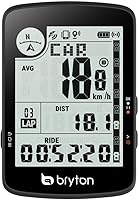
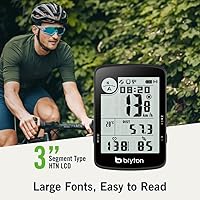
The Bryton Rider 17 GPS Cycling Computer arrived on the market in late 2024, positioning itself as a practical, no-fuss option for recreational and fitness-focused riders who want real data without premium-level spending. Bryton isn't a household name the way Garmin is, but the Taiwanese brand has been quietly producing solid, accessible cycling tech for years. What immediately stands out about this GPS bike computer is its 3-inch LCD display — noticeably larger than most devices in this price range. That extra screen real estate matters more than it sounds when you're glancing down at speed on a busy road.

Features & Benefits

In practice, the screen holds up well in daylight — not AMOLED-sharp, but clear enough that you're not squinting to read your speed. The battery life is genuinely one of this cycling computer's strongest suits; on long tours or back-to-back riding days, topping it up from a power bank mid-ride without losing activity data is a real practical advantage. The Live Track feature works through a simple shareable link, which safety-conscious riders and their families tend to appreciate. Throw in over two dozen data fields covering gradient, altitude, cadence, and heart rate, plus automatic sync to third-party platforms like Strava and TrainingPeaks, and the feature set punches well above its price range.

Best For

This GPS bike computer makes the most sense for a few specific types of rider. If you're currently using a basic speedometer and want to step up to GPS tracking and structured data without the steep learning curve of high-end devices, the Rider 17 is a natural fit. Commuters and recreational riders will appreciate the Live Track sharing as a safety net — it's simple enough that you'll actually use it. Long-distance and endurance cyclists benefit from that extended battery, especially on multi-day routes. Those already using Bryton sensors will find Bluetooth pairing straightforward, and anyone frustrated by touchscreens will find the physical button controls here refreshingly direct.

User Feedback

Riders who've used this cycling computer consistently praise the screen — specifically how easy it is to read at a glance, even in bright sunlight. Setup also earns frequent credit for being genuinely quick rather than just claiming to be. The mount and build quality are generally considered solid for the price, though some longer-term users note the handlebar mount can loosen with sustained vibration. On the app side, a handful of buyers have flagged occasional sync delays with Bryton Active. Compared to Garmin or Wahoo at a similar price, users tend to rate the Rider 17 higher on value but acknowledge that brand recognition and ecosystem depth still favor those more established names.

Pros

  • The 3-inch LCD screen is noticeably easier to read at a glance than most competing devices in this price tier.
  • Battery life is long enough for multi-day tours, with mid-ride power bank charging as a genuine backup option.
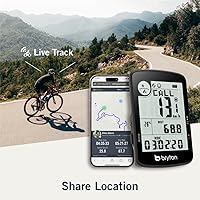
  • Live Track location sharing works via a simple link — no app download required for the people following you.
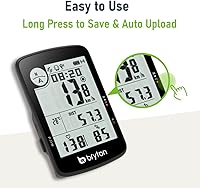
  • Setup is fast and approachable, even for riders with no prior GPS computer experience.
  • Compatible with Strava, TrainingPeaks, Komoot, and Relive for easy post-ride data sharing.
  • At just over 60 grams, this cycling computer adds almost no noticeable weight to the handlebar.
  • Physical button controls are reliable and easy to operate while wearing gloves in wet conditions.
  • Waterproofing means you can ride confidently through rain without babying the device.
  • Smart notifications keep you aware of calls and messages without reaching for your phone.
  • Value for money is consistently cited as a strong point when buyers compare it to pricier alternatives.

Cons

  • GPS signal acquisition can be slow on first use or after long periods without use.
  • The Bryton Active app has reported occasional sync delays and reliability inconsistencies.
  • No turn-by-turn navigation, which is a real limitation for riders exploring new routes.
  • The handlebar mount can loosen over time on rough terrain and may need periodic tightening.
  • Bryton's brand ecosystem and third-party accessory support are narrower than Garmin or Wahoo.
  • LCD display quality, while readable, lacks the contrast and crispness of modern color or OLED screens.
  • Limited community and troubleshooting resources compared to more established brands.
  • No touchscreen means navigating menus mid-ride is less fluid than on competing devices.

Ratings

The scores below reflect an AI-driven analysis of verified global buyer reviews for the Bryton Rider 17 GPS Cycling Computer, with spam, bot activity, and incentivized feedback actively filtered out to ensure the results represent genuine rider experiences. Both standout strengths and recurring frustrations are factored in transparently, so the ratings give you an honest picture of what this GPS bike computer actually delivers on the road — not just what the spec sheet promises.

Screen Readability
88%
Riders consistently single out the 3-inch LCD as the device's most immediately appreciated feature, especially those upgrading from smaller competitors. On sunny morning commutes and open road rides, the larger display makes glancing at speed, distance, and gradient noticeably less effortful than on typical budget units.
A handful of riders note that in extremely bright midday sunlight, the LCD contrast isn't quite sharp enough without adjusting viewing angle. It's not a dealbreaker, but users accustomed to premium color displays may find the screen underwhelming in direct glare.
Battery Life
91%
Among recreational and endurance cyclists, the extended battery duration is praised as a genuine differentiator. Riders on multi-day tours specifically appreciate that they can plug into a power bank mid-ride without losing any recorded data, removing the anxiety that typically accompanies long-haul adventures.
A small number of users report that actual battery performance falls slightly short of the maximum quoted figure under heavy sensor usage or cold weather conditions. This gap is modest, but riders planning extreme-duration events should account for it.
Value for Money
87%
Buyers repeatedly describe this cycling computer as punching above its price tier in terms of features offered. The combination of a large screen, long battery, Live Track, and third-party platform support at this price point is frequently cited as the main reason for choosing it over stripped-down alternatives.
A recurring caveat is that Garmin and Wahoo offer more polished ecosystems at only a modest premium. Buyers who later realize they want deeper analytics or navigation support sometimes feel they would have been better served spending slightly more from the outset.
GPS Performance
69%
31%
For standard recreational and fitness rides, GPS tracking is generally reliable once the unit has acquired a signal. Route accuracy on open roads and well-traveled paths is considered solid, and the Live Track link shares position data that most testers found acceptably precise.
Cold start signal acquisition is the most consistently flagged issue — in urban environments or under tree cover, the initial lock can take longer than competitors. A number of users express frustration at waiting at the start of a ride, particularly in time-sensitive commuting scenarios.
App Reliability
63%
37%
When the Bryton Active app functions smoothly, the sync experience is appreciated for its simplicity — rides upload automatically and data flows cleanly to Strava or TrainingPeaks without manual intervention. For casual riders, this level of automation is more than sufficient.
Intermittent sync failures and occasional app crashes are cited often enough to be a genuine concern, not an isolated complaint. Riders who depend on consistent data logging for training purposes find these interruptions frustrating, and the app's overall polish lags noticeably behind Garmin Connect or the Wahoo app.
Setup & Ease of Use
84%
The initial setup process earns genuine praise for being approachable — power on, wait for GPS, and start riding covers the experience for most users. Physical button controls are repeatedly described as intuitive, especially for riders wearing gloves or those who find touchscreens fiddly in motion.
A subset of buyers notes that configuring data screens and pairing sensors through the Bryton Active app takes more trial and error than expected, with the app's interface described as functional but not particularly guided. First-time GPS computer buyers occasionally find the initial Bluetooth pairing process unintuitive.
Build Quality
76%
24%
The overall construction is considered solid for its price tier — most riders report no cracking, warping, or physical degradation after months of regular use in mixed weather conditions. The waterproofing holds up well in rain, which recreational riders and commuters particularly value.
The handlebar mount draws recurring criticism for gradually loosening on rough terrain or cobbled roads, requiring periodic re-tightening that more premium mounts avoid. A few users also note that the device's plastic casing, while functional, doesn't inspire confidence when compared to higher-end units.
Data Completeness
82%
18%
Having gradient, altitude, cadence, and heart rate all accessible in a single mid-range device is something buyers appreciate deeply, especially those stepping up from basic speedometers. The breadth of trackable metrics covers the needs of fitness-focused and recreational riders comfortably.
Advanced training metrics such as power output, VO2 max estimates, or recovery suggestions are absent, which limits the device's usefulness for structured training. Cyclists who want to go deeper than recreational fitness data will find the metric set starts to feel shallow over time.
Live Track Feature
83%
The link-based sharing approach is praised for its simplicity — no app installation required on the recipient's end, which makes it genuinely practical for sharing with non-cycling family members or friends. Commuters and solo long-distance riders cite it as a meaningful safety feature they actually use regularly.
The Live Track update frequency is not always real-time in the strictest sense, with some users noting brief lag in position updates under variable data conditions. It also depends on the paired smartphone maintaining a stable connection, which adds a point of potential failure.
Sensor Compatibility
71%
29%
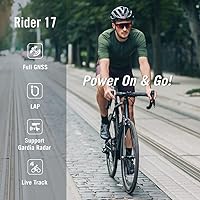
For riders already using Bryton's own sensor range, pairing is straightforward and reliable. The support for speed, cadence, heart rate, and even the Gardia radar makes this a reasonably complete ecosystem for the brand's existing customers.
Compatibility is effectively limited to Bryton's own Bluetooth sensors — riders hoping to reuse ANT+ sensors or hardware from other brands will find options constrained. This is a meaningful limitation for anyone already invested in a mixed sensor setup.
Third-Party Integration
78%
22%
Automatic post-ride sync to Strava, TrainingPeaks, Komoot, and Relive covers the platforms most recreational and fitness cyclists actually use. For riders who want their data visible in familiar tools without manual exports, this integration works reliably when the app is cooperating.
The sync pipeline is only as dependable as the Bryton Active app, which introduces variability. Users who rely on TrainingPeaks for coached training plans have occasionally reported data gaps or delayed uploads that disrupted their workflow.
Smart Notifications
67%
33%
Call and message alerts on the display are appreciated by commuters who want awareness without reaching for a phone. The feature works passably for quick awareness — enough to know something needs attention without being a distraction.
Notification display is basic, with limited text preview and no interaction capability beyond acknowledgment. Riders accustomed to richer notification handling on Garmin devices find this implementation feels minimal, and Bluetooth disconnections between phone and device occasionally cause missed alerts.
Weight & Form Factor
86%
At just over 60 grams, the Rider 17 is light enough that most riders forget it's there after the first few minutes. The compact form factor doesn't intrude on handlebar space, and the included mount keeps the device positioned cleanly in the rider's natural sightline.
The slightly taller profile compared to some ultracompact competitors can be a minor concern for riders with crowded handlebar setups — particularly those running lights, bells, and bags simultaneously. It's a niche complaint, but worth noting for heavily accessorized commuter builds.
Durability Over Time
73%
27%
Reports from riders who have used the Rider 17 through a full season of varied conditions — including rain, heat, and dusty gravel roads — generally indicate that the device holds up without significant functional degradation. Waterproofing in particular performs consistently.
Given the product only launched in late 2024, long-term durability data is still limited. Some early adopters report minor cosmetic wear on buttons and casing edges after sustained daily use, which raises mild questions about how it will perform over several years of regular riding.

Suitable for:

The Bryton Rider 17 GPS Cycling Computer is a strong match for riders who want meaningful data and GPS tracking without the learning curve or cost of a premium device. If you're currently riding with nothing more than a basic speedometer and want to step up to altitude tracking, gradient readings, and live route logging, this is a natural and practical upgrade. Commuters who ride alone, especially in urban or unfamiliar areas, will find the Live Track link-sharing genuinely useful — it's the kind of safety feature that family members actually appreciate. Long-distance and endurance cyclists who hate carrying backup chargers will value the extended battery life, particularly the ability to top up from a power bank mid-ride without pausing or losing activity data. Riders already using Bryton accessories will find sensor pairing smooth, and anyone who prefers the tactile certainty of physical buttons over swipe-based touchscreens will feel right at home here.

Not suitable for:

The Bryton Rider 17 GPS Cycling Computer is not the right tool for competitive cyclists or serious training athletes who rely on deep performance analytics, advanced navigation with turn-by-turn mapping, or tight integration with a broader wearable ecosystem. If you're cross-referencing power meter data, building structured training blocks in Garmin Connect, or expecting the same polish and responsiveness you'd get from a Wahoo ELEMNT or Garmin Edge device, this GPS bike computer will feel limited. Bryton's app ecosystem, while functional, doesn't yet match the depth or reliability of more established platforms — occasional sync issues are a real consideration if seamless data logging is critical to your training routine. Riders who frequently navigate unfamiliar routes and need visual turn-by-turn directions on-device may also find this cycling computer falls short. It's a practical workhorse, but it isn't designed for the demands of performance-driven or navigation-heavy riding.

Specifications

  • Screen Size: The device features a 3-inch LCD display, which is notably larger than most cycling computers in its price category.
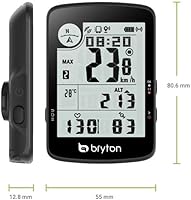
  • Dimensions: The unit measures 2.17″ in length, 0.5″ in width, and 3.17″ in height, making it compact enough for handlebar mounting without obstructing visibility.
  • Weight: At 63 grams (2.22 ounces), the device adds minimal weight to the bike setup.
  • Battery Life: The built-in Lithium Polymer battery supports up to 25 hours of continuous use and can be recharged via a power bank during a ride without data loss.
  • Connectivity: The device connects to sensors, smartphones, and the Bryton Active app exclusively via Bluetooth.
  • Data Metrics: Riders can track up to 23 data functions, including speed, distance, time, cadence, heart rate, gradient, and altitude.
  • Sensors Supported: Compatible Bluetooth sensors include speed, cadence, and heart rate monitors from the Bryton accessory range.
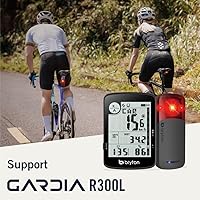
  • Radar Compatibility: The device supports the Gardia R300L bike radar, enabling rear-traffic awareness when paired.
  • Navigation: The unit provides GPS-based ride tracking and Live Track location sharing but does not support turn-by-turn navigation.
  • Live Track: Riders can generate a shareable link from the Bryton Active app to broadcast real-time location, speed, ride time, and distance to any contact.
  • Smart Notifications: When paired with a smartphone via Bluetooth, the device displays incoming call, text message, and email alerts on screen.
  • Mount Type: The device ships with a handlebar mount that secures using a standard Bryton quick-release bracket.
  • Controls: All on-device inputs are handled through physical buttons, with no touchscreen functionality.
  • Waterproofing: The unit is rated as waterproof, making it suitable for riding in rain and wet conditions.
  • App Support: The Bryton Active app is available for both iOS and Android and handles ride sync, settings configuration, and Live Track link generation.
  • Third-Party Platforms: Post-ride data can be automatically shared to Strava, TrainingPeaks, Komoot, and Relive via the Bryton Active app.
  • In Box: The package includes the cycling computer unit, a handlebar mount, a safety lanyard, and a quick start guide.
  • Battery Type: The device uses a built-in Lithium Polymer battery that is included and not user-replaceable.
  • Release Date: The product was first made available in November 2024, making it one of the more recently launched units in Bryton's lineup.
  • Charging Method: The device charges via a standard cable connection and supports pass-through charging from a portable power bank while in use.

Related Reviews
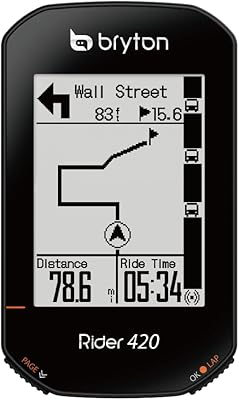
Bryton Rider 420e GPS Cycling Computer
78%
88%
Display Clarity
91%
Battery Life
79%
GPS Accuracy
72%
Navigation & Routing
86%
Sensor Connectivity
More
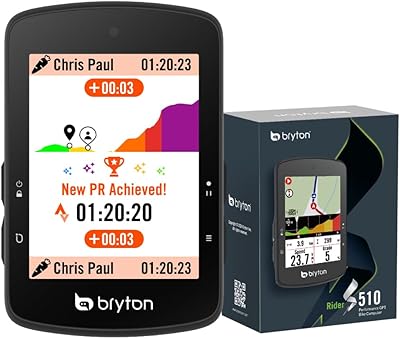
Bryton Rider S510 GPS Cycling Computer
77%
93%
Battery Life
78%
Navigation Accuracy
84%
Touchscreen Quality
72%
Climb Challenge 2.0
88%
Sensor Compatibility
More
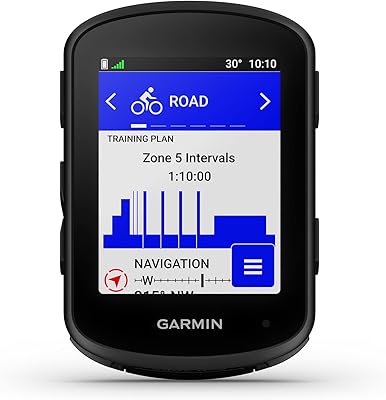
Garmin Edge 840 GPS Cycling Computer
79%
93%
GPS Accuracy
88%
Battery Life
91%
ClimbPro Feature
62%
Touchscreen Performance
74%
Adaptive Training Tools
More
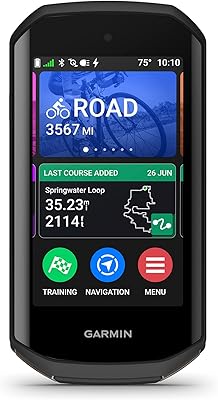
Garmin Edge 1050 GPS Cycling Computer
79%
88%
Touchscreen Quality
91%
Battery Life
86%
Navigation Accuracy
82%
Built-in Speaker
78%
Group Ride Features
More
Garmin Edge 540 GPS Cycling Computer
81%
93%
GPS Accuracy
89%
Battery Life
86%
Navigation & Mapping
91%
ClimbPro Functionality
74%
Adaptive Coaching & Training Tools
More
Timex T5K615 GPS Bike Computer
69%
83%
GPS Accuracy
86%
ANT+ Sensor Pairing
79%
Battery Life
71%
Training Peaks Integration
58%
Display Readability
More
CooSpo BC107 GPS Bike Computer
76%
91%
Value for Money
86%
GPS Accuracy
78%
Ease of Setup
62%
App Experience
79%
Build Quality
More
Beeline Velo 2 Cycling GPS Computer
77%
88%
Ease of Setup
79%
Navigation Accuracy
86%
Battery Life
83%
Build Quality & Durability
74%
Display Readability
More
TwoNav Terra 32GB GPS Bike Computer
75%
91%
Map Quality
88%
Screen Readability
86%
Navigation Accuracy
84%
Route Planning & Editing
79%
Battery Life
More
Garmin Edge 1040 Solar GPS Bike Computer
80%
93%
GPS Accuracy
88%
Battery Life
71%
Solar Charging
86%
Navigation
84%
Training Analytics
More

FAQ

It's designed primarily around Bryton's own Bluetooth sensor ecosystem, so official compatibility is confirmed for Bryton speed, cadence, and heart rate sensors. Some standard Bluetooth sensors from other brands may connect, but Bryton doesn't officially guarantee compatibility with third-party sensors, so it's worth checking before assuming your existing gear will pair cleanly.

Yes — the device works as a standalone GPS cycling computer right out of the box. You don't need the Bryton Active app to record rides or view data on screen. The app is only required if you want to sync ride history, configure Live Track, adjust settings remotely, or push data to platforms like Strava.

You generate a shareable link directly from the Bryton Active app on your phone, then send it to whoever you want to track your ride — via text, WhatsApp, email, or any messaging platform. The recipient doesn't need an account or app; they just open the link in a browser and can see your real-time location, speed, and ride stats. It's straightforward enough that most people use it without any setup issues.

For an LCD display, it holds up reasonably well in daylight. It's not a high-contrast color screen, so in very intense direct sunlight you might find yourself adjusting your viewing angle slightly, but most riders find it clear enough for at-a-glance reading at speed. The larger screen size helps significantly compared to smaller competitors.

On a cold start — meaning the first use or after a long gap — it can take anywhere from 30 seconds to a couple of minutes to lock onto a GPS signal, depending on your location and sky visibility. Once it has a recent fix, subsequent startups are noticeably faster. If you're the type who clips in and rolls immediately, plan for a brief wait before the route tracking kicks in.

No, it doesn't offer turn-by-turn navigation. It records your GPS route and supports Live Track sharing, but there's no on-device map or directional prompts. If you need guided navigation on unfamiliar roads, you'd want to look at a higher-tier device that includes mapping functionality.

The included mount is designed for standard handlebars and fits most road, hybrid, and mountain bike setups. It uses Bryton's own quick-release bracket system, which is compatible with other Bryton mounts if you ever want to swap. If you have an unusual handlebar shape or diameter, it's worth double-checking before assuming it fits without adapters.

Yes, and this is one of the more practical features for long-distance riders. You can plug it into a portable power bank while it's actively recording a ride, and it won't interrupt or lose your activity data. It's not a fast-charge setup, but it's perfectly usable for topping up on a multi-hour or multi-day ride.

Garmin has a more mature app ecosystem, wider third-party compatibility, and a larger support community — those are real advantages. The Rider 17 counters with a larger screen and competitive battery life at a comparable price point. For riders who don't need advanced navigation or deep training analytics, the difference in day-to-day performance is smaller than the brand gap might suggest. Garmin wins on ecosystem; this GPS bike computer wins on screen size and value.

Most riders find it genuinely quick to get started — power it on, wait for GPS, and you're tracking. Pairing with the Bryton Active app takes a few minutes and follows a straightforward Bluetooth pairing process. The physical button controls also tend to feel more intuitive than navigating a touchscreen for riders who aren't used to GPS computers. It's not flawless, but the initial setup is among the simpler ones in its category.

Where to Buy