Overview

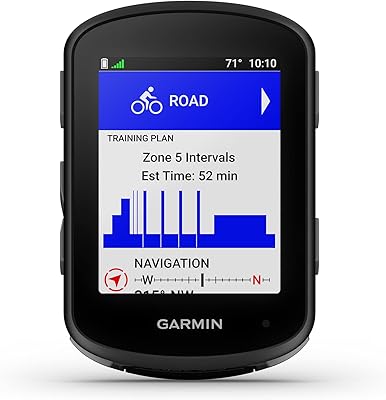
The Bryton Rider S510 GPS Cycling Computer enters a crowded market dominated by Garmin and Wahoo, but this Taiwanese brand has carved out a credible niche by offering performance-focused features at a more accessible price point. Launched in late 2024, it is still a relatively new device, so long-term durability data remains limited. What immediately stands out is the 2.8-inch color touchscreen with an adaptive backlight — visually, it holds its own against pricier rivals. For riders who venture into areas with spotty cell coverage, offline USA map support means you are not dependent on a phone signal to navigate. Early adopter interest has been strong, and for good reason.
Features & Benefits

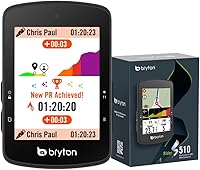
The Rider S510 packs a surprising amount of functionality into a 96-gram unit. Climb Challenge 2.0 uses predictive algorithms to estimate elevation data even on routes you have not planned in advance — genuinely useful on spontaneous gravel days. Turn-by-turn navigation reroutes automatically when you miss a turn, all without needing your phone nearby. The 30-hour battery life is a real asset for multi-day touring or back-to-back long rides. Dual ANT+ and Bluetooth connectivity lets you pair heart rate monitors, electronic shifting systems like Di2 or eTAP, and rear radar without compatibility headaches. Route import from Strava, Komoot, and Ride with GPS rounds out a well-connected feature set.

Best For

This GPS head unit makes the most sense for endurance and gran fondo riders who spend long hours in the saddle and cannot afford to stop and recharge mid-route. Gravel and adventure cyclists will appreciate the offline maps, especially in remote areas where cellular service is unreliable. If you are upgrading from a basic data-only head unit and want actual navigation on your handlebar, the Rider S510 offers a meaningful step up. It is also a smart pick for athletes already embedded in the Strava or TrainingPeaks ecosystem — the auto-sync keeps your workflow tight. Garmin loyalists may not switch, but budget-conscious performance riders who want comparable features without a flagship price tag will find this a compelling option.

User Feedback

Early users tend to praise the touchscreen responsiveness and how well the display holds up in bright sunlight — a legitimate concern for any outdoor cycling display. Mount compatibility gets positive mentions too, with most standard out-front mounts working without issue. On the critical side, some riders note that the Bryton Active app does not quite match the polish of Garmin Connect, with occasional sync hiccups reported on both iOS and Android. GPS accuracy appears solid in most conditions, though a few users have flagged map rendering lag on complex routes. Since this head unit only launched in late 2024, long-term reliability remains an open question — worth monitoring as the user base continues to grow.

Pros

  • The 30-hour battery life is genuinely useful for multi-day touring and ultra-endurance events without mid-ride charging anxiety.
  • Offline USA maps mean you can navigate confidently in remote areas without any cell signal whatsoever.
  • Turn-by-turn navigation reroutes automatically when you miss a turn — no fumbling with your phone required.
  • At its price point, the Rider S510 offers a feature set that rivals devices costing noticeably more from larger brands.
  • The 2.8-inch color touchscreen is bright, readable in direct sunlight, and responsive enough to use with cycling gloves.
  • Climb Challenge 2.0 provides predictive elevation data on unplanned routes, which is a practical tool for spontaneous rides.
  • Dual ANT+ and Bluetooth connectivity means it pairs reliably with heart rate monitors, radar, and electronic shifting systems.
  • Route import from Strava, Komoot, and Ride with GPS works without manual file transfers or extra steps.
  • At 96 grams, this GPS head unit adds almost nothing to your cockpit weight.
  • Waterproof construction means you do not need to think twice about heading out in wet weather.

Cons

  • The Bryton Active app lacks the depth and reliability of Garmin Connect, with sync hiccups reported by some iOS and Android users.
  • As a late-2024 release, long-term durability and firmware support history are still unproven — early adopters carry that risk.
  • Map rendering can lag on complex or dense route sections, which is noticeable if you are used to Garmin Edge responsiveness.
  • Bryton's ecosystem of third-party compatible apps and data field extensions is considerably smaller than Garmin's Connect IQ library.
  • Climb Challenge 2.0 predictive accuracy can vary depending on terrain complexity, so treat it as a helpful estimate rather than a guarantee.
  • Riders switching from Garmin will face a learning curve with the interface and companion app workflow.
  • Long-term software support and update frequency from Bryton remain uncertain compared to more established brands with a longer track record.

Ratings

The scores below for the Bryton Rider S510 GPS Cycling Computer were generated by our AI engine after analyzing verified buyer reviews from global markets, with spam, incentivized, and bot-flagged submissions actively filtered out. The results reflect a balanced picture — where this GPS head unit genuinely delivers and where real riders have run into friction. Both sides of the story are represented here so you can make a confident, well-informed decision.

Battery Life
93%
Riders doing multi-day touring and ultra-endurance events consistently highlight the 30-hour battery as one of the Rider S510's most practical advantages. On back-to-back long days, not having to think about a power bank or mid-ride charging stop is a meaningful quality-of-life improvement that users frequently mention in positive reviews.
A small number of users report that battery drain accelerates noticeably when GPS update rates are set to high frequency or when the backlight stays on maximum brightness in sunny conditions. The 30-hour figure appears achievable under typical settings, but power users running all sensors simultaneously should expect something closer to 24 to 26 hours.
Navigation Accuracy
78%
22%
For planned routes imported from Komoot or Strava, users generally find the turn-by-turn navigation reliable and easy to follow, with road name callouts that reduce the need to stare at the screen mid-ride. Automatic rerouting when a turn is missed works without needing a phone connection, which riders on remote gravel roads appreciate.
Map rendering lag on complex urban routes or densely packed trail networks has been flagged by a portion of users, particularly when comparing this head unit directly against Garmin Edge devices in the same price bracket. GPS lock time from cold start can also be slightly slower than some competitors, which is a minor but noticeable friction point.
Touchscreen Quality
84%
The 2.8-inch color touchscreen draws consistent praise for brightness and readability in direct sunlight — a real test that many cycling displays fail. Riders report that the adaptive backlight adjusts quickly and intelligently, reducing the need to manually fiddle with settings mid-ride.
Touchscreen responsiveness with thicker winter gloves is an area where some users experience missed taps or sluggish response. A handful of reviewers also note that the screen picks up fingerprint smudges quickly, which can affect clarity during prolonged rides if not wiped down.
Climb Challenge 2.0
72%
28%
Cyclists who regularly tackle spontaneous climbs without a pre-loaded route find the predictive elevation feature genuinely useful as a rough planning tool. On well-mapped road terrain, the elevation estimates are accurate enough to help riders pace their effort on unfamiliar ascents.
On very remote or poorly mapped terrain — common for gravel and trail riders — the predictive algorithm can miss gradient changes significantly, leading to some frustrating mismatches between the display and actual road feel. Users tend to treat it as a helpful guide rather than a precise instrument after encountering these discrepancies a few times.
Sensor Compatibility
88%
Dual ANT+ and Bluetooth support means this head unit pairs reliably with nearly any third-party sensor a cyclist might already own — heart rate monitors, power meters, rear radar, and electronic groupsets all connect without the proprietary lock-in issues associated with some competitors. Riders switching from other brands report that their existing sensor ecosystem carries over cleanly.
A small subset of users note occasional Bluetooth dropout with certain heart rate monitors during high-intensity intervals, requiring a manual reconnect. ANT+ pairing is generally more stable, so riders with older ANT+-only sensors are less likely to experience connectivity interruptions.
App & Ecosystem
61%
39%
The Bryton Active app handles the core workflow — pushing routes to the device, syncing completed rides, and forwarding data to Strava, TrainingPeaks, and Komoot — without requiring manual intervention most of the time. For athletes whose primary data home is Strava, the auto-sync is reliable enough to be essentially invisible.
Compared to Garmin Connect, the Bryton Active app feels noticeably less polished, with limited in-app analytics, a less intuitive interface, and occasional sync failures reported on both iOS and Android. Users who want rich post-ride data analysis directly in the companion app will likely find themselves relying on Strava or TrainingPeaks to fill the gap.
Value for Money
86%
At its price point, this GPS head unit offers a feature set that would cost considerably more from Garmin or Wahoo, making it a genuinely compelling option for performance-oriented riders who want navigation, sensor integration, and a color touchscreen without paying top-tier prices. Many reviewers specifically cite the feature-to-cost ratio as the primary reason they chose it over the competition.
The value equation does carry some asterisks — the less mature app ecosystem and the brand's shorter track record in long-term firmware support mean buyers are accepting some risk that Garmin customers generally do not face at a comparable spend level. For riders who heavily factor in after-purchase support, that gap is real.
Build Quality
74%
26%
The unit feels solid in hand and the waterproofing holds up well in rainy ride conditions, which a good number of users have validated through wet commutes and rain-soaked gran fondos. At 96 grams, the build does not feel cheap or hollow despite being lighter than some rivals.
Since this device only launched in late 2024, there is limited long-term durability data available — reviewers simply have not had it long enough to report on how it holds up after 18 to 24 months of regular use. A few early users have mentioned minor scuffing around the mount collar after repeated removal and reinstallation.
Mount & Installation
81%
19%
Compatibility with the Garmin quarter-turn mount standard means most riders can slot the Rider S510 onto their existing out-front mount without buying new hardware, which is a thoughtful design decision that eases the upgrade path from other brands. The included Bryton mount is functional and handlebar installation is straightforward.
Some users with proprietary or brand-specific mount systems have reported minor fitment looseness, particularly at high vibration on rough road surfaces. The safety lanyard included in the box is a practical safety net, but it does suggest the mount retention system is not completely confidence-inspiring on its own.
Route Planning Integration
82%
18%
The ability to pull routes automatically from Komoot, Ride with GPS, and Strava without manual GPX file transfers is one of the smoothest parts of the overall experience, and riders embedded in those platforms find the workflow saves meaningful setup time before heading out.
The sync is app-dependent, so if the Bryton Active app has a hiccup — which does happen occasionally — routes may not appear on the device until the issue clears. There is no direct drag-and-drop or native desktop route management tool for riders who prefer working on a computer.
Display Customization
69%
31%
Users can configure multiple data screen layouts and choose from a reasonable range of data fields covering power, heart rate, speed, elevation, and navigation, which covers the needs of most structured training and endurance riders without feeling limiting day-to-day.
The depth of customization falls short of what Garmin's Connect IQ platform offers — there is no third-party data field marketplace, so riders who rely on specialized metrics or custom training overlays will find the options fairly fixed. This is a known trade-off with the Bryton ecosystem rather than a device-specific flaw.
GPS Signal Acquisition
75%
25%
In open road and outdoor conditions, GPS signal acquisition is reliable and position tracking stays accurate during typical road and gravel rides. Users commuting or riding in suburban areas report that the device holds a clean track without obvious drift.
Cold start acquisition time in dense urban environments or under heavy tree cover is slower than some users expect, and a few reviewers note brief GPS dropouts in deep canyon or tunnel-heavy terrain. These are edge cases, but riders in technically complex environments should factor this in.
Software & Firmware Updates
58%
42%
Bryton has pushed several firmware updates since the device launched in late 2024, addressing early bugs and improving stability — a sign that the product is at least being actively maintained in its first year on the market.
The update cadence and long-term support commitment from Bryton remain uncertain compared to Garmin, which has a well-documented multi-year support history for its devices. Riders who hold onto cycling computers for four or five years face real uncertainty about whether the Rider S510 will receive meaningful updates beyond its first couple of years.
Ease of Setup
83%
Initial setup is quick — pairing sensors, connecting to the app, and getting a route onto the device can be done in under 15 minutes for most users, even those new to the Bryton platform. The touchscreen interface is intuitive enough that most riders do not need to consult the manual beyond the quick start guide.
A few users migrating from Garmin report a short adjustment period in relearning menu logic and data field configuration, as the interface paradigm is different enough to cause minor friction in the first week. Nothing insurmountable, but not as instantly familiar as staying within the same brand ecosystem.

Suitable for:

The Bryton Rider S510 GPS Cycling Computer is a strong match for endurance-focused riders who regularly tackle long days in the saddle and need reliable navigation without babysitting a battery gauge. Gran fondo participants, multi-day tourers, and cyclists who ride in rural or mountainous areas with poor cell coverage will find the offline USA maps and autonomous rerouting particularly practical — you are not left stranded when your phone loses signal on a back road. Gravel and adventure cyclists who plan routes on Komoot or Ride with GPS will appreciate how smoothly the Rider S510 pulls those routes down and displays them. Athletes training with power meters or electronic groupsets like Shimano Di2 or SRAM eTAP will also find the dual ANT+ and Bluetooth connectivity handles their sensor stack without drama. If you are currently using a basic data-only head unit and have been putting off upgrading because flagship prices felt hard to justify, this GPS head unit sits at a point where the feature-to-cost ratio genuinely makes sense.
Not suitable for:

Riders who are deeply invested in the Garmin ecosystem — Connect IQ apps, extensive third-party data fields, or a library of saved Garmin devices — will find the Bryton Rider S510 GPS Cycling Computer a difficult switch, not because it lacks core features, but because Bryton's app and accessory ecosystem simply is not as mature or as wide. Competitive racers who rely on highly precise real-time routing or expect instant map rendering under demanding conditions may find occasional lag frustrating compared to Garmin Edge equivalents at a similar tier. Since this head unit only hit shelves in late 2024, buyers who prioritize proven long-term durability and an established firmware update track record may want to wait another season for the device to accumulate a deeper real-world reliability record. Urban commuters or casual riders who rarely venture beyond cell coverage and have no interest in structured training data would likely find this GPS head unit over-engineered for their needs. If you rely heavily on a polished companion app experience for post-ride analysis, the Bryton Active app works, but it is not yet in the same league as Garmin Connect or Wahoo's platform.

Specifications

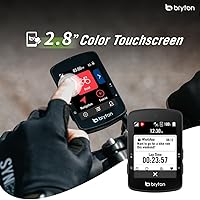
  • Screen Size: The device features a 2.8″ color LCD touchscreen for clear display of maps and cycling data fields.
  • Backlight: An adaptive light sensor automatically adjusts screen brightness to match ambient lighting conditions.
  • Battery Life: The device delivers up to 30 hours of continuous use on a single full charge.
  • Weight: The main unit weighs 96 grams, keeping cockpit weight additions minimal.
  • Dimensions: Physical dimensions are 2.24″ in length, 0.89″ in width, and 3.43″ in height.
  • GPS Sensor: A built-in GPS sensor provides real-time positioning and route tracking without requiring a paired smartphone.
  • Connectivity: Supports both ANT+ and Bluetooth protocols for pairing a wide range of cycling sensors and accessories.
  • Maps: Comes preloaded with offline USA maps, enabling full turn-by-turn navigation without a cellular or Wi-Fi connection.
  • Navigation: Turn-by-turn navigation includes automatic rerouting when the rider deviates from the planned route.
  • Climb Feature: Climb Challenge 2.0 uses predictive algorithms to provide real-time elevation data on both planned and unplanned routes.
  • App Compatibility: Pairs with the Bryton Active app on iOS and Android for ride sync and third-party platform integration.
  • Platform Sync: Automatically syncs ride data to Strava, TrainingPeaks, and Komoot via the Bryton Active companion app.
  • Route Import: Supports direct route import from Komoot, Ride with GPS, and Strava through the Bryton Active app.
  • Sensor Support: Compatible with heart rate monitors, rear bike radar, and electronic shifting systems including Shimano Di2 and SRAM eTAP.
  • Waterproofing: The unit is built to withstand wet weather conditions, making it suitable for rain riding without protective covers.
  • Mount Type: Attaches to handlebars via the included Bryton bike mount, compatible with standard handlebar diameters.
  • Battery Type: Uses a built-in rechargeable lithium-ion battery that charges via the included USB cable.
  • Input Methods: Supports touchscreen input, physical buttons, and includes a microphone for potential voice interaction features.
  • In the Box: Package includes the main unit, Bryton bike mount, USB charging cable, safety lanyard, and a quick start guide.
  • OS Support: The companion app is compatible with both Android and iOS mobile operating systems.

Related Reviews
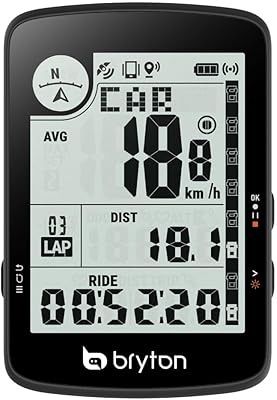
Bryton Rider 420e GPS Cycling Computer
78%
88%
Display Clarity
91%
Battery Life
79%
GPS Accuracy
72%
Navigation & Routing
86%
Sensor Connectivity
More
Bryton Rider 17 GPS Cycling Computer
78%
88%
Screen Readability
91%
Battery Life
87%
Value for Money
69%
GPS Performance
63%
App Reliability
More
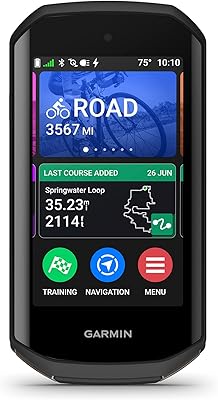
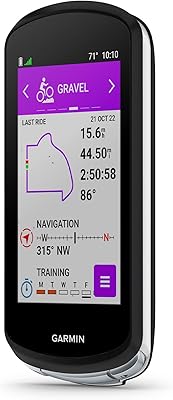
Garmin Edge 1050 GPS Cycling Computer
79%
88%
Touchscreen Quality
91%
Battery Life
86%
Navigation Accuracy
82%
Built-in Speaker
78%
Group Ride Features
More
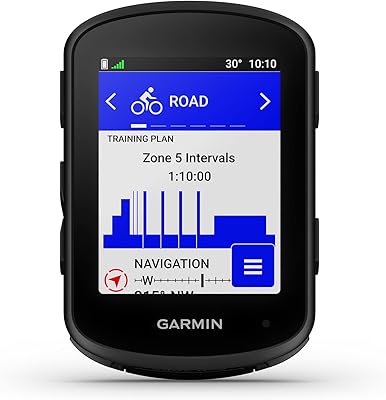
Garmin Edge 840 GPS Cycling Computer
79%
93%
GPS Accuracy
88%
Battery Life
91%
ClimbPro Feature
62%
Touchscreen Performance
74%
Adaptive Training Tools
More
Garmin Edge 540 GPS Cycling Computer
81%
93%
GPS Accuracy
89%
Battery Life
86%
Navigation & Mapping
91%
ClimbPro Functionality
74%
Adaptive Coaching & Training Tools
More
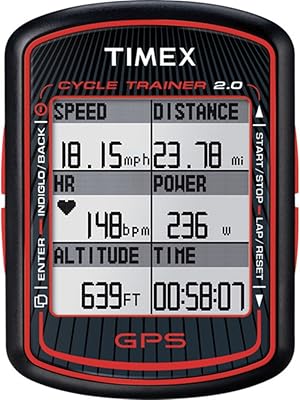
Timex T5K615 GPS Bike Computer
69%
83%
GPS Accuracy
86%
ANT+ Sensor Pairing
79%
Battery Life
71%
Training Peaks Integration
58%
Display Readability
More
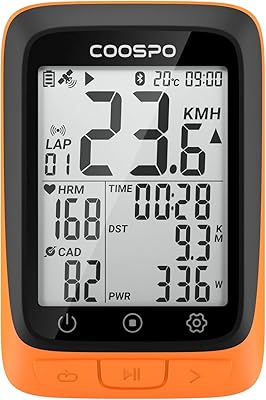
CooSpo BC107 GPS Bike Computer
76%
91%
Value for Money
86%
GPS Accuracy
78%
Ease of Setup
62%
App Experience
79%
Build Quality
More
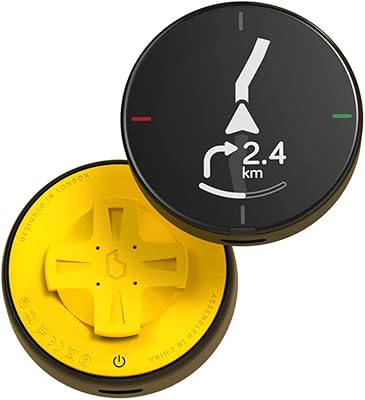
Beeline Velo 2 Cycling GPS Computer
77%
88%
Ease of Setup
79%
Navigation Accuracy
86%
Battery Life
83%
Build Quality & Durability
74%
Display Readability
More
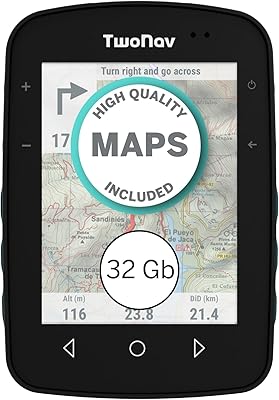
TwoNav Terra 32GB GPS Bike Computer
75%
91%
Map Quality
88%
Screen Readability
86%
Navigation Accuracy
84%
Route Planning & Editing
79%
Battery Life
More
Garmin Edge 1040 Solar GPS Bike Computer
80%
93%
GPS Accuracy
88%
Battery Life
71%
Solar Charging
86%
Navigation
84%
Training Analytics
More

FAQ

Yes, completely. The Rider S510 has built-in GPS and preloaded offline USA maps, so it navigates, reroutes, and records your ride entirely on its own. Your phone is only needed for syncing data after the ride via the Bryton Active app.

In most cases, yes. Because it supports both ANT+ and Bluetooth, it is compatible with the vast majority of third-party sensors — including Garmin heart rate monitors, speed and cadence sensors, and power meters — as long as they broadcast on those standard protocols. Garmin-proprietary features or Connect IQ apps will not carry over, but basic sensor pairing should work fine.

It is a useful tool but treat it as a smart estimate rather than a surveyed measurement. The predictive algorithm performs well on common road types, but on very remote or unusual terrain it can occasionally underestimate or misread the gradient profile. For planned routes with uploaded data, the elevation readings are generally quite reliable.

Yes, both are supported. Routes planned on Komoot, Ride with GPS, or Strava sync automatically to your Bryton Active app account and from there push to the head unit. It is one of the cleaner parts of the workflow and works without manual file transfers.

It is compatible with both Shimano Di2 and SRAM eTAP via ANT+ or Bluetooth, allowing you to see gear position and shifting data on-screen. Campagnolo EPS compatibility is worth verifying against Bryton's current firmware notes before assuming full support.

A full charge from empty typically takes around two to three hours via the included USB cable. Given the 30-hour battery life, most riders find they only need to charge every few rides rather than daily.

Generally yes — the touchscreen is responsive enough for gloved use in most conditions, which is something early users have noted positively. Thick winter gloves may reduce sensitivity somewhat, but standard summer or mid-season cycling gloves should not cause problems.

Honestly, it is functional but not quite at Garmin Connect's level of polish or depth. Core features like ride sync, route management, and third-party platform connections work as advertised. Where it falls a little short is in detailed post-ride analysis tools and the breadth of customization options. If deep in-app analytics are important to you, you may supplement it with Strava or TrainingPeaks.

The Rider S510 ships with Bryton's own handlebar mount, but it also fits the widely used Garmin quarter-turn mount standard, which means most popular out-front mounts from brands like K-Edge, Wahoo, or Barfly should be compatible without any adapters.

Bryton typically offers a one-year limited warranty on their cycling computers, though it is worth confirming the specific terms for your region at the time of purchase. As a smaller brand compared to Garmin or Wahoo, their support response times and service network are more limited, so factoring that into your decision if post-purchase support is a priority for you is worth doing.

Where to Buy