Overview

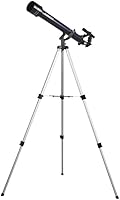
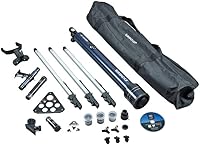
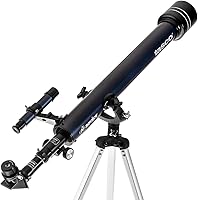
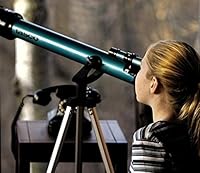
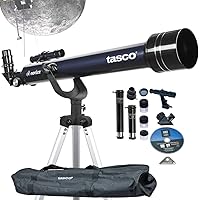
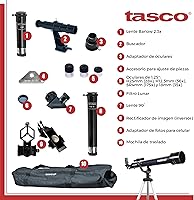
The Tasco Novice 60x700mm Refractor Telescope is a straightforward entry point into backyard astronomy, priced squarely in budget territory where expectations need to match reality. With a 60mm aperture and 700mm focal length, this beginner scope handles lunar viewing well enough to genuinely impress a first-timer — crater detail on a clear night can be surprisingly satisfying. The altazimuth mount is refreshingly simple: no tracking motors, no polar alignment headaches, just point and look. It ships with a Barlow eyepiece, a finderscope, and a moon filter, so new users are not left scrambling for accessories right out of the box.
Features & Benefits

The headline magnification figure on this starter telescope deserves some honest context. 402x sounds impressive until you realize that, with a 60mm aperture, anything above roughly 120x will produce a blurry, dim image rather than a crisp one. That said, the included Barlow eyepiece and lower-power configurations are genuinely useful for scanning the Moon and spotting Jupiter's moons on a steady night. The 6x24 finderscope is a practical touch — locating objects freehand through a narrow eyepiece is frustrating, and having a wide-field finder makes the whole experience far less maddening. The sub-8-pound weight means carrying it outside takes no effort at all.

Best For

This beginner scope makes the most sense as a gift for a curious child or teenager who has caught the stargazing bug but has not yet proven they will stick with the hobby. It also works well for adults who want to dip a toe in without committing serious money upfront. Lunar observation is where it genuinely shines — craters and the terminator line look impressive at sensible magnifications. Teachers needing a basic classroom demonstration tool will find it approachable and easy to operate. What it is not suited for is serious deep-sky work, astrophotography, or anyone already familiar with what a larger aperture can deliver.

User Feedback

Buyers who approach the Tasco Novice refractor with realistic expectations tend to come away reasonably satisfied. Moon views draw the most consistent praise — people are often genuinely surprised by the crater detail they pull out on a clear night. Setup gets positive marks too, with most buyers reporting the scope assembled and pointed at the sky within 20 minutes. The main criticism centers on mount wobble at higher magnifications, which makes fine adjustments tricky, and instructions that could be clearer. Parents buying this as a child's first scope generally report happy results, especially when they frame it upfront as a learning instrument rather than a serious one.

Pros

  • Moon views at moderate magnification are genuinely impressive and rewarding for first-time observers.
  • Setup takes under 30 minutes with no tools, technical knowledge, or alignment procedures required.
  • The altazimuth mount is intuitive — point it where you want to look and start observing immediately.
  • Comes with a finderscope, Barlow eyepiece, and moon filter so buyers do not need to purchase extras.
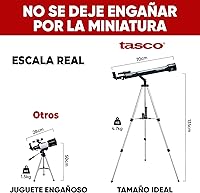
  • At under 8 pounds, this starter telescope is easy to carry outside on a whim and store between sessions.
  • The moon filter meaningfully reduces glare and improves surface detail on bright full-moon nights.
  • Makes a visually appealing, well-packaged gift that feels substantial without a premium price tag.
  • The manual focus mechanism helps beginners develop a hands-on feel for how telescopes actually work.
  • Bright objects like Jupiter and Saturn are identifiable at lower magnifications, adding to the novelty.

Cons

  • The 402x headline magnification is misleading — practical, usable magnification tops out far lower with this aperture.
  • Mount wobble at higher power settings makes fine focusing a genuinely frustrating experience.
  • Plastic construction throughout the focuser and mount starts to feel loose after repeated adjustment.
  • Included instructions are ambiguous in key steps, leaving some buyers hunting for third-party setup videos.
  • Deep-sky objects are essentially out of reach — most nebulae and galaxies show as faint, featureless smudges.
  • Planetary views are thin and underwhelming; rings are visible on Saturn but detail remains very limited.
  • The beginner scope will likely feel inadequate within months for any user who catches the astronomy bug seriously.
  • Chromatic aberration — color fringing around bright objects — is noticeable and cannot be corrected at this price tier.

Ratings

The scores you see here were generated by AI after analyzing thousands of verified global buyer reviews for the Tasco Novice 60x700mm Refractor Telescope, with spam, bot submissions, and incentivized feedback actively filtered out before any scoring took place. Both the genuine highlights and the recurring frustrations are reflected honestly — nothing has been softened to flatter the product. If this beginner scope earns a high mark in one area and a sobering one in another, that is exactly what real users reported.

Optical Clarity
62%
38%
At sensible magnification levels — roughly 60x to 100x — the Moon looks genuinely impressive through this starter telescope. Crater walls, the terminator line, and mare regions resolve with enough detail to spark real excitement in a first-time observer on a steady, clear night.
Push beyond practical magnification limits and the image softens quickly into a blurry, washed-out mess. Users trying to view planets at the maximum advertised setting were frequently disappointed, and chromatic aberration around bright objects is noticeable even at moderate power.
Magnification Accuracy
44%
56%
The included Barlow eyepiece does genuinely increase magnification, and the lower-power eyepiece configurations deliver usable, reasonably sharp views. Buyers who researched realistic expectations before purchasing reported being satisfied with what those lower settings actually show.
The 402x headline figure is largely a marketing number — physically unachievable at useful quality through a 60mm aperture. Many buyers felt misled, and the gap between advertised and real-world performance is wide enough to cause genuine disappointment for anyone who takes the spec sheet at face value.
Ease of Setup
83%
Most buyers, including parents assembling the scope for a child, reported getting from box to first light in under 30 minutes. The altazimuth mount requires no alignment procedures, no motors, and no technical knowledge — just tighten a few knobs and point it at the sky.
The included instructions drew mixed feedback, with some users finding the diagrams ambiguous when attaching the finderscope or diagonal. A small number of buyers needed to watch a third-party video online to clear up steps that should have been obvious from the printed guide.
Mount Stability
57%
43%
For low-magnification sweeping and casual lunar browsing, the altazimuth mount is stable enough to hold a steady view without constant correction. Casual backyard observers pointing at the Moon rarely reported significant issues at moderate power settings.
At higher magnifications, vibration from even a light touch on the focuser can send the image shaking for several seconds. Users attempting to observe at 150x or above found the mount frustratingly wobbly, making precise focusing an exercise in patience rather than an enjoyable experience.
Finderscope Usefulness
71%
29%
The 6x24 finderscope makes locating targets dramatically easier than trying to hunt freehand through a narrow main eyepiece. Beginner users appreciated having it included, and most found it intuitive to align and use after a short practice session.
The finderscope bracket can feel flimsy, and getting it precisely aligned with the main tube requires some patience. A few buyers noted the finder image is dim in low-contrast sky conditions, reducing its usefulness for targets other than the Moon or bright planets.
Included Accessories
68%
32%
Shipping with a Barlow eyepiece, finderscope, diagonal, and moon filter means a new user does not need to spend anything extra to get a functional observing session going. The moon filter in particular is a practical inclusion that genuinely improves the lunar viewing experience.
The eyepiece quality is basic, and the diagonal feels lightweight compared to metal equivalents found on pricier scopes. Experienced observers will likely want to replace most of the included accessories fairly quickly if they choose to keep using the scope long-term.
Build Quality
55%
45%
The optical tube itself feels reasonably solid, and the baby-blue finish holds up well enough for careful indoor-to-backyard use. For the price tier, the physical construction is about what a realistic buyer should expect — adequate for gentle handling.
Plastic is prominent throughout the mount and focuser, and several buyers noted that repeated handling and adjustment caused parts to feel loose over time. The focuser rack in particular drew criticism for developing slop after extended use, making precise focus harder to lock in.
Portability
79%
21%
At under 8 pounds, this beginner scope is genuinely easy to carry outside on a whim. There is no setup ritual involved — grab it, take it out, start observing. For apartment dwellers or families moving it between a bedroom and a backyard, the compact size is a real practical advantage.
The included tripod is not particularly robust, and carrying the full assembled rig any meaningful distance feels awkward without a dedicated bag. Users who wanted to take it to a dark-sky site found that transporting it safely required more care than the lightweight frame might suggest.
Value for Money
73%
27%
Judged purely as a first telescope for a curious child or a casual adult dabbler, this starter telescope represents reasonable value. It delivers genuine Moon views, arrives ready to use, and costs less than most competing options with a comparable accessory bundle.
Buyers who expected performance anywhere near the headline specs felt the price was not justified once reality set in. As a long-term astronomy tool, it falls short quickly — and the cost of replacing accessories and upgrading the mount can approach the price of simply buying a better scope from the start.
Moon Viewing Performance
81%
19%
This is unambiguously where the Tasco Novice refractor performs best. On a clear night with stable air, the Moon fills the eyepiece with impressive detail — craters, ridges, and shadow play along the terminator genuinely reward the observer and justify the purchase for lunar enthusiasts.
Performance varies noticeably with atmospheric conditions, and even modest turbulence causes the lunar image to shimmer and lose fine detail. The experience is rarely as consistently sharp as the best user reports might suggest, and some nights produce noticeably softer results.
Planetary Viewing Performance
41%
59%
Jupiter and Saturn are identifiable at moderate magnifications — Saturn's rings are visible as a distinct shape, and Jupiter's disk shows some color banding under good conditions. For a first glimpse of the solar system's giants, it clears a minimal but real bar.
Planetary detail is severely limited by the 60mm aperture. Users hoping to see surface features on Mars, cloud bands on Jupiter, or Cassini Division in Saturn's rings were largely disappointed. The views are recognizable but thin, and experienced observers will find them unsatisfying.
Deep-Sky Performance
29%
71%
A handful of bright showpiece objects — the Orion Nebula, the Pleiades, the Andromeda Galaxy as a faint smudge — are within reach under dark skies at low magnification. For absolute beginners, locating even these basic targets can feel like a genuine accomplishment.
The 60mm aperture simply cannot gather enough light for meaningful deep-sky observing. Most nebulae and galaxies either disappear entirely or show as formless, featureless blobs. Anyone with serious interest in deep-sky work will outgrow this beginner scope almost immediately.
Instructions & Documentation
52%
48%
The manual covers the fundamental setup steps and gives enough information for a complete beginner to assemble the scope and point it at the Moon on their first night. Some buyers found the basic diagrams sufficient for getting started without additional help.
Multiple reviewers flagged the instructions as unclear when it came to aligning the finderscope, adjusting the diagonal, and understanding which eyepiece to use at which magnification. The documentation feels like it was written as an afterthought rather than as a genuine onboarding guide.
Gifting Appeal
77%
23%
The baby-blue color, tidy packaging, and accessible price make this beginner scope a genuinely attractive gift option for curious kids and teenagers. Parents reported positive reactions on unwrapping, and the low barrier to first use means gift recipients can be observing the Moon the same evening.
The novelty can wear off once a child realizes the views do not match science-documentary imagery. Parents who framed it as a serious instrument set their children up for disappointment — managing expectations upfront is critical to making this a lasting gift rather than a closet occupant.

Suitable for:

The Tasco Novice 60x700mm Refractor Telescope was built with a very specific buyer in mind, and if you fit that profile, it delivers solid value for the money. This is the right pick for parents shopping for a first telescope for a curious child or teenager — someone who has been asking questions about the Moon and planets but has never looked through an eyepiece before. It also works well for adults who want to explore stargazing casually without committing serious money to a hobby they are not yet sure will stick. Teachers running basic science demonstrations will appreciate how quickly it sets up and how little prior knowledge it demands from students. If your primary goal is getting a clear, satisfying view of the Moon on a clear night, this beginner scope will genuinely deliver that experience and probably leave a first-timer impressed. Think of it as a responsible, low-stakes entry point — a way to find out whether astronomy is worth pursuing further before spending significantly more.
Not suitable for:

The Tasco Novice 60x700mm Refractor Telescope is a poor fit for anyone who has already spent time behind a better scope and knows what quality optics feel like. The 402x magnification figure printed on the box is a marketing number, not a realistic operational ceiling — and buyers who take it literally will be disappointed almost immediately. Anyone serious about planetary detail, deep-sky objects, or astrophotography should look elsewhere; the 60mm aperture simply cannot support those ambitions, no matter how dark the skies or how patient the observer. Teenagers or adults who have done even modest research into astronomy and understand what aperture actually means for light-gathering will likely find this beginner scope frustrating rather than rewarding within a few months. If the person receiving this already has some experience or is the type who will push a tool to its limits and then resent it for falling short, a more capable instrument is a smarter investment from the start.
Specifications

  • Aperture: The objective lens measures 60mm in diameter, determining how much light the telescope can gather for viewing.
  • Focal Length: The optical tube has a focal length of 700mm, which influences magnification and the field of view achievable with each eyepiece.
  • Max Magnification: The manufacturer rates maximum magnification at 402x, though practical usable magnification with a 60mm aperture is realistically closer to 120x before image quality degrades.
  • Mount Type: The telescope uses an altazimuth mount, allowing movement along two axes — up and down, and left and right — without requiring polar alignment.
  • Finderscope: A 6x24 finderscope is included to help users locate and center celestial objects before switching to the main eyepiece for higher-magnification viewing.
  • Eyepiece Type: The kit includes a Barlow eyepiece that multiplies the magnification of any inserted eyepiece, extending the range of magnification options available to the user.
  • Moon Filter: A threaded moon filter is included and attaches directly to the eyepiece barrel to reduce glare and improve surface contrast when observing a bright full moon.
  • Focus Mechanism: Focusing is achieved manually via a rack-and-pinion focuser, which the user adjusts by hand to bring objects into sharp view.
  • Item Weight: The telescope weighs 7.9 pounds fully assembled, making it light enough for one person to carry from indoors to a backyard without difficulty.
  • Dimensions: The assembled unit measures 30.5″ in depth by 11″ in width by 8″ in height, suitable for storage in a spare closet or under a bed.
  • Package Weight: The complete retail package, including all accessories and packaging, weighs approximately 8 pounds as shipped.
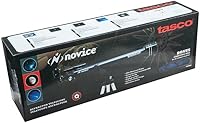
  • Package Dimensions: The shipping box measures 30″ x 10.4″ x 6.8″, fitting comfortably in a standard vehicle trunk for transport home from a store or pickup location.
  • Color: The optical tube is finished in baby blue, giving the scope a visually approachable appearance well suited to younger users and gift presentation.
  • Power Source: The telescope is entirely hand-powered with no motors, batteries, or electronic components required for basic operation.
  • Skill Level: This instrument is designed and rated for beginner skill level, requiring no prior astronomy knowledge or technical experience to operate.
  • Manufacturer: Tasco is a brand manufactured and distributed by Bushnell, a well-established optics company with decades of experience in consumer optical products.
  • Country of Origin: The telescope is manufactured in China under the Bushnell-owned Tasco brand label.
  • Model Year: This specific model was introduced in 2008 and has remained largely unchanged since its original release.
  • Included Contents: The retail package contains the 60mm refractor optical tube, altazimuth tripod mount, 6x24 finderscope, Barlow eyepiece, moon filter, and a diagonal mirror.
  • Suggested Users: The manufacturer designates this telescope for unisex adult users, though it is widely purchased as a gift for children and teenagers.

Related Reviews
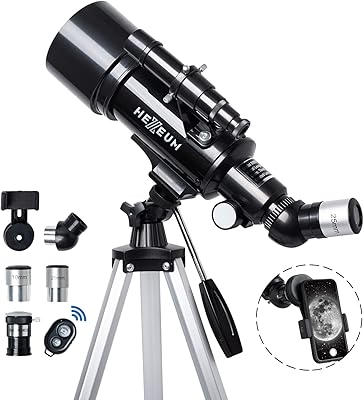
HEXEUM AZ50070 70mm Refractor Telescope
73%
78%
Optical Clarity
88%
Value for Money
57%
Tripod Stability
66%
Ease of Assembly
63%
Finderscope Usability
More
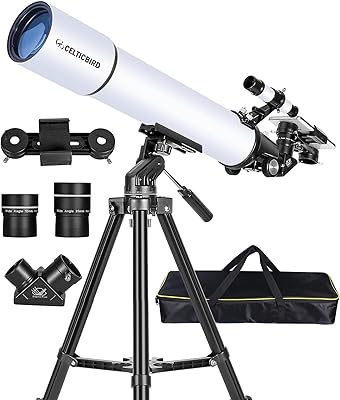
CELTICBIRD 90700 90mm Refractor Telescope
70%
83%
Optical Clarity
76%
Mount Precision
88%
Tripod Stability
81%
Ease of Assembly
62%
Finderscope Usability
More
HUGERSTAR 80600 Refractor Telescope
70%
78%
Optical Clarity
88%
Ease of Setup
61%
Tripod Stability
83%
Value for Money
84%
Portability
More
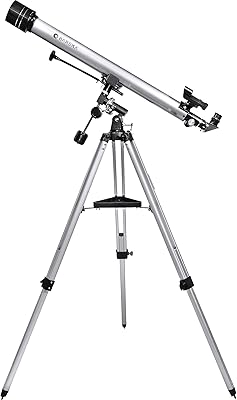
Barska Starwatcher Refractor Telescope 60mm
80%
91%
Value for Money
88%
Ease of Setup
93%
Portability
85%
Performance (Planetary Viewing)
62%
Performance (Deep-Sky Viewing)
More
Celticbird 80mm 800mm Refractor Telescope
75%
83%
Optical Clarity
91%
Ease of Assembly
78%
Mount Usability
61%
Tripod Stability
58%
Included Eyepiece Quality
More
Barska Starwatcher 70mm Refractor Telescope
66%
72%
Optical Clarity
58%
Magnification Performance
54%
Build Quality
84%
Ease of Setup
88%
Portability & Storage
More
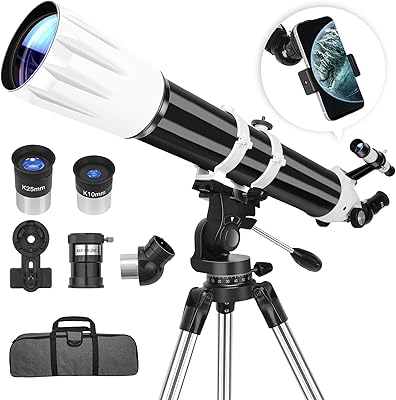
PISEZ 90800 90mm Refractor Telescope
68%
83%
Optical Clarity
81%
Value for Money
72%
Ease of Setup
68%
Magnification Range
61%
Tripod Stability
More
SVBONY SV503 102mm ED Refractor Telescope
82%
88%
Optical Performance
93%
Focuser Quality
84%
Chromatic Aberration Control
91%
Build Quality
86%
Astrophotography Suitability
More
Hawkko 90900 Refractor Telescope
75%
83%
Optical Clarity
76%
Build Quality
69%
Mount Smoothness
88%
Ease of Setup
71%
Magnification Range
More
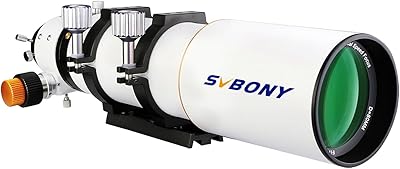
SVBONY SV503 80mm ED Refractor Telescope
81%
91%
Optical Clarity
88%
Focuser Quality
86%
Chromatic Aberration Control
89%
Build Quality & Materials
83%
Value for Money
More

FAQ

The Moon is genuinely the star of the show here — on a clear night you will see crater detail, mountain ridges, and shadow play along the terminator that can be genuinely breathtaking for a first-timer. Jupiter and Saturn are visible as small disks with some recognizable features at moderate power. Deep-sky objects like nebulae and galaxies are largely out of reach for meaningful detail with a 60mm aperture.

Honestly, no — not in any practical sense. With a 60mm objective lens, the maximum magnification before the image becomes too dim and blurry to be useful is roughly 100x to 120x. The 402x figure is a theoretical maximum that the optics physically cannot support at acceptable quality. Stick to lower power settings and you will have a much more enjoyable experience.

Most first-timers get the scope assembled and pointed at the Moon within 20 to 30 minutes. The altazimuth mount is straightforward — there is no polar alignment involved, just attach the tube, tighten the knobs, and point it where you want to look. The finderscope alignment takes a little patience but is not complicated once you understand the concept.

It can be, with realistic expectations set in advance. If the child understands they are getting a tool to explore the Moon and bright planets — not a device that produces NASA-quality images — they will likely enjoy it. Parents who frame it as a science learning instrument rather than a magic window to the universe tend to report the happiest outcomes.

Technically yes, but it is not well optimized for terrestrial viewing. The included diagonal inverts the image, which is fine for astronomy but disorienting when looking at ground-based scenes. You would also need to factor in atmospheric shimmer, which worsens the image during daytime use. A dedicated spotting scope or binoculars would serve terrestrial observation much better.

For getting started, everything you need is in the box. The finderscope, Barlow eyepiece, moon filter, and diagonal are all included. You will not need to buy anything extra to have a functional first observing session. If you get serious about the hobby down the road, you will probably want to invest in quality eyepieces — but that is a later decision, not an immediate necessity.

At low to moderate magnifications it is stable enough for comfortable viewing, but higher power settings expose the mount's limitations fairly quickly. Any vibration — bumping the tripod, adjusting the focuser, even a light breeze — can send the image shaking for several seconds. This is a common limitation at this price tier and not unique to this beginner scope.

Not in any meaningful way. The altazimuth mount has no tracking capability, so stars trail across the frame almost immediately during any exposure longer than a fraction of a second. The 60mm aperture also limits how much light hits the sensor. If astrophotography is the goal, a scope with a motorized equatorial mount and a larger aperture is the appropriate starting point.

Stepping up in budget generally buys you a larger aperture, a more stable mount, and better eyepiece quality — all of which directly improve what you can see and how enjoyable the experience is. This starter telescope occupies a genuine entry-level niche, and it serves that niche adequately. But if a buyer is serious about astronomy from day one, spending more upfront on a 70mm or 80mm refractor with a better mount will pay off quickly in both performance and satisfaction.

It is genuinely useful — more so than many buyers expect from an included accessory at this price. Observing a full moon without a filter can be uncomfortably bright and washes out surface contrast. The moon filter cuts the glare significantly and makes crater detail easier to pick out. It is one of the more practical inclusions in the kit and worth using regularly during lunar sessions.

Where to Buy