Overview

The Tamron SP 24-70mm F/2.8 G2 Camera Lens sits in a competitive but well-defined space: a seriously built zoom that challenges Canon's own 24-70mm f/2.8 at a noticeably lower price point. The G2 label isn't just a marketing refresh — Tamron made tangible engineering improvements over the original, addressing autofocus speed, stabilization, and optical coatings in ways that actually matter in the field. This is not a lens aimed at casual shooters. It targets working pros and dedicated hobbyists on Canon DSLR systems who want sharp, reliable glass without paying first-party prices. Build quality and optical performance both meet the expectations set by its price tier.
Features & Benefits

Where this Tamron zoom earns its keep is in the details of its optical and mechanical engineering. The eBAND anti-reflection coating cuts down on ghosting and flare when shooting into light — a real difference in backlit ceremonies or high-contrast outdoor situations. Autofocus is handled by a dedicated MPU with Ultrasonic Silent Drive, making it noticeably quicker and more accurate than the first-gen model. The 5-stop vibration compensation ranks among the best in class for this lens category, with a dedicated panning mode that actually works. A constant f/2.8 aperture throughout the zoom range means exposure stays predictable, and the fluorine-coated, moisture-resistant build handles tough shooting conditions without fuss.

Best For

The G2 lens is a natural fit for wedding and event photographers who need to move fluidly between wide environmental shots and tighter portrait moments without swapping glass. Its constant wide aperture and strong stabilization make it equally capable in dimly lit reception halls and bright outdoor settings. Portrait photographers who want real subject separation from a zoom — not a prime — will appreciate what f/2.8 delivers at 70mm. Travel photographers looking to pack light with one versatile optic will find it covers most situations short of extreme telephoto. Canon DSLR users who have been weighing the OEM version against third-party glass will find this a genuinely compelling case for the latter.

User Feedback

Among verified buyers, this 24-70mm f/2.8 carries a strong 4.6-star rating — and reading through the reviews, that score holds up. Photographers consistently praise autofocus reliability and corner-to-corner sharpness, with many noting it performs on par with — or very close to — Canon's equivalent. The six-year warranty from Tamron comes up repeatedly as a genuine confidence factor, not just fine print. That said, honest reviewers don't ignore the size and weight: at just under two pounds, it's not a light carry on a long shoot day. A handful of users also mention checking for firmware updates on certain Canon bodies to ensure full compatibility. No lens is perfect, but the feedback here paints a picture of solid, consistent performance.

Pros

  • Constant f/2.8 aperture throughout the zoom range keeps exposure predictable in fast-moving situations.
  • Five-stop vibration compensation is among the strongest in its class for a standard zoom lens.
  • Autofocus speed and accuracy represent a meaningful real-world upgrade over the first-generation model.
  • eBAND coating handles backlit and high-contrast scenes without the distracting flare cheaper lenses produce.
  • Moisture-resistant construction and fluorine front coating make this Tamron zoom genuinely field-ready in tough weather.
  • Sharp corner-to-corner image quality holds up well even at wide aperture, according to consistent buyer reports.
  • The six-year USA warranty is one of the most generous in the third-party lens market.
  • Panning-specific VC mode adds practical value for sports or action photographers shooting at slower shutter speeds.
  • Optically competitive with the Canon OEM equivalent at a noticeably lower price point.
  • Build quality feels solid and professional, matching the expectations of working photographers.

Cons

  • At just under two pounds, fatigue is a real concern during long handheld shooting sessions.
  • Barrel size is substantial — it will dominate smaller Canon crop-sensor bodies in terms of balance.
  • Some users report needing to apply firmware updates before autofocus performs optimally on certain Canon bodies.
  • VC performance in real-world panning scenarios does not always match the impressive lab-rated specification.
  • No native support for Canon mirrorless systems limits long-term flexibility if you plan to eventually switch platforms.
  • The 82mm filter thread means filter costs are higher than lenses with smaller front elements.
  • Occasional focus breathing at the telephoto end has been noted by video-focused users.
  • At this price tier, buyers rightly expect perfection, and any sample variation can feel more frustrating than it might on a cheaper lens.

Ratings

The scores below for the Tamron SP 24-70mm F/2.8 G2 Camera Lens were generated by our AI system after analyzing verified buyer reviews from multiple global markets, with spam, bot activity, and incentivized feedback actively filtered out. Across hundreds of real-world accounts from wedding photographers, travel shooters, and working professionals, both the strengths and the genuine frustrations of this Tamron zoom are reflected here without softening either side.

Image Sharpness
91%
Photographers consistently report excellent center sharpness even wide open at f/2.8, with corner performance that holds up well across the zoom range. Wedding and portrait shooters in particular note that images rarely need sharpening in post, even under demanding mixed-lighting conditions.
A small number of users noted slightly softer corners at the 24mm wide end when shooting at maximum aperture, which can be visible in architectural or landscape shots. Stopping down to f/5.6 largely resolves this, but it is worth knowing if critical edge-to-edge sharpness at 24mm f/2.8 is a priority.
Autofocus Performance
88%
The dedicated MPU driving autofocus is one of the clearest improvements over the first-gen model, and buyers shooting fast-moving subjects like children, wedding guests, or sports report confident, accurate tracking. Quiet USD motor operation is a genuine plus in ceremony or stage environments where noise matters.
Some users working with older Canon bodies or specific firmware combinations report occasional hunting in very low contrast scenes. A firmware update through Tamron's TAP-in Console resolves this for most, but the extra step frustrates buyers who expect out-of-the-box perfection at this price tier.
Vibration Compensation
84%
The 5-stop VC system earns consistent praise from handheld shooters working in dim venues, with many event photographers crediting it for keeping shots clean at shutter speeds they would not have attempted otherwise. The dedicated panning mode is a thoughtful addition that genuinely aids sports and action work.
Real-world VC performance does not always match the CIPA-rated 5-stop headline figure, particularly in dynamic situations with vertical camera movement. A handful of reviewers noted that at longer focal lengths, the stabilization occasionally introduces micro-jitter rather than eliminating it, which is more visible in video than stills.
Build Quality
93%
The barrel feels solid and purposeful in hand — not plasticky or hollow — and the internal zoom mechanism keeps the lens length consistent regardless of focal length, which experienced photographers appreciate for balance and handling. Multiple weather seals along the barrel give the lens a confidence-inspiring feel when shooting outdoors.
While the construction is genuinely robust, a few users feel the plastic barrel material does not quite match the tactile premium of Canon or Nikon OEM glass at a comparable price point. It is a minor aesthetic criticism rather than a functional one, but it does come up among buyers who handle both side by side.
Weather Sealing
82%
18%
Outdoor and event photographers who have shot in light rain or dusty festival environments report that the moisture-resistant construction holds up well without any ingress issues. The fluorine coating on the front element proves its worth in field conditions, making cleaning quick and preventing stubborn smearing.
The weather sealing is explicitly rated for moisture resistance rather than full weatherproofing, and Tamron is clear that it is not designed for heavy rain or wet immersion. Users who regularly shoot in severe conditions note that pairing this lens with a body that has stronger weather sealing is advisable to avoid putting the lens in situations that exceed its design spec.
Value for Money
87%
Buyers who compared this directly against Canon's own 24-70mm f/2.8 consistently highlight the price difference as significant, especially given that the G2 lens adds optical stabilization that the Canon equivalent lacks entirely. For photographers building a working kit on a professional but not unlimited budget, the value proposition is genuinely compelling.
At its retail price, the G2 lens sits firmly in premium territory and should not be evaluated against budget glass. A small number of buyers feel that sample variation at this price point is less forgivable than it would be on a cheaper lens, and expectations around out-of-the-box perfection are high enough that any optical inconsistency feels like a poor return on investment.
Low-Light Performance
89%
The combination of a constant f/2.8 aperture and strong VC creates a genuinely capable low-light tool that event photographers reach for repeatedly in dimly lit reception halls, stage environments, and street scenes. Buyers shooting with high-ISO Canon bodies report that the lens extracts the most from available light without needing excessive noise-reduction compensation in post.
In extremely dark environments — think poorly lit backstage areas or candlelit rooms — even the f/2.8 maximum aperture requires pushing ISO to levels where image quality becomes a body limitation rather than a lens limitation. The VC helps, but it cannot compensate for a lack of photons in the most challenging shooting conditions.
Bokeh Quality
79%
21%
At 70mm and f/2.8, subject separation and background blur are smooth enough to satisfy portrait photographers who would otherwise default to a prime for this purpose. Many buyers mention using this focal length specifically for head-and-shoulders portraits at events where switching to a prime is impractical.
Bokeh at the wider end of the zoom range is less creamy and more busy in complex backgrounds, which is expected at 24mm f/2.8 but still limits its appeal for photographers who prioritize that aesthetic across the full range. Specular highlights occasionally render with a slightly geometric shape rather than perfectly circular, which is a common limitation of zoom lenses at this aperture.
Flare & Ghosting Control
83%
The eBAND coating makes a tangible difference when shooting into the sun or artificial light sources, with most users reporting far fewer ruined frames from lens flare than they experienced with competing third-party options. Backlit wedding portraits and ceremony shots are where this improvement shows up most clearly in real work.
In extreme backlit situations — direct sun in the wide corner of the frame at 24mm, for instance — some ghosting is still visible and requires either compositional adjustment or correction in post. The coating raises the floor considerably but does not make the lens completely immune to the optical physics of shooting into strong light sources.
Handling & Ergonomics
76%
24%
The zoom and focus rings are well-damped and respond predictably, which photographers who frequently pull focus manually or adjust zoom mid-shot appreciate over long sessions. The internal zoom design keeps the center of gravity stable, which improves handling on heavier Canon body bodies.
At nearly two pounds, fatigue becomes a real factor during multi-hour handheld events, and photographers with smaller hands find the 82mm barrel diameter less comfortable over time than narrower alternatives. The weight is a design consequence of the stabilization and aperture, but it is one of the most commonly cited practical complaints among long-term users.
Distortion Control
74%
26%
Distortion at mid-range focal lengths is well-controlled and rarely an issue in practice for event or portrait work, where straight architectural lines are not a primary concern. Most raw processing software includes an established lens correction profile for this lens, making distortion removal a one-click operation in post.
Barrel distortion at 24mm is visible and meaningful enough to matter for architectural or real estate photographers who need straight lines without post-processing correction. While software fixes are available, photographers who prefer to shoot JPEGs or work without lens profiles applied will need to factor this into their workflow.
Chromatic Aberration
81%
19%
Lateral chromatic aberration is well-controlled for a zoom of this aperture range, and most shooters find that fringing is minimal enough not to interfere with the final image in real editorial or portrait contexts. The optical coatings contribute to this performance in high-contrast edge situations.
Some longitudinal CA — the colored fringing in front of and behind the plane of focus — is visible wide open in high-contrast scenes, which is a common characteristic of fast zoom lenses. It is correctable in post but does add a step to the workflow for photographers who demand clinically clean files straight from the camera.
AF Noise Level
86%
The Ultrasonic Silent Drive motor is genuinely quiet in operation, which matters enormously for photographers shooting ceremonies, theater performances, or any event where the camera is close to audio recording equipment or sensitive to sound. Most users describe the autofocus as effectively silent under normal shooting conditions.
At the very limits of its autofocus range or when hunting in very low contrast scenes, a faint mechanical sound becomes perceptible in otherwise quiet environments. It is not a dealbreaker, but video shooters using on-camera microphones should be aware that this edge-case behavior exists.
Warranty & Brand Support
91%
The six-year Tamron USA warranty stands out as genuinely exceptional in a market where most third-party lens makers offer two or three years. Buyers who have needed to use the warranty report responsive service, and the long coverage window provides meaningful peace of mind for a lens purchased as a professional working tool.
The warranty covers manufacturing defects but excludes accidental damage, which means a single drop is entirely the owner's financial responsibility. Photographers who shoot in high-risk environments like concerts or outdoor adventure contexts may find that adding third-party gear insurance is a smart complement to the manufacturer warranty.

Suitable for:

The Tamron SP 24-70mm F/2.8 G2 Camera Lens is an excellent match for Canon DSLR photographers who shoot in demanding, unpredictable conditions and need a single versatile lens to handle most of what gets thrown at them. Wedding and event photographers in particular will appreciate the constant f/2.8 aperture paired with class-leading stabilization — that combination is genuinely useful when you are moving between a dark reception hall and a bright outdoor courtyard without time to swap glass. Portrait photographers who want meaningful subject separation from a zoom, not just a prime, will find the 70mm end delivers real background blur at wide aperture. Travel and documentary shooters who want to minimize their kit without sacrificing optical quality will find this lens covers an enormous range of real-world scenarios. The six-year Tamron USA warranty also adds a layer of long-term confidence that is worth factoring into any serious gear purchase.

Not suitable for:

Photographers who shoot exclusively with mirrorless systems should look elsewhere, as this Tamron SP 24-70mm F/2.8 G2 Camera Lens is built specifically for Canon EF mount DSLR bodies and is not natively designed for mirrorless use. Shooters who prioritize traveling light above all else may find nearly two pounds of lens a genuine daily burden, especially on longer trips where every ounce counts. If you mostly shoot in controlled studio conditions with a tripod, the stabilization advantage loses much of its practical value, which changes the value equation considerably. Videographers who need completely silent autofocus for on-camera audio recording may want to audition the lens carefully before committing, as autofocus behavior during video can vary across Canon bodies. Budget-conscious beginners who are still building fundamental skills may find the investment harder to justify before they are ready to extract what this lens actually offers.

Specifications

  • Focal Length: This lens covers a 24–70mm zoom range, making it suitable for wide-angle, standard, and short-telephoto compositions on Canon full-frame and crop-sensor DSLR bodies.
  • Max Aperture: A constant maximum aperture of f/2.8 is maintained throughout the entire zoom range, ensuring consistent exposure and depth-of-field control at any focal length.
  • Min Aperture: The minimum aperture is f/22, giving photographers full flexibility when shooting in bright conditions or when maximum depth of field is required.
  • Lens Mount: Built exclusively for the Canon EF mount, this lens is compatible with Canon full-frame and APS-C DSLR camera bodies using that bayonet standard.
  • Stabilization: Tamron's Vibration Compensation system is rated at 5 stops (CIPA standard) and includes a dedicated Mode 2 optimized for panning shots.
  • Autofocus System: Autofocus is driven by an Ultrasonic Silent Drive motor paired with a high-performance dedicated MPU, delivering fast and quiet focusing across the zoom range.
  • Optical Coatings: The lens incorporates eBAND (Extended Bandwidth and Angular-Dependency) coating to minimize ghosting and flare in backlit and high-contrast lighting situations.
  • Front Element: A fluorine coating is applied to the front element, repelling water droplets, dust, and smudges to simplify cleaning and protect the glass during field use.
  • Weather Sealing: Moisture-resistant construction with multiple sealing points along the barrel allows confident use in light rain and dusty outdoor environments.
  • Filter Thread: The front filter thread measures 82mm in diameter, which is standard for lenses of this aperture class but does require larger and typically more expensive filters.
  • Dimensions: The lens body measures approximately 4.4 × 3.5 × 3.5 inches (length × diameter), making it a substantial but manageable size for professional DSLR use.
  • Weight: At 1.99 pounds (approximately 900g), this is a noticeable but typical weight for a full-frame f/2.8 standard zoom lens with built-in stabilization.
  • Generation: This is the second-generation G2 version of Tamron's SP 24–70mm f/2.8, featuring meaningful upgrades over the original in autofocus, stabilization, and coatings.
  • Warranty: Tamron covers this lens with a 6-year limited warranty for USA buyers, which is one of the most generous warranty terms offered by any major lens manufacturer.
  • Model Number: The official Tamron model number for this lens is AFA032C700, which is useful when registering the product or contacting Tamron support directly.
  • Lens Type: Classified as a standard zoom lens, this optic is designed to serve as a primary, all-purpose workhorse lens for Canon DSLR photographers across a wide range of shooting scenarios.

Related Reviews
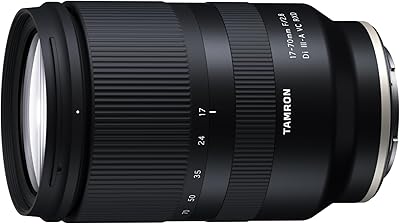
Tamron 17-70mm f/2.8 Di III-A Zoom Lens
82%
91%
Optical Sharpness
93%
Aperture Versatility
84%
Autofocus Performance
86%
Image Stabilization
82%
Build Quality & Durability
More
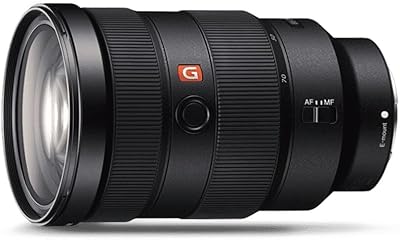
Sony FE 24-70mm F2.8 GM Zoom Lens
84%
94%
Optical Sharpness
91%
Autofocus Performance
92%
Bokeh Quality
93%
Build Quality
63%
Value for Money
More
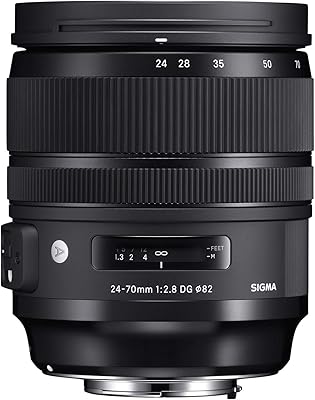
Sigma 24-70mm f/2.8 Art Zoom Lens
79%
91%
Optical Sharpness
83%
Autofocus Performance
84%
Image Stabilization
72%
Build Quality
78%
Value for Money
More
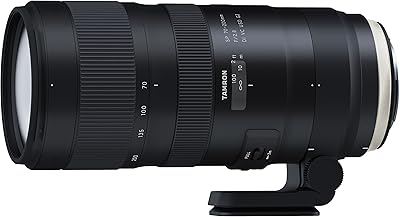
Tamron SP 70-200mm F/2.8 G2 Telephoto Lens
82%
86%
Autofocus Performance
91%
Image Sharpness
84%
Image Stabilization
88%
Value for Money
79%
Build Quality
More
Tamron 17-70mm F/2.8 Di III-A Zoom Lens
81%
88%
Optical Sharpness
93%
Aperture Performance
84%
Autofocus Speed & Accuracy
87%
Image Stabilization
71%
Video Usability
More
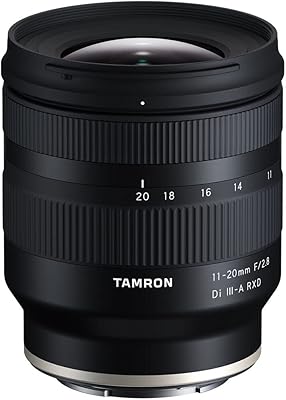
Tamron 11-20mm F/2.8 Di III-A Wide-Angle Lens
84%
91%
Image Sharpness
88%
Autofocus Performance
86%
Build Quality & Weather Sealing
74%
Value for Money
67%
Distortion & Optical Corrections
More
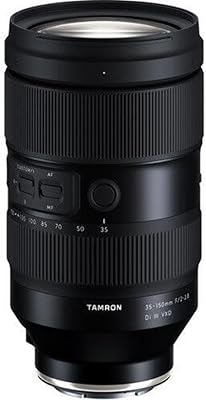
Tamron 35-150mm F/2-2.8 Di III VXD Lens
84%
92%
Optical Sharpness
89%
Autofocus Performance
94%
Aperture Versatility
87%
Build Quality
78%
Value for Money
More
Tamron 35mm f/2.8 Di III OSD M1:2 Lens for Sony E-Mount
85%
94%
Image Quality
75%
Autofocus Speed
90%
Macro Performance
88%
Build Quality
91%
Portability
More
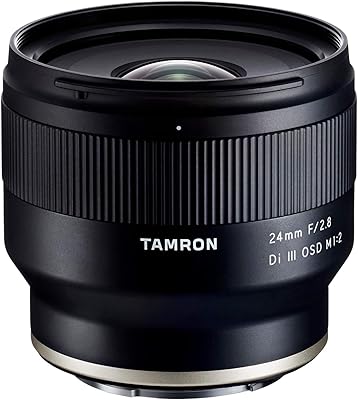
Tamron 24mm F/2.8 Di III OSD Lens
79%
91%
Image Sharpness
93%
Value for Money
74%
Build Quality & Durability
71%
Autofocus Performance
88%
Macro Capability
More
Nikon NIKKOR Z 24-70mm f/2.8 S Zoom Lens
87%
93%
Autofocus Speed & Accuracy
91%
Video Performance
94%
Optical Image Quality
96%
Build Quality
89%
Weather Sealing
More

FAQ

It works on both. The Canon EF mount is compatible with all Canon DSLRs, full-frame and APS-C alike. On a crop-sensor body, the effective focal length becomes roughly 38–112mm due to the 1.6x crop factor, which shifts the character of the lens somewhat but still makes it a very capable general-purpose zoom.

The G2 made autofocus a clear priority. Tamron added a dedicated MPU specifically to manage AF, and in practice this translates to noticeably snappier and more reliable tracking compared to the first-gen model. Most users shooting events or moving subjects report a real, tangible improvement rather than just a spec-sheet bump.

It is genuinely useful for both, but stills photographers benefit most in handheld low-light situations — think indoor receptions, dim venues, or slow-shutter landscape work. The 5-stop rating means you can handhold at shutter speeds that would normally produce blur. The dedicated panning mode is a nice extra for anyone shooting sports or moving subjects at slower shutter speeds.

Unfortunately not — the G2 lens uses an 82mm front filter thread, which is larger than the 77mm standard common on many other pro zooms. If you are upgrading from a lens with 77mm filters, you will need to either purchase new 82mm filters or use step-up rings, though step-up rings can sometimes interfere with lens hoods.

The moisture-resistant construction is designed for incidental exposure — light rain, mist, a splash — rather than full submersion or torrential downpours. Photographers who shoot outdoor weddings or nature work in variable weather report solid confidence with this lens, but pairing it with a weather-sealed Canon body gives you the best overall protection for the system.

That depends on your priorities. The Canon version is optically excellent and has no stabilization, while the G2 lens adds 5-stop VC at a lower price point. For photographers who rely heavily on handheld shooting or work in low light, the stabilization advantage is meaningful. Those who shoot mostly from a tripod may weight that factor less. Optically, the two perform much closer than the price difference suggests.

Some users have found that applying a firmware update improves autofocus behavior on certain Canon bodies, especially newer models. Tamron offers free firmware updates through their TAP-in Console accessory, which connects to a computer via USB. It is worth checking Tamron's official support site for any available updates for your specific camera pairing before writing off any initial AF quirks.

For a zoom at this aperture range, the G2 lens performs well. Some barrel distortion is present at 24mm and mild pincushion at the long end, but both are correctable in post-processing software like Lightroom, which includes a lens profile for this model. Chromatic aberration is well-controlled, particularly with the eBAND coating handling the worst flare and fringing scenarios.

Most photographers find both rings smooth and well-damped. The zoom action is internal, meaning the barrel does not extend as you zoom, which helps with balance and prevents the lens from acting like a bellows in dusty environments. The focus ring has good feedback for manual adjustments, though the majority of users rely primarily on autofocus in practice.

The Tamron USA warranty covers manufacturing defects in materials and workmanship for six years from the date of purchase, which is unusually generous for the industry. Accidental damage, water damage beyond the lens's rated moisture resistance, and unauthorized repairs are not covered. Registering the lens with Tamron after purchase is recommended to ensure the full warranty is on record.

Where to Buy