Overview

The Tamron SP 70-200mm F/2.8 G2 Telephoto Lens is Tamron's second pass at a focal range serious photographers never stop debating — and it represents a meaningful step forward from the original A009. It occupies an interesting middle ground: more capable than Tamron's own entry-level telephoto options, yet priced well below Canon's first-party glass covering the same territory. Sports, wildlife, portraits, weddings — this zoom range covers a lot of ground, and a constant f/2.8 aperture throughout makes it genuinely useful across all of them. At 3.31 lbs it's not a light kit, though that's expected in this lens class. Support for firmware customization via the optional TAP-in Console sets it apart from older Tamron generations in a way that technically minded shooters will appreciate.
Features & Benefits

Where this second-gen Tamron earns its keep is in real shooting conditions. The autofocus is noticeably quicker than its predecessor — particularly useful when tracking an athlete mid-stride or a bird changing direction, where a hesitant AF system costs you the shot entirely. The three-mode stabilization is one of the more practical implementations in this category; Tamron claims a five-stop handling advantage, and in practice it holds up well for handheld work at moderate shutter speeds. Optically, the revised internal arrangement produces cleaner contrast and less color fringing than the A009. The ability to update firmware and tweak AF behavior through the TAP-in Console — sold separately, worth flagging — gives technically minded shooters more control than most third-party lenses at this level offer.

Best For

This telephoto zoom makes the most sense for photographers who regularly shoot subjects that refuse to stay still. Wildlife and sports shooters will value the AF tracking and reach, while portrait photographers get flattering compression at 200mm with enough background separation to make subjects genuinely pop — without being locked into a single focal length the way a prime would force them to be. Wedding and event photographers working in variable light will find the f/2.8 aperture and stabilization pulling off shots that slower glass simply can't manage. For Canon DSLR users specifically, this is one of the more convincing reasons to stay with the EF system rather than spend considerably more on first-party L glass covering the same focal range.

User Feedback

Among the 219 ratings the Tamron G2 70-200mm has accumulated, the overall picture is positive — 4.5 stars — but the distribution tells the real story. Most praise centers on autofocus reliability and noticeably sharper corner-to-corner rendering compared to older Tamron glass, with stabilization also drawing good marks in field use. The honest criticisms: the weight becomes a genuine issue on all-day handheld shoots, and in very flat, low-contrast lighting the AF can lose its footing briefly. Some buyers coming from Canon L-series glass note the build feels slightly less substantial, though not cheap. A handful of reviews flag confusion around the TAP-in Console — it is not included in the box — which is worth knowing before purchasing.

Pros

  • Autofocus is significantly faster than the first-generation A009, reducing missed shots during fast action.
  • Constant f/2.8 aperture across the full zoom range keeps exposure and background blur consistent as you reframe.
  • Three-mode image stabilization performs well in real-world handheld shooting, not just lab conditions.
  • Optical rendering is sharper edge-to-edge and shows less color fringing than its predecessor.
  • Firmware can be updated and AF behavior customized via the TAP-in Console, giving shooters long-term flexibility.
  • Priced well below Canon L-series glass covering the same focal range without sacrificing core image quality.
  • Full electronic communication with Canon bodies means accurate metering and EXIF data pass through correctly.
  • Holds up well for wildlife, sports, portraits, and events — one lens that legitimately works across multiple genres.
  • Build quality feels solid and professional without being unnecessarily bulky compared to rivals in this class.

Cons

  • At 3.31 lbs, handheld fatigue becomes real during extended all-day shoots without a monopod.
  • Autofocus can hunt briefly in very flat or low-contrast lighting situations, which is frustrating during events.
  • The TAP-in Console is not included — buyers expecting it in the box will need to budget separately for it.
  • Build quality, while good, does not quite match the tactile confidence of Canon L-series lenses at this price tier.
  • Strictly limited to Canon EF mount; mirrorless or Nikon users cannot use this lens without compromises.
  • With 219 ratings, the review pool is narrower than some competing lenses, making outlier opinions more influential.
  • Some buyers report a learning curve when first navigating the multi-mode VC system in practice.
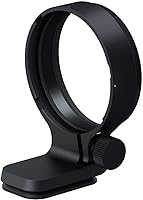
  • Accessories beyond the basic in-box kit — like a tripod collar — may need to be purchased separately depending on workflow.

Ratings

The scores below reflect AI-assisted analysis of verified global user reviews for the Tamron SP 70-200mm F/2.8 G2 Telephoto Lens, with spam, bot activity, and incentivized feedback actively filtered out to surface what real photographers actually experience. Ratings span both the strengths that earn consistent praise and the friction points that divide opinion, giving you an honest picture before you commit to a purchase at this price level.

Autofocus Performance
86%
Most users report a clear and meaningful step up from the G1 in AF speed, with sports and wildlife photographers noting fewer missed frames when tracking birds in flight or athletes mid-stride. In good to moderate light the USD motor locks on quickly and holds tracking without hunting.
In very flat or low-contrast scenes — think overcast backlit subjects or indoor venues with soft, diffuse lighting — some users experience brief AF hesitation or hunting that costs them a shot. It does not quite match Canon L-series reliability in these edge-case conditions.
Image Sharpness
91%
Center sharpness at f/2.8 is consistently praised, and corner-to-corner rendering improves noticeably when stopped down to f/4 or f/5.6. Portrait photographers in particular highlight how subjects resolve with excellent fine detail even at 200mm wide open.
A small number of reviewers note slight softness in the extreme corners at wide apertures on full-frame bodies, which is typical for this lens class but worth knowing if corner sharpness matters for architectural or landscape work at 70mm.
Image Stabilization
84%
The three-mode VC system earns genuine praise in real shooting scenarios — handheld at 200mm in fading afternoon light, users report consistently usable images at shutter speeds where unstabilized glass would fail. The panning mode is singled out as particularly effective for tracking moving subjects.
A handful of users feel the five-stop claim is optimistic and closer to three to four stops in practice under realistic field conditions. Switching between the three VC modes requires a deliberate adjustment mid-shoot, which some find disruptive when the situation changes quickly.
Value for Money
88%
Against the backdrop of first-party Canon glass covering the same focal range, the Tamron G2 70-200mm delivers image quality that most photographers cannot distinguish in everyday use, at a substantially lower outlay. For enthusiasts and working photographers who cannot justify the Canon premium, this lens is consistently described as the smart buy.
A few reviewers feel the price has crept up over time and the value proposition is less clear-cut than it once was, particularly when used versions of Canon L-series lenses enter the comparison. The TAP-in Console adding to the total cost also stings for buyers who factored in firmware customization.
Build Quality
79%
21%
The barrel feels solid and professional, with a weight and density that communicates genuine construction rather than hollow plastic. Moisture-resistant sealing gives outdoor shooters reasonable confidence in light rain, and the zoom and focus rings operate smoothly with consistent damping.
Buyers coming directly from Canon L-series glass consistently note that the tactile feel — particularly around the mount and barrel joints — does not quite match Canon's standard. It is not fragile, but side-by-side comparisons reveal the difference in materials and tolerance clearly.
Bokeh Quality
89%
The nine rounded aperture blades produce smooth, circular out-of-focus highlights with no harsh edges, and at 200mm f/2.8 the background separation is strong enough to isolate subjects convincingly even in cluttered environments. Portrait photographers consistently cite this as one of the lens's most compelling qualities.
At the wider end of the zoom range — around 70mm to 100mm — background rendering is pleasant but less dramatic, and some users notice slightly busier bokeh transitions compared to fast prime lenses. This is a zoom-range trade-off rather than a design flaw, but worth noting for bokeh-focused shooters.
Low-Light Capability
83%
The constant f/2.8 aperture means exposure settings stay predictable across the zoom range, which is a genuine workflow advantage in dimly lit event venues or during golden-hour wildlife sessions. Wedding photographers describe pulling off shots that slower zoom lenses simply could not capture at the same ISO.
While the aperture itself is strong, AF reliability in genuinely dark scenes is less consistent, and some users note that the stabilization benefit diminishes for subjects moving in low light since the limiting factor becomes shutter speed, not camera shake.
Portability & Handling
63%
37%
When mounted on a monopod or tripod, the weight becomes a non-issue and the balance with a mid-size Canon DSLR body feels natural. The zoom ring placement and grip texture make it comfortable to operate during shorter handheld sessions.
At 3.31 lbs, all-day handheld shooting becomes physically taxing, and multiple reviewers specifically mention wrist and shoulder fatigue by the afternoon at events. For photographers who walk long distances with their kit — wedding venues, safari walks — the weight is a real operational consideration, not just a spec number.
Chromatic Aberration Control
82%
18%
The revised optical formula reduces color fringing compared to the A009, and reviewers shooting high-contrast scenes — dark subjects against bright skies — note that CA is well managed for a lens at this focal length and aperture combination. Most fringing that does appear is easily corrected in post.
At the extreme ends of the zoom range and in very high-contrast lighting, a small degree of lateral chromatic aberration remains visible at pixel-level inspection. It rarely affects print output but can require a correction step for photographers delivering files intended for large-format display.
Firmware & Customization
74%
26%
For photographers who invest in the separately sold TAP-in Console, the ability to adjust AF speed, stabilization behavior, and update firmware over time adds meaningful long-term value. It is a feature that competitors at similar price points do not generally offer, and technically minded users appreciate the control.
The TAP-in Console is not included in the box, which has caused genuine frustration among buyers who expected it based on product listings. Those who do buy it report the interface is functional but not particularly intuitive, and the upgrade process requires patience the first time through.
Optical Distortion
77%
23%
Barrel and pincushion distortion are well controlled throughout the zoom range, and most shooters working in sports, wildlife, or portrait genres will never encounter a scenario where it is noticeable without pixel-peeping. In-camera lens correction profiles further reduce any residual distortion on compatible Canon bodies.
Architectural or product photographers who require straight lines without correction will notice mild barrel distortion at 70mm that needs software compensation. It is correctable, but it is not a lens optimized for subjects where geometric accuracy is the primary requirement.
Zoom Range Versatility
87%
The 70–200mm range covers a wide variety of telephoto shooting scenarios in a single lens, removing the need to swap glass between a wildlife session and a portrait shoot. Sports photographers in particular value having the flexibility to pull back to 70mm for environmental context shots.
The range does not extend below 70mm, meaning you will need a second lens for anything wider — it is not a walk-around solution. Photographers shooting in tight indoor spaces will also find 70mm on a crop-sensor body starts at an effective 112mm, which limits compositional flexibility significantly.
Flare & Contrast Resistance
78%
22%
Shooting into the light or near strong artificial sources, this second-gen Tamron shows improved contrast retention compared to earlier Tamron designs, and the included lens hood provides meaningful mechanical shading in most practical situations. Event photographers working under stage lighting report fewer washed-out frames than they experienced with older Tamron glass.
Shooting directly toward bright point light sources — stage spots, the sun near the frame edge — can still produce visible flare streaks and mild contrast reduction. It is not unusually flare-prone for its class, but photographers regularly working in backlit conditions may want to account for this.

Suitable for:

The Tamron SP 70-200mm F/2.8 G2 Telephoto Lens was built for Canon DSLR shooters who need serious reach and a wide, consistent aperture without paying first-party prices. It fits naturally into the bags of wildlife and sports photographers who can't afford to let autofocus hesitation cost them a critical shot, and it handles the fast-moving, unpredictable subjects those genres demand better than the G1 ever did. Portrait and wedding photographers will appreciate the f/2.8 opening across the full zoom range — it keeps backgrounds soft and subjects sharp even when venue lighting is working against you. If you shoot on a monopod or tripod regularly, the weight is a non-issue and the stabilization system gives you meaningful extra flexibility on slower shutter speeds. Canon EF mount users who want to invest in quality glass without committing to Canon's considerably higher price point for comparable focal length coverage will find this telephoto zoom a compelling, practical choice.

Not suitable for:

The Tamron SP 70-200mm F/2.8 G2 Telephoto Lens is not the right call for photographers who primarily shoot handheld for long stretches — 3.31 lbs adds up quickly over the course of a full day, and by hour six it becomes a genuine physical consideration rather than an abstract spec. Mirrorless shooters are also out of luck: this is strictly a Canon EF mount lens, and while adapters exist, native mirrorless lenses will always outperform an adapted DSLR lens for speed and reliability on those bodies. Casual or occasional photographers who shoot telephoto only a few times a year would be hard-pressed to justify the investment — a lighter, slower zoom would serve their needs at a fraction of the cost. Buyers expecting the TAP-in Console firmware customization out of the box will be disappointed: that accessory is sold separately and adds to the total spend. And anyone whose primary comparison point is Canon L-series glass should go in with realistic expectations — this second-gen Tamron closes the gap meaningfully, but build quality and AF consistency in extreme conditions still favor the Canon.

Specifications

  • Brand: Manufactured by Tamron, a Japanese optical company with decades of third-party lens production for major DSLR systems.
  • Model Number: This lens carries the official model designation A025C, representing the Canon EF mount variant of the G2 generation.
  • Focal Length: Covers a continuous zoom range from 70mm to 200mm, keeping you in telephoto territory throughout without any focal length gaps.
  • Max Aperture: Maintains a constant f/2.8 maximum aperture across the entire zoom range, so your exposure settings stay consistent as you reframe.
  • Mount: Designed exclusively for the Canon EF mount, with full electronic communication for metering, autofocus, and EXIF data passthrough.
  • Autofocus: Uses Tamron's USD (Ultrasonic Silent Drive) motor, which is quieter and faster than the system found in the first-generation A009.
  • Stabilization: Features a three-mode Vibration Compensation system that Tamron rates at a five-stop handling advantage for handheld shooting.
  • Dimensions: Measures 7.6 inches long with a barrel diameter of approximately 3.46 inches, consistent with other professional telephoto zooms in this class.
  • Weight: Comes in at 3.31 lbs (approximately 1,500g), which is substantial but broadly comparable to rival f/2.8 telephoto zooms from other manufacturers.
  • Generation: This is the second-generation design, succeeding the A009 (G1) with optical, mechanical, and AF improvements across the board.
  • Firmware: Lens firmware can be updated and AF settings can be customized using the Tamron TAP-in Console, which is sold separately and not included in the box.
  • Lens Type: This is a telephoto zoom lens, covering a range frequently used for sports, wildlife, portraits, and event photography.
  • In-Box Contents: The box includes the lens itself, a lens hood, a front lens cap, a rear body cap, and a printed instruction manual — no case or TAP-in Console included.
  • Availability: This lens is currently active and has not been discontinued by the manufacturer as of the latest available product data.
  • Filter Thread: Accepts 77mm screw-in front filters, which is a standard size shared by many professional telephoto and wide-angle lenses.
  • Aperture Blades: The diaphragm uses nine rounded aperture blades, which contributes to the smooth, circular bokeh the lens produces when shooting wide open.
  • Minimum Focus: Achieves a minimum focusing distance of approximately 37.4 inches (95cm) at 200mm, reasonable for a lens of this class.
  • Lens Groups: The optical formula consists of 23 elements arranged in 17 groups, including special low-dispersion glass elements to reduce chromatic aberration.

Related Reviews

Nikon NIKKOR Z 70-200mm f/2.8 S Telephoto Zoom Lens
84%
96%
Optical Sharpness
93%
Autofocus Performance
91%
Image Stabilization
94%
Build Quality
89%
AF Motor Noise
More
Canon EF 70-200mm f/2.8L USM Telephoto Zoom Lens
82%
91%
Autofocus Speed
93%
Image Sharpness
94%
Build Quality
92%
Aperture Consistency
89%
Bokeh & Subject Separation
More
Tamron SP 24-70mm F/2.8 G2 Camera Lens
85%
91%
Image Sharpness
88%
Autofocus Performance
84%
Vibration Compensation
93%
Build Quality
82%
Weather Sealing
More
Tamron 24mm F/2.8 Di III OSD Lens
79%
91%
Image Sharpness
93%
Value for Money
74%
Build Quality & Durability
71%
Autofocus Performance
88%
Macro Capability
More
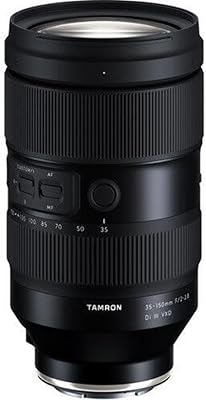
Tamron 35-150mm F/2-2.8 Di III VXD Lens
84%
92%
Optical Sharpness
89%
Autofocus Performance
94%
Aperture Versatility
87%
Build Quality
78%
Value for Money
More
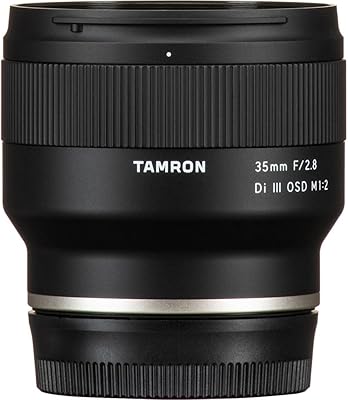
Tamron 35mm f/2.8 Di III OSD M1:2 Lens for Sony E-Mount
85%
94%
Image Quality
75%
Autofocus Speed
90%
Macro Performance
88%
Build Quality
91%
Portability
More
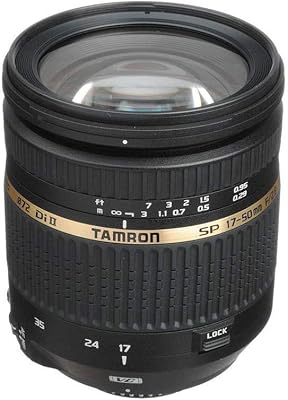
Tamron SP 17-50mm F/2.8 VC Zoom Lens
76%
84%
Center Sharpness
91%
Aperture Performance
67%
Autofocus Speed
78%
Vibration Compensation
73%
Build Quality
More
Tamron 20-40mm f/2.8 Di III VXD Lens
80%
91%
Image Sharpness
89%
Autofocus Performance
83%
Build Quality & Durability
94%
Size & Portability
67%
Zoom Range Versatility
More
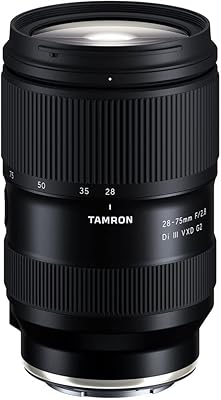
Tamron 28-75mm F/2.8 Di III VXD G2 for Sony E-Mount
87%
89%
Image Quality
92%
Autofocus Speed
85%
Build Quality
87%
Ease of Use
90%
Low-Light Performance
More
Tamron 17-70mm F/2.8 Di III-A Zoom Lens
81%
88%
Optical Sharpness
93%
Aperture Performance
84%
Autofocus Speed & Accuracy
87%
Image Stabilization
71%
Video Usability
More

FAQ

It works fine on both. Any Canon DSLR with an EF mount — crop-sensor bodies like the Rebel series and 90D included — will accept this lens without issue. On a crop-sensor body, the effective focal length becomes roughly 112–320mm due to the 1.6x crop factor, which actually gives you extra reach for wildlife or sports at the cost of the wider end.

No, it is not. The TAP-in Console is a separate accessory you would need to purchase on its own. The box includes the lens, hood, caps, and instructions only. This has caught some buyers off guard, so it is worth factoring into your budget if firmware customization or AF fine-tuning matters to you.

The Canon L-series version has an edge in build robustness, AF consistency in very challenging conditions, and overall weather sealing refinement. That said, the Tamron G2 70-200mm closes the gap considerably over the G1 and delivers image quality that most photographers would be hard-pressed to distinguish in typical shooting conditions. The L-series costs meaningfully more, so whether the gap justifies the premium depends entirely on how demanding your work environment is.

Tamron claims a five-stop advantage, which is ambitious, but real-world shooters generally report it holds up well for stationary or slow-moving subjects. At 200mm, you can realistically expect sharp handheld shots at shutter speeds where most unstabilized lenses would struggle. For fast-moving subjects you will still want a fast shutter speed regardless, since stabilization corrects camera shake but not subject motion.

The USD motor is notably quiet, and for most practical video work the autofocus noise will not be an issue. That said, if you are recording with an on-camera microphone in a very quiet environment, any subtle mechanical sounds could be picked up. Using an external mic or manual focus for critical audio-sensitive video work is the safer approach.

The Tamron SP 70-200mm F/2.8 G2 Telephoto Lens includes moisture-resistant construction with seals at key points along the barrel, making it reasonably protected for shooting in light rain or dusty conditions. It is not fully submersible or rated to the same degree as some premium Canon L-series lenses, so exercising caution in heavy downpours is still a good idea.
Tamron-branded teleconverters compatible with this lens exist, but compatibility with Canon-brand teleconverters is not guaranteed and autofocus functionality can be affected depending on the combination. If you plan to use teleconverters regularly, verify compatibility with your specific camera body before purchasing, as results vary.

Honestly, it depends on how you shoot. On a monopod or tripod, the weight is essentially a non-issue. Handheld for an hour or two is also manageable. Where it adds up is during long event shoots — weddings, sports days — where you are carrying and actively using it for six or more hours. A good camera strap and wrist strap system helps considerably if handheld all-day shooting is your primary use case.

The front element accepts 77mm screw-in filters, which is a very common size among professional telephoto and zoom lenses. If you already own 77mm UV, polarizer, or ND filters for other lenses, there is a good chance they will work here too without needing step-up rings.

The nine rounded aperture blades produce smooth, circular out-of-focus highlights with no hard edges, which translates to genuinely pleasing background separation in portrait work. At 200mm and f/2.8 the background compression is strong, and subjects tend to pop clearly from their surroundings. It performs well enough in this regard that many portrait photographers choose this telephoto zoom specifically for that combination of reach and rendering.