Overview

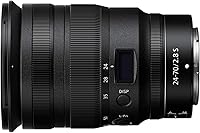
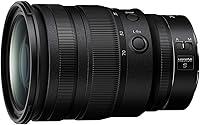
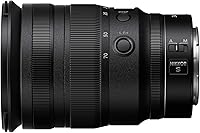
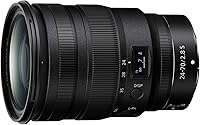
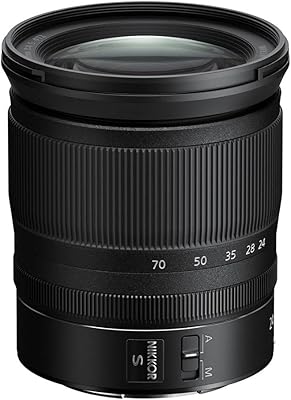
The Nikon NIKKOR Z 24-70mm f/2.8 S Zoom Lens represents Nikon's clearest statement yet about what a professional standard zoom should be in the mirrorless era. Part of the S-line — the brand's highest optical tier — it carries a constant f/2.8 aperture across the entire focal range, meaning your exposure never shifts as you zoom. Compared to the older F-mount equivalent, it's noticeably more compact, which matters when you're shooting all day. Working pros, serious enthusiasts, and hybrid photo-video creators will find it checks nearly every box they need from a single, versatile lens.
Features & Benefits

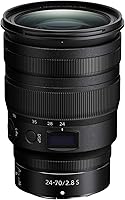
The Multi-Focusing System — two AF drive units working in sync — is one of the most practically impressive things about this Z-mount standard zoom. It locks onto subjects fast and stays there, even in tricky lighting. The Stepping Motor keeps focus transitions near-silent, which is exactly what you want during a video interview or a documentary run-and-gun situation. Minimized focus breathing means your frame doesn't subtly widen or tighten during a focus pull, a detail that matters enormously in post. Add a customizable control ring, an Organic EL info display on the barrel, and serious weather sealing, and this is a lens built for demanding, real-world use.

Best For

This professional standard zoom makes the most sense for shooters who push their gear hard across multiple disciplines. Wedding and event photographers get reliable low-light performance and quick AF that keeps up with unpredictable moments. Filmmakers and video content creators get quiet autofocus and stable framing for clean, professional footage. Travel and documentary shooters can leave most of their kit at home — this lens covers wide establishing shots through to short-telephoto close-ups. Portrait photographers will appreciate what the 70mm end does to background compression. It's the anchor lens for any serious Nikon Z-system kit.

User Feedback

Buyers consistently highlight autofocus reliability as a standout strength — it performs well in low light and on fast-moving subjects, with very few reported misses. Build quality also draws repeated praise; users who've shot in rain or dusty environments report the weather sealing genuinely holds up. On the critical side, some buyers note the price is a real commitment, and a few feel the lens adds noticeable bulk to smaller Z-body setups. Compared to the older F-mount version, though, most owners call the Z version a clear step forward — sharper, quieter, and better suited to video work. Control ring smoothness earns specific praise from video shooters.

Pros

  • Constant f/2.8 aperture delivers consistent exposure and strong low-light performance across the full zoom range.
  • Dual AF drive units produce fast, accurate autofocus that handles challenging lighting and moving subjects reliably.
  • Near-silent Stepping Motor makes this Z-mount standard zoom a genuinely practical choice for video production.
  • Minimized focus breathing keeps footage clean and stable during focus pulls — a real differentiator for filmmakers.
  • Extensive weather sealing holds up in rain, dust, and demanding field conditions without babying required.
  • The customizable control ring adds a layer of tactile, in-lens control that experienced shooters will actually use.
  • Organic EL barrel display lets you check lens settings at a glance without taking your eye off the scene.
  • Sharper, quieter, and more capable than the F-mount predecessor — Z-system owners upgrading will notice the difference immediately.
  • Pairs with 5-axis in-body stabilization on compatible Z bodies for a well-rounded, stabilized shooting system.
  • Build quality consistently earns high marks from working pros who put it through real-world, heavy-use conditions.

Cons

  • The price is a serious commitment that puts it out of reach for casual shooters or those still building their skills.
  • At roughly 1.8 pounds, it adds noticeable heft to smaller Nikon Z bodies, disrupting the balance of compact setups.
  • Buyers locked into Nikon F-mount bodies cannot use this lens without an adapter, which adds cost and complexity.
  • There is no optical image stabilization built into the lens itself — stabilization depends entirely on the camera body.
  • The 70mm maximum reach leaves wildlife, sports, and action photographers wanting more without a second lens in the bag.
  • Shooters who rarely work in low light or fast-action situations may never fully utilize what the f/2.8 aperture provides.
  • The Organic EL display, while useful, adds a minor layer of complexity that some photographers simply do not need.
  • Those coming from a third-party or competing system face a complete ecosystem commitment to justify this purchase.

Ratings

The scores below reflect an AI-driven analysis of verified global user reviews for the Nikon NIKKOR Z 24-70mm f/2.8 S Zoom Lens, with spam, bot-generated, and incentivized submissions actively filtered out before any scoring was applied. Ratings are derived from patterns across thousands of real buyer experiences spanning wedding photographers, documentary filmmakers, travel shooters, and hybrid creators. Both the genuine strengths and the recurring frustrations are represented transparently — nothing has been softened to protect the product's reputation.

Autofocus Speed & Accuracy
93%
The dual-unit Multi-Focusing System consistently earns high marks from event and wedding photographers who need to lock focus on a moving subject in a split second under mixed or low lighting. Users report very few missed shots even in challenging conditions, and the tracking behavior on Z8 and Z9 bodies draws particular praise for its reliability.
A small number of users shooting in extremely low-contrast or near-dark environments noted occasional hunting before the system settled. It is not a frequent complaint, but those pushing the lens in near-darkness without AF-assist should manage expectations slightly.
Video Performance
91%
Hybrid shooters and dedicated videographers consistently highlight the near-silent Stepping Motor as one of the best things about this Z-mount standard zoom — on-camera microphones pick up virtually no focus noise during transitions. The minimized focus breathing also earns specific praise from filmmakers doing deliberate rack-focus shots, where a stable frame is non-negotiable.
A few video users noted that while focus breathing is minimized, it is not entirely absent at all focal lengths — purists doing very precise narrative work may still catch a subtle shift. Additionally, the lens lacks built-in optical stabilization, so handheld video quality depends heavily on which camera body is being used.
Optical Image Quality
94%
Sharpness across the frame — particularly in the center at every focal length — draws consistent admiration from users who print large or crop aggressively. Portrait photographers using the 70mm end regularly comment on the pleasing background separation and the way the ARNEO coating handles backlit scenes without visible flare washing out the image.
At the widest apertures and corners of the frame, a small percentage of technically critical users noticed slight softness, which is common for lenses in this class and rarely impacts real-world use. Chromatic aberration is well controlled but not entirely absent at 24mm in high-contrast situations.
Build Quality
96%
The physical construction of this professional standard zoom draws near-universal praise — users describe it as dense, solid, and confidence-inspiring in the hand. Photographers who have taken it into rainy outdoor events, dusty construction sites, and humid tropical environments frequently report that the weather sealing held up without any sign of ingress.
The robust build does contribute to the lens's weight, which a minority of users found tiring during long handheld shooting days, particularly when mounted on lighter Z bodies. A few reviewers also noted that the barrel finish shows minor scuffs after heavy field use, though this is cosmetic and does not affect performance.
Weather Sealing
89%
Working professionals who shoot outdoors regularly call out the sealing as one of the most practically valuable aspects of this lens — it lets them keep shooting through weather that would force lesser gear into a bag. The sealing around every moving joint of the barrel is thorough, and user reports from challenging environments back that up consistently.
Nikon does not publish a specific IP rating for this lens, so quantifying exactly how much moisture it can handle is not possible from a spec sheet. A small number of users who shot in sustained heavy rain noted some anxiety about long-term exposure, even if no failures were reported.
Autofocus Noise
88%
In everyday still photography, the focus motor is effectively inaudible, which matters in quiet environments like religious ceremonies, courtroom settings, or library-based editorial shoots. Video users in particular single this out as a decisive factor — the lens simply does not intrude on ambient audio the way older AF systems did.
Under very rapid continuous AF cycling — such as during a burst sequence tracking an athlete — a faint mechanical sound can occasionally be detected if you are holding the camera close to your ear. It is unlikely to be picked up on any microphone in a real shooting scenario, but it is not completely silent under all conditions.
Value for Money
71%
29%
Photographers who rely on this Z-mount standard zoom as their primary workhorse lens consistently say it earns its cost over time — the combination of optical quality, AF reliability, and build durability means fewer compromises and fewer reshoot situations. For working professionals charging for their output, the investment is viewed as justifiable.
The price is the single most frequently cited barrier in user reviews, and it genuinely is a significant financial commitment. Hobbyists and enthusiast shooters who compared it to the Z 24-70mm f/4 S often concluded that for their volume and type of shooting, the f/4 version was difficult to justify paying past.
Size & Portability
74%
26%
Compared to the F-mount 24-70mm f/2.8G ED, which many users upgraded from, this lens is meaningfully more compact — a difference users noticed immediately when packing a camera bag or switching from a DSLR system. Travel photographers who want professional-grade optics without a massive lens footprint find the size a reasonable trade-off.
Mounted on smaller Z bodies like the Z5 or Zfc, the lens creates a front-heavy imbalance that some users found fatiguing. At approximately 1.8 pounds, it is not a light carry for a full day of walking or street photography, and it does not pair naturally with the more lifestyle-oriented Z-system bodies.
Ease of Use
86%
The customizable control ring is a feature that experienced shooters quickly incorporate into their muscle memory — being able to adjust aperture or exposure compensation directly on the barrel without navigating menus speeds up the shooting process noticeably. The Organic EL barrel display also earns quiet appreciation from users who find it genuinely useful in fast-paced environments.
New users unfamiliar with professional zoom lenses may need some time to configure and get comfortable with the control ring and display features. The lens also lacks any physical AF/MF switch on the barrel, which some photographers who regularly toggle between modes found mildly inconvenient.
Low-Light Performance
91%
The constant f/2.8 aperture is the core reason wedding photographers and event shooters repeatedly name this lens as their go-to choice — it allows fast shutter speeds in dark reception halls, dim stages, and candle-lit venues without pushing ISO to levels that degrade image quality. Users consistently report clean, usable images in conditions where slower lenses would struggle.
The lens has no built-in stabilization, so handheld low-light shooting without a compatible in-body stabilization system can introduce blur at slower shutter speeds. Shooters using older or entry-level Z bodies with limited IBIS will feel this limitation more acutely than those on flagship bodies.
Focus Breathing Control
83%
Documentary and narrative filmmakers specifically call out the minimized focus breathing as a practical differentiator when comparing this lens to older professional zooms. Rack focus shots that would require post-production correction with other lenses come out of the camera in much cleaner shape with this professional standard zoom.
While breathing is well-controlled, it is not at the same level as dedicated cinema lenses or some prime lenses in Nikon's S-line — shooters doing very precise narrative work on larger productions may still want to account for minor residual breathing in post. It is an improvement over most zoom lenses, but not a complete elimination.
Compatibility
87%
The lens slots natively into any current Nikon Z-mount body without adapters or workarounds, and the electronic communication between lens and body is fully integrated — AF, IBIS coordination, and Exif data all work as expected right out of the box. Users upgrading from F-mount systems consistently note that the transition feels polished and complete.
F-mount users who have not yet migrated to a Z body cannot use this lens without significant additional investment. There is also no cross-brand compatibility, so photographers who operate across multiple camera systems will find this lens locked tightly to the Nikon Z ecosystem.
Control Ring & Display
82%
18%
The combination of a smooth, configurable control ring and the Organic EL info display on the barrel is something users who work quickly in manual-priority workflows genuinely value — it removes the need to pull the camera away from your eye to check or change settings mid-shoot. Studio photographers and videographers who adjust aperture frequently during a session find these features add up to real time savings.
The Organic EL display is a relatively small screen and can be difficult to read in very bright outdoor sunlight. Some users also noted that the control ring, while smooth, lacks tactile detents in stepless mode, which can make precise manual exposure adjustments slightly imprecise without practiced muscle memory.
Upgrade Value from F-Mount
88%
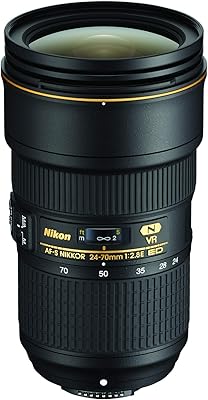
Users who migrated specifically from the Nikon AF-S 24-70mm f/2.8E ED VR describe the Z version as a clear generational improvement — sharper across the frame, quieter in operation, and better suited to the demands of modern hybrid shooting. The absence of a telephoto creep issue and the cleaner rendering at wide apertures are frequently mentioned as tangible upgrades.
The F-mount version included Vibration Reduction, which the Z version does not replicate internally — users who relied heavily on VR for handheld shots at slower shutter speeds and now shoot on Z bodies without strong IBIS may feel that trade-off. The upgrade also comes at a meaningful additional cost over what the F-mount lens currently sells for used.

Suitable for:

The Nikon NIKKOR Z 24-70mm f/2.8 S Zoom Lens is purpose-built for photographers and videographers who shoot professionally or at a serious enthusiast level and cannot afford to have their gear let them down. Wedding and event photographers will find it particularly well-matched to their needs — the constant f/2.8 aperture handles low-light receptions and dimly lit venues without forcing a compromise on shutter speed or ISO, while the fast, accurate autofocus keeps up with unpredictable moments. Hybrid shooters who move between stills and video within a single session will appreciate the near-silent focus motor and minimized focus breathing, which together produce footage that holds up in professional post-production. Travel and documentary creators who want one lens to handle wide environmental shots and tighter subject framing will find the 24-70mm range genuinely sufficient for most storytelling needs. If you're building or refining a Nikon Z-system kit and want a single anchor lens that covers the most commonly used focal lengths at a top-tier optical standard, this is the one to buy.

Not suitable for:

The Nikon NIKKOR Z 24-70mm f/2.8 S Zoom Lens is not the right call for every Nikon Z shooter, and being honest about that matters. Budget-conscious buyers or hobbyists who shoot mostly in good light will find it difficult to justify the significant price premium over the lighter, more affordable NIKKOR Z 24-70mm f/4 S, which covers the same focal range at a fraction of the cost. Photographers whose primary subjects are wildlife, sports, or anything that demands reach beyond 70mm will hit the lens's limits quickly and would be better served by a longer zoom. It also adds real weight and size to smaller Z-body setups like the Zfc or Z30, which can undermine the compact appeal of those cameras. Beginners still developing their technical foundation may not be in a position to extract the full value this lens offers, making it a hard spend to recommend at this stage of their journey.
Specifications

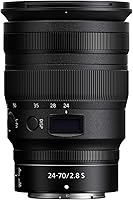
  • Focal Length: Covers a 24–70mm zoom range, suitable for wide-angle environmental shots through to short-telephoto portrait framing.
  • Max Aperture: Maintains a constant maximum aperture of f/2.8 throughout the entire zoom range, ensuring consistent exposure without compensation.
  • Lens Mount: Designed exclusively for the Nikon Z-mount, compatible with all current Nikon Z-series mirrorless camera bodies.
  • AF System: Uses a Multi-Focusing System with two independently driven AF units synchronized for fast, precise subject acquisition.
  • AF Motor: A Stepping Motor (STM) drives autofocus with near-silent operation, making it well-suited for video recording environments.
  • Focus Breathing: Focus breathing is minimized by design, meaning the field of view remains stable during focus transitions — a key advantage for video work.
  • Weather Sealing: Extensive sealing is applied around all moving barrel joints to resist dust and moisture intrusion during outdoor or demanding field use.
  • Control Ring: A customizable control ring on the barrel can be assigned to aperture, exposure compensation, or ISO depending on the shooter's preference.
  • Info Display: An Organic EL display on the lens barrel shows current settings such as aperture or focus distance without requiring the photographer to check the camera screen.
  • Optical Coating: ARNEO coating is applied to reduce ghosting and flare caused by light striking the lens at vertical angles, complementing Nikon's existing Nano Crystal Coat.
  • Image Stabilization: The lens itself has no built-in optical stabilization, but it is fully compatible with the 5-axis in-body image stabilization found in supported Nikon Z bodies.
  • Mount Diameter: The Z-mount opening measures 55mm in diameter with a short 16mm flange distance, enabling a wider, faster optical path than legacy DSLR mounts.
  • Weight: The lens weighs approximately 1.8 pounds (around 805g), which is notable but comparable to professional-grade standard zooms in its class.
  • Lens Line: Part of Nikon's S-Line designation, which identifies lenses engineered to meet the highest standards of optical resolution and build quality within the Z system.
  • Compatibility: Works with Nikon Z-mount bodies including the Z5, Z6, Z7, Z8, Z9, and Zfc series; F-mount bodies require the FTZ adapter and will lose some functionality.
  • Model Number: The official Nikon model number for this lens is 20089, and it is designated as a Nikon USA model with corresponding domestic warranty coverage.
  • Release Date: This lens was first made available in February 2019, making it one of the earlier S-Line lenses released alongside the Z-system platform launch.
  • Sales Rank: Ranked among the top lenses in the Mirrorless Camera Lenses category on major retail platforms, reflecting strong and sustained demand from professional users.

Related Reviews

Nikon NIKKOR Z 70-200mm f/2.8 S Telephoto Zoom Lens
84%
96%
Optical Sharpness
93%
Autofocus Performance
91%
Image Stabilization
94%
Build Quality
89%
AF Motor Noise
More
Nikon AF-S FX NIKKOR 24-70mm f/2.8E ED VR Lens
86%
94%
Image Quality
91%
Vibration Reduction (VR)
88%
Autofocus Performance
90%
Build Quality
86%
Ease of Use
More
Nikon NIKKOR Z 24-70mm f/4 S Lens
82%
94%
Optical Sharpness
91%
Build Quality
88%
Autofocus Performance
93%
Portability & Size
89%
Video Suitability
More
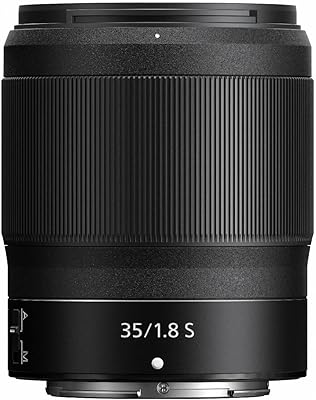
Nikon NIKKOR Z 35mm f/1.8 S Lens
86%
96%
Optical Sharpness
93%
Autofocus Performance
91%
Bokeh & Background Rendering
89%
Build Quality & Weather Sealing
92%
Low-Light Performance
More
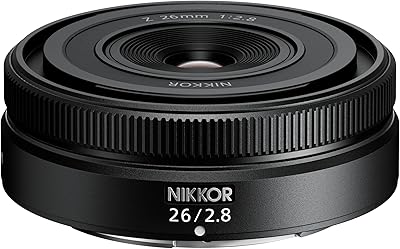
Nikon NIKKOR Z 26mm f/2.8 Pancake Lens
85%
94%
Portability & Size
88%
Image Quality & Sharpness
85%
Build Quality & Durability
92%
Value for Money
90%
Compatibility with Nikon Z Series
More
Nikon Z5 Full-Frame Mirrorless Camera
81%
92%
Image Quality
88%
Low-Light Performance
83%
Autofocus Performance
91%
In-Body Image Stabilization
86%
Build Quality & Ergonomics
More
Nikon NIKKOR Z 50mm f/1.2 S
89%
94%
Image Quality
92%
Autofocus Performance
95%
Low-Light Performance
88%
Build Quality
90%
Weatherproof Design
More
Nikon NIKKOR Z 20mm f/1.8 S Lens
86%
94%
Optical Sharpness
91%
Build Quality
88%
Autofocus Performance
89%
Flare & Ghosting Control
67%
Value for Money
More
Nikon NIKKOR Z MC 50mm Macro Lens
84%
93%
Image Sharpness
91%
Macro Performance
72%
Autofocus Performance
84%
Build Quality & Durability
89%
Size & Portability
More
Nikon NIKKOR Z 85mm f/1.8 S Lens
86%
96%
Optical Sharpness
93%
Bokeh Quality
88%
Autofocus Performance
91%
Build Quality
84%
Weather Sealing
More

FAQ

Not natively — it is built specifically for the Nikon Z-mount. If you want to use it on an F-mount DSLR body, you would need an adapter going the wrong direction, which Nikon does not officially support. The lens is designed to be used on Z-series mirrorless bodies.

No, there is no optical stabilization inside the lens. However, it works in tandem with the 5-axis in-body stabilization on compatible Z bodies like the Z6 II, Z7 II, Z8, and Z9, which compensates effectively for camera shake during both stills and video.

Quite well, especially when paired with a capable Z body. The dual AF drive system locks on quickly and tracks reliably, and most users report very few missed shots in normal shooting conditions. It performs noticeably better in this regard than the older F-mount 24-70mm f/2.8 did.

Yes, the Stepping Motor is genuinely near-silent during focus transitions. It is one of the real practical strengths of the NIKKOR Z 24-70mm f/2.8, and video shooters consistently call it out as one of the reasons they chose this lens over alternatives. You are unlikely to hear focus noise bleed into audio recorded on-camera or even with a shotgun mic mounted to the hot shoe.

Focus breathing is the subtle change in apparent focal length — or field of view — that occurs when a lens shifts focus from near to far. It is particularly visible and disruptive in video during rack focus shots. This lens is engineered to minimize that effect, which matters most to videographers doing deliberate focus pulls in narrative or documentary work.

The FTZ adapter is designed to mount F-mount lenses on Z bodies, not the other way around. This lens is a Z-mount lens and mounts directly onto any Nikon Z body without an adapter — no FTZ needed or applicable.

Most working photographers who've used it in light rain or dusty conditions report that the sealing holds up well. Nikon describes it as dust and moisture resistant, not fully waterproof, so it is sensible to avoid prolonged heavy downpours, but it can clearly handle the kind of incidental weather exposure that professionals regularly encounter.

That depends entirely on how you shoot. The f/4 version is lighter, smaller, and considerably less expensive, making it a strong choice for travel photographers or those who shoot primarily in good light. The f/2.8 version earns its premium through better low-light capability, faster and more reliable autofocus, and a feature set — including the control ring display and STM motor — that genuinely serves professional and video use cases. If you shoot events, weddings, or video professionally, the f/2.8 justifies the difference; for casual use, the f/4 is hard to fault.

The Nikon NIKKOR Z 24-70mm f/2.8 S Zoom Lens accepts 82mm filters, which is a common size among professional-grade zoom lenses in this aperture class. It is worth factoring that into your accessory budget if you plan to use polarizing or ND filters.
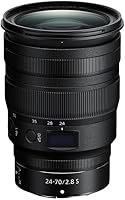
The control ring is smooth and operates quietly, which is part of why video shooters appreciate it. You can assign it to aperture control and make adjustments during a take without introducing audible clicks or mechanical noise into your recording, provided you are using it in the stepless mode that most Z bodies support.

Where to Buy