Overview

The Synology SNV3410 400GB M.2 NVMe SSD is not a general-purpose storage drive — it is purpose-built exclusively for Synology NAS devices, and that distinction matters more than any benchmark number. The SNV3410 sits in Synology's enterprise-leaning lineup, above consumer SSDs in terms of endurance and ecosystem depth, and its M.2 2280 form factor slots directly into compatible NAS units or expansion adapter cards. Expect to pay a premium over generic NVMe alternatives. That price gap reflects a deliberate design choice: this is a specialized caching tool engineered to work within one ecosystem, not a budget upgrade you bolt onto any machine.

Features & Benefits

The headline spec is 70,000 4K random write IOPS, but what that actually means in practice is fast, consistent cache responses when multiple users are hitting your NAS simultaneously — think shared file access in a home office or small business setting. This NAS caching drive is rated for 24/7 continuous operation, which is where it genuinely pulls ahead of consumer-grade NVMe drives that degrade under sustained load. It integrates natively with Synology DSM, offering built-in health monitoring and SMART data without configuration headaches. The 400GB capacity covers most caching scenarios comfortably, and the 5-year warranty backs that endurance claim with real manufacturer accountability.

Best For

This Synology NVMe SSD is a strong fit for home lab and prosumer users who run a Synology DiskStation or RackStation and want noticeably faster access to frequently used files. Small businesses relying on Synology for centralized file sharing will also get real, day-to-day value from the reduced latency under multi-user load. It works in NAS units with built-in M.2 slots or through the M2D18, M2D20, or E10M20-T1 adapter cards — check your device compatibility list before ordering. What it is not: a general desktop drive. If you need a boot drive for a PC or an upgrade for non-Synology hardware, look elsewhere entirely.

User Feedback

Across more than 270 verified ratings, the SNV3410 holds a 4.7-star average — a strong result, though not without nuance. Buyers consistently praise plug-and-play DSM setup and noticeable NAS responsiveness gains as the standout positives. Long-term reliability also earns repeated mentions, with users reporting stable always-on performance across extended periods. The friction point that surfaces most often is cost: some buyers question whether the premium over third-party NVMe options is justified when their NAS supports generic drives. A handful also flag the importance of verifying DSM version compatibility before installing. Buyers who prioritize vendor-backed reliability generally feel the investment holds up; those chasing the lowest price per gigabyte tend to be less convinced.

Pros

  • Native DSM integration means health monitoring and SMART data work out of the box with zero configuration.
  • A 5-year warranty provides rare peace of mind for a drive running in an always-on NAS environment.
  • Up to 70,000 4K random write IOPS delivers fast, consistent cache performance under real multi-user workloads.
  • The M.2 2280 form factor fits both built-in NAS slots and Synology adapter cards without modification.
  • Rated for 24/7 continuous operation — built for endurance, not just headline benchmark numbers.
  • 400GB capacity is generous enough to cache meaningful working datasets in most home and small business setups.
  • Installation is straightforward; Synology users report the SNV3410 is recognized and configured quickly through DSM.
  • Strong 4.7-star average across more than 270 verified buyers reflects consistent real-world satisfaction.
  • Purpose-built design eliminates the compatibility uncertainty that comes with using generic NVMe drives in Synology devices.

Cons

  • Priced at a noticeable premium over third-party NVMe alternatives that many Synology devices will also accept.
  • Locked entirely to the Synology ecosystem — useless if you ever switch NAS brands or repurpose the drive.
  • Some buyers will need to purchase a separate adapter card, adding cost that is easy to overlook upfront.
  • The 400GB capacity may feel limiting for users planning to use it for tiered storage rather than pure caching.
  • A handful of buyers have flagged the importance of verifying DSM version compatibility before installing.
  • No meaningful value for anyone outside the Synology ecosystem, which narrows its resale and reuse appeal significantly.
  • The price-per-gigabyte calculation does not favor buyers who are primarily focused on storage density over caching performance.
  • Buyers on tight budgets may find it difficult to justify the brand premium when compatible generic drives exist at lower price points.

Ratings

The scores below were generated by AI after analyzing verified buyer reviews for the Synology SNV3410 400GB M.2 NVMe SSD worldwide, with spam, bot-submitted, and incentivized feedback actively filtered out. Ratings reflect the real consensus of Synology NAS owners — home lab users, prosumers, and small business operators — who have run this NAS caching drive in always-on environments. Both the standout strengths and the legitimate frustrations are represented transparently in every category.

Caching Performance
91%
Users running multi-user Synology setups report noticeably faster file access after enabling SSD caching, particularly when several people are hitting the same shared folders simultaneously. The consistent 4K random I/O performance under sustained load — not just in short bursts — is what buyers call out most often in long-term follow-up reviews.
A minority of buyers note that the performance uplift is less dramatic for workloads dominated by large sequential transfers, such as backup jobs or media streaming from a single user. In those specific scenarios, the gap between this drive and a cheaper third-party alternative narrows considerably.
DSM Integration
93%
The drive is recognized automatically by DiskStation Manager with no driver installation or manual configuration required, which buyers consistently describe as one of the most friction-free hardware upgrades they have made to their NAS. Native SMART monitoring and health dashboards populate immediately, giving users real visibility into drive status from day one.
A small number of buyers encountered unexpected behavior when running older DSM versions, requiring a software update before the drive was fully recognized. This is a minor friction point, but it catches buyers off guard when they assume any current DSM version will work without checking compatibility first.
Long-Term Reliability
88%
Buyers who have been running the SNV3410 in always-on NAS setups for a year or more consistently report stable operation with no degradation in responsiveness, which is the most meaningful endorsement for a drive rated for 24/7 multi-user workloads. The enterprise-grade endurance rating translates into genuine confidence for users who cannot afford unexpected downtime.
The sample size of long-term reviewers beyond 18 months is still relatively limited given the drive's 2022 release date, so multi-year reliability data is less robust than for more established enterprise drives. A handful of early adopters did report isolated failures, though the 5-year warranty coverage addresses this for most buyers.
Value for Money
67%
33%
Buyers who prioritize guaranteed compatibility, first-party DSM health monitoring depth, and a 5-year warranty feel the premium is justified — especially in small business contexts where troubleshooting a failed generic drive during working hours carries a real cost. The peace of mind factor is frequently cited as the deciding reason to choose this over cheaper alternatives.
This is the single most debated aspect across all reviews: a significant portion of buyers feel the price premium over compatible third-party NVMe options is difficult to justify on performance grounds alone. For home users running a NAS casually, the cost delta is hard to rationalize when lower-priced drives often work without issue.
Ecosystem Compatibility
84%
Within the Synology ecosystem, compatibility is essentially guaranteed — the drive works across a wide range of DiskStation and RackStation models, either through built-in M.2 slots or the M2D18, M2D20, and E10M20-T1 expansion cards. Buyers describe the compatibility verification process through Synology's knowledge center as straightforward and well-documented.
The Synology-only design is a hard constraint that frustrates buyers who later want to repurpose the drive or who switch NAS platforms. There is also an added cost consideration for buyers whose NAS lacks a built-in M.2 slot and requires a separate adapter card that can add meaningfully to the total investment.
Installation Experience
89%
Physical installation is straightforward — the M.2 2280 form factor seats cleanly and securely, and buyers with no prior SSD installation experience report completing the hardware step in under five minutes. The subsequent DSM cache setup process through Storage Manager is guided well enough that most users do not need to consult external documentation.
Users whose NAS requires an adapter card face a slightly more involved process, and a few buyers were caught off guard by needing to update DSM before the drive appeared correctly in Storage Manager. Neither issue is major, but they add friction for buyers expecting a completely zero-step experience.
Warranty & Support
86%
A 5-year warranty from the manufacturer on a drive explicitly rated for continuous operation is a meaningful commitment that few third-party NVMe alternatives match at this capacity. Buyers who have gone through Synology's RMA process generally report it as competent and reasonably prompt compared to generic drive brands.
A small number of buyers noted that reaching Synology support for warranty claims can involve longer-than-expected wait times during peak periods. The warranty terms also vary by region, so international buyers are advised to verify local coverage conditions before assuming global parity.
Endurance Under Load
87%
Buyers running this NAS caching drive in small office environments with constant concurrent access report no thermal throttling or sustained performance drops, which matters significantly in a NAS that never gets powered down. The 24/7 workload rating is not just a marketing claim — real-world reports from business users back it up over extended periods.
There is limited publicly available data on the drive's total bytes written rating, which makes it harder to compare endurance directly against competing enterprise NVMe options at a technical level. Buyers who scrutinize TBW figures before purchasing may find the specification sheet less detailed than they would prefer.
Heat Management
81%
19%
In standard Synology NAS enclosures with adequate airflow, buyers report that the drive operates at stable temperatures without any additional cooling measures. The M.2 form factor and typical caching workload profile — burst-heavy rather than sustained sequential — keep thermal output manageable in most real-world setups.
In particularly compact or poorly ventilated NAS enclosures, a few buyers noted higher idle temperatures than expected over long periods. This is unlikely to cause failure given the drive's workload rating, but it is worth monitoring via DSM's health dashboard in tighter builds.
Capacity Adequacy
74%
26%
For caching frequently accessed files in a typical home or small business NAS setup, 400GB covers a practical working dataset comfortably. Buyers who primarily use the drive to cache a shared project folder or a media library report that 400GB is more than sufficient for their actual usage patterns.
Buyers hoping to use the drive for tiered storage rather than pure caching find the 400GB ceiling limiting fairly quickly, particularly as working datasets grow. A number of reviewers wished a larger capacity option in the SNV3000 series were more readily available at a comparable price point.
Setup Documentation
78%
22%
Synology's online knowledge center and YouTube channel provide reasonably thorough walkthroughs for setting up SSD caching with this drive, which buyers with no prior NAS caching experience find helpful as a starting point. The DSM interface itself is intuitive enough that most users do not rely heavily on external documentation anyway.
The physical packaging includes minimal printed documentation, which can leave less technically confident buyers uncertain about the first steps before they locate online resources. Some users also found that Synology's compatibility checker tool online lagged slightly behind in listing every supported configuration for newer NAS models.
Physical Build Quality
83%
The drive feels solid and well-constructed for an M.2 component, with a clean black PCB finish consistent with enterprise-positioned storage products. Buyers who have installed multiple M.2 drives note that the SNV3410 seats and locks in adapters and slots without any of the flimsy connector feel occasionally found on cheaper drives.
At this price tier, some buyers expected a heatspreader or thermal pad included in the packaging, neither of which is provided. This is an industry norm for M.2 drives, but it is a minor disappointment for buyers who assumed a premium-priced product would include thermal accessories.
Multi-User Responsiveness
88%
This is where the SNV3410 most clearly earns its positioning over consumer NVMe alternatives — in small office environments with four to eight concurrent NAS users, buyers describe a consistent and noticeable reduction in wait times when accessing shared files. The performance does not degrade visibly under simultaneous access in the way spinning drives and even some budget SSDs do.
In single-user home setups with modest storage demands, the multi-user endurance advantage is largely irrelevant, which means buyers in that scenario are paying for a capability they will never fully use. The value proposition narrows significantly for solo users who simply want faster personal NAS access.

Suitable for:

The Synology SNV3410 400GB M.2 NVMe SSD is the right call for anyone already invested in the Synology ecosystem who wants to meaningfully speed up their NAS without guesswork or compatibility headaches. Home lab enthusiasts and prosumers running a DiskStation or RackStation will notice the biggest gains when using it as a read/write cache for frequently accessed files — think fast access to a shared media library, a busy project folder, or a multi-user file server. Small business owners who rely on Synology for centralized storage and need consistent, low-latency performance across several concurrent users will also find it earns its keep. It fits natively into NAS units with built-in M.2 slots, and it pairs cleanly with Synology's M2D18, M2D20, and E10M20-T1 adapter cards for devices that need one. Buyers who value a 5-year warranty and first-party DSM integration — including health monitoring and SMART reporting without any manual setup — will appreciate the long-term confidence this NAS caching drive provides.

Not suitable for:

The Synology SNV3410 400GB M.2 NVMe SSD is explicitly the wrong choice if your storage setup does not run Synology hardware — full stop. It is not a general-purpose desktop NVMe drive, will not function as a PC boot drive, and offers no value in QNAP, Asustor, or any other non-Synology NAS environment. Budget-focused buyers who are hoping to squeeze out NAS caching performance at the lowest possible cost should seriously evaluate whether a compatible third-party NVMe drive makes more financial sense for their use case, since the SNV3410 carries a premium that not every setup will justify. Users who need high-capacity tiered storage rather than a dedicated caching layer may also find 400GB limiting over time, especially as working datasets grow. And if your Synology device does not have a built-in M.2 slot and you have not budgeted for an adapter card, factor that additional cost into your decision before purchasing.

Specifications

  • Capacity: The drive provides 400GB of flash storage, sized for NAS caching workloads rather than primary bulk storage.
  • Form Factor: Uses the M.2 2280 form factor, measuring 22mm wide by 80mm long, the most common M.2 size in NAS devices.
  • Interface: Connects via NVMe over PCIe, delivering significantly lower latency than SATA-based M.2 alternatives.
  • Random Write IOPS: Rated for up to 70,000 4K random write IOPS, optimized for the mixed read/write patterns typical of NAS caching.
  • Workload Rating: Designed for 24/7 continuous multi-user operation, making it suitable for always-on NAS environments.
  • Warranty: Covered by a 5-year manufacturer warranty, reflecting the enterprise-grade endurance expectations built into the drive.
  • Ecosystem: Compatible exclusively with Synology NAS devices; it is not supported in non-Synology hardware or as a general-purpose PC drive.
  • Adapter Support: Works in NAS units with built-in M.2 slots and is also compatible with Synology M2D18, M2D20, and E10M20-T1 expansion cards.
  • DSM Integration: Integrates natively with Synology DiskStation Manager for automatic drive health monitoring and SMART data reporting.
  • Drive Type: Internal solid-state drive with no moving parts, contributing to its reliability under continuous read/write workloads.
  • Weight: Weighs 0.704 ounces, consistent with the lightweight construction standard for M.2 form factor drives.
  • Dimensions: Physical dimensions are 5.5 x 3.75 x 0.25 inches including packaging; the bare M.2 stick conforms to the 2280 standard.
  • Color: The drive board is black, typical of enterprise-positioned M.2 NVMe products in this category.
  • Brand: Manufactured and sold directly by Synology, the same company that produces the NAS hardware and DSM software it is designed for.
  • Model Number: Official model designation is SNV3410-400G, part of Synology's SNV3000 enterprise NVMe SSD series.
  • Release Date: First made available in January 2022, positioning it as a current-generation offering within Synology's storage accessory lineup.
  • Market Rank: Holds a ranking of number 176 in the Internal Solid State Drives category on Amazon, indicating strong and sustained buyer interest.
  • User Rating: Carries a 4.7-star average rating based on more than 270 verified buyer reviews at time of evaluation.

Related Reviews

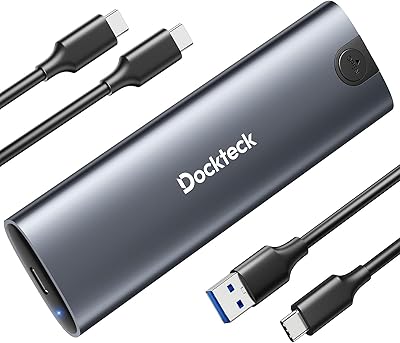
dockteck DH0002 M.2 NVMe/SATA SSD Enclosure
84%
88%
Transfer Speed (NVMe)
76%
SATA Drive Performance
83%
Build Quality
93%
Ease of Setup
79%
Thermal Management
More
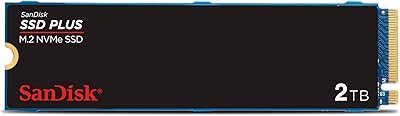
SanDisk 2TB SSD Plus M.2 NVMe SSD
86%
89%
Performance
92%
Ease of Installation
88%
Reliability
91%
Value for Money
90%
Capacity
More
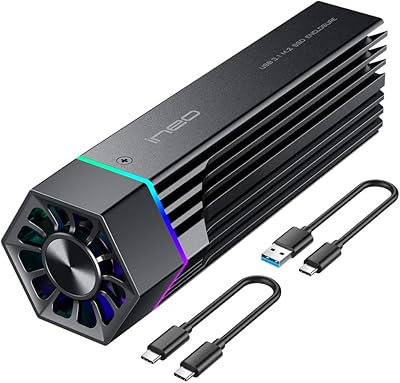
ineo C2605-NVMe M.2 NVMe SSD Enclosure
77%
88%
Write Protection Reliability
79%
Transfer Speed Performance
82%
Thermal Management
61%
Fan Noise Level
76%
Build Quality & Materials
More
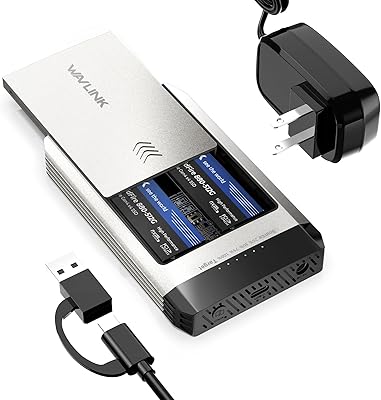
WAVLINK Dual-Bay NVMe M.2 SSD Cloner
75%
83%
Offline Cloning Reliability
78%
Transfer Speed
71%
Compatibility Range
76%
Build Quality
86%
Ease of Setup
More
ORICO Dual M.2 NVMe SSD Enclosure
79%
88%
Build Quality
84%
Thermal Management
82%
Transfer Speed
71%
Drive Compatibility
91%
Ease of Installation
More
Cable Matters USB4 40Gbps M.2 NVMe Enclosure
80%
88%
Data Transfer Performance
83%
Build Quality & Materials
79%
Thermal Management & Cooling
91%
Portability & Form Factor
74%
Compatibility Range
More
Vansuny 1TB NVMe M.2 SSD
87%
94%
Performance (Speed)
88%
Reliability
72%
Compatibility
91%
Value for Money
85%
Build Quality
More
Plugable M.2 NVMe SSD Enclosure
87%
94%
Ease of Setup
92%
Data Transfer Speed
88%
Build Quality
90%
Port Compatibility
87%
Cooling & Thermal Management
More
Vansuny 2TB NVMe M.2 Internal SSD
78%
88%
Value for Money
79%
Read/Write Speed
91%
PS5 Compatibility
74%
Thermal Management
93%
Installation Experience
More
GAMERKING 2TB M.2 NVMe Internal SSD
75%
78%
Read/Write Performance
82%
Value for Money
91%
Installation Experience
67%
Thermal Management
63%
Long-Term Reliability
More

FAQ

It only works in Synology NAS hardware. The Synology SNV3410 400GB M.2 NVMe SSD is purpose-built for Synology's ecosystem, and Synology does not officially support or guarantee its function in QNAP, Asustor, or any other brand's NAS. If you are not on Synology, this is not the right drive for you.

Yes, as long as your NAS supports one of Synology's compatible expansion cards: the M2D18, M2D20, or E10M20-T1. You will need to purchase the adapter card separately and verify that your specific NAS model supports it. Synology's compatibility list on their website is the most reliable place to confirm this before buying.

SSD caching works by storing frequently accessed data on the fast NVMe drive rather than fetching it repeatedly from slower spinning hard drives. In practice, this means quicker file opens, snappier response when browsing shared folders, and more consistent speeds when several users are hitting the NAS at once. Whether you notice it depends on your workload — heavy random access patterns see the biggest gains, while large sequential transfers like video backups benefit less.

For most home lab and small business caching setups, 400GB covers a solid working dataset of frequently accessed files. If your NAS holds several terabytes of spinning hard drive storage and your active working files are a relatively small fraction of that, 400GB is typically plenty. If you are planning to use the drive for tiered storage rather than pure caching, you may want to evaluate your actual dataset size before committing.

Not really — DSM recognizes the SNV3410 automatically, and setting up a cache pool is done through the Storage Manager interface in a few clicks. Health monitoring and SMART data also populate without any manual configuration. Most users report the whole process takes under ten minutes from physical installation to active cache.

A compatible third-party NVMe drive will often work and cost less per gigabyte. The trade-offs are warranty support through Synology, native DSM health monitoring that may be more detailed for first-party drives, and the peace of mind that comes with a Synology-tested component in an always-on environment. Buyers who prioritize lowest upfront cost tend to explore third-party options; those running business-critical NAS setups generally lean toward the SNV3410 for the guaranteed compatibility and 5-year coverage.

Yes, Synology supports configuring two M.2 SSDs in a cache group for combined read and write caching, which can improve both speed and redundancy depending on your DSM configuration. You will need two available M.2 slots, either built-in or via an expansion card that supports dual drives. Check your NAS model's specifications to confirm how many M.2 slots are available.

The NAS caching drive holds cached copies of data, not the primary data itself. If the SSD fails, DSM will fall back to serving data from your hard drives, which remain intact. You may see a temporary drop in performance, but your actual files are not at risk from an SSD cache failure. Synology handles this gracefully in DSM with appropriate alerts.

M.2 NVMe drives have no moving parts, so there is no noise. Heat generation is generally low in a caching role because the drive is handling bursts of random I/O rather than sustained sequential writes. Most Synology NAS units with M.2 slots have adequate airflow for this drive without any modifications, though dense enclosures with minimal ventilation may warrant a check of your thermals over time.

Yes — the drive is explicitly rated for 24/7 continuous multi-user operation, so normal always-on NAS usage falls well within its intended workload. Synology's warranty covers manufacturing defects and premature failure under rated conditions. Keep your purchase receipt and check Synology's warranty terms for the RMA process details in your region.

Where to Buy