Overview

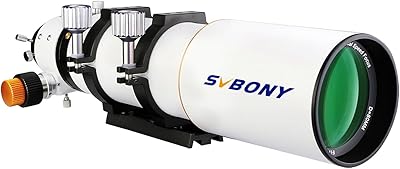
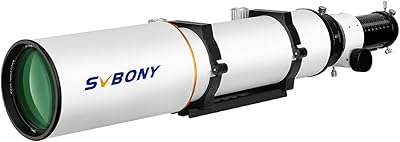
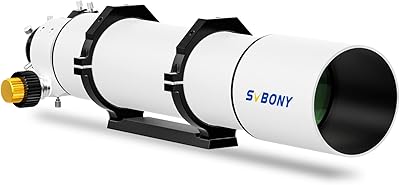
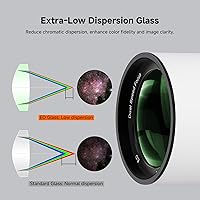
The SVBONY SV503 70mm Refractor Telescope sits in an interesting spot in the mid-range market — it's purpose-built for observers and astrophotographers who want a capable optical tube without juggling a shopping list of add-on correctors. The defining feature is the built-in field flattener, which is genuinely rare at this price tier; most competing refractors make you source a separate corrector at additional cost. The ED glass objective — combining FPL51 and lanthanum glass — keeps color fringing noticeably controlled, though it stops short of a true apochromat. Worth stating plainly: this is an OTA only. No mount, no eyepieces, no finder scope. SVBONY has built a solid following among budget-conscious astronomers, and this flat-field telescope represents one of their more ambitious offerings.

Features & Benefits

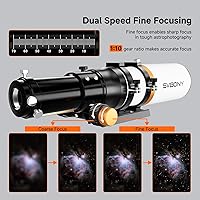
The dual-speed RAP focuser — sized at 2.5 inches — is where this refractor OTA immediately separates itself from cheaper tubes. Coarse adjustment gets you in the ballpark quickly; the fine-tuning knob then lets you nail critical focus without introducing vibration, which matters enormously when you're imaging. The integrated 2-element field corrector flattens the image circle across a generous 32mm diameter, meaning stars stay pinpoint right to the edges of a crop-sensor frame. Compatibility is handled thoughtfully too: an M54 female thread and a 2-inch adapter mean you can attach most popular astronomy cameras without hunting for adapters. Add in the built-in dew shield and internal baffling, and this flat-field telescope is clearly designed with long imaging sessions in mind.

Best For

This refractor OTA is a natural fit for beginner astrophotographers who are ready to move beyond a basic achromat but aren't yet ready to spend on a premium apochromat. The built-in corrector is a practical win for anyone who wants to point a mirrorless or dedicated astronomy camera at targets like the Orion Nebula or the Andromeda Galaxy without fussing over a separate corrector in the imaging train. Visual observers who want edge-to-edge star sharpness across a wide field will appreciate it too. And because the tube weighs under 3 kilograms, it travels well — a real consideration for anyone doing dark-site trips. The SV503 is not a grab-and-go kit, though; you'll need to supply your own mount and eyepieces.

User Feedback

With a rating north of 4.7 stars across several hundred reviews, buyer sentiment skews positive — and the most consistent praise centers on optical clarity and the field flattener's real-world performance. Astrophotographers specifically mention clean, flat frames with popular one-shot color cameras, which validates the core premise. That said, a notable chunk of buyers arrive expecting a complete setup and are caught off guard by the absence of a mount and finder scope — something worth anticipating before purchasing. A few users report variability in focuser smoothness between units, suggesting some quality-control spread. Comparisons to similarly priced competitors generally favor the SV503 for imaging, though pure visual observers occasionally feel they're paying for features they don't need. SVBONY's customer support earns decent marks in most threads.

Pros

  • The built-in field flattener delivers genuinely flat, sharp frames corner to corner — no separate corrector needed.
  • ED glass construction keeps chromatic aberration well controlled, producing clean, color-accurate views and images.
  • The dual-speed focuser allows precise, vibration-free focus adjustments crucial for astrophotography.
  • Broad camera compatibility out of the box, thanks to the M54 thread and included 2-inch reduction adapter.
  • At under 3 kilograms, the SV503 is easy to transport to dark sites without straining your mount's payload limit.
  • The integrated dew shield and internal baffling help maintain image quality during long, cold observing sessions.
  • Strong buyer satisfaction rating across hundreds of reviews reflects consistent optical performance.
  • Compact tube length makes it manageable on a wider range of mounts, including smaller equatorial rigs.
  • Represents genuine value for a flat-field ED refractor compared to buying a standard refractor plus a separate corrector.

Cons

  • No mount, eyepiece, or finder scope is included — the total investment is significantly higher than the OTA price alone.
  • Some buyers report unit-to-unit variation in focuser smoothness, suggesting occasional quality-control inconsistencies.
  • The aperture is modest for planetary observing; those wanting detailed views of Saturn or Jupiter may feel constrained.
  • Astrophotography newcomers face a real learning curve setting up an imaging train correctly for the first time.
  • The absence of a finder scope makes star-hopping or initial alignment noticeably more cumbersome without adding one separately.
  • Falls short of true apochromat color correction, which matters for the most demanding high-contrast imaging work.
  • Relies on a separate tracking mount to unlock its astrophotography potential, adding significant setup cost and complexity.

Ratings

Our AI rating engine analyzed verified global buyer reviews for the SVBONY SV503 70mm Refractor Telescope — actively filtering out incentivized, bot-generated, and outlier feedback — to produce the scores below. The result is an honest, data-driven snapshot of where this flat-field refractor genuinely excels and where real users have run into friction. Both the praise and the pain points are reflected transparently in every category score.
Optical Clarity
88%
Buyers consistently praise the sharpness at the center of the field, with many noting that stars appear tight and well-defined even on nights of average seeing. Astrophotographers targeting nebulae like M42 or M31 report noticeably cleaner, more contrasty results compared to their previous achromatic refractors.
A small portion of users note that the very finest planetary detail — subtle cloud structure on Jupiter or the Cassini Division on Saturn — pushes against the limits of a 70mm aperture, regardless of glass quality. This is an aperture constraint, not an optical flaw, but it matters for those with planetary ambitions.
Field Flattener Performance
91%
The built-in corrector is the headline feature, and most buyers agree it delivers on its promise. Astrophotographers pairing it with crop-sensor cameras report stars that hold their shape convincingly across the frame without any additional accessories in the imaging train.
A handful of users shooting with larger full-frame sensors observe mild residual elongation in the extreme corners, suggesting the corrected image circle has practical limits beyond its specified diameter. For full-frame shooters, this is worth factoring into your expectations before purchase.
Chromatic Aberration Control
83%
The ED glass combination does a genuinely good job suppressing the purple and green fringing that plagues standard achromats — most buyers notice this immediately when comparing images on bright stars or the lunar limb. For wide-field deep-sky imaging, color accuracy is strong enough that many users skip any post-processing fringe removal steps.
On very bright stars or at high magnification for visual use, faint secondary color is still visible to careful observers — this is not a true apochromat, and the residual chromatic aberration, while mild, keeps that distinction real. Buyers expecting apochromat-level color purity may be slightly disappointed.
Focuser Quality
79%
21%
The dual-speed RAP focuser is well-regarded by most users for its smooth travel and the genuine precision that the fine-speed knob offers during astrophotography sessions. Being able to dial in focus without shaking the entire imaging train is something buyers coming from single-speed focusers immediately appreciate.
Quality control consistency is a recurring thread in negative reviews, with some units showing noticeably more friction, slop, or drawtube slip than others. It is not a widespread problem, but the unit-to-unit variability is real enough that a small but vocal group of buyers reached out to SVBONY for support or adjustment guidance.
Build & Tube Construction
86%
The aluminum tube feels solid and well-finished for a refractor at this price point, and the integrated dew shield and internal baffling are features that competitors often skip or sell separately. Buyers who have handled pricier European or Japanese OTAs note that the fit and finish punches above expectation for its market tier.
A few long-term users have observed that the anodizing on the focuser body shows wear with regular handling faster than expected, and the dew shield retraction mechanism on some units feels slightly loose. These are cosmetic or minor functional concerns rather than deal-breakers, but they do chip away from a premium feel.
Value for Money
89%
When buyers factor in that a comparable refractor plus a separately purchased field flattener would cost meaningfully more, the all-in price of this flat-field telescope looks genuinely compelling. The consensus across review threads is that it offers a level of optical correction that previously required a much larger outlay.
The value equation shifts if you are a true beginner, because the OTA-only package means mount, eyepieces, and accessories stack the real-world cost considerably higher than the advertised price suggests. For buyers who already own gear, it is excellent value; for those starting from scratch, the total investment is sobering.
Portability
87%
At under 3kg, the SV503 is light enough to comfortably carry to dark sites without stressing smaller mounts or filling a vehicle with gear. Frequent travelers to dark-sky locations specifically call out the compact tube as a practical asset when packing alongside a grab-and-go equatorial mount.
While the tube itself is compact, there is no included case or bag, so buyers need to source their own transportation solution — a padded hard case sized for this tube adds cost and requires a separate purchase. Without protection, the dew shield and focuser are vulnerable during transport.
Camera Compatibility
84%
The M54 female thread and bundled 2-inch adapter cover the most common connection scenarios right out of the box, and astrophotographers using popular dedicated astronomy cameras report a straightforward, no-fuss attachment experience. This level of out-of-the-box compatibility is not guaranteed at this price tier.
DSLR and mirrorless users still need a brand-specific T-ring to complete the connection, which is not included and represents an additional purchase step that some buyers find unexpectedly annoying. A small number of users also report minor image train spacing issues requiring thin extension rings to hit the optimal back-focus distance.
Visual Astronomy Performance
76%
24%
For wide-field visual targets — large open clusters, the Orion Nebula complex, or the Pleiades — the SV503 delivers pleasing, flat, sharp views that casual and intermediate observers genuinely enjoy. The ED glass keeps star colors clean, which adds to the aesthetic pleasure of wide-field star fields.
Visual-only observers occasionally feel the feature set tilts too far toward astrophotography priorities, particularly the lack of a finder scope and the absence of any included eyepiece. For pure visual use, there are simpler and slightly cheaper options that come bundled with the accessories needed to actually observe on night one.
Ease of Setup
71%
29%
Physically, attaching the tube to a Vixen-style dovetail saddle is quick and intuitive, and connecting a camera to the threaded focuser is straightforward once you have the right T-ring in hand. Experienced observers and astrophotographers with existing gear get up and running without any meaningful friction.
For buyers new to astrophotography, the learning curve around back-focus distance, imaging train assembly, and focus management is steep, and none of this is addressed in the included documentation. Several reviews from newcomers express frustration that there is no finder scope to assist with initial alignment, a gap that adds setup time considerably.
Stray Light Suppression
82%
18%
The integrated dew shield and multi-baffle interior do a credible job cutting down on internal reflections, and astrophotographers report noticeably cleaner backgrounds in frames taken near artificial light sources or a bright moon. This is a detail that budget refractors routinely skip.
In truly demanding conditions — shooting near streetlights or with a large bright object just outside the field — some users notice faint gradient artifacts suggesting the baffling has limits. Adding a longer aftermarket dew shield extension is a common recommendation among experienced SV503 users for the most challenging sessions.
Astrophotography Readiness
85%
The combination of built-in field correction, ED glass, a precise dual-speed focuser, and threaded camera interface makes this one of the more imaging-ready refractor OTAs available without crossing into significantly higher price brackets. Buyers who already own a tracking mount describe a very capable deep-sky imaging platform right from the start.
The OTA-only format means the total cost of an imaging-ready setup is considerably higher than the tube price alone, which can catch buyers off guard. Also, there is no Bahtinov mask or focus aid included, and achieving and repeating precise focus across sessions requires additional tools or patience from first-time imagers.
Brand Support & Warranty
74%
26%
SVBONY's support team is generally responsive via both email and their Amazon storefront, and most buyers who contacted them about focuser issues or optical concerns report receiving replies and solutions within a reasonable timeframe. Replacement parts for focuser components appear to be available through direct contact with the brand.
Support quality appears inconsistent depending on the channel and timing, with some buyers reporting longer-than-expected waits or needing multiple follow-ups to resolve issues. The warranty terms are not prominently documented in the box, which creates uncertainty for buyers who want clear recourse if a problem surfaces after the return window closes.

Suitable for:

The SVBONY SV503 70mm Refractor Telescope is an excellent match for beginner-to-intermediate astrophotographers who want a properly corrected flat-field optical tube without the extra expense and complexity of a separate field flattener in the imaging train. If you're at the stage where you own or plan to buy a tracking mount and a dedicated astronomy camera — and you want to start capturing wide-field targets like the Orion Nebula, the Pleiades, or the Andromeda Galaxy — this flat-field telescope slots into that workflow without the usual adapter headaches. Visual observers who care about sharp, distortion-free stars across the full field of view will also find it rewarding, particularly for open clusters and large nebulae. It's compact and light enough to travel comfortably to a dark site without dominating your gear bag, which matters if you're regularly driving to better skies. Upgraders coming from a basic achromat will notice a real improvement in color rendering, even if the SV503 doesn't fully match a premium apochromat.
Not suitable for:

The SVBONY SV503 70mm Refractor Telescope is the wrong choice for anyone expecting a ready-to-use kit straight out of the box. There is no mount, no eyepiece, and no finder scope included — so if you're a first-time buyer with no existing gear, your total cost will be considerably higher once you factor in those essentials. Planetary observers chasing fine surface detail on Jupiter or Saturn may also find the aperture limiting; a larger instrument gathers significantly more light and resolves finer structure. Those who need the absolute best color correction — say, for high-resolution narrowband imaging or critical visual work — will find that true apochromatic refractors, while more expensive, still outperform this refractor OTA at the extremes. And buyers who prefer an all-in-one solution with a built-in finder or a simple alt-az mount for casual backyard use should look elsewhere, as the SV503 is squarely aimed at users who already know their way around an imaging or equatorial setup.
Specifications

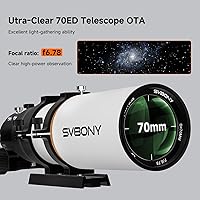
  • Aperture: The objective lens measures 70mm in diameter, providing enough light-gathering for bright deep-sky targets like nebulae and star clusters under dark skies.
  • Focal Length: The optical tube has a focal length of 474mm, yielding a wide field of view well suited to large extended objects and wide starfields.
  • Focal Ratio: At f/6.78, this refractor OTA sits in a versatile middle ground — fast enough for astrophotography yet still manageable for visual use.
  • Objective Type: The objective is a 2-element ED lens combining an FPL51 element with a lanthanum special glass element to reduce chromatic aberration significantly compared to standard achromats.
  • Field Corrector: A 2-element field flattener corrector is built directly into the tube, providing 100% flat-field correction across a 32mm image circle.
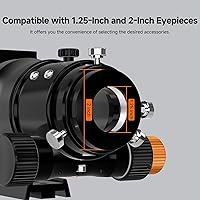
  • Focuser: The 2.5-inch RAP dual-speed focuser offers both coarse and fine adjustment, with a 2-inch reduction adapter and an M54x0.75 female thread for camera attachment.
  • Corrected Circle: The built-in corrector delivers full flat-field correction across a 32mm diameter, comfortably covering most crop-sensor and dedicated astronomy camera formats.
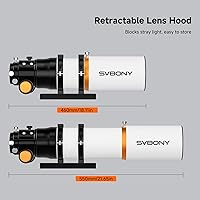
  • Tube Length: The minimum tube length is 365mm, extending slightly during focus travel, making it compact enough for most small-to-medium equatorial mounts.
  • Tube Diameter: The main optical tube has an outer diameter of 82mm, and the dew shield extends to 93mm in diameter when deployed.
  • Weight: The optical tube assembly weighs approximately 2,685g (5.9lb), keeping it within the payload range of many mid-class equatorial and alt-azimuth mounts.
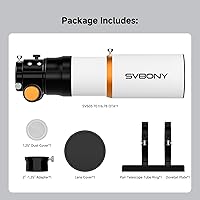
  • Included Accessories: The package includes the optical tube, a 2-inch reduction adapter, and an M54-threaded focuser interface; no mount, eyepiece, or finder scope is included.
  • Compatibility: The focuser accepts standard 2-inch astronomy accessories and connects directly to cameras via the M54x0.75 female thread without requiring additional adapters for most popular setups.
  • Dew Shield: An integrated retractable dew shield is built into the front of the tube to help reduce dew formation and suppress stray light during sessions.
  • Internal Baffling: Internal baffling runs the length of the tube to minimize reflections and scattered light, improving contrast in both visual and photographic use.
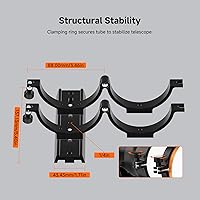
  • Mounting Interface: The tube includes a mounting clamp rail compatible with standard Vixen-style dovetail saddles, allowing secure attachment to most equatorial and GoTo mounts.
  • Optical Design: This is a flat-field ED refractor with a self-contained corrector, not a traditional achromat or a true apochromat, placing it in a distinct mid-tier optical class.
  • Product Dimensions: The packaged optical tube measures approximately 12.5 inches in depth by 9.25 inches wide by 6.7 inches tall, making it manageable for transport in a medium carry bag.
  • Manufacturer: The SV503 is manufactured by SVBONY, a China-based optics brand that distributes globally and offers direct customer support through its own website and Amazon storefront.

Related Reviews

SVBONY SV503 80mm ED Refractor Telescope
81%
91%
Optical Clarity
88%
Focuser Quality
86%
Chromatic Aberration Control
89%
Build Quality & Materials
83%
Value for Money
More
SVBONY SV503 102mm ED Refractor Telescope
82%
88%
Optical Performance
93%
Focuser Quality
84%
Chromatic Aberration Control
91%
Build Quality
86%
Astrophotography Suitability
More
Barska Starwatcher 70mm Refractor Telescope
66%
72%
Optical Clarity
58%
Magnification Performance
54%
Build Quality
84%
Ease of Setup
88%
Portability & Storage
More
HEXEUM AZ50070 70mm Refractor Telescope
73%
78%
Optical Clarity
88%
Value for Money
57%
Tripod Stability
66%
Ease of Assembly
63%
Finderscope Usability
More
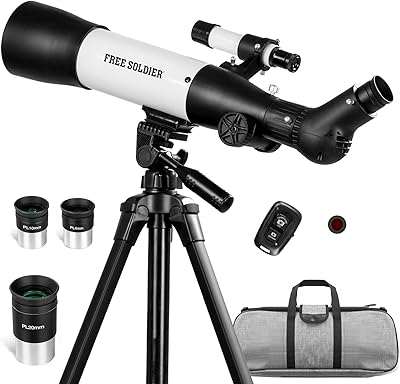
FREE SOLDIER 70mm Refractor Telescope
74%
78%
Optical Clarity
86%
Ease of Setup
58%
Tripod Stability
82%
Value for Money
84%
Moon & Planet Viewing
More
SVBONY SV48P 102mm Refractor Telescope OTA
74%
83%
Optical Clarity
86%
Build Quality
88%
Focuser Performance
79%
Astrophotography Suitability
81%
Value for Money
More
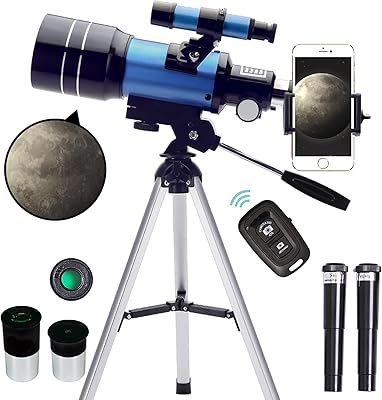
ToyerBee 70mm Refractor Telescope
71%
76%
Optical Clarity
63%
Build Quality
54%
Tripod & Mount Stability
71%
Magnification Range
82%
Ease of Assembly
More
HUGERSTAR 80600 Refractor Telescope
70%
78%
Optical Clarity
88%
Ease of Setup
61%
Tripod Stability
83%
Value for Money
84%
Portability
More
Barska Starwatcher Refractor Telescope 60mm
80%
91%
Value for Money
88%
Ease of Setup
93%
Portability
85%
Performance (Planetary Viewing)
62%
Performance (Deep-Sky Viewing)
More
PISEZ 90800 90mm Refractor Telescope
68%
83%
Optical Clarity
81%
Value for Money
72%
Ease of Setup
68%
Magnification Range
61%
Tripod Stability
More

FAQ

You will need to supply your own. The SVBONY SV503 70mm Refractor Telescope is sold as an optical tube assembly only — no mount, no eyepieces, and no finder scope are included in the box. Budget for at least an equatorial or GoTo mount and a couple of eyepieces before you can use it for observing.
Correct — that is the main selling point of this OTA. The field corrector is built directly into the tube, so when you attach a camera to the focuser, you are already shooting through a corrected optical path. There is no need to insert a separate flattener into the imaging train, which simplifies setup considerably.

ED glass is a meaningful step up from a standard achromat, and the FPL51 plus lanthanum combination does control color fringing well enough for most wide-field deep-sky imaging. That said, a true triple apochromat — typically costing considerably more — will still produce cleaner color separation on bright stars. For targets like emission nebulae or open clusters, the color correction here is more than adequate for most users.

The focuser has an M54x0.75 female thread and comes with a 2-inch reduction adapter, so it connects to most dedicated astronomy cameras and many mirrorless cameras with the appropriate T-ring adapter for your specific brand. Check whether your camera manufacturer offers an M42 or M54 T-ring, as that is the most common connection method.

The dual-speed RAP focuser is one of the stronger points of this refractor OTA. The coarse knob moves the draw tube quickly to get you in the ballpark, and then the fine-speed knob — typically a 1:10 reduction ratio — lets you creep into precise focus without introducing shake. Most users find it smooth and well-damped, though a small number of buyers have reported slight variability in tension between units.

For visual use, a solid alt-azimuth or basic equatorial mount rated for at least 5kg payload works fine given the tube weighs under 3kg. For astrophotography, you really want a motorized equatorial mount with guiding capability — something like a mid-range Sky-Watcher or iOptron mount. Avoid undersizing the mount; a wobbly platform will cost you more in frustration than the telescope saves you in price.

Yes, it is one of its practical strengths. The tube is under 3kg and compact enough to fit in a medium-sized carry bag or a hard case alongside other gear. If you are regularly driving to rural dark sites, this flat-field telescope is easy to transport without dedicating a large vehicle to the trip.

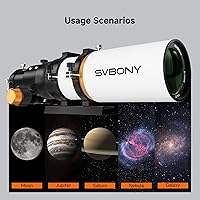
You can observe planets with it, and the ED glass will keep color fringing under control on bright targets like Jupiter and Saturn. However, a 70mm aperture limits the fine detail you can resolve — you will see the main cloud bands on Jupiter and Saturn's rings clearly, but do not expect the same level of planetary detail you would get from a larger instrument. This OTA is genuinely optimized for wide-field deep-sky work.

That depends on the camera sensor or eyepiece you are using. With a crop-sensor mirrorless camera, you are looking at a generous chunk of sky per frame — wide enough to capture the full Orion Nebula region or a large portion of the Andromeda Galaxy in a single shot. The 32mm flat-field correction circle covers most popular camera formats without corner degradation.

SVBONY offers customer support through both their own website and the Amazon storefront where the product is listed. Buyer feedback on their support responsiveness is generally positive, with most issues resolved through direct communication or replacement parts. As with any brand at this price tier, documenting any defects with photos and reaching out promptly tends to produce the best outcomes.

Where to Buy