Overview

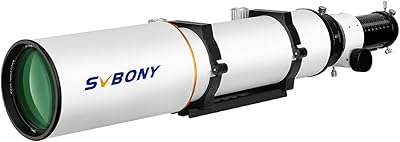
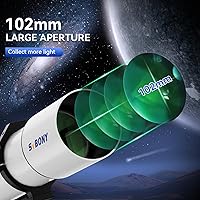
The SVBONY SV48P 102mm Refractor Telescope OTA landed in mid-2024 as a serious step up for hobbyists who have outgrown entry-level scopes but aren't ready to commit to a high-end apochromat. With a 102mm aperture and a relatively fast f/6.5 focal ratio, it sits comfortably in mid-range territory — offering noticeably more light-gathering capability than the 70mm or 80mm tubes most beginners start with. One thing to flag upfront: this is an optical tube assembly only. No mount comes in the box, so the total cost and setup experience depend heavily on what you pair it with. SVBONY has been quietly building credibility among hobbyist astronomers, and the SV48P reflects that steady trajectory.
Features & Benefits

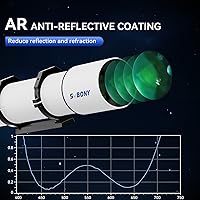
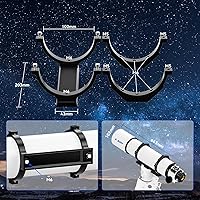
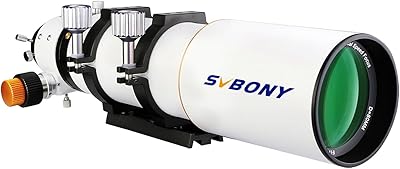
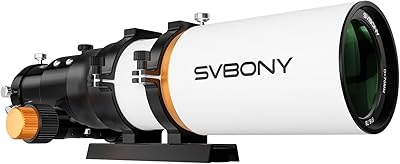
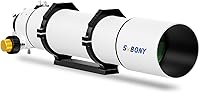
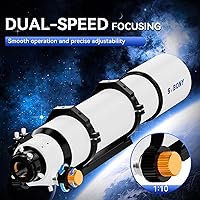
The dual-speed 2.5-inch focuser is one of the first things experienced observers will appreciate. The coarse wheel gets you in the ballpark fast, while the fine-tuning knob lets you chase that last bit of sharpness — a workflow that matters a lot when you're imaging rather than just looking. The fully multi-coated achromatic glass handles light transmission well, and the AR coating adds real contrast improvement on faint targets. A 360-degree rotatable focuser lets you reframe an astrophotography shot without shifting the whole tube — genuinely useful in the field. At around 7 lbs, this SVBONY optical tube won't strain a mid-range mount, and the integrated tube rings keep everything rigid under load during longer sessions.

Best For

This 102mm refractor OTA suits a handful of specific buyer profiles well. If you've been using a department-store scope and want something that actually holds up under real observing conditions, this is a meaningful upgrade. Wide-field astrophotographers targeting open clusters, nebulae, or the Milky Way will appreciate the fast focal ratio — though budget for a field flattener separately, as it's not included. Visual observers who prefer sweeping views over high magnification will find the short focal length rewarding. It's also a strong pick for anyone who already owns a capable equatorial or alt-az mount and needs a quality tube to pair with it. Compact enough to pack for a weekend trip, too.

User Feedback

With around 105 ratings and a 4.6-star average, early reception for the SV48P has been genuinely encouraging. Buyers consistently cite sharp views and solid build quality as standout positives, and several have confirmed it holds up for wide-field imaging when paired with a dedicated astronomy camera. That said, some note chromatic aberration on bright targets like the Moon or Venus — a fair and expected tradeoff with achromatic rather than apochromatic optics. A few buyers also point out that no finderscope is included, which means additional accessories are needed before a first light session. Since this tube only launched in mid-2024, long-term durability data is still limited, but the early picture looks promising.

Pros

  • The 102mm aperture collects noticeably more light than typical entry-level 70mm or 80mm refractors.
  • An f/6.5 focal ratio makes the SV48P genuinely well-suited for wide-field deep-sky imaging.
  • The dual-speed focuser offers both fast rough adjustment and precise fine-tuning — a real asset during astrophotography sessions.
  • At around 7 lbs, this 102mm refractor OTA is light enough for a wide range of mid-range mounts without overloading them.
  • The 360-degree rotatable focuser lets you reframe shots without repositioning the entire tube.
  • Fully multi-coated optics and AR lens treatment improve contrast and brightness on faint objects.
  • Integrated tube rings add structural rigidity and reduce vibration during imaging.
  • Early buyers consistently rate optics quality and build quality as standout positives for the price point.
  • The compact 720mm tube length makes transport and storage practical for observers on the move.

Cons

  • No mount is included, meaning the total cost to get observing is significantly higher than the OTA price alone.
  • No finderscope in the box makes initial target acquisition frustrating without a separate purchase.
  • Achromatic optics produce visible chromatic aberration on bright targets like the Moon and planets.
  • A field flattener is needed for sharp corner-to-corner astrophotography performance — and that is another added expense.
  • With just over 100 ratings since mid-2024, long-term reliability and durability data remains thin.
  • The lack of an included diagonal or eyepiece means even basic visual use requires extra accessories.
  • Buyers new to astronomy may underestimate how much additional gear is needed to make this tube functional.
  • Not ideal as a standalone recommendation for anyone without existing mount infrastructure already in place.

Ratings

The SVBONY SV48P 102mm Refractor Telescope OTA has been scored below by our AI engine after analyzing verified buyer reviews from global marketplaces, with spam, bot-generated, and incentivized feedback actively filtered out. The scores reflect a candid synthesis of what real observers and astrophotographers consistently report — both the genuine strengths and the friction points that affect day-to-day use.
Optical Clarity
83%
Buyers regularly praise how sharp and bright targets appear through the eyepiece, particularly on open star clusters and wide nebula fields. The multi-coated optics deliver noticeably better contrast and color rendition than the budget 70mm or 80mm tubes most upgraders are coming from.
Chromatic aberration is a consistent complaint on bright targets like the Moon and Venus — a purple or blue fringe appears around high-contrast edges that some users find distracting. This is an inherent limitation of achromatic doublet design, not a defect, but it does cap the score.
Build Quality
86%
The tube feels solid and well-machined for its price tier, with integrated tube rings that keep everything rigid during both visual sessions and imaging runs. Early adopters have noted that the focuser barrel shows no obvious wobble or play, which is a common weak point on cheaper OTAs.
A small number of buyers reported inconsistency in focuser tension straight out of the box, requiring minor adjustment before use. Given the limited long-term data available since the mid-2024 launch, it is still unclear how well the build holds up through years of field use and temperature cycling.
Focuser Performance
88%
The 2.5-inch dual-speed focuser is consistently highlighted as a standout feature — users appreciate being able to slew quickly to approximate focus and then dial in precisely with the fine-tuning knob, especially when chasing a sharp star point for astrophotography. The 360-degree rotation is a practical bonus for camera framing.
A few imaging-focused buyers noted that the focuser lacks a tension lock, which can cause minor focus drift under heavier camera setups if the scope is pointed at steep angles. Motorized or electronic focus control is not available, which is expected at this price but worth noting for serious imagers.
Astrophotography Suitability
79%
21%
The fast f/6.5 focal ratio makes the SV48P genuinely capable for wide-field deep-sky imaging — early adopters have posted encouraging results on emission nebulae and star clusters, especially when paired with a cooled astronomy camera. The rotatable focuser makes camera angle adjustment much less of a hassle compared to fixed-barrel designs.
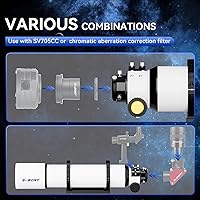
Getting the best out of it for imaging requires additional purchases — specifically a field flattener for edge-to-edge sharpness across a camera sensor, plus a tracking mount. The chromatic aberration on bright stars can also affect image quality if not corrected in post-processing or with a dedicated filter.
Value for Money
81%
19%
For what you get in terms of aperture, focuser quality, and optical coatings, the SV48P sits in a competitive spot within its market tier. Buyers upgrading from entry-level scopes consistently feel they received a meaningful jump in performance without crossing into premium apochromat pricing.
The value calculation depends heavily on what you already own. For buyers starting from scratch, the additional cost of a mount, finderscope, eyepieces, and potentially a field flattener means the all-in cost is substantially higher than the OTA price alone — something first-time buyers sometimes overlook.
Portability
91%
At around 7 lbs, this 102mm refractor OTA is impressively light for its aperture class, making it easy to load into a car for a dark-sky trip and quick to set up on arrival. Several observers mention using it regularly at remote sites precisely because it does not require a heavy-duty mount to carry.
The tube length of 720mm means it is not the most compact package in absolute terms — transporting it without a dedicated case requires care to avoid knocking the focuser or objective. No carrying case is included in the box.
Accessories Included
38%
62%
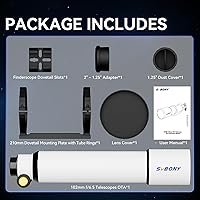
The tube rings are a practical inclusion that immediately improve mounting stability and save buyers from sourcing a compatible ring set separately. The dual-speed focuser is also supplied ready to use without needing an upgrade.
Beyond the tube rings, the box is notably sparse — no eyepiece, no finderscope, no diagonal, and no field flattener. Buyers who do not already own these accessories will need to budget significantly more before they can use the scope at all, which catches some first-time buyers off guard.
Chromatic Aberration Control
61%
39%
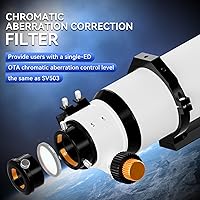
On diffuse targets like nebulae and open clusters at moderate magnification, the achromatic optics perform well enough that color fringing is largely a non-issue. Astrophotographers who plan to use narrowband or chromatic correction filters can mitigate the issue effectively in their workflow.
On the Moon, bright planets, and double stars near the edge of the field, purple and blue fringing is plainly visible and noted by a consistent proportion of reviewers. Buyers expecting apochromat-level color correction at this price point will be disappointed — the optics are achromatic by design, not by omission.
Ease of Setup
74%
26%
The tube is straightforward to attach to any standard dovetail-compatible mount, and the dual-speed focuser is intuitive enough for a first-time user to operate within minutes. There is no complex optical collimation required, unlike reflector designs.
Because no finderscope is included, initial target acquisition can be frustrating for beginners who have not yet developed the skill of manually pointing a tube at a specific sky region. The lack of a diagonal also means visual observing requires awkward neck angles depending on the target's position.
Deep-Sky Visual Performance
77%
23%
The 102mm aperture and wide field of view make sweeping sessions through the Milky Way and large nebulae genuinely rewarding. Objects like the Orion Nebula, Pleiades, and Andromeda Galaxy benefit visibly from the extra light-gathering over smaller aperture refractors.
The scope is not optimized for high-magnification deep-sky work — the focal ratio limits how far you can push magnification before image quality degrades. Smaller, fainter galaxies that require high power and excellent seeing conditions will not be the SV48P's strongest suit.
Planetary Viewing
58%
42%
The scope can resolve Saturn's rings and Jupiter's main cloud bands at moderate magnification, which satisfies casual planetary observers who are not dedicated to high-resolution planetary imaging. It is a capable general-purpose tube rather than a specialized planetary instrument.
Chromatic fringing on planets reduces the crispness of fine detail, and the relatively short focal length limits the practical magnification ceiling compared to longer focal ratio instruments. Serious planetary observers would be better served by a longer focal length scope or an apochromat.
Mount Compatibility
84%
The lightweight build makes the SV48P compatible with a wide range of mid-range equatorial and alt-az mounts without stressing their payload ratings. The integrated tube rings with a standard dovetail interface mean it drops straight onto most popular mounting systems without adapters.
The tube ships without a dovetail bar, so buyers need to confirm whether their mount's clamp system matches the included rings or requires a separate bar purchase. This is a minor but occasionally overlooked detail in the buying process.
Long-Term Durability
67%
33%
The machined metal focuser body and rigid tube construction suggest solid build intentions, and early adopters who have used it through several seasons have not widely reported failures or degradation in optical performance.
The product has only been on the market since mid-2024, so true long-term durability data simply does not exist yet. How the coatings, focuser mechanism, and tube seals hold up through years of temperature swings and outdoor use remains an open question.
Brand Reliability
72%
28%
SVBONY has built a growing reputation within the hobbyist astronomy community as a brand that offers credible optical performance at accessible price points. Their wider product ecosystem — cameras, filters, eyepieces — also means the SV48P integrates naturally with other SVBONY accessories.
Customer support experiences with SVBONY are mixed based on broader community feedback, and the warranty terms are not as clearly communicated as those from more established Western astronomy brands. Buyers outside of major markets may face longer resolution times if issues arise.

Suitable for:

The SVBONY SV48P 102mm Refractor Telescope OTA is a strong match for hobbyists who have already caught the astronomy bug and are ready to invest in something more capable than a beginner kit. If you already own a decent equatorial or alt-az mount — or are budgeting for one — this optical tube gives you a meaningful performance jump without crossing into apochromat pricing territory. Wide-field astrophotographers chasing nebulae, open clusters, or Milky Way shots will find the fast f/6.5 focal ratio genuinely well-suited to that kind of work, especially when paired with a dedicated astronomy camera. Visual observers who prefer sweeping, low-magnification views across large patches of sky will also get a lot out of this tube. It is compact and light enough to pack for a dark-sky weekend trip without a second thought, which makes it appealing to anyone who observes away from home regularly.
Not suitable for:

Buyers expecting a complete, plug-and-play setup will be caught off guard by the SVBONY SV48P 102mm Refractor Telescope OTA — there is no mount, no finderscope, and no field flattener in the box, so the real cost of getting this scope operational is meaningfully higher than the sticker price alone. Anyone hoping to use it primarily on bright, high-contrast targets like the Moon or planets should know upfront that achromatic optics at this aperture will show some chromatic fringing, particularly around the limb of the Moon or on Venus — it is manageable, but it is there. If you want clean, color-accurate views of planets without any fringing, an apochromatic refractor is the more appropriate choice, even if it costs considerably more. Complete beginners who have never owned a telescope and are not yet comfortable selecting compatible mounts, eyepieces, and cameras would be better served starting with an all-in-one package that removes those decisions. And anyone prioritizing long-term reliability data should note that this is a relatively new product with a limited review base, so durability over multiple years is not yet well-documented.
Specifications

  • Brand: Manufactured by SVBONY, a brand focused on budget-to-mid-range astronomy and optical equipment for hobbyists.
  • Model: The model designation is SV48P, with an internal model number of FF9341C.
  • Aperture: The objective lens has a diameter of 102mm, enabling meaningful light collection for deep-sky observation and imaging.
  • Focal Ratio: The optical system operates at f/6.5, making it a relatively fast refractor well-suited for wide-field applications.
  • Tube Length: The optical tube measures 720mm in length, keeping the overall footprint compact for a 102mm aperture instrument.
  • Focuser: A 2.5-inch dual-speed focuser is included, offering both coarse and fine adjustment to aid precise focus in visual and imaging use.
  • Focuser Rotation: The focuser rotates a full 360 degrees, allowing the observer to reframe a target without physically repositioning the tube.
  • Optics Type: The objective lens is an achromatic doublet with fully multi-coated surfaces to maximize light transmission and reduce internal scatter.
  • Lens Coating: All optical surfaces feature AR anti-reflective coatings designed to improve image contrast and brightness, particularly on faint targets.
  • OTA Weight: The optical tube assembly alone weighs approximately 7 lbs, making it compatible with a broad range of mid-range mounts without exceeding their payload limits.
  • Package Weight: The total shipping and package weight is 10.03 lbs, accounting for the tube rings, focuser, and packaging materials.
  • Dimensions: The packaged product measures 28.35 x 10.63 x 9.06 inches, reflecting the full length of the optical tube assembly.
  • Tube Rings: Integrated hooped tube rings are included to provide a stable mounting interface and reduce flex between the tube and any dovetail bar or mount.
  • Mount Included: No mount of any kind is included; this product is an optical tube assembly only and requires a separately purchased mount to be functional.
  • Finderscope: No finderscope is included in the box, so buyers will need to purchase one separately for easier initial target acquisition.
  • Compatibility: The SV48P is compatible with standard 2-inch and 1.25-inch telescope eyepieces, as well as dedicated astronomy cameras via appropriate adapters.
  • Focus Type: Focusing is entirely manual via the dual-speed focuser mechanism; there is no motorized or electronic focus control included.
  • Availability: This optical tube was first made available in July 2024, making it a relatively recent product with a still-growing base of long-term user data.

Related Reviews

SVBONY SV503 102mm ED Refractor Telescope
82%
88%
Optical Performance
93%
Focuser Quality
84%
Chromatic Aberration Control
91%
Build Quality
86%
Astrophotography Suitability
More
SVBONY SV503 80mm ED Refractor Telescope
81%
91%
Optical Clarity
88%
Focuser Quality
86%
Chromatic Aberration Control
89%
Build Quality & Materials
83%
Value for Money
More
SVBONY SV503 70mm Refractor Telescope
83%
88%
Optical Clarity
91%
Field Flattener Performance
83%
Chromatic Aberration Control
79%
Focuser Quality
86%
Build & Tube Construction
More
HUGERSTAR 80600 Refractor Telescope
70%
78%
Optical Clarity
88%
Ease of Setup
61%
Tripod Stability
83%
Value for Money
84%
Portability
More
CELTICBIRD 90700 90mm Refractor Telescope
70%
83%
Optical Clarity
76%
Mount Precision
88%
Tripod Stability
81%
Ease of Assembly
62%
Finderscope Usability
More
Barska Starwatcher Refractor Telescope 60mm
80%
91%
Value for Money
88%
Ease of Setup
93%
Portability
85%
Performance (Planetary Viewing)
62%
Performance (Deep-Sky Viewing)
More
PISEZ 90800 90mm Refractor Telescope
68%
83%
Optical Clarity
81%
Value for Money
72%
Ease of Setup
68%
Magnification Range
61%
Tripod Stability
More
Celticbird 80mm 800mm Refractor Telescope
75%
83%
Optical Clarity
91%
Ease of Assembly
78%
Mount Usability
61%
Tripod Stability
58%
Included Eyepiece Quality
More
HEXEUM AZ50070 70mm Refractor Telescope
73%
78%
Optical Clarity
88%
Value for Money
57%
Tripod Stability
66%
Ease of Assembly
63%
Finderscope Usability
More
Barska Starwatcher 70mm Refractor Telescope
66%
72%
Optical Clarity
58%
Magnification Performance
54%
Build Quality
84%
Ease of Setup
88%
Portability & Storage
More

FAQ

It does not include a mount of any kind. The SVBONY SV48P 102mm Refractor Telescope OTA is sold purely as an optical tube assembly, so you will need to source a compatible equatorial or alt-az mount separately. Make sure whatever mount you choose can comfortably handle at least 7 to 10 lbs of payload to give yourself some headroom.
No, there is no finderscope included. For casual visual observing this is manageable, but if you plan to hunt down specific targets — especially fainter deep-sky objects — you will want to add a small finder or a red-dot sight to make the experience much less frustrating.

Yes, to some degree. The SV48P uses an achromatic doublet lens, which is the standard at this price tier, and achromats do produce a degree of color fringing around high-contrast edges — most noticeable on the Moon or bright planets like Venus. For wide-field deep-sky targets like nebulae and star clusters, it is far less distracting. If color accuracy on planets is your top priority, an apochromatic refractor would be a better fit, though it costs considerably more.

Yes, and it is actually well-suited for wide-field astrophotography thanks to the fast f/6.5 focal ratio. That said, for the best edge-to-edge sharpness with a camera sensor, you will likely want to add a field flattener, which is not included. A sturdy equatorial mount with tracking is also essential for imaging. With those pieces in place, early adopters have reported solid results on nebulae and star clusters.

The 2.5-inch dual-speed focuser accepts standard 2-inch eyepieces directly, and with a reducer sleeve — commonly included with most 2-inch eyepieces — you can also use 1.25-inch eyepieces. Neither type is included in the box, so plan to add those to your budget if you are starting from scratch.

The optical tube itself weighs around 7 lbs. As a general rule of thumb in astronomy, you want a mount rated for at least double the OTA weight to maintain stability, especially for imaging. A mount with a 15 to 20 lb payload rating would give you comfortable margin for the tube plus any attached camera or accessories.

A dual-speed focuser has two separate adjustment rates built into one mechanism. The fast wheel moves the focuser quickly so you can get roughly in focus without spinning forever, while the slow fine-tuning knob lets you make tiny, precise adjustments — which is especially important when imaging, where even a fraction of a millimeter of focus shift matters. Single-speed focusers make that fine adjustment much harder to nail consistently.

Yes, with the right adapters. You will need a T-ring matched to your specific camera brand and a T-adapter that fits the 2-inch focuser barrel on this SVBONY optical tube. These adapters are widely available and inexpensive. Keep in mind that a field flattener between the camera and focuser is recommended for clean results across the full sensor area.

It can handle lunar and planetary viewing reasonably well, but it is honestly optimized for wide-field, deep-sky use. The f/6.5 focal ratio favors lower magnifications and broader fields of view. You can push magnification with a short focal length eyepiece, but the achromatic optics will show some color fringing on bright targets at higher powers. For dedicated planetary observing, a longer focal length refractor or a reflector would be a more purpose-built choice.

The SV48P became available in July 2024, so it is still a fairly recent release. There are around 105 ratings on Amazon with a strong 4.6-star average, which is an encouraging early signal. That said, long-term durability data is naturally limited at this stage. The feedback so far is positive around optics clarity and build quality, but if you prefer to buy products with years of documented real-world use, you may want to monitor the review count for another season before committing.