
Overview

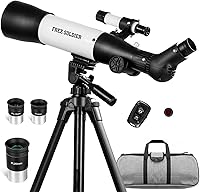
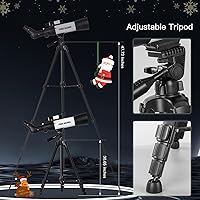
The FREE SOLDIER 70mm Refractor Telescope arrived on the scene in late 2024 from a brand that built its reputation in outdoor gear rather than optics — which makes it an interesting entry into the beginner astronomy market. At a mid-range price, it offers a 70mm aperture and 500mm focal length, putting it in genuinely useful territory for someone stepping beyond department-store toys. The kit comes fully loaded: three Plossl eyepieces, a finder scope, phone adapter, wireless remote, and a carry bag. The white optical tube sits on an adjustable altazimuth tripod, compact enough for a backyard or apartment balcony.

Features & Benefits

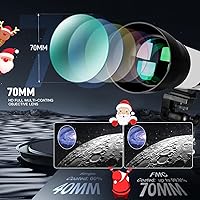
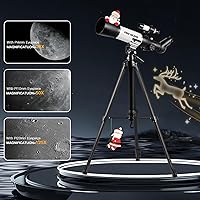
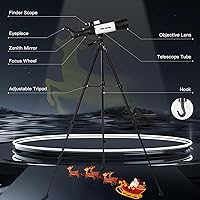
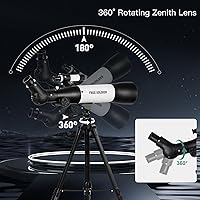
At f/7.1, the fully multi-coated optics do a solid job of pulling in light and keeping chromatic fringing under control — a real concern at this price tier. The three included Plossl eyepieces cover a useful range: the 20mm is great for scanning wide star fields, the 10mm offers a balanced mid-power view, and the 4mm pushes magnification for a closer look at lunar craters. A 360° rotating diagonal means you won't have to contort yourself when the scope points high. The 5x24 finder scope makes locating objects much less frustrating, and the phone adapter with wireless remote opens the door to basic moon photography.

Best For

This beginner telescope makes the most sense for adults who are genuinely curious about astronomy but aren't ready to drop serious money on a dedicated instrument. Moon and planet viewing is where it genuinely shines — lunar craters look striking, and Saturn's rings are within reach on a steady night. The low-power eyepiece also works well for daytime birdwatching, making this a versatile option for nature enthusiasts. Gift buyers will appreciate that everything arrives in one box, carry bag included, so there's no scrambling for accessories. Just don't expect deep-sky performance; faint nebulae and galaxies are largely out of reach for a 70mm aperture.

User Feedback

Most buyers come away impressed by how quickly this refractor telescope goes from box to first light — assembly is straightforward and the moon views consistently draw praise. The carry bag earns positive mentions for making transport easy. On the critical side, some users report tripod vibration when nudging the scope, which can be annoying at high magnification. A few have noted slight color fringing around bright objects through the 4mm eyepiece. The phone adapter works for most modern smartphones, though larger cases may need to be removed first. On customer service, the brand's responsiveness gets reasonable marks, though replies can occasionally be slow during peak periods.

Pros

  • Optics are genuinely solid for the price — multi-coated lenses produce noticeably brighter, cleaner views than budget alternatives.
  • Three Plossl eyepieces cover a useful magnification range right out of the box, with no immediate need to buy extras.
  • Assembly is beginner-friendly and most users have it set up and viewing within 30 minutes.
  • The 360-degree rotating diagonal makes high-angle viewing comfortable without awkward repositioning.
  • Moon views are a consistent highlight — crater detail is sharp and satisfying on a steady night.
  • The carry bag is a practical bonus that makes it easy to pack up and take to a darker location.
  • Phone adapter and wireless remote let casual users snap moon photos without any extra purchases.
  • The altazimuth mount is intuitive for beginners — point, pan, and track without a learning curve.
  • At roughly six pounds, this refractor telescope is light enough to carry to a park or rooftop without hassle.
  • The 5x24 finder scope meaningfully reduces the frustration of locating objects, especially for first-timers.

Cons

  • Tripod vibration at high magnification is a recurring complaint and can disrupt viewing at the worst moments.
  • The 4mm eyepiece pushes the scope near its practical magnification limit, where image quality noticeably softens.
  • Chromatic aberration — color fringing around bright objects like the moon — is visible under close scrutiny.
  • The phone adapter may need case removal for larger smartphones, which gets tedious during an observing session.
  • Deep-sky objects are effectively out of reach; expecting more than faint smudges will lead to disappointment.
  • The altazimuth mount, while easy to use, offers no motorized tracking, so objects drift out of view quickly at high power.
  • Build quality on the tripod feels plasticky under load, raising questions about long-term durability.
  • Customer service response times can lag, which is frustrating if a part arrives damaged or missing.
  • The brand has limited heritage in optics, making it harder to assess long-term reliability compared to established telescope makers.
  • Finderscope alignment can slip over time and may need periodic readjustment to stay accurate.

Ratings

Our AI-generated scores for the FREE SOLDIER 70mm Refractor Telescope are based on deep analysis of verified global buyer reviews, with spam, bot-submitted, and incentivized feedback actively filtered out before scoring. Each category reflects the honest consensus of real users — beginners, casual stargazers, and gift recipients alike — with both genuine strengths and recurring frustrations weighted transparently into every number.

Optical Clarity
78%
22%
For a scope at this price tier, the multi-coated 70mm lens delivers noticeably crisp lunar views that consistently impress first-time users. Crater detail on the moon through the 10mm eyepiece draws particular praise, with many buyers describing it as far sharper than they expected.
Chromatic aberration becomes visible around the edges of bright targets — especially the moon and planets — when pushing toward the 4mm eyepiece. Users with prior experience on branded optics notice the fringing quickly, even if beginners are less bothered by it.
Ease of Setup
86%
Buyers across all experience levels highlight how quickly this beginner telescope goes from box to first light — typically under 30 minutes. The instructions are clearer than most budget competitors, and the component count is manageable without feeling overwhelming for a first-time assembler.
Aligning the finder scope with the main tube is the one step that regularly trips up new users, and the instructions could be more explicit about that process. A handful of buyers also report that some connections feel slightly loose out of the box and need minor adjustment before use.
Tripod Stability
58%
42%
The adjustable tripod covers a useful height range and feels reasonably solid for wide-field, low-magnification viewing — casual moon scanning at 25x is comfortable enough. Users doing quick outdoor sessions on calm evenings rarely flag stability as a dealbreaker at lower power settings.
At higher magnification — particularly with the 4mm eyepiece — vibration from even a light touch or mild breeze is clearly visible and takes several seconds to dampen. This is the single most consistent complaint across user reviews and is a real limitation during high-power planetary sessions.
Value for Money
82%
18%
The bundled kit — three Plossl eyepieces, finder scope, phone adapter, wireless remote, and carry bag — represents strong all-in value at the asking price, especially compared to bare-tube competitors in the same range. Most buyers feel they received more than they paid for, particularly as a gift purchase.
Hobbyists upgrading from a previous scope often feel the optical and mechanical quality doesn't represent a meaningful step forward in performance. At the upper edge of the beginner price bracket, some buyers expected tighter tolerances on the focuser and mount than what was delivered.
Moon & Planet Viewing
84%
Lunar performance is the genuine highlight of this refractor telescope — crater fields, mountain ridges, and terminator detail are all clearly resolved on steady nights. Saturn's rings and Jupiter's cloud bands are achievable targets, giving beginners a genuinely rewarding early experience.
Atmospheric conditions have an outsized impact at the magnifications this scope uses, and many buyers don't realize that mediocre nights produce mediocre results regardless of equipment. Expectations around planetary detail — particularly color and fine surface texture — can outpace what 70mm of aperture realistically delivers.
Phone Adapter Usability
67%
33%
For moon photography, the included adapter does the job reasonably well — users regularly share sharp full-moon shots taken with mid-range smartphones. The wireless remote is a thoughtful inclusion that genuinely reduces camera shake during capture.
Fitting the adapter to larger modern smartphones, especially in cases, is fiddly and sometimes requires case removal entirely. Several users also report that keeping the phone aligned with the eyepiece during tracking is more finicky than the marketing imagery suggests.
Build Quality
63%
37%
The optical tube itself feels solid and the focuser mechanism operates smoothly enough for casual use. For buyers handling the scope gently and storing it in the included bag, the construction holds up well through regular backyard sessions.
The tripod legs and mounting hardware feel noticeably plastic-heavy, and the overall assembly lacks the rigidity that more established telescope brands offer at a similar price point. Long-term durability remains a question mark given the brand's limited track record in optics specifically.
Accessories Completeness
88%
Few beginner kits at this price include a carry bag, wireless remote, and phone adapter alongside three eyepieces and a finder scope — this bundle stands out as unusually complete. Gift buyers in particular appreciate not needing to source any extras before the first observing session.
The eyepiece quality, while better than H and K series designs, still leaves room for improvement — a quality 2x Barlow would have been a more useful inclusion than the wireless remote for many users. The carry bag, though appreciated, is on the smaller side and requires some care when packing accessories.
Finder Scope Performance
72%
28%
The 5x24 finder scope meaningfully reduces the frustration of locating objects blind, which is a genuine pain point for anyone new to star-hopping. Once properly aligned to the main tube, it gets the target close enough that only minor adjustments are needed to center it.
The straight-through design means awkward crouching when the main scope is pointed at higher elevations, which becomes tiring quickly. The finder's low aperture also makes it nearly useless for identifying anything fainter than bright stars or obvious planets.
Daytime Terrestrial Use
74%
26%
With the 20mm eyepiece, this refractor telescope delivers surprisingly enjoyable daytime views of birds, landscapes, and distant objects — wide enough to scan comfortably and sharp enough to pick out fine detail at distance. Several buyers use it primarily for wildlife observation rather than astronomy.
The lack of an erecting prism means terrestrial images appear inverted or mirror-reversed, which takes real adjustment to get used to and limits its appeal against dedicated spotting scopes. Users wanting a dual-purpose astronomy and daytime scope may find this limitation frustrating in practice.
Focuser Smoothness
69%
31%
The focuser operates smoothly enough for casual lunar and planetary use, and achieving sharp focus on the moon with the 10mm or 20mm eyepiece is straightforward even for first-timers. Most users have no issues with the basic focusing experience during standard observing sessions.
At high magnification the focuser becomes sensitive enough that small adjustments overshoot easily, making fine-tuning the 4mm eyepiece view more frustrating than it should be. A few buyers also note that the focuser feels slightly loose and could benefit from a tension adjustment mechanism.
Portability
83%
At under six pounds and with a carry bag included, the FREE SOLDIER scope is genuinely easy to take to a park, rooftop, or darker rural location without logistical headaches. The compact tube length means it fits in a car boot without rearranging everything else.
The tripod, once fully extended, is bulky enough that the carry bag handles both the tube and accessories but not the assembled tripod — so some disassembly is always required for transport. Users hoping to set up and move quickly between locations will find the packing process moderately time-consuming.
Customer Support
61%
39%
The brand explicitly promises accessible customer support, and a portion of buyers report satisfactory resolutions when contacting them about missing or damaged parts. For straightforward issues, the response is generally adequate.
Response times are inconsistent, with several buyers noting waits longer than a week for replies during peak periods. For a newer optical brand with less established credibility, the uneven support experience adds an element of risk that buyers should factor into their decision.

Suitable for:

The FREE SOLDIER 70mm Refractor Telescope is a strong fit for adults who are genuinely curious about the night sky but haven't yet committed to the hobby. If your main goals are checking out lunar craters, spotting Jupiter's moons, or catching a glimpse of Saturn's rings on a clear night, a 70mm refractor at this price is more than capable of delivering those satisfying early wins. It's also a practical pick for gift buyers who want to hand over a complete, ready-to-use kit without hunting down accessories separately. The included phone adapter makes it appealing to casual smartphone photographers who'd love a decent moon shot without investing in dedicated astro-imaging gear. Daytime users — birdwatchers, nature observers, anyone who wants a portable scope for outdoor use — will find the low-power eyepiece and carry bag a genuinely useful combination.

Not suitable for:

The FREE SOLDIER 70mm Refractor Telescope is not the right tool for anyone hoping to explore faint deep-sky objects like distant galaxies or dim nebulae — a 70mm aperture simply doesn't gather enough light for that kind of work, regardless of eyepiece quality. Experienced hobbyists who have already outgrown a similar-sized scope will likely find little here to justify the purchase, as the altazimuth mount lacks the tracking capability needed for serious planetary study or long-exposure photography. If tripod stability is a priority — say, you plan to use the highest magnification eyepiece regularly — budget scopes at this tier tend to wobble under vibration, and this one is no exception. Anyone expecting DSLR-quality astrophotography from the phone adapter will be disappointed; it is genuinely suited only for bright, large targets like the moon. Finally, buyers in light-polluted urban cores may find the experience underwhelming without occasional access to a darker sky.

Specifications

  • Aperture: The objective lens measures 70mm in diameter, determining how much light the telescope can collect.
  • Focal Length: The optical tube has a focal length of 500mm, giving a focal ratio of f/7.1.
  • Eyepieces: Three Plossl eyepieces are included — PL4mm, PL10mm, and PL20mm — covering low to high magnification ranges.
  • Magnification Range: Using the included eyepieces, achievable magnification spans from 25x with the 20mm up to 125x with the 4mm.
  • Lens Coating: All optical elements are fully multi-coated to improve light transmission and reduce internal reflections and chromatic fringing.
  • Finder Scope: A 5x24 straight-through finder scope is mounted on the tube to assist with initial object location.
  • Zenith Lens: A 360-degree rotating diagonal is included, allowing comfortable viewing at steep or overhead angles.
  • Mount Type: The telescope uses an altazimuth mount, enabling straightforward horizontal and vertical manual movement.
  • Tripod: The included tripod is adjustable in height to accommodate different users and viewing positions.
  • Phone Adapter: A universal smartphone adapter is included, compatible with most standard-sized smartphones for afocal photography.
  • Wireless Remote: A wireless remote shutter release is bundled in the kit for hands-free smartphone photo capture.
  • Carry Bag: A dedicated carry bag is included with the kit for transporting and storing the telescope and accessories.
  • Focus Type: Focusing is achieved manually via a rack-and-pinion or sliding focuser on the eyepiece drawtube.
  • Product Weight: The complete setup weighs approximately 5.99 lbs, keeping it portable for backyard or outdoor use.
  • Dimensions: The packaged unit measures 30.65″ deep by 10″ wide by 47.73″ tall at full tripod extension.
  • Optical Tube Length: The optical tube itself is 500mm in length, consistent with the stated focal length.
  • Compatible Devices: The phone adapter is designed for use with smartphones; it is not compatible with DSLRs or mirrorless cameras.
  • Availability Date: This product was first made available in September 2024, making it a recent addition to the beginner telescope market.
  • Manufacturer: The telescope is manufactured by FREE SOLDIER OPTICS, a division of the FREE SOLDIER outdoor equipment brand.
  • Finderscope Type: The finder scope is a straight-through design, meaning the viewing axis runs parallel to the main optical tube.

Related Reviews
HEXEUM AZ50070 70mm Refractor Telescope
73%
78%
Optical Clarity
88%
Value for Money
57%
Tripod Stability
66%
Ease of Assembly
63%
Finderscope Usability
More
Barska Starwatcher 70mm Refractor Telescope
66%
72%
Optical Clarity
58%
Magnification Performance
54%
Build Quality
84%
Ease of Setup
88%
Portability & Storage
More
SVBONY SV503 70mm Refractor Telescope
83%
88%
Optical Clarity
91%
Field Flattener Performance
83%
Chromatic Aberration Control
79%
Focuser Quality
86%
Build & Tube Construction
More
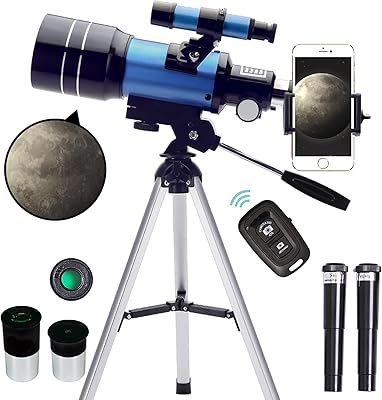
ToyerBee 70mm Refractor Telescope
71%
76%
Optical Clarity
63%
Build Quality
54%
Tripod & Mount Stability
71%
Magnification Range
82%
Ease of Assembly
More
PISEZ 90800 90mm Refractor Telescope
68%
83%
Optical Clarity
81%
Value for Money
72%
Ease of Setup
68%
Magnification Range
61%
Tripod Stability
More
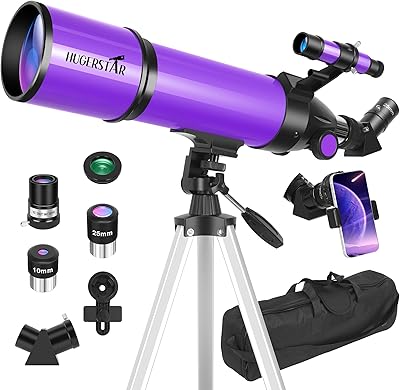
HUGERSTAR 80600 Refractor Telescope
70%
78%
Optical Clarity
88%
Ease of Setup
61%
Tripod Stability
83%
Value for Money
84%
Portability
More
Celticbird 80mm 800mm Refractor Telescope
75%
83%
Optical Clarity
91%
Ease of Assembly
78%
Mount Usability
61%
Tripod Stability
58%
Included Eyepiece Quality
More
CELTICBIRD 90700 90mm Refractor Telescope
70%
83%
Optical Clarity
76%
Mount Precision
88%
Tripod Stability
81%
Ease of Assembly
62%
Finderscope Usability
More
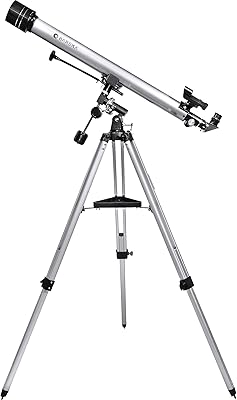
Barska Starwatcher Refractor Telescope 60mm
80%
91%
Value for Money
88%
Ease of Setup
93%
Portability
85%
Performance (Planetary Viewing)
62%
Performance (Deep-Sky Viewing)
More
SVBONY SV503 80mm ED Refractor Telescope
81%
91%
Optical Clarity
88%
Focuser Quality
86%
Chromatic Aberration Control
89%
Build Quality & Materials
83%
Value for Money
More

FAQ

Most people have this beginner telescope assembled and pointed at the sky within 20 to 30 minutes. The instructions are reasonably clear, and the parts snap or screw together without needing special tools. Aligning the finder scope to match the main eyepiece view is the one step that trips up some beginners, but it just takes a little patience with a daytime target like a distant rooftop.

Yes, Saturn's rings are visible under decent conditions — they won't look like a Hubble photo, but you will clearly see the planet as a ringed disc rather than a plain dot. Lunar craters are an even stronger performer; the moon through the 10mm or 20mm eyepiece is genuinely impressive. Just pick a night when the atmosphere is steady, because heat shimmer and turbulence affect high-magnification views more than the telescope itself.

Honestly, not really. A 70mm aperture collects a limited amount of light, so faint objects like the Andromeda Galaxy will appear as a dim smudge at best, and most deep-sky targets will be invisible from a light-polluted backyard. This scope is best treated as a solar system and lunar viewer rather than a deep-sky instrument.

It works with most standard smartphones, but if you use a very thick protective case you may need to remove it first for a secure fit. The included wireless remote pairs with your phone's camera shutter so you can snap photos without touching the scope and causing vibration — that matters more than it sounds when you are trying to get a sharp moon shot.

The tripod is functional but not rock-solid — this is a common trade-off at this price level. Light taps or wind gusts will cause some vibration, and at the 4mm eyepiece (highest magnification) that wobble is more noticeable. Letting the scope settle for a few seconds after adjusting position helps a lot, and avoiding maximum magnification in breezy conditions will save a lot of frustration.

Yes, and it works quite well for it. The 20mm eyepiece gives a wide enough field of view to scan trees or shorelines comfortably. Just keep in mind that refractor telescopes produce an inverted or mirror-reversed image without a correcting prism, so some users find that disorienting for terrestrial use at first.

The 4mm eyepiece delivers around 125x magnification, which is near the practical ceiling for a 70mm aperture. It is usable on calm nights for close lunar or planetary views, but image brightness drops noticeably and atmospheric turbulence becomes a real factor. Most experienced users find the 10mm eyepiece at 50x to be the sweet spot for the sharpest, most satisfying views.

The kit is genuinely complete for a beginner. You get three eyepieces, a finder scope, a zenith diagonal, a phone adapter, a wireless remote, and a carry bag — there is nothing essential missing for casual moon and planet observing. Down the road, some users choose to add a moon filter to cut glare during full moon viewing, but that is an optional upgrade, not a necessity.

For light dust, a soft lens blower brush is all you need — avoid wiping dry because even fine grit can scratch coated optics. For smudges, use a proper optical lens cleaning solution and a microfiber cloth designed for camera lenses, working in gentle circular motions from the center outward. Never use household glass cleaners or paper towels on the optical elements.

It is actually one of the better complete kits for that purpose — the carry bag, the included accessories, and the reasonably clear instructions take a lot of the guesswork out of getting started. The main thing to set the right expectations on is that the best views take a little patience to find; the first night out can feel clumsy, but the second and third sessions are when it really clicks.