Overview

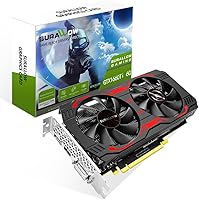
The SURALLOW GTX 1660 Ti 6GB Graphics Card shows up in May 2025 — a strangely late debut for a GPU that NVIDIA introduced back in 2019. At this point, the GTX 1660 Ti is essentially a used-market chip released new, which is unusual. SURALLOW itself is not a recognized AIB partner; there is no track record comparable to brands like ASUS, MSI, or Gigabyte here. Buyers should factor that in. Still, what you are paying for is a brand-new card with Turing architecture and 1536 CUDA cores — one that sidesteps the condition uncertainty of secondhand purchases, and that counts for something among cost-conscious builders.
Features & Benefits

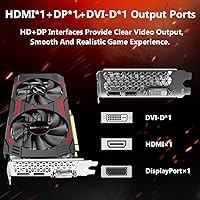
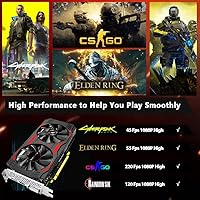
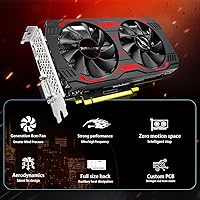
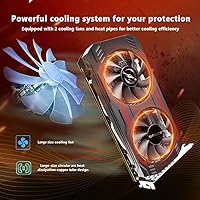
The 6GB GDDR6 memory on a 192-bit bus holds up well at 1080p — do not let the older architecture mislead you. Independent GTX 1660 Ti benchmarks widely show it hitting comfortable frame rates in popular titles like Fortnite, CS2, and most mid-range AAA games at medium-to-high settings. The dual-fan cooler uses direct-contact copper heat pipes that handle thermals competently under load, while the semi-passive fan mode keeps things quiet during light use or idle periods. Add in three display outputs — HDMI, DisplayPort, and DVI — plus broad PCIe 3.0 compatibility, and the feature set is genuinely solid for what this budget graphics card costs.

Best For

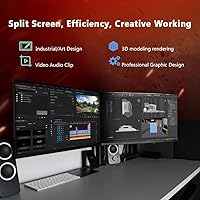
This GTX 1660 Ti card is a reasonable pick for someone upgrading out of integrated graphics or retiring a GTX 970, 1050, or similar aging card. Casual and indie gamers playing at 1080p will get workable performance without overspending on newer RTX generations. It also suits light office or creative workstation setups where a dedicated GPU is needed but raw compute power is not the priority. If you are in a market where RTX 3050 or RTX 4060 cards are significantly overpriced or out of stock, the SURALLOW GPU represents a practical stopgap — new-in-box, with triple-monitor support built right in.

User Feedback

Sitting at 4.1 out of 5 stars from 67 ratings, early feedback is cautiously positive. Buyers commonly mention easy installation, stable 1080p output, and noticeably quiet operation at idle — all of which align with what the specs suggest. The concerns are harder to dismiss, though. Reviewers repeatedly flag uncertainty around SURALLOW's warranty and durability, valid worries given the brand carries no established reputation. A handful of buyers also point out that comparable used cards from trusted AIB names can be found for similar prices. With only 67 reviews and most coming from early adopters, it is simply too soon to draw firm conclusions about long-term reliability.

Pros

  • Ships brand-new in box, avoiding the condition uncertainty of secondhand GTX 1660 Ti cards on the used market.
  • 6GB GDDR6 VRAM handles 1080p gaming comfortably across a wide range of popular titles.
  • Semi-passive fan mode keeps the card near-silent during idle or light desktop use.
  • Supports three simultaneous display outputs including HDMI, DisplayPort, and DVI.
  • Broad PCIe 3.0 x16 compatibility means it drops into older motherboards without issue.
  • Direct-contact copper heat pipes keep thermals in check under sustained gaming loads.
  • DirectX 12 support ensures the card is not locked out of current or near-future game titles.
  • Compact enough at under 2.2 pounds to fit a variety of mid-tower and smaller case builds.
  • Early buyer feedback points to straightforward installation with no major setup headaches reported.

Cons

  • SURALLOW has no established reputation as a GPU manufacturer, making long-term reliability an open question.
  • Only 67 reviews exist at the time of writing — far too few to draw confident conclusions about durability.
  • The GTX 1660 Ti architecture is several years old and lacks ray tracing and DLSS support found in RTX cards.
  • Warranty and after-sales support quality from this brand are unproven and untested at scale.
  • Comparable used cards from trusted AIB brands are often available at similar or lower prices.
  • No ray tracing hardware means this budget graphics card is locked out of a growing set of visual features.
  • Performance headroom above 1080p medium settings is limited; demanding modern titles will push its boundaries.
  • The unusually late 2025 release date for a 2019-era GPU raises questions about supply chain and component sourcing.
  • Buyers have no community forums, driver support history, or brand track record to lean on if issues arise.

Ratings

Our AI rating system analyzed verified global buyer reviews for the SURALLOW GTX 1660 Ti 6GB Graphics Card, actively filtering out incentivized, bot-generated, and outlier feedback to surface what real users consistently experience. Scores reflect an honest synthesis of both genuine praise and recurring frustrations across independent purchasers worldwide. Nothing is glossed over — the strengths and the legitimate concerns are weighted equally in every category below.

1080p Gaming Performance
78%
22%
For casual and mid-range gaming at 1080p, buyers consistently report smooth, stable frame rates in titles like Valorant, CS2, Minecraft, and older AAA releases. The 6GB GDDR6 VRAM holds up well in most scenarios without noticeable stuttering during typical gaming sessions.
Newer demanding titles such as Cyberpunk 2077 or Alan Wake 2 require significant settings compromises to stay playable. The aging Turing architecture starts to show its limits as games push higher graphical fidelity, and there is no DLSS to compensate.
Value for Money
61%
39%
Buyers who struggled to find affordable new-in-box GPUs in their region found this card offered a reasonable entry point without the condition risks of secondhand purchases. For office builds or light gaming rigs, the cost-to-function ratio feels acceptable.
Several reviewers noted that certified refurbished GTX 1660 Ti cards from established AIB brands are available at comparable or lower prices with better brand backing. The value proposition weakens noticeably when the used market is accessible to a buyer.
Thermal Management
74%
26%
The dual-fan cooler with direct-contact copper heat pipes keeps GPU temperatures within safe operating ranges during sustained gaming loads. Users in moderately ventilated cases reported temperatures settling in the mid-70s Celsius range, which is perfectly normal for this GPU class.
Under heavy, prolonged load in poorly ventilated cases, a handful of buyers noticed temperatures creeping higher than expected for a card with this TDP. The cooler does its job but does not stand out against the thermal solutions on name-brand AIB versions of the same GPU.
Noise Level
83%
The semi-passive fan behavior is one of the most appreciated features among reviewers — during web browsing, video streaming, or light desktop work, the fans stop entirely and the card is completely inaudible. This is a genuine day-to-day comfort advantage for quiet office or living-room setups.
When the fans do spin up under gaming load, the noise is noticeable and a step below the quieter premium coolers found on higher-end AIB cards. It is not disruptive, but users who game without headphones in a quiet room may notice the fan ramp-up.
Build Quality
57%
43%
The card arrives well-packaged and the physical construction feels solid enough for standard installation into a desktop build. No major reports of DOA units or physical defects have surfaced in the current review pool.
With only 67 reviews and no long-term ownership data yet available, it is genuinely impossible to assess how the card holds up over one to three years of regular use. The plastic shroud and overall finish feel functional rather than confidence-inspiring compared to established brand cards.
Brand Reliability
44%
56%
Buyers who received the card report it worked as advertised out of the box, and a handful noted responsive initial contact with seller support. There are no widespread reports of early failures or misrepresented specs at this stage.
SURALLOW carries no track record as a GPU manufacturer and is not a recognized NVIDIA AIB partner, which is a meaningful gap. Buyers cannot lean on community forums, historical reliability data, or a proven warranty process — concerns that matter significantly for a component expected to last years inside a PC.
Installation Ease
88%
Reviewers consistently describe installation as plug-and-play straightforward — insert into the PCIe slot, connect the power cable, install NVIDIA drivers, and the card is ready. No unusual driver conflicts or setup complications were reported by early buyers.
A small number of users unfamiliar with GPU installation found the included documentation minimal. First-time builders may want to follow an independent installation guide rather than relying on any bundled materials.
Driver & Software Support
71%
29%
Because the GTX 1660 Ti runs on standard NVIDIA drivers available through GeForce Experience, driver support is handled entirely by NVIDIA rather than SURALLOW. This is actually a meaningful advantage — buyers get the full NVIDIA driver ecosystem regardless of the card manufacturer.
SURALLOW provides no proprietary monitoring or overclocking software, leaving users dependent on third-party tools like MSI Afterburner. The card also lacks NVIDIA's newer features like DLSS and Reflex, which are driver-level capabilities tied to RTX hardware.
Display Connectivity
81%
19%
Having HDMI, DisplayPort, and DVI outputs on a single budget card is genuinely practical — it means compatibility with virtually any monitor combination a user might already own, including older DVI-only monitors from previous builds.
The DVI port, while useful for legacy monitors, takes up space that could have accommodated a second HDMI output, which would be more practical for modern multi-monitor setups. There is no USB-C or Thunderbolt connectivity, which is expected at this price tier but worth noting.
Multi-Monitor Support
76%
24%
For productivity users and light workstation setups, three-monitor support works reliably, and buyers running dual or triple displays for office work or coding report no signal stability issues across the available ports.
Running three monitors simultaneously in a gaming context is not where this card shines — the VRAM and compute resources are stretched thin across multiple high-resolution displays, and performance drops noticeably in demanding scenarios.
Warranty & After-Sales Support
39%
61%
SURALLOW claims technical support availability within 24 hours, and a small number of reviewers noted their initial queries were responded to relatively promptly. Amazon's return window provides some baseline buyer protection in the short term.
There is no clearly published warranty duration, no established repair or replacement infrastructure, and no community of long-term owners to reference for post-warranty support experiences. For a component expected to run inside a PC for several years, this is a significant unresolved concern.
Compatibility
87%
PCIe 3.0 x16 is universally compatible with virtually every desktop motherboard sold in the past decade, including budget B450 and H310 boards. The card slots in cleanly across a wide range of build configurations with no reported compatibility headaches.
The card requires a dedicated 8-pin PCIe power connector, which older or very basic power supplies may lack. Buyers upgrading from entry-level OEM desktops should verify their PSU has the necessary connector before ordering.
Power Efficiency
73%
27%
At approximately 120W TDP, this budget graphics card is reasonably frugal for what it delivers at 1080p, and works comfortably within a 450W power supply budget. Users running it in home office PCs appreciate the modest impact on electricity consumption during non-gaming hours.
Compared to newer-generation budget cards like the RTX 4060, the performance-per-watt ratio is considerably worse. Buyers planning extended gaming sessions or in regions with high electricity costs may find the efficiency gap with newer GPUs meaningful over time.
Review Depth & Confidence
48%
52%
The existing 67 reviews are largely from hands-on buyers rather than obvious incentivized submissions, and the 4.1-star average reflects a genuine positive early reception rather than inflated feedback.
Sixty-seven reviews is a thin evidence base for a hardware purchase with a multi-year lifespan expectation. Most reviewers are early adopters with limited ownership time, meaning durability, long-term cooling performance, and real-world failure rates remain genuinely unknown.

Suitable for:

The SURALLOW GTX 1660 Ti 6GB Graphics Card makes the most sense for budget-focused PC builders who need a brand-new card without paying RTX-tier prices. If you are coming from integrated graphics or a GPU from the GTX 900 or 1000 series, the performance jump will be immediately noticeable at 1080p. Casual gamers playing less demanding titles — indie games, older AAA releases, esports staples like CS2 or Valorant — will find this card handles those workloads without complaint. It also fits office and light creative workstation setups where you need a real GPU for display output or light rendering but have no interest in paying a premium. Buyers in regions where the used card market is unreliable or where newer budget RTX cards carry inflated pricing have a reasonable case for considering this as a new-in-box alternative.
Not suitable for:

Anyone chasing high-frame-rate 1440p or 4K gaming should look elsewhere — the SURALLOW GTX 1660 Ti 6GB Graphics Card was never designed for that workload, and the Turing architecture, while capable at 1080p, starts to show its age at higher resolutions and in demanding modern titles. Serious content creators who need VRAM headroom for video editing or 3D rendering at scale will also hit the ceiling quickly with 6GB. If brand pedigree and long-term support matter to you — and for a component that lives inside your PC for years, they should — the absence of any established warranty track record from SURALLOW is a genuine concern. Competitive gamers who need consistently high frame rates in current-gen titles would be better served by a certified refurbished card from a known AIB brand or by stretching the budget to an RTX 3060. With only 67 reviews and no long-term reliability data available, risk-averse buyers have reasonable grounds to wait or look elsewhere.
Specifications

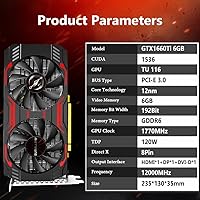
  • GPU Model: The card uses the NVIDIA GTX 1660 Ti graphics processor, based on the TU116 chip.
  • Architecture: Built on NVIDIA Turing architecture using a 12nm manufacturing process for improved efficiency over Pascal-generation cards.
  • CUDA Cores: Features 1536 CUDA cores, which handle the parallel processing workloads required for gaming and light compute tasks.
  • VRAM: Equipped with 6GB of GDDR6 memory, offering faster bandwidth than the GDDR5 found on older GTX 1060 cards.
  • Memory Bus: The memory interface is 192-bit wide, providing a balance of bandwidth and power efficiency suited to 1080p workloads.
  • PCIe Interface: Uses a PCIe 3.0 x16 slot interface, compatible with both PCIe 3.0 and PCIe 4.0 motherboards without performance penalty.
  • Display Outputs: Provides three physical outputs — one HDMI port, one DisplayPort, and one DVI port — supporting up to three simultaneous monitors.
  • Max Resolution: Capable of outputting up to 8K resolution via DisplayPort, though practical gaming performance is optimized for 1080p.
  • Cooling System: Uses a dual-fan cooler with direct-contact copper heat pipes that transfer heat away from the GPU die directly into the heatsink fins.
  • Fan Behavior: The fans operate in semi-passive mode, stopping entirely during idle or low-load conditions to reduce noise and mechanical wear.
  • DirectX Support: Supports DirectX 12, ensuring compatibility with current game titles that rely on modern graphics API features.
  • Dimensions: The card measures 11.14 × 7.99 × 2.52 inches, occupying a standard dual-slot footprint in most mid-tower and full-tower cases.
  • Weight: The card weighs 2.16 pounds, which is within the normal range for a dual-fan mid-range GPU and should not require additional bracket support.
  • Multi-Monitor: Officially supports up to three displays running simultaneously across the HDMI, DisplayPort, and DVI outputs.
  • Brand: Manufactured and sold by SURALLOW, an independent vendor not affiliated with recognized NVIDIA AIB partners such as ASUS, MSI, or Gigabyte.
  • Release Date: Listed as first available in May 2025, which is notably late given that the GTX 1660 Ti GPU was originally launched by NVIDIA in February 2019.
  • Power Connector: The GTX 1660 Ti typically requires a single 8-pin PCIe power connector; buyers should verify their PSU has the appropriate cable before purchase.
  • TDP: The GTX 1660 Ti has a rated TDP of approximately 120W, making it compatible with most 450W or higher power supplies in budget builds.

Related Reviews

PNY GeForce GTX 1660 SUPER 6GB Graphics Card
84%
92%
Value for Money
91%
1080p Gaming Performance
88%
Cooling & Noise Levels
90%
Installation & Compatibility
87%
Graphics Rendering
More
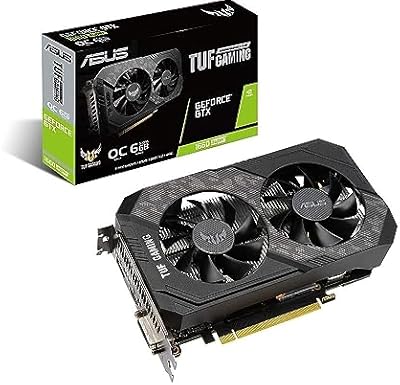
ASUS TUF GTX 1660 Super 6GB GPU
79%
88%
1080p Gaming Performance
86%
Thermal Management
83%
Fan Noise & Acoustics
91%
Build Quality
79%
Value for Money
More
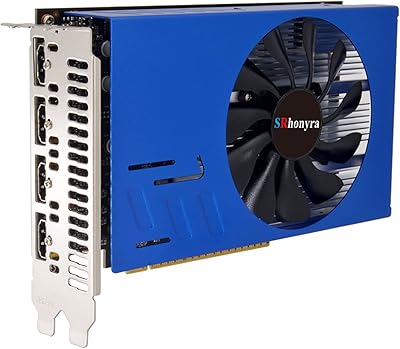
SRhonyra GTX 1050 Ti 4GB Graphics Card
74%
91%
Multi-Monitor Output
87%
Setup & Installation
83%
Driver Stability
71%
Resolution Performance
78%
Thermal Performance
More
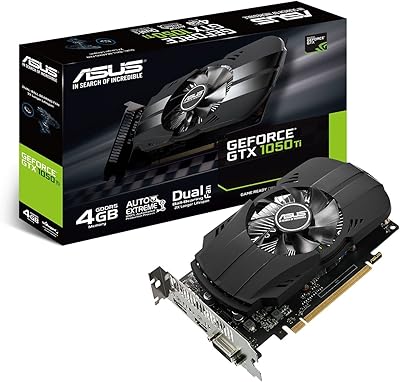
ASUS GTX 1050 Ti 4GB Graphics Card
82%
67%
Gaming Performance
93%
Power Efficiency
91%
Noise & Acoustics
88%
Thermal Management
86%
Build Quality
More
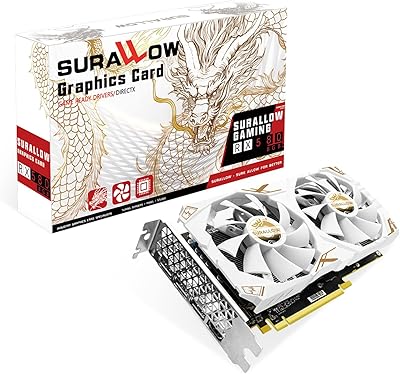
SURALLOW RX 580 8GB Graphics Card
73%
83%
1080p Gaming Performance
78%
Value for Money
76%
Thermal Management & Cooling
61%
Build & Component Quality
89%
Driver Support & Software Compatibility
More
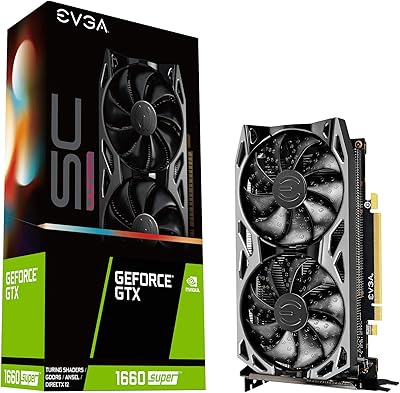
EVGA GeForce GTX 1660 Super 6GB
85%
89%
Gaming Performance (1080p/1440p)
90%
Build Quality & Durability
85%
Cooling Efficiency
88%
Noise Levels
92%
Value for Money
More
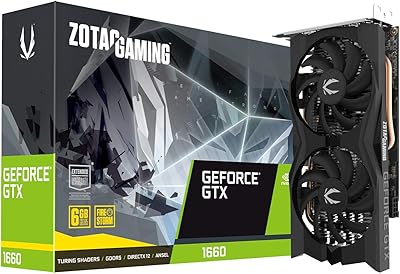
ZOTAC GeForce GTX 1660 6GB GDDR5
84%
88%
Performance at 1080p
92%
Value for Money
85%
Cooling & Noise
90%
Ease of Installation
78%
VR & 4K Gaming Performance
More
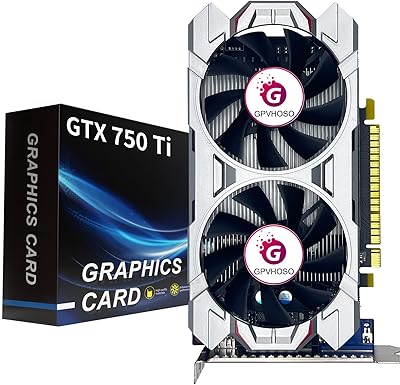
GPVHOSO GTX 750Ti 4GB Graphics Card
75%
71%
Value for Money
52%
Gaming Performance
89%
Power Efficiency
81%
Multi-Monitor Support
86%
Installation Ease
More
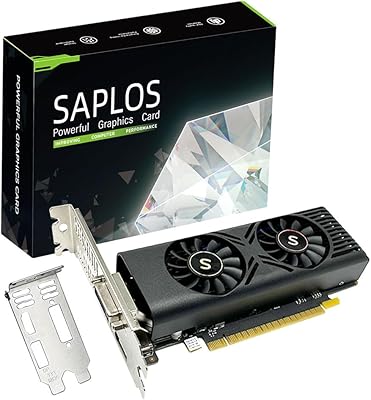
SAPLOS GTX 1050 4GB GDDR5 Graphics Card
83%
92%
Value for Money
85%
Performance for Gaming
90%
Cooling & Noise
88%
Build Quality
91%
Ease of Installation
More
KAER RX590 8GB Graphics Card
70%
71%
1080p Gaming Performance
63%
Value for Money
74%
Thermal Performance
69%
Fan Noise
83%
Driver & Software Support
More

FAQ

For the majority of popular titles at 1080p — esports games, indie releases, and mid-range AAA games from the past few years — yes, it handles them well at medium to high settings. Newer, heavily optimized open-world titles may require dialing settings down to maintain smooth frame rates, but that is true of most cards in this performance tier.

No. The GTX 1660 Ti does not include dedicated RT cores, so hardware-accelerated ray tracing is not supported. If ray tracing or DLSS is important to you, you would need to step up to an RTX-series card instead.

That is a fair concern and one worth taking seriously. SURALLOW is not a recognized NVIDIA AIB partner, and unlike ASUS, MSI, or Gigabyte, there is no long track record to draw from. The SURALLOW GTX 1660 Ti 6GB Graphics Card currently has around 67 ratings on Amazon, which is a limited sample. Early buyers report positive experiences, but if brand reliability and established warranty support are priorities for you, that is a genuine risk factor here.
The GTX 1660 Ti has a TDP of around 120W and typically requires a single 8-pin PCIe power connector. A quality 450W PSU should be sufficient for a typical budget build. If your system runs other power-hungry components, a 550W unit gives comfortable headroom.

Yes. The card includes HDMI, DisplayPort, and DVI outputs, and officially supports up to three simultaneous displays. This makes it a practical option for productivity setups or anyone who wants a multi-monitor arrangement without paying RTX-card prices.

Almost certainly yes. The card uses a PCIe 3.0 x16 interface, which is compatible with any motherboard that has a PCIe x16 slot — including older PCIe 2.0 boards. PCIe is backwards and forwards compatible, so there are no major compatibility hurdles to worry about.

During gaming or sustained load, the dual fans will spin up and produce audible noise — typical of any mid-range cooler. At idle or during light desktop use, the semi-passive mode kicks in and the fans stop entirely, making the card essentially silent. Most users in the early reviews specifically mention appreciating the quiet idle behavior.

It depends on what you value. A used ASUS or MSI GTX 1660 Ti from a trusted seller might offer more brand confidence and a known cooler design, but you take on condition risk and no warranty. This budget graphics card ships new, which eliminates uncertainty about previous use or wear. The trade-off is that you are trusting an unproven brand for that new-card guarantee.

SURALLOW states technical support is available within 24 hours for product concerns, but specific warranty duration and return policy details are not prominently published. Before purchasing, it is worth checking the seller listing and Amazon return window carefully, since warranty coverage from lesser-known brands can vary significantly in practice.

Yes, for the vast majority of mid-tower and full-tower cases. The card measures 11.14 inches in length with a standard dual-slot height profile and weighs just over 2 pounds. Compact mini-ITX builds with tight GPU clearance restrictions may want to double-check case specifications before ordering.