Overview

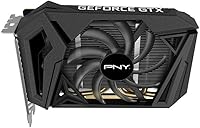
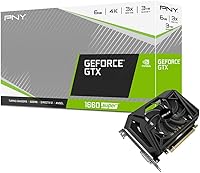
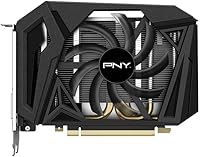
The PNY GTX 1660 Super 6GB Graphics Card arrived at a smart moment in the GPU market, targeting 1080p gamers who wanted a meaningful upgrade without stepping into flagship pricing. Built on NVIDIA's Turing architecture, it brought genuine improvements over the Pascal generation — particularly through more efficient shader execution and a switch to GDDR6 memory that the non-Super version lacked entirely. The single-fan, compact footprint makes it an easy fit in mid-tower and smaller builds where space is tight. Just set expectations accordingly: this GTX 1660 Super is a capable, well-rounded card for 1080p play, not a ray-tracing machine or a 4K contender.
Features & Benefits

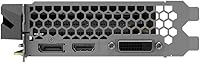
With 6GB of GDDR6 VRAM and 336 GB/s of memory bandwidth, the PNY single-fan card handles texture-heavy titles — think open-world games with dense environments — without the stuttering you get when a card runs out of headroom. The 1408 CUDA cores push consistently smooth frame rates at 1080p, and the 1785 MHz boost clock means the card reaches its stride quickly under load. Turing Shaders handle floating-point and integer operations simultaneously, which translates to noticeably better performance in titles built around that capability. Outputs cover DisplayPort, HDMI, and DVI-D, so multi-monitor setups are straightforward. PCIe 3.0 means it drops into almost any system without fuss.

Best For

This mid-range Turing GPU is a natural pick for 1080p competitive gaming — titles like Fortnite, Valorant, or Apex Legends where hitting 100-plus fps matters. It also makes real sense for anyone upgrading from a GTX 960, 970, or 1060, where the performance jump is substantial enough to feel genuinely refreshing. The compact single-fan design suits smaller cases where a dual-fan card simply will not fit. Light content creators will appreciate the NVENC encoder, which handles streaming and video exports without taxing the CPU heavily. If ray tracing is a priority, look elsewhere — but for pure rasterization performance at this price tier, it is hard to argue against the value.

User Feedback

Across nearly 470 ratings, the PNY single-fan card holds a solid 4.5-star average, and the feedback patterns are fairly consistent. Buyers repeatedly highlight easy installation and reliable plug-and-play behavior, especially those dropping it into existing builds. The card runs quietly under everyday gaming loads, which gets mentioned often as a pleasant surprise. On the critical side, a few owners note that during extended sessions in demanding titles, thermals creep up noticeably — a predictable trade-off with single-fan cooling. Driver setup through GeForce Experience draws mostly positive comments, though a handful found the software bloated. Long-term reliability reports lean positive across both fresh builds and pre-built system upgrades alike.

Pros

  • Handles 1080p gaming at 60 to 144 fps with comfort in most popular titles.
  • The GDDR6 memory upgrade over the non-Super version gives noticeably better performance in texture-heavy games.
  • Compact single-fan design fits easily into smaller cases where space is genuinely limited.
  • Runs quietly under typical gaming loads, which matters more than people expect day to day.
  • PCIe 3.0 interface means it drops into a wide range of older and newer motherboards without compatibility headaches.
  • NVENC encoder handles streaming and video exports efficiently without hammering the CPU.
  • DisplayPort, HDMI, and DVI-D outputs cover almost every monitor and multi-display setup a 1080p user would need.
  • Installation is straightforward — drivers load cleanly and the card is recognized without manual troubleshooting in most cases.
  • Turing architecture delivers better power efficiency than Pascal, keeping heat and noise manageable under normal use.
  • Strong long-term reliability track record based on owner feedback across a large and varied buyer pool.

Cons

  • Single-fan cooling struggles during extended, heavy gaming sessions — temperatures climb more than many buyers anticipate.
  • No ray tracing cores means this mid-range Turing GPU is locked out of that feature in any meaningful way.
  • 6GB of VRAM is starting to feel tight in some newer titles that push higher texture presets.
  • GeForce Experience software is considered bloated by a notable portion of owners and cannot be fully avoided during setup.
  • Performance at 1440p drops off sharply — this card was not designed with that resolution in mind.
  • Buyers in warmer ambient environments or poorly ventilated cases will likely need to monitor thermals actively.
  • No performance headroom for future AAA titles that continue to raise GPU demands year over year.
  • The absence of a dual-fan version in this PNY SKU limits thermal management options compared to competing AIB models.

Ratings

The scores below reflect an AI-driven analysis of verified global buyer reviews for the PNY GTX 1660 Super 6GB Graphics Card, with spam, incentivized submissions, and bot activity actively filtered out before aggregation. Both the strengths that earned this card its loyal following and the genuine frustrations that surface repeatedly in real-world use are transparently reflected. The result is an honest, category-by-category picture of where this mid-range GPU delivers and where it asks buyers to compromise.

1080p Gaming Performance
88%
For the resolution it was built around, this GTX 1660 Super punches consistently well — competitive titles like Valorant and Apex Legends run smoothly above 100 fps, and AAA games hold playable frame rates on high settings without constant tweaking. Gamers upgrading from older Pascal or Maxwell cards report the difference as immediately noticeable.
Performance starts to thin out in the most demanding recent releases, where hitting a stable 60 fps on ultra settings at 1080p requires dropping one or two quality sliders. The card is showing its age against titles released after 2022 that push higher asset complexity.
Value for Money
83%
Buyers consistently describe this card as one of the more honest value propositions in its tier — you get modern Turing efficiency, GDDR6 memory, and a reliable feature set without paying for capabilities most 1080p gamers will never use. For builders on a strict budget, the performance-per-dollar calculation holds up well.
As newer-generation budget GPUs have entered the market, the value argument has softened somewhat, and buyers who catch it at a higher price point during stock shortages tend to feel the deal less keenly. It remains good value, but context and timing matter more than they used to.
Thermal Management
61%
39%
Under everyday gaming loads — a two-hour session in a well-ventilated mid-tower — the single fan does its job quietly and temperatures stay within a reasonable range. Casual gamers and those in cooler environments rarely raise thermal concerns at all.
Extended heavy sessions push temperatures noticeably higher, and buyers in warm rooms or compact cases report the fan ramping up aggressively to compensate. Several owners specifically noted that the single-fan design hits its ceiling faster than dual-fan alternatives from competing AIB partners, which is a real trade-off to consider.
Build Quality & Durability
79%
21%
The card feels solidly constructed for its price tier, and long-term ownership reports across the rating pool are largely positive — few buyers mention early failures or structural issues after months of regular use. The PCB and cooler assembly do not feel cheap or flimsy during installation.
The shroud and fan housing use standard plastic construction rather than anything premium, and a small number of owners have noted that the single fan bearing can develop a faint rattle over time, particularly in units that run hot frequently. It is durable but not built to the standard of higher-tier AIB cards.
Installation & Compatibility
92%
This is one area where the PNY single-fan card earns near-universal praise — it slots into almost any system without drama, the PCIe 3.0 interface covers a huge range of motherboards, and the compact footprint removes the clearance anxiety that comes with larger dual or triple-fan designs. Both first-time builders and experienced upgraders describe setup as refreshingly uneventful.
A very small number of buyers encountered driver conflicts on certain older OEM system configurations, requiring a clean driver install rather than a straightforward update. This is uncommon but worth noting for anyone dropping the card into a pre-built machine with a non-standard software environment.
Noise Levels
77%
23%
At typical gaming loads, the fan is quiet enough that most users do not notice it over game audio or even a moderate ambient environment. Buyers who upgraded from older cards with aging, worn fans specifically call out how noticeably quieter this mid-range Turing GPU is in daily use.
When the card is pushed hard — particularly in graphically intense open-world games running for more than 90 minutes — the fan audibly ramps up in ways that a dual-fan card at similar load would handle more gracefully. It is not disruptive, but it is perceptible.
Driver & Software Experience
74%
26%
NVIDIA's driver ecosystem is mature and well-maintained, and most buyers report that initial setup works cleanly with Windows detecting the card and pulling drivers automatically or with minimal prompting. Game Ready driver updates are frequent and genuinely improve performance in new releases over time.
GeForce Experience, the companion software bundled with NVIDIA cards, draws consistent criticism for being heavier than necessary and pushing notifications that many users find intrusive. A meaningful portion of the rating pool mentions uninstalling or disabling it and managing drivers manually instead.
Power Efficiency
84%
The Turing generation's efficiency gains over Pascal are real and felt in daily use — system power draw during gaming is moderate, and the card does not demand an expensive high-wattage PSU upgrade the way older high-performance cards did. Buyers with modest 450W to 500W power supplies report no issues.
Efficiency is strong relative to its own generation but looks less impressive compared to more recent GPU architectures that have made further gains in performance-per-watt. For buyers prioritizing a very low-power build, newer alternatives may be worth the price premium.
Streaming & Content Creation
81%
19%
The NVENC encoder built into this card is a genuine asset for part-time streamers and light video editors — it offloads encoding from the CPU efficiently, keeping frame rates stable while broadcasting to Twitch or YouTube at 1080p60. Buyers who stream competitive games specifically highlight how much smoother gameplay feels compared to CPU-based encoding.
For heavier production workloads — multi-track video editing, 3D rendering, or batch export pipelines — the 6GB VRAM ceiling becomes a limiting factor relatively quickly, and professional content creators will find this card undersized for sustained creative work.
Display Connectivity
78%
22%
Three separate outputs — DisplayPort, HDMI, and DVI-D — give buyers genuine flexibility for multi-monitor setups, and the inclusion of DVI-D is a practical touch for anyone still running an older monitor without modern inputs. Most dual-monitor desk configurations are covered without any adapter needed.
The card supports a maximum of three simultaneous displays, and buyers looking to run more than that will need a different solution. The absence of a second DisplayPort output also limits certain high-refresh-rate multi-monitor arrangements for competitive setups.
Physical Footprint
87%
At just over 6.6 inches long and occupying two slots, this is a genuinely compact card that opens up build options that a reference-sized or triple-fan GPU would close off. Builders working in smaller mid-towers or upgrading compact pre-built desktops consistently highlight the size as a practical advantage.
The compact design is partly a consequence of the single-fan cooler, which means you are accepting a thermal compromise in exchange for the smaller footprint. There is no version of this PNY SKU with dual-fan cooling, so buyers who want better thermals would need to look at competing AIB models entirely.
Ray Tracing Capability
19%
81%
There is very little positive to say here by design — the GTX 1660 Super was intentionally positioned below the RTX line, and buyers who understood that going in have no complaints about a feature they never expected. For rasterization-only workloads, the absence of RT cores has zero impact on day-to-day gaming.
There are no dedicated RT cores on this chip, making hardware ray tracing unavailable entirely. As more titles ship with ray-traced lighting and shadows as a prominent visual feature, this card is categorically excluded from that experience, and software-based approximations are not a meaningful substitute.
Long-Term Relevance
58%
42%
For buyers who are firmly committed to 1080p gaming and do not plan to push into higher resolutions, this mid-range Turing GPU still performs respectably in the majority of the current game library. Titles optimized for older hardware continue to run well, and the GDDR6 memory gives it more runway than the non-Super variant.
The card is aging noticeably against the trajectory of modern game requirements, and buyers planning for a three-to-five year horizon will increasingly find themselves dropping settings or encountering hard limits in newer releases. It is a solid card today but not a forward-looking investment.

Suitable for:

The PNY GTX 1660 Super 6GB Graphics Card is a strong fit for anyone building or upgrading a PC primarily around 1080p gaming, particularly if the goal is hitting smooth, consistent frame rates in competitive titles or popular AAA releases without overspending. Gamers coming from a GTX 960, 970, or 1060 will notice a genuine performance jump that makes the upgrade feel worthwhile rather than incremental. The compact single-fan design is a practical asset for builders working with smaller mid-tower or slim cases where a dual-fan card would simply not fit. Light streamers and part-time content creators also get real mileage from the NVENC hardware encoder, which offloads streaming and export tasks from the CPU efficiently. If your priority is a quiet, efficient card for everyday 1080p play and you do not need cutting-edge ray tracing, this mid-range Turing GPU delivers solid value for the money.
Not suitable for:

The PNY GTX 1660 Super 6GB Graphics Card is not the right choice for anyone with ambitions beyond 1080p gaming — if 1440p or 4K resolution is the target, this card will struggle to keep frame rates at acceptable levels in demanding titles. Ray tracing enthusiasts should look elsewhere entirely, as this GPU lacks dedicated RT cores and the experience in ray-traced games is poor by any measure. Hardcore gamers who run extended multi-hour sessions in graphically intense titles may find the single-fan cooling solution less capable than a dual or triple-fan alternative, with temperatures climbing higher under sustained load. The PNY single-fan card also leaves professionals doing heavy video production, 3D rendering, or machine learning workloads underserved — those workflows demand more VRAM and compute headroom than this tier provides. If your budget can stretch to a more recent generation GPU, the generational efficiency and feature gaps become harder to ignore.

Specifications

  • GPU Model: The card is built on the NVIDIA GeForce GTX 1660 Super chip, part of NVIDIA's Turing generation released in late 2019.
  • Architecture: Turing architecture enables concurrent floating-point and integer shader execution, improving real-world performance over the previous Pascal generation.
  • CUDA Cores: The card features 1408 CUDA cores, which handle the parallel processing workload in games and GPU-accelerated applications.
  • Base Clock: The GPU runs at a base clock speed of 1530 MHz under standard operating conditions.
  • Boost Clock: Under gaming load, the boost clock reaches up to 1785 MHz, sustaining higher performance during demanding scenes.
  • Video Memory: 6GB of GDDR6 VRAM is onboard, providing significantly higher bandwidth than the GDDR5 used in the non-Super GTX 1660.
  • Memory Bus: The 192-bit memory bus width delivers up to 336 GB/s of memory bandwidth for fast texture and data throughput.
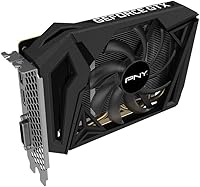
  • Display Outputs: The card provides one DisplayPort, one HDMI, and one DVI-D output, supporting up to three simultaneous displays.
  • Interface: PCIe 3.0 x16 interface ensures compatibility with a broad range of motherboards, including older platforms that lack PCIe 4.0 slots.
  • Max Resolution: The card officially supports output resolutions up to 7680x4320, though gaming at that resolution is not a practical use case for this GPU tier.
  • Cooling System: Cooling is handled by a single fan, making the card notably compact but requiring adequate case airflow for sustained gaming workloads.
  • Dimensions: The card measures 6.61 x 4.96 x 1.57 inches, fitting comfortably in mid-tower cases and many compact builds.
  • Weight: At 1.32 pounds, the card is lightweight and unlikely to stress PCIe slots, even without a GPU support bracket.
  • Power Efficiency: Turing architecture delivers approximately 1.4x better power efficiency compared to the Pascal generation, reducing heat output and fan noise under typical loads.
  • Encoder: The NVENC hardware encoder is included, enabling efficient game streaming and video export without heavily loading the CPU.
  • API Support: The card supports DirectX 12, OpenGL 4.6, and Vulkan, covering the full range of APIs used by modern games and applications.
  • Model Number: The PNY model identifier for this card is VCG16606SSFPPB, useful when cross-referencing driver support or warranty documentation.
  • Release Date: This card first became available in October 2019, positioning it as a mid-cycle Turing refresh targeting the mainstream gaming segment.

Related Reviews

ASUS TUF GTX 1660 Super 6GB GPU
79%
88%
1080p Gaming Performance
86%
Thermal Management
83%
Fan Noise & Acoustics
91%
Build Quality
79%
Value for Money
More
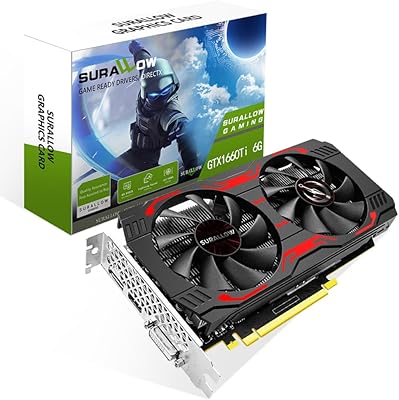
SURALLOW GTX 1660 Ti 6GB Graphics Card
69%
78%
1080p Gaming Performance
61%
Value for Money
74%
Thermal Management
83%
Noise Level
57%
Build Quality
More
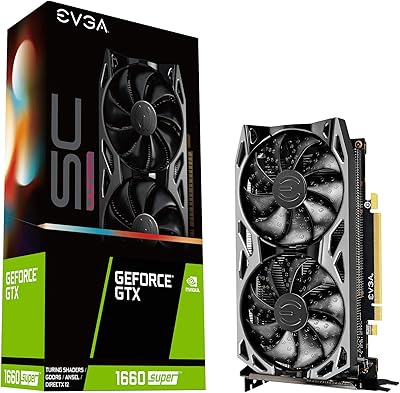
EVGA GTX 1660 Super SC Ultra GPU
81%
88%
1080p Gaming Performance
57%
1440p Gaming Performance
83%
Thermal Management
86%
Noise Levels
62%
VRAM Adequacy
More
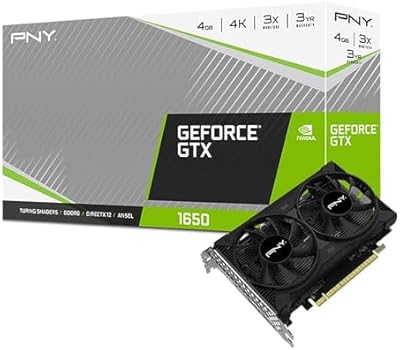
PNY GeForce GTX 1650 4GB GDDR6 Graphics Card
85%
87%
Gaming Performance (1080p)
92%
Value for Money
84%
Cooling & Thermals
90%
Setup & Installation
82%
Noise Levels
More
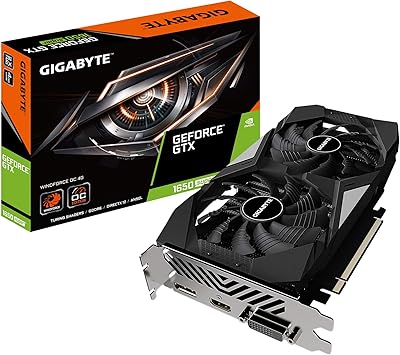
GIGABYTE GeForce GTX 1650 Super Graphics Card
75%
78%
Gaming Performance
86%
Thermal Management
88%
Noise Level
51%
VRAM Capacity
67%
Value for Money
More
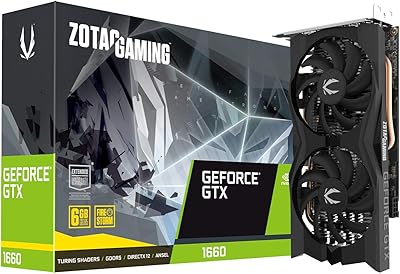
ZOTAC GTX 1660 6GB Graphics Card
76%
83%
1080p Gaming Performance
79%
Value for Money
91%
Form Factor & Fit
66%
Thermal Performance
61%
Noise Level
More
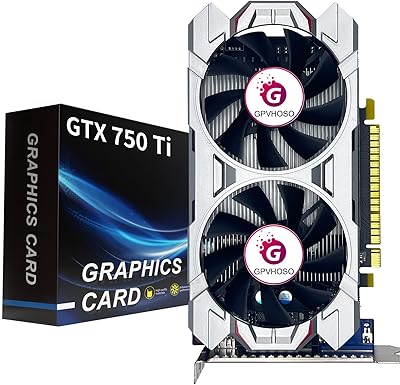
GPVHOSO GTX 750Ti 4GB Graphics Card
75%
71%
Value for Money
52%
Gaming Performance
89%
Power Efficiency
81%
Multi-Monitor Support
86%
Installation Ease
More
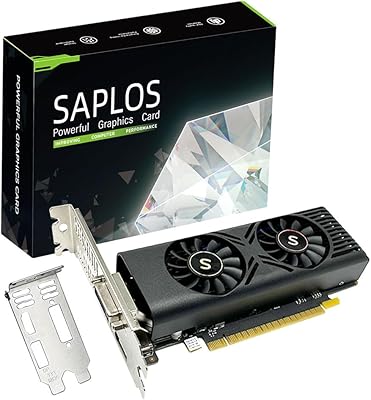
SAPLOS GTX 1050 4GB Graphics Card
77%
83%
Value for Money
61%
Gaming Performance
93%
Installation Ease
78%
Cooling & Noise
86%
Multi-Monitor Support
More
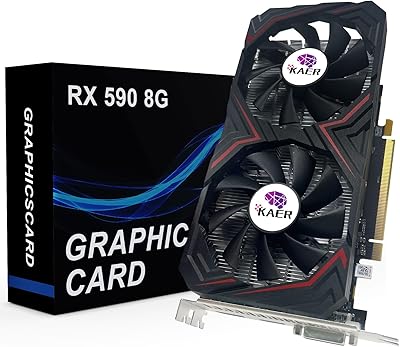
KAER RX590 8GB Graphics Card
70%
71%
1080p Gaming Performance
63%
Value for Money
74%
Thermal Performance
69%
Fan Noise
83%
Driver & Software Support
More
SRhonyra GTX 1050 Ti 4GB Graphics Card
74%
91%
Multi-Monitor Output
87%
Setup & Installation
83%
Driver Stability
71%
Resolution Performance
78%
Thermal Performance
More

FAQ

Almost certainly yes. The PNY GTX 1660 Super 6GB Graphics Card measures just over 6.6 inches in length with a compact single-fan cooler, so it clears the clearance requirements of virtually all standard mid-tower and even many mini-tower cases. Just double-check your case specifications if you are working with a particularly constrained build.
No, this GTX 1660 Super has a rated TDP of 125W and a recommended system power supply of 450W. A decent quality 450W to 550W PSU is more than sufficient for a typical gaming build pairing this card with a mid-range CPU.

Technically it can output at those resolutions, but practically speaking this mid-range Turing GPU was designed and optimized for 1080p. At 1440p you will need to lower settings significantly to maintain smooth frame rates in demanding titles, and 4K gaming is not a realistic use case for this tier of GPU at all.

No. The GTX 1660 Super does not have dedicated RT cores, so hardware-accelerated ray tracing is not available. If ray tracing is a priority for you, you would need to step up to the RTX series instead.

Quite well for most streamers. The NVENC hardware encoder on this card is efficient and produces clean output without hammering your CPU the way software encoding does. For 1080p streaming at 60 fps, most users will find the results more than acceptable.

Under typical gaming conditions, the PNY single-fan card runs quietly — quieter than many dual-fan cards in everyday use. However, during extended sessions in very demanding titles, the fan does spin up more noticeably to manage heat. If you run long gaming sessions in a warm room, good case airflow becomes more important.

In competitive titles like Fortnite, Valorant, or CS2 you can comfortably expect well over 100 fps on high settings. In more demanding AAA games like Cyberpunk 2077 or Hogwarts Legacy, you are looking at 60 fps on medium-to-high settings with some tweaking. It is a solid 1080p performer across the board.

Yes, this mid-range Turing GPU uses a PCIe 3.0 interface natively, so older motherboards are fully supported. It will also work in PCIe 4.0 slots with full backward compatibility and no practical performance loss for gaming workloads.

Most buyers report a smooth experience — Windows typically detects the card and prompts a driver download automatically, or you can grab the latest driver directly from NVIDIA's website. GeForce Experience is bundled software that some users find useful for keeping drivers current, though it is optional if you prefer a leaner setup.

That depends on your budget and expectations. If 1080p gaming at solid frame rates is the goal and the price is right, the GTX 1660 Super remains a capable and reliable choice. That said, newer-generation cards have improved meaningfully in efficiency and feature support, so if your budget allows for something more recent it is worth comparing before committing.

Where to Buy