Overview

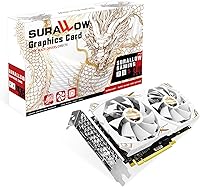
The SURALLOW RX 580 8GB Graphics Card sits in an interesting spot — it's a brand-new card built around AMD's older Polaris architecture, a generation that refuses to die quietly. The RX 580 has been a staple of budget gaming PCs for years, and for good reason: the underlying silicon still holds up at 1080p. SURALLOW is not a name most PC builders recognize, and that's worth acknowledging upfront — this is a third-party board partner, not AMD itself. Holding rank #202 in Computer Graphics Cards on Amazon signals real purchase volume. Just calibrate expectations clearly: this card is built for 1080p gaming, not 4K, and certainly not ray tracing.
Features & Benefits

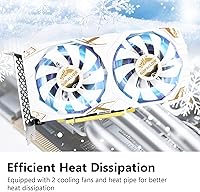
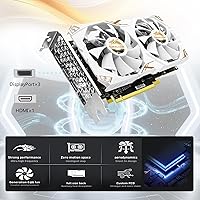
At its core, the SURALLOW GPU packs 2048 stream processors paired with 8GB of GDDR5 memory running across a 256-bit bus — that combination is what made the RX 580 a reliable 1080p workhorse. The base clock sits at 1286 MHz, though real-world boost behavior may push higher depending on thermals and workload. Cooling is handled by a dual-fan setup with direct-contact copper heat pipes, a legitimate thermal design rather than a token heatsink. One practical touch: the fans are semi-passive, spinning down under light loads for quieter everyday use. Output flexibility is solid too, with HDMI, three DisplayPorts, and a DVI connector covering most monitor setups.

Best For

This RX 580 card makes the most sense for someone who needs a capable GPU without spending aggressively. Think integrated-graphics refugees, people retiring a GT 1030, or anyone running an aging card that struggles with modern titles at playable frame rates. It handles 1080p gaming well in titles like Fortnite, CS2, or recent-ish AAA games on medium-to-high settings. The multi-display output also makes it a reasonable pick for home theater rigs or light productivity workstations needing display flexibility. And if you've been burned by used GPUs with unknown mileage, buying this new — even from a smaller brand — is an understandable call.

User Feedback

Across 219 ratings, this budget graphics card holds a 4.0 overall score — respectable territory for a brand with minimal name recognition. Buyers frequently praise easy installation and point to AMD's Adrenalin driver software as a reliability anchor, which genuinely takes pressure off SURALLOW's thin support reputation. The concerns, though, are real: a portion of reviewers flag inconsistent unit quality, and the warranty situation is murky — SURALLOW lacks an established after-sales track record. On the performance side, several buyers note results that track closely with used RX 580s from bigger brands, confirming the AMD hardware itself is doing the heavy lifting, regardless of who manufactured the board.

Pros

  • Genuine 1080p gaming capability at medium-to-high settings in a wide range of titles.
  • Arrives new in box — no used-GPU anxiety about hidden wear or overclocking history.
  • AMD Adrenalin driver support is stable, regularly updated, and completely independent of SURALLOW.
  • Five display outputs, including three DisplayPorts, cover most multi-monitor and home theater configurations.
  • Semi-passive fans keep the system quiet during light workloads and everyday desktop use.
  • PCIe 3.0 interface slots into a wide range of older and current-generation motherboards without compatibility issues.
  • 8GB GDDR5 is sufficient for 1080p texture loads, reducing pop-in and frame instability versus 4GB cards.
  • Holds a 4.0 rating across 219 verified buyers — solid traction for an unknown brand entry.
  • This budget graphics card delivers performance that buyers consistently compare to used name-brand RX 580s.
  • Direct-contact copper heat pipes provide a real thermal solution rather than a token passive heatsink.

Cons

  • SURALLOW has no established warranty process or community reputation to fall back on if something fails.
  • Quality control inconsistency has been flagged by a meaningful portion of negative reviewers.
  • Dead-on-arrival reports exist — the rate is low but non-trivial given the brand's lack of accountability infrastructure.
  • Performance hits a hard ceiling above 1080p; 1440p gaming is not a realistic use case here.
  • The card runs less efficiently than current-generation GPUs, with higher power draw for comparable output.
  • No RGB or aesthetic customization — not ideal for glass-panel builds where visual presentation matters.
  • After-sales support channels are unclear; resolving issues beyond Amazon's return window may be difficult.
  • The DVI port takes up space that could have been a more useful second HDMI output for modern displays.

Ratings

The SURALLOW RX 580 8GB Graphics Card has been scored by our AI system after analyzing verified buyer reviews from global marketplaces, with spam, bot activity, and incentivized feedback actively filtered out. What emerges is a nuanced picture: strong real-world 1080p gaming performance anchored by AMD's proven architecture, offset by legitimate concerns around brand accountability and quality consistency. Both the highs and the frustrations are reflected honestly in every category below.
1080p Gaming Performance
83%
For its target audience — people gaming at 1080p on titles like Fortnite, CS2, or slightly older AAA releases — this RX 580 card delivers fluid, playable frame rates that genuinely impress at its price tier. Buyers consistently report medium-to-high settings feeling smooth without constant dips, which is exactly what this segment of gamer needs.
Push beyond 1080p or load up a more demanding modern title at ultra settings, and the limitations of the Polaris architecture show quickly. This is not a card for anyone chasing high refresh rates in graphically intensive games released in the last two years.
Value for Money
78%
22%
Buying a brand-new GPU with 8GB GDDR5 at this price point is genuinely difficult to argue against for budget builders. Several buyers noted they chose this over second-hand RX 580s from well-known brands specifically because the new-in-box status removes the unknown mileage anxiety that comes with used cards.
The value equation hinges on the card actually lasting. If quality control is inconsistent — and some reviewers suggest it is — a cheaper upfront cost can quickly feel less attractive when factoring in return hassle and limited warranty clarity. Buyers should weigh that risk honestly.
Thermal Management & Cooling
76%
24%
The dual-fan setup with direct-contact copper heat pipes is a real thermal design, not a budget compromise. Under sustained gaming loads, multiple buyers reported temperatures staying within acceptable ranges without the fans ramping to distracting noise levels, which is a meaningful win for longer sessions.
A handful of reviewers noted the cooling solution becomes audible under heavy workloads, and there are occasional reports of temperatures running higher than expected on units that may have received inconsistent thermal paste application during assembly. It performs, but with some variance.
Build & Component Quality
61%
39%
For most buyers, the card arrives functional and well-packaged, and the physical construction feels adequate for its market position. The PCB and shroud do not feel flimsy, and the overall assembly is competent enough for standard desktop installation.
Quality control is the most recurring pain point across negative reviews. A meaningful portion of buyers have flagged dead-on-arrival units or early failures, which points to inconsistency at the manufacturing level rather than a systematic design flaw. For a brand with no established reputation, this is a real concern.
Driver Support & Software Compatibility
89%
This is arguably the strongest card in the SURALLOW GPU's hand: because the underlying chip is AMD silicon, Adrenalin driver support is handled entirely by AMD, not SURALLOW. Buyers get stable, regularly updated drivers with broad game compatibility, which is something no third-party board partner can take credit for — but buyers benefit from it regardless.
Older AMD drivers occasionally require a clean install when updating, which can trip up less experienced builders. A few buyers also noted minor compatibility quirks with specific motherboard configurations, though these are not unique to this card and reflect broader AMD platform behavior.
Installation & Ease of Setup
88%
Easy installation is one of the most frequently praised aspects across verified reviews. The card follows standard PCIe form factor conventions, fits comfortably in mid-tower cases, and requires a single power connector setup that even first-time builders found straightforward to manage.
The card's dimensions — just over 9.4 inches long — can be tight in compact or mini-ITX cases, and a few buyers in smaller builds had to check clearance before it fit cleanly. Not a dealbreaker, but worth measuring before purchase.
Noise Level
74%
26%
The semi-passive fan behavior is a genuinely useful feature for everyday desktop use. When the system is browsing, streaming, or under light load, the fans stop entirely, making the card effectively silent during those periods — something buyers who use their PC for work during the day genuinely appreciated.
Under sustained gaming loads, the fans do engage at higher speeds, and the noise profile is noticeable rather than whisper-quiet. It is not disruptive, but buyers expecting near-silent operation during extended gaming sessions may be slightly disappointed.
Multi-Monitor & Display Output
86%
Five display outputs — HDMI, three DisplayPorts, and a DVI connector — give this budget graphics card an output flexibility that many pricier cards do not bother to include. Buyers setting up triple-monitor productivity desks or home theater configurations found the variety of port options genuinely practical.
The DVI port, while useful for older monitors, is increasingly obsolete, and some buyers wished one of those slots had been a second HDMI instead. Simultaneous use is capped at three displays, which covers most use cases but should be confirmed before building around a four-screen setup.
Compatibility & Platform Flexibility
91%
PCIe 3.0 is broadly compatible with a wide range of motherboards, from older AM3+ and LGA 1150 platforms to current-generation AM5 and LGA 1700 boards running in backward-compatible mode. This makes the card genuinely easy to drop into an existing build without platform concerns.
PCIe 3.0 is not bottlenecked by most realistic use cases for this card, but buyers on very old systems with PCIe 2.0 slots should verify compatibility. It works in most scenarios, but maximum bandwidth may be mildly constrained on truly aging platforms.
Warranty & After-Sales Support
41%
59%
The card ships new in box, which at minimum provides a cleaner starting point than a used GPU with no purchase history. Some buyers reported successful contact with SURALLOW for initial support inquiries, suggesting there is at least some form of customer response infrastructure in place.
SURALLOW has no established warranty reputation, and multiple buyers found the after-sales process frustratingly unclear when issues arose. Unlike established brands with documented return and repair policies, this card comes with meaningful uncertainty around what happens if something goes wrong after the Amazon return window closes.
Form Factor & Physical Design
72%
28%
At just under 9.5 inches long and under 1.6 inches thick, the card fits without drama in most standard mid-tower cases. The dual-slot design is conventional, and buyers appreciate that it does not demand excessive clearance or exotic mounting.
The shroud design is functional but visually plain, with no RGB lighting or aesthetic customization — which may disappoint buyers who care about case aesthetics. For a build behind a glass panel, this card does not add much visual interest.
Memory & VRAM Adequacy
82%
18%
8GB of GDDR5 is genuinely sufficient for 1080p gaming in 2024, including titles with higher texture loads. Buyers moving from 4GB cards noticed an immediate improvement in texture pop-in reduction and more stable frame pacing in memory-heavy games.
The 256-bit bus and GDDR5 standard are aging fast by modern benchmarks. At 1440p or above, VRAM bandwidth becomes a bottleneck, and buyers should understand this card was designed with 1080p as its practical ceiling rather than a future-proofed specification.
Brand Trustworthiness
48%
52%
To SURALLOW's credit, the majority of buyers receive a functioning product that performs as described, and the AMD driver ecosystem removes one of the biggest brand-dependency risks. For buyers who research thoroughly and purchase through Amazon's buyer protection, the risk is somewhat mitigated.
SURALLOW is an unknown quantity with no meaningful track record, no community presence in major PC building forums, and no established RMA process that buyers can point to. Skepticism about the brand is common in reviews and entirely reasonable — this is a trust gap the brand has not yet closed.
Power Efficiency
58%
42%
The 14nm Polaris process is not power-hungry by modern standards relative to its performance output, and buyers with modest power supplies in the 500W range found it ran without issues under normal gaming conditions.
Compared to more recent GPU architectures, the RX 580 is not a model of efficiency. Buyers in regions with high electricity costs, or those running already-loaded power supplies, should account for the card's real-world power draw, which sits meaningfully higher than current-generation competitors at similar performance tiers.

Suitable for:

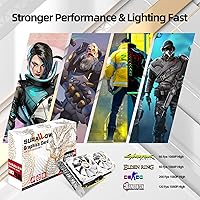
The SURALLOW RX 580 8GB Graphics Card is a practical pick for budget-conscious PC builders who need a functional, new-in-box GPU without stretching their spending. If you're running integrated graphics or a card from the GTX 900 or RX 400 generation, the performance jump here is real and noticeable in everyday gaming. It's well-matched for anyone gaming at 1080p in titles like Fortnite, CS2, Rocket League, or moderately demanding AAA games from the last five to six years — expect medium-to-high settings with playable, stable frame rates. The five display outputs also make it a surprisingly capable pick for multi-monitor productivity desks or home theater setups where output variety matters more than raw graphical horsepower. And if you've been burned by mystery-mileage used GPUs before, buying this card new through Amazon's buyer protection offers a meaningful layer of peace of mind that the second-hand market simply cannot.
Not suitable for:

The SURALLOW RX 580 8GB Graphics Card is the wrong tool for buyers chasing 1440p or 4K performance — the Polaris architecture and 256-bit GDDR5 memory bus were not designed for those workloads, and no amount of driver tuning will change that reality. Gamers who prioritize high refresh rate competitive play in graphically intense titles will hit a ceiling faster than they expect. If brand reputation, established warranty support, and a documented RMA process are non-negotiable for you, this card's manufacturer — SURALLOW — does not yet have the track record to satisfy those requirements, and that is a legitimate concern worth taking seriously. Content creators who rely on GPU-accelerated rendering or encoding will also find the aging architecture a bottleneck compared to more current options. Finally, anyone planning to run this card in a small form factor or mini-ITX build should verify case clearance carefully, as the card's length can cause fitment issues in tighter enclosures.
Specifications

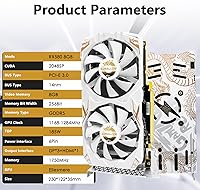
  • GPU Architecture: Built on AMD's Polaris GCN 4th Gen architecture, manufactured on a 14nm process node.
  • Stream Processors: Equipped with 2048 stream processors for handling parallel compute and rendering workloads at 1080p.
  • VRAM: 8GB of GDDR5 dedicated video memory provides sufficient headroom for modern 1080p gaming textures.
  • Memory Bus: A 256-bit memory bus enables adequate bandwidth for 1080p workloads and multi-display output scenarios.
  • Memory Clock: The GDDR5 memory operates at 1750 MHz, contributing to stable texture streaming at the card's target resolution.
  • Base GPU Clock: The base GPU clock is rated at 1286 MHz; actual boost behavior under load may vary by thermal conditions.
  • Interface: Uses a PCIe 3.0 x16 interface, compatible with a wide range of current and legacy motherboard platforms.
  • Display Outputs: Provides 1x HDMI 2.0b, 3x DisplayPort 1.4a, and 1x DVI-D port for broad monitor and display compatibility.
  • Max Displays: Supports up to 3 simultaneous display outputs, suitable for multi-monitor productivity or home theater setups.
  • Cooling System: Dual-fan cooling with direct-contact copper heat pipes channels heat away from the GPU die into a fin array.
  • Fan Behavior: Semi-passive fan mode allows fans to stop completely under low load, reducing noise during light desktop use.
  • Card Dimensions: The card measures 9.42 x 3.74 x 1.59 inches, occupying a standard dual-slot footprint in most mid-tower cases.
  • Card Weight: Weighs 1.9 pounds, within the typical range for a dual-fan mid-range GPU and requiring no additional bracket support in most builds.
  • Power Connector: Requires an external PCIe power connector; buyers should confirm their PSU has the appropriate cable before installing.
  • Recommended PSU: A power supply of at least 500W is generally recommended to ensure stable operation under sustained gaming loads.
  • API Support: Supports DirectX 12, Vulkan 1.2, and OpenGL 4.6, covering the majority of modern game engine requirements.
  • Brand: Manufactured and sold by SURALLOW, a third-party AMD board partner with limited established market history.
  • Amazon BSR: Ranked #202 in Computer Graphics Cards on Amazon, indicating consistent and meaningful purchase volume in its category.

Related Reviews
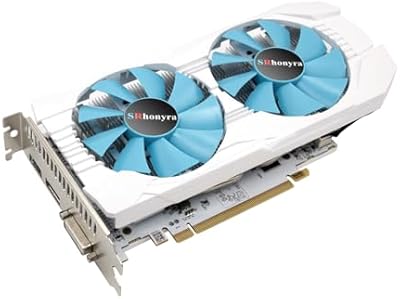
SRhonyra RX 580 8GB GDDR5 Graphics Card
81%
91%
Value for Money
88%
Performance at 1080p
85%
Cooling Efficiency
87%
Ease of Installation
83%
Multi-Display Support
More
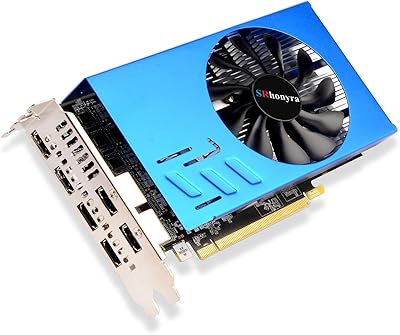
Sapphire NITRO+ RX 580 8GB Graphics Card
80%
84%
1080p Gaming Performance
88%
Thermal Management
91%
Build Quality
83%
Value for Money
57%
Power Efficiency
More
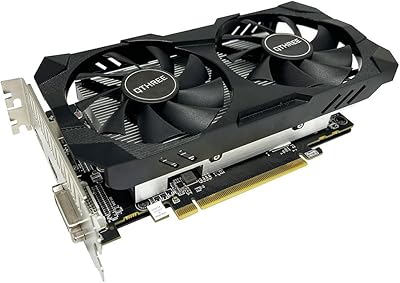
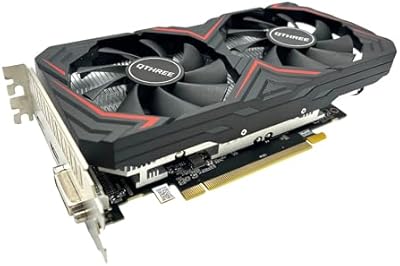
QTHREE Radeon RX 590 GME 8GB Graphics Card
69%
72%
Value for Money
67%
1080p Gaming Performance
63%
Cooling Efficiency
84%
Ease of Installation
68%
Driver Stability
More
SRhonyra RX 580 8GB 6-Monitor Graphics Card
75%
91%
Multi-Monitor Output
78%
Setup & Installation
83%
Locked Resolution Stability
88%
Power Efficiency
76%
Video Wall Splicing
More
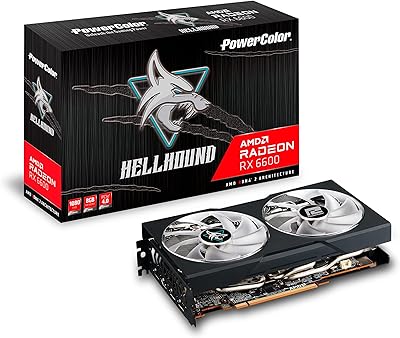
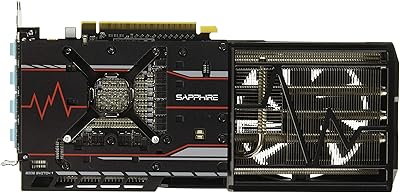
PowerColor Hellhound AMD Radeon RX 6600 8GB Graphics Card
85%
91%
Value for Money
88%
Gaming Performance (1080p)
85%
Cooling Efficiency
75%
Noise Level Under Load
90%
Ease of Installation
More
QTHREE Radeon RX 560 XT 8GB Graphics Card
68%
61%
Value for Money
53%
Gaming Performance
88%
Installation & Setup
67%
Thermal Performance
58%
Fan Noise
More
Sapphire Radeon RX Vega 56 8GB HBM2 Graphics Card
83%
89%
Performance at 1440p and 1080p
84%
Cooling System Efficiency
91%
Value for Money
70%
Size and Compatibility
85%
Build Quality and Durability
More
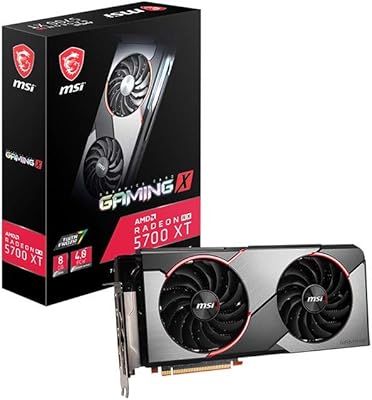
MSI Radeon RX 5700 XT Gaming X 8GB GDDR6 Graphics Card
84%
91%
Gaming Performance
84%
Cooling Efficiency
88%
RGB Lighting Customization
70%
Driver/Software Installation
65%
Noise Levels Under Load
More
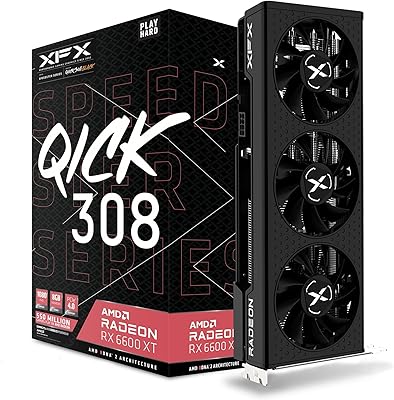
XFX QICK308 RX 6600 XT Graphics Card
79%
88%
1080p Gaming Performance
67%
1440p Gaming Performance
91%
Cooling Performance
86%
Noise Levels
53%
Ray Tracing Performance
More
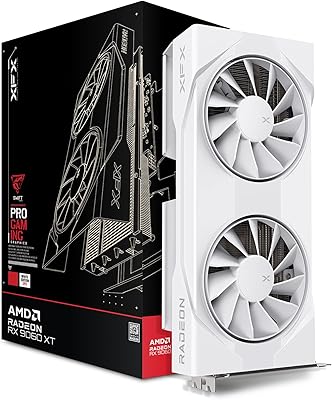
XFX RX 9060 XT 8GB Graphics Card
82%
88%
Gaming Performance at 1440p
93%
Gaming Performance at 1080p
67%
VRAM Adequacy
86%
Thermal Performance
89%
Noise Levels
More

FAQ

For 1080p gaming, the RX 580 is still genuinely capable. Titles like Fortnite, CS2, and most AAA games from the past several years run at medium-to-high settings with stable frame rates. It is not a card for 1440p or anything above that, but within its target resolution it holds up better than many people expect from its age.

A 500W power supply is the practical minimum for stable operation, assuming the rest of your system is not unusually power-hungry. If you have a high-core-count CPU or multiple storage drives, giving yourself a bit more headroom — say 550W to 600W — is the safer approach. Make sure your PSU also has the correct PCIe power connector available.

Driver installation is handled through AMD directly, not SURALLOW. Once the card is seated and your system boots, head to AMD's official website and download the latest Adrenalin Edition drivers for the RX 580. A clean install is recommended if you are switching from an Nvidia card, and AMD's installer includes a clean install option built in.

Yes, the card supports up to three simultaneous displays using any combination of its HDMI, DisplayPort, and DVI outputs. Just keep in mind that all three active connections need to be in use at the same time for the multi-display setup to function — the card does not output to more displays than it detects as connected and active.

In most standard mid-tower cases it will fit without issue — the card is just over 9.4 inches long and takes up two expansion slots. Where you need to be careful is in smaller cases, particularly mini-ITX or micro-ATX builds with restricted GPU clearance. Measure your available GPU length before ordering if your case is on the compact side.

Under light loads — browsing, streaming, light desktop work — the fans stop entirely, so the card is effectively silent in those situations. During sustained gaming sessions the fans do spin up and you will hear them, but most buyers describe the noise as noticeable rather than disruptive. It is not a silent card under load, but it is not particularly loud either.

That concern is fair and worth taking seriously. SURALLOW does not have the brand history or documented warranty process that established names like Sapphire or PowerColor carry. The practical upside is that AMD handles all driver and software support, which removes one major risk. The real exposure is hardware quality consistency and what happens if something goes wrong outside of Amazon's return window — for that reason, buying through Amazon and keeping your purchase history is a smart move.

Several buyers have noted the performance is comparable to second-hand cards from bigger board partners, which makes sense since the underlying AMD GPU is the same. The main advantage here is that you get a new card with a known history rather than a used one with unknown mileage, previous overclocking, or mining duty. The trade-off is paying a slight premium over the cheapest used options and accepting some uncertainty around the lesser-known manufacturer.

It can technically output a 4K signal to a display, but gaming at 4K is not a realistic use case for this card. The architecture and memory bandwidth were designed around 1080p performance, and pushing to 4K will result in frame rates that are too low for a comfortable experience in most games. For 4K gaming you would need a significantly more capable GPU.

If the card arrives non-functional or fails within Amazon's return window, the standard Amazon return process is your most reliable path — initiate a return or replacement directly through your order. Beyond that window, your options depend on SURALLOW's own warranty policy, which is not clearly documented and has been a point of frustration for some buyers. This is one reason it is worth keeping your Amazon order confirmation and registering the product if SURALLOW offers any form of product registration.