Overview

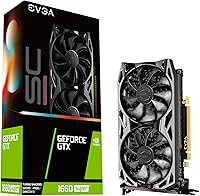
The EVGA GTX 1660 Super SC Ultra GPU arrived in late 2019 as NVIDIA's answer to budget-conscious gamers who wanted meaningful performance without stepping into flagship pricing. EVGA has long been one of the most trusted names in discrete graphics, known for tight quality control and a warranty program that actually delivers. Built on the Turing architecture, this mid-range Turing card benefits from the same generational efficiency improvements that powered the RTX lineup — just without the ray tracing cores. Set expectations honestly: it's a strong 1080p performer, capable in lighter 1440p titles, but demanding modern games at high resolution will push its limits. It still holds real value in today's used market.
Features & Benefits

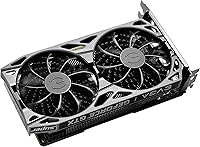
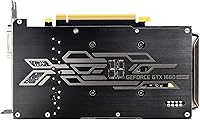
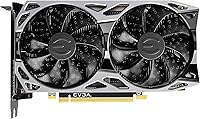
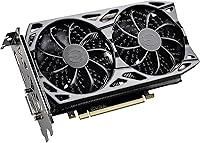
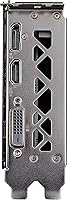
The factory overclock pushes the boost clock to 1830 MHz, which translates to a small but consistent performance edge over the reference GTX 1660 Super — noticeable in frame-rate-sensitive games. The 6GB of GDDR6 memory running at 14,000 MHz keeps texture streaming smooth in most 1080p titles, though VRAM-hungry games released in 2023 and beyond can start to feel the squeeze. The dual-fan cooler does a solid job maintaining reasonable temps under sustained gaming loads, and it runs quietly enough that you won't notice it over game audio. The all-metal backplate adds structural rigidity, reduces PCB flex during installation, and helps pull heat away from the back of the board passively. Connectivity covers DVI, DisplayPort, and HDMI, and the compact footprint fits comfortably in mid-tower and mATX cases.

Best For

This EVGA 1660 Super makes the most sense for 1080p competitive gamers who want high, stable frame rates in titles like Valorant, CS2, or Apex Legends without spending more than necessary. It's also a natural fit for anyone still running a GTX 970 or 1060 — the performance jump is meaningful and the Turing efficiency improvements help keep power draw reasonable. Builders working with mATX cases will appreciate the compact dual-slot design. Content creators who rely on NVIDIA's NVENC encoder for streaming or light video work get solid results without needing a workstation card. If EVGA's warranty and step-up program matter to you, that's an extra layer of confidence most competitors don't match.

User Feedback

With over 1,500 ratings averaging 4.7 stars, buyer sentiment is overwhelmingly positive — and the reasons are fairly consistent. People appreciate how straightforward the card is to install and how it performs well right out of the box without needing manual tuning. The SC Ultra variant earns particular praise for running quietly during everyday gaming sessions. That said, a handful of users mention sensitivity to driver updates causing occasional instability, and a few report that temperatures can climb under prolonged heavy loads if case airflow isn't adequate. Long-term owners generally speak positively about build quality and longevity, and EVGA's customer support reputation holds up in the feedback. Value for money comes up frequently as a reason buyers feel satisfied with their purchase.

Pros

  • Factory overclocked out of the box, so you get a free performance bump without touching any settings.
  • Runs noticeably quiet during normal gaming sessions — the dual-fan cooler earns its keep without being intrusive.
  • 6GB of GDDR6 memory handles 1080p gaming in most titles without breaking a sweat.
  • The all-metal backplate adds real structural integrity and helps the card feel premium, not cheap.
  • Installation is straightforward — buyers consistently report it as a plug-and-play experience.
  • Compact footprint fits comfortably in mATX and smaller mid-tower builds where larger cards simply won't go.
  • EVGA's warranty and customer support reputation is one of the best in the GPU business.
  • NVENC encoder support makes it a capable streaming and light video editing companion.
  • Maintains strong resale value and community support given the large installed user base.
  • DVI, DisplayPort, and HDMI outputs give you genuine flexibility for mixed or multi-monitor setups.

Cons

  • 6GB of VRAM is increasingly tight in newer AAA titles, especially with high-resolution texture packs.
  • No ray tracing support whatsoever — a hard limitation of the non-RTX Turing lineup.
  • Driver updates have occasionally caused instability for some users, requiring rollbacks to stay stable.
  • Temperatures can climb under prolonged heavy loads if your case airflow isn't well managed.
  • 1440p performance in graphically demanding modern games requires significant settings compromises.
  • The card is several years old now, meaning it has fewer years of relevance ahead than newer alternatives.
  • No support for DLSS, which has become a meaningful performance tool in an expanding library of games.
  • Power delivery requires a dedicated PCIe connector — worth checking older PSUs for compatibility before buying.

Ratings

The scores below were generated by our AI review engine after analyzing thousands of verified global buyer reviews for the EVGA GTX 1660 Super SC Ultra GPU, with automated filtering applied to remove incentivized, duplicate, and bot-generated feedback. The result is an honest, data-grounded picture of where this card genuinely excels and where real buyers have run into friction. Both the strengths and the limitations are reflected transparently so you can make a confident, eyes-open purchasing decision.

1080p Gaming Performance
88%
At 1080p, this mid-range Turing card consistently delivers high, stable frame rates in both competitive shooters and mid-to-high settings AAA titles. Buyers upgrading from Pascal or Maxwell cards report an immediately noticeable jump in smoothness, especially in fast-paced multiplayer games where frame rate consistency matters more than peak numbers.
In the most graphically demanding modern titles — particularly those released after 2022 — hitting 60+ fps at high settings requires dialing back textures or shadow quality. The card is not struggling, but it is no longer coasting the way it did at launch, and that gap will continue to widen.
1440p Gaming Performance
57%
43%
Lighter competitive titles and older releases run at 1440p with reasonable frame rates, giving buyers with higher-resolution monitors a usable experience in a narrower slice of their game library. For esports-focused gamers who predominantly play titles like CS2 or Rocket League, 1440p remains accessible.
Demanding open-world or visually intensive games at 1440p expose the 6GB VRAM ceiling quickly, forcing aggressive settings compromises that undermine the point of gaming at that resolution. Buyers who purchased this card expecting 1440p as a primary target frequently report disappointment once they hit those limits.
Thermal Management
83%
Under typical gaming conditions, the dual-fan cooler keeps temperatures well within a comfortable operational range, and the card rarely thermal throttles during standard one-to-two hour gaming sessions. Buyers running the card in well-ventilated mid-tower builds report consistently stable temps that never become a concern.
In cases with restricted airflow — small enclosures, dense mATX builds, or hot ambient environments — temperatures climb more aggressively under prolonged load, and some users have noted throttling during extended benchmark or stress-test scenarios. The cooler performs well for its size, but it has less thermal headroom than larger triple-fan designs.
Noise Levels
86%
The SC Ultra variant earns consistent praise for staying impressively quiet during everyday gaming, with the fans remaining nearly inaudible at low-to-moderate loads. Buyers who game without headphones or in living room setups specifically call out the low acoustic profile as a standout quality.
Under full sustained load, fan noise does become perceptible — not intrusive, but present. A small number of users reported slight coil whine under specific GPU load conditions, which is a known characteristic of some units rather than a universal complaint.
VRAM Adequacy
62%
38%
For 1080p gaming in the majority of titles released through 2021, 6GB of GDDR6 is more than sufficient, and buyers report smooth texture loading and minimal stuttering in their day-to-day game library. The fast 14,000 MHz memory speed helps the card punch above its weight in memory bandwidth-sensitive scenarios.
Newer titles — especially those with high-resolution texture packs or open-world streaming systems — are increasingly breaching the 6GB threshold at 1080p high settings, causing visible stuttering or forced settings reductions. This is the most commonly cited long-term frustration among buyers who have held onto the card for two or more years.
Build Quality
91%
The pre-installed all-metal backplate gives the card a premium, solid feel that buyers notice immediately out of the box, and there are virtually no reports of flexing, creaking, or poor fitment. EVGA's manufacturing tolerances are tight, and the overall construction inspires confidence in long-term durability.
A very small number of buyers received units with minor cosmetic blemishes or slightly misaligned fan shroud panels, though these appear to be isolated quality control outliers rather than a systemic issue. Functionally, the build quality complaints are rare enough to be statistically negligible.
Ease of Installation
94%
Installation is described by the vast majority of buyers as completely painless — slot it in, connect the 8-pin power cable, and it works. First-time builders specifically call out the straightforward process as confidence-building, with no software hoops or complicated setup steps required to get into a game.
A handful of users encountered driver conflicts on systems with integrated graphics or residual AMD GPU software, requiring a clean driver install to resolve. These cases are uncommon and are more a reflection of Windows driver management than any fault of the card itself.
Value for Money
78%
22%
At the right price point — particularly on the used or refurbished market — the SC Ultra variant represents a strong return on investment for 1080p gaming, and buyers who paid competitive prices consistently rate it as money well spent. The factory overclock adds tangible performance without requiring any user tinkering.
At full retail pricing, the value calculation becomes harder to justify given what the same budget can now buy in terms of newer-generation hardware with more headroom. Buyers who purchased near launch pricing feel satisfied, but those evaluating it today against current alternatives are right to scrutinize the ask carefully.
Driver Stability
71%
29%
For most users running standard NVIDIA driver releases on clean Windows installs, the card operates without any notable stability issues across a wide variety of games and workloads. Long-term owners report that the card has been reliably stable across multiple years of driver updates in the vast majority of cases.
A recurring minority of users report instability following specific NVIDIA driver updates, requiring rollbacks to previous versions to restore normal operation. The issue is not unique to this card — it affects the GTX 16 series broadly — but it is frequent enough to appear consistently in negative reviews and warrants awareness.
Streaming & Encoding
84%
The 7th-generation NVENC hardware encoder produces clean stream output at 1080p60 without meaningfully impacting in-game performance, making this a legitimate dual-purpose card for gamers who also stream. Buyers who use OBS or XSplit specifically praise how little the encoding overhead affects their gaming frame rates.
At higher streaming bitrates or when encoding 1440p output, the encoder begins to show its generational age compared to the more capable NVENC implementation in RTX 30-series cards. It is sufficient for most streamers but not ideal for those pushing broadcast-quality output at maximum settings.
Longevity & Reliability
87%
Buyers who have owned the card for two or more years frequently return to leave positive updates, noting that the card continues to operate without faults well beyond its first year of use. EVGA's component selection and quality control reputation appears to translate into real-world longevity based on longer-term owner feedback.
As a card that is now several years into its lifecycle, buyers should factor in the diminishing performance headroom for future game releases rather than hardware failure risk. The card is reliable, but its useful life as a primary gaming GPU is closer to its end than its beginning for demanding users.
Display Compatibility
82%
18%
The combination of DVI, DisplayPort, and HDMI outputs covers an unusually wide range of monitor types, including older DVI-only panels that newer cards have dropped support for entirely. Buyers with mixed monitor setups or older secondary displays consistently cite the DVI port as a practical differentiator.
The card supports only three display outputs total, and running all three simultaneously can introduce minor configuration quirks depending on the monitor combination used. Users looking to drive four or more displays will need a different solution, as this is firmly a one-to-three display card.
Form Factor & Compatibility
89%
The compact dual-slot footprint makes this one of the more case-friendly options in its performance class, fitting comfortably into mATX builds and smaller mid-towers where longer triple-slot cards simply cannot go. Buyers building in tighter enclosures specifically sought out this card for its dimensions and were consistently satisfied.
While the card fits most standard cases without issue, buyers with very compact ITX enclosures should still verify GPU length clearance before purchasing. The dual-slot design also means less surface area for heat dissipation compared to larger coolers, which contributes to the thermal limitations noted under sustained load.
Manufacturer Support
88%
EVGA's warranty service and customer support responsiveness are mentioned positively far more often than with most competing GPU brands, with buyers describing smooth RMA processes and helpful direct communication. The step-up program, which allowed buyers to trade toward newer cards within a set window, built meaningful brand loyalty among early adopters.
EVGA's decision to exit the GPU market means that the long-term support ecosystem for this card is now finite, and the step-up program is no longer available for new purchases. Buyers relying on EVGA's ongoing ecosystem benefits should factor this change into their decision.

Suitable for:

The EVGA GTX 1660 Super SC Ultra GPU is a practical choice for anyone building or upgrading a 1080p gaming PC on a reasonable budget. If you're still running a GTX 970, 1060, or anything from the 900 or 1000 series, the performance jump here is substantial enough to feel genuinely worthwhile. Competitive gamers who prioritize high frame rates in titles like Valorant, CS2, or Apex Legends will get exactly what they need without paying for features they'll never use. The compact dual-slot form factor also makes this a strong pick for mATX builders or anyone working in a smaller chassis where a triple-slot cooler simply won't fit. Streamers and light video editors who rely on NVIDIA's NVENC encoder will find it handles those workloads capably alongside gaming. If EVGA's warranty program and customer support track record factor into your buying decision, that's a legitimate added value that not every GPU manufacturer can match.
Not suitable for:

The EVGA GTX 1660 Super SC Ultra GPU is not the right call for anyone planning to game primarily at 1440p or higher resolutions in demanding modern titles. Games like Cyberpunk 2077, Alan Wake 2, or other VRAM-hungry releases will push the 6GB frame buffer to its limits, and you'll often need to dial down settings more than you'd expect at that resolution. Buyers hoping to explore ray tracing should look elsewhere entirely, as this card lacks the dedicated RT cores found on the RTX lineup. If you're building a future-proof workstation for professional 3D rendering, serious video production, or machine learning tasks, the compute headroom simply isn't there. Those who want to stay ahead of the hardware curve for the next four or five years would be better served saving for a more current-generation card, since this mid-range Turing card is increasingly showing its age in the face of newer GPU releases.
Specifications

  • GPU Chip: Powered by the NVIDIA GeForce GTX 1660 SUPER, built on the Turing architecture with 1408 CUDA cores.
  • Boost Clock: The factory overclock delivers a boost clock of 1830 MHz, slightly above the reference GTX 1660 Super specification.
  • VRAM: Equipped with 6GB of GDDR6 memory running at 14,000 MHz effective speed for fast texture and data throughput.
  • Memory Bus: The memory interface operates across a 192-bit bus width, balancing bandwidth efficiency for 1080p workloads.
  • Cooling System: A dual-fan active cooling setup manages thermals under sustained gaming loads while keeping noise levels acceptably low.
  • Backplate: An all-metal backplate comes pre-installed, adding structural rigidity and providing minor passive heat dissipation from the rear PCB.
  • Display Outputs: Connectivity includes one DVI port, one DisplayPort, and one HDMI port, supporting up to three simultaneous displays.
  • Max Resolution: Officially supports output resolutions up to 7680x4320 (8K) via DisplayPort, though gaming performance is optimized for 1080p.
  • Dimensions: The card measures 7.96 x 1.54 x 4.38 inches, occupying a standard dual-slot profile suitable for most mid-tower and mATX cases.
  • Weight: The card weighs 1.2 pounds, which is typical for a dual-fan mid-range GPU and unlikely to stress standard PCIe slots.
  • Power Connector: Requires a single 8-pin PCIe power connector, with a recommended system PSU of at least 450W for stable operation.
  • TDP: The card carries a thermal design power rating of 125W, making it relatively efficient for its performance tier.
  • API Support: Supports DirectX 12, OpenGL 4.6, and Vulkan, covering the full range of modern game and application rendering APIs.
  • Encoder: Includes NVIDIA's 7th-generation NVENC hardware encoder, well-suited for game streaming and light video export tasks.
  • Architecture: Built on NVIDIA's Turing architecture (12nm process), which introduced significant shader and efficiency improvements over Pascal.
  • Model Number: The official EVGA model designation is 06G-P4-1068-KR, used for warranty registration, driver support, and part identification.
  • Manufacturer: Designed and produced by EVGA, a company recognized in the enthusiast community for strict quality control and responsive customer support.
  • Availability Date: First made available on October 29, 2019, positioning it as part of NVIDIA's mid-cycle refresh of the GTX 16 series lineup.

Related Reviews

EVGA GTX 1650 Super 4GB Graphics Card
72%
83%
1080p Gaming Performance
76%
Value for Money
61%
VRAM Adequacy
79%
Thermal Management
88%
Build Quality
More
PNY GTX 1660 Super 6GB Graphics Card
74%
88%
1080p Gaming Performance
83%
Value for Money
61%
Thermal Management
79%
Build Quality & Durability
92%
Installation & Compatibility
More
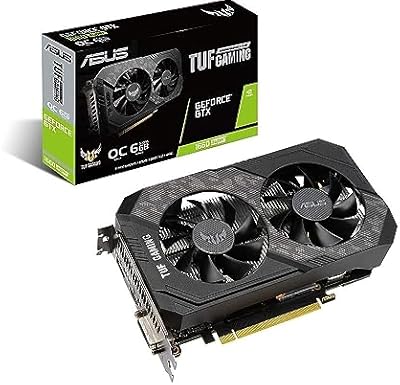
ASUS TUF GTX 1660 Super 6GB GPU
79%
88%
1080p Gaming Performance
86%
Thermal Management
83%
Fan Noise & Acoustics
91%
Build Quality
79%
Value for Money
More
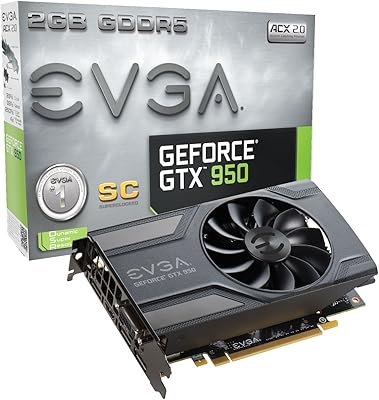
EVGA GTX 950 SC 2GB Graphics Card
76%
67%
Gaming Performance
52%
VRAM Adequacy
91%
Noise & Cooling
94%
Form Factor & Size
88%
Power Efficiency
More
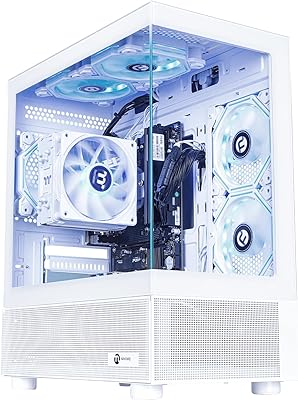
NINGMEI Soul Ryzen 5 5600GT Gaming PC
74%
84%
Value for Money
61%
Gaming Performance
88%
Upgrade Potential
79%
Build Quality & Aesthetics
67%
Thermal Management
More
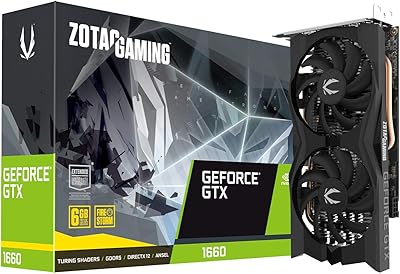
ZOTAC GTX 1660 6GB Graphics Card
76%
83%
1080p Gaming Performance
79%
Value for Money
91%
Form Factor & Fit
66%
Thermal Performance
61%
Noise Level
More
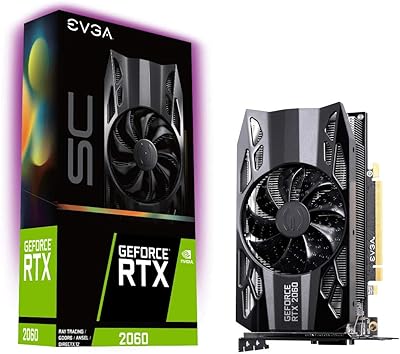
EVGA GeForce RTX 2060 SC 6GB GDDR6
84%
91%
Performance for 1080p Gaming
88%
Cooling Efficiency
92%
Value for Money
86%
Ray Tracing & DLSS Features
85%
Performance for 1440p Gaming
More
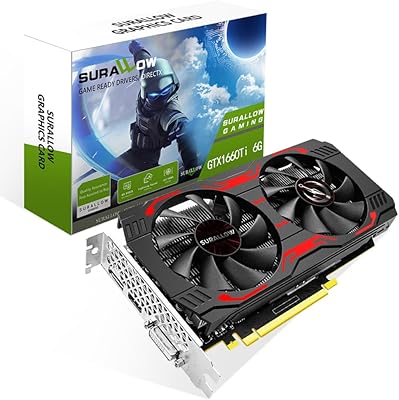
SURALLOW GTX 1660 Ti 6GB Graphics Card
69%
78%
1080p Gaming Performance
61%
Value for Money
74%
Thermal Management
83%
Noise Level
57%
Build Quality
More
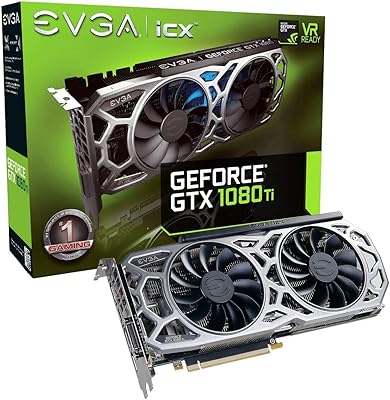
EVGA GeForce GTX 1080 Ti 11GB Graphics Card
80%
88%
Gaming Performance
91%
Thermal Management
83%
Noise Level
89%
Build Quality
87%
VRAM Capacity
More
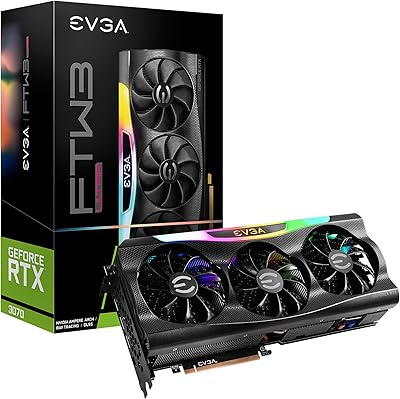
EVGA RTX 3070 FTW3 Ultra Graphics Card
77%
94%
Thermal Performance
91%
Noise Level
93%
Build Quality
88%
Gaming Performance at 1440p
67%
Gaming Performance at 4K
More

FAQ

It depends on your use case and what you're paying for it. The EVGA GTX 1660 Super SC Ultra GPU still holds up well for 1080p gaming in most titles, and if you're upgrading from a GTX 970 or 1060, the difference is very noticeable. On the used market at the right price, it remains a sensible pick. For a brand-new purchase at full retail, you'd want to compare it against newer budget options before committing.
It can, but with some caveats. Less demanding or older titles run at 1440p without much trouble, but graphically intensive modern games will require you to drop settings noticeably to maintain smooth frame rates. If 1440p is your primary target, the 6GB VRAM and overall compute headroom will start to feel limiting fairly quickly.

Most users report that the dual-fan cooler stays impressively quiet during normal gaming sessions. Under sustained heavy load — think extended benchmark runs or prolonged AAA gaming — the fans do spin up more audibly, but they generally stay well within acceptable levels. It's unlikely to bother you over game audio or headphones.

EVGA recommends at least a 450W power supply for a system using this card. The card itself draws around 125W under load and needs a single 8-pin PCIe power connector. If your PSU is older or a lesser-known brand rated at exactly 450W, stepping up to a quality 550W unit gives you comfortable headroom.

Most likely yes. The card measures just under 8 inches in length and occupies two expansion slots, which means it fits comfortably in the majority of mATX and standard mid-tower cases. Just double-check your case's listed GPU length clearance before purchasing to be safe.

No, it does not. The GTX 1660 Super is based on Turing architecture but lacks the dedicated RT cores found in the RTX 20 and 30 series cards. Ray tracing is simply not a feature you should expect from this mid-range Turing card.

No. DLSS requires Tensor cores, which are exclusive to NVIDIA's RTX lineup. The SC Ultra variant does not support DLSS, so you won't be able to use that upscaling feature in games that offer it.

Beyond aesthetics, the backplate serves two practical purposes. It stiffens the PCB, reducing flex during installation or when the card is mounted in a case without additional support — important for heavier coolers. It also passively draws a small amount of heat away from the back of the board over time, which is a minor but real thermal benefit.

EVGA has one of the better reputations for customer support among GPU manufacturers. The card comes with a standard limited warranty, and EVGA's step-up program — which allows you to trade up to a newer card within a set window — has been a long-standing community favorite. Reaching their support team is generally straightforward, and replacement processes tend to be handled without excessive friction.

Yes, and it's actually a solid choice for that use case at this performance tier. The NVENC hardware encoder onboard is NVIDIA's 7th-generation implementation, which produces good-quality stream output without eating into your CPU headroom. For light video editing — think 1080p timelines in DaVinci Resolve or Premiere — it handles the work without issue. Heavier 4K editing projects or effects-heavy timelines may feel sluggish, but for most content creators at this level it's more than adequate.

Where to Buy