Overview
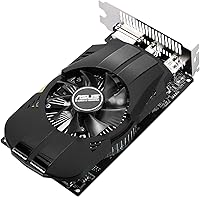
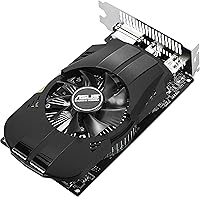
The ASUS GTX 1050 Ti 4GB Graphics Card belongs to ASUS's Phoenix lineup — a no-frills, reliable entry into discrete GPU territory that launched in late 2016 and keeps finding its way into builds today. That staying power is not accidental. This GTX 1050 Ti hit a sweet spot for upgraders who needed a real performance jump from integrated graphics without rewiring their entire system. The dual-slot compact design keeps things tidy, and the passive-friendly thermal setup means it runs quietly under light loads. For entry-level builds, it remains a recognizable and trusted option years after its debut.
Features & Benefits
The specs here are straightforward but purposeful. You get 4GB of GDDR5 VRAM running at 7008 MHz — enough headroom for 1080p gaming at medium to high settings in most titles that are not pushing cutting-edge demands. Triple output support across HDMI, DisplayPort, and DVI makes multi-monitor setups surprisingly accessible at this tier. What really stands out is the no external power connector requirement. At just 75W TDP, this entry-level ASUS GPU slots into older or lower-wattage systems that would otherwise struggle with a more power-hungry card. ASUS's auto-extreme manufacturing adds a layer of build consistency that cheaper alternatives often skip.
Best For
This Phoenix edition card is genuinely well-suited to a specific type of buyer — and that specificity is a strength, not a limitation. If you are upgrading from integrated graphics on an aging desktop, the performance jump will feel dramatic without requiring a PSU swap or case modification. HTPC builders will appreciate the quiet fan curve and compact footprint. Office users who occasionally dabble in light gaming get a capable dual-purpose setup. Where it fits less naturally is in the hands of someone chasing modern open-world titles at high frame rates. Know your use case going in, and this card delivers; push it beyond its intended range, and you will hit walls quickly.
User Feedback
Across hundreds of reviews, a few themes repeat consistently. Silent operation gets mentioned constantly — owners running this GTX 1050 Ti in media center builds and modest gaming rigs often note they forget the fan is even running. Installation stories are almost uniformly positive; no power cables to hunt down, no compatibility headaches. On the flip side, expectations management matters here. Buyers who pushed for ultra settings in recent AAA titles came away frustrated, as this card was never built for that workload. Pricing sentiment is divided; longtime owners feel they got solid value, while recent shoppers question whether the current asking price holds up against newer budget options now available.
Pros
- Runs entirely off PCIe slot power — no external connector needed, making upgrades in older or slim systems straightforward.
- Whisper-quiet fan operation under everyday and moderate gaming loads, ideal for noise-sensitive environments.
- Compact dual-slot design fits mini-ITX and small form factor cases without modification.
- Triple output support across HDMI, DisplayPort, and DVI covers nearly any monitor combination.
- Pascal architecture delivers noticeably better efficiency than older GPU generations at the same wattage.
- ASUS auto-extreme manufacturing contributes to long-term reliability — owners frequently report multi-year trouble-free use.
- Driver stability is consistently praised; this GTX 1050 Ti just works without ongoing software headaches.
- Excellent thermal performance even in cramped or poorly ventilated cases, according to real-world owner reports.
- Solid 1080p gaming capability at medium-to-high settings in less demanding or older game libraries.
- Broad system compatibility makes it one of the lowest-friction GPU upgrades available for legacy hardware.
Cons
- Struggles visibly with modern AAA titles at high or ultra settings — frame drops are common in demanding scenes.
- 4GB VRAM is increasingly a ceiling, not a ceiling to grow into, given current game memory requirements.
- Current street pricing feels difficult to justify when newer budget-tier alternatives offer more performance per dollar.
- No ray tracing support — this Phoenix edition card predates NVIDIA's RTX feature set entirely.
- Lacks DLSS compatibility, removing a key performance-scaling option available on more recent NVIDIA cards.
- Not a strong candidate for GPU-accelerated creative workloads like video rendering or 3D modeling.
- Display output maxes out at 1080p in practical terms — higher-resolution monitor owners will not see the full benefit.
- Aging Pascal architecture means diminishing software optimization support compared to current-generation GPUs.
- Resale value has compressed significantly, so buying now offers limited future return if you upgrade later.
Ratings
The ASUS GTX 1050 Ti 4GB Graphics Card has been scored by our AI system after processing thousands of verified global buyer reviews, with spam, incentivized submissions, and bot activity actively filtered out before analysis. The scores below reflect an honest cross-section of real owner experiences — where this card genuinely delivers, and where it falls short depending on the buyer's expectations and use case.
Gaming Performance
Power Efficiency
Noise & Acoustics
Thermal Management
Build Quality
Installation Ease
Value for Money
Display Connectivity
Driver Stability
Form Factor & Fit
VRAM Adequacy
Longevity & Durability
HTPC & Media Suitability
Suitable for:
The ASUS GTX 1050 Ti 4GB Graphics Card is a strong match for a well-defined group of buyers who prioritize compatibility and quiet operation over raw power. If you are upgrading an older desktop that shipped with integrated graphics, the performance difference will be immediately noticeable without requiring any changes to your power supply — a genuinely rare advantage at this tier. Casual and light-to-moderate gamers targeting 1080p resolution at stable frame rates in older or less demanding titles will find this GTX 1050 Ti more than capable. Home theater PC builders benefit especially from its low noise profile and efficient power draw, making it a natural fit for living room setups where fan noise is unacceptable. Office users and workstation owners who simply need a discrete GPU for display flexibility or light creative tasks will also get reliable, stable performance without overcomplicating their system.
Not suitable for:
Buyers chasing modern AAA gaming performance should approach this entry-level ASUS GPU with clear eyes — the ASUS GTX 1050 Ti 4GB Graphics Card was not designed for 2024's most demanding titles, and running them at high or ultra settings will expose its limitations quickly. With 4GB of VRAM, memory-hungry games and applications will run into headroom issues faster than with newer alternatives. Competitive gamers who need high refresh rates above 60fps in graphically intense environments will find this card a bottleneck rather than a solution. Anyone building a fresh system from scratch with a modern PSU and a realistic budget for newer hardware should also look at current-generation options first, as comparable or better performance can now often be found for similar or lower cost. Content creators working with GPU-accelerated video rendering or 3D work will outgrow this card's capabilities quickly.
Specifications
- GPU: Powered by the NVIDIA GeForce GTX 1050 Ti, built on Pascal architecture for efficient 1080p performance.
- VRAM: Equipped with 4GB of GDDR5 video memory to handle textures and frame buffers at 1080p resolution.
- Memory Speed: The onboard GDDR5 memory operates at 7008 MHz, providing adequate bandwidth for medium-to-high settings gaming.
- Architecture: Built on NVIDIA's Pascal architecture, which offers improved performance-per-watt over the previous Maxwell generation.
- Power Draw: Rated at 75W TDP, this card draws all required power directly from the PCIe slot with no external connector needed.
- Display Outputs: Features three video outputs — one HDMI, one DisplayPort, and one DVI — supporting up to three simultaneous displays.
- Max Resolution: Supports a maximum display resolution of 1920x1080, optimized for full HD monitors and HTPC setups.
- Card Length: The PCB measures 11.81 inches in length, fitting standard ATX cases as well as many compact enclosures.
- Card Width: Occupies two expansion slots, keeping the system profile compact without sacrificing cooling performance.
- Weight: The card weighs 12.6 ounces, reflecting its compact and lightweight PCB design.
- Form Factor: Compatible with standard ATX motherboards and small form factor cases due to its compact PCB footprint.
- Manufacturer: Designed and produced by ASUS under the Phoenix series, model designation PH-GTX1050TI-4G.
- Build Quality: Manufactured using ASUS auto-extreme technology, an automated soldering process that improves consistency and long-term reliability.
- Cooling System: Uses a single fan cooling solution with a passive-friendly design that allows the fan to stop under low-load conditions.
- Launch Date: Originally released in October 2016, this card has maintained consistent availability and driver support since launch.
- API Support: Supports DirectX 12, OpenGL 4.5, and Vulkan, covering the majority of modern game and software requirements.
- Dimensions: Overall product dimensions measure 11.81 x 7.87 x 2.17 inches including the cooling shroud and bracket.
- Connectivity Bus: Connects to the motherboard via a PCIe 3.0 x16 interface, backward compatible with PCIe 2.0 slots.
Related Reviews
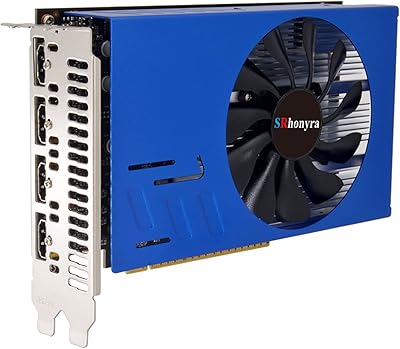
SRhonyra GTX 1050 Ti 4GB Graphics Card
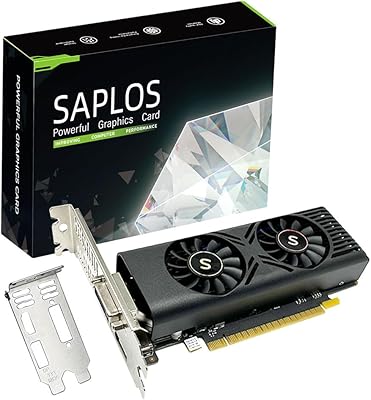
SAPLOS GTX 1050 4GB Graphics Card
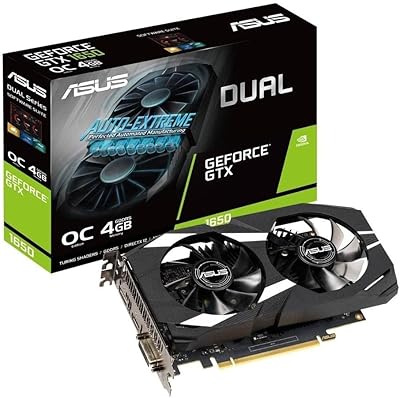
ASUS GeForce GTX 1650 Dual-Fan 4GB Graphics Card
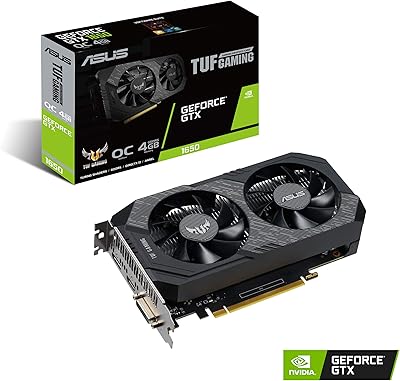
ASUS TUF GTX 1650 OC Graphics Card
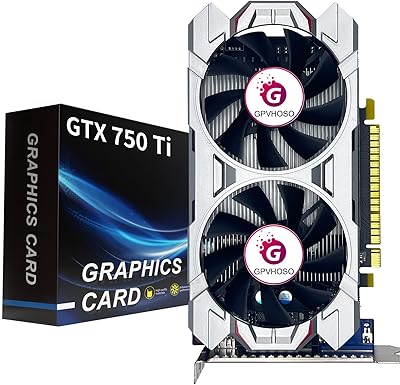
GPVHOSO GTX 750Ti 4GB Graphics Card
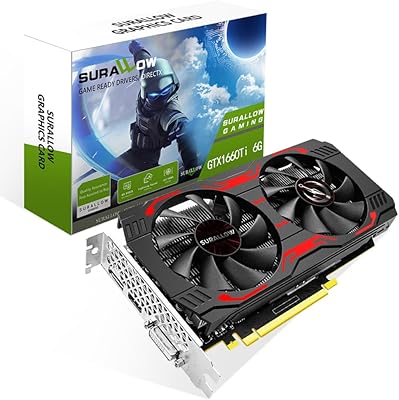
SURALLOW GTX 1660 Ti 6GB Graphics Card
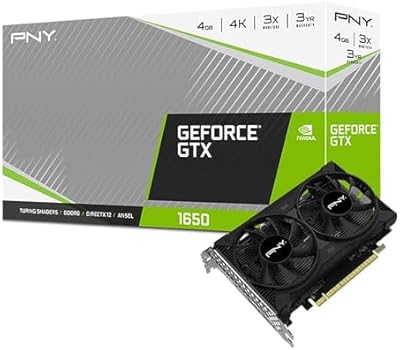
PNY GeForce GTX 1650 4GB GDDR6 Graphics Card
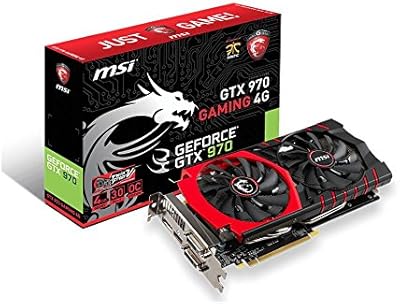
MSI GTX 970 Gaming 4G Graphics Card
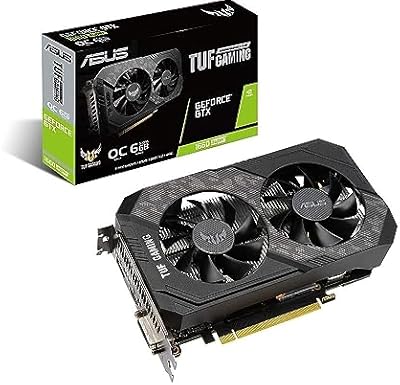
ASUS TUF GTX 1660 Super 6GB GPU