Overview

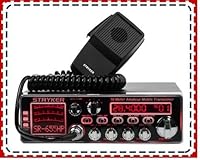
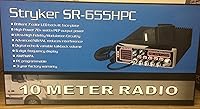
The Stryker SR-655HPC 10 Meter Amateur Radio is a dedicated ham radio built for the 10-meter band, and that distinction matters right up front. This is not a CB radio. Operating it legally requires an FCC amateur radio license, so anyone shopping for a simple plug-and-play truckers radio should look elsewhere. Stryker has earned a solid reputation in the 10-meter and export radio market over the years, and this transceiver sits at the serious end of their lineup. The analog tuner gives the experience a tactile, hands-on character that many operators genuinely prefer. At this price tier, you are buying a capable enthusiast-grade rig, not a casual entry point.
Features & Benefits

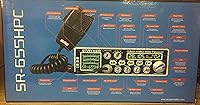
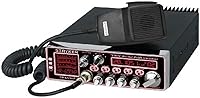
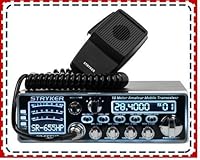
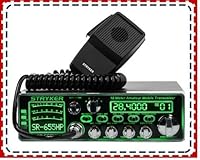
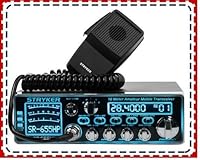
At 70 watts PEP, driven by four MOSFET transistors, this Stryker radio puts real output behind your signal — enough for solid contacts without being excessive for most 10-meter work. The Up-Armored receiver is arguably the headline feature: it rejects adjacent channel interference tightly, which makes a tangible difference when you're operating near other high-power stations. The seven-color LED faceplate cycles manually or via CPU scan, and in a dark cab or shack, that kind of adjustability is practically useful. A 32-position dimmer, variable power output, VFO mode, and PC programmability round out a feature set that gives experienced operators real flexibility without feeling overcrowded.

Best For

This 10-meter transceiver is built for licensed amateur operators — Technician class and above — who want substantial output power from a mobile or base station setup. It suits operators who have outgrown lower-power entry rigs and need more headroom without stepping into something far larger or more complex. The tight receiver filtering makes the SR-655HPC especially practical in busy RF environments — dense urban repeater areas, truck stops, or anywhere interference is a genuine operational problem. For those who also care about aesthetics, the LED customization is a welcome bonus rather than a distraction — it complements the radio's capabilities rather than substituting for them.

User Feedback

Across more than 300 ratings, this Stryker radio holds a 4.2 out of 5 — solid for a niche piece of equipment where buyers tend to have high expectations. The most consistent praise covers audio clarity, output power, and receiver performance in congested band conditions. On the critical side, long-term durability draws occasional concern, with some users reporting issues after extended use. Customer support responsiveness has also come up as inconsistent in a handful of reviews. The PC programmability earns mixed reactions — experienced operators appreciate the control, while others find the initial setup less straightforward than expected. Mobile users generally report higher satisfaction than those running it as a fixed base station.

Pros

  • Delivers a genuine 70W PEP output that gives your signal real reach on the 10-meter band.
  • The Up-Armored receiver handles crowded RF environments noticeably better than many competitors in this class.
  • Seven-color LED faceplate with CPU scan mode is genuinely useful for low-light mobile operation, not just decorative.
  • Variable power control lets operators dial output up or down depending on conditions and needs.
  • PC programmability gives technically inclined users a level of customization rarely found at this size and price point.
  • Six Roger Beep options and digital echo features are a niche appeal, but enthusiasts who want them will not feel shortchanged.
  • The SR-655HPC includes an antenna in the box, which at least gets you on the air without an immediate extra purchase.
  • Advanced clarifier and VFO mode provide fine-grained frequency control that experienced operators will put to real use.
  • At 5.79 pounds and a manageable footprint, this Stryker radio installs without dominating a vehicle dashboard.
  • User satisfaction among mobile operators is consistently higher than average for this category.

Cons

  • Long-term durability has drawn enough critical reviews to warrant caution before treating this as a forever radio.
  • Customer support from Stryker has been described as inconsistent, which matters if you run into a defect post-purchase.
  • PC programming setup is not intuitive out of the box and can frustrate users who expect a straightforward process.
  • At this price tier, the lack of a built-in SWR meter is a notable omission for operators who tune their own antennas.
  • Base station users report a less satisfying experience compared to those running it mobile, suggesting the design priorities lean toward vehicle use.
  • The analog tuner, while tactile and familiar to many, means this 10-meter transceiver lacks the precision of digital frequency entry found on pricier rigs.
  • Roger Beep and echo features add front-panel controls that can feel cluttered to operators who have no interest in using them.
  • Some buyers report the included antenna is adequate for testing but not a genuine long-term solution for serious operation.

Ratings

The Stryker SR-655HPC 10 Meter Amateur Radio has been scored across key performance and usability categories by our AI system after analyzing verified buyer reviews from around the world — with spam, bot activity, and incentivized feedback actively filtered out. The scores below reflect the full picture: where this 10-meter transceiver genuinely impresses experienced operators, and where real-world use has exposed its limitations. No category has been softened or skipped.
Transmission Power
91%
Operators consistently report that the 70W PEP output makes a noticeable difference in contact reliability, especially over longer distances or during marginal band conditions. Mobile users in particular praise how the signal holds up compared to lower-power rigs they have previously run.
A small number of users have questioned whether sustained high-power output causes heat buildup during long transmit sessions, and a few note that output consistency can drift slightly over time on older units.
Receiver Performance
88%
The tighter adjacent channel rejection is the most praised technical feature in user reviews. Operators who regularly work from busy environments — truck stops, urban repeater-dense areas — report that the SR-655HPC stays noticeably cleaner than competing rigs they have tried in the same spots.
A handful of users feel the receiver, while strong in crowded conditions, does not quite match the sensitivity of purpose-built SSB transceivers at the same frequency range when chasing weak DX signals in quieter environments.
Audio Quality
86%
Received audio clarity earns consistent praise across a wide range of operating conditions. Many reviewers specifically comment that voices come through with a natural, full tone rather than the thin or tinny sound common to cheaper radios in this category.
Some users find the transmitted audio picks up background cab noise more readily than expected, and a few mention the talkback monitoring can be slightly misleading as a reference for what the other station actually hears.
Build Quality
67%
33%
The physical construction feels solid on initial handling, and the faceplate controls have a reassuring tactile feel that inspires confidence during installation. Most users who run the radio lightly report no issues for the first year or two of ownership.
Longer-term durability is where reviews start to diverge noticeably. A meaningful portion of critical reviews mention component failures or degraded performance after 18 to 36 months of regular use, which is a real concern given the price point of this Stryker radio.
Display & Backlighting
84%
The seven-color LED display with 32-position dimmer control gets genuinely positive feedback from mobile operators who need readable frequency information at a glance in changing light conditions. The CPU-controlled color cycling feature is a fun option that users either love or simply leave off.
A few users report that color uniformity across the faceplate is not always perfectly even, and at the lowest dimmer settings some find the display just barely readable in very dark environments rather than comfortably dim.
Ease of Installation
79%
21%
The standard 13.8V DC power requirement means most operators with existing mobile or shack setups can drop this radio in without major electrical changes. Physical dimensions fit comfortably in typical under-dash or console mounting locations.
Some buyers note that the manual lacks the depth needed for less experienced operators during initial wiring and grounding, and a few report spending extra time troubleshooting audio hum issues that better documentation might have prevented.
PC Programmability
63%
37%
For operators already familiar with radio programming software, the PC programmability opens up useful configuration options that would be tedious or impossible to set manually. Those who invest time in the setup process report genuine satisfaction with the level of control it provides.
The learning curve is steeper than many buyers anticipate, and the setup process is regularly flagged in reviews as confusing for anyone who has not worked with programming cables and software before. The experience is not plug-and-play, and clearer documentation would meaningfully improve this aspect.
Value for Money
72%
28%
When the receiver performance and output power hold up over time, most operators feel the price is justified relative to alternatives with comparable specifications. Mobile users who get consistent daily use out of the radio tend to rate the value more favorably than occasional operators.
The durability concerns logged by a notable portion of long-term owners do put pressure on the value equation. Buyers who experience component issues outside a responsive warranty window may feel they paid a premium price for mid-tier longevity.
Roger Beep & Echo Features
76%
24%
Operators who enjoy these features are enthusiastic about having six Roger Beep options and independently adjustable echo controls. The dual front-mounted controls for echo are genuinely accessible compared to menu-buried implementations on other radios.
For operators who have no interest in these features, the dedicated front-panel controls add visual clutter without functional benefit. A few reviewers specifically mention wishing these controls were less prominent or could be fully disabled at the hardware level.
VFO & Clarifier Control
82%
18%
The advanced clarifier combined with VFO mode gives the radio a level of fine-tuning capability that SSB operators in particular find very useful. Locking onto a slightly off-frequency station becomes noticeably easier compared to basic clarifier implementations.
Users who operate primarily on AM rather than SSB tend to use the clarifier far less, which means this strength is audience-dependent. The VFO interaction is intuitive for experienced operators but has a short learning curve for those coming from simpler fixed-channel rigs.
Variable Power Control
81%
19%
Being able to dial power output down for close-range contacts or to comply with specific band conditions is a feature experienced operators put to real use. Several reviewers cite this as one of the more practical day-to-day operating advantages of the SR-655HPC over fixed-output alternatives.
The power control feel is described as slightly coarse by some users — small adjustments can produce larger output changes than expected, making precise mid-range power settings trickier to nail consistently.
Customer Support
49%
51%
Some buyers report positive warranty resolution experiences when they reached the right contact at Stryker, and the brand does have an active presence in online ham radio communities where peer-to-peer advice is often available.
Inconsistency is the recurring theme in support-related reviews. Multiple buyers describe difficulty reaching a responsive representative, slow turnaround on warranty claims, and in some cases no reply at all. For a radio at this price, after-sale support reliability is a legitimate concern.
Mobile Usability
87%
This is clearly where the radio performs at its best according to user feedback. The form factor mounts cleanly, the display is readable in motion, and the power output holds up well during mobile operation in areas with variable band conditions.
A small number of mobile users report vibration-related contact issues over time on rough roads, suggesting the internal connectors or board mounting may not be optimized for sustained high-vibration environments.
Base Station Suitability
61%
39%
With a proper regulated power supply, the SR-655HPC can function adequately as a base station radio, and some operators run it in this configuration without major complaints, particularly for casual or part-time shack use.
User satisfaction drops noticeably among those running it exclusively as a fixed base station. The radio does not offer the ergonomic layout, front-panel speaker quality, or cooling design that operators accustomed to purpose-built base transceivers tend to expect.

Suitable for:

The Stryker SR-655HPC 10 Meter Amateur Radio is built for licensed ham radio operators who want serious output power from a compact, mobile-friendly package. It makes the most sense for Technician or General class licensees who spend time operating from a vehicle, whether on long hauls, road trips, or daily commutes where 10-meter band activity is part of the routine. Operators who frequent busy RF environments — dense urban areas, truck stops, or locations with many high-power stations running simultaneously — will particularly appreciate the tighter-than-average receiver filtering, which keeps adjacent channel interference from washing out incoming signals. It also appeals to hobbyists who are upgrading from a lower-power entry rig and want more headroom without jumping into a far larger or more complex transceiver. The PC programmability and VFO mode make it a solid choice for users who like to dial in their setup precisely rather than accept fixed defaults.
Not suitable for:

The Stryker SR-655HPC 10 Meter Amateur Radio is the wrong purchase for anyone without a valid FCC amateur radio license — this is not a CB radio, cannot legally be used on the 11-meter CB band, and operating it without proper licensing violates federal law. Buyers looking for a simple, plug-and-play communication device for trucking or casual road use should look at actual CB radios instead. Newcomers to amateur radio who are still getting comfortable with the basics may find the feature set — VFO mode, PC programming, advanced clarifier — more intimidating than useful at first. Those who need a long-term rock-solid workhorse on a tight budget should weigh the durability concerns raised in some user reviews before committing. Finally, operators who primarily run fixed base station setups and expect flawless performance in that configuration may find the SR-655HPC better optimized for mobile use than for a permanent shack installation.
Specifications

  • Model Number: This unit is manufactured under the model designation SR-655HPC by Stryker Radios.
  • Frequency Band: The radio operates on the 10-meter amateur band, centered around 29 MHz, and is not compatible with CB or 11-meter frequencies.
  • Power Output: Maximum output is rated at 70W PEP, delivered through four FQP13N10 MOSFET transistors for stable high-power transmission.
  • Tuner Technology: The radio uses an analog tuner, providing a tactile, hands-on tuning experience familiar to many experienced ham operators.
  • Dimensions: The unit measures 17 x 9 x 3 inches, making it suitable for both mobile vehicle mounting and compact base station setups.
  • Weight: The radio weighs 5.79 pounds, balancing sturdy construction with practical handling for mobile installation.
  • Operating Voltage: Designed to run at 13.8V DC, which is standard for vehicle electrical systems and most regulated desktop power supplies.
  • Display: A 7-color LED frequency display allows operators to choose a preferred backlight color or enable automatic CPU-controlled color cycling.
  • Dimmer Control: A 32-position dimmer lets users fine-tune display brightness across a wide range for comfortable operation in any lighting condition.
  • Clarifier: An advanced clarifier with VFO mode enables precise frequency adjustment, useful for locking onto SSB signals and fine-tuning during contacts.
  • Echo Feature: Digital echo is built in with two dedicated front-panel controls, allowing operators to adjust echo depth and delay independently.
  • Roger Beep: Six distinct Roger Beep tones are available, selectable to signal the end of a transmission in the style preferred by the operator.
  • Talkback Control: A variable talkback control lets the operator monitor their own transmitted audio through the speaker at an adjustable level.
  • Programming: The radio is PC programmable, allowing frequency and configuration settings to be managed via computer software for greater flexibility.
  • Power Control: Variable power output control allows operators to reduce transmitted power for short-range contacts or to comply with band conditions.
  • Receiver Design: Stryker's Up-Armored receiver design applies tighter-than-standard adjacent channel rejection filtering to reduce interference in busy RF environments.
  • Included Accessories: The package includes one antenna, providing a basic starting point for getting on the air immediately after installation.
  • Manufacturer: Designed and sold by Stryker Radios, a brand with an established presence in the 10-meter and export radio market.

Related Reviews

Stryker SR-955HPC 10 Meter Amateur Radio
77%
94%
Frequency Stability
91%
Transmit Audio Quality
89%
Power Output
78%
DSP Noise Reduction
83%
Build Quality
More
Stryker SR-447HPC2 10 Meter Radio
78%
91%
Audio Clarity
88%
Transmit Power
93%
Compact Form Factor
87%
SWR Protection
63%
Ease of Installation
More
Radioddity QT80 10 Meter Ham Radio Transceiver
78%
88%
Transmission Power
84%
Receive Audio Quality
79%
Noise Reduction Performance
86%
Ease of Setup
83%
Display & Interface
More
President Richard 10 Meter Radio
87%
88%
Performance
90%
Ease of Use
84%
Build Quality
92%
Mobile Setup Suitability
78%
Range/Signal Strength
More
AnyTone ARES II 10 Meter Mobile Radio
73%
88%
Transmit Power
83%
Receive Audio Quality
79%
Build Quality
81%
Value for Money
74%
SSB Performance
More
AnyTone AT-5555N II 10 Meter Radio
86%
94%
Power Output
89%
Ease of Use
92%
Range and Signal Clarity
85%
Build Quality
90%
Noise Reduction Performance
More
Radioddity QT60 Pro 10-Meter Ham Transceiver
78%
83%
RF Performance
81%
Audio Clarity (RX)
71%
Transmit Audio Quality
86%
Display & Interface
79%
Noise Reduction System
More
AnyTone SMT-02 10 Meter Mobile Radio
71%
93%
Form Factor & Portability
84%
Audio Clarity & Receive Quality
67%
Transmit Power & Range
78%
Build Quality & Durability
81%
Ease of Installation
More
Radioddity QT40 10 Meter SSB Ham Radio
77%
86%
SSB Signal Performance
83%
Noise Reduction Effectiveness
88%
Power Output
84%
Audio Clarity
81%
NOAA Weather Integration
More
Stryker SR-497-HPC AM/FM 10 Meter Radio
80%
93%
Transmit Power & Output
88%
Audio Clarity
84%
Noise Reduction (NB/ANL)
86%
Build Quality & Durability
89%
Display & Visibility
More

FAQ

Yes, absolutely. This is a 10-meter amateur radio and operating it requires a valid FCC amateur radio license — at minimum a Technician class license, which grants privileges on portions of the 10-meter band. Using it without a license is a federal violation, and no amount of creative wiring changes that. If you are thinking about getting licensed, the ARRL website is a good starting point.

No, these are fundamentally different things. CB radios operate on the 11-meter band at a maximum of 4 watts. This Stryker radio is designed for the 10-meter amateur band and puts out up to 70 watts. They are legally and technically distinct, and you cannot use this radio on CB frequencies within the law.

It can work as a base station, but you will need a regulated 13.8V DC power supply capable of handling the current draw at full output — a quality 30-amp supply is a common recommendation. That said, user feedback does suggest mobile operators tend to get more out of it than those running it as a fixed station, so keep that in mind when deciding on your setup.

It depends on your comfort level with radio software. Experienced operators who have used programming cables and software on other rigs tend to get it working without much trouble. Newer users sometimes find the initial setup less obvious than expected. The payoff is real flexibility once it is configured, but plan for a learning curve if you are not already familiar with this type of workflow.

You need a regulated 13.8V DC power supply. For a radio putting out 70W PEP, look for a supply rated at least 25 to 30 amps to avoid voltage sag under load. Underpowering a high-output radio like this can cause audio distortion and potentially stress the final transistors over time.

Roger Beep tones signal the end of your transmission — a common practice in certain radio communities, particularly among operators who came from CB backgrounds. The digital echo lets you hear a short repeat of your own voice in the speaker after you transmit. Neither feature affects RF performance, and both can simply be left off if you have no use for them. For operators who enjoy them, having six beep options and adjustable echo is a nice touch.

Better than most radios in this category, according to consistent user reports. The Up-Armored receiver uses tighter filtering than is typical, which helps it stay clean when nearby operators are running high power. It is one of the genuinely differentiating features of the Stryker SR-655HPC 10 Meter Amateur Radio compared to other rigs in this class.
It is functional enough for initial testing and basic operation, but most serious operators end up replacing it. A quality 10-meter mobile whip or a dedicated base antenna will perform significantly better and let the radio reach its potential. Think of the included antenna as a starting point, not a long-term solution.

Stryker offers a warranty on their radios, but buyer feedback suggests that reaching their support team can sometimes be inconsistent. If warranty coverage is a major factor in your decision, it is worth checking Stryker's current warranty terms directly and reading recent buyer experiences before purchasing.

It adjusts the brightness of the LED faceplate display across 32 discrete steps, giving you very fine control over how bright or dim the display appears. This is especially handy in a dark vehicle cab where a fully bright display can be distracting at night, or outdoors in direct sunlight where you need maximum brightness to read the frequency easily.

Where to Buy