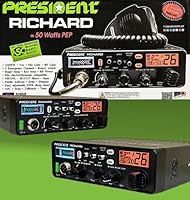

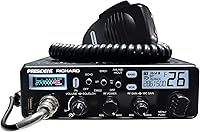
Overview

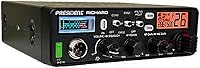
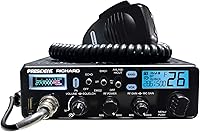
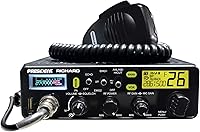
The President Richard 10 Meter Radio is a DIN-size mobile transceiver from President Electronics, a brand with real credibility built over decades in the CB and amateur radio market. It covers 28.000 to 29.700 MHz—the 10-meter amateur band—which is a genuine draw for Technician-class licensees who want to chase skip without buying into a full multiband HF rig. Keep in mind this is a mobile or fixed-mount unit, not a dedicated shack radio. That said, it competes confidently against CB crossover units and entry-level ham transceivers, offering a feature count that surprises operators expecting something more stripped-down.

Features & Benefits

At 50 watts PEP, this 10-meter transceiver has enough output to make real contacts during a band opening—whether you're running AM for old-school skip or switching to FM for cleaner local audio. The noise filter suite, including ANL, NB, and HI-CUT options, makes a noticeable difference when conditions turn messy or you're parked near electrical interference. Practical extras round the package out nicely: a talkback function lets you monitor your own audio, the public address output is handy at events or job sites, and a USB charging socket keeps your phone topped up without hunting for a free port in a crowded dash.

Best For

This President Electronics mobile unit really shines for Technician-class ham operators who want dedicated 10-meter capability without the complexity of stepping up to a full HF rig. It's equally appealing to truck drivers and overlanders already comfortable with CB radio culture who've earned their ham license—the learning curve here is shallow. The compact DIN-size footprint works as well on a workshop desk as it does in a vehicle mount. If you want a radio that arrives ready to go with built-in scanning, filters, and emergency channels rather than something requiring heavy accessories, this fits the brief.

User Feedback

Across roughly 400 ratings averaging 4.3 stars, the Richard radio earns consistent praise for audio clarity and front-panel controls that don't require a manual hunt to figure out. Installation gets called out positively by mobile users—most report a straightforward fit into a standard DIN slot. The honest caveats: a few owners mention the internal cooling fan is audible during transmit, which can be distracting in a quiet cab, and the included manual reads like it went through a rough translation. Some first-time users also note that squelch and RF gain need careful tuning out of the box. On longevity, though, years of reliable use show up repeatedly, which says something real about build quality.

Pros

  • Solid 50-watt PEP output gives you real talk power when 10 meters opens up during a band skip.
  • AM and FM mode support means you can work both legacy and modern operating preferences without a second radio.
  • The built-in ANL, NB, and HI-CUT filter suite cuts electrical noise noticeably during mobile operation.
  • Front-panel controls are laid out intuitively enough that most operators get comfortable without constantly referencing the manual.
  • DIN-size form factor fits cleanly into a standard vehicle slot or sits low-profile on a desktop without dominating the space.
  • Public address output and talkback function add practical utility at job sites or community events.
  • USB charging socket is a genuinely useful touch that reduces cable clutter in a busy cab.
  • Dual emergency channels and scan capability give the radio a safety-conscious dimension beyond casual hobby use.
  • Multiple long-term owners report years of reliable daily use, suggesting build quality that holds up in real-world conditions.
  • Water-resistant construction adds a layer of durability for operators who run the radio in less-than-controlled environments.

Cons

  • The internal cooling fan is audible during transmit and can be distracting in a quiet vehicle cab.
  • The included manual reads like a rough translation, which slows down first-time setup for less experienced operators.
  • Squelch and RF gain often need careful manual tuning out of the box before the radio performs at its best.
  • Coverage is limited strictly to the 10-meter band—no SSB, no other HF bands, no flexibility there.
  • Operators without a Technician or higher ham license cannot legally use this radio for transmitting at all.
  • No SSB mode means serious DX operators chasing long-distance contacts have a hard ceiling on what this radio can do.
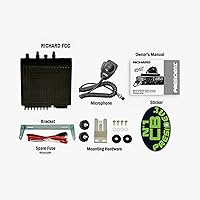
  • At roughly 2.4 pounds the unit is light, but the power cable and antenna connections add installation complexity that beginners sometimes underestimate.
  • Channel count is limited to 2 standard plus 2 emergency channels, which feels thin compared to broader-coverage transceivers.

Ratings

Our AI-driven rating system analyzed verified buyer reviews for the President Richard 10 Meter Radio from across multiple global markets, actively filtering out incentivized, duplicate, and bot-generated feedback to surface what real operators actually experience day to day. The scores below reflect both the genuine strengths that keep this 10-meter transceiver consistently well-rated and the honest pain points that prospective buyers deserve to know before committing. Nothing has been softened or inflated—what you see here is a transparent synthesis of the full range of user sentiment.

Audio Receive Quality
88%
Operators consistently praise how clean received audio sounds through the built-in speaker, even during band openings when signals are stacking up. Several users note that voices come through with a clarity that rivals more expensive transceivers, which matters a lot during extended listening sessions on a long haul.
A small number of users report that at higher volume levels the internal speaker can introduce a slight distortion, and in very noisy vehicle environments the speaker alone is not always sufficient without an external speaker add-on.
Transmit Performance
84%
The 50-watt PEP output earns consistent praise from operators who use the radio during skip conditions—contacts that weaker radios struggle to hold become reliable with this level of power behind them. AM audio reports from receiving stations are generally described as punchy and well-defined.
A handful of users note that without careful mic gain adjustment the transmitted audio can sound over-driven, and without SSB capability the radio simply cannot compete with general HF transceivers for serious DX work on 10 meters.
Build Quality
81%
19%
The chassis feels solid in hand, with front-panel controls that have a reassuring tactile response rather than the cheap, wobbly feel common on budget radios. Long-term owners frequently comment that the radio holds up well through years of vibration and temperature swings inside a working vehicle.
The rear panel connections and some knobs feel slightly less premium than the front panel suggests, and a few users who run the radio in demanding environments wish the overall casing were more robustly sealed beyond its basic water-resistant rating.
Feature Depth
91%
For a DIN-size mobile radio, the feature list is genuinely impressive—ANL, NB, HI-CUT filters, echo, talkback, public address, scan, roger beep, and dual emergency channels are all built in without requiring any accessories. Operators who double as event communicators or emergency volunteers find real utility in having these tools ready without extra hardware.
Some of the more advanced features, like the echo and tone controls, feel more novelty than necessity to experienced operators, and there is no way to disable certain audio enhancements that a minority of users find add coloration they did not ask for.
Ease of Installation
86%
The DIN-size form factor means most vehicle installations are genuinely plug-and-play—slip it into the slot, run a power lead to the fuse box, connect an antenna, and you are largely done. Mobile users repeatedly highlight how straightforward the physical setup is compared to larger transceivers.
The power connector and wiring harness layout can be a little cramped behind the unit once installed in a tight dash, and a few users note the power cable supplied is shorter than ideal for some vehicle configurations, requiring an extension.
Noise Filtering
79%
21%
The combination of ANL, Noise Blanker, and HI-CUT filter gives operators three genuinely distinct tools to address different noise problems, and users who operate near electrical interference report meaningful improvement when engaging the blanker. This is not a single-button noise reduction system—it rewards operators who take time to learn each control.
Under very heavy electrical interference, such as near diesel truck alternators at high RPM, the filters reduce but do not eliminate all noise artifacts. Users accustomed to DSP-based noise reduction on higher-end radios may find the analog filter approach less effective in worst-case scenarios.
Front Panel Usability
83%
Controls are logically grouped and labeled with enough clarity that most operators get comfortable without extended manual study. The rotary channel switch and dedicated knobs for RF gain and mic gain are particularly appreciated by users who prefer physical controls over menu-diving.
The sheer number of functions squeezed into the front panel means labeling is inevitably small, and operators with larger hands or who are trying to make adjustments while driving report occasional difficulty hitting the right control without looking.
Manual & Documentation
47%
53%
The manual does cover all the main functions and includes enough diagram support to get through basic setup, and operators with prior radio experience can often work around the documentation gaps using their existing knowledge.
The translation quality is a frequently cited frustration—phrasing is awkward in places and some functional descriptions are ambiguous enough to confuse newer operators trying to understand advanced filter settings. Several users recommend seeking out online community resources or YouTube walkthroughs to fill the gaps.
Fan Noise
58%
42%
The internal cooling fan does its job effectively in keeping the radio thermally stable during extended transmit sessions, and in a typical vehicle environment with road noise present it blends into the background reasonably well for most operators.
In a quiet cab or desktop setting the fan is audible enough during transmit to distract some users, and this is one of the most consistently mentioned minor complaints across the review base. Operators who record audio or work in noise-sensitive environments will likely find it more intrusive than those on the highway.
Value for Money
77%
23%
When measured against what comparably priced 10-meter transceivers offer, this President Electronics mobile unit delivers a feature set that punches above its tier—the combination of 50 watts, dual modes, and the full filter and audio toolkit at this price point is hard to match from competing brands.
Buyers who only want basic 10-meter voice capability may feel they are paying for features they will never use, and those who need SSB will need to spend considerably more on a different radio entirely, making the value proposition conditional on how many built-in features actually matter to the individual operator.
Longevity & Reliability
82%
18%
Multiple reviewers across the rating base report using the radio daily for two to four years without component failures or significant degradation in performance, which is a meaningful indicator of durability for a mid-tier mobile radio operating in temperature-variable vehicle environments.
There is a small but notable cluster of reviews describing early failures—primarily related to the display or power circuit—which suggests some unit-to-unit variability in quality control that buyers should factor into their purchasing decision.
Squelch & RF Gain Setup
63%
37%
Once properly calibrated, the squelch and RF gain controls give the operator fine-grained command over what comes through the speaker, and experienced ham operators will appreciate having both controls as dedicated front-panel knobs rather than buried in a menu.
Out of the box, factory default settings are not optimized for most real-world environments, and newer operators frequently report a confusing first experience before they find the right balance. The manual does not provide enough contextual guidance on how to set these controls for different band conditions.
Microphone Compatibility
74%
26%
Support for both electret and dynamic microphone types opens up a wide range of aftermarket mic options, and operators who already own a quality hand mic from another radio can often adapt it with minimal effort depending on the connector type.
The pin wiring on the stock mic connector is not universally compatible with all CB-brand microphones without modification, and the supplied microphone, while functional, is considered entry-level by users who have compared it to aftermarket options.

Suitable for:

The President Richard 10 Meter Radio is the kind of radio that makes the most sense for licensed amateur operators—specifically those holding a Technician or General class ticket—who want a capable, mobile-ready transceiver without committing to a bulky multiband HF setup. It fits naturally into the workflow of truck drivers and long-haul overlanders who already understand CB radio culture and have taken the step of getting licensed, since the interface and installation process will feel immediately familiar. Operators who live in regions where 10 meters opens up reliably during solar cycle peaks will get the most out of the 50-watt output and the AM/FM mode flexibility. The compact DIN-size footprint also makes this 10-meter transceiver a practical pick for a workshop bench or small shack desk where space is genuinely limited. If you want a radio that arrives loaded with filters, scanning, emergency channels, and audio tools rather than requiring you to bolt on accessories later, this President Electronics mobile unit delivers solid value for the investment.

Not suitable for:

Buyers who do not hold at least a Technician-class amateur radio license should stop here—transmitting on 10 meters without a license is illegal, and no amount of feature depth changes that reality. The President Richard 10 Meter Radio is also a poor match for operators hoping to work multiple HF bands, since it covers only 28.000 to 29.700 MHz and nothing else; if you want 20 meters, 40 meters, or SSB capability, you need a different radio entirely. Serious base station builders who expect the polish and ergonomics of a purpose-built shack transceiver may find this unit underwhelming in that context—it was designed for a dash or a desktop, not a dedicated operating position with a full-sized mic and logging setup. Operators who need SSB mode for DX work will also need to look elsewhere, as this 10-meter transceiver covers AM and FM only. And if a completely silent operating environment is non-negotiable for you, the audible internal fan that some users report during transmit could be a genuine annoyance worth weighing before you buy.

Specifications

  • Output Power: The radio transmits at up to 50 watts PEP, providing meaningful signal strength for both local contacts and long-distance skip propagation on 10 meters.
  • Frequency Range: Coverage spans 28.000 to 29.700 MHz, encompassing the full 10-meter amateur radio band allocated for licensed ham operators.
  • Modes: Both AM and FM operating modes are supported, giving operators flexibility depending on band conditions and the preferences of stations they contact.
  • Form Factor: The unit is built to DIN size, designed for standard single-DIN vehicle dash slots or compact fixed-mount desktop installations.
  • Dimensions: The chassis measures 6.69″ wide, 6.29″ deep, and 2.04″ tall, keeping the footprint small enough for tight mounting locations.
  • Weight: At 2.43 pounds, the radio is light enough for easy repositioning during mobile installation without requiring heavy-duty mounting hardware.
  • Display: An LCD panel provides clear readout of frequency, channel, and operating status under typical lighting conditions.
  • Input Voltage: The radio operates on 13.2V DC, which is compatible with standard 12V vehicle electrical systems when the engine is running.
  • Microphone Input: The mic input accepts both electret and dynamic microphone types, so operators are not locked into a single accessory ecosystem.
  • Channels: Two standard channels are available alongside two dedicated emergency channels, and a scan function cycles through active frequencies automatically.
  • Noise Filters: Built-in ANL (Automatic Noise Limiter), NB (Noise Blanker), and HI-CUT audio filter give operators three distinct tools for managing interference and static.
  • Audio Features: Talkback, echo effect, roger beep, adjustable tone, and a public address output are all built into the unit without requiring external processors.
  • USB Socket: A USB charging socket is integrated into the front panel, allowing a mobile device to be charged directly from the radio during vehicle operation.
  • Water Resistance: The unit carries a water-resistant rating, offering basic protection against incidental moisture exposure in outdoor or vehicle environments.
  • Antenna Connector: The radio uses a standard mobile radio antenna connector, compatible with common NMO, SO-239, and similar antenna mounting solutions.
  • Additional Controls: Front-panel controls include RF Power, RF Gain, Mic Gain, ASC (Automatic Squelch Control), dimmer adjustment, key beep toggle, and a rotary channel switch.
  • Manufacturer: The radio is manufactured by President Electronics, a company with a long-standing presence in both the CB and amateur radio markets across multiple countries.
  • Power Source: One 12V battery or a direct vehicle power connection is required; no internal battery is included or supported for standalone portable use.

Related Reviews
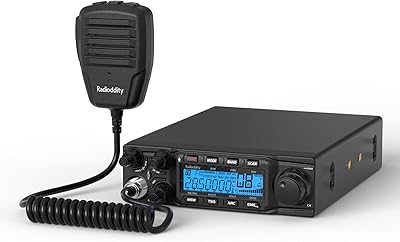
Radioddity QT80 10 Meter Ham Radio Transceiver
78%
88%
Transmission Power
84%
Receive Audio Quality
79%
Noise Reduction Performance
86%
Ease of Setup
83%
Display & Interface
More
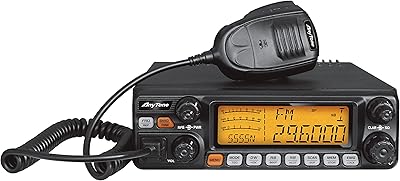
AnyTone AT-5555N II 10 Meter Mobile Radio
80%
89%
Power Output
85%
Signal Clarity & Audio Quality
82%
Channel Capacity & Flexibility
84%
CTCSS/DCS Tone Performance
78%
Weather Alert Function
More
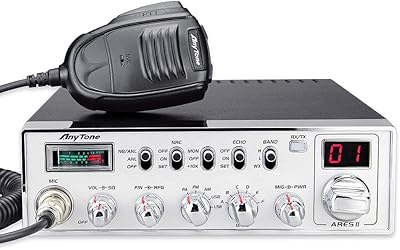
Radioddity QT60 Pro 10-Meter Ham Transceiver
78%
83%
RF Performance
81%
Audio Clarity (RX)
71%
Transmit Audio Quality
86%
Display & Interface
79%
Noise Reduction System
More
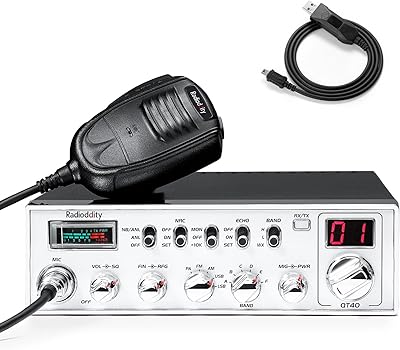
AnyTone ARES II 10 Meter Mobile Radio
73%
88%
Transmit Power
83%
Receive Audio Quality
79%
Build Quality
81%
Value for Money
74%
SSB Performance
More
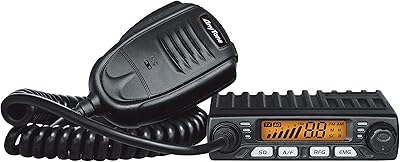
Radioddity QT40 10 Meter SSB Ham Radio
77%
86%
SSB Signal Performance
83%
Noise Reduction Effectiveness
88%
Power Output
84%
Audio Clarity
81%
NOAA Weather Integration
More
Stryker SR-955HPC 10 Meter Amateur Radio
77%
94%
Frequency Stability
91%
Transmit Audio Quality
89%
Power Output
78%
DSP Noise Reduction
83%
Build Quality
More
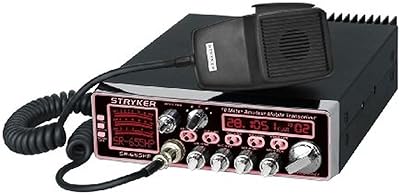
AnyTone SMT-02 10 Meter Mobile Radio
71%
93%
Form Factor & Portability
84%
Audio Clarity & Receive Quality
67%
Transmit Power & Range
78%
Build Quality & Durability
81%
Ease of Installation
More
Stryker SR-655HPC 10 Meter Amateur Radio
76%
91%
Transmission Power
88%
Receiver Performance
86%
Audio Quality
67%
Build Quality
84%
Display & Backlighting
More
Stryker SR-447HPC2 10 Meter Radio

78%
91%
Audio Clarity
88%
Transmit Power
93%
Compact Form Factor
87%
SWR Protection
63%
Ease of Installation
More
LUOWAN Tesla Style 10.4-inch Android Car Stereo
69%
83%
Display Quality
61%
Software Stability
81%
CarPlay Integration
63%
GPS Navigation
49%
Installation Experience
More

FAQ

Yes, absolutely. To transmit legally on the 10-meter band, you need at least a Technician-class amateur radio license issued by the FCC in the US, or the equivalent authority in your country. Receiving-only use does not require a license, but you cannot key up the mic without one. If you do not yet have a license, the good news is that the Technician exam is relatively accessible and covers the basics needed to operate on 10 meters.

No. The President Richard 10 Meter Radio covers 28.000 to 29.700 MHz, which is the 10-meter amateur band. CB radio operates on 26.965 to 27.405 MHz on the 11-meter band, so there is no frequency overlap. These are different services with different licensing requirements, and this radio is not designed or legal for CB use.

Yes, the radio is built to DIN size, so it slots into a standard single-DIN opening. Most trucks, vans, and SUVs with a factory radio slot will accommodate it without modification. Just make sure you have a suitable mounting bracket or DIN sleeve if your vehicle requires one.

An antenna is not included with the radio—you will need to source one separately. For 10-meter mobile use, a dedicated 10-meter whip or a tunable HF mobile antenna cut for the band works well. Avoid using a CB antenna without a tuner, as the frequency difference means the SWR will likely be unacceptably high.

The fan is an internal cooling component and some users do notice it during transmit, particularly in a quiet vehicle cab. It is not a constant roar, but it is audible enough that a handful of reviewers flagged it as a minor annoyance. For most everyday operating conditions it fades into the background, but if you are hypersensitive to fan noise it is worth knowing about upfront.

Possibly, but it depends on the connector and wiring. The radio accepts both electret and dynamic microphone types, which covers a wide range of aftermarket mics. However, the pin configuration on President Electronics radios may differ from some CB brands, so check the wiring diagram before assuming your existing mic will work without an adapter.

No, this 10-meter transceiver supports AM and FM modes only. SSB (Single Sideband) is not available, which does limit serious DX capability since SSB is the dominant mode for weak-signal and long-distance HF work. If SSB is a priority for you, you will need to look at a different transceiver.

The digital SWR display gives you a working reference for antenna tuning and is genuinely useful for getting your SWR into an acceptable range. It is not a substitute for a dedicated external SWR meter if you need precise measurements, but for typical mobile antenna setup it does the job well enough to get on the air safely.

The physical installation is straightforward—most users report getting it mounted and wired without major difficulty. The trickier part for newcomers is the initial radio configuration: squelch, RF gain, and mic gain all benefit from some deliberate tuning rather than leaving them at factory defaults. The included manual is serviceable but not brilliantly written, so supplementing it with online resources or a local ham radio club can save some frustration.

It is a reasonable choice to have ready for when you pass, but buying it before you are licensed means it will sit unused for transmitting until you have your call sign. On the receive side you can listen freely, which is actually a decent way to familiarize yourself with band activity. Once licensed, this President Electronics mobile unit is a solid first 10-meter radio that will not feel like an immediate upgrade is needed.