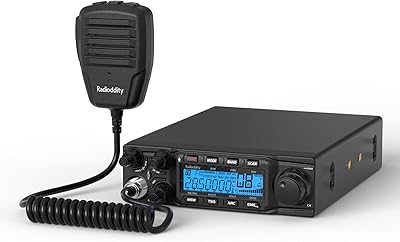
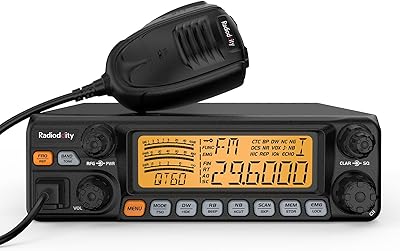
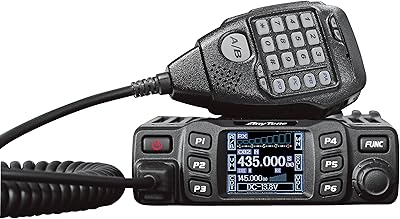
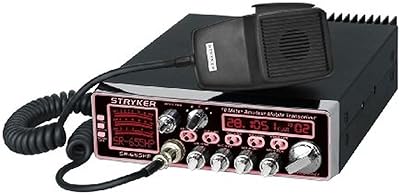
Overview

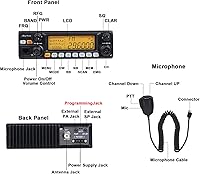
The AnyTone AT-5555N II 10 Meter Mobile Radio is built with truck cabs and home base stations in mind, and it shows the moment you power it up. This high-power radio tunes across the 28.000-29.700 MHz band, with frequencies you can adjust through PC programming rather than being locked into a fixed set. It lands in the mid-to-upper tier of 10 meter radios, both in price and in what it offers, so expectations should be set accordingly. A wide, easy-to-read LCD panel keeps frequency, mode, and channel information visible without squinting at tiny digits. It also carries FCC ID T4K-AT5555NII, which at least confirms it clears the regulatory bar most buyers never think to check.
Features & Benefits

Power is where this mobile transceiver earns its keep, pushing up to 60W AM PEP, 50W FM, and 60W SSB PEP, numbers that put it well ahead of typical CB output. CTCSS/DCS tone coding lets you filter out the chatter from other users sharing your frequency, which matters more than you'd think once you're parked next to a busy lot. VOX hands-free transmission pairs with TX and RX noise reduction, so conversations stay cleaner even with road noise in the background. There's a built-in WX weather channel with alert function, handy for drivers who want a heads-up before a storm rolls in. Forty programmable channels spread across multiple bands give you room to organize contacts by region or group, and voltage protection circuitry adds a layer of insurance against the spikes that come standard with vehicle electrical systems.

Best For

This high-power radio makes the most sense for truck drivers who've outgrown a standard CB and want noticeably stronger range on long highway stretches. Hobbyists moving up from basic CB radios into proper 10 meter operation will appreciate the extra channels and tone coding options. Off-roaders and overlanders get real value from the built-in weather alert, since storm warnings matter more when you're miles from cell coverage. Anyone comfortable poking around PC software will get more out of the customizable channel programming than someone looking for a plug-and-play box. It also suits base station setups where flexible mode switching between AM, FM, USB, and LSB is a real requirement rather than a nice-to-have, since not every radio in this price range offers that range of modes.

User Feedback

Owner ratings for this 10 meter radio average 4.3 out of 5 across 231 reviews, which is solid for a category where buyers tend to be picky and vocal. Most of the praise lines up with what you'd expect: people comparing it against similarly priced radios consistently single out transmit power and signal clarity as standouts. The friction point shows up during setup, where PC programming trips up first-timers who expected something closer to plug-and-play. A handful of reviews touch on mic compatibility and whether the included accessories play nicely with aftermarket gear, so it's worth a quick check before buying if you're planning to swap parts. Long-term durability comments are less common but generally positive, and a few drivers specifically mention the weather alert proving useful on actual road trips rather than sitting unused.

Pros

  • Delivers genuinely high power output, up to 60W AM PEP and 60W SSB PEP, well beyond standard CB levels.
  • CTCSS/DCS tone coding cuts down on unwanted chatter when sharing busy channels with other users.
  • VOX hands-free transmission paired with noise reduction keeps conversations clear even with road noise in the cab.
  • Built-in weather alert function gives truckers and off-roaders a real heads-up before storms hit.
  • Forty programmable channels across multiple bands offer plenty of room to organize contacts by group or region.
  • Large LCD display makes frequency, mode, and channel info easy to read at a glance while driving.
  • Voltage protection circuitry adds a layer of insurance against the power spikes common in vehicle electrical systems.
  • Holds a solid 4.3 out of 5 average across 231 customer ratings, signaling consistent buyer satisfaction.
  • Flexible AM, FM, USB, and LSB mode switching suits both mobile and base station setups.
  • Transmit power and signal clarity are frequently singled out as standout strengths compared to similarly priced radios.

Cons

  • PC programming software has a real learning curve for first-time 10 meter users.
  • Plug-and-play it is not; getting full value requires some hands-on setup time.
  • A few reviewers mention compatibility hiccups between the included mic and aftermarket accessories.
  • Performance is closely tied to a proper antenna and vehicle electrical setup, which adds extra cost and effort.
  • Not water resistant, so it is not ideal for open-air or marine-style installs.
  • Casual users who only need basic short-range chatter may find the feature set excessive for their needs.
  • Long-term durability feedback is limited, so buyers are relying on a smaller pool of reviews for that data.
  • Built-in speaker audio output is only 3 watts, modest compared to the radio's high RF power ratings.

Ratings

These scores for the AnyTone AT-5555N II 10 Meter Mobile Radio are generated by AI after analyzing verified buyer reviews from around the world, with spam, bot activity, and incentivized feedback filtered out before any number gets calculated. The goal is a clear, honest snapshot of how this high-power radio actually performs once it is mounted in a real truck or base station, not a marketing summary. Both the strengths people rave about and the friction points they mention openly are reflected below.
Power Output
89%
Buyers consistently call out the genuine punch behind the rated 60W AM PEP and 60W SSB PEP figures, noting real gains in range over a typical CB once parked roadside or running from a truck stop. For long highway stretches, that extra wattage translates into fewer dropped contacts.
A handful of users note that hitting peak output depends heavily on a properly tuned antenna and clean electrical supply, so the advertised numbers do not always show up out of the box. Anyone skipping that setup step ends up underwhelmed by the difference.
Signal Clarity & Audio Quality
85%
TX and RX noise reduction paired with strong SSB carrier suppression gets specific praise for keeping conversations intelligible even with engine and road noise in the background. Several reviewers mention picking out distant stations more easily than on cheaper radios.
Audio quality leans heavily on mic placement and cabin acoustics, so a few owners report muddier results until they adjusted positioning or upgraded their microphone. It is not a flaw in the radio itself, but it does require some trial and error.
Channel Capacity & Flexibility
82%
18%
Forty programmable channels spread across nine bands give frequent users plenty of room to separate work contacts from personal ones without constantly reprogramming. Group convoy setups in particular benefit from having dedicated channel blocks ready to go.
Some buyers feel forty channels per band is generous but still limiting if they regularly hop between many regional groups, wishing for a larger memory bank. It is a minor gripe rather than a dealbreaker for most use cases.
CTCSS/DCS Tone Performance
84%
Tone coding gets steady praise for cutting down on cross-talk from other users sharing the same frequency, which matters in crowded trucking corridors or popular off-road areas. Reviewers describe noticeably quieter channels once codes are set correctly.
Configuring tone codes correctly requires understanding how CTCSS and DCS interact with squelch settings, and a few first-time buyers admit they needed outside guides or forums to get it dialed in. It is not difficult once learned, just unfamiliar at first.
Weather Alert Function
78%
22%
Drivers and overlanders specifically mention the built-in WX channel and automatic alert tone as genuinely useful, especially in areas with spotty cell coverage where a phone weather app is not an option. It is described as a quiet but appreciated safety net.
A few reviewers note the alert only covers standard NOAA frequencies and will not replace a dedicated weather radio for serious storm chasing or marine use. For casual road trips, though, most consider it more than sufficient.
Ease of PC Programming
61%
39%
Once buyers get past the initial setup, many appreciate the flexibility of organizing all 40 channels exactly how they want through AnyTone's software rather than being stuck with factory defaults. It rewards a little patience with long-term convenience.
This is consistently the most-mentioned pain point, with first-time 10 meter users describing the menu structure and PC software as unintuitive compared to simpler CB setups. Expect to spend real time with the manual or a tutorial video before it clicks.
Display & Controls
83%
The large LCD panel earns regular praise for staying readable at a glance, even in bright daylight, which matters when trying to keep eyes on the road. Frequency, mode, and channel info are described as clearly laid out.
A smaller number of reviewers wish the button layout felt more intuitive without referencing the manual, since several functions are buried in submenus rather than mapped to dedicated buttons. It is a minor learning curve more than a real flaw.
Build Quality
79%
21%
The housing and control knobs feel solid to most owners, holding up fine to the vibration and temperature swings that come with daily truck use. Several reviewers mention it feeling noticeably sturdier than budget CB alternatives of a similar size.
A small number of buyers raise concerns about long-term durability, since the radio has not been on the market long enough to generate extensive multi-year reliability data. It is not a widespread issue currently, just an open question worth tracking.
Mode Versatility (AM/FM/USB/LSB)
86%
Having AM, FM, USB, LSB, and PA modes in one unit gets singled out by base station users who want flexibility without buying multiple radios. Switching between modes is described as quick and reliable once you know where the setting lives.
A few casual users say they only ever touch one or two modes and never explore the rest, making some of that flexibility go unused in daily practice. It is more a non-issue than a real complaint.
Mic & Accessory Compatibility
68%
32%
Support for both electret and dynamic microphone types gives buyers some freedom to use accessories they may already own or prefer. Several reviewers mention successfully pairing it with aftermarket mics without major issues.
This is one of the more inconsistent areas in feedback, with a noticeable number of reviews mentioning compatibility hiccups or extra wiring needed for certain third-party mics. It is worth confirming pin compatibility before assuming a smooth plug-in experience.
Voltage Protection & Electrical Safety
80%
20%
Built-in voltage protection circuitry gets quiet but consistent appreciation from truckers running the radio off a vehicle electrical system prone to spikes and fluctuations. It is treated as cheap insurance against a costly repair down the line.
A few reviewers note the protection works best paired with a properly fused, clean power source, and skipping that step can still cause issues despite the built-in safeguard. It reduces risk rather than eliminating it entirely.
Value for Money
81%
19%
Buyers comparing this high-power radio against similarly priced 10 meter options generally feel the power output and feature set justify the cost, especially next to stepping up into higher-end amateur gear. It is frequently described as a solid mid-tier investment.
A portion of reviewers feel the price edges close to entry-level ham radios with broader band coverage, making the value proposition weaker for buyers who do not specifically need 10 meter operation. It is a closer call for more flexible budgets.
Overall Buyer Satisfaction
86%
With a 4.3 out of 5 average across 231 ratings, overall sentiment leans clearly positive, with power output and audio clarity coming up again and again as reasons people would recommend it. Repeat buyers and gifts for fellow truckers are not uncommon in the feedback.
The recurring criticism centers on the programming learning curve and occasional accessory compatibility friction, which keep it from scoring even higher despite strong core performance. These read as setup-stage frustrations rather than ongoing reliability complaints.

Suitable for:

The AnyTone AT-5555N II 10 Meter Mobile Radio is a strong fit for truck drivers who spend long hours on the highway and need more reach than a basic CB can offer. It also makes sense for hobbyists who have outgrown entry-level CB gear and want to step into proper 10 meter operation with more channels and tone control. Off-roaders and overlanders will likely get genuine use out of the built-in weather alert, especially in areas where cell service drops out. Anyone willing to spend a little time with PC programming software will appreciate the flexibility of organizing forty channels exactly how they want them. Base station operators who need to switch between AM, FM, USB, and LSB on the fly will find that versatility hard to match at a similar price point.
Not suitable for:

The AnyTone AT-5555N II 10 Meter Mobile Radio is not the right call for someone who just wants to plug in a radio and start talking within minutes, since getting the most out of it usually means working through PC programming software at some point. Casual users who only need basic line-of-sight communication around a job site or campground are better served by a simpler, cheaper handheld. Buyers who dislike troubleshooting accessory compatibility should be cautious too, since some reviewers note hiccups with mic and aftermarket gear pairing. It is also overkill for anyone who only operates occasionally and will not take advantage of the higher power output or the full channel count. Finally, those without a vehicle electrical system or proper antenna setup will not see the radio perform anywhere near its rated specs.
Specifications

  • Frequency Range: Tunes across the 28.000-29.700 MHz band with fully programmable frequencies.
  • Power Output: Outputs up to 60W AM PEP, 50W FM, and 60W SSB PEP.
  • Channels: Stores 40 programmable channels spread across bands A through I.
  • Tone Coding: Supports CTCSS and DCS tone codes for filtered channel access.
  • VOX Function: Includes VOX hands-free transmission that keys up automatically when you speak.
  • Noise Reduction: Applies separate TX and RX noise reduction circuitry to clean up transmitted and received audio.
  • Weather Channel: Has a built-in WX weather channel with an automatic weather alert function.
  • Voltage Protection: Includes power supply voltage protection circuitry to help shield the unit from electrical spikes.
  • Display: Features a large LCD display that shows frequency, mode, and channel information at a glance.
  • Operating Modes: Switches between AM, FM, USB, LSB, and PA transmission modes.
  • Tuning Steps: Adjusts frequency tuning in steps from 100Hz up to 1MHz.
  • Programming: Programs through a rear PC jack using AnyTone's dedicated programming software.
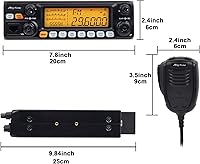
  • Dimensions: Measures approximately 250 x 200 x 60 mm, or about 9.8″ x 7.9″ x 2.4″.
  • Input Voltage: Runs on a 13.8V DC input voltage.
  • Antenna Connector: Uses a UHF SO-239 antenna connector for standard mobile antenna setups.

Related Reviews

AnyTone ARES II 10 Meter Mobile Radio
73%
88%
Transmit Power
83%
Receive Audio Quality
79%
Build Quality
81%
Value for Money
74%
SSB Performance
More
AnyTone SMT-02 10 Meter Mobile Radio
71%
93%
Form Factor & Portability
84%
Audio Clarity & Receive Quality
67%
Transmit Power & Range
78%
Build Quality & Durability
81%
Ease of Installation
More
Radioddity QT80 10 Meter Ham Radio Transceiver
78%
88%
Transmission Power
84%
Receive Audio Quality
79%
Noise Reduction Performance
86%
Ease of Setup
83%
Display & Interface
More
President Richard 10 Meter Radio
76%
88%
Audio Receive Quality
84%
Transmit Performance
81%
Build Quality
91%
Feature Depth
86%
Ease of Installation
More
Radioddity QT60 Pro 10-Meter Ham Transceiver
78%
83%
RF Performance
81%
Audio Clarity (RX)
71%
Transmit Audio Quality
86%
Display & Interface
79%
Noise Reduction System
More
Radioddity QT40 10 Meter SSB Ham Radio
77%
86%
SSB Signal Performance
83%
Noise Reduction Effectiveness
88%
Power Output
84%
Audio Clarity
81%
NOAA Weather Integration
More
AnyTone AT-778UV Dual Band Mobile Radio
79%
83%
Build Quality
88%
Audio Clarity
86%
Dual-Band Coverage
79%
Display & Interface
51%
Programming Software
More
Stryker SR-655HPC 10 Meter Amateur Radio
76%
91%
Transmission Power
88%
Receiver Performance
86%
Audio Quality
67%
Build Quality
84%
Display & Backlighting
More
Stryker SR-955HPC 10 Meter Amateur Radio
77%
94%
Frequency Stability
91%
Transmit Audio Quality
89%
Power Output
78%
DSP Noise Reduction
83%
Build Quality
More
Stryker SR-447HPC2 10 Meter Radio
78%
91%
Audio Clarity
88%
Transmit Power
93%
Compact Form Factor
87%
SWR Protection
63%
Ease of Installation
More

FAQ

Yes, technically transmitting on the 10 meter amateur band requires a valid FCC license, even though radios like the AnyTone AT-5555N II 10 Meter Mobile Radio are sold and used informally by plenty of people. If you want to stay fully within the rules, a Technician class ham license covers 10 meter privileges and isn't too hard to study for. Plenty of buyers use these radios without one, but that's a personal risk decision, not something worth ignoring.

Programming runs through AnyTone's PC software connected via the rear jack, and the first setup session takes a bit of patience while you learn the menu layout. After that, organizing all 40 channels across the different bands goes much faster. If you're not comfortable poking around computer software, expect more of a learning curve than a basic plug-and-play CB.

Most antennas built for the 10 meter or CB range should work fine, since this mobile transceiver uses a standard UHF SO-239 connector. That said, antenna tuning matters a lot at these power levels, so check your SWR before transmitting at full output to avoid stressing the radio.

Those numbers, 60W AM PEP and 60W SSB PEP, reflect peak envelope power, the momentary peak during voice transmission, rather than a constant output level. FM's 50W rating is closer to a continuous figure. In practice this just means the radio pushes serious power across all three modes, with SSB generally being more efficient for long-distance contacts.

You can tune into the WX channel manually any time, but the weather alert function will also notify you automatically when an alert tone goes out over the NOAA weather frequencies, similar to a dedicated weather radio. It's a nice extra for anyone spending long stretches on the road or off-grid.

It's built to work with both electret and dynamic microphone types, so there's some flexibility there. A few buyers have mentioned compatibility hiccups with certain aftermarket mics, so if you're planning to swap out the stock one, it's worth confirming pin compatibility first.

This high-power radio runs on 13.8V and pulls noticeably more current than a basic CB once you're transmitting at full power, so it's worth running it through a properly fused circuit rather than tapping into an existing accessory line. The built-in voltage protection helps guard against spikes, but a clean power source still makes a real difference in performance.

No, this isn't a water-resistant unit, so it needs to live inside the cab or under cover rather than mounted somewhere it could get rained on directly. Keep that in mind if an exterior or open-bed installation was the plan.

The biggest difference is power and flexibility, since this 10 meter radio puts out significantly more wattage than a stock CB and adds AM, FM, USB, and LSB modes instead of just one. You also get CTCSS/DCS tone coding and a weather alert function that most basic CBs simply don't include. The trade-off is a steeper learning curve and, technically, a license requirement that CB radios don't have.

Antenna placement matters more than radio placement for actual signal quality, so prioritize a solid ground plane and a clear line of sight when mounting the antenna. For the radio body itself, somewhere secure and within easy reach of the display and controls works best, just keep it away from direct sun and moisture.