Overview

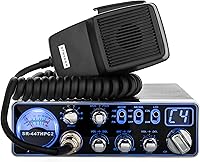
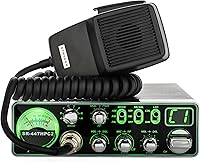
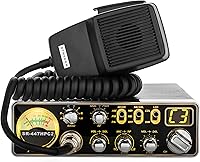
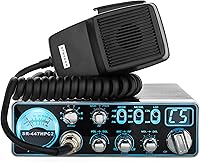
The Stryker SR-447HPC2 10 Meter Radio sits at the upper end of the mobile 10 meter market, offering a rare combination of serious power and a surprisingly small footprint. It was built with truck drivers in mind — specifically those dealing with the tighter overhead console spaces found in newer rigs. Licensed ham operators and CB veterans looking to step up will find plenty to like here too. Worth noting before you buy: operating on 10 meters requires an amateur radio license, so this is not a plug-and-play CB replacement. The core appeal is straightforward — high output power packed into a compact, road-ready chassis that does not force you to sacrifice mounting convenience.

Features & Benefits

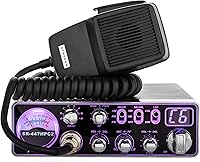
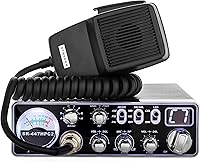
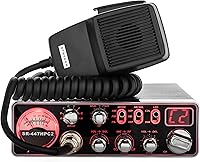
Where this 10 meter radio earns its keep is in how the hardware actually performs on the road. Pushing over 55 watts through high-power MOSFET finals, it produces noticeably richer, fuller audio than lower-wattage alternatives — thanks in part to negative peak compression, which smooths out your voice signal instead of letting it clip. The built-in SWR meter is a genuinely practical touch: it monitors antenna conditions in real time and cuts transmission before a bad-SWR situation damages your finals. The 7-color backlit faceplate with a 32-position dimmer sounds like a gimmick until you are driving at night and need to dial the glow to a comfortable level. Forty programmable channels across eight frequency bands round things out.

Best For

This Stryker mobile rig makes the most sense for long-haul truckers who have already run into the mounting headaches that come with bulkier radios in modern cab designs. Its slim profile was clearly engineered with those tight overhead console slots in mind. Licensed amateur operators wanting a capable mobile setup — without hauling around a full-size base station — will also get solid value here. If you are coming from a CB background and want cleaner audio with genuine range, this is a natural next step. It is less suited for casual users given its price tier, and those in low-interference areas may not fully appreciate the adjacent channel rejection advantage.

User Feedback

Owners consistently highlight two things: audio clarity and physical fit. The modulation gets particular praise — many note it sounds fuller and more natural compared to previous radios they have owned. Truckers with newer Kenworth and Peterbilt models appreciate how cleanly the SR-447HPC2 tucks into the overhead console. On the other side, some buyers find the antenna tuning process more involved than expected, especially if they are newer to 10 meter operation. A handful of users are indifferent to the echo and roger beep features and prefer to disable them entirely. Long-term durability feedback skews positive overall, though a small number of owners report reliability concerns after extended heavy use.

Pros

  • Output power exceeds 55 watts PEP, giving you noticeably stronger transmission than most competing mobile 10 meter radios.
  • Negative peak compression produces richer, cleaner modulation that makes your voice easier to understand at distance.
  • The built-in SWR meter actively protects the radio from antenna faults, which is a real safeguard for your investment.
  • Fits neatly into the overhead consoles of newer truck models where larger radios simply will not mount.
  • The 32-position backlight dimmer lets you tune cab brightness precisely — genuinely useful on night runs.
  • Forty programmable channels across eight bands offer serious flexibility for operators who work multiple frequency ranges.
  • Noise blanker and ANL switch help keep received audio clean in electrically noisy vehicle environments.
  • The SR-447HPC2 includes a microphone and power cable out of the box, so you are not hunting for accessories on day one.
  • PC programmability means you can customize the radio without fumbling through front-panel menus in a moving cab.
  • Water resistance adds a layer of durability for installations where moisture exposure is a real-world concern.

Cons

  • Requires an amateur radio license to operate legally — a hard stop for buyers coming purely from a CB background.
  • Antenna tuning can be time-consuming for less experienced operators, and a poorly matched antenna will hurt performance significantly.
  • The echo and roger beep features are polarizing; some users disable them immediately and find them unnecessary at this price point.
  • A handful of long-term owners have reported reliability issues after extended heavy daily use.
  • At its price tier, it demands a proper antenna investment to perform as advertised — budget antenna setups will bottleneck results.
  • Installation in non-standard or older vehicle dash configurations can require additional mounting hardware not included in the box.
  • Users unfamiliar with 10 meter operation face a learning curve around band selection and frequency management compared to simple CB use.

Ratings

The scores below for the Stryker SR-447HPC2 10 Meter Radio were generated by our AI engine after analyzing verified buyer reviews from multiple global sources, with spam, bot submissions, and incentivized feedback actively filtered out. Each category reflects the honest consensus of real-world users — truckers, licensed ham operators, and mobile radio enthusiasts — with both standout strengths and genuine frustrations weighted transparently into every score.

Audio Clarity
91%
Operators consistently single out the modulation quality as one of the best they have experienced in a mobile 10 meter unit. The negative peak compression keeps voice audio full and natural-sounding even at long distances, and contacts routinely comment on how clean transmissions sound compared to competing radios in the same class.
A small number of users report that at maximum echo settings the audio can become muddied, and those running lower-quality aftermarket microphones sometimes find the modulation richness does not fully translate. Getting the most out of the audio does require some front-panel tuning time.
Transmit Power
88%
The 55+ watt output gives this Stryker mobile rig a clear edge over lower-powered alternatives, and operators on long highway runs appreciate the added headroom when band conditions are marginal. MOSFET finals handle sustained key-downs without the thermal stress issues some older designs exhibit.
Achieving the full rated output consistently requires a well-matched antenna and a clean 13.8–14.2V power supply, which not every truck electrical system delivers reliably. A handful of users noted slightly lower real-world output than the spec suggests under suboptimal power conditions.
Compact Form Factor
93%
The slim 1.9″ height is the single feature truckers mention most in positive reviews — it genuinely fits in the overhead console slots of newer Kenworth, Peterbilt, and Freightliner models where virtually no competing high-power radio will mount. For drivers who have struggled to find a powerful radio that works in a modern cab, this solves a real problem.
The compact chassis does mean controls are tightly spaced, and operators with larger hands occasionally find the front-panel buttons fiddly during adjustment while driving. The depth of 9.25″ can also be a tight fit in shallower console configurations.
SWR Protection
87%
The built-in SWR meter with automatic transmit cutoff is widely praised as a genuine safety net, particularly by users who are newer to antenna tuning. Several buyers credit it with preventing damage during initial setup when their antenna was not yet properly matched, saving them from an expensive repair.
The SWR display is shown on the channel readout rather than a dedicated meter, which some experienced operators find less intuitive to read at a glance compared to a separate analog meter. It also does not replace a dedicated external SWR meter for precise antenna optimization work.
Ease of Installation
63%
37%
For operators with prior 12V installation experience, the wiring process itself is manageable — the power cable is included, and the SO239 antenna connection is standard. Users who took time to read the manual and properly tune their antenna reported a smooth overall setup experience.
Antenna tuning is where many buyers hit a wall, especially those coming from CB backgrounds who have not dealt with SWR optimization before. Multiple reviewers described spending several hours getting their SWR reading into a safe range, and a few gave up and sought help from local ham clubs or shops.
Backlight & Display
84%
The seven-color backlit faceplate with 32-step dimming is more practical than it sounds on paper — night drivers particularly appreciate being able to dial brightness down to a soft glow that does not wash out their night vision or distract other cab occupants. The auto-cycle color mode adds a personal touch that many users enjoy.
A handful of users find the color options more of a novelty than a necessity and would prefer a simpler single-color display at a lower price point. The channel display font is also considered small by some operators who glance at it while driving.
Receiver Performance
82%
18%
The up-armored receiver and adjacent channel rejection get solid marks from operators who run in busy frequency environments, such as truck stops or urban areas where interference is common. Received audio is generally described as clear and well-separated even when nearby channels are active.
In truly congested RF environments — near high-power repeaters or broadcast towers — a few users noted some bleed-through that the noise blanker could not fully suppress. Performance in these edge cases is better than budget radios but not quite on par with high-end base station receivers.
Build Quality
76%
24%
The chassis feels solid for a compact mobile unit, and the faceplate controls have a reassuring tactile response that holds up well during daily use in a vibrating cab environment. Most long-term owners report no structural issues after a year or more of regular operation.
A recurring concern among a subset of verified buyers involves reliability after extended heavy use, with some reporting component failures beyond the 18-month mark. The water-resistant rating is basic and should not be interpreted as protection against anything beyond incidental moisture.
Value for Money
71%
29%
For operators who fully use the feature set — programmable channels, variable power, SWR protection, quality modulation — the price is considered fair relative to competing high-power 10 meter mobiles. Buyers who prioritize audio performance and compact size tend to feel it is money well spent.
Casual or infrequent users are unlikely to recoup value from the premium pricing, and those who need to invest additionally in a quality antenna and power supply will find the total outlay adds up quickly. Cheaper alternatives exist for operators whose needs do not extend to high wattage or tight-space mounting.
Echo & Roger Beep
58%
42%
Users who enjoy the echo and roger beep features appreciate having dual front-mounted controls for quick adjustment, and the ability to select between two distinct beep tones adds some personalization. For hobbyists who use these features socially, they work reliably and consistently.
This is one of the most polarizing feature sets on the radio — a significant portion of buyers disable both features immediately and view them as unnecessary additions at this price tier. The dual echo controls also take up front-panel real estate that some operators feel could have been used more usefully.
Frequency Flexibility
86%
Eight frequency bands with 40 programmable channels each gives the SR-447HPC2 a breadth of coverage that serious operators genuinely use, especially those who work across different regional band plans or participate in organized nets. PC programmability makes bulk channel setup far less tedious than front-panel entry.
The PC programming process requires sourcing compatible software and a programming cable, which is not included and adds a minor extra cost and setup step. Users who only ever operate on a handful of standard channels may find the extensive programmability more complexity than they need.
Microphone Quality
72%
28%
The included microphone performs adequately for everyday operation and pairs reasonably well with the radio's modulation characteristics. Most users find it sufficient for getting on the air immediately without an additional purchase.
Experienced operators tend to replace the stock microphone fairly quickly, noting that an aftermarket option noticeably improves transmitted audio quality. The included mic feels utilitarian compared to the overall price point of the radio itself.
Power Supply Sensitivity
61%
39%
Running the radio at the recommended 14.2V delivers noticeably better output performance, and operators with well-regulated truck electrical systems or a dedicated power supply report consistent, strong results that match expectations.
Truck electrical systems that fluctuate or run slightly low can cause inconsistent output and, in some cases, affect receiver sensitivity. This is a broader mobile radio challenge, but the SR-447HPC2 appears more sensitive to voltage variation than some competing units, according to a subset of experienced users.

Suitable for:

The Stryker SR-447HPC2 10 Meter Radio is a strong match for licensed amateur radio operators who spend significant time on the road and need a capable mobile rig without the bulk of a full-size unit. Long-haul truckers driving newer models — think Kenworth T680s or Peterbilt 579s with tight overhead consoles — will particularly appreciate how cleanly this radio fits into spaces that reject larger radios outright. CB enthusiasts who have earned their Technician or General license and want a meaningful step up in both audio quality and transmission power will find it a natural progression. It also suits operators who work in congested frequency environments, since the advanced adjacent channel rejection helps cut through interference that would muddy a cheaper radio. If you value having granular control over your setup — adjustable power, programmable channels, fine-tuned backlighting — this Stryker mobile rig gives you that depth without requiring a separate controller box.

Not suitable for:

The Stryker SR-447HPC2 10 Meter Radio is not the right choice for anyone who does not hold a valid amateur radio license, full stop — operating it on 10 meters without one is illegal, and no amount of features changes that reality. Buyers hoping for a simple CB upgrade they can install and forget will likely find the setup process more demanding than expected, particularly when it comes to properly tuning the antenna for a low SWR reading. Casual hobbyists or occasional users may struggle to justify the price tier given how much of the feature set — programmable channels, variable power, noise blanker — only pays off with regular, serious use. Those who primarily operate in short-range, low-interference environments are unlikely to notice the audio and reception advantages that justify the cost over more affordable alternatives. If you are mounting in an older vehicle with ample dash space and no overhead console constraints, the compact size loses much of its practical value.

Specifications

  • Power Output: The radio delivers 55+ watts PEP through high-power MOSFET final transistors, placing it well above typical mid-range mobile 10 meter units.
  • Frequency Range: Coverage spans 28.000 to 29.700 MHz, encompassing the full 10 meter amateur band across eight selectable frequency bands (A through H).
  • Channels: Each of the eight bands holds 40 channels, all of which are programmable via a connected PC for custom frequency configurations.
  • Dimensions: The chassis measures 6.2″ wide by 1.9″ tall by 9.25″ deep, a compact footprint engineered to fit modern truck overhead console slots.
  • Weight: The unit weighs 4.4 pounds, which is manageable for overhead or dash mounting without placing excessive stress on mounting hardware.
  • Input Voltage: Nominal operating voltage is 13.8V DC, with 14.2V recommended for optimal output performance in vehicle installations.
  • Antenna Connector: The antenna port uses a standard UHF SO239 socket, compatible with the most commonly available PL-259 mobile antenna connectors.
  • Frequency Control: A Phase-Locked-Loop synthesizer manages frequency stability, keeping drift within 0.001% across the operating temperature range.
  • LED Backlight: The faceplate offers seven selectable backlight colors with a 32-position dimmer, adjustable via a press-and-hold button or automatic CPU-driven color cycling.
  • SWR Protection: A built-in SWR meter monitors antenna conditions during transmission and automatically blocks the transmit function when standing wave ratio reaches a damaging level.
  • Modulation: Negative peak compression is applied to the AM signal to maintain rich, clear modulation and reduce distortion at high power levels.
  • Echo & Beep: Digital echo is adjustable via two front-mounted controls, and the roger beep function offers two tone options or can be fully disabled.
  • Noise Reduction: A combined Noise Blanker and ANL (Automatic Noise Limiter) switch helps suppress ignition and electrical interference on the received signal.
  • Talkback & Power: Both talkback monitor level and transmit power output are independently variable, giving the operator fine control over audio and RF performance.
  • Temperature Range: The unit is rated for operation between -20°C and +50°C, covering the range of conditions encountered in most North American truck cab environments.
  • Water Resistance: The radio carries a water-resistant rating, providing basic protection against incidental moisture exposure during typical mobile installations.
  • In-Box Contents: Each unit ships with the radio, a power cable, and a microphone; no separate antenna or mounting bracket is included.
  • Frequency Stability: Frequency tolerance is held to 0.005%, and stability is rated at 0.001%, ensuring consistent channel accuracy across temperature fluctuations.

Related Reviews
Stryker SR-955HPC 10 Meter Amateur Radio
77%
94%
Frequency Stability
91%
Transmit Audio Quality
89%
Power Output
78%
DSP Noise Reduction
83%
Build Quality
More
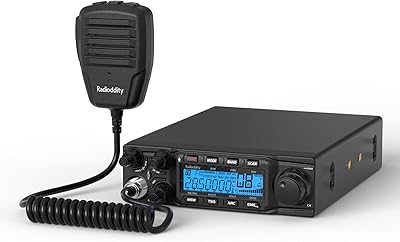
Stryker SR-655HPC 10 Meter Amateur Radio
76%
91%
Transmission Power
88%
Receiver Performance
86%
Audio Quality
67%
Build Quality
84%
Display & Backlighting
More
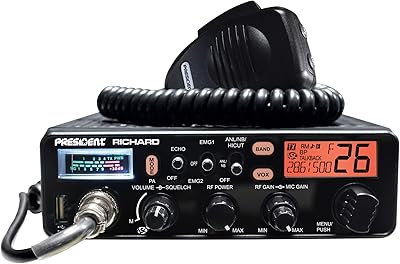
Radioddity QT80 10 Meter Ham Radio Transceiver
78%
88%
Transmission Power
84%
Receive Audio Quality
79%
Noise Reduction Performance
86%
Ease of Setup
83%
Display & Interface
More
President Richard 10 Meter Radio
87%
88%
Performance
90%
Ease of Use
84%
Build Quality
92%
Mobile Setup Suitability
78%
Range/Signal Strength
More
AnyTone AT-5555N II 10 Meter Radio
86%
94%
Power Output
89%
Ease of Use
92%
Range and Signal Clarity
85%
Build Quality
90%
Noise Reduction Performance
More
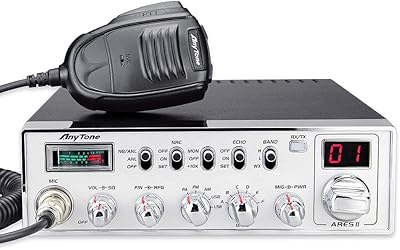
Radioddity QT60 Pro 10-Meter Ham Transceiver
78%
83%
RF Performance
81%
Audio Clarity (RX)
71%
Transmit Audio Quality
86%
Display & Interface
79%
Noise Reduction System
More
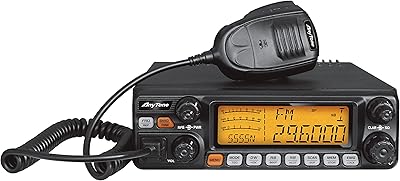
AnyTone ARES II 10 Meter Mobile Radio
73%
88%
Transmit Power
83%
Receive Audio Quality
79%
Build Quality
81%
Value for Money
74%
SSB Performance
More
Radioddity QT40 10 Meter SSB Ham Radio
77%
86%
SSB Signal Performance
83%
Noise Reduction Effectiveness
88%
Power Output
84%
Audio Clarity
81%
NOAA Weather Integration
More
Stryker SR-497-HPC AM/FM 10 Meter Radio
80%
93%
Transmit Power & Output
88%
Audio Clarity
84%
Noise Reduction (NB/ANL)
86%
Build Quality & Durability
89%
Display & Visibility
More
AnyTone SMT-02 10 Meter Mobile Radio
71%
93%
Form Factor & Portability
84%
Audio Clarity & Receive Quality
67%
Transmit Power & Range
78%
Build Quality & Durability
81%
Ease of Installation
More

FAQ

Yes, and this is important to understand before you buy. The 10 meter band (28–29.7 MHz) is an amateur radio frequency range, which means you need at least a Technician class amateur radio license in the US to operate it legally. It is not a CB radio and cannot be legally used as one.

That is exactly the installation scenario this radio was designed for. Its slim 1.9″ height and 6.2″ width allow it to slide into the overhead cubby slots found in many late-model Kenworth and Peterbilt trucks where bulkier radios simply will not fit. That said, console dimensions vary by year and trim, so it is worth measuring your specific slot before ordering.

You will need a 10 meter mobile antenna with a PL-259 connector to match the SO239 port on the radio. A quality tunable antenna — such as a 102-inch whip or a loaded mobile antenna like those from Firestik or Wilson — will help you achieve a low SWR reading, which is essential for protecting the finals and getting the most out of the power output.

When you key up to transmit, the radio automatically checks the reflected power coming back from the antenna. If the SWR is too high — meaning your antenna is poorly matched — the radio will alert you with an audible beep and prevent transmission to avoid damaging the output transistors. It is a practical safeguard, especially for users still dialing in their antenna setup.

Technically you can use it at home with a regulated 13.8V DC power supply — many ham operators do exactly that for portable base setups. You will need a power supply rated to handle the current draw at full output, which at 55+ watts means a supply capable of 20 amps or more is advisable. Just keep in mind it was designed and sized as a mobile unit, so a dedicated base station radio may serve a home shack better long-term.

Many 4-pin CB-style microphones will physically connect and work for basic operation, but for the best audio quality — especially given the modulation capabilities of this radio — it is generally recommended to use the included microphone or a dedicated 10 meter aftermarket mic. Wiring pin assignments can vary between manufacturers, so check compatibility before substituting.

Pressing the color button cycles through the seven available colors manually, or you can let the radio scan through all colors on its own automatically. To adjust the brightness, press and hold the color button until the backlight dims to your preferred level across the 32 available dimmer positions. It takes a minute to get the muscle memory down, but it is straightforward once you try it.

Yes, the roger beep can be fully disabled — and plenty of users do exactly that. There are two different beep tones available if you want to use the feature, but if you find it distracting or your contacts do, switching it off is a simple front-panel adjustment.

For someone with basic 12V wiring experience, installation is fairly straightforward — power cable to the fuse block, antenna to the SO239, microphone plugged in, and you are close to ready. The more time-consuming part is properly tuning the antenna to achieve a safe SWR reading, which requires an SWR meter or using the radio's built-in meter during initial setup. First-timers should budget an hour or two and take the antenna tuning process seriously.

Range depends heavily on antenna quality, terrain, atmospheric conditions, and what band openings are available on 10 meters at any given time. Under good conditions with a well-matched antenna, reliable communication over many miles is achievable — but the advertised maximum figure assumes ideal conditions that do not reflect everyday use. On a typical day with normal propagation, expect practical ranges that vary considerably, and treat any specific mileage claim as a best-case ceiling rather than a guarantee.

Where to Buy

Scotts Radios
In stock $299.99
CB Radio Supply
In stock $304.99