Overview

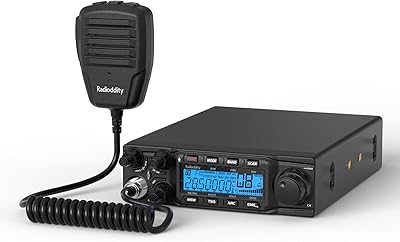
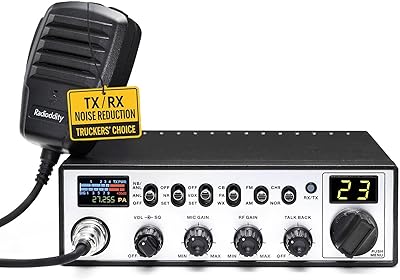
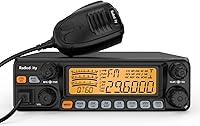
The Radioddity QT60 Pro 10-Meter Ham Transceiver entered the market in August 2023 and has quietly carved out a respectable niche among mobile amateur radio operators. Unlike a standard CB radio, this 10-meter transceiver offers multi-mode operation — SSB, AM, FM, and PA — a meaningful step up in versatility. That said, you need at least a Technician class license to transmit legally on this band; it is a ham radio, not a CB replacement. The QT60 Pro currently sits at #22 in Fixed-mount CB Radios on Amazon, supported by a 4.5-star average from 153 ratings — encouraging numbers without being exceptional.
Features & Benefits

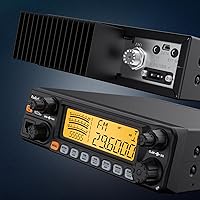
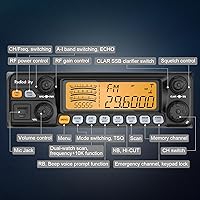
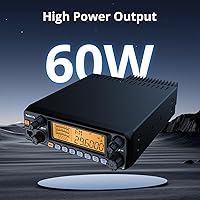
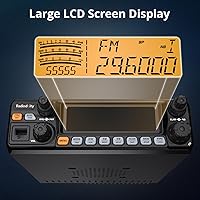
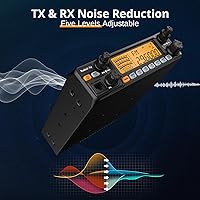
At 60W PEP on SSB and AM, and 50W on FM, the QT60 Pro punches well for a mobile rig in this price class — enough power for solid regional contacts when band conditions cooperate. The five-level noise reduction on both transmit and receive is genuinely useful inside a noisy vehicle cab or out in the field. The LCD display is large enough to read at a glance while driving, and the button layout keeps critical controls accessible without requiring menu-diving for routine adjustments. ASQ automatic squelch keeps AM and FM modes clean without constant manual intervention. NOAA weather alert reception across all seven WX channels rounds out a practical feature set for anyone operating in variable outdoor conditions.

Best For

This mobile ham radio is most at home with licensed operators — Technician class and above — who want meaningful 10-meter capability without the cost and complexity of a full HF rig. It is a natural choice for the overlanding and off-road crowd, where range beyond typical CB distances matters and NOAA weather alerts can be genuinely life-useful. Emergency preparedness operators will appreciate the SSB versatility alongside those WX channels. It also works well as a first SSB radio for operators who have outgrown CB and want to explore the 10-meter band without committing to a high-end transceiver. For basic day-to-day operation, most users will not need a computer to get started.

User Feedback

Across user reviews, the QT60 Pro earns consistent praise for audio clarity on receive and the legibility of its display in bright conditions. Owners frequently cite strong value compared to pricier 10-meter alternatives. The criticisms are real, though: several users flag the stock microphone as a weak point, with audio quality noticeably improved when swapped for an aftermarket unit. The manual has drawn complaints for being sparse on SSB-specific guidance. Real-world range is highly dependent on antenna choice, band conditions, and terrain — treat the 60-mile figure as a ceiling, not a typical result. Build quality and the mounting bracket get generally positive marks, and Radioddity's 18-month warranty with responsive support is a recurring positive in customer comments.

Pros

  • 60W PEP output on SSB gives this 10-meter transceiver real legs when band conditions are favorable.
  • Five-level adjustable noise reduction on both transmit and receive is rare at this price point and genuinely useful in noisy vehicles.
  • The large LCD display is easy to read at a glance while driving, even in direct sunlight.
  • ASQ automatic squelch on AM and FM keeps background noise quiet without constant manual tweaking.
  • NOAA weather alert reception across all seven WX channels adds meaningful safety value for off-road and field use.
  • 200 programmable channels across eight bands offers solid organizational flexibility for frequent operators.
  • Basic day-to-day operation requires no computer programming, lowering the setup barrier for newcomers to SSB.
  • The QT60 Pro includes CTCSS/DCS tone capability, useful for coordinating within groups on shared frequencies.
  • An 18-month warranty with reported responsive customer support gives buyers reasonable post-purchase confidence.
  • Competitive pricing relative to other 10-meter SSB mobiles makes it an accessible entry point into the segment.

Cons

  • The stock microphone underdelivers on audio quality — most serious operators will want to budget for an aftermarket replacement.
  • The user manual is thin on SSB-specific guidance, leaving newer operators to figure out key adjustments on their own.
  • Real-world range is highly dependent on antenna, terrain, and band conditions — the advertised maximum is rarely achievable in practice.
  • ASQ automatic squelch is limited to AM and FM modes only; SSB users must manage squelch manually.
  • The unit has no meaningful water resistance rating, making it a poor choice for exposed or wet-weather mounting locations.
  • At nearly five pounds, the physical weight and mounting footprint may be awkward in smaller or tightly packed vehicle interiors.
  • PC programming requires a separately purchased cable, which adds cost and a step that the packaging does not make obvious.
  • Frequency coverage is locked to the 10-meter band only — operators wanting broader HF access will need a different radio entirely.
  • Fine-tuning SSB clarity in the field has a learning curve that some users find frustrating without clearer documentation to guide them.

Ratings

The scores below for the Radioddity QT60 Pro 10-Meter Ham Transceiver were generated by AI after analyzing verified global user reviews, with spam, bot activity, and incentivized feedback actively filtered out. Each category reflects a genuine synthesis of what real operators praised and what frustrated them in daily use. Both the strengths and the recurring pain points are represented honestly, so you can make an informed decision before purchasing.
RF Performance
83%
Operators consistently report that the 60W PEP output holds up well during mobile SSB contacts when band conditions are even moderately favorable. Several users noted cleaner-than-expected signal reports from other stations, suggesting the transmitter chain is reasonably well-implemented for the price tier.
A handful of experienced operators noted that intermodulation behavior under heavy band activity is noticeable if you push the radio hard. Real-world skip performance is entirely at the mercy of propagation, and a minority of users had inflated expectations that the hardware alone could not meet.
Audio Clarity (RX)
81%
19%
Received audio is one of the most consistently praised aspects of this mobile ham radio, with users describing it as clear and well-defined even in noisy vehicle environments. The built-in speaker handles 3W into 8 ohms adequately for cab use, and the five-level noise reduction meaningfully reduces alternator whine and road noise bleed.
At higher noise reduction levels, some users report a slight flattening of audio texture that makes fine SSB tuning marginally harder. External speaker performance varies depending on the unit chosen, and the manual offers little guidance on optimal pairing.
Transmit Audio Quality
71%
29%
When paired with an aftermarket microphone, transmitted audio quality receives consistently positive signal reports from other operators. The TX noise reduction works noticeably well for suppressing background cab noise during mobile contacts, which users in off-road and overlanding groups particularly appreciated.
The stock microphone is the single most cited disappointment across user feedback — audio reports from other stations are frequently described as thin or slightly muffled when using it. Most serious operators treat a microphone upgrade as a near-mandatory first purchase alongside this radio.
Display & Interface
86%
The large backlit LCD earns strong marks for in-vehicle readability, with several users specifically noting it holds up well in direct sunlight — a common pain point with competitor displays. Button placement is intuitive enough that most operators can adjust key settings without pulling over, which matters during trail runs.
A few users with larger hands found the button spacing slightly cramped during gloved operation in cold-weather conditions. The display does not offer a night-mode dimming option that some operators would find useful for pre-dawn or overnight use.
Noise Reduction System
79%
21%
Having independent five-level control over both TX and RX noise reduction is a feature that operators coming from basic CB rigs find genuinely useful. In real-world mobile use on highway drives, mid-range RX settings deliver a noticeable reduction in interference without sacrificing too much audio detail.
At the top noise reduction levels, some users report that weak SSB signals get partially suppressed along with the noise, which is a trade-off you manage through experimentation rather than any documented guidance. The manual does not explain the noise reduction behavior in enough detail for newer operators to optimize it efficiently.
NOAA Weather Reception
88%
Coverage of all seven standard NOAA weather frequencies with active alert functionality is a genuine utility feature, and overlanders and emergency preparedness users frequently call it out as a deciding factor in their purchase. Alert sensitivity is reliable enough that users trust it during multi-day backcountry trips.
The alert function is receive-only and requires the radio to be powered on to be useful, which is an obvious but occasionally overlooked limitation for users hoping for a standby-mode alert capability. A small number of users in fringe reception areas noted inconsistent alert triggering.
Channel Management
74%
26%
Two hundred programmable channels spread across eight bands gives frequent operators substantial organizational flexibility, and the front-panel channel scanner works reliably for monitoring across programmed frequencies. For users who stick to a familiar set of repeater or simplex frequencies, setup is genuinely manageable without a computer.
Bulk channel programming without the optional PC cable is tedious and error-prone for anyone loading more than a dozen channels manually. The PC programming cable is sold separately with no clear in-box indication, which catches some buyers off guard when they want to do a full channel load on day one.
Build Quality
77%
23%
The chassis feels solid for its price class, and the mounting bracket hardware receives generally positive feedback for holding the radio securely in rough terrain without loosening over time. Several trail users reported the unit surviving sustained vibration on washboard roads without any mechanical or connection issues.
The exterior plastic finish shows scuffs and minor abrasion marks relatively quickly in a working vehicle environment. A few users noted that the microphone connector feels slightly less robust than the rest of the chassis, raising questions about long-term durability under frequent connect-disconnect cycles.
Ease of Setup
82%
18%
For basic operation — getting on the air, tuning to a frequency, and accessing NOAA channels — the QT60 Pro is approachable enough that most licensed operators can be functional within an hour of installation without touching a computer. The menu system is organized logically, and most routine adjustments are accessible from the front panel.
SSB-specific setup, including fine-tuning the clarifier and optimizing noise reduction for a particular vehicle environment, involves a trial-and-error process that the manual does not adequately support. Users without prior SSB experience will likely need to consult online forums or the ham radio community to get the most out of the radio quickly.
User Manual Quality
52%
48%
The manual covers basic installation and front-panel controls clearly enough for initial setup, and the wiring diagram for vehicle power connection is accurate and easy to follow. Operators with prior ham radio experience will find enough information to get operational quickly.
For anything beyond the basics — SSB operation, noise reduction optimization, or PC programming workflow — the manual is frustratingly sparse. This is the most consistently cited frustration across user reviews, and the gap is wide enough that it meaningfully adds friction for operators stepping into SSB for the first time.
Value for Money
84%
Relative to other 10-meter SSB mobile transceivers, the QT60 Pro delivers a compelling feature-to-cost ratio that is difficult to argue with at its price point. Users frequently reference competitors that cost significantly more while offering a comparable or only marginally better feature set, which makes this an easy recommendation for budget-conscious licensed operators.
The stock microphone effectively adds an unannounced upgrade cost for serious SSB operators, which erodes the value proposition slightly once you factor it in. Users who purchase expecting a truly complete out-of-box experience may feel the real cost of ownership is modestly higher than the list price implies.
Mobile Installation
78%
22%
The mounting bracket is sturdy and the hardware package is reasonably complete for a standard dashboard or under-dash vehicle installation. At 4.96 pounds, the radio is stable once properly mounted, and the detachable microphone and hanger fit cleanly into most cab configurations.
The physical footprint — particularly the depth — can be awkward in tighter center-console or under-dash spaces, and a handful of users in compact vehicles reported needing creative mounting solutions. The power cable length may require extension in larger vehicles with the battery located far from the mounting position.
ASQ Squelch Performance
73%
27%
Automatic Squelch Control on AM and FM modes works reliably in typical mobile use, keeping the speaker quiet between transmissions without requiring constant manual adjustment on busy monitoring frequencies. Overlanding group users found it particularly practical when monitoring a shared simplex frequency during convoy runs.
ASQ is not available on SSB, which means SSB operators must manage squelch manually — a reasonable technical limitation but one that catches some operators off guard if they are accustomed to radios that handle this automatically. The manual squelch threshold on SSB requires more frequent readjustment as band conditions shift.
After-Sale Support
80%
20%
Radioddity's customer support is cited positively in a meaningful portion of reviews, with users reporting timely responses to technical questions and warranty claims handled without excessive friction. The 18-month warranty period is longer than some competitors in this class, which adds a layer of confidence for first-time buyers.
Support quality for nuanced technical issues — particularly SSB-specific configuration questions — varies depending on the representative, and some users report being directed back to the manual rather than receiving actionable guidance. Firmware update support and long-term parts availability remain open questions for a radio introduced in 2023.

Suitable for:

The Radioddity QT60 Pro 10-Meter Ham Transceiver is a strong fit for licensed amateur operators — Technician class and above — who want a capable mobile rig without spending into full HF territory. Overlanders and off-road trail groups will find real value here: the combination of 60W SSB output, NOAA weather alerts, and a display readable in bright daylight addresses genuine field communication needs. Emergency preparedness operators who want more versatility than a basic CB can offer, but need something practical to install and use quickly, will appreciate the mostly menu-free setup for everyday operation. It also makes a sensible first SSB radio for operators who have held a license for a while and are ready to explore 10-meter propagation without a steep financial commitment. If you already understand band conditions and realistic mobile antenna trade-offs, this radio will meet your expectations honestly.
Not suitable for:

Anyone without a valid FCC amateur radio license should look elsewhere — the Radioddity QT60 Pro 10-Meter Ham Transceiver is strictly a licensed-operator device, and transmitting on 10 meters without authorization is illegal regardless of how easy the radio is to use. CB-only users hoping for a direct drop-in replacement will find the licensing requirement, the narrower frequency band, and the SSB learning curve more friction than they bargained for. Operators who need a truly rugged, waterproof radio for heavy-weather or submersion-risk environments should note this unit carries no water resistance rating to speak of. If your primary use case demands consistent 50-plus-mile mobile range, you will need ideal band conditions and a well-matched antenna — this radio cannot guarantee that outcome on its own. Advanced HF operators looking for wide multi-band coverage will quickly find 10 meters too limiting, and should budget for a proper all-band transceiver instead.
Specifications

  • Power Output: Delivers 60W PEP on SSB and AM modes, and 50W on FM, providing meaningful output for mobile skip and regional contacts.
  • Frequency Range: Covers 28.000–29.700 MHz, operating exclusively within the 10-meter amateur radio band with programmable frequency steps.
  • Modes: Supports AM, FM, USB, LSB, and PA (public address) transmission modes, offering considerably more versatility than a standard CB radio.
  • Channels: Stores up to 200 programmable channels organized across 8 frequency bands, with 40 channels available per band.
  • Noise Reduction: Features independently adjustable TX and RX noise reduction across five levels, allowing fine-tuned clarity control in high-interference environments.
  • Squelch Control: Automatic Squelch Control (ASQ) is active on AM and FM modes; SSB squelch is manually adjustable with a threshold below 1.0 μV.
  • NOAA Weather: Receives all seven standard NOAA weather broadcast frequencies and includes an active weather alert function for emergency monitoring.
  • Display: Uses a large backlit LCD panel designed for at-a-glance readability in varying light conditions, including direct sunlight during vehicle operation.
  • Antenna Connector: Equipped with a standard UHF SO-239 antenna connector, compatible with a wide range of mobile whip and base-loaded 10-meter antennas.
  • Audio Output: Built-in speaker delivers 3W into an 8-ohm load; connecting an external 8-ohm speaker automatically disables the internal unit.
  • RF Gain: RF gain is continuously adjustable across a 45dB range, giving operators manual control over receiver sensitivity in varying signal conditions.
  • Operating Voltage: Designed to run on 13.8V DC with a current drain of approximately 10A under modulation, suitable for direct vehicle power connection.
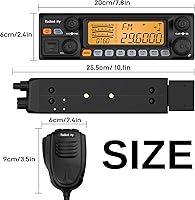
  • Dimensions: The main chassis measures 7.87 x 2.36 x 2.36 inches, with a total cable assembly length of 12 inches including the detachable microphone lead.
  • Weight: The unit weighs 4.96 pounds, which should be accounted for when planning the mounting bracket placement in a vehicle interior.
  • Temperature Range: Rated for operation between -20°C and +50°C, making it suitable for use across a broad range of seasonal and geographic conditions.
  • CTCSS/DCS: Includes a built-in CTCSS/DCS encoder and decoder for tone-based squelch operation, useful for coordinating within groups on shared frequencies.
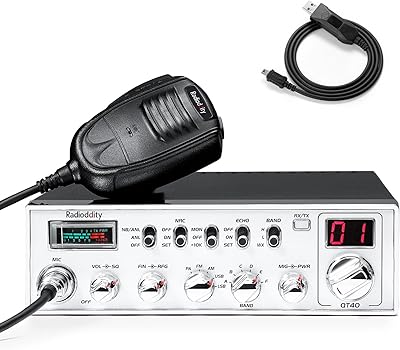
  • PC Programming: Supports computer-based channel programming via an optional separately purchased programming cable, allowing batch channel management for advanced users.
  • Warranty: Covered by Radioddity's 18-month manufacturer warranty, with customer support consistently cited as responsive in user feedback.

Related Reviews

Radioddity QT40 10 Meter SSB Ham Radio
77%
86%
SSB Signal Performance
83%
Noise Reduction Effectiveness
88%
Power Output
84%
Audio Clarity
81%
NOAA Weather Integration
More
Radioddity QT80 10 Meter Ham Radio Transceiver
78%
88%
Transmission Power
84%
Receive Audio Quality
79%
Noise Reduction Performance
86%
Ease of Setup
83%
Display & Interface
More
Asustor Lockerstor 10 Pro AS7110T 10-Bay NAS
83%
92%
Performance
96%
Storage Capacity
89%
Connectivity
62%
Setup and Installation
90%
Build Quality
More
DS18 PRO-ZXI10MBASS 10-inch Mid-Bass Loudspeaker
82%
91%
Build Quality
88%
Sound Performance
93%
Sensitivity & Efficiency
86%
Power Handling
89%
Value for Money
More
President Richard 10 Meter Radio
87%
88%
Performance
90%
Ease of Use
84%
Build Quality
92%
Mobile Setup Suitability
78%
Range/Signal Strength
More
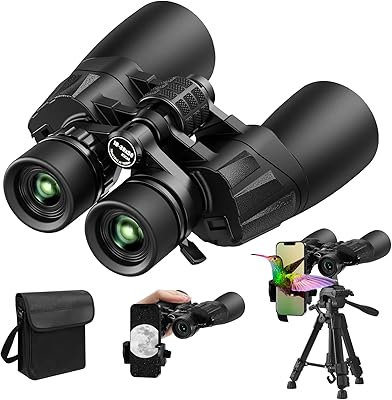
EEDABROS 10-30x50 Zoom Binoculars Pro+
76%
82%
Optical Clarity
78%
Zoom Range Usability
71%
Low-Light Performance
76%
Build Quality & Durability
84%
Waterproofing & Weather Resistance
More
Radioddity CB-900 PRO AM/FM CB Radio
78%
83%
Audio Clarity & Receive Quality
74%
Transmit Quality & Microphone Performance
78%
Noise Reduction Effectiveness
69%
AM/FM Dual-Mode Operation
86%
NOAA Weather Alert Reception
More
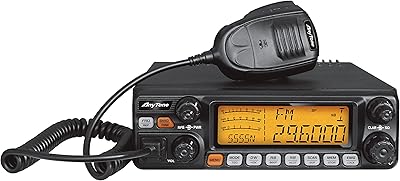
AnyTone AT-5555N II 10 Meter Radio
86%
94%
Power Output
89%
Ease of Use
92%
Range and Signal Clarity
85%
Build Quality
90%
Noise Reduction Performance
More
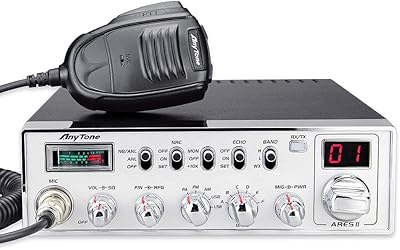
AnyTone ARES II 10 Meter Radio
85%
88%
Signal Clarity & Performance
92%
Installation & Setup
85%
Noise Reduction
90%
Programmability & Customization
87%
Build Quality
More
Cetaphil Pro Soothing Wash 10 Ounce
88%
89%
Effectiveness for Sensitive Skin
91%
Hydration & Moisture Retention
94%
Fragrance-Free Formula
87%
Gentleness & Skin Compatibility
85%
Texture & Feel on Skin
More

FAQ

Yes, a valid FCC amateur radio license — at minimum a Technician class — is required to transmit on the 10-meter band. You can use the radio to receive without a license, but any transmission without authorization is illegal. If you are not yet licensed, the ARRL offers study resources and the exam process is fairly straightforward.

Not directly. While the QT60 Pro shares some physical similarities with CB-style mobile radios, it operates on the 10-meter amateur band rather than CB frequencies, and it requires a ham license to transmit. If you are looking for a straight CB replacement with no licensing requirement, this is not the right radio for that use case.

For mobile operation, a 10-meter-specific whip or base-loaded antenna matched to 28–29.7 MHz is the right starting point. The radio uses a standard SO-239 connector, so most mobile HF antennas will physically fit. A properly matched antenna will have far more impact on your real-world range than the radio's output power alone, so do not cut corners there.

Treat that figure as a theoretical ceiling under ideal conditions, not a typical result. Real-world mobile range on 10 meters depends heavily on band conditions, your antenna setup, terrain, and whether skip propagation is active. Under flat conditions with a mediocre antenna, expect far shorter reliable range. When the band is open and conditions are right, you can occasionally contact stations much farther than 60 miles.

For most basic operation — scanning the band, making contacts, and using NOAA weather channels — you can get started without any computer programming. The menu system handles routine adjustments directly from the front panel. PC programming via an optional cable becomes useful if you want to batch-load a large number of custom channels quickly.

The Radioddity QT60 Pro 10-Meter Ham Transceiver offers five discrete noise reduction levels that can be set independently for transmit and receive. In practice, running a mid-level RX noise reduction setting in a moving vehicle does make a noticeable difference in audio intelligibility, particularly when alternator whine or road noise bleeds into the audio chain. It is not a magic fix for a poorly shielded power cable, but it is a genuine help in typical mobile environments.
The included microphone is functional but considered a weak point by many users. If audio quality on your transmitted signal matters — and on SSB it really does — budgeting for an aftermarket hand microphone is worth considering. Many operators report a clear improvement in transmitted audio reports after switching to a higher-quality replacement.

Yes, and this is one of the more practical features of this mobile ham radio for overlanders and off-road groups. It receives all seven NOAA weather broadcast frequencies and includes an alert function that will notify you of active weather warnings even when monitoring another channel. For backcountry use, that kind of situational awareness is genuinely valuable.

No. The unit carries no meaningful water resistance rating, so it should not be mounted in a location exposed to direct rain, splash, or condensation. For most in-cab vehicle installations this is not a practical concern, but if you are planning an exposed dashboard or external box mount, you will need to factor in weather protection separately.

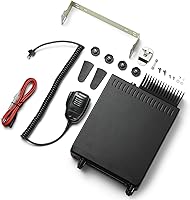
The package includes the radio, a detachable microphone, a mounting bracket with hardware, a power cable, a spare 10A fuse, and non-slip mats. You will need to source an antenna and coaxial cable separately, as none are included. A programming cable is also a separate purchase if you plan to use PC-based channel management. A 13.8V DC power source — typically your vehicle's electrical system — is also required.

Where to Buy