Overview

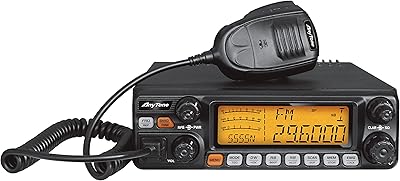
The AnyTone ARES II 10 Meter Mobile Radio is a mid-range transceiver built for truck drivers and amateur radio enthusiasts who want more flexibility than a standard CB radio offers. Covering 28.000–29.695 MHz with support for FM, AM, USB, and LSB modes, it handles a wider range of operating scenarios than most rigs in this class. Weather channel support on 140–170 MHz adds genuine road-trip utility. The unit's footprint — roughly 287 x 200 x 61mm — is compact enough for a dash or center console mount without a major installation project. AnyTone has built a steady reputation in the amateur and export radio space, and this 10-meter mobile radio reflects that practical, no-frills focus.
Features & Benefits

Power output is where the ARES II stands out at this price point. FM tops out at 40W, SSB at 35W, and AM at 12W — all continuously adjustable, which matters when fine-tuning for band conditions. Digital noise reduction on both transmit and receive, combined with the noise blanker and ANL filter, does a solid job of cleaning up audio in a loud cab or high-interference environment. CTCSS/DCS tones handle repeater access cleanly. The 40 programmable channels per band are configured through AnyTone's PC software — far easier than navigating the front panel alone. SWR and voltage protection round out the feature set, offering useful hardware insurance for a permanent mobile install.

Best For

This AnyTone transceiver makes the most sense for long-haul truckers who have hit the ceiling of CB and want more frequency flexibility and power without hauling a full HF rig into the cab. Licensed amateur operators — a US Technician-class license covers 10-meter voice privileges at minimum — who want SSB capability in a compact mobile form will find it capable. It is also a reasonable entry point for hobbyists exploring upper-HF operation. PC programmability is a genuine draw for anyone managing multiple channel setups across different locations. That said, if you want pure plug-and-play operation, the configuration overhead here may not suit you.

User Feedback

With roughly 70 ratings and a 4.3-star average, this 10-meter mobile radio earns generally positive marks — though the picture has some rough edges. Audio output quality and build consistency draw the most consistent praise, and buyers who lean on the PC software tend to be satisfied with how channel management works. Where things get more mixed is documentation: the manual is widely called out as thin, particularly for operators new to SSB. The stock microphone is functional but generates enough complaints that an early upgrade seems common. Range expectations should also be tempered — real-world coverage depends heavily on antenna choice and terrain, and the stated maximum rarely holds in practice.

Pros

  • Adjustable power output across FM, AM, and SSB gives you real control over your signal for different conditions.
  • FM output reaches up to 40W, which is genuinely strong for a mobile radio in this price range.
  • Digital noise reduction on both transmit and receive keeps audio noticeably cleaner in high-interference environments.
  • PC programmability via AnyTone’s software makes managing 40 channels per band far less painful than front-panel-only setups.
  • CTCSS/DCS tone support allows proper repeater access without any workarounds.
  • The ARES II fits a standard dash or console mount without requiring a complicated installation.
  • Built-in SWR and voltage protection offer real hardware safety for permanent mobile installs.
  • Weather channel coverage adds practical road utility beyond the core amateur radio use case.
  • Build quality is consistently rated as solid by buyers relative to the mid-range price point.
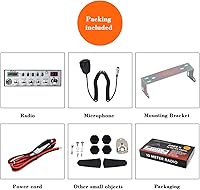
  • The included accessory kit — bracket, power cable, mic hanger, fuses — covers most basic install needs out of the box.

Cons

  • The owner’s manual is widely criticized as thin and poorly organized, especially for SSB newcomers.
  • The stock microphone is functional but frequently cited as a weak point worth upgrading early.
  • Real-world range falls well short of the stated maximum in typical terrain and antenna conditions.
  • SSB operation has a steeper learning curve than FM-only alternatives, which may frustrate newer operators.
  • No water resistance rating makes this a poor choice for exposed or outdoor-mount installations.
  • Frequency coverage is limited to the 10-meter band, so operators wanting multi-band HF access will need a different radio.
  • PC software setup is required to get full use of the programmable channels, which adds a barrier for non-technical buyers.
  • Legal operation in the US requires a valid amateur radio license — this is not a drop-in CB replacement.
  • With only 69 ratings at time of review, the long-term reliability picture is still relatively limited.
  • The echo function, while listed as a feature, is generally regarded as a novelty with limited practical value.

Ratings

The AnyTone ARES II 10 Meter Mobile Radio has been scored by our AI rating engine after deep analysis of verified global buyer reviews, with spam, bot-submitted, and incentivized feedback actively filtered out before scoring. Ratings reflect honest consensus across real owners — truckers, licensed amateur operators, and mobile radio hobbyists — and both the genuine strengths and recurring frustrations are transparently factored into every category score below.
Transmit Power
88%
For a mid-range mobile radio, the adjustable output — up to 40W on FM and 35W on SSB — is genuinely capable and regularly called out by truck drivers who want more punch than a CB delivers. Being able to dial power down for short-range work is a practical touch that experienced operators appreciate.
AM is capped at 12W, which is noticeably lower than the FM and SSB figures and can feel limiting for operators who rely on AM mode. A small number of buyers also reported the radio not consistently reaching rated output without careful antenna matching.
Receive Audio Quality
83%
The built-in digital noise reduction on the receive side does meaningful work in a noisy cab environment — engine noise and road interference are noticeably tamed compared to basic rigs at this price point. The 3W internal speaker is loud enough for highway use without an external speaker in most vehicles.
At very high squelch sensitivity settings, some users notice the audio can sound processed or slightly compressed. A few buyers mentioned that SSB receive clarity, while acceptable, did not quite match dedicated HF radios at a similar or slightly higher price.
Build Quality
79%
21%
The chassis feels solid and well-assembled for the price tier, and buyers who have installed the ARES II in working trucks report it holding up well through vibration and temperature swings over months of daily use. The front panel buttons and knobs have a reasonably firm, deliberate feel.
It does not have the premium heft of higher-end Japanese-made transceivers, and a handful of buyers noted minor cosmetic inconsistencies out of the box. There is no water or dust resistance rating, which limits where it can be safely mounted long-term.
Value for Money
81%
19%
Measured against what you actually get — four operating modes, adjustable high power, digital noise reduction, CTCSS/DCS, PC programmability, and hardware protection circuits — the price sits at a reasonable point for the feature set. Buyers consistently note that comparable feature counts on other brands push into a noticeably higher price bracket.
The value calculation shifts if you factor in the likely need for a better microphone and a programming cable purchase. For buyers who end up needing hands-on technical support, the thin documentation can turn simple setup into an unexpectedly time-consuming process.
SSB Performance
74%
26%
Having functional USB and LSB modes in a compact mobile form factor at this price is not a given, and operators who have used SSB on the 10-meter band in good propagation conditions report solid results for regional and occasional DX contacts. Sensitivity on SSB receive is rated competitively for the class.
Tuning SSB for clean audio requires more patience than FM, and without adequate documentation, new SSB users frequently report confusion during initial setup. Intermodulation performance is adequate but not exceptional, which can become noticeable in environments with strong nearby signals.
Ease of Setup
61%
39%
The physical installation is straightforward — the included bracket, hardware, and DC power cable cover most of what you need to get it mounted and powered in a vehicle. Buyers with prior mobile radio experience typically report having the unit operational within an hour.
First-time owners without radio experience consistently flag setup as harder than expected, with the manual providing minimal guidance for programming or SSB operation. Relying entirely on front-panel controls to configure channels is tedious, making PC software practically mandatory despite the added friction.
PC Programming
76%
24%
Once the software is downloaded and the programming cable is connected, channel management across both band groups is genuinely more efficient than menu-diving on the radio itself. Buyers who manage multiple channel plans for different routes or operating locations find this a real time-saver.
The software interface looks dated and is not particularly intuitive for newcomers. A compatible programming cable must be sourced separately in many cases, and the download process via the AnyTone website has been flagged by some users as unclear to navigate.
Noise Filtering
78%
22%
The combination of digital noise reduction, the RF-type noise blanker, and ANL filtering gives this AnyTone transceiver a meaningful advantage over budget rigs with no active filtering. In high-interference environments like highway corridors or near industrial areas, the difference is audible and practical.
Aggressive noise blanker settings can occasionally introduce audio artifacts on receive, particularly on SSB. A small subset of buyers noted that TX noise reduction, while present, did not fully clean up audio captured through the stock microphone in a loud cab.
Microphone Quality
54%
46%
The included microphone gets the job done for casual FM contacts and handles push-to-talk reliably. For buyers who just want to get on the air without immediate accessory purchases, it is a functional starting point.
Microphone quality is one of the most consistent complaints across buyer feedback. Audio from the stock mic is frequently described as thin or lacking clarity on SSB, and upgrading to a better dynamic microphone is something a notable portion of buyers end up doing within the first few weeks.
Documentation
42%
58%
The manual does cover basic controls and connector functions, giving experienced radio operators enough reference points to get started without outside help. Key specifications are presented in a structured format that is useful for quick lookup.
For anyone who is not already familiar with mobile transceivers, the documentation is genuinely inadequate — sparse, poorly organized, and essentially silent on SSB operation guidance. This is arguably the most consistent and pointed criticism across the buyer base, and it adds unnecessary friction to the ownership experience.
CTCSS/DCS Implementation
82%
18%
Tone encoding and decoding works reliably for repeater access, and buyers who regularly use local amateur FM repeaters report no issues with tone compatibility across standard CTCSS and DCS code sets. Setup via the PC software is considerably easier than navigating tones through the front panel.
Configuring CTCSS and DCS tones through the front panel alone is cumbersome enough that it almost requires the PC software to do it efficiently. There are no visible indicators on the display to confirm active tone status at a glance, which some operators find inconvenient.
Mobile Installation
77%
23%
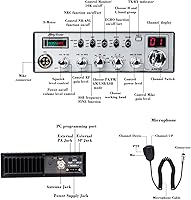
The compact dimensions and the included mounting hardware make dash or console installation achievable without custom fabrication in most truck cabs and passenger vehicles. The standard SO-239 antenna connector means no adapter hassle with the vast majority of commercially available mobile antennas.
The mounting bracket, while functional, is not the most refined piece of hardware in the box and requires careful alignment to avoid rattling over rough roads. The power cable, while included, is relatively short, which can complicate routing in larger cabs.
Range & Propagation
66%
34%
Under good propagation conditions, 10-meter SSB operation with this rig can deliver impressive reach — buyers operating during active solar cycles report contacts well beyond what FM range figures suggest. The adjustable power output helps optimize for different operating scenarios.
The advertised 20 km talking range is a ceiling, not a reliable everyday figure, and buyers who purchased expecting consistent long-distance FM coverage have been disappointed. Real-world range is highly dependent on antenna quality, vehicle height, and current band conditions — factors the product listing does not adequately contextualize.
Protection Circuits
84%
Built-in SWR and voltage protection circuits are a meaningful inclusion for a permanently installed mobile radio, where antenna tuning issues or vehicle electrical spikes are real risks. Buyers who have accidentally operated with a poorly matched antenna report the protection kicking in without apparent damage to the output stage.
Protection circuits are a safety net, not a tuning tool, and a small number of buyers have mistaken SWR protection activation for a radio fault. The radio does not provide clear user feedback when protection circuitry activates, which could leave less experienced operators troubleshooting the wrong thing.
After-Sales Support
63%
37%
AnyTone provides software downloads and basic seller contact support, and the one-year warranty gives buyers a reasonable coverage window for defects. For straightforward issues, the seller responsiveness has been rated positively by a portion of buyers.
Support quality is inconsistent, and the experience varies considerably depending on where the unit was purchased. Buyers with technical questions about SSB configuration or software compatibility often find themselves turning to online amateur radio forums rather than official support channels for useful answers.

Suitable for:

The AnyTone ARES II 10 Meter Mobile Radio is a strong fit for long-haul truckers who have outgrown CB radio and want more power, more modes, and broader frequency flexibility without spending a fortune on a full HF station. Licensed amateur operators — at minimum a US Technician-class license covers 10-meter voice operation — will find the SSB capability and adjustable power output genuinely useful for mobile work on the band. Hobbyists stepping into upper-HF for the first time will appreciate that this AnyTone transceiver packs FM, AM, USB, and LSB into a cab-friendly footprint. If you regularly operate across multiple channel plans and want the ability to manage them cleanly via PC software rather than hunting through menus, the programmability here is a real practical advantage. Weather channel monitoring is a quiet but useful feature for anyone spending long hours on the road.
Not suitable for:

The AnyTone ARES II 10 Meter Mobile Radio is not the right choice for anyone expecting to operate without a license — 10-meter voice use in the US is not legal on CB frequencies, and this rig operates in the amateur band, which requires at least a Technician-class ticket. Buyers looking for a pure plug-and-play experience may find the configuration overhead frustrating; getting the most out of this AnyTone transceiver involves time with the PC software and a willingness to work through a manual that many users have described as underdeveloped. If your priority is wide-area coverage, be realistic: actual range is highly dependent on antenna quality, terrain, and propagation conditions — the theoretical maximum rarely translates to everyday use. Those needing a waterproof or ruggedized radio for outdoor or exposed-mount installations should look elsewhere, as this unit carries no water resistance rating. Finally, operators who want a more capable HF rig covering multiple amateur bands will quickly hit the ceiling here.
Specifications

  • Frequency Range: Covers 28.000–29.695 MHz on the 10-meter amateur band, with all channels fully programmable via PC software.
  • Operating Modes: Supports four modes — FM, AM, USB, and LSB — making it capable across a wide range of operating styles and conditions.
  • Power Output: FM output is adjustable up to 40W, SSB up to 35W, and AM up to 12W, with all three continuously variable from 1W upward.
  • Channels: Provides 40 programmable channels per band across both L and H band groups, configurable through AnyTone’s official PC software.
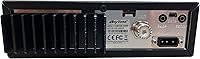
  • Antenna Connector: Uses a standard UHF SO-239 socket, which is compatible with the vast majority of mobile antenna coax and PL-259 connectors.
  • Input Voltage: Operates on 13.8V DC, typical of a vehicle electrical system or a dedicated regulated bench power supply.
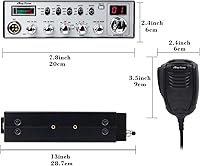
  • Dimensions: The unit measures 287mm (L) x 200mm (W) x 61mm (H), fitting most standard dash, console, or under-shelf mobile mounts.
  • Weight: Weighs 1.5 kg, which is manageable for permanent mobile installation with the included mounting bracket.
  • Display: Features an LED display with adjustable brightness, readable in both low-light and daylight cab environments.
  • Audio Output: Internal speaker delivers 3W into an 8-ohm load, with an external speaker jack that disables the built-in speaker when in use.
  • Noise Reduction: Includes digital noise reduction on both receive and transmit paths, plus a switchable noise blanker and ANL filter for cleaner audio in high-interference settings.
  • Squelch: Squelch threshold is fully adjustable, with automatic squelch control available in AM and FM modes for hands-free operation.
  • Tone Encoding: Supports CTCSS and DCS tone coding for repeater access and selective calling, covering standard amateur and commercial tone sets.
  • Weather Channels: Receives weather broadcast frequencies in the 140–170 MHz range, adding road-safety utility beyond the core amateur radio function.
  • Squelch Sensitivity: Squelch threshold is rated at less than 0.5 μV, allowing reliable opening on weak signals without excessive noise breakthrough.
  • Receiver Sensitivity: SSB sensitivity is rated at 0.25 μV for 10 dB signal-plus-noise to noise ratio, indicating capable weak-signal receive performance for the class.
  • Warranty: Covered by a one-year manufacturer warranty, with support available directly through AnyTone or the seller.
  • PC Programming: Channel memory and configuration are managed via downloadable software from AnyTone’s official website, compatible with Windows-based systems.
  • Protection Circuits: Includes built-in SWR protection and voltage protection to help guard the final amplifier stage during mobile operation.
  • Package Contents: Ships with the radio, microphone with coiled cord, mounting bracket, DC power cable, microphone hanger, non-slip mats, hardware screws, and spare fuses.

Related Reviews

AnyTone AT-5555N II 10 Meter Radio
86%
94%
Power Output
89%
Ease of Use
92%
Range and Signal Clarity
85%
Build Quality
90%
Noise Reduction Performance
More
AnyTone SMT-02 10 Meter Mobile Radio
71%
93%
Form Factor & Portability
84%
Audio Clarity & Receive Quality
67%
Transmit Power & Range
78%
Build Quality & Durability
81%
Ease of Installation
More
Radioddity QT80 10 Meter Ham Radio Transceiver
78%
88%
Transmission Power
84%
Receive Audio Quality
79%
Noise Reduction Performance
86%
Ease of Setup
83%
Display & Interface
More
President Richard 10 Meter Radio
87%
88%
Performance
90%
Ease of Use
84%
Build Quality
92%
Mobile Setup Suitability
78%
Range/Signal Strength
More
Radioddity QT60 Pro 10-Meter Ham Transceiver
78%
83%
RF Performance
81%
Audio Clarity (RX)
71%
Transmit Audio Quality
86%
Display & Interface
79%
Noise Reduction System
More
Stryker SR-655HPC 10 Meter Amateur Radio
76%
91%
Transmission Power
88%
Receiver Performance
86%
Audio Quality
67%
Build Quality
84%
Display & Backlighting
More
AnyTone AT-778UV Dual Band Mobile Radio
79%
83%
Build Quality
88%
Audio Clarity
86%
Dual-Band Coverage
79%
Display & Interface
51%
Programming Software
More
Stryker SR-955HPC 10 Meter Amateur Radio
77%
94%
Frequency Stability
91%
Transmit Audio Quality
89%
Power Output
78%
DSP Noise Reduction
83%
Build Quality
More
Radioddity QT40 10 Meter SSB Ham Radio
77%
86%
SSB Signal Performance
83%
Noise Reduction Effectiveness
88%
Power Output
84%
Audio Clarity
81%
NOAA Weather Integration
More
Stryker SR-447HPC2 10 Meter Radio
78%
91%
Audio Clarity
88%
Transmit Power
93%
Compact Form Factor
87%
SWR Protection
63%
Ease of Installation
More

FAQ

Yes, and this is important to understand before buying. The AnyTone ARES II 10 Meter Mobile Radio operates in the 28 MHz amateur band, which in the US requires at minimum a Technician-class amateur radio license to use on voice modes. It is not a CB radio and cannot legally be used as a drop-in replacement for one. If you are not yet licensed, the ARRL offers study resources and the exam process is straightforward.
Not directly. CB radios operate on a different set of frequencies (around 27 MHz) under a separate FCC authorization that requires no license. This AnyTone transceiver operates on the 10-meter amateur band and requires a valid amateur license. The two are not interchangeable from a regulatory standpoint, even though both see use in trucking communities.

The stated maximum of 20 km should be treated as a best-case figure under ideal conditions. In practice, actual range depends heavily on your antenna, its height and tuning, local terrain, and current band propagation. With a well-matched mobile antenna and good conditions, 10-meter FM can cover solid regional distances, and SSB can extend considerably further when propagation cooperates. Do not count on 20 km as a daily baseline.

Yes, the software is free to download from AnyTone’s official website. You will need a Windows PC and a compatible programming cable — check whether one is included with your purchase or needs to be ordered separately, as this varies. The software itself is functional, though the interface is not particularly polished; most users get it working without major difficulty.

It uses a standard UHF SO-239 socket, which is the most common connector type for mobile HF and 10-meter antennas. Most commercially available mobile antennas with a PL-259 plug will connect directly without adapters.

Yes, both USB (upper sideband) and LSB (lower sideband) are supported. SSB on 10 meters is a real step up from FM operation in terms of weak-signal capability and long-distance potential. That said, if you have never used SSB before, expect a learning curve: tuning for clear audio requires more care than FM, and the documentation included with this radio is not particularly helpful for newcomers. Online amateur radio communities are a much better resource for getting started.

It is designed for 13.8V DC, which matches a typical vehicle electrical system. The included power cable connects directly to your vehicle’s battery or fuse panel. At full power output the radio draws around 8A under modulation, so use appropriately rated wiring and the included spare fuses. Connecting directly to the battery rather than through a noisy accessory circuit generally produces cleaner audio.

The stock microphone is functional and gets you on the air, but it is one of the more consistent complaints from buyers. Audio quality is adequate for casual use, but if clear audio on SSB or FM is important to you, budgeting for an aftermarket microphone sooner rather than later is a common recommendation from users of this AnyTone transceiver.

Yes, there is a built-in SWR protection circuit that helps guard the output stage if reflected power gets too high. That said, protection circuits are a last line of defense, not a substitute for a properly tuned antenna. Running consistently high SWR will eventually cause damage regardless; use an external SWR meter during installation and get the antenna sorted correctly from the start.

The radio carries a one-year manufacturer warranty. AnyTone and the seller offer support via direct contact, and AnyTone’s website hosts software downloads. Support responsiveness varies based on user reports, so keeping your purchase documentation and noting the seller contact details at time of order is a practical precaution.