Overview

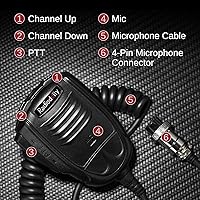
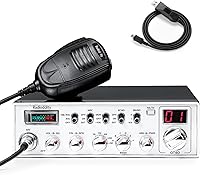
The Radioddity QT40 10 Meter SSB Ham Radio sits in a comfortable middle ground — more capable than a standard CB radio but far less expensive than a dedicated base station setup. It targets truckers, licensed ham operators, and outdoor communicators who want real SSB functionality in a compact mobile package. One thing to clarify upfront: operating this transceiver in the 10-meter band requires at least a Technician class license, so it is not a drop-in replacement for your CB. Out of the box, you get a microphone, a USB programming cable, and an 18-month warranty — a solid inclusion at this price tier.
Features & Benefits

What separates this 10-meter transceiver from a basic CB unit is the combination of power and flexibility. Peak output hits 40W on FM and 35W on SSB, while AM sits at an adjustable 1–12W range — useful for shorter local contacts. The digital noise reduction on both transmit and receive makes a real difference in loud vehicle environments; voices come through noticeably cleaner. Throw in NOAA weather alerts, CTCSS/DCS tone squelch, VOX, RF gain control, and a public address function, and this mobile ham radio covers a surprisingly wide operational range. PC programming via the included USB cable rounds things out.

Best For

The QT40 is a natural fit for long-haul truckers who want more range and clarity than a CB radio provides, without the complexity or cost of a full base station rig. Licensed Technician or General class ham operators on a tighter budget will find it a capable everyday driver for 10-meter mobile work. Overlanders and camping enthusiasts who need NOAA weather alerts baked in alongside solid voice range will appreciate the dual utility. If you want PC programmability without hunting for a separate cable, that is already handled. Essentially, this mobile ham radio rewards buyers who know what they want and are ready to work the controls.

User Feedback

Across verified buyer reviews, a few consistent themes emerge. On the positive side, users frequently praise SSB audio clarity and how well the noise reduction holds up during highway driving — those working in cab environments seem genuinely satisfied. Installation also draws good marks, with most finding the physical setup straightforward. That said, the absence of a front-panel display is a recurring gripe, particularly for operators who like to monitor signal data at a glance. Some buyers have run into driver compatibility issues with the USB programming cable on certain Windows versions. Beginners may face a short learning curve, though experienced operators tend to adapt quickly.

Pros

  • SSB capability delivers noticeably better range than a standard CB radio under good band conditions.
  • Digital noise reduction on both transmit and receive keeps audio clear even in loud truck cab environments.
  • 40W peak FM output is strong for a mobile unit at this price point.
  • NOAA weather alerts add genuine safety utility without needing a separate weather radio.
  • PC programmability is included out of the box — no extra cable purchase required.
  • CTCSS/DCS squelch, VOX, and RF gain control give operators real flexibility over their setup.
  • The built-in PA function adds practical value for truckers who need to address surroundings.
  • Installation is straightforward, with most users reporting a clean and uncomplicated physical setup.
  • The 18-month warranty provides reasonable peace of mind for a mid-range radio purchase.
  • AM and FM modes alongside SSB make the QT40 versatile across different communication scenarios.

Cons

  • No front-panel display makes it harder to monitor signal strength without additional equipment.
  • SSB fine-tuning options are limited compared to more expensive rigs in the same frequency range.
  • Some users have reported USB programming cable driver issues on certain Windows versions.
  • Band conditions heavily influence real-world range — the 10-mile maximum is rarely achieved in practice.
  • This mobile ham radio requires a valid amateur radio license, which adds a barrier for unlicensed buyers.
  • The echo function, while customizable, can feel gimmicky and may distract from core performance evaluation.
  • At 3.3 pounds, the unit is not lightweight for operators who need to move or reposition it frequently.
  • Beginners with no prior ham radio experience may need extra time to learn the full feature set.

Ratings

The Radioddity QT40 10 Meter SSB Ham Radio has been scored by our AI rating system after analyzing verified buyer feedback from global markets, with spam, bot-generated, and incentivized reviews actively filtered out. The scores below reflect the honest consensus of real operators — truckers, licensed ham enthusiasts, and outdoor communicators — covering everything from signal performance to long-term reliability. Both the standout strengths and the genuine frustrations are represented here without sugar-coating.
SSB Signal Performance
86%
Operators consistently report strong, clean SSB contacts that far outperform what a standard CB radio can manage. On open band days, truckers and ham operators alike describe the clarity as a genuine step up — voices come through with definition rather than the muddy audio typical of lower-power AM rigs.
SSB fine-tuning is more limited than what you get on higher-end Japanese transceivers in a similar frequency range. Experienced operators who are used to precise clarifier controls may find the adjustment range a bit restrictive when chasing weak or drifting signals.
Noise Reduction Effectiveness
83%
The digital noise reduction on both transmit and receive is one of the most praised aspects among truck drivers specifically. In cab environments with road noise, engine rumble, and electrical interference, the QT40 holds its own — received audio stays intelligible where other radios struggle noticeably.
In extremely noisy environments, such as near high-voltage power lines or with a poorly grounded installation, the noise reduction can only do so much. A small number of users noted residual background hiss on SSB receive that persisted even with noise reduction active.
Power Output
88%
Forty watts peak on FM and up to 35W on SSB is genuinely competitive for a mobile unit at this price point. Users running this transceiver with a well-matched antenna report solid signal reports from contacts, and the adjustable AM output gives added flexibility for different operating conditions.
AM output maxes out at 12W, which is a significant gap compared to FM and SSB modes. Operators who primarily use AM — a less common but still relevant choice for some trucking channels — may find this ceiling limiting during longer-distance contacts.
Audio Clarity
84%
Received audio through the built-in speaker is described as punchy and clear for a mobile-class radio. Truckers who monitor weather alerts and communicate on the road report that voices are easy to distinguish without needing an external speaker in most cab configurations.
The internal speaker output of 3W into 8 ohms is adequate but not exceptional in very loud environments at highway speeds. Some users prefer adding an external speaker for improved volume headroom, which the unit supports but does not include.
NOAA Weather Integration
81%
19%
Having NOAA weather alerts built into a 10-meter transceiver is a practical bonus that overlanders and truckers consistently appreciate. The automatic alert function means you do not need a separate weather radio — it monitors in the background and triggers when the National Weather Service issues a warning.
The weather band is receive-only, as expected, but the alert triggering can occasionally lag behind real-time conditions depending on local NWS transmitter signal strength. Users in fringe reception areas have noted the alert sometimes misses or delays on weaker NOAA signals.
Ease of Installation
79%
21%
The physical installation process draws positive feedback across skill levels — mount the chassis, connect to a 13.8V power source, attach the antenna, and the radio is operational. Most users report getting the unit powered up and transmitting within a reasonable timeframe without needing professional help.
The manual, while functional, lacks depth for true beginners unfamiliar with ham radio concepts like RF gain, squelch thresholds, or sideband selection. New operators often report spending time on forums or YouTube to fully understand the controls before feeling confident.
PC Programming Experience
61%
39%
The inclusion of a USB programming cable in the box is a smart move — most competitors charge extra for this. Buyers who successfully install the correct drivers report that the programming software is straightforward for batch-configuring channels and custom settings.
Driver installation is a recurring friction point, particularly on Windows 10 and 11. Several users had to manually source and install CH340 or CP210x drivers, and a handful could not get the cable working at all without significant troubleshooting — a frustrating experience for less tech-savvy operators.
Build Quality
74%
26%
The chassis feels solid enough for permanent vehicle installation, and the knobs and controls have a reasonable tactile feel without excessive wobble. Users who have had the QT40 mounted in working trucks for extended periods generally report no structural issues over time.
The silver and black plastic finish does not project the same premium feel as metal-chassis competitors. A few users noted that the front panel labels can show wear with heavy daily use, and the microphone included in the box feels noticeably budget-grade compared to the radio itself.
Front Panel Usability
57%
43%
The control layout is logical once you learn it, and the PWR/RX RSSI signal meter gives useful real-time feedback on received signal strength without needing a separate external meter. Operators familiar with this style of interface adapt to it relatively quickly.
The absence of a front-panel display screen is the single most cited hardware complaint across user reviews. Without a digital frequency or channel readout, operators must rely on memory or reference materials to confirm their current operating frequency — a meaningful inconvenience for regular use.
Value for Money
82%
18%
Measured against what you actually get — SSB capability, digital noise reduction, NOAA alerts, PC programmability, and an 18-month warranty — the QT40 represents solid value in the mid-range mobile transceiver category. Buyers who have previously priced comparable rigs from established Japanese brands consistently flag this as a cost-effective alternative.
The value calculation shifts somewhat if you factor in the potential cost of troubleshooting the USB cable, purchasing an aftermarket microphone, or adding an external speaker. These are not guaranteed expenses, but they are real possibilities that nudge the total cost of ownership upward.
Receiver Sensitivity
77%
23%
SSB sensitivity is rated at 0.25 μV, which is respectable for a radio in this class and translates to picking up weaker distant stations that lower-sensitivity receivers would miss entirely. On active band days, users report hearing a wide range of contacts without straining the squelch settings.
AM sensitivity, while technically adequate at 1.0 μV, means the QT40 is not the strongest receiver in crowded or noisy RF environments. Operators in urban areas with high RF interference occasionally note that weaker AM signals get buried in the noise floor more readily than expected.
Customization Options
76%
24%
The range of adjustable features — CTCSS/DCS squelch, RF gain, VOX sensitivity, TOT, HI-CUT filter, and echo — gives experienced operators meaningful control over their operating environment. These are not just checkbox features; regular users actually engage with RF gain and squelch tuning as part of normal operation.
The echo function, while listed as a feature, is considered by most operators to be a novelty rather than a practical tool. Some users feel the feature set leans toward impressive-sounding specs over deeply refined performance, particularly when comparing SSB fine-tuning granularity to pricier alternatives.
Warranty and Support
71%
29%
An 18-month warranty is above average for a Chinese-manufactured ham radio at this price tier, and Radioddity has a generally responsive reputation for email-based customer support. Buyers report that straightforward defect claims are handled without excessive pushback.
Support quality can be inconsistent depending on the nature of the issue — software and driver-related problems in particular tend to receive more generic guidance than hands-on troubleshooting help. Users outside the US have noted longer resolution timelines for replacement or repair claims.
Compatibility with Existing Gear
73%
27%
The 50-ohm output impedance is industry standard, meaning most 10-meter mobile antennas and common coaxial accessories will connect without adapters. The external speaker jack adds further compatibility with aftermarket audio setups for users who want a louder or cleaner listening experience.
The included microphone uses a specific connector that may not be universally compatible with premium aftermarket microphones without an adapter. Users who want to upgrade to a noise-canceling or desk-style mic should verify connector compatibility before purchasing separately.

Suitable for:

The Radioddity QT40 10 Meter SSB Ham Radio is built for a fairly specific crowd, and it genuinely delivers for the right buyer. Long-haul truckers who have grown frustrated with the limited range and audio quality of standard CB radios will find this 10-meter transceiver a meaningful upgrade — the SSB capability alone opens up far greater distance potential under good band conditions. Licensed Technician and General class ham operators who need a capable mobile rig without spending serious money on a name-brand Japanese unit will appreciate the power-to-price ratio here. Overlanders, campers, and outdoor communicators who want NOAA weather alerts baked into the same unit they use for voice comms will also find the QT40 a practical choice. If you already have your ham license and want PC programmability without sourcing extra hardware, this mobile ham radio ships ready to go.

Not suitable for:

The Radioddity QT40 10 Meter SSB Ham Radio is not the right tool for every situation, and a few dealbreakers are worth stating plainly. If you do not hold at least a Technician class amateur radio license, you cannot legally operate this transceiver on the 10-meter band — it is not a CB radio replacement and should not be treated as one. Buyers who rely heavily on at-a-glance signal monitoring will be frustrated by the lack of a front-panel display, which is a genuine operational inconvenience compared to similarly priced competitors. Operators who demand precise SSB fine-tuning for contesting or DX work will likely find this 10-meter transceiver too limited and should look at higher-end rigs. Windows users who are less comfortable troubleshooting USB drivers may run into friction with the programming cable. And anyone expecting plug-and-play simplicity out of the box may face a steeper learning curve than anticipated.
Specifications

  • Frequency Range: The transceiver operates across 28.000–29.695 MHz, covering the full 10-meter amateur radio band.
  • Power Output: Output power reaches up to 40W on FM, up to 35W on SSB (USB/LSB), and is adjustable from 1–12W on AM.
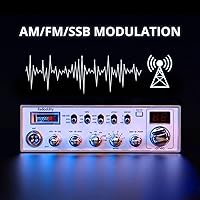
  • Modulation Modes: Supported modulation types include FM, AM, Upper Sideband (USB), and Lower Sideband (LSB).
  • Channels: The unit offers 40 channels for organized frequency management across the 10-meter band.
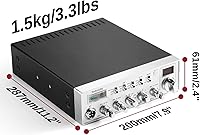
  • Dimensions: The radio body measures 11.3 x 7.87 x 2.4 inches, sized for standard mobile or cab-mount installation.
  • Weight: The unit weighs 3.3 pounds, making it suitable for fixed vehicle mounting rather than handheld portable use.
  • Power Supply: The transceiver requires a 13.8V DC power source, consistent with standard 12V vehicle electrical systems.
  • Noise Reduction: Both transmit and receive channels include digital noise reduction to improve audio clarity in high-interference environments.
  • Weather Band: A built-in NOAA weather band with automatic alert function monitors live weather broadcasts and triggers alerts on severe conditions.
  • Squelch System: The unit supports CTCSS and DCS tone squelch with an adjustable threshold below 0.5 μV for precise channel access control.
  • RF Gain Control: A 45dB adjustable RF gain control allows operators to optimize signal reception across varying band conditions.
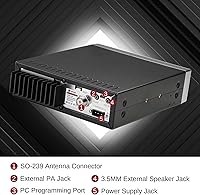
  • Audio Output: The built-in speaker delivers 3W into an 8-ohm load, with an external speaker jack that disables the internal speaker when used.
  • Sensitivity: Receiver sensitivity is rated at 0.25 μV for SSB and 1.0 μV for AM and FM at standard signal-to-noise ratios.
  • Programming: A USB programming cable is included in the box, enabling PC-based configuration of channels and radio parameters.
  • Special Functions: Operator-configurable features include VOX, echo, HI-CUT filter, ANL noise limiter, TOT (time-out timer), and a public address (PA) mode.
  • Adjacent Selectivity: Adjacent-channel selectivity is rated at 60dB for AM/FM and 70dB for SSB, reducing interference from nearby frequencies.
  • Output Impedance: The antenna output impedance is 50 ohms, unbalanced, compatible with standard mobile whip and loaded vertical antennas.
  • Warranty: Radioddity provides an 18-month manufacturer warranty covering defects in materials and workmanship.
  • In the Box: Each unit ships with the QT40 radio, one microphone, and one USB programming cable — no power cable or antenna is included.
  • Water Resistance: The QT40 carries no water resistance rating and should be installed in a protected, dry interior environment.

Related Reviews
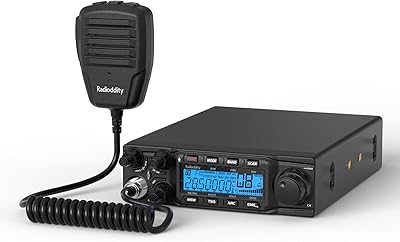
Radioddity QT80 10 Meter Ham Radio Transceiver
78%
88%
Transmission Power
84%
Receive Audio Quality
79%
Noise Reduction Performance
86%
Ease of Setup
83%
Display & Interface
More
Radioddity QT60 Pro 10-Meter Ham Transceiver
78%
83%
RF Performance
81%
Audio Clarity (RX)
71%
Transmit Audio Quality
86%
Display & Interface
79%
Noise Reduction System
More
President Richard 10 Meter Radio
87%
88%
Performance
90%
Ease of Use
84%
Build Quality
92%
Mobile Setup Suitability
78%
Range/Signal Strength
More
AnyTone ARES II 10 Meter Radio
85%
88%
Signal Clarity & Performance
92%
Installation & Setup
85%
Noise Reduction
90%
Programmability & Customization
87%
Build Quality
More
AnyTone AT-5555N II 10 Meter Radio
86%
94%
Power Output
89%
Ease of Use
92%
Range and Signal Clarity
85%
Build Quality
90%
Noise Reduction Performance
More
Stryker SR-655 10 Meter Amateur Radio
86%
89%
Transmission Range
91%
Build Quality
65%
Ease of Setup
87%
Display Visibility
93%
Power Output
More
AnyTone SMT-02 10 Meter Mobile Radio
71%
93%
Form Factor & Portability
84%
Audio Clarity & Receive Quality
67%
Transmit Power & Range
78%
Build Quality & Durability
81%
Ease of Installation
More
Stryker SR-955HPC 10 Meter Amateur Radio
77%
94%
Frequency Stability
91%
Transmit Audio Quality
89%
Power Output
78%
DSP Noise Reduction
83%
Build Quality
More
Stryker SR-447HPC2 Heavy-Duty 10 Meter Radio
87%
91%
Performance
88%
Build Quality
85%
Ease of Use
92%
Power Output
89%
Durability
More
C. Crane CCRadio-2E Enhanced Portable AM FM Weather and 2-Meter Ham Band Radio
85%
94%
Battery Life
89%
AM Reception
90%
NOAA Weather Alerts
70%
Portability
85%
Durability
More

FAQ

Yes, operating on the 10-meter band requires at least a Technician class amateur radio license in the United States — and a General class license unlocks full privileges. This is not a CB radio and cannot legally be used as one. If you are not yet licensed, the FCC licensing process is straightforward and worth pursuing before purchasing.

It depends on the antenna. The QT40 uses a standard 50-ohm unbalanced antenna connection, so any 10-meter compatible mobile antenna with the right connector should work. CB antennas are tuned for the 27 MHz CB band, not the 10-meter band around 28–29 MHz, so you will likely need a dedicated 10-meter mobile whip for proper performance.

Range varies enormously depending on your antenna, terrain, and most importantly, band conditions. Under ideal circumstances with good propagation, SSB contacts can stretch hundreds of miles. In typical day-to-day use with moderate conditions, expect reliable local-to-regional communication. The advertised 10-mile figure is a conservative ground-wave estimate — SSB can do much better when the band is open.

The physical installation is fairly intuitive — mount the unit, run power to a 13.8V source, and connect your antenna. Getting comfortable with the controls, especially SSB fine-tuning and the various squelch settings, takes a bit more time. Most beginners report getting the basics running within an hour but recommend reading the manual before touching the more advanced features.

Yes, basic channel selection and most settings can be adjusted directly from the front panel. The PC programming option via USB cable is there for convenience — it makes batch configuration faster and less error-prone — but it is not required for everyday use.

Some users have reported driver compatibility issues, particularly on Windows 10 and 11. The fix usually involves manually installing the CH340 or CP210x driver depending on the cable chipset. It is a solvable issue but can frustrate buyers who are not comfortable with device driver troubleshooting.

No, this mobile ham radio does not have a front-panel display screen. Signal strength is monitored through the PWR/RX RSSI meter, but there is no digital readout of frequency or channel number. This is one of the most commonly noted limitations among buyers who are used to display-equipped rigs.

Technically yes, as long as you power it with a regulated 13.8V DC power supply rated for the current draw. It is designed and optimized as a mobile transceiver, but many operators run similar radios from their shack with a dedicated bench power supply without any issues.

This is one area where user feedback has been consistently positive. Both the transmit and receive noise reduction help cut through road noise and engine rumble, making conversations noticeably cleaner compared to radios without this feature. It is not perfect in extreme noise environments, but real-world trucking use cases seem well served.

The QT60 steps up to 60W peak output and adds an LCD display and dual watch functionality — features that matter to more experienced operators. The QT40 trades those extras for a lower price point, making it a better entry point for new ham operators or truckers who want SSB without paying for features they may not use right away.

Where to Buy