Overview

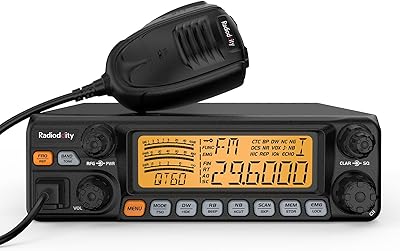
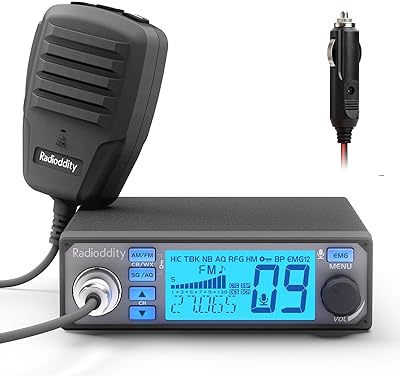
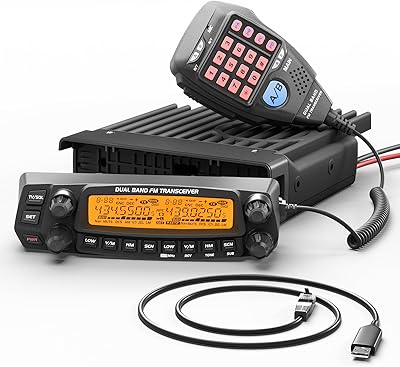
The Radioddity QT80 10 Meter Ham Radio Transceiver is a mid-range mobile rig that arrived in mid-2024 and has quietly built a solid reputation among operators who want real capability without paying flagship prices. It covers the full 10-meter band from 28 to 29.7 MHz and supports FM, AM, USB, and LSB modes, making it genuinely versatile for everyday ham use. Out of the box, you get the radio, a mounting bracket, power cable, and microphone, so most operators can be up and running quickly. Over 130 buyer ratings averaging 4.5 stars and an 18-month warranty suggest Radioddity is standing behind this one.
Features & Benefits

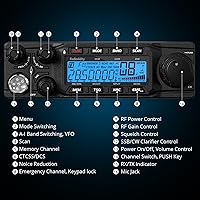
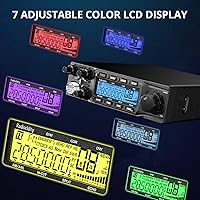
The QT80 delivers 80W PEP on SSB and AM — respectable output for a mobile unit, and noticeably more headroom than most entry-level 10-meter radios. On FM it steps down to 50W, which is still plenty for local contacts. The adjustable TX and RX noise reduction is a genuine daily-use feature, particularly in a truck cab or any environment with constant engine interference. Automatic Squelch Control means less babysitting the dial during long drives. You also get CTCSS/DCS tone squelch and an SWR high-alert warning, which protects the finals if your antenna is not properly matched. The 7-color backlit display is sharp and easy to read. Worth noting: there is no noise blanket filter, which some experienced operators will miss.

Best For

This 10-meter mobile transceiver is a natural fit for licensed General-class operators or Technician licensees who hold 10-meter SSB privileges. It also appeals to long-haul truck drivers who want reliable SSB communication on the road — though the 621-mile range figure is a theoretical ceiling under ideal propagation, not a real-world guarantee. Ham enthusiasts stepping up from CB will find the QT80 a meaningful upgrade in both power and mode flexibility. It works equally well as a shack radio for operators who prefer a single unit that can do double duty. If a noise blanket is on your must-have list, look elsewhere; if it is not, the value proposition here is genuinely strong.

User Feedback

Buyers consistently praise the audio clarity on receive and how straightforward the initial setup is — most report getting on air within an hour of unboxing. The display gets positive mentions for readability across different lighting conditions. On the critical side, some users find the stock microphone underwhelming and opt for an aftermarket replacement fairly quickly. The user manual has drawn a few complaints about being thin on detail for newer operators. A handful of reviewers mention the SWR alert triggering more aggressively than expected, which may catch mobile operators off-guard with marginal antennas. Overall, sentiment compares favorably to similarly priced 10-meter rigs, with most dissatisfaction centering on accessories rather than the radio itself.

Pros

  • 80W PEP output on SSB and AM gives the QT80 genuine signal reach that budget CB radios simply cannot match.
  • Adjustable TX and RX noise reduction works well in real mobile environments, noticeably cleaning up audio during highway driving.
  • Automatic Squelch Control reduces hands-on tuning during long sessions, which drivers especially appreciate.
  • The 7-color LCD display is crisp and easy to read in both bright sunlight and low-light cab conditions.
  • CTCSS/DCS tone squelch and a built-in SWR high-alert protect both the operator and the radio from common field mistakes.
  • 40 programmable channels per band with frequency steps as fine as 10Hz give this 10-meter mobile transceiver real operational flexibility.
  • Setup is straightforward — most buyers report being on air within an hour of opening the box.
  • The included mounting bracket and hardware are well-regarded and feel like a complete package, not an afterthought.
  • At its price point, the feature density is hard to beat among currently available mid-tier 10-meter mobile rigs.
  • An 18-month warranty is longer than many competitors offer in this segment.

Cons

  • The stock microphone is underwhelming and frequently swapped out by buyers within the first few weeks of use.
  • The user manual is thin and leaves newer operators searching online for answers that should be in the documentation.
  • No noise blanket filter is included, which is a meaningful gap for operators working in electrically noisy environments.
  • The SWR alert can trigger aggressively with marginal antennas, catching mobile operators off-guard during installation.
  • At 4.44 pounds and nearly 10 inches deep, the Radioddity mobile rig requires a decent amount of dash or console real estate.
  • FM output drops to 50W, which may disappoint operators who primarily work that mode and expected full power across the board.
  • The 621-mile range figure is a best-case propagation scenario, not a reliable everyday expectation — conditions vary widely.
  • Limited third-party accessory ecosystem compared to more established brands means fewer plug-and-play upgrade options.

Ratings

The Radioddity QT80 10 Meter Ham Radio Transceiver scores below are generated by AI after systematically analyzing verified global buyer reviews, actively filtering out incentivized, bot-driven, and low-quality feedback to surface what real operators actually experience. The QT80 earns strong marks across several key categories, but this analysis does not shy away from the areas where the Radioddity mobile rig falls short — both strengths and genuine pain points are reflected transparently in every score.
Transmission Power
88%
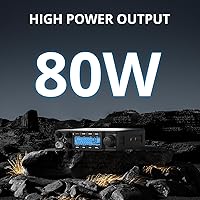
Operators consistently report that 80W PEP on SSB and AM delivers noticeably stronger signal reports compared to lower-powered alternatives in this price tier. Truck drivers making long interstate runs particularly appreciate the headroom when band conditions soften mid-trip.
FM output steps down to 50W, which catches some buyers off guard who expected uniform power across all modes. For operators who lean heavily on FM rather than SSB, this gap feels like a missed opportunity at this price point.
Receive Audio Quality
84%
The received audio on SSB is frequently described as clean and easy to follow even during extended mobile sessions. Buyers upgrading from basic CB radios note an immediate and appreciable improvement in the clarity of incoming signals.
At higher squelch settings some users report a slight clipping effect on weak signals, and the built-in speaker, while adequate for a vehicle environment, struggles to fill larger spaces without an external speaker.
Noise Reduction Performance
79%
21%
The adjustable TX and RX noise reduction genuinely delivers in real-world mobile use — highway driving sessions that would otherwise be fatiguing become noticeably more manageable once the controls are dialed in correctly. Most buyers who take the time to tune these settings report satisfaction with the outcome.
The absence of a noise blanket filter is the single biggest technical gap for operators working near ignition noise or switching power supplies. Users with NB-equipped radios in the past find this omission hard to overlook, and no software update can add what is not in the hardware.
Ease of Setup
86%
The included mounting hardware is complete and well-made, and the majority of buyers report a straightforward installation experience with no missing components. Getting from unboxing to first contact typically takes under an hour for anyone with basic vehicle installation experience.
The user manual has drawn repeated criticism for being thin on detail, particularly around programming channels and configuring the more advanced squelch options. New operators often end up searching forums for guidance that really should be in the documentation.
Display & Interface
83%
The 7-color backlit LCD is one of the more frequently praised aspects of the QT80 — operators note that the display reads well in direct sunlight and is equally comfortable at night without being distracting. The ability to pick your own backlight color is a small but appreciated touch.
Menu navigation is functional but not especially intuitive, and a few users with larger hands find the front panel controls slightly cramped. The color customization, while fun, can feel like it adds steps to an otherwise simple interaction.
Build Quality
77%
23%
The chassis feels solid and the front panel has a purposeful, no-nonsense layout that holds up well to daily vehicle vibration. Most long-term owners report no rattles, loose knobs, or connector issues after months of regular use.
The overall aesthetic and materials feel more utilitarian than refined, and a few buyers note that the finish shows minor scuffs with normal handling faster than expected. It is durable enough, but it does not feel premium relative to higher-priced competitors.
Microphone Quality
56%
44%
The included microphone is functional and covers the basics — voice gets through, contacts can hear you, and for casual SSB contacts it does the job well enough to get started without any additional spend.
Recurring feedback across multiple buyer reviews makes clear that the stock mic is the weakest part of the package, with reports of muffled audio and a cheap feel to the housing. Many operators budget for an aftermarket replacement within the first month, which adds hidden cost to the purchase.
SWR Protection
73%
27%
Having a built-in SWR high-alert is a genuinely useful safety feature that helps operators catch antenna problems before they damage the output stage — especially valuable for newer hams who may not yet own a dedicated SWR meter.
Several users report that the alert triggers more aggressively than expected, flagging a high SWR warning even with antennas that measure acceptably on a dedicated meter. In a mobile installation with normal connection movement, this sensitivity can feel like a false alarm more often than it should.
Frequency Flexibility
91%
Ten-hertz tuning steps give SSB operators real precision when chasing a contact, and the range of step sizes from 10Hz up to 1MHz makes it equally practical for scanning across the band quickly. The 40 programmable channels per band are more than enough for most operators working regular frequencies.
The programmable channel interface requires more steps than competing units to edit stored frequencies, and some users find the process fiddly enough that they avoid reprogramming channels in the field altogether.
Squelch & Selectivity
81%
19%
The ASQ mode earns consistent positive mentions from drivers who want to listen during long hauls without constantly adjusting the squelch threshold — it adapts reasonably well to changing band noise levels on the road. CTCSS and DCS support adds practical utility for operators working within club or repeater environments.
Under rapidly changing band conditions some users note that ASQ can be slow to re-open after a burst of noise clears, resulting in the tail end of transmissions being cut off. Manual squelch gives more control but requires more attention, which is not always practical while driving.
Value for Money
82%
18%
For what the QT80 delivers — 80W PEP, multiple modulation modes, noise reduction, CTCSS/DCS, and a full installation kit — the price positions it as one of the more feature-dense options in the mid-tier 10-meter mobile segment. Buyers who compare it directly against competitors at similar price points generally feel they got a fair deal.
The microphone shortcoming and manual thin-ness dilute the overall value perception for buyers who factor in the likely cost of replacement accessories. If you budget for an aftermarket mic, the effective cost of entry rises meaningfully above the sticker price.
Warranty & Support
74%
26%
An 18-month warranty is longer than the 12-month coverage common among competing products in this segment, and buyers report that Radioddity responds to warranty inquiries without excessive delays. That extra six months of coverage matters for a radio used daily in a vehicle environment.
Customer support quality appears inconsistent based on buyer accounts — some report swift resolutions while others describe slow follow-up once an issue moves beyond basic troubleshooting. Documentation quality and support depth are areas where more established ham radio brands have a clear edge.
Mobile Ergonomics
72%
28%
The compact footprint — under 10 inches deep and under 2 inches tall — fits cleanly in most truck and SUV console installations without consuming excessive space. The mounting bracket included in the box is sturdy enough that most operators do not feel the need to source an aftermarket option.
At 4.44 pounds, the radio needs a secure mount; any flex in the bracket or mounting surface becomes noticeable over rough roads. A handful of users also note that the microphone cord length is shorter than ideal for some vehicle layouts, requiring an extension cable.
Band Conditions Adaptability
68%
32%
The adjustable RF gain and AGC help the radio manage a wide range of signal strengths without requiring constant manual intervention, which is appreciated during sessions when band conditions are shifting. Operators who work the 10-meter band during higher solar activity report solid performance across varying propagation states.
When the band is flat and signals are genuinely weak, the QT80 shows its mid-tier limits compared to radios with more sophisticated front-end filtering. SSB sensitivity is respectable but not exceptional, and experienced contesters or DX chasers will likely want something more refined.

Suitable for:

The Radioddity QT80 10 Meter Ham Radio Transceiver is well-matched for General-class amateur operators and Technician licensees who hold 10-meter SSB privileges and want a capable mobile rig that does not demand a top-shelf budget. Long-haul truck drivers and road-trip enthusiasts who rely on SSB contacts for communication across large distances will find the power output and noise reduction genuinely useful in a moving vehicle environment. It is also a smart step-up choice for operators who have outgrown CB radio and want to explore the 10-meter band with real mode flexibility — FM, AM, USB, and LSB all in one unit. Home station operators who want a single radio that can pull double duty on a desk and in a vehicle will appreciate the compact footprint and included mounting hardware. The 18-month warranty and solid buyer satisfaction ratings add a reasonable layer of confidence for anyone buying into the Radioddity ecosystem for the first time.

Not suitable for:

The Radioddity QT80 10 Meter Ham Radio Transceiver is not the right call for unlicensed buyers — you need at minimum a Technician license with 10-meter privileges, or a General class license, to legally transmit on this band, and no radio changes that. Experienced HF operators who depend on a noise blanket filter for working through heavy electrical interference will find its absence a real limitation, not a minor omission. If you routinely run high-duty-cycle digital modes or need a radio engineered for contest-grade performance, the QT80 sits below that tier. The stock microphone is widely considered a weak link, meaning budget-conscious buyers who want to avoid any additional spending may be frustrated early on. Operators who need a detailed, comprehensive manual to get comfortable with advanced features may also find the documentation lacking compared to more established brands.
Specifications

  • Frequency Range: The QT80 covers 28.000 to 29.700 MHz across the full 10-meter amateur band, with programmable channel storage for quick access to favorite frequencies.
  • Power Output: Peak envelope power reaches 80W on SSB and AM modes, while FM operation runs at 50W — both solid figures for a mobile-class transceiver.
  • Modulation Modes: Supported modes include FM, AM, USB (upper sideband), LSB (lower sideband), and PA, covering the full range of common 10-meter operating styles.
  • Frequency Steps: Operators can tune in steps of 10Hz, 100Hz, 1KHz, 5KHz, 10KHz, 100KHz, or 1MHz, allowing fine control for SSB work or broad scanning.
  • Channels: The radio stores 40 programmable channels per band, making it practical for operators who regularly work a fixed set of frequencies.
  • Display: A 7-color backlit LCD provides clear frequency and status readout, with user-selectable colors to suit different lighting environments.
  • Antenna Connector: The antenna port uses a standard UHF SO-239 socket, which is compatible with the vast majority of 10-meter mobile and base antennas on the market.
  • Input Voltage: The QT80 runs on 13.8V DC, consistent with standard vehicle electrical systems and typical regulated desktop power supplies used in home shacks.
  • Current Draw: With modulation active, the radio draws up to 15A, so a fused 15A or heavier power connection to the vehicle battery is recommended.
  • Audio Output: The built-in speaker delivers up to 3W into an 8-ohm load, which is adequate for typical in-vehicle listening at conversational levels.
  • RF Gain Control: RF gain is adjustable across a 45dB range, giving operators meaningful control over receiver sensitivity when signals are strong or band conditions are noisy.
  • Squelch: Squelch is fully adjustable and includes an Automatic Squelch Control (ASQ) mode alongside CTCSS and DCS tone-coded squelch options for selective listening.
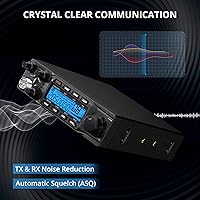
  • Noise Reduction: Both transmit and receive noise reduction are independently adjustable, designed to reduce background noise and improve voice clarity in electrically noisy environments.
  • SWR Alert: A built-in SWR high-alert function monitors antenna match and warns the operator when standing wave ratio reaches a potentially damaging level.
  • NB Filter: A noise blanket (NB) filter is not included in this model, which is worth noting for operators who frequently work near ignition or switching noise sources.
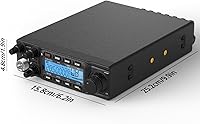
  • Dimensions: The radio body measures 6.2 x 9.9 x 1.9 inches, a compact form factor that fits most standard mobile mounting locations without major modification.
  • Weight: At 4.44 pounds, the QT80 is substantial enough to feel solid in a mount but light enough for a single-person installation without assistance.
  • Warranty: Radioddity covers the QT80 with an 18-month manufacturer warranty, which is longer than the 12-month coverage typical of many competing products in this segment.
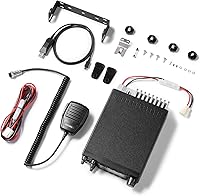
  • In-Box Contents: Each unit ships with the radio, a mounting bracket, power cable, microphone, and user manual, providing a complete installation kit without requiring separate accessory purchases.
  • Temperature Range: The radio is rated for operation between -20°C and +50°C, making it suitable for use in most seasonal and geographic conditions operators are likely to encounter.

Related Reviews

Radioddity QT40 10 Meter SSB Ham Radio
77%
86%
SSB Signal Performance
83%
Noise Reduction Effectiveness
88%
Power Output
84%
Audio Clarity
81%
NOAA Weather Integration
More
Radioddity QT60 Pro 10-Meter Ham Transceiver
78%
83%
RF Performance
81%
Audio Clarity (RX)
71%
Transmit Audio Quality
86%
Display & Interface
79%
Noise Reduction System
More
President Richard 10 Meter Radio
87%
88%
Performance
90%
Ease of Use
84%
Build Quality
92%
Mobile Setup Suitability
78%
Range/Signal Strength
More
AnyTone ARES II 10 Meter Radio
85%
88%
Signal Clarity & Performance
92%
Installation & Setup
85%
Noise Reduction
90%
Programmability & Customization
87%
Build Quality
More
AnyTone AT-5555N II 10 Meter Radio
86%
94%
Power Output
89%
Ease of Use
92%
Range and Signal Clarity
85%
Build Quality
90%
Noise Reduction Performance
More
AnyTone SMT-02 10 Meter Mobile Radio
71%
93%
Form Factor & Portability
84%
Audio Clarity & Receive Quality
67%
Transmit Power & Range
78%
Build Quality & Durability
81%
Ease of Installation
More
Radioddity CB-500 CB Radio Mobile Transceiver
79%
88%
Audio Clarity
86%
Noise Reduction Performance
67%
Transmission Range
83%
Ease of Installation
63%
Menu Navigation & Usability
More
Radioddity DB50 Dual Band Mobile Radio Transceiver
79%
88%
Transmit Power & Range
91%
Receiver Coverage
86%
Audio Clarity
84%
Channel Management
89%
Chirp Compatibility
More
Stryker SR-955HPC 10 Meter Amateur Radio
77%
94%
Frequency Stability
91%
Transmit Audio Quality
89%
Power Output
78%
DSP Noise Reduction
83%
Build Quality
More
Stryker SR-655 10 Meter Amateur Radio
86%
89%
Transmission Range
91%
Build Quality
65%
Ease of Setup
87%
Display Visibility
93%
Power Output
More

FAQ

Yes, absolutely. To transmit on the 10-meter band you need either a General class amateur license or a Technician license with the specific 10-meter phone privileges that come from passing the General written exam element. You can listen without a license, but keying up requires proper authorization. Operating without a license on these frequencies is an FCC violation.

No — the QT80 operates strictly within the 28 to 29.7 MHz amateur 10-meter band and is not designed or legal for use on CB frequencies at 27 MHz. If you are looking for a CB radio, this is not the right product. These are separate services with different rules.

Any standard 10-meter mobile whip antenna with a UHF PL-259 connector will work with the SO-239 socket on this radio. Popular options include mag-mount and trunk-lip antennas sized for the 10-meter band. Make sure your antenna is properly tuned — the SWR alert on the Radioddity QT80 10 Meter Ham Radio Transceiver will warn you if the match is poor, but a good SWR meter during setup is always the safer approach.
In practice, most users report that the adjustable RX noise reduction does a meaningful job of cleaning up the audio when driving, particularly on long highway stretches with consistent engine noise. It is not a magic fix for severe interference, but dialing it in makes the difference between a fatiguing listening experience and a reasonably clear one. TX noise reduction also helps the other end of the contact hear you more cleanly when road noise is present.

The stock microphone is functional and will get you on the air, but many operators find themselves replacing it within a few months. It is not bad for the price tier, but if audio quality on SSB matters to you, budgeting for a mid-range aftermarket hand mic sooner rather than later is a reasonable plan.

It works fine as a desktop station radio, as long as you pair it with a regulated 13.8V DC power supply rated for at least 20A to handle transmit peaks comfortably. Plenty of operators use mobile transceivers like the QT80 at home, and the compact size makes it easy to fit on a desk or shelf.

The SWR alert monitors the antenna match and gives you a warning when it detects a high standing wave ratio that could stress the output stage. It does not automatically shut down transmission, so you should treat the alert as a prompt to stop transmitting and check your antenna connection rather than just dismissing it.

The QT80 sits competitively in the mid-tier 10-meter mobile segment. Its combination of 80W PEP output, adjustable noise reduction, CTCSS/DCS squelch, and programmable channels is a strong feature set at this price point. The main gap compared to some alternatives is the absence of a noise blanket filter, which certain competitors do include. Overall buyer sentiment tends to be positive relative to similarly priced options.

Yes, the frequency step can be set as fine as 10Hz, which is more than adequate for SSB operation where you typically need to tune within a few hundred hertz to lock onto a contact. The tuning range of steps available makes the radio flexible across different operating styles.

You get the radio itself, a mobile mounting bracket with the necessary hardware, a power cable for vehicle connection, the handheld microphone, and a user manual. It is a reasonably complete kit for getting started, though the manual has been noted by some buyers as being on the brief side, particularly for operators new to this type of radio.

Where to Buy