Overview

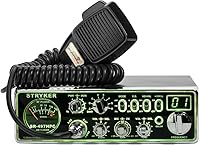
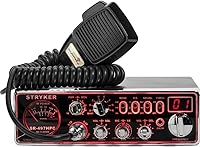
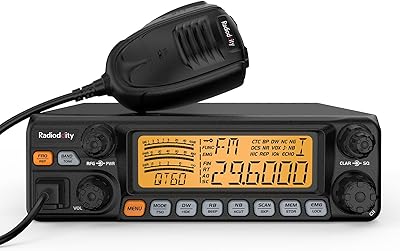
The Stryker SR-497-HPC AM/FM 10 Meter Radio is a serious piece of kit — not something you pick up casually on your way into the hobby. Built for licensed ham operators (you will need at least a Technician or General class license to transmit legally on 10 meters), this is a premium-tier base and mobile rig that sits well above the entry-level pack. The headline spec is a 90W peak output, which immediately signals its intent. It covers both the 10-meter ham band and an adjacent frequency range, giving operators real dual-band flexibility. At roughly 16 inches long and over six pounds, this is a fixed-mount unit — plan your vehicle or shack install before ordering.
Features & Benefits

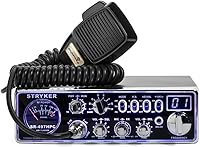
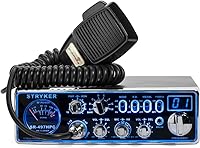
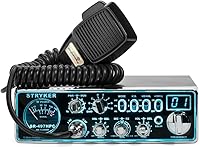
What makes this Stryker rig stand out is how much functionality lives inside a single chassis. The variable power control lets you dial back from the full 90W peak for close-range chatter or open it up when distance matters. With 240 channels and both AM and FM operation, switching modes is straightforward. Built-in digital echo — adjustable right from the front panel — adds presence to your audio without needing an outboard processor. On busy bands, the NB/ANL noise reduction does real work, cutting interference that would otherwise grind conversations to a halt. The automatic AWI function is a practical safeguard: if SWR climbs too high, it alerts you before your finals take a hit. The multi-color meter display, with its front-panel dimmer, stays readable in low light.

Best For

The SR-497-HPC is squarely aimed at operators who have outgrown basic CB gear and want something with genuine capability. Licensed ham radio operators running a mobile or home-shack setup will get the most from it, but long-haul truckers and overlanders seeking strong output plus a PA function will also find it a natural fit. The front-mounted mic connector is a small but smart design choice — it makes installation in tight cab spaces considerably less painful. If you have been running external echo or Roger beep hardware, this 10-meter radio folds those features in natively, cleaning up your setup. That said, it is not a starter radio; newcomers without prior radio experience may find the feature density overwhelming at first.

User Feedback

Across more than 200 ratings, the SR-497-HPC holds a solid 4.5-star average — and the review content suggests that score is earned. Buyers consistently praise audio clarity and build quality, with the illuminated meter drawing particular appreciation for low-light visibility. Range, predictably, is where nuance enters: the 30-mile figure is a best-case scenario, and real-world distances vary considerably based on terrain and antenna setup. A handful of reviewers flag a learning curve with the echo and Roger beep controls, and a few note the physical size catches them off guard in smaller cabs. Long-term owners generally report dependable reliability, with the recurring advice being to get the antenna properly tuned from day one.

Pros

  • 90W peak output gives this 10-meter radio genuine reach that lower-powered competitors simply cannot match.
  • Variable power control lets you scale output to the situation, protecting nearby stations during short-range chatter.
  • Built-in digital echo and Roger beep eliminate the need for external processors, keeping installs cleaner.
  • The automatic AWI antenna warning indicator actively protects your equipment if SWR climbs into dangerous territory.
  • AM and FM operation across 240 channels offers real flexibility for both licensed hams and advanced users.
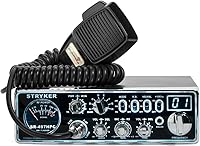
  • The 7-color meter display with a front-panel dimmer stays readable day or night without distraction.
  • Front-mounted mic connector is a practical win for anyone mounting the SR-497-HPC in a confined cab space.
  • NB/ANL noise reduction performs well on crowded bands, making conversations noticeably cleaner in high-interference environments.
  • Long-term owners consistently report solid reliability when the antenna is properly tuned from the start.
  • Talkback control and receive gain adjustments give experienced operators fine-grained control over their audio chain.

Cons

  • The feature set has a real learning curve — new operators can feel overwhelmed before they find their footing.
  • Physical size catches some buyers off guard; measure your mount location carefully before purchasing.
  • Real-world range falls well short of the 30-mile spec in most terrain and antenna configurations.
  • Echo and Roger beep controls, while useful, can be fiddly to dial in and occasionally frustrate less patient users.
  • Transmitting on 10 meters requires a valid FCC ham license — a hard stop for unlicensed buyers.
  • At 6.63 pounds, this Stryker rig is heavy relative to lighter mobile competitors in its class.
  • 12V DC operation limits this to vehicle or powered shack use — no battery-pack portability.
  • Some users report the front-panel layout takes time to memorize, especially with so many adjacent controls.
  • Antenna tuning is critical to performance, yet no antenna is included — budget for a quality external antenna separately.
  • Buyers upgrading from basic CB gear may need time to adjust to the expanded frequency range and added controls.

Ratings

The scores below reflect an AI-driven analysis of verified buyer reviews for the Stryker SR-497-HPC AM/FM 10 Meter Radio, drawn from a global pool of ratings with spam, bot-generated, and incentivized feedback actively filtered out. Each category has been scored to reflect the full picture — not just the enthusiasm of early adopters — so both the genuine strengths and the recurring frustrations are represented with equal honesty. Whether you are a seasoned ham operator or an enthusiast upgrading from a basic CB setup, these ratings are designed to help you make a clear-eyed decision.

Transmit Power & Output
93%
The 90W peak output is the single most praised aspect of this rig among experienced operators. Buyers running mobile installs on long highway stretches consistently report noticeably stronger signal punch compared to lower-wattage competitors, and the variable power control adds real operational flexibility when working shorter distances.
A handful of reviewers note that sustained high-power operation generates meaningful heat, and a small number of users running extended sessions without adequate ventilation have reported thermal throttling concerns. This is manageable with proper installation, but it is worth planning for.
Audio Clarity
88%
Received audio quality draws consistent praise across dozens of reviews, with operators highlighting clean, intelligible voice reproduction even on busy or slightly noisy bands. Truckers running this rig during long hauls specifically mention how much easier it is to follow conversations compared to lower-tier radios they previously used.
A subset of users report that the microphone gain control requires careful calibration — set too high, it introduces distortion on the transmitted side that other stations pick up. Getting the mic gain dialed in takes a few sessions and occasionally some feedback from contacts on the other end.
Noise Reduction (NB/ANL)
84%
The NB/ANL combination performs noticeably well in real-world noisy environments — vehicle ignition interference, power line noise, and general band congestion are all meaningfully reduced when the system is properly engaged. Operators using this rig near urban infrastructure find it a genuine advantage over radios with more basic filtering.
In extreme interference scenarios, the noise blanker can occasionally suppress portions of weaker incoming signals along with the noise, which experienced operators describe as a clipping artifact. It is not a dealbreaker, but users working DX contacts on marginal propagation days have flagged it as something to be aware of.
Build Quality & Durability
86%
The physical construction of the SR-497-HPC earns consistently favorable comments — the chassis feels solid, the front-panel controls have a reassuring tactile firmness, and long-term owners routinely describe years of dependable service with no structural degradation. The water-resistant rating also provides useful peace of mind for mobile installs exposed to condensation and humidity.
A small number of buyers report that certain front-panel buttons feel slightly less refined than the overall build quality suggests, and a few long-term users mention wear on the channel selector knob after extended use. These are minor issues but worth noting for buyers expecting flawless fit and finish at every touch point.
Display & Visibility
89%
The 7-color meter with the multi-step front-panel dimmer is a standout quality-of-life feature that buyers genuinely appreciate during night driving and low-light shack operation. The large round meter is easy to read at a glance, and the color options give operators the ability to match ambient lighting conditions without squinting at the display.
A couple of reviewers mention that in direct, bright sunlight the display can wash out slightly, making precise meter readings harder to catch at a quick glance while driving. It is a relatively uncommon complaint, but operators who primarily use the rig in open desert or high-sunlight environments have raised it.
Echo & Roger Beep Controls
74%
26%
Having digital echo and dual Roger beep options built directly into the front panel — without needing any external processors or add-on hardware — is something enthusiasts genuinely value. The dual front-mounted echo controls make real-time adjustment accessible mid-conversation, and buyers who previously ran outboard echo units appreciate the cleaner install.
The echo and Roger beep controls are the most polarizing aspect of the user feedback. New operators often overshoot the echo settings and end up with an overly processed sound that frustrates contacts on the other end. Even experienced users report needing several sessions to find settings that sound natural rather than artificial.
Ease of Installation
77%
23%
The front-mounted microphone connector is a practical design decision that simplifies cabling in tight truck cabs and compact vehicle mounts — multiple buyers specifically credit it with making an otherwise complex install much more manageable. The standard 12V DC power input integrates cleanly into existing vehicle electrical systems.
The physical size of the unit — 16 inches deep and nearly 6.63 pounds — catches buyers off guard more often than it should, and a handful of reviewers mention needing to rethink their planned mount location after the radio arrived. Proper install planning is non-negotiable, and the manual could do more to guide first-time installers through SWR tuning.
Ease of Use
67%
33%
For operators who already have experience with feature-dense radios, the front panel layout becomes intuitive fairly quickly. Controls are logically grouped, and once familiar, switching between modes, adjusting gain, and managing echo settings can be done smoothly without breaking concentration.
Newcomers to 10-meter radio consistently describe the SR-497-HPC as overwhelming in the early stages — there are simply a lot of controls competing for attention. The learning curve is real, and several one-star reviews come directly from buyers who underestimated the complexity rather than from any fundamental flaw in the radio itself.
Antenna Warning System (AWI)
91%
The automatic AWI is one of those features that experienced operators recognize as genuinely protective rather than cosmetic. Buyers who have previously damaged radio finals from high SWR situations specifically call out the AWI as a meaningful safeguard that gives them confidence during mobile operation with varying antenna conditions.
The AWI monitors and alerts but does not automatically reduce power output when SWR spikes — the operator still has to act. A few users expected more autonomous protection and were surprised to find it is an indicator system rather than a fully automated protective circuit.
Range Performance
62%
38%
Under favorable conditions — flat terrain, a quality tuned antenna, and good propagation — operators report satisfying range that justifies the high power output. Long-haul truckers on open highway stretches do report meaningful contact distances that exceed what lower-power rigs delivered for them previously.
The 30-mile range claim creates a significant expectations gap that shows up repeatedly in negative reviews. Real-world range in hilly terrain, suburban environments, or with a poorly tuned antenna falls well short of that figure, and buyers who took the specification at face value without understanding propagation variables have expressed frustration.
Value for Money
71%
29%
Experienced operators who know what they are buying generally consider the SR-497-HPC fairly priced for the output power, feature count, and build quality it delivers. The elimination of external echo and Roger beep hardware alone represents real savings and install simplicity for operators who would otherwise need those add-ons.
For buyers who are new to 10-meter radio and underestimate the license requirement, antenna investment, and setup complexity, the overall cost of ownership climbs fast and the value proposition weakens considerably. The radio itself is not overpriced for what it is, but the ecosystem cost surprises some buyers.
PA Functionality
78%
22%
The built-in PA function is a appreciated bonus for operators who need it — truckers and overlanders in particular find it genuinely useful for external announcements without carrying a separate PA unit. It works as advertised and requires no special configuration beyond connecting an external speaker.
The PA output is functional but not powerful enough to impress users with previous experience on dedicated PA systems. It serves practical needs in low-noise outdoor environments, but in windy or high-ambient-noise conditions its limitations become apparent fairly quickly.
Channel & Frequency Coverage
82%
18%
240 channels across both AM and FM modes gives this Stryker rig meaningful coverage flexibility for licensed operators who work multiple frequencies or participate in local nets. The dual-band frequency range — covering both 10-meter ham and the adjacent secondary range — is a practical advantage over single-band alternatives.
Operators primarily interested in FM-only use or who work a narrow set of regular frequencies may find the 240-channel capacity somewhat superfluous. Channel scanning functionality, which some buyers expected given the channel count, is not a feature many users highlight as particularly robust.
Talkback Function
79%
21%
The talkback feature — hearing your own transmitted audio through the speaker — proves especially useful during echo and mic gain setup sessions, allowing operators to self-monitor their audio quality without needing a second station or recording device. Regular users appreciate it as a tuning aid that speeds up the setup process.
A few buyers report that talkback audio at higher output levels introduces a slight lag or feedback loop sensation that becomes distracting during normal operation, leading them to disable it after initial setup. It is more of a configuration tool than a feature most operators leave engaged continuously.

Suitable for:

The Stryker SR-497-HPC AM/FM 10 Meter Radio is built for operators who already know what they want and have the license to back it up. If you hold at least a General class ham license and are ready to run a high-power mobile or base station setup, this rig delivers the output and feature depth to justify the investment. Long-haul truckers who spend hours on the road will appreciate the PA capability, the front-mounted mic connector that simplifies tight cab installs, and the noise reduction that keeps frequencies clear on congested channels. Overlanders and off-road communicators running 12V systems will find it integrates naturally into a vehicle build. Enthusiasts who have been cobbling together external echo boxes and Roger beep units will especially value having those features built directly into the chassis — it simplifies the install and reduces points of failure.
Not suitable for:

If you are new to radio and still figuring out the basics, the Stryker SR-497-HPC AM/FM 10 Meter Radio is probably not your starting point. The feature density — multiple gain controls, digital echo, selectable Roger beeps, NB/ANL settings, and AWI management — assumes a user who is already comfortable navigating a radio front panel. Beyond the learning curve, there is a legal reality to consider: you must hold a valid FCC ham radio license to transmit on the 10-meter band, and operating without one is not a gray area. Buyers expecting handheld portability will also be disappointed — at over six pounds and 16 inches in length, this is strictly a fixed-mount unit. Anyone working with a very compact vehicle cab should carefully measure available space before ordering, as several owners have been caught off guard by the physical footprint.
Specifications

  • Peak Output: The radio delivers up to 90W peak output, with a variable power control that lets operators reduce transmission strength when full power is unnecessary.
  • Frequency Range: Coverage spans 28.000–29.700 MHz on the 10-meter ham band and 24.890–24.990 MHz on the adjacent secondary range.
  • Channels: The unit offers 240 programmable channels, providing ample room for both common and regional frequencies.
  • Modes: Both AM and FM operation are supported, allowing operators to switch modes depending on band conditions and contacts.
  • Dimensions: The chassis measures 9″ deep by 3″ wide by 16″ high, making it a full-size fixed-mount unit not suited to handheld use.
  • Weight: The radio weighs 6.63 pounds, which is typical for a high-power mobile or base station rig of this class.
  • Power Supply: It operates on 12V DC, making it compatible with standard vehicle electrical systems and powered ham shack setups.
  • Noise Reduction: An advanced NB/ANL (Noise Blanker and Automatic Noise Limiter) system is built in to reduce electrical interference and static on busy frequencies.
  • Antenna Protection: The automatic AWI (Antenna Warning Indicator) monitors SWR levels and alerts the operator if readings climb to equipment-damaging thresholds.
  • Display: A large round meter with 7-color illumination and a matching channel display provide clear visual feedback, with a multi-step front-panel dimmer for brightness control.
  • Echo System: A built-in digital echo processor is included with two dedicated front-mounted controls, removing the need for an external echo unit.
  • Roger Beep: Two selectable Roger beep tones are available, with a dedicated off switch for operators who prefer silent end-of-transmission signaling.
  • Mic Connector: The microphone connector is positioned on the front panel, which simplifies mounting and cable routing in confined vehicle installs.
  • Freq Counter Jack: A pre-wired frequency counter jack is included and is compatible with FC-390 style external counters for operators who need precise frequency verification.
  • PA Function: A built-in public address (PA) output allows the radio to be connected to an external speaker for PA announcements.
  • Talkback: A talkback control lets the operator hear their own transmitted audio through the speaker, which is useful for monitoring mic levels and echo settings.
  • Gain Controls: Separate receive gain and microphone gain controls give the operator independent adjustment of incoming and outgoing audio levels.
  • Water Resistance: The unit carries a water-resistant rating, offering a degree of protection against moisture exposure in vehicle environments.
  • Manufacturer: The SR-497-HPC is manufactured by Stryker Radios, a brand focused on 10-meter and export-style radio equipment for the enthusiast market.
  • Availability: The radio has been available since March 2014 and has not been discontinued by the manufacturer as of the most recent product data.

Related Reviews
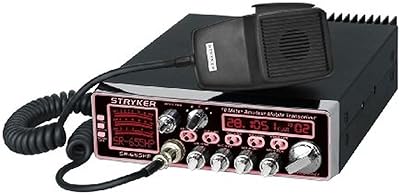
Stryker SR-655HPC 10 Meter Amateur Radio
76%
91%
Transmission Power
88%
Receiver Performance
86%
Audio Quality
67%
Build Quality
84%
Display & Backlighting
More
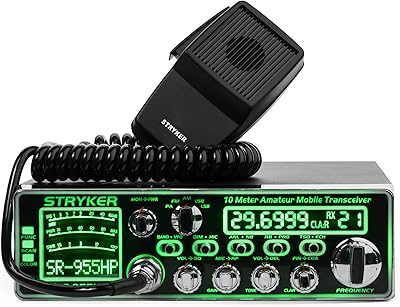
Stryker SR-955HPC 10 Meter Amateur Radio
77%
94%
Frequency Stability
91%
Transmit Audio Quality
89%
Power Output
78%
DSP Noise Reduction
83%
Build Quality
More
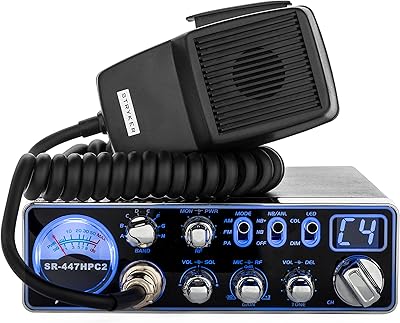
Stryker SR-447HPC2 10 Meter Radio
78%
91%
Audio Clarity
88%
Transmit Power
93%
Compact Form Factor
87%
SWR Protection
63%
Ease of Installation
More
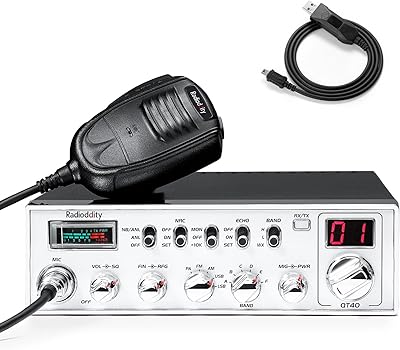
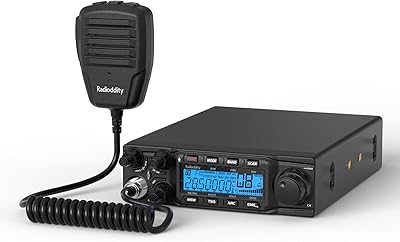
Radioddity QT80 10 Meter Ham Radio Transceiver
78%
88%
Transmission Power
84%
Receive Audio Quality
79%
Noise Reduction Performance
86%
Ease of Setup
83%
Display & Interface
More
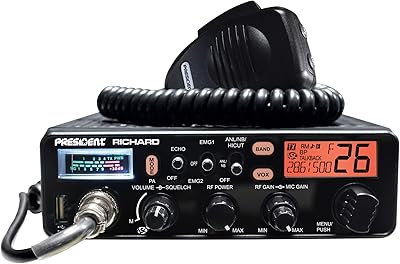
President Richard 10 Meter Radio
87%
88%
Performance
90%
Ease of Use
84%
Build Quality
92%
Mobile Setup Suitability
78%
Range/Signal Strength
More
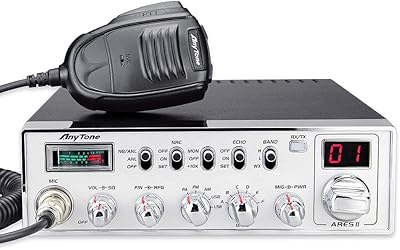
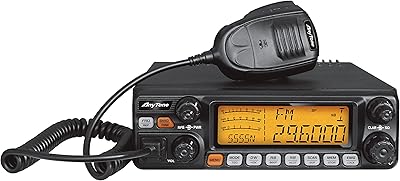
AnyTone ARES II 10 Meter Mobile Radio
73%
88%
Transmit Power
83%
Receive Audio Quality
79%
Build Quality
81%
Value for Money
74%
SSB Performance
More
Radioddity QT60 Pro 10-Meter Ham Transceiver
78%
83%
RF Performance
81%
Audio Clarity (RX)
71%
Transmit Audio Quality
86%
Display & Interface
79%
Noise Reduction System
More
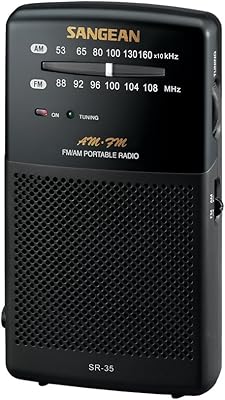
Sangean SR-35 AM/FM Pocket Radio
81%
88%
AM/FM Reception Quality
84%
Built-in Speaker Performance
91%
Battery Life
63%
Ease of Tuning
93%
Portability & Size
More
AnyTone AT-5555N II 10 Meter Radio
86%
94%
Power Output
89%
Ease of Use
92%
Range and Signal Clarity
85%
Build Quality
90%
Noise Reduction Performance
More
AnyTone SMT-02 10 Meter Mobile Radio
71%
93%
Form Factor & Portability
84%
Audio Clarity & Receive Quality
67%
Transmit Power & Range
78%
Build Quality & Durability
81%
Ease of Installation
More

FAQ

Yes, absolutely. To transmit legally on the 10-meter band (28.000–29.700 MHz) in the United States, you need at least an FCC General class amateur radio license. Operating without one is a federal violation, not just a technicality. If you are not yet licensed, studying for and passing the General exam is the right first step before purchasing this rig.

It can, but measure your available space first. At 16 inches deep and over six pounds, this is a substantial unit, and a number of buyers have been surprised by the footprint. The front-mounted mic connector does help with cable management in tighter cabs, but you will still need a solid mounting bracket and a clean 12V power feed.

The AWI monitors your SWR — essentially the efficiency of the connection between the radio and your antenna. If SWR climbs too high, the radio alerts you before you start pushing power into a mismatched antenna, which can damage the finals. Think of it as a basic protection system that keeps you from unknowingly frying the transmitter. That said, it is not a substitute for properly tuning your antenna before you start operating.

Take that figure as a best-case scenario in ideal flat-terrain conditions with a well-tuned antenna. Real-world range depends heavily on your antenna setup, local terrain, buildings, and atmospheric conditions. Most operators in typical environments report shorter practical distances. A quality external antenna makes a far bigger difference to actual range than raw wattage does.

Honestly, probably not as a first radio. The front panel has a lot going on — digital echo, NB/ANL controls, receive and mic gain, talkback, Roger beep selection, and more. Experienced operators will find it intuitive, but someone just starting out may feel lost before they have even made their first contact. If you are brand new to ham radio, a simpler HF transceiver with guided setup might serve you better while you get your footing.

Yes. The SR-497-HPC comes with a frequency counter jack that is pre-wired for FC-390 style counters. If you want precise frequency readout beyond what the built-in display shows, you can attach a compatible external counter without any modification.

Roger beeps are short tones that transmit automatically when you release the mic key, signaling to the other party that you have finished talking. The two selectable options on this rig differ in tone character — one tends to be a single beep, the other a slightly different pitch or pattern. There is also an off setting, which is worth using in formal or busy net operations where the extra noise is unwelcome.

It is a functional digital echo, not studio-quality, but it is genuinely usable. Most operators run it at a moderate setting to add a bit of depth to their audio on the air. The dual front-panel controls make it easy to dial in. That said, some users do find it takes a few sessions to land on a setting that sounds natural rather than excessive, so start conservative and adjust from there.

It works fine as a base station. You will need a 12V DC power supply capable of handling the current draw at full output — a regulated 25–30 amp supply is a common choice for radios in this power class. Pair it with an appropriate outdoor or attic antenna and you have a solid home station setup.

Based on owner feedback gathered over several years, the SR-497-HPC has a generally solid reliability record when properly installed and operated within its design parameters. The most consistent advice from long-term owners is to get the antenna tuned correctly from day one — running high SWR over time is the most common cause of premature wear on the transmitter stage. Treat it right and most users report years of dependable service.

Where to Buy