Overview

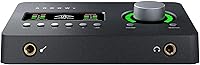
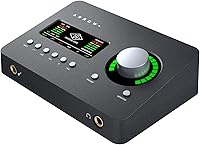
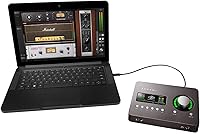
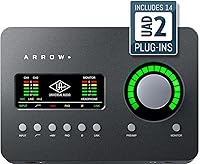
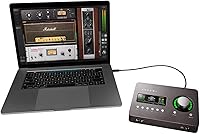
The Universal Audio Arrow Thunderbolt 3 Audio Interface is a compact, bus-powered desktop unit aimed squarely at serious home studio producers and mobile recording setups that demand professional audio quality without the bulk. Released in early 2018, it represents UA's most accessible entry point into the Apollo ecosystem — same conversion quality, smaller footprint. At 24-bit/192kHz resolution, the fidelity is genuinely professional-grade. Before you order, though, one thing needs to be crystal clear: this Thunderbolt audio interface requires a Thunderbolt 3 connection, and that cable is not included. No Thunderbolt 3 port on your machine means no Arrow. That is not a minor footnote — it is the first question to answer.
Features & Benefits

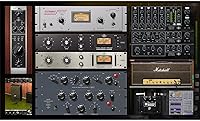
The Arrow interface's standout capability is its Unison preamp technology, which physically reconfigures the hardware's impedance and gain staging to emulate mic preamps and guitar amps from Neve, API, Manley, Marshall, and Fender. That is not just software trickery — it changes how the input actually behaves. Real-time UAD processing runs independently of your DAW's buffer setting, so you can track through classic compressors and EQs with genuinely low latency. The included plug-in bundle is substantial — LA-2A, 1176, Pultec EQs, Marshall Plexi among others — though expanding beyond it means spending more in UA's store. The 2-in/4-out layout works well for solo sessions but will feel limiting for anyone tracking a full band simultaneously.

Best For

UA's compact desktop interface is most at home in a focused, single-artist setup. Singer-songwriters, guitarists, and bedroom producers will get the most value out of it — particularly those who want to track vocals or guitar through high-end preamp emulations without buying a rack full of outboard gear. It is also a strong step-up option for anyone graduating from a basic USB interface who wants genuine professional conversion. Thunderbolt 3 laptop users working on the go will appreciate the bus-powered portability — one cable, no adapter, no wall wart required. If you are running larger sessions with multiple simultaneous inputs, however, you will quickly hit the two-input ceiling and need something bigger.

User Feedback

Across 131 ratings, the Arrow interface holds a 4.3 out of 5 — respectable, though the reviews paint a nuanced picture. Most praise focuses on audio quality and the experience of tracking through real-time UAD processing, which users consistently describe as genuinely different from software-only alternatives. On the flip side, the Thunderbolt 3 dependency draws real complaints from buyers who discovered the limitation after purchase. Windows users in particular report more friction around driver setup than Mac users typically do. The cost of expanding the UAD plug-in library beyond the bundled titles also surfaces regularly as an unexpected ongoing expense — worth factoring into your total budget before buying.

Pros

  • Unison preamp technology physically models iconic hardware from Neve, API, Manley, Marshall, and Fender — not just cosmetic emulation.
  • Real-time UAD processing runs independently of DAW buffer settings, giving you genuinely low-latency tracking through classic compressors and EQs.
  • 24-bit/192kHz audio conversion is professional-grade, holding its own against interfaces at significantly higher price points.
  • Bus-powered via a single Thunderbolt 3 cable — no power adapter needed, making it one of the cleaner portable setups available.
  • The included plug-in bundle is substantial for a bundled package, covering compressors, EQs, amp sims, and channel strips from day one.
  • Compact form factor fits easily on a small desk or in a laptop bag without taking up meaningful space.
  • Opens the door to the full UAD plug-in ecosystem, which is one of the most respected third-party libraries in professional audio.
  • Solid 4.3-star rating across real buyers reflects consistent satisfaction with audio quality and the core recording experience.

Cons

  • Thunderbolt 3 is a hard dependency — no compatible port means the Arrow interface simply will not function, full stop.
  • Only two inputs limits you to solo tracking; recording multiple sources simultaneously requires a more capable unit.
  • Windows users frequently report more driver complexity and setup friction compared to the relatively smooth Mac experience.
  • Expanding beyond the bundled plug-ins requires ongoing spending in UA's store, which can quietly become a significant added cost.
  • The Thunderbolt 3 cable is not included in the box, which is an annoying oversight given how essential it is.
  • Older Macs and PCs with Thunderbolt 2 or USB-C-only ports are effectively incompatible, limiting the potential user base considerably.
  • The UAD processing, while powerful, runs on the onboard DSP — heavier plug-in chains can push the hardware's processing limits during large sessions.
  • No standalone or iOS compatibility means it is tied entirely to a Thunderbolt 3 desktop or laptop environment.

Ratings

Our AI-generated scores for the Universal Audio Arrow Thunderbolt 3 Audio Interface were produced by systematically analyzing verified global buyer reviews, actively filtering out incentivized, bot-generated, and spam submissions to surface only genuine user experiences. The ratings reflect both where this interface genuinely excels and where real buyers have run into frustration — nothing is glossed over. Whether you are drawn in by the UAD processing or cautious about the connectivity requirements, the scorecards below give you an honest, data-driven picture before you commit.
Audio Conversion Quality
93%
Users consistently describe the 24-bit/192kHz conversion as a clear and audible step up from USB interfaces in the same price range. Vocalists and acoustic guitarists in particular note that recordings come back with a presence and clarity that holds up well even in professional mixing contexts.
A small number of users with very high-end monitoring setups have noted that the conversion, while excellent for the price tier, does not quite match the top-tier Apollo rack units in perceived depth and headroom. This is a marginal criticism and mostly comes from producers comparing it directly against significantly more expensive hardware.
Unison Preamp Performance
91%
The Unison preamp system draws consistent praise from guitarists and vocalists who say it genuinely changes how the input circuit feels and responds — not just how it sounds. Tracking through a Neve or API emulation at this price point, with actual impedance-level hardware interaction, is something users frequently describe as the Arrow's single most impressive capability.
Getting the most out of Unison requires some familiarity with preamp character and gain staging; casual users sometimes find the differences between emulations subtle until they know what to listen for. A handful of reviewers also noted that the full range of Unison-compatible plug-ins extends well beyond what is included in the bundle.
Real-Time UAD Processing
88%
Being able to track vocals or guitar through a hardware-emulated LA-2A or 1176 compressor with near-zero latency — regardless of the DAW buffer setting — is something users cite repeatedly as genuinely transforming their recording workflow. It removes the mental friction of deciding whether to commit to processing at tracking time.
The Arrow carries a single SHARC DSP core, which means heavier UAD plug-in chains on multiple tracks can push the processor to its ceiling faster than users expect. Producers who build complex sessions with many simultaneous UAD instances will hit processing limits and may need to freeze or bounce tracks more frequently than they would like.
Thunderbolt 3 Connectivity
58%
42%
For users with a Thunderbolt 3-equipped machine, the single-cable connection is genuinely clean and reliable — it handles power and data simultaneously with no noticeable dropouts or latency artifacts during sustained sessions. Laptop producers especially appreciate the reduction in cable clutter.
Thunderbolt 3 is also the Arrow's most polarizing characteristic. Buyers without a native Thunderbolt 3 port are simply locked out, and adapters from USB-C or older Thunderbolt versions are unreliable at best. This compatibility wall has generated a meaningful share of the negative reviews and returns associated with this product.
Windows Compatibility
61%
39%
Windows 10 64-bit with the Fall Creators Update is officially supported, and many Windows users do get the unit running without major incident once they follow UA's setup documentation carefully. Some Windows-based home studio producers report stable, consistent daily operation after initial configuration.
Driver setup on Windows is meaningfully more complex than on macOS, and a noticeable segment of Windows users in buyer forums describe recurring stability issues, occasional audio dropouts, or difficulty with initial authorization. The experience gap between Mac and Windows is real enough that Windows users should treat it as a known risk rather than an edge case.
Included Plug-In Bundle
78%
22%
The Real-time Analog Classics Bundle included at no extra cost covers a genuinely useful spread of tools — compressors, EQs, amp sims, and channel strips that many producers would reach for on real sessions. For someone new to UAD, it provides enough variety to produce complete tracks without immediately needing to spend more.
The bundle is a strong starting point, but experienced producers will notice the gaps fairly quickly and feel the pull toward UA's paid plug-in store. Individual UAD titles can be expensive, and the expectation that the included bundle is just a taste — not a complete toolkit — catches some buyers off guard.
Portability & Form Factor
86%
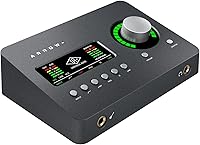
At 2 pounds and with dimensions that fit comfortably in a laptop bag, this Thunderbolt audio interface is one of the more travel-friendly professional options in its class. The bus-powered design means one less adapter to pack, which frequent movers consistently call out as a practical daily benefit.
The 10 x 8 x 4-inch footprint, while compact by professional interface standards, is still a desk item rather than a pocketable device. Users working in very constrained spaces — a small apartment desk or a cramped studio booth — occasionally mention wishing it were slightly smaller.
Channel Count & I/O Flexibility
54%
46%
For a solo artist tracking one vocal and one instrument at a time, the 2-in/4-out configuration covers the basics without unnecessary complexity. The four outputs allow for flexible monitoring routing, including separate headphone and speaker mixes in a straightforward home setup.
Two inputs is a hard ceiling that frustrates anyone who tries to use this unit for anything beyond solo recording. Users who started with it for single-track sessions and later tried to record a duo, a small podcast, or a live drum room hit this limitation immediately and found themselves needing to upgrade sooner than expected.
Setup & Ease of Use
72%
28%
On a compatible Mac with Thunderbolt 3, most users describe the initial setup as straightforward — install UA Connect, plug in the cable, and the unit is recognized and ready within minutes. The hardware controls are minimal and logically laid out, which reduces the learning curve for newcomers to professional interfaces.
The requirement to register and authorize through UA's software platform adds a step that some users find unnecessarily involved, particularly if internet access is limited. Windows setup introduces additional complexity around driver installation that can turn a quick start into a multi-hour troubleshooting exercise for less technically confident buyers.
Build Quality & Hardware Feel
83%
The Arrow interface has a solid, dense feel that users associate with professional studio equipment — the unit does not flex or rattle, and the front-panel knobs have a firm, smooth action that holds up well under daily use. It reads as a premium physical object rather than something assembled to a price point.
The matte gray finish, while clean-looking, does show fingerprints and light scuffing over time with regular handling. A few users who travel frequently with the unit noted surface marks appearing sooner than expected, though none reported functional damage from normal transport.
Value for Money
74%
26%
For a producer who will actively use the UAD processing and has a compatible Thunderbolt 3 machine, UA's compact desktop interface offers a level of audio quality and processing depth that genuinely justifies its position above entry-level USB interfaces. The included plug-in bundle adds real-world value that helps offset the initial outlay.
Once you factor in the cost of a Thunderbolt 3 cable (not included), and the likelihood of purchasing additional UAD plug-ins over time, the total cost of ownership climbs considerably above the sticker price. Buyers comparing it purely on hardware spec against competing USB interfaces may feel the premium is harder to justify without fully committing to the UAD ecosystem.
Latency Performance
89%
The ability to monitor through UAD plug-ins with near-zero latency — independently of the software buffer setting — is one of the Arrow's clearest practical advantages during tracking. Guitarists and vocalists who have previously dealt with the mental disruption of monitoring latency describe this as a meaningful improvement to their recording experience.
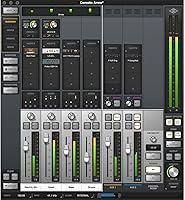
Near-zero latency applies specifically to the UAD monitoring path; standard software monitoring through the DAW is still subject to normal buffer-related delay. Users who are not familiar with UA's Console software sometimes confuse the two paths and end up troubleshooting a latency issue that is actually just a routing misconfiguration.
Software Ecosystem & Integration
77%
23%
The UAD platform is one of the most respected third-party plug-in libraries in professional audio, and owning Arrow hardware gives you access to the same ecosystem used by working professional studios. Regular sales and bundle deals on UA's store mean the library can be expanded meaningfully over time without always paying full price.
The ecosystem is proprietary — UAD plug-ins only run on UA hardware, which creates a dependency that some users find uncomfortable. If you ever move away from UA hardware, your UAD plug-in investment does not transfer to a standard software license, which is a long-term consideration worth weighing carefully before buying into the platform.

Suitable for:

The Universal Audio Arrow Thunderbolt 3 Audio Interface is built for a specific kind of producer — one who works alone or in small sessions and wants access to genuinely professional audio processing without filling a rack or breaking the bank on outboard gear. Singer-songwriters who track vocals and acoustic instruments will find the Unison preamp emulations from Neve, API, and Manley deliver a level of character and warmth that standard USB interfaces simply cannot replicate. Guitarists benefit particularly well here, since the amp emulations from Marshall and Fender run in real time with near-zero latency, making the tracking experience feel much closer to playing through actual hardware. Mobile producers with Thunderbolt 3 laptops will also appreciate the bus-powered convenience — one cable handles both data and power, so the setup on a laptop desk or in a studio booth stays clean and fast. It also makes strong sense for anyone who wants to start building a UAD plug-in collection gradually, since the Arrow is the most affordable hardware entry point into that ecosystem.
Not suitable for:

The Universal Audio Arrow Thunderbolt 3 Audio Interface is a poor fit for anyone whose computer lacks a native Thunderbolt 3 port — this is a hard requirement, not a workaround situation, and adapters from USB-C or older Thunderbolt versions often do not work reliably. Producers who regularly record bands, podcasts with multiple guests, or any session requiring more than two simultaneous inputs will hit the channel ceiling fast and find themselves needing a larger interface almost immediately. Windows users should go in with lowered expectations around driver stability; while the unit officially supports Windows 10, community feedback suggests the Mac experience is noticeably smoother and better-supported. Budget-conscious buyers should also be aware that the included plug-in bundle, while genuinely useful, is just the starting point — the broader UAD library requires additional purchases, and those costs add up quickly. If you are looking for a plug-and-play USB interface for basic recording without committing to an ecosystem, there are simpler and more affordable options that will serve that need better.
Specifications

  • Connection: The interface connects exclusively via Thunderbolt 3, which handles both audio data transfer and bus power through a single cable.
  • Audio Resolution: Supports recording and playback at up to 24-bit/192kHz, placing it firmly in professional-grade conversion territory.
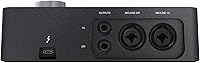
  • Input Channels: Provides 2 simultaneous input channels, suited for solo recording sessions involving a microphone and an instrument.
  • Output Channels: Offers 4 output channels, allowing flexible monitoring and routing configurations within a small studio setup.
  • Power Source: Fully bus-powered through the Thunderbolt 3 connection, requiring no external power adapter during normal operation.
  • Preamp Type: Equipped with Unison mic preamp technology, which physically reconfigures input impedance to authentically emulate classic hardware preamp circuits.
  • Included Plug-ins: Ships with the Real-time Analog Classics Bundle, including emulations of the UA 610-B, Marshall Plexi, Pultec EQs, LA-2A, 1176LN, 1176SE, Precision Delays, Channel Strip, and Raw Distortion.
  • Compatible OS: Officially supports macOS 10.12 Sierra, macOS 10.13 High Sierra, and Windows 10 64-bit with the Fall Creators Update installed.
  • Compatible Devices: Designed for use with Thunderbolt 3-equipped laptops and desktop computers running supported operating systems.
  • DSP Processing: Onboard UAD-2 SOLO DSP chip enables real-time plug-in processing independently of the host DAW software buffer size.
  • Dimensions: Measures 10 x 8 x 4 inches, making it compact enough to fit on a small desk or inside a laptop bag.
  • Weight: Weighs approximately 2 pounds, light enough for regular transport between sessions or locations.
  • Model Number: The official model identifier is ARROW, as designated by Universal Audio in their product line.
  • Brand: Manufactured by Universal Audio, a company known for high-fidelity audio hardware and the widely used UAD plug-in platform.
  • First Available: The product was first made available in January 2018, representing UA's entry-level interface in the Apollo hardware family.
  • Discontinued Status: As of the latest available information, this product has not been discontinued by the manufacturer.
  • Cable Included: A Thunderbolt 3 cable is not included in the box and must be purchased separately before the unit can be used.
  • User Rating: Holds an average rating of 4.3 out of 5 stars based on 131 customer ratings on Amazon.

Related Reviews

Universal Audio Apollo X16 Audio Interface
82%
94%
Conversion Quality
91%
UAD DSP Performance
89%
Build & Hardware Quality
92%
Low-Latency Tracking
88%
I/O Flexibility
More
Universal Audio Apollo 8 QUAD Audio Interface
79%
93%
Preamp Quality
91%
DSP Performance
89%
Audio Conversion
92%
Build Quality
74%
Software & Console 2.0
More
MOTU 624 Thunderbolt/USB Audio Interface

79%
93%
Latency Performance
86%
Driver Stability
78%
AVB Networking
88%
Build Quality
71%
Software & Routing
More
PreSonus Quantum 4848 Thunderbolt Audio Interface
77%
91%
Conversion Quality
89%
Latency Performance
93%
Channel Count & I/O Density
62%
macOS Compatibility
84%
Build & Hardware Quality
More
MOTU 112D Thunderbolt USB Audio Interface
81%
91%
Driver Stability
94%
Channel Count & I/O
87%
AVB Networking
89%
Thunderbolt Performance
88%
Connector Ecosystem
More
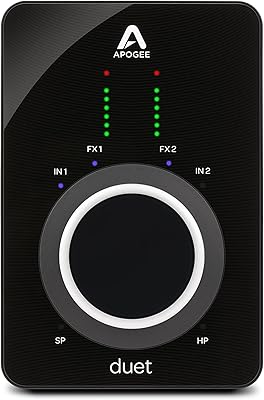
Apogee Duet 3
Apogee Duet 3
86%
94%
Preamp Performance
91%
Build Quality
88%
Hardware DSP Utility
56%
Cable Management
96%
Conversion Quality
More
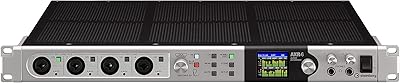
Steinberg AXR4T Thunderbolt Audio Interface
76%
93%
Preamp Quality
91%
Audio Resolution
88%
Routing Flexibility
89%
Connectivity & I/O
86%
Low-Latency Performance
More
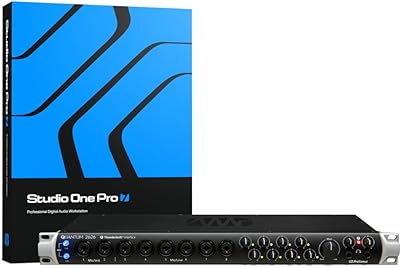
PreSonus Quantum 2626 Thunderbolt Audio Interface
88%
96%
Latency
94%
Sound Quality
91%
Software Bundle
88%
Build Quality
87%
Expandability
More
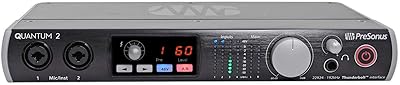
PreSonus Quantum 26x32 Thunderbolt Audio Interface
74%
91%
Latency Performance
78%
Preamp Quality
86%
Preamp Recall System
88%
I/O Count & Routing
53%
Driver Stability
More
MOTU 16A 32x32 Audio Interface
79%
91%
Driver Stability
93%
Channel Count & I/O Depth
88%
Onboard DSP Mixer
86%
Connectivity Flexibility
74%
AVB Networking
More

FAQ

It officially supports Windows 10 64-bit with the Fall Creators Update, so it is not Mac-exclusive. That said, a meaningful number of Windows users report more friction during driver installation and setup compared to the relatively straightforward Mac experience. If you are on Windows, budget some extra time for getting things running properly and make sure you are on a supported OS version before buying.

No, it is not. The Arrow interface requires a Thunderbolt 3 cable to function, and one is not included in the packaging. This catches a lot of buyers off guard, so factor that into your purchase — a quality Thunderbolt 3 cable is an additional cost you will need to account for right away.

It must be a true Thunderbolt 3 port. While Thunderbolt 3 uses the USB-C physical connector, not all USB-C ports support the Thunderbolt 3 protocol. Plugging the Arrow into a standard USB-C port will not work. Check your laptop or computer specs carefully to confirm you have a genuine Thunderbolt 3 port before purchasing.

Unison is Universal Audio's approach to hardware-level preamp emulation. Rather than just applying a software filter to the audio signal, it actually reconfigures the input circuit's impedance and gain characteristics to behave like the target hardware — whether that is a Neve 1073, an API Vision preamp, or a Fender amp. In practice, musicians who have tracked through both the Arrow and actual hardware units often find the difference is subtle but real, particularly for guitarists and vocalists using dynamic microphones.

The Arrow interface has two inputs, so you can connect up to two sources simultaneously — for example, one microphone and one instrument, or two microphones if you are using XLR connections. If you need to record more than two sources at the same time, this unit will not be sufficient and you should look at a larger interface in UA's Apollo range or from another brand.

You will need an internet connection for the initial authorization and registration process through Universal Audio's UA Connect software. After that, the plug-ins are authorized to your hardware and you can use them offline. The real-time processing happens entirely on the Arrow's onboard DSP chip, not in the cloud.

That depends on how much of the value you are placing on the UAD processing side versus just the audio conversion. The Unison preamp emulations and the onboard DSP are core reasons to choose this unit, so if you are mostly looking for a clean conversion stage and plan to use your existing plug-ins inside your DAW, there are competing interfaces at similar price points that might suit you just as well without locking you into the UAD ecosystem.

Yes, you can purchase additional UAD plug-ins through Universal Audio's online store, and they run on the onboard DSP chip just like the included titles. The library is extensive and covers a lot of highly regarded vintage hardware emulations. The catch is that individual plug-ins can be expensive, and the costs add up quickly if you plan to build a large collection. It is worth treating the additional plug-in spending as an ongoing investment rather than a one-time purchase.

UA's compact desktop interface is DAW-agnostic on the audio side — it works with Pro Tools, Logic Pro, Ableton Live, Reaper, Cubase, and most other major DAWs. The UAD plug-ins themselves can be used within any DAW that supports standard VST, AU, or AAX plug-in formats. You do need to install UA's driver and Connect software for everything to function, but there is no restriction to a single DAW platform.

The Arrow is UA's most affordable entry into the Thunderbolt interface family, offering one SHARC DSP core compared to the Apollo Twin's more powerful processing capacity. For a beginner or a solo producer, the difference in raw DSP headroom may not be immediately noticeable, and the included plug-in bundle gives you plenty to work with from day one. If you anticipate running many UAD plug-ins simultaneously on complex sessions in the future, the Apollo Twin offers more room to grow — but for straightforward home recording, the Arrow covers the fundamentals very well.

Where to Buy