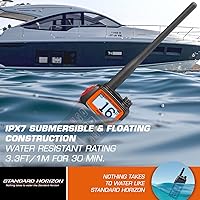
Overview

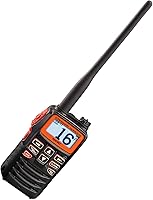
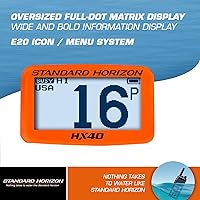
The Standard Horizon HX40 VHF Marine Radio comes from a brand that's been making marine electronics for decades, and that pedigree shows up the moment you pick this thing up. It's a handheld VHF unit, not a repurposed consumer walkie-talkie, and that distinction matters once you're actually out on the water. Standard Horizon built it for boaters who need short-range, reliable communication near coastlines or on inland lakes and rivers, whether that's checking in with a marina or calling for help in a pinch. It sits at the more affordable end of the company's handheld lineup, which makes it an easy recommendation as either a primary radio for casual outings or a backup tucked in a hatch next to the fixed-mount unit. For anglers, paddlers, and weekend cruisers, it covers the basics without asking for a steep price.

Features & Benefits

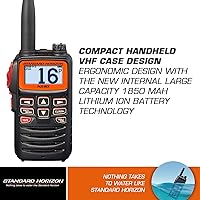
Channel coverage is what separates this handheld VHF radio from a generic walkie-talkie: all 16 marine frequencies are on tap, so hailing other boats, checking weather broadcasts, or reaching a marina doesn't require any workaround. The IPX8 rating matters more in practice, though — this isn't just splash-resistant, it's built to survive a real dunk, which counts for a lot once you've actually dropped a radio overboard. Six watts of transmit power gives noticeably more reach than consumer-grade radios, especially over open water with nothing blocking the signal. It runs on a single lithium-ion battery that holds its charge well over repeated use, and the compact housing clips easily onto a life vest. Rated range tops out at 36 miles, though that assumes ideal, unobstructed conditions between two similar units.

Best For

This marine radio makes the most sense for weekend boaters who want a dependable backup in case their fixed-mount VHF ever fails — having a second way to call for help is never a bad idea. It's also a smart pick for anglers and kayakers who need something waterproof enough to survive being knocked overboard during a rough moment on the water. Coastal cruisers who just want quick access to weather channels and nearby vessel chatter will find it covers what they need without complication. Anyone stepping up from a basic, non-marine walkie-talkie will appreciate finally having proper VHF channel access. That said, it's not the right choice for boaters who specifically want GPS integration or DSC distress-calling features, since those live further up the brand's lineup in pricier models.

User Feedback

Most owners describe this radio as solid and no-frills, the kind of gear that just does its job without drawing attention to itself. Durability and water resistance come up again and again as the traits people appreciate most, especially from anyone who's had a radio go for an unplanned swim. On the downside, several buyers note that real-world range falls noticeably short of the rated maximum, though that's true of most handheld VHF units once you account for terrain, antenna height, and anything blocking line of sight. Battery life and overall build quality get consistent praise for everyday use, which matters more than headline specs for most boaters. A few first-time owners mention a learning curve around marine channel functions, so it helps to spend a few minutes with the manual before heading out.

Pros

  • Survives accidental submersion thanks to its IPX8 waterproof rating, not just light rain or spray
  • Six watts of transmit power outperforms typical consumer-grade walkie-talkies over open water
  • Full 16-channel marine frequency access covers hailing, weather, and ship-to-ship communication
  • Lithium-ion battery holds charge more consistently over time than older NiMH-based radios
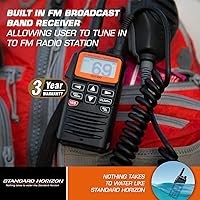
  • Compact and lightweight enough to clip directly onto a life vest
  • Owners consistently describe build quality and durability as standout strengths
  • Works well as an affordable backup to a boat's main fixed-mount VHF system
  • The Standard Horizon HX40 VHF Marine Radio delivers solid basics without unnecessary complexity

Cons

  • No GPS integration, so position tracking or location sharing isn't available
  • Lacks DSC distress-calling functionality found on higher-tier Standard Horizon models
  • Real-world range often falls short of the rated maximum once obstructions enter the picture
  • First-time VHF users may need time to learn proper channel selection and usage
  • Limited to short-range, line-of-sight communication rather than long-distance reliability
  • Single battery design means no quick-swap option if power runs low mid-trip
  • Not built for commercial or offshore use where advanced safety features matter more
  • Entry-level positioning means fewer extras compared to pricier handheld VHF radios

Ratings

These scores for the Standard Horizon HX40 VHF Marine Radio are generated by AI after analyzing thousands of verified buyer reviews from boaters worldwide, with spam, bot activity, and incentivized feedback filtered out. The goal is to give a transparent, balanced picture of where this handheld VHF radio genuinely excels and where it falls short in real on-water use.

Build Quality & Durability
88%
Owners consistently mention that this marine radio feels solid in hand, with a housing that holds up well to bumps, drops, and daily abuse on a boat deck. The casing doesn't feel cheap despite the entry-level price point, which surprises a lot of first-time buyers.
A handful of long-term users note minor wear around the antenna base and belt clip after a year or two of heavy use. It's not built like a commercial-grade unit, so treating it gently still extends its lifespan noticeably.
Waterproof Performance
91%
The IPX8 rating isn't just marketing here; multiple kayakers and anglers report it surviving full submersion overboard without missing a beat. This kind of real-world reliability after an accidental dunk is exactly what boaters expect from dedicated marine gear.
A small number of reviewers mention the rubberized seals around buttons feeling slightly stiff initially, which can make operation a bit fiddly with wet or gloved hands. It's a minor tradeoff for the waterproofing it provides.
Signal Range & Reception
76%
24%
Over open water with clear line of sight, users report the 6-watt output reaching well past what typical consumer walkie-talkies manage, especially for ship-to-ship hailing and marina check-ins. It performs as expected in coastal and lake settings.
Several buyers note that the rated 36-mile range is rarely achieved in practice, especially around hills, marinas with structures, or low-lying kayak use. Expectations should be set around realistic line-of-sight conditions rather than the headline number.
Battery Life
84%
The lithium-ion battery gets praised for holding a charge through full weekend trips without needing a mid-day top-off, a clear improvement over older NiMH-based handhelds many users previously owned. Daily boaters appreciate not worrying about power on shorter outings.
A few reviewers mention noticeable capacity drop after roughly two years of regular charging cycles, which is typical for lithium-ion but still worth planning for. Replacement battery availability is something occasional buyers wish was clearer upfront.
Channel Functionality
89%
Full access to all 16 marine channels covers everything from weather broadcasts to ship-to-ship chatter, and most users say switching between them feels intuitive once you've used the radio a few times. It does exactly what a marine VHF needs to do.
A few first-time VHF owners coming from basic walkie-talkies mention initial confusion over channel etiquette and which frequencies serve which purpose. It's more a knowledge gap than a device flaw, but it affects the early experience.
Value for Money
86%
Buyers frequently call this handheld VHF radio a smart entry point into dedicated marine communication without paying for GPS or DSC features they may never use. For weekend boaters and backup-radio shoppers, it hits a comfortable price-to-performance balance.
Some reviewers who later wanted GPS tagging or distress-calling functionality felt they had to upgrade sooner than expected, effectively paying twice. It's best suited to buyers who are confident they don't need those extras.
Portability & Ergonomics
92%
The compact, lightweight form factor gets singled out repeatedly, especially by kayakers and anglers who clip it directly onto a life vest without feeling weighed down. It tucks easily into small storage compartments on smaller boats too.
A few users with larger hands mention the buttons feel a bit small and closely spaced for quick one-handed operation. It's a minor ergonomic tradeoff that comes with such a compact design.
Transmit Power
81%
19%
The 6-watt output is consistently described as a meaningful upgrade over consumer-grade radios, giving clearer transmission over longer stretches of open water. Boaters communicating ship-to-ship find it noticeably more dependable than non-marine alternatives.
It still falls short of higher-tier handhelds or fixed-mount units when distance or obstructions increase, which some reviewers learned the hard way during longer coastal trips. It's adequate, not exceptional, for serious range needs.
Ease of Use for Beginners
67%
33%
Once buyers spend a few minutes with the manual, most say the controls click into place quickly and become second nature within a trip or two. The learning curve is real but short for anyone with basic radio familiarity.
First-time VHF owners frequently mention initial confusion over marine-specific channel functions compared to standard walkie-talkies. A noticeable subset of reviews specifically call out this onboarding friction as their biggest early frustration.
Audio Clarity
78%
22%
Most users describe transmissions and incoming audio as clear and easy to understand at close to mid-range distances, even with engine or wind noise in the background. It handles typical on-water chatter without much distortion.
A smaller group of reviewers note audio gets noticeably muffled at the edges of the radio's effective range, which lines up with expected VHF behavior. It's not a flaw unique to this unit, just a natural limitation of handheld radios.
Feature Set (GPS/DSC)
52%
48%
Buyers who only need straightforward channel access appreciate that the simpler feature set keeps the radio uncomplicated and easy to operate without extra menus or settings to navigate.
The lack of GPS integration and DSC distress calling is the most repeated criticism among reviewers who expected more from a marine safety device. Boaters prioritizing emergency features generally end up looking at pricier models instead.
Overall Reliability
87%
Across long-term reviews, this radio gets described as dependable trip after trip, rarely failing unexpectedly when boaters actually need it for hailing or weather checks. That consistency is a major reason it shows up so often as a trusted backup unit.
A small number of owners report occasional connection drops in fringe range conditions, though this tends to align with expected VHF line-of-sight limitations rather than a defect. Overall failure reports remain uncommon relative to usage volume.

Suitable for:

The Standard Horizon HX40 VHF Marine Radio makes the most sense for boaters who want a dedicated backup in case their fixed-mount unit ever fails on the water. Weekend sailors and casual cruisers who mostly need to hail a marina, check weather channels, or talk ship-to-ship will find the 16-channel coverage more than adequate. Anglers and kayakers benefit especially from the submersible build, since gear going overboard is a matter of when, not if, on small boats. Anyone upgrading from a generic consumer walkie-talkie will immediately notice the difference in range and reliability once they're using a radio actually built for marine frequencies. It also suits budget-conscious buyers who want real VHF functionality without paying for GPS or DSC features they may never use.

Not suitable for:

This handheld VHF radio is not the right pick for offshore boaters or anyone who relies on DSC distress calling as a safety baseline, since that feature isn't included here. Buyers wanting integrated GPS for position tracking or man-overboard marking will need to look at higher-tier models in the Standard Horizon lineup instead. The rated 36-mile range only applies under ideal, line-of-sight conditions between two similar radios, so anyone expecting that distance in everyday coastal use with obstructions will be disappointed. First-time VHF users who want a plug-and-play experience may also find the channel functions take a bit of getting used to. Finally, anyone needing a primary communication device for serious long-range or commercial marine work should treat this as a backup unit rather than a main radio.

Specifications

  • Brand: This handheld VHF radio is manufactured by Standard Horizon, a long-established name in marine electronics.
  • Model Number: The model designation for this unit is HX40.
  • Radio Type: This is a handheld VHF marine radio designed specifically for on-water communication.
  • Channel Count: The radio provides access to 16 standard marine frequency channels.
  • Frequency Range: Operating frequency spans from 156.025 MHz to 163.275 MHz.
  • Transmit Power: The unit transmits at 6 watts, which exceeds typical consumer-grade handheld radios.
  • Talking Range: Rated talking range reaches up to 36 miles under ideal, line-of-sight conditions between two similar units.
  • Waterproof Rating: The radio carries an IPX8 submersible rating, tested to 1.5 meters (4.92 feet) for 30 minutes.
  • Battery Type: Power comes from a single rechargeable lithium-ion battery.
  • Voltage: The battery system operates at 7 volts.
  • Color: The radio is finished in black.
  • Special Features: Key features include portability and waterproof construction suited for marine use.
  • Country Of Origin: The unit is manufactured in China.
  • Department: This product is categorized under boating equipment.
  • Package Quantity: Each package contains one handheld radio unit.
  • Package Weight: The shipped package weighs approximately 4.0 pounds.
  • Package Dimensions: The retail package measures 10.0 inches by 10.0 inches by 10.0 inches.
  • Date Available: This model was first made available on February 11, 2018.

Related Reviews
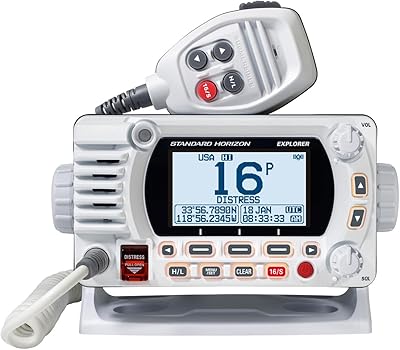
Standard Horizon GX1800G Fixed Mount VHF Radio
81%
91%
GPS & DSC Integration
83%
Transmit Range & Power
88%
Build & Waterproofing
67%
Display Readability
74%
Ease of Installation
More
Standard Horizon HX890NB VHF/GPS Radio
86%
91%
Performance in Marine Environments
93%
Build Quality and Durability
82%
Ease of Use
88%
Battery Life
94%
Waterproofing and Submersion
More
Standard Horizon HX210 Handheld Marine VHF Radio
85%
93%
Waterproof Protection
86%
Build Quality
88%
Battery Life
79%
Charging System
71%
Transmit Range
More
Uniden MHS75 Handheld VHF Marine Radio
81%
91%
Waterproof Performance
87%
Build Quality
83%
Audio Clarity
78%
Transmit Range
76%
Battery Life
More
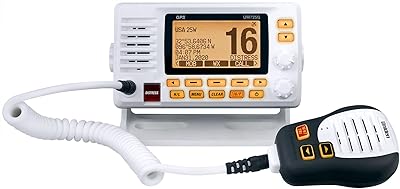
Uniden UM725G Marine VHF Radio
79%
93%
Display Clarity
91%
Built-in GPS
88%
DSC Functionality
86%
Audio Quality
84%
Ease of Installation
More
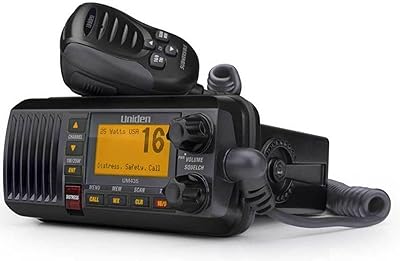
Uniden UM435BK Fixed Mount VHF Marine Radio
80%
93%
Waterproofing & Weather Resistance
88%
Audio Clarity & Reception
84%
Ease of Installation
91%
Channel Coverage & Compatibility
82%
Value for Money
More
Standard Horizon GX1850 Fixed Mount VHF Radio
75%
83%
NMEA 2000 Integration
88%
Audio Clarity
86%
Waterproofing & Durability
84%
DSC Functionality
82%
Ease of Installation
More
Icom M94D VHF Marine Radio
80%
91%
Build Quality
83%
AIS Receive Performance
87%
DSC Distress Calling
88%
Audio Clarity
92%
AquaQuake Water Draining
More
Uniden Atlantis 155 Handheld VHF Marine Radio
80%
91%
Waterproof Performance
88%
Buoyancy & Drop Safety
89%
Ease of Use
61%
Transmit Power & Range
86%
NOAA Weather Alerts
More
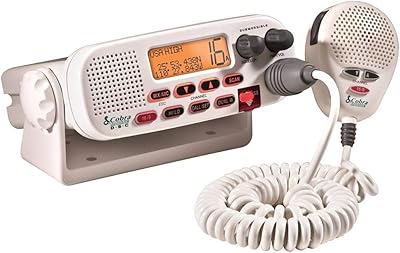
Cobra MR F77B GPS Fixed Mount VHF Radio
79%
88%
GPS Performance
91%
DSC Functionality
79%
Ease of Installation
67%
Audio Clarity
86%
Display Visibility
More

FAQ

Yes, that's one of its strongest points. It carries an IPX8 rating, meaning it's tested to survive submersion at 1.5 meters for 30 minutes, so an accidental dunk overboard shouldn't kill it. Just don't expect it to function as a dive radio for extended underwater use.

It works fine as a primary radio for casual boating, fishing, or paddling where short-range communication is all you need. For offshore or commercial use, though, most boaters pair it with or rely on a fixed-mount VHF and treat this handheld as a backup.

No, this particular model skips both GPS integration and DSC distress functionality. If those features matter to you, Standard Horizon offers higher-tier handhelds and fixed-mount units that include them.

The 36-mile figure is a best-case number that assumes line-of-sight conditions between two similar radios, usually ship-to-ship over open water. In typical real-world use with obstructions, hills, or lower antenna height, expect noticeably less than that.

It uses a single rechargeable lithium-ion battery rather than disposable batteries. Lithium-ion packs generally hold their charge better over time compared to older NiMH battery designs found in older handheld radios.

There's a small learning curve if you're new to VHF channel functions, since marine radios work a bit differently from standard walkie-talkies. Most buyers say it's manageable after spending a little time with the manual and trying out the channels on land first.

Yes, the compact and lightweight design makes it easy to clip onto a life vest, belt, or stash in a small storage compartment. That portability is part of why anglers and kayakers tend to like it.

It gives you access to all 16 standard marine frequency channels, covering hailing, ship-to-ship chatter, and weather broadcasts. That's full coverage for typical recreational boating needs.

If you're on the water regularly, yes. Consumer walkie-talkies don't access marine frequencies and generally can't match the 6-watt transmit power or waterproofing built into this radio. It's a meaningful step up for anyone who needs real marine communication rather than general-purpose chatter.

Feedback is generally positive here, with durability and water resistance coming up repeatedly as standout traits. Most owners describe it as a solid, no-frills performer that holds up well to regular use on the water.