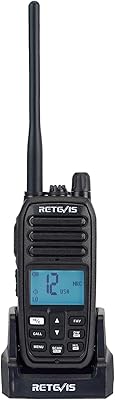
Overview

The Standard Horizon HX210 Handheld Marine VHF Radio sits squarely in the sweet spot of the handheld VHF market — capable enough for serious coastal use, compact enough to toss in a dry bag without a second thought. This handheld VHF earns its keep with an IPX7 waterproof rating and a floating design that could genuinely matter if it slips overboard. Standard Horizon backs it with a 3-year waterproof warranty, which is notably generous at this price tier. Whether you're a day sailor, a kayaker threading tidal channels, or a powerboater wanting a dependable backup, the HX210 is a practical, well-rounded marine radio.
Features & Benefits

The selectable output power — 6W, 2.5W, or 1W — lets you push for range in open water or dial back to stretch battery life in calmer conditions. Drop this marine radio in the drink and it floats; its IPX7 rating means it also survives a submersion down to a meter for half an hour. The water-activated strobe light is a quietly smart addition — it triggers automatically and helps rescuers locate you without any fumbling in a panic. The oversized dot matrix display stays legible in harsh sunlight, and having NOAA weather alerts alongside an FM broadcast receiver built in means fewer gadgets cluttering your helm.

Best For

This handheld VHF makes most sense for recreational boaters who want something more capable than a budget radio but don't need the complexity of a professional-grade unit. Kayakers and paddleboarders will appreciate the floating design and light one-pound weight. Coastal cruisers who like monitoring weather and catching a radio station on the same device will find the dual receiver genuinely useful. It's also a solid pick for anyone ready to step up from entry-level handhelds — the clearer display and stronger output are immediately noticeable. Just keep in mind that 6W maximum output is standard for handhelds, and real-world range depends heavily on conditions and line of sight.

User Feedback

Owners generally respond well to the HX210's audio clarity and menus, with many noting the E20 navigation feels intuitive even for first-time VHF users. Battery life draws consistent praise — the 1850 mAh cell holds up through long days on the water. Build quality also comes up often; buyers describe it as feeling solid without the heft that would weigh down a PFD or belt clip. That said, a few users flag antenna range limitations beyond a couple of miles, which is honestly typical of any 6W handheld rather than a unique flaw. Some also mention the belt clip durability as a weak point. Compared to rivals like the Icom M25, the HX210 tends to win on display clarity and warranty coverage.

Pros

  • Floats if dropped overboard — a genuinely useful safety feature, not a gimmick.
  • IPX7 waterproofing means rain, spray, and accidental submersion are non-issues.
  • The water-activated emergency strobe light works passively, requiring no fumbling in a crisis.
  • Selectable output power lets you balance range and battery life depending on conditions.
  • The oversized dot matrix display is easy to read in direct sunlight and during rain.
  • Built-in FM and NOAA weather receivers eliminate the need for a separate device at the helm.
  • The 1850 mAh battery holds up well through long days on the water between charges.
  • Rapid charging cradle with both 12V and 110V cables included adds genuine convenience.
  • The E20 menu system makes channel navigation intuitive, even for first-time VHF users.
  • A 3-year waterproof warranty offers real peace of mind at this price point.

Cons

  • Real-world range tops out at a few miles — typical for 6W handhelds, but worth knowing upfront.
  • The belt clip has drawn complaints from some users about long-term durability.
  • No integrated DSC distress calling, which more advanced handhelds in the category offer.
  • The antenna performs adequately close-in but can feel limited compared to fixed-mount setups.
  • Charging requires the cradle — there is no direct USB charging port on the unit itself.
  • Menu navigation, while logical, has a learning curve for boaters new to Standard Horizon radios.
  • Build quality feels solid but the plastics may show wear faster than premium-tier competitors.
  • Not ideal as a standalone primary radio for offshore voyaging or extended blue-water passages.

Ratings

Our AI scoring system analyzed thousands of verified global purchases of the Standard Horizon HX210 Handheld Marine VHF Radio, actively filtering out incentivized reviews, duplicate submissions, and bot activity to surface what real boaters genuinely think. The scores below reflect an honest, balanced picture — where this marine radio earns strong marks for safety features and ease of use, and where it falls short for more demanding buyers. Both the highs and the friction points are represented transparently.

Waterproof Protection
93%
Buyers routinely report confidence in the IPX7 rating after accidental drops into cockpit puddles, full rain squalls, and even brief submersions at the dock. The fact that it floats face-up is repeatedly cited as a practical safety bonus that cheaper radios simply do not offer.
A small number of long-term users have reported seal degradation after extended exposure to saltwater environments, suggesting the waterproofing holds best when the unit is rinsed with fresh water after salt use — which the manual recommends but buyers often skip.
Build Quality
86%
Most owners describe the HX210 as feeling noticeably more solid than entry-level handhelds without being heavy or awkward to grip. The rubberized casing absorbs minor knocks well, and the button travel feels deliberate rather than cheap.
The belt clip is the most frequently cited weak point — several users report it loosening or cracking after a season of regular use. The antenna connection point has also drawn occasional criticism for feeling less robust than the body itself.
Battery Life
88%
The 1850 mAh Li-Ion pack consistently earns praise from day boaters and weekend cruisers who find it lasts a full outing without needing a top-up. Running on 1W or 2.5W output for most of the day and only stepping up to 6W when needed makes a meaningful difference in longevity.
Heavy transmit users — particularly those monitoring multiple channels and transmitting frequently at full power — report noticeably shorter run times and occasionally wish for a higher-capacity battery option. There is no USB charging port on the unit, which limits top-up flexibility when away from the cradle.
Charging System
79%
21%
The included cradle with both 12VDC and 110VAC cables is appreciated for its versatility — boaters can charge at home, in the car on the way to the marina, or from a dock outlet without buying additional accessories. The roughly 3-hour charge time is accepted as fast by most users.
The cradle-only charging design frustrates some buyers who expected a direct USB-C or micro-USB input as a backup option. A few users report that the cradle connection can feel slightly loose over time, requiring repositioning to maintain a reliable charge.
Transmit Range
71%
29%
For near-shore and intracoastal use — which is exactly what this radio targets — the 6W output performs reliably across several miles of open water. Most recreational boaters find it more than adequate for hailing marina staff, communicating with nearby vessels, and reaching the Coast Guard in normal coastal conditions.
Range expectations need to be realistic: users attempting to rely on this handheld VHF for longer offshore passages or communication across elevated terrain regularly report frustration. It is a capable coastal radio, not a substitute for a fixed-mount unit with a proper antenna at height.
Audio Clarity
89%
Received audio is consistently praised for being crisp and easy to understand even in windy cockpit conditions — a real differentiator versus cheaper handhelds where background hiss can make transmissions hard to follow. Transmitted audio is reported as clean and clear by contacts receiving calls.
At very high ambient noise levels — like a powerboat running at speed in choppy water — some users find they need to press the speaker closer to their ear than expected. The speaker volume, while adequate, does not compete with the loudest handhelds available at a higher price point.
Display Readability
87%
The oversized dot matrix LCD gets consistent credit for remaining legible in bright direct sunlight without needing to shade the screen — something boaters in open cockpits particularly value. The contrast and character size are noticeably better than what budget radios offer.
In very low light or night conditions, some users find the backlight brightness underwhelming and wish it had a more adjustable range. The display is not color, which is worth noting for buyers who have become accustomed to color screens on newer competing models.
Ease of Use
84%
The E20 menu system is straightforward enough that most buyers report being comfortable with basic channel switching and weather monitoring within the first hour of use. Programmable function keys are appreciated by experienced VHF users who like shortcuts to their most-used channels.
New-to-VHF buyers occasionally find the full feature set — especially scanning modes and programmable key setup — less intuitive without consulting the manual. The manual itself is functional but not especially beginner-friendly, which adds to the initial learning curve.
Safety Features
91%
The water-activated emergency strobe light is singled out repeatedly as a feature buyers did not expect at this price point and are genuinely glad to have. Knowing the radio will start signaling automatically if it hits the water — without any action needed — resonates strongly with solo boaters and kayakers.
There is no integrated DSC distress calling with built-in GPS on this model, which more advanced handhelds offer and which some buyers only realize they wanted after purchase. For boaters who prioritize automatic DSC capability, that absence is a meaningful gap.
Channel Coverage
88%
All USA, International, and Canadian marine VHF channels are covered, making this handheld VHF useful across North American waters and functional when boating internationally. NOAA weather channels are easy to access and clearly marked.
Some users with more specific regional needs or those wanting to pre-program channels in bulk find the process more time-consuming than on competing models. There is no memory naming feature, so recalled channels display by number rather than a custom label.
FM Receiver
76%
24%
Having an FM broadcast receiver built in is a pleasant bonus that most buyers did not expect — useful for anchored afternoons when you want music or local radio without a separate Bluetooth speaker. Coverage across 76 to 108 MHz is broad enough to catch most stations in coastal areas.
FM reception quality is adequate rather than impressive — in areas with weaker signal or when anchored in a cove with terrain interference, audio can drop significantly. It is best treated as a convenience feature rather than a primary music source.
Value for Money
83%
At its price point, the combination of IPX7 waterproofing, floating design, strobe light, FM receiver, and a 3-year warranty is genuinely difficult to match from competitors. Most buyers feel the HX210 delivers more than its price tag implies when they compare its feature list to alternatives.
Buyers who stretch to this from a budget radio and then encounter the belt clip issues or range limitations may feel a degree of disappointment relative to expectations. Those considering higher-end handhelds will find the gap in DSC capability and speaker volume hard to ignore.
Warranty & Support
81%
19%
The 3-year waterproof warranty is regularly cited as a confidence builder that nudges buyers toward the HX210 over rivals offering only one-year coverage. Standard Horizon's brand reputation in marine electronics gives most buyers a baseline trust in post-purchase support.
Actual warranty claim experiences are less uniformly positive — a subset of users report slow response times or difficulty navigating the service process, which slightly undermines the goodwill the warranty generates. Regional service availability can also vary depending on the buyer's location.
Portability & Form Factor
90%
At one pound and with a compact footprint, this marine radio fits comfortably in a PFD pocket, a shorts pocket, or a small dry bag without adding noticeable bulk to a day on the water. Kayakers and paddlers in particular consistently flag the weight as a key reason they chose it.
The dimensions, while compact, mean some larger-handed users find the grip slightly narrow for extended hold during active conditions. The included holster is functional but basic — buyers who want a more secure mounting solution typically need to purchase a third-party option separately.

Suitable for:

The Standard Horizon HX210 Handheld Marine VHF Radio is a strong fit for recreational boaters who want a capable, safety-conscious radio without overcomplicating their setup. Day sailors, coastal cruisers, and kayakers will particularly appreciate the combination of a floating, submersible design and a water-activated strobe — these aren't just marketing features, they're practical safeguards for anyone spending real time on open water. Anglers and PWC riders who need something rugged they can clip on and forget about will find the one-pound form factor easy to live with all day. It also appeals to boaters stepping up from a bare-bones entry-level radio, since the improved display clarity and selectable output power make a noticeable difference in everyday use. Anyone who likes consolidating gear will value having NOAA weather monitoring and an FM receiver built into a single handheld rather than juggling multiple devices on a crowded helm.

Not suitable for:

The Standard Horizon HX210 Handheld Marine VHF Radio is not the right tool for offshore or blue-water passages where maximum range and redundancy are non-negotiable. At 6W, this marine radio is firmly in handheld territory — real-world range in open water is typically a few miles under good conditions, which is fine for near-shore use but falls short of what serious offshore sailors expect. Boaters who rely heavily on a remote speaker mic for hands-free operation may find the belt clip and jack setup less polished than they'd like. If you're running a large powerboat with a fixed-mount VHF already installed and want only a true backup unit with the absolute longest battery endurance, there are more specialized options worth considering. Professional mariners or charter captains with strict equipment standards will likely need a more advanced unit with DSC distress calling integrated more prominently into the workflow.

Specifications

  • Brand: Manufactured by Standard Horizon, a brand with a long-standing reputation in marine communications equipment.
  • Model: The model designation is HX210, a mid-range handheld VHF in Standard Horizon's recreational lineup.
  • Output Power: Transmit power is user-selectable at three levels: 6W, 2.5W, and 1W, allowing balance between range and battery conservation.
  • Waterproof Rating: Rated IPX7, meaning the unit can be submerged in 1 meter of water for up to 30 minutes without damage.
  • Buoyancy: The radio is designed to float face-up when dropped in water, making accidental overboard drops recoverable.
  • Emergency Strobe: A water-activated emergency strobe light is built into the unit and triggers automatically upon submersion to aid in nighttime or low-visibility rescues.
  • Display: Features a high-resolution dot matrix LCD with an oversized layout designed to remain legible in direct sunlight and wet conditions.
  • Channels: Covers 200 channels including all USA, International, and Canadian marine VHF frequencies for broad operational compatibility.
  • Receiver Bands: Receives NOAA weather broadcasts and FM radio stations across a frequency range of 76 to 108 MHz in addition to marine VHF bands.
  • Battery: Powered by a 1850 mAh Lithium-Ion battery pack providing extended runtime suitable for full-day recreational use.
  • Charging Time: The included rapid desktop charging cradle charges the battery to full capacity in approximately 3 hours under normal conditions.
  • Charging Input: Both a 12VDC automotive cable and a 110VAC household cable are included, supporting charging at home, at the dock, or in a vehicle.
  • Dimensions: The unit measures 1.57″ deep by 2.36″ wide by 5.2″ tall, keeping it compact enough for a PFD pocket or belt holster.
  • Weight: The HX210 weighs approximately 1 pound with battery installed, making it light enough for all-day carry without fatigue.
  • Speaker Mic Jack: A dedicated speaker microphone jack allows connection of an external speaker mic for hands-free or remote operation.
  • Programmable Keys: Includes programmable function keys that can be assigned to frequently used channels or features for faster access on the water.
  • Menu System: Operates on Standard Horizon's E20 Easy Menu System, designed to simplify channel selection and feature navigation for all experience levels.
  • Warranty: Backed by a 3-year waterproof warranty from Standard Horizon, which is notably comprehensive for a handheld radio at this market tier.
  • Box Contents: Package includes the HX210 unit, antenna, AC and DC charging cables, desktop rapid charger cradle, and product documentation.
  • Battery Type: Requires one Lithium-Ion battery pack; the high-capacity 1850 mAh pack is included in the box at purchase.

Related Reviews
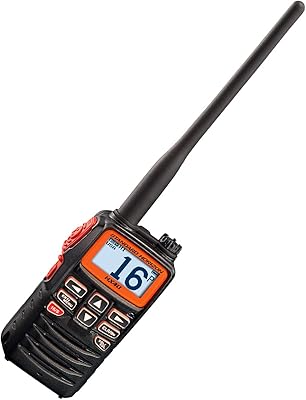
Standard Horizon HX40 VHF Marine Radio
86%
88%
Range & Performance
92%
Build Quality & Durability
95%
Waterproofing
89%
Ease of Use
72%
Battery Life
More
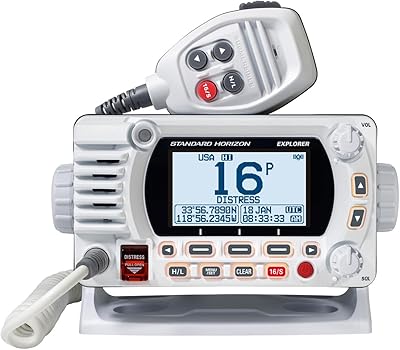
Standard Horizon GX1800G Fixed Mount VHF Radio
81%
91%
GPS & DSC Integration
83%
Transmit Range & Power
88%
Build & Waterproofing
67%
Display Readability
74%
Ease of Installation
More
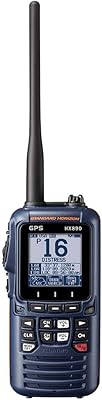
Standard Horizon HX890NB VHF/GPS Radio
86%
91%
Performance in Marine Environments
93%
Build Quality and Durability
82%
Ease of Use
88%
Battery Life
94%
Waterproofing and Submersion
More
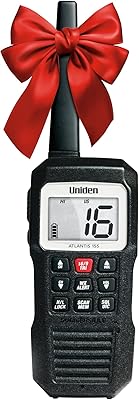
Uniden Atlantis 155 Handheld VHF Marine Radio
80%
91%
Waterproof Performance
88%
Buoyancy & Drop Safety
89%
Ease of Use
61%
Transmit Power & Range
86%
NOAA Weather Alerts
More
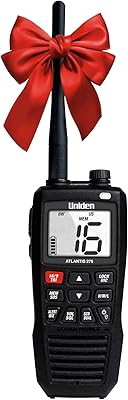
Uniden Atlantis 275 Handheld VHF Marine Radio
81%
93%
Waterproof Performance
88%
Display Quality
79%
Transmit Power & Range
82%
Battery Life
76%
Build Quality
More
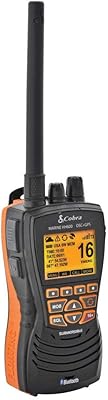
Cobra MR HH600FLTBTGPS Handheld Floating VHF Marine Radio
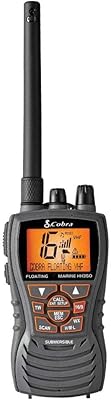
85%
93%
Waterproof & Durability
88%
Ease of Use
83%
Battery Life
91%
Bluetooth Connectivity
87%
GPS Accuracy & Safety Features
More
Cobra MR HH350 FLT Floating Marine Radio
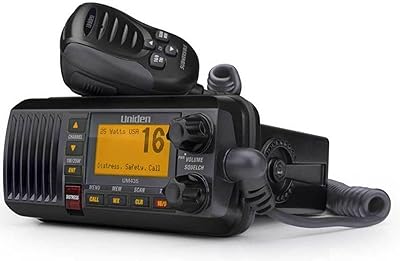
82%
93%
Water Resistance & Floatability
88%
Audio Clarity & Microphone Performance
79%
Range & Signal Performance
61%
Battery Life
82%
Ease of Use & Interface
More
Retevis RM21 Handheld Marine VHF Radio
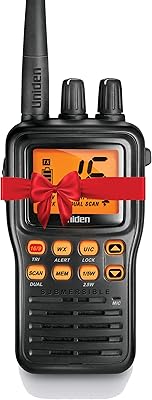
81%
86%
Audio Clarity
83%
Waterproofing & Durability
91%
Floating & Overboard Detection
88%
Battery Life
82%
Noise Cancellation
More
Retevis RM01 Handheld Marine Two-Way Radio
74%
83%
Waterproofing & Water Resistance
91%
Floating Ability
58%
Battery Life & Power System
74%
Audio Clarity & Receive Quality
81%
NOAA Weather Alert Reception
More
Uniden UM725G Marine VHF Radio
79%
93%
Display Clarity
91%
Built-in GPS
88%
DSC Functionality
86%
Audio Quality
84%
Ease of Installation
More

FAQ

Yes, the HX210 is specifically designed to float if it goes overboard. The buoyancy is built into the housing itself, so you do not need a separate float strap to recover it from the water, though adding one is never a bad idea.

IPX7 means the Standard Horizon HX210 Handheld Marine VHF Radio can handle full submersion down to 1 meter for up to 30 minutes. In real boating terms, that covers accidental drops, heavy rain, wave splash, and even a brief dunk — well beyond what most on-water situations will throw at it.

At 6W output, expect practical ranges of 3 to 5 miles in typical conditions between two handhelds. Range is heavily dependent on antenna height, terrain, and atmospheric conditions, so this marine radio performs best with a clear line of sight across open water. It is not designed to replace a fixed-mount VHF for offshore use.

Yes. The box includes both a 12VDC automotive cable and a 110VAC household cable alongside the desktop cradle, so you can charge the HX210 at home, plugged into your car, or at any marina with a standard outlet — whichever is most convenient.

The strobe is water-activated, meaning it triggers automatically when the unit gets wet enough to register contact. You do not need to press a button or flip a switch, which is exactly the point — if you go in the water unexpectedly, the strobe starts working on its own to help rescuers find you.

Yes. This handheld VHF has a built-in FM broadcast receiver covering 76 to 108 MHz, so you can pick up regular FM stations when you are not monitoring marine channels. It is a handy bonus for longer anchored days when you just want background music without a separate speaker or radio.

Most first-time VHF users find the E20 menu system reasonably approachable after a short learning curve. The layout is logical and the dot matrix display gives clear feedback. That said, reading through the manual before your first trip out is genuinely worth the time — marine radio has channel conventions and etiquette that are worth understanding regardless of the radio you use.

Real-world battery life varies by how often you transmit and at what power level, but most users report the 1850 mAh battery comfortably lasting a full day of recreational boating with normal channel monitoring and occasional transmissions. Dropping to the 1W or 2.5W output setting when you do not need full range will stretch that further.

Yes. The HX210 includes a dedicated speaker mic jack, so you can connect a compatible external speaker mic for hands-free or remote operation — useful if you want to mount the radio in a more accessible spot while keeping the mic near the helm.

Both are solid mid-range floating handhelds aimed at recreational boaters. The HX210 tends to get the edge on display clarity and the built-in FM receiver, while the Icom M25 has its own loyal following for ergonomics and brand familiarity. The 3-year warranty on the HX210 is also longer than what Icom offers at a comparable price, which for some buyers tips the decision. Neither is a clear winner for every use case, so it is worth comparing which specific features matter most to you.

Where to Buy