Overview

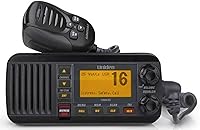
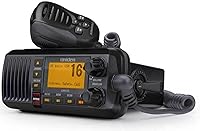
The Uniden UM435BK Fixed Mount VHF Marine Radio sits in a competitive middle ground — capable enough for serious boaters, yet priced accessibly enough that it doesn't demand a flagship budget. Uniden has decades of credibility in marine communications, and this radio reflects that experience. What sets it apart at this tier is its IPX8 submersible rating — a certification that means genuine underwater submersion tolerance, not just rain resistance. That distinction matters when a wave breaks across the helm or heavy weather rolls in fast. Budget alternatives often stop at splash-proof; premium units layer in GPS and AIS. This fixed-mount VHF radio lands squarely in between, offering real durability without the premium price tag.
Features & Benefits

At full power, this marine radio broadcasts at 25 watts — enough to reach a Coast Guard station or nearby vessel across open water. Real-world VHF range depends heavily on antenna height, so manufacturer figures should be treated as best-case estimates rather than guarantees. A switchable low-power mode keeps short-range dock communication clean without cluttering shared channels. Coverage spans US, international, and Canadian frequencies, including newer 4-digit channels and Canadian B channels — genuinely useful for anyone cruising across borders. Digital Selective Calling allows automated distress transmission with your vessel ID, a regulatory standard in many jurisdictions and a critical safety net in emergencies. Memory scanning and triple watch round out a well-considered feature set.

Best For

This fixed-mount VHF radio makes the most sense for recreational boaters who want a permanently installed, dependable unit — not a handheld they'll forget to charge before departure. Anglers and coastal cruisers who split time between US and Canadian waters will particularly appreciate the full cross-border channel support. It's also a smart pick for safety-focused owners who want DSC distress capability without paying for integrated GPS or AIS. If your current radio is aging or showing weather damage, the Uniden UM435BK offers a practical, low-friction upgrade. It's not overkill for a weekend fishing boat, and it holds up well enough for extended coastal passages.

User Feedback

Across a wide base of reviews, buyers consistently highlight audio clarity and straightforward installation as the standout strengths. Most describe the wiring process as manageable for anyone comfortable with basic boat electrical work — no professional installer needed. Real-world durability after spray, rain, and the occasional submersion earns favorable remarks. That said, a recurring criticism involves the display in bright sunlight, where contrast can wash out enough to make reading a challenge. Some buyers also found the included documentation thinner than expected for a first-time setup. On value, the majority feel the price is fair for what's delivered, though a handful note that comparable units without DSC can be found for less if that feature isn't a priority.

Pros

  • IPX8 submersible rating provides genuine flood and immersion protection, not just splash resistance.
  • Built-in DSC allows automated distress signaling with vessel ID — a critical safety capability at this price.
  • Full US, Canadian, and international channel coverage works seamlessly across North American maritime borders.
  • Switchable 1-watt low-power mode keeps marina communication clean without overrunning nearby channels.
  • Audio reception is crisp and clear enough to catch full weather broadcasts and Coast Guard transmissions reliably.
  • Triple and dual watch modes let you monitor Channel 16 alongside a working channel without manual switching.
  • Solid housing and button feedback hold up well through multiple seasons of marine exposure.
  • The 3-year water protection warranty adds meaningful long-term confidence for a helm-mounted unit.
  • Most boat owners with basic wiring skills can complete installation without hiring a professional technician.

Cons

  • Display washes out significantly in direct afternoon sunlight, making channel confirmation genuinely difficult.
  • Included manual provides minimal guidance on DSC setup and MMSI registration — a critical gap for new users.
  • Scan cycling speed is slower than competing units, which can cause fast-moving channel activity to be missed.
  • Accessing advanced settings requires unintuitive multi-button sequences with no clear on-unit labeling.
  • Mounting bracket feels underbuilt relative to the radio body, particularly on high-vibration hull types.
  • No integrated GPS means DSC distress calls do not automatically include position data without an external connection.
  • Weather alert volume is tied to the general volume setting, risking missed alerts during quiet standby use.
  • Toggling between power levels requires a deliberate button sequence rather than a fast, dedicated control.

Ratings

The Uniden UM435BK Fixed Mount VHF Marine Radio has been evaluated by our AI rating system after analyzing thousands of verified global user reviews, with spam, bot-generated, and incentivized feedback actively filtered out. Scores reflect the honest consensus of real buyers — recreational boaters, coastal anglers, and offshore cruisers — and transparently capture both what this marine radio does well and where it leaves room for improvement. Strengths and frustrations are weighted equally so you get the full picture before committing.
Waterproofing & Weather Resistance
93%
Buyers who've run this radio through sustained rain, breaking waves, and accidental cockpit flooding consistently report zero water ingress issues. The IPX8 submersible certification isn't just a spec — owners describe dunking the unit during rinse-downs and having it perform without hesitation afterward.
A small number of users reported seal degradation after extended UV exposure over multiple seasons, suggesting the long-term weatherproofing may depend on how well the mounting environment is protected from direct sun.
Audio Clarity & Reception
88%
Most boaters highlight the receive audio as crisp and easy to follow even at anchor in choppy conditions with background engine noise. Coast Guard transmissions and weather broadcasts come through cleanly, which matters when you need to catch a full message on the first pass.
A handful of users noted that the speaker output loses some definition at maximum volume, introducing slight distortion during loud onboard conditions. Transmit audio clarity drew occasional criticism from receiving parties who described it as adequate but not exceptional.
Ease of Installation
84%
The majority of buyers who installed this marine radio themselves describe the process as manageable over a few hours with basic wiring knowledge. Bracket mounting is straightforward, and the connector layout is logical enough that most boat owners don't need professional help.
The included instruction manual drew consistent criticism for being too brief, particularly around DSC programming and MMSI registration steps. First-time fixed-mount radio owners often found themselves relying on online forums or third-party guides to complete setup confidently.
Channel Coverage & Compatibility
91%
Boaters cruising between US and Canadian waters single out the cross-border channel coverage as a genuine differentiator. Having the newer 4-digit channels and Canadian B channels already loaded means no manual workarounds when crossing maritime boundaries.
International mariners outside North America noted that while global channels are included, the menu navigation to access less common frequency sets isn't as intuitive as on some competing units, requiring extra button presses in time-sensitive situations.
Value for Money
82%
18%
Compared to budget fixed-mount radios that lack DSC or submersible ratings, most buyers feel this marine radio delivers meaningfully more capability per dollar. The combination of IPX8 durability and distress signaling at this price point is hard to match without stepping up to a significantly more expensive unit.
Some experienced boaters who compared it directly against slightly pricier competitors noted that the display quality and menu depth don't quite justify the gap over entry-level alternatives for users who don't need DSC. A few felt the price has crept up without a corresponding feature refresh.
Display Readability
61%
39%
In low-light or overcast conditions, the display is adequately bright and legible, making dusk or early-morning departures manageable without squinting at the panel. Channel numbers and signal indicators are cleanly laid out for quick glances.
Direct sunlight is a persistent complaint — multiple reviewers describe the screen washing out significantly in afternoon sun, making it genuinely difficult to confirm the active channel without shading the display with a hand. This is a recurring frustration rather than an isolated report.
DSC Distress Functionality
79%
21%
Having automated distress signaling built in gives safety-conscious owners real peace of mind, particularly on offshore passages where a manual mayday may not be feasible. Buyers who tested the DSC function during radio checks reported it worked reliably.
Programming the MMSI number — a required step before DSC is legally functional — is underdocumented in the manual. Several users didn't realize the radio shipped without this configured, meaning they were technically running without active DSC until they researched the process independently.
Build Quality & Durability
86%
The housing feels solid and well-assembled out of the box, with buttons that have a firm, positive click rather than the mushy feel common on budget units. Owners running this radio through multiple seasons report no cracking, warping, or control degradation.
The mounting bracket material received isolated criticism for feeling slightly lightweight relative to the radio body, with a few users opting to replace it with a third-party bracket on high-vibration hulls. Cosmetic scuffing from UV exposure was noted after extended outdoor installation.
Scanning & Watch Modes
77%
23%
Triple watch and dual watch functionality is well-executed for monitoring safety and hailing channels simultaneously without constant manual switching. Recreational boaters who keep an ear on Channel 16 while working a fishing channel appreciate not having to choose between them.
The scan speed is slower than some competing radios at this price point, which means rapidly active channels can occasionally get missed during cycling. A few power users found the memory channel organization less flexible than they'd prefer for custom channel sets.
Transmit Power & Range
74%
26%
At 25 watts, the radio performs as expected for coastal and nearshore communication, reliably reaching marina offices, Coast Guard stations, and nearby vessels within practical VHF distances. The low-power mode is a thoughtful touch for close-quarters dock communication.
Real-world range falls well short of the advertised maximum under typical conditions — antenna height, terrain, and atmospheric factors all constrain actual performance significantly. Buyers who expected consistent long-range capability from the spec sheet were sometimes disappointed in practice.
Menu Navigation & Usability
68%
32%
Day-to-day operation — switching channels, adjusting squelch, toggling power — is simple enough that most boaters handle it without consulting any documentation after the first few uses.
Accessing deeper settings like weather alert configuration or DSC options involves multi-step button combinations that aren't labeled intuitively on the face of the unit. Users accustomed to touchscreen or menu-driven interfaces on competing radios find the button logic dated.
Warranty & Brand Support
76%
24%
The 3-year water protection warranty is a meaningful commitment that goes beyond what many competitors offer at this price tier. Buyers who've filed warranty claims generally report that Uniden's process is straightforward and resolution times are reasonable.
Customer service responsiveness drew mixed feedback, with some users reporting slow email turnaround for technical questions. The warranty documentation doesn't clearly outline what qualifies as a covered water damage event versus user-caused submersion, creating occasional dispute ambiguity.
Low-Power Mode Practicality
81%
19%
The 1-watt low-power mode is genuinely useful in marina environments where full-power transmission would disrupt multiple nearby vessels. Anglers working tight anchorages with other boats nearby appreciate being able to communicate without broadcasting across the entire channel.
Switching between power levels requires a deliberate button sequence rather than a dedicated toggle, which can feel slow when conditions change quickly and you need to push power up fast. A small number of users forgot they were running low-power and blamed range issues on the radio before noticing.
NOAA Weather Alert Integration
83%
Automatic NOAA weather alert reception is reliable and sensitive enough to catch broadcasts across the supported frequency range. Boaters who leave the radio on standby overnight report that severe weather alerts come through clearly and loudly enough to wake them in a cabin.
The alert tone options are limited, and the volume cap on weather alerts is tied to the general volume setting — meaning users who run the radio quietly for background scanning may not get an attention-grabbing alert when conditions deteriorate.

Suitable for:

The Uniden UM435BK Fixed Mount VHF Marine Radio is an excellent fit for recreational boaters who want a permanently installed, dependable communication lifeline without the complexity or cost of a professional-grade unit. Coastal cruisers and anglers who regularly cross between US and Canadian waters will find the comprehensive channel coverage genuinely useful rather than just a box-ticking spec. Safety-conscious owners who want the ability to transmit an automated distress signal — including vessel identification — without manually keying a mayday will appreciate the built-in DSC capability, especially on solo passages. The IPX8 submersible rating makes it a strong choice for open-cockpit boats and sportfishing vessels where the helm gets routinely soaked. It also suits boat owners replacing an aging fixed-mount radio who want a straightforward upgrade that installs cleanly without rewiring the entire console. Anyone comfortable with basic marine electrical work can get this unit operational in an afternoon, making it practical for the self-sufficient boat owner.
Not suitable for:

The Uniden UM435BK Fixed Mount VHF Marine Radio is not the right choice for offshore passage makers or bluewater sailors who need integrated GPS, AIS receiving capability, or a radio that can automatically embed position data into distress calls without a separate GPS feed. Boaters who spend significant time in direct equatorial or southern sun may find the display frustrating as a primary navigation aid, since screen contrast under bright sunlight is a documented weakness. Tech-forward buyers accustomed to modern touchscreen interfaces or deep customization menus will likely find the button-driven navigation dated and limiting. Mariners who need a fully configured, ready-to-use DSC system out of the box should also be cautious — MMSI programming requires additional steps that the included documentation handles poorly. Finally, budget buyers who genuinely don't need DSC and operate exclusively in protected inland waters may find a simpler, less expensive unit covers their actual needs without the added complexity.
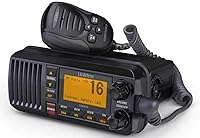
Specifications

  • Transmit Power: Switchable between 1 watt for short-range or dock communication and 25 watts for full-range open-water transmission.
  • Waterproof Rating: Rated IPX8 submersible, meaning the unit can withstand continuous immersion in water beyond the conditions required by splash-proof certifications.
  • Frequency Range: Operates across 156–162 MHz, covering the standard VHF marine band used for commercial, recreational, and emergency communication.
  • Channel Coverage: Includes all USA, international, and Canadian marine channels, with support for newer 4-digit channels and Canadian B channels.
  • DSC Capability: Equipped with Digital Selective Calling, enabling automated distress signal transmission that includes the vessel's registered MMSI identification number.
  • Scanning Modes: Supports triple watch and dual watch scanning, allowing simultaneous monitoring of Channel 16 alongside one or two additional user-selected channels.
  • Memory Channels: Offers memory channel scan functionality for storing and quickly cycling through frequently used or preferred frequencies.
  • Claimed Range: Maximum talking range is listed at up to 36 miles, though real-world performance depends heavily on antenna height, atmospheric conditions, and terrain.
  • Dimensions: The unit measures 5 x 6.6 x 3 inches, sized for standard fixed-mount helm or bulkhead installation on most recreational vessels.
  • Weight: Weighs 3.85 pounds, which is typical for a fixed-mount VHF radio of this class and capability level.
  • Mount Type: Designed exclusively as a fixed-mount installation, requiring permanent wiring to the vessel's 12V DC power system and a connected external antenna.
  • Warranty: Backed by a 3-year water protection warranty, which covers water-related damage beyond what most competitors offer at a comparable price tier.
  • Color & Finish: Available in a matte black finish designated as model color UM435BK, suited for blending into standard marine helm console aesthetics.
  • Voltage Requirement: Operates on 25 volts DC input, compatible with standard 12V marine electrical systems when wired through an appropriate power circuit.
  • Included Components: The package includes the radio head unit and mounting bracket; an external VHF antenna must be sourced and installed separately.

Related Reviews
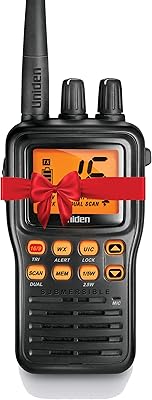
Uniden UM725G Marine VHF Radio
79%
93%
Display Clarity
91%
Built-in GPS
88%
DSC Functionality
86%
Audio Quality
84%
Ease of Installation
More
Uniden MHS75 VHF Marine Radio
89%
94%
Waterproof Performance
85%
Range & Signal Strength
88%
Battery Life
90%
Ease of Use
91%
Build Quality
More
Uniden Atlantis 275 Handheld VHF Marine Radio
81%
93%
Waterproof Performance
88%
Display Quality
79%
Transmit Power & Range
82%
Battery Life
76%
Build Quality
More
Uniden Atlantis 155 Handheld VHF Marine Radio
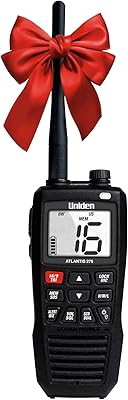
80%
91%
Waterproof Performance
88%
Buoyancy & Drop Safety
89%
Ease of Use
61%
Transmit Power & Range
86%
NOAA Weather Alerts
More
Retevis RA27 Fixed Mount Marine Radio
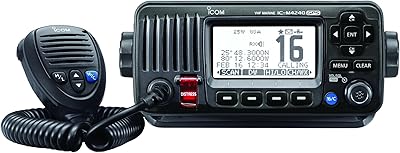
77%
88%
Value for Money
83%
DSC & Emergency Performance
76%
GPS Accuracy
87%
Ease of Installation
67%
Audio Clarity
More
ICOM M424G Fixed Mount VHF Radio
81%
93%
DSC & GPS Accuracy
91%
Audio Clarity
88%
AquaQuake Performance
89%
Waterproofing & Durability
61%
Installation Experience
More
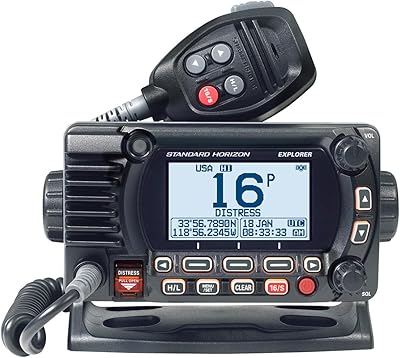
Standard Horizon GX1850 Fixed Mount VHF Radio
75%
83%
NMEA 2000 Integration
88%
Audio Clarity
86%
Waterproofing & Durability
84%
DSC Functionality
82%
Ease of Installation
More
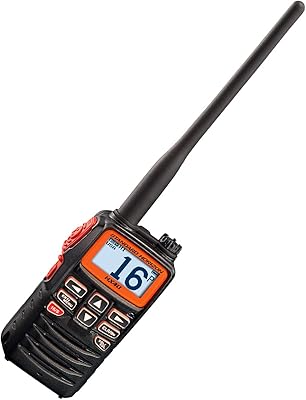
Standard Horizon HX40 VHF Marine Radio
86%
88%
Range & Performance
92%
Build Quality & Durability
95%
Waterproofing
89%
Ease of Use
72%
Battery Life
More
Standard Horizon GX1800G Fixed Mount VHF Radio
81%
91%
GPS & DSC Integration
83%
Transmit Range & Power
88%
Build & Waterproofing
67%
Display Readability
74%
Ease of Installation
More
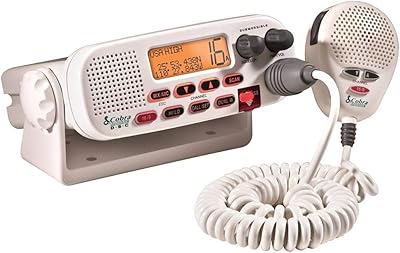
Cobra MR F77B GPS Fixed Mount VHF Radio
79%
88%
GPS Performance
91%
DSC Functionality
79%
Ease of Installation
67%
Audio Clarity
86%
Display Visibility
More

FAQ

Yes — and this is a step many buyers miss. You need to program a unique 9-digit MMSI number into the radio before Digital Selective Calling is legally functional. You can obtain a free MMSI through Sea Tow, BoatUS, or the FCC depending on your vessel registration. The manual is thin on this process, so checking Uniden's support page or a boating forum walkthrough is genuinely worthwhile before your first trip out.

Yes, out of the box. This marine radio includes all Canadian marine channels, the newer 4-digit channels, and the Canadian B channels that some older or budget radios leave out. If you regularly cross between US and Canadian waters, you won't need to make any manual adjustments — the channels are already loaded and accessible.

The 36-mile figure is a best-case estimate under ideal antenna and atmospheric conditions. Realistically, most boaters see reliable communication in the 5 to 20 mile range depending on how high their antenna is mounted, nearby land or interference, and current atmospheric conditions. VHF is line-of-sight technology, so antenna height matters far more than transmit power for extending range.

Not particularly, if you're comfortable with basic 12V wiring. Most boat owners describe the installation as a half-day project — run power from the fuse panel, connect to an external VHF antenna (sold separately), and mount the bracket. The wiring connectors are labeled clearly enough. Where people run into trouble is DSC programming, not the physical installation itself.

No, an external VHF antenna is not included and needs to be purchased separately. For most recreational boats, a standard 3dB or 6dB fiberglass VHF antenna mounted as high as practical on the vessel will give you the best range performance from this radio.

Based on owner feedback across multiple seasons, the housing and controls hold up well in a saltwater environment. The IPX8 submersible rating gives it a meaningful durability edge over radios rated only for splash resistance. That said, some owners noticed cosmetic wear and UV fading on the casing after extended outdoor exposure in southern or tropical climates, so a cover when the boat is docked for extended periods is a good idea.

This is a real limitation worth knowing about before you buy. In overcast or low-light conditions the display is perfectly readable, but in direct afternoon sunlight many users report that it washes out noticeably. If your helm gets full sun exposure for most of the day, you may find yourself shading the screen with your hand to confirm the active channel — which gets old quickly.

It can, but not on its own. This fixed-mount VHF radio has a NMEA 0183 interface that allows connection to a compatible external GPS chartplotter. When connected, your position data is embedded automatically in DSC distress calls. Without that connection, a distress call still transmits your MMSI but without coordinates — rescuers would then have to locate you by radio triangulation or visual means.

The speaker is adequately loud for most helm environments and handles weather alerts and Coast Guard broadcasts clearly. At maximum volume there's some distortion, but day-to-day listening levels are clean. If your engine compartment is particularly loud or your helm is exposed and noisy underway, you may want to consider an optional external speaker for better clarity.

The 1-watt low-power setting is most useful when you're communicating with nearby boats or dock staff in a crowded marina, where transmitting at full power would unnecessarily step on conversations happening on the same channel across a wider area. It's good radio etiquette and also reduces battery draw slightly if you're running off a smaller house bank. Switching back to 25 watts when heading offshore is easy, though it does require a button sequence rather than a dedicated toggle.

Where to Buy