Overview

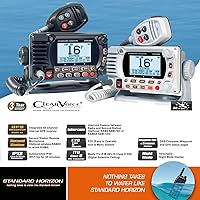
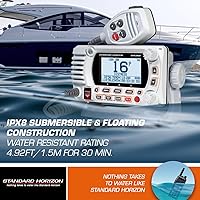
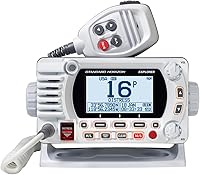
The Standard Horizon GX1800G Fixed Mount VHF Radio sits in a practical sweet spot for boaters who want more capability than a handheld can realistically deliver. Where portable units compromise on transmit power and battery life, this fixed-mount VHF runs at a full 25 watts off the boat's power system, giving you a noticeably stronger signal in open water. Standard Horizon has been building marine communications gear for decades, and that experience shows in the build quality here. The housing is genuinely waterproof, not just splash-resistant, which matters when you're running through chop or caught in unexpected rain.
Features & Benefits

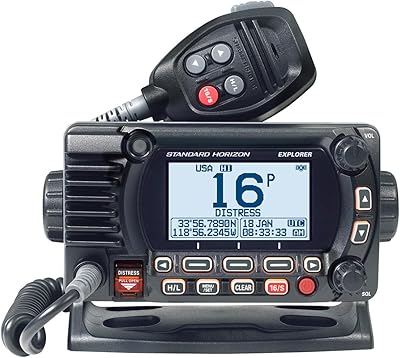
The most compelling aspect of the GX1800G is how the built-in GPS pairs with DSC Class D compliance. If you hit the distress button, the radio automatically broadcasts your exact coordinates — no fumbling to relay your position over voice. That's a real safety advantage, not a checkbox feature. Transmit power is selectable between 25W for open-water range and 1W for close-quarters harbor communication, which keeps unnecessary radio traffic down. The backlit display is clear enough at night, and channel scanning works without digging through menus. An optional RAM4 remote microphone extends usability to a second helm station, a practical addition on larger vessels.

Best For

This fixed-mount VHF is a particularly strong fit for recreational boaters who want a proper safety setup without overcomplicating the electronics. Anglers, day-cruisers, and weekend sailors relying on a handheld will immediately notice the difference in signal stability from a fixed installation with a quality antenna. It's also a solid choice for anyone adding their first permanent helm radio — the interface is approachable, and installation, while requiring some basic wiring, isn't intimidating. Boaters wanting GPS-based DSC capability without purchasing a separate chartplotter will find this marine radio covers that need efficiently. Coastal and near-offshore cruising is the sweet spot; deep bluewater passages are a different conversation.

User Feedback

With roughly 116 ratings and a strong average score, the feedback picture for the GX1800G is encouraging — though it's a modest sample, so individual experiences carry more weight than they might for a more widely reviewed product. Buyers consistently praise GPS lock speed, audio clarity, and how manageable the physical installation turned out once the wiring was planned. The recurring frustrations center on antenna expectations — this radio performs only as well as the antenna you pair it with, and a few buyers learned that the hard way. Direct sunlight readability has also come up occasionally. Notably, most complaints trace back to setup choices rather than any defect in the hardware itself.

Pros

  • Built-in GPS automatically transmits your coordinates during a DSC distress call — a genuine safety advantage on the water.
  • Full 25-watt output delivers noticeably stronger range than any handheld unit when paired with a proper antenna.
  • DSC Class D compliance meets the standard required for monitored distress signaling on marine channels.
  • Waterproof construction holds up in real marine conditions, including heavy spray and rain exposure.
  • Switchable 1W low-power mode is useful for close-range harbor communication without clogging the channel.
  • The GX1800G supports an optional RAM4 remote mic, making it practical for dual-helm or larger vessel setups.
  • Backlit LCD display is easy to read at night and in overcast conditions.
  • Standard Horizon has a long track record in marine electronics, and long-term owners report consistent durability.
  • Channel scanning is intuitive and doesn't require digging through submenus during busy moments on the water.
  • Covers GPS integration and DSC compliance in one unit, saving the cost of a separate positioning device.

Cons

  • Performance is heavily antenna-dependent — a cheap or poorly mounted antenna will significantly undercut the radio's range potential.
  • The 15 km range figure reflects ideal open-water conditions; real-world results vary considerably based on antenna height and obstructions.
  • Display readability in direct, bright sunlight has been a recurring complaint among some users.
  • Installation requires basic wiring competence; buyers with no electrical experience on boats may need professional help.
  • No AIS receive capability, which limits its usefulness for traffic awareness in busy shipping lanes.
  • The review pool is relatively small, making it harder to draw firm long-term reliability conclusions compared to more widely reviewed competitors.
  • No NMEA 2000 or advanced network integration, limiting compatibility with modern multi-function display setups.
  • The unit runs only on 13.8V DC, so it cannot be used as a portable or backup radio away from the boat's power system.

Ratings

Our AI-generated scores for the Standard Horizon GX1800G Fixed Mount VHF Radio were built by analyzing verified buyer feedback from global sources, with spam, bot-generated, and incentivized reviews actively filtered out before any scoring was applied. The result is a balanced, transparent picture that reflects both what real boaters love about this unit and the genuine frustrations a minority of users have encountered. No aspect has been softened or inflated — the scores reflect actual ownership experiences across a range of vessel types and use cases.
GPS & DSC Integration
91%
Buyers consistently single out the GPS-DSC pairing as the most meaningful safety feature on the unit. Knowing that a single distress button press will automatically broadcast your GPS coordinates — without needing to voice-report your position under stress — is something owners describe as genuinely reassuring on offshore or solo trips.
A small number of users noted that initial GPS lock can take longer in areas with obstructed sky view, such as marina berths surrounded by tall structures. The DSC function also requires pre-programming an MMSI number, which catches first-time buyers off guard if they weren't aware of the registration step beforehand.
Transmit Range & Power
83%
At 25 watts, this fixed-mount VHF delivers the kind of signal punch that handheld radios simply cannot match, and boaters running coastal routes report clear, reliable communication with the Coast Guard and other vessels across meaningful distances. The switchable 1-watt mode is a practical touch for close-quarters harbor work.
Real-world range falls noticeably short of the 15 km maximum when antenna quality or height is suboptimal, which has led to some disappointment among buyers who assumed rated range was a baseline rather than a ceiling. Performance is highly antenna-dependent, and the radio ships without one.
Build & Waterproofing
88%
The housing has held up well for long-term owners who operate in genuinely demanding saltwater environments, with no widespread reports of corrosion, button failure, or connector degradation after multiple seasons of use. The IPX7-equivalent waterproof rating gives real confidence during heavy rain or spray-over-the-bow situations.
A few users in consistently humid or tropical climates reported minor cosmetic weathering on the white housing over extended periods, though this appears to be aesthetic rather than functional. The overall durability picture is positive, but the sample size is modest enough that long-term failure patterns aren't yet fully established.
Display Readability
67%
33%
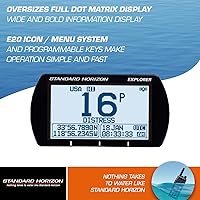
In night sailing or overcast-day conditions, the backlit LCD is genuinely easy to read, and most users running dawn or dusk fishing trips report no visibility issues at the helm. The display layout is clean and uncluttered, which helps when you need to glance at channel information quickly.
Direct sunlight performance is a recurring complaint — on open-cockpit powerboats and sailboats in bright conditions, the screen can wash out significantly. This is probably the most consistently mentioned hardware limitation in user feedback, and it's worth factoring in if your helm has no overhead shade.
Ease of Installation
74%
26%
Boaters with basic wiring experience typically describe the installation as manageable and well-documented, with the mounting bracket and connector layout being straightforward to work with. First-timers who planned their cable routing in advance report completing the install in a couple of hours without professional help.
Users without prior boat wiring experience have found the process more frustrating, particularly when routing power cables through bulkheads or dealing with older vessel wiring. The radio itself isn't complicated to wire, but the surrounding installation context on a boat adds complexity that the product has no control over.
Audio Clarity
86%
Received audio is described as crisp and clear by the majority of owners, including those operating in noisy engine environments where a muddy speaker would be a real problem. The built-in speaker projects well enough to be heard at a typical helm without straining.
A handful of users noted that transmitted audio quality can drop when using the radio at maximum range under marginal signal conditions, which is expected behavior but occasionally surprised newer VHF users. No widespread complaints about microphone sensitivity or distortion at normal operating distances.
Channel Scanning
82%
18%
The scanning function works reliably and doesn't require navigating deep into menus to activate, which matters when you're managing a boat underway and can't give the radio your full attention. Weather channel access is quick and straightforward for routine monitoring.
Some users accustomed to more feature-rich radios found the scanning customization options somewhat limited compared to higher-end units. It covers the core use cases well but lacks some of the finer scan-grouping controls that experienced mariners occasionally want.
Value for Money
79%
21%
For a mid-range fixed-mount VHF that bundles GPS, DSC Class D compliance, and a reputable brand name into one unit, most buyers feel the price reflects what they're getting. Avoiding a separate GPS purchase for DSC compliance alone makes a meaningful dent in the total outlay for a first-time fixed-radio installation.
The need to separately purchase a quality antenna adds real cost to the total setup, which some buyers feel should be communicated more clearly at the point of sale. Boaters who shop purely on unit price without factoring in antenna cost sometimes feel the overall expenditure ran higher than expected.
Interface & Usability
81%
19%
New VHF users generally find the button layout intuitive and appreciate that core functions like channel 16 access and power switching don't require consulting the manual. The learning curve is gentle enough that most owners feel comfortable operating the radio confidently within the first outing.
Navigating deeper menu functions — such as DSC call logs or GPS settings — can feel less intuitive for users who aren't accustomed to marine electronics menu structures. Nothing is broken, but a cleaner menu hierarchy would reduce the occasional head-scratching moment.
Antenna Compatibility
72%
28%
The GX1800G accepts standard PL-259 connector antennas, making it compatible with the wide range of aftermarket marine VHF antennas available from major brands. Upgrading to a higher-gain antenna is straightforward and delivers a clear performance improvement.
The radio ships with no antenna included, and several buyers — particularly those new to fixed-mount VHF radios — were caught off guard by this. The impact of antenna quality on real-world performance is significant enough that it arguably deserves more prominent guidance in the product documentation.
Remote Mic Support
77%
23%
The ability to add a Standard Horizon RAM4 remote microphone is a valued feature for owners of larger vessels with flybridge or dual-helm configurations, and users who have added the accessory report it works reliably and integrates cleanly with the base unit.
The remote mic is a separate purchase and is compatible only with Standard Horizon's own SSM-70H model, which limits flexibility for buyers who already own third-party remote microphone equipment. Availability of the accessory can also vary depending on your region or retailer.
Brand Reliability
89%
Standard Horizon's reputation in the marine communications space is well-established, and long-term owners across multiple product generations tend to express strong brand loyalty based on consistent hardware reliability over multiple boating seasons. Customer support experiences reported by GX1800G owners are generally described as responsive.
As a specialized marine electronics brand, Standard Horizon has a narrower retail and service footprint than general consumer electronics companies, which can make in-person support or hands-on warranty service harder to access depending on your location.

Suitable for:

The Standard Horizon GX1800G Fixed Mount VHF Radio is a strong match for recreational boaters who want a permanent, reliable communications setup with a genuine safety backbone. If you're a day-cruiser, weekend sailor, or avid angler who spends real time on coastal or near-offshore waters, the built-in GPS and DSC Class D distress function give you something a handheld simply can't match: the ability to broadcast your exact coordinates automatically in an emergency. It's also well-suited to first-time fixed-radio buyers — the interface is approachable, the brand is well-regarded in the marine world, and the installation, while requiring basic wiring knowledge, is manageable for a reasonably handy boat owner. Powerboaters and sailboat skippers who want GPS integration for DSC compliance without adding a standalone chartplotter will find this marine radio handles that need efficiently. Anyone upgrading from a portable unit will notice a meaningful improvement in transmit range and overall audio clarity.
Not suitable for:

The Standard Horizon GX1800G Fixed Mount VHF Radio is not the right tool for every boater, and it's worth being clear about where it falls short. Bluewater passage-makers or offshore voyagers who need advanced features like AIS display, NMEA 2000 network integration, or a larger color screen will find this unit too basic for their requirements. It also demands a permanent 13.8V DC power connection and a quality external antenna — buyers expecting plug-and-play simplicity or planning to use it without a proper antenna installation will be disappointed with the real-world range. The display, while functional, has drawn some criticism in direct sunlight conditions, which could be a concern for open-cockpit boats in bright climates. And if you need a truly portable solution that works across multiple vessels without any installation, a handheld VHF remains the more practical choice.
Specifications

  • Product Type: Fixed-mount marine VHF radio with integrated GPS receiver and DSC Class D capability.
  • Model Number: The unit is identified by model number GX1800GW, manufactured by Standard Horizon.
  • Transmit Power: Output power is selectable between 25 watts for open-water communication and 1 watt for short-range use.
  • Frequency Range: Operates across the standard marine VHF band from 156 MHz to 174 MHz.
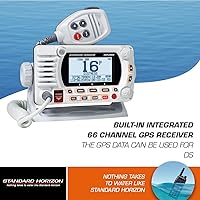
  • Channels: Covers 66 channels, including international, US, and Canadian marine VHF channel sets.
  • GPS Receiver: Built-in 66-channel GPS receiver provides continuous position tracking and feeds coordinates directly to the DSC distress function.
  • DSC Class: Complies with DSC Class D standards, enabling one-button emergency distress broadcasting with automatic GPS position data.
  • Waterproofing: Rated to an IPX7-equivalent waterproof standard, providing protection against temporary submersion and sustained water exposure.
  • Operating Voltage: Designed to run on 13.8V DC, which is the standard nominal voltage of a typical 12V marine electrical system.
  • Max Talking Range: Manufacturer-rated maximum talking range is approximately 15 km under optimal open-water conditions with a quality antenna.
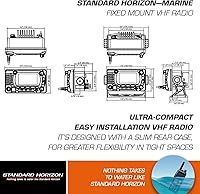
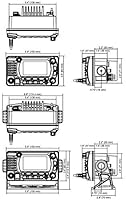
  • Dimensions: The unit measures 7.5 × 4 × 10 inches, sized for standard flush or bracket mounting at a helm station.
  • Weight: The radio weighs 3.43 pounds, which is typical for a fixed-mount unit in this class.
  • Display: Features a backlit LCD display designed for visibility in low-light and nighttime conditions.
  • Remote Mic Support: Compatible with the Standard Horizon RAM4 remote microphone (model SSM-70H) for secondary helm or remote station operation.
  • Color: Available in white, which is the standard finish for the GX1800GW variant.
  • Brand: Manufactured by Standard Horizon, a brand with decades of dedicated experience in marine communications equipment.

Related Reviews
Standard Horizon GX1850 Fixed Mount VHF Radio
75%
83%
NMEA 2000 Integration
88%
Audio Clarity
86%
Waterproofing & Durability
84%
DSC Functionality
82%
Ease of Installation
More
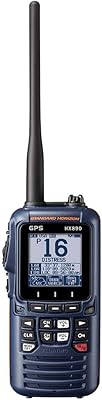
Standard Horizon HX890NB VHF/GPS Radio
86%
91%
Performance in Marine Environments
93%
Build Quality and Durability
82%
Ease of Use
88%
Battery Life
94%
Waterproofing and Submersion
More
Standard Horizon HX40 VHF Marine Radio
86%
88%
Range & Performance
92%
Build Quality & Durability
95%
Waterproofing
89%
Ease of Use
72%
Battery Life
More
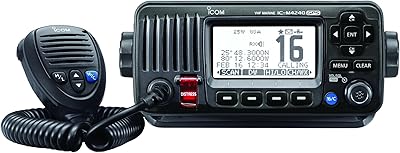
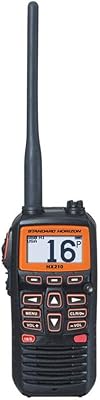
ICOM M424G Fixed Mount VHF Radio
81%
93%
DSC & GPS Accuracy
91%
Audio Clarity
88%
AquaQuake Performance
89%
Waterproofing & Durability
61%
Installation Experience
More
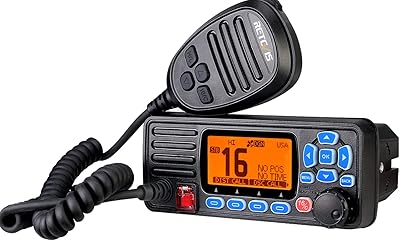
Standard Horizon HX210 Handheld Marine VHF Radio
85%
93%
Waterproof Protection
86%
Build Quality
88%
Battery Life
79%
Charging System
71%
Transmit Range
More
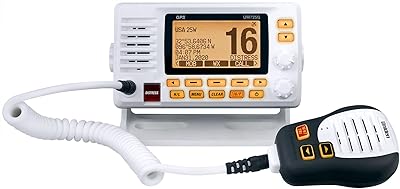
Retevis RA27 Fixed Mount Marine Radio
77%
88%
Value for Money
83%
DSC & Emergency Performance
76%
GPS Accuracy
87%
Ease of Installation
67%
Audio Clarity
More
Uniden MHS75 VHF Marine Radio
89%
94%
Waterproof Performance
85%
Range & Signal Strength
88%
Battery Life
90%
Ease of Use
91%
Build Quality
More
Uniden UM725G Marine VHF Radio
79%
93%
Display Clarity
91%
Built-in GPS
88%
DSC Functionality
86%
Audio Quality
84%
Ease of Installation
More
Uniden UM435BK Fixed Mount VHF Marine Radio
80%
93%
Waterproofing & Weather Resistance
88%
Audio Clarity & Reception
84%
Ease of Installation
91%
Channel Coverage & Compatibility
82%
Value for Money
More
Uniden Atlantis 275 Handheld VHF Marine Radio
81%
93%
Waterproof Performance
88%
Display Quality
79%
Transmit Power & Range
82%
Battery Life
76%
Build Quality
More

FAQ

The GPS receiver is fully built into the unit — no external GPS antenna is required. It locks onto satellite signals using an internal antenna, so you can get position-aware DSC distress calls without adding any extra hardware.

The GX1800G does not include a VHF antenna, so you will need to purchase one separately. Antenna choice has a dramatic impact on real-world range — a quality, properly mounted 6 dB gain antenna mounted as high as possible on the vessel will give you considerably better performance than a basic unit mounted low. Do not underestimate this part of the installation.

Absolutely — this marine radio works on any body of water, fresh or salt. The waterproof housing and VHF marine channels are just as relevant for lake and river boating as for coastal use.

Most reasonably handy boat owners find the installation manageable. You'll need to run a power lead to a 12V DC source with an inline fuse, mount the unit, and connect an antenna cable. The trickiest part for most people is cable routing rather than the electrical connections themselves. If you're uncomfortable working with your boat's wiring, a marine electronics installer can do it quickly.

Yes, to use the DSC distress function properly, you need to program a Maritime Mobile Service Identity (MMSI) number into the radio. You get this number for free by registering with Sea Tow, BoatUS, or the FCC depending on your vessel type. Without an MMSI programmed in, the distress call won't include your vessel identification, which limits how useful it is to rescue services.

No, this unit does not support NMEA 2000 connectivity. It operates as a standalone device and does not integrate into a vessel's onboard electronics network. If NMEA 2000 integration is important to your setup, you would need to look at a higher-tier model.

This is a known limitation. The backlit LCD performs well at night and in overcast conditions, but in direct, harsh sunlight it can be harder to read clearly. A mounting position that offers some shade from a helm console or bimini helps noticeably. It's not a dealbreaker, but it's worth considering where you plan to mount it.

Yes, the GX1800G supports the Standard Horizon RAM4 remote microphone, model SSM-70H. This allows you to operate the radio from a secondary location, which is a practical feature on larger vessels with flybridge or dual-station setups.

The unit is built to an IPX7-equivalent waterproof standard, meaning it can handle temporary submersion and heavy spray without damage. It's designed for the marine environment, so routine splashing, rain, and the occasional wave wash over the helm are not concerns under normal conditions.

For recreational coastal and near-offshore use, 25 watts is the standard output for fixed-mount VHF radios and is sufficient. VHF marine communication is line-of-sight by nature, meaning transmit power matters less than antenna height and placement. Going beyond 25 watts doesn't legally provide meaningful benefit on the marine VHF band in most jurisdictions.