Overview

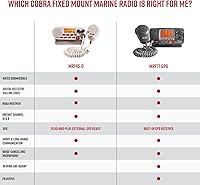
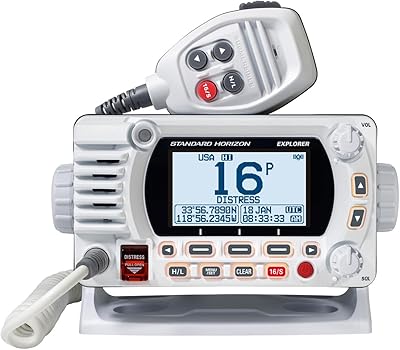
The Cobra MR F77B GPS Fixed Mount VHF Radio sits at a compelling spot in the fixed-mount market — feature-rich enough to satisfy serious boaters, yet accessible for recreational weekend use. What sets it apart from bare-bones competitors is the built-in GPS receiver, which lets the radio transmit your precise coordinates during a DSC distress call without requiring an external GPS feed wired to the NMEA port. It also switches between 1W and 25W output, giving you flexibility for short-range marina chatter or full-power open-water communication. The submersible housing is a baseline expectation at this tier, but it remains a welcome confirmation for anyone heading into rough water.
Features & Benefits

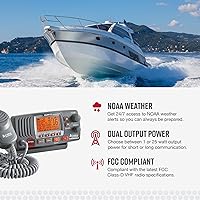
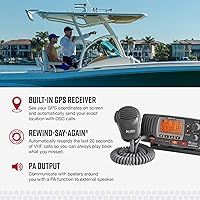
The Rewind-Say-Again function automatically captures the last 20 seconds of incoming audio — genuinely useful when a wave or engine surge distracts you mid-transmission and you need to replay what the harbormaster just said. Tri-Watch keeps Channel 16 monitored while scanning two additional channels, so you stay on the emergency frequency without babysitting the dial. The noise-cancelling microphone handles most wind and engine interference adequately, though it is not flawless in fully exposed conditions. NOAA Weather Alert interrupts active channels when a warning is issued, which matters more than people expect until they actually need it. Backlit keys and an illuminated display make the unit usable during early-morning or night passages.

Best For

This fixed-mount VHF radio is a natural upgrade for anyone stepping up from a handheld unit to a permanent helm installation. Anglers and day-cruisers get particularly strong value from the GPS-integrated DSC, which eliminates the cost and complexity of running a separate chartplotter feed just to send a distress signal with coordinates attached. Coastal and near-offshore sailors will appreciate the automatic weather alerting, and boaters on busy waterways benefit from the PA speaker output for clear dockside communication. The compact footprint suits smaller center consoles too. Just note that installation requires a 12V DC supply and a separate antenna — this is not a plug-and-play, self-contained device.

User Feedback

Buyers consistently highlight straightforward installation and strong LCD readability in bright sunlight as the top positives. GPS acquisition is widely described as quick, and DSC functionality holds up in real use without dropped coordinates. On the flip side, some users find the microphone audio thinner than what they get from pricier alternatives like the Standard Horizon GX1800G, and a handful note the mounting bracket feels less solid than expected. Long-term saltwater durability draws mixed opinions — most owners report no issues, but a few mention connector corrosion after extended exposure. The included NMEA cable is appreciated, though first-time installers occasionally find the full wiring setup more involved than anticipated.

Pros

  • Built-in GPS means DSC distress calls transmit your coordinates immediately, with no external GPS source required.
  • Rewind-Say-Again replay is a practical safety net on noisy or high-traffic waterways.
  • Both flush and surface mount hardware included, reducing extra parts orders before installation.
  • NMEA input cable ships in the box, simplifying integration for those with an existing GPS source.
  • NOAA Weather Alert interrupts active channels automatically — useful long before conditions deteriorate visibly.
  • Tri-Watch keeps Channel 16 monitored continuously without requiring manual channel toggling.
  • LCD display reads clearly in direct sunlight, which matters more than most buyers expect at sea.
  • Compact footprint fits smaller helm consoles without dominating the dashboard layout.
  • Switchable 1W and 25W output lets you tailor transmission power to the actual distance required.
  • The Cobra MR F77B earns consistent long-term reliability marks from owners across multiple boating seasons.

Cons

  • Mounting bracket feels underbuilt and has a documented history of flex or cracking under regular use.
  • Microphone audio thins out noticeably in sustained wind or at higher speeds with the cockpit exposed.
  • Menu navigation for secondary features like DSC configuration is not intuitive and requires frequent manual reference.
  • Connector and port areas show early corrosion on saltwater vessels unless proactively maintained after every outing.
  • GPS functionality is distress-only — buyers expecting any navigational display will be immediately disappointed.
  • Scan dwell time per channel is slower than competing units, risking partial missed transmissions on busy waterways.
  • Speaker volume is insufficient for open-cockpit use at speed, particularly compared to rivals at a similar price.
  • No antenna included, which first-time buyers occasionally overlook until the installation is already underway.
  • MMSI programming and full DSC activation require steps that less experienced users find poorly guided by onscreen prompts.
  • Interface polish lags behind Standard Horizon alternatives, which matters to buyers who prefer intuitive menu-driven controls.

Ratings

The Cobra MR F77B GPS Fixed Mount VHF Radio earned its scores through AI-driven analysis of verified global buyer reviews, with spam, incentivized, and bot-generated feedback actively filtered out before scoring. Across hundreds of real-world assessments — from coastal anglers to offshore cruisers — both the genuine strengths and the recurring frustrations are reflected without bias. The result is an honest, granular picture of where this marine radio delivers and where it asks for compromise.
GPS Performance
88%
Buyers consistently report fast satellite acquisition after power-on, even in overcast conditions. The key practical benefit is that a DSC distress call transmits your actual coordinates immediately, without needing to wire in a separate chartplotter or external GPS puck — a real advantage for smaller vessels with simpler electronics.
A small number of users note that GPS lock can take longer in enclosed helm stations with limited sky view. It also does not display a navigational chartplotter interface, so buyers expecting chart-based features will be disappointed — this is a radio GPS, not a navigation tool.
DSC Functionality
91%
DSC works as expected right out of the box, and most buyers who tested it during coast guard drills or buddy checks report reliable distress signal transmission with accurate coordinates attached. For a safety feature, that consistency earns genuine trust from the boating community.
First-time VHF users occasionally find the DSC setup process — assigning an MMSI number, for example — less intuitive than it could be. The manual provides guidance, but a few buyers felt the onscreen prompts could be clearer for non-technical users.
Ease of Installation
79%
21%
Many owners describe the physical mounting as straightforward, appreciating that both flush and surface mount hardware is included in the box. The NMEA input cable is a welcome inclusion that saves an extra parts order for those who want GPS integration without a standalone puck.
This is not a plug-and-play install. It requires a 12V DC connection, a separately purchased antenna, and MMSI programming before DSC is active. Buyers without prior marine electronics experience report spending significantly more time on setup than anticipated, especially when routing cables through a helm console.
Audio Clarity
67%
33%
The noise-cancelling microphone performs adequately in calm conditions and at moderate speeds, reducing enough background rumble that marina staff and other boaters can hear transmissions clearly. The PA speaker output is genuinely useful for hailing crew on deck without shouting over engine noise.
At higher speeds or in heavy weather, the microphone struggles against sustained wind, and some users report that received audio from the speaker sounds thinner compared to Standard Horizon units at a similar price point. A few buyers specifically wished the speaker output was louder for open-cockpit use.
Display Visibility
86%
The illuminated LCD draws consistent praise for daytime legibility, with several reviewers noting they could read channel numbers and signal strength clearly in direct afternoon sun without squinting or shading the screen. Backlit function keys make operation manageable in low-light conditions at dusk or on early-morning departures.
The display is functional but not large, and users with older eyes or those wearing polarized sunglasses occasionally find reading finer menu text requires closer attention. Night-mode brightness adjustment is limited, which can be mildly irritating during night watches when any excess light matters.
Build Quality & Durability
73%
27%
The submersible rating holds up for most buyers operating in splash-heavy coastal environments, and the overall housing feels solid enough for everyday helm use. Several long-term owners report the unit surviving multiple seasons without seal degradation or button failure.
The mounting bracket draws repeated criticism for feeling underbuilt relative to the radio itself — a few users report flex or loosening after heavy use in choppy conditions. Some buyers in high-salinity environments have also noted early corrosion around connector points, suggesting the sealing around ports could be more robust.
NOAA Weather Alerts
84%
Automatic weather alerting interrupts active channels when a NOAA bulletin is issued, which owners in hurricane-prone coastal regions and Great Lakes boaters alike describe as genuinely valuable rather than a checkbox feature. Channel scanning picks up alerts reliably without requiring manual monitoring.
The alert tone is not adjustable in volume independently from the main speaker, which some users find either too loud in quiet anchorages or too easy to miss in noisy running conditions. There is no visual-only alert mode for situations where audio needs to be minimized.
Rewind-Say-Again Feature
81%
19%
The 20-second replay function earns real appreciation from users who boat in high-traffic or noisy channels. Missing a bridge tender call or a harbormaster instruction is a practical problem, and being able to replay the last transmission without asking for a repeat is a small but meaningful operational convenience.
The 20-second buffer is adequate for most short transmissions but can cut off the beginning of longer messages, leaving partial context. A handful of buyers also note the feature is not immediately obvious during first use and requires consulting the manual to activate reliably.
Tri-Watch Channel Scanning
77%
23%
Scanning Channel 16 simultaneously with two other channels means you stay connected to the emergency frequency without manually toggling back — particularly useful on busy commercial waterways where working channels and safety monitoring need to run in parallel.
Some users find the scan dwell time per channel slightly slow, meaning a brief transmission on a secondary channel can be partially missed before the radio cycles back. It functions correctly but is not as responsive as the scanning on some competing units from Standard Horizon.
Value for Money
74%
26%
Compared to entry-level fixed-mount VHF radios without GPS or DSC, this marine radio packs a meaningful set of safety-relevant features at a mid-to-premium price. For buyers who would otherwise need to add a separate GPS source to activate DSC, the integrated receiver represents a real cost saving.
Buyers who compare it directly against the Standard Horizon GX1800G at a similar or slightly higher price point sometimes feel the Cobra offers less polished audio and a less refined interface for the money. It is not a poor value, but it is not an obvious category winner on price-to-performance alone.
Range & Signal Strength
72%
28%
At 25 watts with a quality external antenna installed correctly, the radio reaches typical VHF line-of-sight distances that most coastal boaters need. The signal strength meter on the display helps users assess reception quality at a glance without guessing.
Advertised 10-mile range is theoretical and antenna-dependent — real-world performance varies substantially based on antenna height, terrain, and atmospheric conditions. Buyers who expected consistent 10-mile coverage regardless of setup have occasionally expressed disappointment, which reflects a gap in expectation management rather than a hardware defect.
Menu & Interface Usability
69%
31%
Basic operations — changing channels, adjusting squelch, triggering weather scan — are accessible quickly once the layout is familiar. Illuminated keys reduce fumbling during overnight passages, and channel 16 priority access is always within easy reach.
The menu hierarchy for accessing secondary features like DSC setup, scan configuration, and display settings is not immediately intuitive, and multiple buyers mention referring back to the manual more often than expected. The interface lacks the polish of some competitors, particularly for users coming from a modern electronics background.
Included Accessories
78%
22%
Including both flush and surface mount kits means buyers are not immediately forced to order additional hardware before getting started. The NMEA input cable is a thoughtful inclusion that simplifies GPS integration for those who do have an external GPS source they want to connect.
No antenna is included, which is expected at this product tier but still catches some first-time buyers off guard at purchase. The microphone hanger bracket has been described by several users as flimsy, and a couple of buyers reported it cracking within the first season of regular use.
Weather Resistance
82%
18%
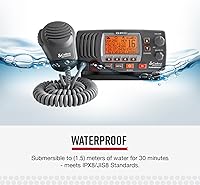
The submersible rating gives genuine confidence for use in open cockpits, on center consoles, and in conditions where spray and rain are regular occurrences. Most long-term owners report no water ingress issues under normal boating use across multiple seasons.
As noted by a subset of saltwater users, connector and port areas can show corrosion earlier than expected without regular freshwater rinsing and protective spraying. The waterproofing covers the unit itself well, but the overall system durability depends heavily on how well the owner maintains the wiring connections.

Suitable for:

The Cobra MR F77B GPS Fixed Mount VHF Radio is best suited for recreational and coastal boaters who want a permanent helm installation that covers genuine safety bases without requiring a complex multi-device electronics setup. If you are stepping up from a handheld VHF and want DSC distress calling with real GPS coordinates transmitted automatically, this radio handles that without forcing you to buy and wire in a separate GPS puck — a meaningful practical advantage on smaller vessels or simpler consoles. Anglers and day-cruisers working busy coastal waterways will find the Tri-Watch scanning and NOAA Weather Alert genuinely useful rather than theoretical features. The PA speaker output suits anyone who regularly needs to communicate across a dock or hail crew on deck over engine noise. Sailors making coastal passages will appreciate having automatic weather alerts interrupt the radio rather than having to monitor forecasts manually. For boaters who want reliable, safety-credentialed fixed-mount VHF without paying for a full chartplotter-integrated system, this marine radio occupies a practical and honest middle ground.
Not suitable for:

Buyers expecting a true plug-and-play experience should look carefully before purchasing the Cobra MR F77B GPS Fixed Mount VHF Radio, because installation requires a 12V DC wired connection, a separately purchased and mounted antenna, and MMSI number programming before DSC is fully functional — none of which are difficult, but all of which require time, tools, and some baseline familiarity with marine wiring. Offshore bluewater sailors or commercial operators who demand the most refined audio performance or the most intuitive interface may find the Standard Horizon GX1800G a more polished fit at a comparable price. Users who spend significant time in fully exposed, high-speed conditions may also find the noise-cancelling microphone less effective than hoped, particularly in sustained heavy weather. Anyone primarily focused on chartplotting or navigation data should understand clearly that the built-in GPS serves DSC distress functions only — it does not display charts or feed navigational instruments. Saltwater boaters who are not diligent about rinsing and maintaining connectors may encounter corrosion at the port level sooner than expected. Finally, buyers on a strict budget looking for basic channel communication without safety features would be overpaying for capabilities they will never use.

Specifications

  • Output Power: Switchable between 1 watt for short-range communication and 25 watts for maximum coverage on open water.
  • Frequency Range: Covers 156.025 MHz to 163.275 MHz, spanning all standard US, Canadian, and international marine VHF channels.
  • GPS Receiver: Built-in GPS receiver acquires position data independently, without requiring a wired external NMEA GPS source.
  • DSC Capability: Full Digital Selective Calling (DSC) support allows automated distress signal transmission including GPS coordinates to the coast guard.
  • Weather Monitoring: Receives all NOAA weather channels and triggers automatic Weather Alert when an active bulletin is broadcast.
  • Channel Scanning: Tri-Watch function scans Channel 16 simultaneously with two additional user-selected channels for continuous safety monitoring.
  • Audio Replay: Rewind-Say-Again feature automatically records and stores the last 20 seconds of any incoming transmission for instant playback.
  • Microphone: Integrated noise-cancelling microphone reduces background interference from wind and engine noise during transmission.
  • PA Output: Built-in Public Address speaker output allows voice projection to crew or nearby vessels through an external speaker connection.
  • Display: Illuminated LCD display with 480 x 272 resolution shows channel data, signal strength, and menu navigation clearly.
  • Water Resistance: Submersible and waterproof construction meets marine standards for use in splash, rain, and brief immersion conditions.
  • Dimensions: Physical unit measures 7.13 x 2.25 x 6.25 inches, offering a compact footprint suited to smaller helm console installations.
  • Weight: Complete unit weighs 2.8 pounds, lightweight enough for straightforward single-person mounting during installation.
  • Power Input: Operates on 12V DC vessel power, requiring a direct wired connection to the boat's electrical system.
  • Signal Strength Meter: Onscreen signal strength indicator displays incoming reception quality in real time directly on the LCD.
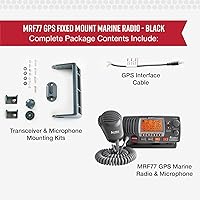
  • Included Accessories: Package includes both a flush mount and a surface mount kit, plus one NMEA input cable for external GPS integration.
  • Channel Coverage: Supports full channel operation for US domestic, Canadian, and international maritime VHF frequency allocations.
  • Illuminated Controls: All function keys are backlit for reliable operation during low-light conditions including dusk, dawn, and overnight passages.

Related Reviews
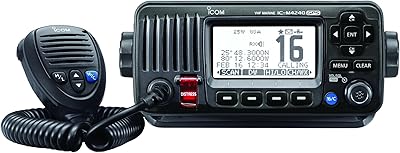
ICOM M424G Fixed Mount VHF Radio
81%
93%
DSC & GPS Accuracy
91%
Audio Clarity
88%
AquaQuake Performance
89%
Waterproofing & Durability
61%
Installation Experience
More
Cobra MR F45-D Fixed Mount VHF Radio
84%
88%
Audio Clarity
91%
Ease of Installation
93%
Weather Alert Performance
79%
DSC Functionality
74%
Build Quality
More
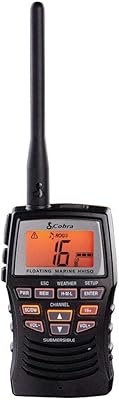
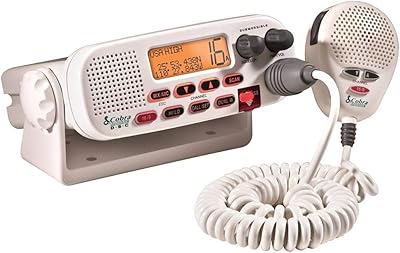
Cobra MR HH150 FLT VHF Marine Radio
85%
87%
Performance
92%
Build Quality
79%
Battery Life
88%
Ease of Use
91%
Waterproofing & Durability
More
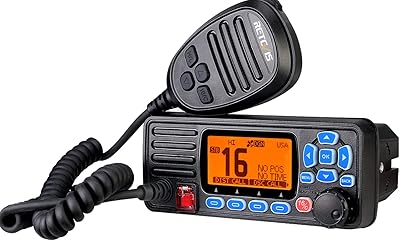
Retevis RA27 Fixed Mount Marine Radio
77%
88%
Value for Money
83%
DSC & Emergency Performance
76%
GPS Accuracy
87%
Ease of Installation
67%
Audio Clarity
More
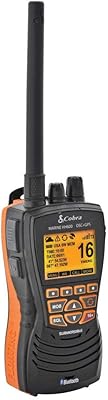
Cobra MR HH600FLTBTGPS Handheld Floating VHF Marine Radio
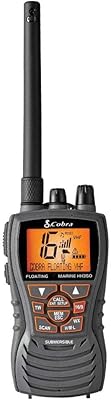
85%
93%
Waterproof & Durability
88%
Ease of Use
83%
Battery Life
91%
Bluetooth Connectivity
87%
GPS Accuracy & Safety Features
More
Cobra MR HH350 FLT Floating Marine Radio
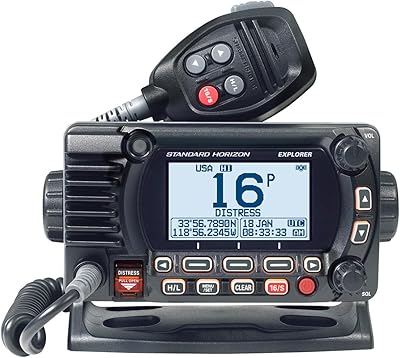
82%
93%
Water Resistance & Floatability
88%
Audio Clarity & Microphone Performance
79%
Range & Signal Performance
61%
Battery Life
82%
Ease of Use & Interface
More
Standard Horizon HX890NB VHF/GPS Radio
86%
91%
Performance in Marine Environments
93%
Build Quality and Durability
82%
Ease of Use
88%
Battery Life
94%
Waterproofing and Submersion
More
Standard Horizon GX1850 Fixed Mount VHF Radio
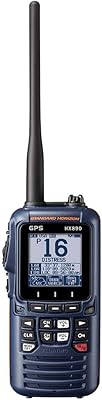
75%
83%
NMEA 2000 Integration
88%
Audio Clarity
86%
Waterproofing & Durability
84%
DSC Functionality
82%
Ease of Installation
More
Standard Horizon GX1800G Fixed Mount VHF Radio
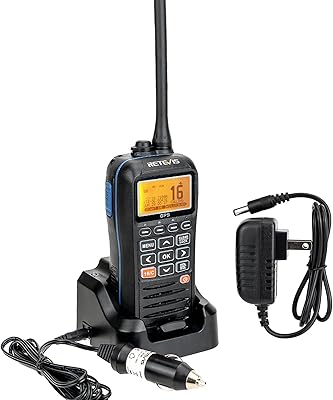
81%
91%
GPS & DSC Integration
83%
Transmit Range & Power
88%
Build & Waterproofing
67%
Display Readability
74%
Ease of Installation
More
Uniden UM435BK Fixed Mount VHF Marine Radio
80%
93%
Waterproofing & Weather Resistance
88%
Audio Clarity & Reception
84%
Ease of Installation
91%
Channel Coverage & Compatibility
82%
Value for Money
More

FAQ

No, and that is one of the genuine practical advantages of this radio. The built-in GPS receiver acquires your position independently, so when you trigger a DSC distress call, your coordinates are transmitted automatically without any external GPS device wired to the NMEA port. That said, the NMEA input cable is included if you do want to connect an existing chartplotter as a GPS source instead.

You will need a 12V DC power connection from your vessel's electrical system, a separately purchased VHF antenna with appropriate coax cable, and an MMSI number registered to your vessel before DSC is fully active. Both flush and surface mount hardware are included, but the antenna is not — plan for that additional purchase before your install day.

An MMSI number is a unique vessel identifier required to use the DSC emergency calling feature legally. You can register for one free of charge through BoatUS, Sea Tow, or the FCC depending on whether you boat domestically or internationally. Without a registered MMSI programmed into the radio, the DSC function will not transmit a properly identifiable distress signal.

It carries a submersible waterproof rating, which means it handles spray, rain, and incidental immersion as expected for a helm-mounted marine radio. That said, owners in saltwater environments should rinse connector areas with fresh water periodically and apply a protective spray to exposed ports, since some users have reported early corrosion around wiring connections without regular maintenance.

It supports full channel operation across US domestic, Canadian, and international VHF maritime frequency allocations, so it functions correctly whether you are cruising domestic coastal waters, crossing into Canadian territory, or operating offshore on a passage.

VHF radio range is fundamentally line-of-sight, which means your real-world range depends heavily on your antenna height, the height of the antenna on the vessel you are communicating with, and atmospheric conditions. Ten miles is achievable with a well-positioned quality antenna in good conditions, but do not plan your safety strategy around hitting that number consistently — practical ranges of five to seven miles are more typical for recreational-sized vessels.

Tri-Watch keeps Channel 16 — the international distress and calling frequency — continuously monitored in the background while you are actively using two other channels. In practice, it means you can be listening to a marina working channel or chatting on another frequency and still hear any emergency traffic or coast guard announcements on 16 without manually switching back.

The radio passively records the last 20 seconds of any incoming audio at all times. If a wave hits, the engine surges, or you just get distracted, you can instantly replay whatever just came through without asking the other party to repeat themselves. It is particularly useful in busy harbor approaches or when working with bridge tenders on tight timing.

Both are solid mid-tier fixed-mount VHF radios with DSC and GPS, but the Standard Horizon GX1800G is generally considered to have more refined audio quality and a slightly more intuitive menu structure. The Cobra holds its own on GPS integration speed and feature count, but buyers who prioritize polished audio or prefer a smoother onscreen interface may lean toward the Standard Horizon after hands-on comparison.

Yes, the PA speaker output allows you to connect a compatible external speaker for amplified audio projection. This is useful for hailing crew on deck, communicating across a dock, or simply getting clearer audio in a noisy cockpit where the built-in speaker volume may not carry well enough on its own.

Where to Buy