Overview

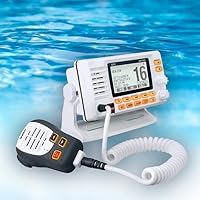
The Uniden UM725G Marine VHF Radio sits in the mid-range fixed-mount category, offering a feature set that most budget radios simply can't match without crossing into commercial territory. What separates it from comparably priced alternatives is the built-in GPS receiver, which many competitors at this price tier omit entirely. The IPX8 waterproof rating means it can handle a full submersion, not just splash exposure — and that's the baseline you should expect from anything mounted on a working boat. It won't replace your chartplotter or serve as a navigation hub, but as a dedicated VHF radio, it covers far more ground than the bare-bones units it competes against.
Features & Benefits

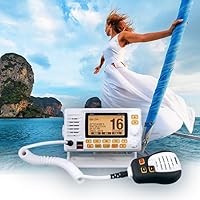
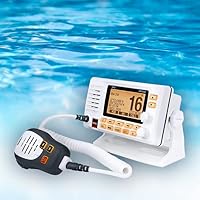
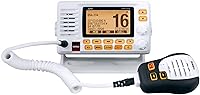
The dual transmit power — switchable between 1 watt and 25 watts — is more practical than it first appears. In a crowded marina, 1W keeps your signal tight and local; out in open water, 25W gives you the reach needed to hail the Coast Guard or a distant vessel. The LCD is genuinely the largest in its class, and reading channel data or status info in direct afternoon sunlight is noticeably easier than on competing units. The boat-to-boat texting is a rare feature at this price point, letting crews coordinate without broadcasting to every boat in earshot. NOAA weather alerts run passively in the background, exactly as they should.

Best For

This fixed-mount VHF radio suits recreational boaters who want real safety capabilities without the cost or complexity of commercial-grade equipment. If you fish regularly or run day cruises, the large readable display earns its keep quickly — squinting at a cramped screen in afternoon glare gets old fast. It's a natural choice for anyone cruising US and Canadian coastal waters, since channel coverage is comprehensive and requires no manual configuration. Families and multi-crew boats will find the private text messaging genuinely useful for keeping coordination off the open airwaves. For anyone upgrading from an older basic radio, the functional jump here is substantial.

User Feedback

Buyers are broadly satisfied with the UM725G, and the strong ratings reflect real approval rather than an absence of criticism. Display clarity and installation ease come up repeatedly in positive reviews, with several owners noting the audio quality as a noticeable step up from their previous radio. Complaints exist but tend to be narrow: the owner's manual draws the most consistent frustration, especially around text messaging setup and antenna pairing details. A number of buyers compared it favorably to older Uniden models and similarly priced Standard Horizon units, with GPS integration often cited as the tipping point. Critically, hardware failures are rare in the feedback pool — most issues stem from documentation, not the device itself.

Pros

  • Built-in GPS automatically transmits your position during a DSC distress call, a genuine safety feature most competitors skip at this price tier.
  • The LCD is the largest in its class, making channel and status readout noticeably easier in harsh sunlight.
  • Switchable 1W and 25W transmit power gives you practical flexibility between confined marina use and open-water communication.
  • IPX8 waterproof rating means the radio can handle full submersion, not just the occasional splash.
  • Boat-to-boat text messaging is a rare and genuinely useful feature for multi-vessel groups wanting private coordination.
  • Full US, Canadian, and International channel coverage requires zero manual configuration for coastal and offshore cruising.
  • NOAA weather alerts run passively in the background, flagging storm warnings without requiring you to actively monitor a weather channel.
  • The UM725G includes a speaker microphone and full mounting hardware, so installation does not require sourcing extra accessories.
  • Buyers consistently praise audio clarity and call quality as a noticeable improvement over entry-level fixed-mount radios.
  • Installation feedback from real owners suggests a straightforward process even for boaters without advanced electrical experience.

Cons

  • The included owner's manual is frequently criticized for being unclear, especially around text messaging setup and initial GPS configuration.
  • No native AIS reception means you cannot track nearby vessel traffic without a separate dedicated AIS receiver.
  • NMEA 0183 output rather than NMEA 2000 may require an adapter to integrate cleanly with modern multifunction display systems.
  • The text messaging feature has a learning curve that the documentation does not adequately support for first-time users.
  • Antenna compatibility questions appear with some frequency in buyer feedback, suggesting the manual could better address external antenna pairing.
  • At 2 pounds and with fixed-mount wiring requirements, this radio is impractical for trailerable boats or situations where a handheld unit makes more sense.
  • No Class B DSC support limits utility for boaters who need to meet stricter offshore communication standards.
  • The radio operates on 12V DC only, so boats without a 12V power setup will need a converter before installation.

Ratings

The Uniden UM725G Marine VHF Radio has been scored by our AI system after analyzing verified buyer reviews from around the world, with spam, bot-submitted, and incentivized feedback actively filtered out before any scoring was applied. These ratings reflect the full picture — what real boaters praised after months on the water, and where they ran into friction. Both strengths and genuine pain points are represented transparently across every category below.
Display Clarity
93%
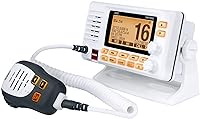
Owners consistently single out the oversized LCD as a standout feature, particularly for use in direct afternoon sunlight on open water where smaller screens become nearly unreadable. The 68mm by 38mm panel gives noticeably more room for channel, DSC, and weather data compared to competing units in the same class.
A small number of users noted that the backlight intensity at night could feel too bright without a dimming adjustment becoming second nature, which takes a few outings to dial in comfortably during low-light passages.
Built-in GPS
91%
The integrated GPS receiver is one of the most frequently praised differentiators in buyer feedback, especially for boaters who wanted automatic position transmission during DSC distress calls without wiring in a separate GPS source. Coastal cruisers found it particularly reassuring knowing their coordinates would broadcast instantly in an emergency.
A handful of users reported that GPS lock acquisition can take longer than expected in cloudy or enclosed anchorage conditions, and the manual provides little guidance on what to expect during the initial satellite acquisition process.
DSC Functionality
88%
Buyers who set up their MMSI number correctly reported that the DSC distress function worked exactly as intended, giving them genuine confidence in the radio as a safety tool rather than just a communication device. The ability to both send and receive DSC calls is a meaningful step up from radios that only transmit.
Several users found the MMSI programming steps confusing without supplemental online resources, and the documentation around DSC call logging and individual channel calling was described as thin by more technically minded buyers.
Audio Quality
86%
Call clarity came up repeatedly in positive reviews, with many buyers noting that incoming transmissions were crisp and the speaker volume was sufficient to cut through moderate wind noise in an open cockpit. The included speaker microphone also received favorable mentions for transmit audio quality on the receiving end.
In genuinely noisy conditions — running at speed in heavy chop or near a loud diesel engine — some owners found themselves cupping the speaker to catch weaker incoming signals, suggesting the speaker output could be more powerful at maximum volume.
Ease of Installation
84%
The majority of recreational boaters reported a clean installation experience, noting that the included mounting hardware, DC power cord, and bracket made the physical setup manageable without professional help. Owners who had previously installed other fixed-mount radios found the UM725G comparable or slightly easier to position at the helm.
Connecting the NMEA 0183 data cord to an existing chartplotter introduced friction for some buyers, particularly those whose displays used NMEA 2000 exclusively, requiring a converter that is not included and not clearly addressed in the documentation.
Build Quality
82%
18%
The physical construction feels solid for a mid-range marine radio, and most long-term owners reported no degradation in buttons, connectors, or housing integrity after regular seasonal use in salt air environments. The IPX8 submersible rating appears to hold up in practice based on feedback from owners who experienced unexpected splashing or brief immersion.
A few buyers observed that the control buttons have a slightly soft tactile feel compared to higher-end competitors, which is a minor ergonomic complaint but one that comes up consistently enough among boaters who prefer a more definitive button press during active maneuvering.
Waterproofing
89%
The IPX8 rating translates well to real-world conditions according to buyer feedback, with multiple owners reporting continued normal operation after spray exposure, rain, and in at least a few cases, brief submersion events that were not entirely intentional. For a helm-mounted radio, this level of protection is exactly what the use case demands.
While hardware failures related to water ingress are rare in the feedback pool, a couple of users in high-humidity tropical environments reported connector corrosion over multiple seasons, suggesting that proactive connector maintenance matters even with a strong waterproof rating.
Weather Alert Performance
81%
19%
NOAA weather alert monitoring runs passively in the background without requiring active channel tuning, and buyers in storm-prone coastal areas appreciated being alerted to incoming weather broadcasts without having to manually scan weather channels during long anchored overnights.
Some users noted that the alert tone volume is not independently adjustable from the main speaker volume, which created situations where a weather alert during quiet overnight anchoring was startlingly loud — a small but fixable ergonomic gap.
Text Messaging Feature
67%
33%
Boaters who took time to fully configure the feature and introduced it to a buddy boat or second vessel in their group found it genuinely useful for private coordination, particularly in crowded anchorages where broadcasting intentions over Channel 16 felt unnecessarily public.
The learning curve is steep and the manual does not adequately walk users through the setup process, leading a meaningful portion of buyers to either give up on the feature entirely or rely on third-party tutorials. The functionality is only useful if other nearby vessels also have compatible Uniden radios, which limits practical adoption.
Value for Money
83%
Buyers who compared the feature set against other fixed-mount radios at a similar price point — particularly those without built-in GPS or a large display — consistently rated the UM725G as strong value, especially given that GPS-equipped competitors often cost noticeably more.
A segment of buyers felt the documentation and overall polish of the ownership experience did not quite match the feature investment, noting that a radio at this price tier should ship with a more thorough manual and clearer setup guidance without requiring supplemental online research.
Channel Coverage
92%
Full US, Canadian, and International marine channel coverage is confirmed across the buyer base, with no reports of missing channels or region-specific limitations. Boaters who cross regularly between US and Canadian waters highlighted this as a practical advantage over radios that require manual region switching.
There are no significant complaints about channel coverage itself, though a small number of international buyers outside North America noted that the radio's interface and documentation are primarily oriented toward North American users, which can add minor friction in other regions.
Documentation Quality
44%
56%
The quick-start card included in the box was acknowledged by some buyers as sufficient for basic initial setup, including powering on, scanning channels, and configuring volume — the core functions most recreational boaters use daily without needing deeper documentation.
The full owner's manual is the most consistently criticized aspect of the ownership experience across all feedback, with buyers describing it as unclear, incomplete, and poorly organized around advanced features like DSC configuration, MMSI programming, and text messaging setup. This is the primary driver of negative reviews and post-purchase frustration.
Antenna Compatibility
71%
29%
Buyers who paired the radio with a standard PL-259 VHF marine antenna reported solid range performance consistent with the rated specifications, and several noted clean signal reception even at distances where cheaper radios began to break up noticeably.
Antenna compatibility questions appear with regularity in buyer feedback, and the documentation does not clearly specify what antenna specifications optimize performance. A few buyers reported range below expectations before diagnosing a mismatched or low-gain antenna as the root cause rather than any deficiency in the radio itself.
NMEA Integration
63%
37%
Boaters with NMEA 0183-compatible chartplotters reported successful data sharing after connecting the included data cord, with GPS position feeding cleanly into their navigation displays and eliminating the need for a second GPS source at the helm.
The shift toward NMEA 2000 as the dominant standard in modern marine electronics means a growing proportion of buyers need a protocol converter to make this connection work, adding cost and wiring complexity that is neither included nor clearly acknowledged in the product documentation.
Microphone Quality
78%
22%
The bundled speaker microphone received positive feedback for both ergonomics and transmit clarity, with buyers on sailboats and powerboats alike noting that their transmissions were well-received by Coast Guard stations and other vessels at reasonable distances without distortion.
The coiled cord on the microphone was flagged by a small number of users as shorter than ideal for some helm configurations, and a few buyers noted the microphone clip felt less robust than the radio unit itself, raising questions about long-term durability under daily use.

Suitable for:

The Uniden UM725G Marine VHF Radio is a strong fit for recreational boaters who want meaningful safety capabilities without investing in commercial-grade equipment. If you regularly run coastal or nearshore routes in US or Canadian waters, the built-in GPS paired with DSC distress functionality means your position transmits automatically in an emergency — a real advantage when every second counts. Day cruisers and weekend anglers will appreciate the oversized LCD, which makes reading channel and weather data in bright outdoor conditions far less frustrating than on smaller competing units. Families or multi-crew boats benefit from the boat-to-boat text messaging, which keeps coordination private and off the shared airwaves. It also makes excellent sense as an upgrade for anyone currently running an older basic fixed-mount radio who wants a substantial feature improvement without a steep learning curve or a dramatically higher price.
Not suitable for:

Experienced offshore sailors or commercial operators who need AIS integration or Class B DSC functionality should look elsewhere, as the Uniden UM725G Marine VHF Radio does not natively support those capabilities without additional hardware. Boaters who rely on a single device for both navigation and communication will find this radio insufficient — it is a dedicated VHF unit, not a hybrid chartplotter. If you need NMEA 2000 network compatibility to feed data into a multifunction display system, this unit's NMEA 0183 output may require an adapter or workaround depending on your existing setup. Buyers who prefer minimal setup and expect detailed, step-by-step documentation out of the box may find the included manual thin, particularly around advanced features like text messaging configuration. This fixed-mount VHF radio is also not the right pick for inflatable or trailerable boats where a handheld waterproof unit would be more practical.
Specifications

  • Transmit Power: Switchable between 1 watt for short-range local communication and 25 watts for long-range open-water transmission.
  • Waterproof Rating: Rated IPX8 submersible, meaning the radio is designed to withstand continuous immersion in water beyond one meter depth.
  • Display Size: LCD measures 68mm wide by 38mm tall, the largest screen in its fixed-mount class for improved readability in outdoor conditions.
  • Frequency Range: Covers 156.000 to 162.025 MHz, encompassing all standard marine VHF frequencies used internationally.
  • Channel Coverage: Includes all US, Canadian, and International marine channels with no manual regional switching required.
  • Talking Range: Rated up to 36 miles under optimal open-water conditions with a compatible external antenna.
  • GPS: Built-in GPS receiver enables automatic position data transmission during DSC distress calls without a separate GPS source.
  • DSC Capability: Supports Digital Selective Calling for both distress signal transmission and reception, meeting standard recreational boating safety requirements.
  • Weather Monitoring: Receives all NOAA weather channels and triggers automatic alerts when emergency weather broadcasts are detected.
  • Text Messaging: Supports boat-to-boat private text messaging over marine VHF, a feature unique to the Uniden platform at this price tier.
  • Power Input: Operates on 12V DC power only, drawing from a standard 12-volt marine electrical system via the included DC power cord.
  • Dimensions: Unit measures 3.25 inches deep by 5.8 inches wide by 3.25 inches tall for flush or bracket mounting at the helm.
  • Weight: Complete unit weighs 2 pounds, which is typical for a full-featured fixed-mount marine VHF radio.
  • Data Output: Equipped with a NMEA 0183 data port for sharing GPS position data with compatible chartplotters or navigation displays.
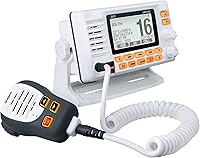
  • Included Accessories: Package includes a DC power cord, NMEA 0183 data cord, extension speaker cord, speaker microphone, mounting bracket, knobs, microphone hanger, and mounting hardware.

Related Reviews
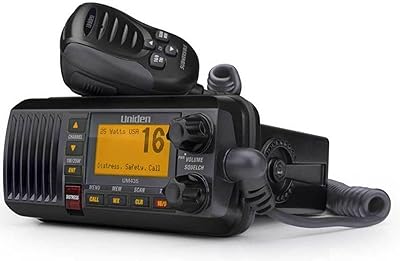
Uniden MHS75 VHF Marine Radio
89%
94%
Waterproof Performance
85%
Range & Signal Strength
88%
Battery Life
90%
Ease of Use
91%
Build Quality
More
Uniden UM435BK Fixed Mount VHF Marine Radio
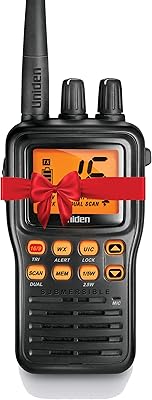
80%
93%
Waterproofing & Weather Resistance
88%
Audio Clarity & Reception
84%
Ease of Installation
91%
Channel Coverage & Compatibility
82%
Value for Money
More
Uniden Atlantis 155 Handheld VHF Marine Radio
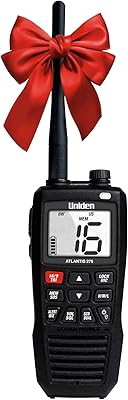
80%
91%
Waterproof Performance
88%
Buoyancy & Drop Safety
89%
Ease of Use
61%
Transmit Power & Range
86%
NOAA Weather Alerts
More
Uniden Atlantis 275 Handheld VHF Marine Radio
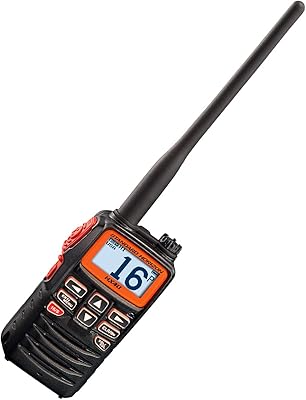
81%
93%
Waterproof Performance
88%
Display Quality
79%
Transmit Power & Range
82%
Battery Life
76%
Build Quality
More
Standard Horizon HX40 VHF Marine Radio
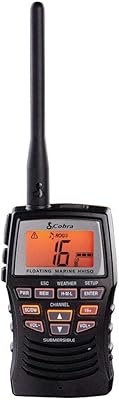
86%
88%
Range & Performance
92%
Build Quality & Durability
95%
Waterproofing
89%
Ease of Use
72%
Battery Life
More
Cobra MR F45-D Fixed Mount VHF Radio
84%
88%
Audio Clarity
91%
Ease of Installation
93%
Weather Alert Performance
79%
DSC Functionality
74%
Build Quality
More
Cobra MR F77B GPS Fixed Mount VHF Radio
79%
88%
GPS Performance
91%
DSC Functionality
79%
Ease of Installation
67%
Audio Clarity
86%
Display Visibility
More
Cobra MR HH150 FLT VHF Marine Radio
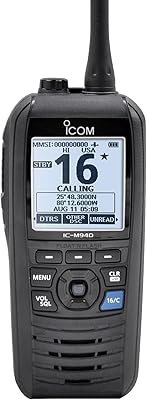
85%
87%
Performance
92%
Build Quality
79%
Battery Life
88%
Ease of Use
91%
Waterproofing & Durability
More
Standard Horizon GX1800G Fixed Mount VHF Radio
81%
91%
GPS & DSC Integration
83%
Transmit Range & Power
88%
Build & Waterproofing
67%
Display Readability
74%
Ease of Installation
More
Icom M94D VHF Marine Radio
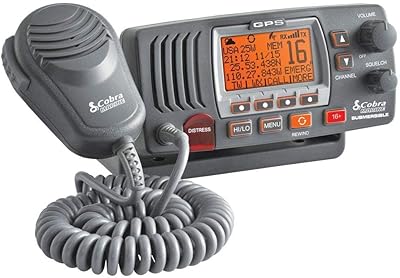
80%
91%
Build Quality
83%
AIS Receive Performance
87%
DSC Distress Calling
88%
Audio Clarity
92%
AquaQuake Water Draining
More

FAQ

The GPS receiver is fully integrated into the radio itself, so no external GPS antenna is needed for basic position functionality. When you trigger a DSC distress call, the unit automatically includes your coordinates without any additional hardware.

Yes, but with a caveat. The radio outputs NMEA 0183 data, which is the older standard. Most modern multifunction displays support NMEA 0183 via a dedicated input, but if your chartplotter is NMEA 2000 only, you will need a protocol converter to bridge the two systems.

No antenna is included in the box, which is standard for fixed-mount marine VHF radios. You will need a separate VHF marine antenna — a standard PL-259 connector type. A quality 6dB gain antenna mounted at a reasonable height will help you get close to the rated 36-mile range in open water.

The texting feature uses the DSC protocol over the marine VHF band to send short messages directly to another vessel whose MMSI number you have stored. Both boats need compatible Uniden radios with this feature enabled. It is useful for coordinating with a buddy boat without broadcasting over Channel 16 or another working channel.

Yes. The IPX8 rating means the unit is tested for continuous submersion, so rain, spray, and accidental splashing are well within its tolerance. That said, keeping the microphone port clear of salt buildup over time is still good practice for long-term reliability.

You do need an MMSI number to use the DSC distress and messaging features. In the US, you can register for free through BoatUS, Sea Tow, or directly through the FCC if your vessel requires a ship station license. Once registered, you program the MMSI into the radio during initial setup.

It covers all US, Canadian, and International marine channels without any region switching. If you cruise between US and Canadian waters regularly or take offshore passages, the full channel set is already loaded and ready to use.

Most owners report a straightforward installation process. The included mounting bracket and hardware handle the physical mounting, and the DC power connection is a standard two-wire hookup to your 12V system. Connecting the NMEA 0183 data cord to a chartplotter adds some complexity, but it is well within reach for anyone comfortable doing basic helm wiring.

The most consistent complaint is the owner's manual, particularly around the text messaging setup and some of the DSC configuration steps. The hardware itself draws very few complaints — most frustration is about documentation rather than the radio not working. Downloading a PDF of the manual online before you start setup can save you some time.

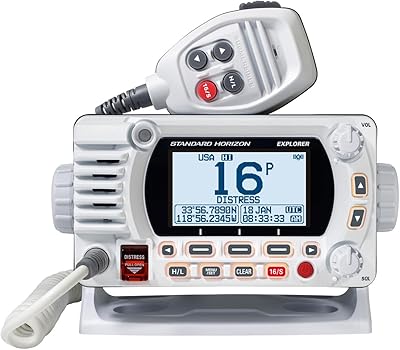
Both brands sit close in overall capability at this price tier. The UM725G has an edge in display size and the unique boat-to-boat texting feature. Standard Horizon units often get credit for slightly more polished documentation and broader dealer support. If DSC with built-in GPS and a large screen are your priorities, this Uniden marine radio competes well; if you value a more detailed manual and a wider service network, Standard Horizon is worth comparing directly.

Where to Buy

Anchor Express
In stock $135.99
American Diving Supply
In stock $149.99
Essenbay Marine
In stock $155.95
Defender Marine
In stock $155.99
Wholesale Marine
In stock $155.99
Alltackle Fishing and Marine
In stock $155.99