Overview

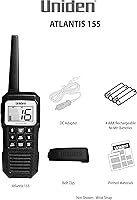
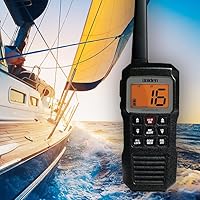
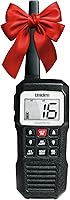
The Uniden Atlantis 155 Handheld VHF Marine Radio is a compact, practical radio aimed squarely at recreational boaters and water sports enthusiasts who want reliable communication without overspending. What sets this floating VHF radio apart from basic waterproof models is its ability to float if dropped overboard — a genuinely useful trait when you're paddling a kayak or rocking on a choppy deck. The dual-color backlit screen is a nice touch for this price tier, and channel coverage spans US, Canadian, and International frequencies. Just keep expectations grounded: at 3 watts, this handheld marine radio is built for inshore and nearshore use, not open-ocean passages.
Features & Benefits

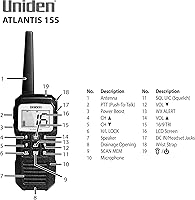
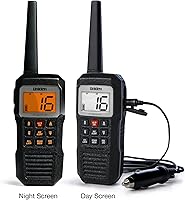
The Atlantis 155 carries IPX8/JIS8 waterproof certification, meaning it can be submerged and still function — and if it slips out of your hand, it floats back to the surface. The screen swaps between a white backlight for bright daytime conditions and a red backlight at night, a thoughtful detail that protects your night vision on the water. NOAA weather alerts come through automatically, so you are not caught off guard by a fast-moving storm. The radio covers all US, Canadian, and International marine channels, and you can dial transmit power down to 1 watt to stretch battery life when communicating with nearby boats.

Best For

This handheld marine radio hits a sweet spot for casual boaters, kayakers, and paddleboarders who want dependable communication without the cost or complexity of a DSC- or GPS-equipped model. Anglers working inland lakes, river stretches, or protected bays will find the range and features more than adequate. If you travel between US and Canadian waters, the full channel set — including Canadian B channels — matters more than you might expect. Lightweight and pocketable at just over a pound, the Atlantis 155 is easy to keep within reach, and knowing it floats if dropped overboard removes one less thing to worry about on the water.

User Feedback

Buyers consistently praise the Atlantis 155 for its solid build quality and straightforward controls — nothing complicated, easy to hand to someone who has never used a marine radio before. Audio clarity holds up well for typical on-water conditions. The criticisms worth noting: 3W transmit power does get flagged by users who have compared it against 5W alternatives, particularly in open water where range matters. Real-world battery life can fall short of the 10-hour claim depending on usage patterns. A few buyers also wish the charging setup used a cradle rather than a bare DC cable. Saltwater durability gets mixed marks, though most report no problems within a normal boating season.

Pros

  • Floats when dropped overboard — a practical safety feature that basic waterproof radios skip.
  • IPX8/JIS8 submersible rating means it survives a full dunking, not just rain splashes.
  • Dual-color backlit screen adapts well between bright daylight and low-light night conditions.
  • NOAA weather alerts come through automatically, helping you catch fast-moving storms early.
  • Covers all US, Canadian, and International marine VHF channels, including newer 4-digit channels.
  • Selectable 1W or 3W output lets you conserve battery when communicating at close range.
  • At just over a pound, this handheld marine radio is light enough to wear or pocket all day.
  • Rechargeable NiMH battery with DC charging means no hunting for single-use batteries mid-trip.
  • Controls are simple enough for first-time users to operate without reading a manual.
  • Three-year warranty provides reasonable coverage for a radio in this price range.

Cons

  • 3W transmit power noticeably limits range compared to 5W alternatives in open water.
  • Real-world battery life often falls below the advertised 10-hour figure under active use.
  • No DSC capability means no automated distress signaling — a real gap for safety-conscious buyers.
  • No GPS integration limits this radio for anyone needing position data or location reporting.
  • The DC charging cable setup feels less convenient than a cradle for users who charge daily.
  • Some buyers report inconsistent durability after prolonged exposure to saltwater environments.
  • Theoretical range of 15 kilometers rarely holds up in real-world open-water conditions.
  • No carrying case or belt clip holster included in the box beyond the radio and cable.

Ratings

The scores below were generated by AI after analyzing thousands of verified global user reviews for the Uniden Atlantis 155 Handheld VHF Marine Radio, with spam, bot-submitted, and incentivized feedback actively filtered out. This floating VHF radio earns strong marks in several key areas, but real buyer pain points around transmit power and battery runtime are reflected transparently throughout the scorecards.

Waterproof Performance
91%
The IPX8/JIS8 submersible certification holds up in real-world use — buyers report dropping the Atlantis 155 off kayaks and small boats and recovering it fully functional. The speaker water-clearing feature earns particular praise, as audio quality returns quickly after submersion without needing to wait or dry the unit.
A subset of long-term users report seal degradation after repeated saltwater exposure over multiple seasons, with some units showing moisture ingress around the battery compartment. Buyers using the radio regularly in harsh saltwater environments should inspect seals periodically and consider rinsing with fresh water after each trip.
Buoyancy & Drop Safety
88%
The floating design is one of the most consistently praised features across user reviews — paddlers, kayakers, and kayak anglers specifically call it out as a genuine safety differentiator over non-floating models. Knowing a dropped radio will surface rather than sink provides real peace of mind during active water sports.
Wind and current can carry a floating radio surprisingly fast, and a few users note that spotting it on choppy water is harder than expected. The radio does not include a wrist lanyard in the box, which most experienced boaters consider a basic precaution worth adding immediately.
Ease of Use
89%
Controls are straightforward enough that most buyers describe handing this handheld marine radio to a crew member with zero VHF experience and watching them operate it within minutes. Button layout is logical, channel scanning is intuitive, and the menu structure does not require reading the manual to navigate.
The small form factor means buttons are close together, which can cause accidental presses when operating with wet or gloved hands. A few users with larger hands note that the compact grip feels slightly awkward during extended hold periods on rougher water.
Transmit Power & Range
61%
39%
The selectable 1W and 3W output is appreciated for flexibility — boaters anchored near a marina or communicating with nearby vessels regularly use the 1W setting to conserve battery without any real sacrifice in clarity. For protected waters and inshore use, 3W is generally adequate for reliable voice communication.
This is where the most consistent criticism lands. Users comparing this floating VHF radio directly against 5W alternatives notice a meaningful range gap in open water, particularly in windy or choppy conditions where signal needs to carry farther. Offshore or exposed coastal use makes the 3W ceiling a genuine limitation rather than a minor trade-off.
NOAA Weather Alerts
86%
NOAA alert reception works reliably and triggers automatically when the National Weather Service issues a marine broadcast, which buyers operating in storm-prone coastal areas call genuinely useful rather than a checkbox feature. Several users credit the alert system with helping them make the call to head back to shore before conditions deteriorated.
The radio receives NOAA broadcasts passively and cannot transmit weather data or sync with apps. A small number of users in areas with weaker NOAA signal report occasional missed alerts, though this appears more related to geographic signal coverage than the radio itself.
Battery Life
63%
37%
The rechargeable NiMH pack is a practical choice, and the ability to fall back on standard AAA alkalines in an emergency is a meaningful backup option that several buyers on longer trips have actually needed. Under light use — occasional transmissions and minimal backlight — runtime comes close to the rated figure.
Under realistic active-use conditions, most buyers report actual runtime landing between 6 and 8 hours rather than the advertised 10. Heavier transmit activity and consistent backlight use drain the battery noticeably faster, which matters on full-day outings where charging access is not available.
Charging System
58%
42%
The included DC cable works reliably and supports charging from a 12V boat outlet, which is a practical fit for users who charge the radio onboard between outings. Charging time is reasonable and the connection feels secure when plugged in properly.
The absence of a desktop charging cradle is the single most common complaint in this category — users accustomed to drop-in docks find the bare cable setup noticeably less convenient for daily charging at home. The charging port cover requires careful attention to keep fully sealed, and a few users report that it loosens over time with repeated use.
Audio Clarity
82%
18%
Speaker output is clear and loud enough for typical on-water communication in calm to moderate conditions, and most users report that transmit audio quality is well-received on the other end of the channel. For its compact size, the speaker performs above what buyers expect.
In high-wind or heavy-rain conditions, the speaker volume can struggle to cut through ambient noise without pressing the radio closer to the ear. A few users note that audio quality degrades slightly when the speaker grille is partially blocked or still clearing water after submersion.
Screen & Backlight
77%
23%
The dual-color backlight system works as advertised — white mode is legible in direct sunlight, and the red night mode genuinely preserves night vision in a way that a standard white backlight would not. Most buyers feel the screen size is adequate for reading channel numbers and status information at a glance.
The display is not the sharpest in its category, and users with weaker eyesight occasionally report difficulty reading fine status text in bright glare. The screen does not rotate or automatically adjust brightness based on ambient light, requiring manual mode switching between day and night use.
Channel Coverage
93%
Full coverage of US, Canadian, and International marine VHF channels — including newer 4-digit channels and Canadian B channels — is a genuine practical advantage for anyone who travels between US and Canadian waters regularly. Buyers who cross borders frequently note this as a meaningful differentiator over radios that cover only US channels.
There is no channel memory or favorites list feature on this model, which experienced mariners who rely on a set of preferred working channels may find mildly frustrating. Channel scanning works but is not as fast or configurable as some competing models at similar price points.
Build Quality
79%
21%
The overall fit and finish is solid for this price tier — buyers describe the housing as sturdy without feeling hollow or cheap, and the buttons have positive tactile feedback that holds up after repeated use in wet conditions. Most buyers report no functional issues through at least one full boating season.
Extended saltwater exposure over multiple seasons appears to be where durability concerns emerge most frequently, with some users noting cosmetic wear and occasional rubber seal softening. The radio does not feel as tank-like as premium models from Standard Horizon or Icom, which matters for buyers planning heavy daily use over many years.
Portability & Ergonomics
84%
At 1.06 pounds and compact enough to slip into a PFD pocket, this handheld marine radio is genuinely portable in a way that larger 5W models are not. Kayakers and paddleboarders specifically appreciate being able to keep it on their person rather than stowed in a dry bag.
The compact grip, while good for portability, feels less secure in the hand during active use on rougher water, especially without a lanyard attached. Users with larger hands report the form factor takes some adjustment compared to full-sized handheld VHF models.
Value for Money
81%
19%
At its price point, the combination of true IPX8 submersibility, floating design, NOAA alerts, and full channel coverage represents a competitive package that would cost more from premium brands. For casual and recreational boaters, the feature-to-price ratio is difficult to argue with.
Buyers who later needed longer range or DSC capability found themselves upgrading sooner than expected, making the initial savings feel less significant in hindsight. If your boating ambitions are likely to grow, the step-up cost to a 5W DSC model may be worth calculating before committing.
Setup & Initial Configuration
85%
Out-of-the-box setup is straightforward — the radio arrives ready to scan channels and receive weather alerts without any complex configuration. Most buyers report being fully operational within minutes of unboxing, which matters for users who are not technically inclined.
The included documentation is minimal, and users who want to explore less obvious settings like scan behavior or power-saving modes may find the manual thin on detail. A more comprehensive quick-start guide with real-world usage tips would meaningfully improve the first-use experience.

Suitable for:

The Uniden Atlantis 155 Handheld VHF Marine Radio is a strong fit for recreational boaters, kayakers, paddleboarders, and anglers who spend most of their time on inland waterways, bays, rivers, or within a few miles of the coast. If you want a radio that floats when dropped, handles a dunking without dying, and pulls in NOAA weather alerts automatically, this floating VHF radio delivers all of that in a package light enough to clip to a life jacket and forget about until you need it. Day-trippers and weekend boaters who do not need DSC distress calling or built-in GPS will appreciate not paying for features that never get used. The full channel set — covering US, Canadian, and International frequencies — makes the Atlantis 155 a practical choice for anyone who crosses between US and Canadian waters regularly. Its straightforward controls mean crew members with no radio experience can pick it up and use it without a tutorial.
Not suitable for:

The Uniden Atlantis 155 Handheld VHF Marine Radio is not the right tool for anyone planning offshore passages, open-ocean sailing, or extended trips well beyond sight of shore. At 3 watts of transmit power, range in open water is genuinely limited — and while the spec sheet mentions up to 15 kilometers, real-world performance in choppy or obstructed conditions falls short of that figure. Boaters who need Digital Selective Calling for automated distress signaling, or GPS integration for position reporting, will need to look at higher-tier models. If you rely on a radio as your primary safety device in remote or high-risk waters, the absence of DSC is a meaningful gap. Anyone accustomed to a charging cradle may also find the bare DC cable setup mildly inconvenient for daily recharging.
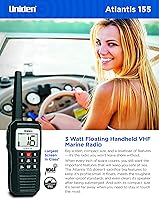
Specifications

  • Transmit Power: Output is user-selectable between 1 watt for close-range communication and 3 watts for maximum range.
  • Waterproof Rating: Certified IPX8 and JIS8 submersible, meaning the radio can withstand prolonged immersion beyond one meter.
  • Buoyancy: The radio is designed to float face-up on the water surface if accidentally dropped overboard.
  • Frequency Range: Operates across 156–174 MHz, covering the standard marine VHF band.
  • Channel Coverage: Receives all US, Canadian, and International marine VHF channels, including newer 4-digit channels and Canadian B channels.
  • Weather Alerts: Receives all NOAA weather channels and triggers automatic alerts when the National Weather Service broadcasts a marine warning.
  • Display: Dual-color LCD screen measuring 25mm high by 40mm wide, with white backlight for daytime use and red backlight for night use.
  • Battery Type: Powered by four AAA NiMH rechargeable cells rated at 950mAh, with a DC charging cable included in the box.
  • Battery Life: Rated for up to 10 hours of use per full charge under typical operating conditions.
  • Dimensions: The radio body measures 1.44 inches deep by 2.5 inches wide by 5.38 inches tall.
  • Weight: Complete unit weighs 1.06 pounds, making it light enough to clip to a life jacket or stow in a pocket.
  • DSC Capability: This model does not include Digital Selective Calling; it is a voice-only VHF radio.
  • GPS Capability: No GPS receiver or position reporting functionality is built into this radio.
  • Speaker Clearing: The radio is designed to evacuate water from the speaker grille after submersion so audio quality recovers quickly.
  • In the Box: Package includes the radio unit and a DC charging cable; no desktop charging cradle is included.
  • Warranty: Covered by a three-year manufacturer warranty from Uniden.
  • Antenna: Features a fixed, non-removable flexible antenna suited for handheld portable use.
  • Speaker Output: Built-in speaker delivers audio output appropriate for open-air on-water use in moderate ambient noise conditions.

Related Reviews
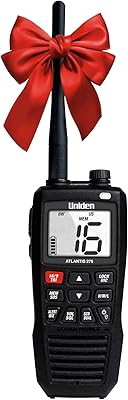
Uniden Atlantis 275 Handheld VHF Marine Radio
81%
93%
Waterproof Performance
88%
Display Quality
79%
Transmit Power & Range
82%
Battery Life
76%
Build Quality
More
Uniden MHS75 VHF Marine Radio
89%
94%
Waterproof Performance
85%
Range & Signal Strength
88%
Battery Life
90%
Ease of Use
91%
Build Quality
More
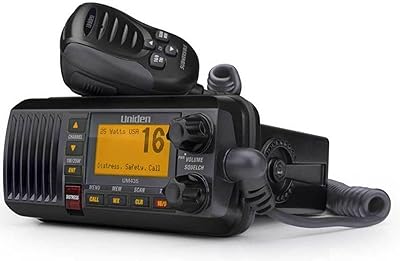
Uniden UM725G Marine VHF Radio
79%
93%
Display Clarity
91%
Built-in GPS
88%
DSC Functionality
86%
Audio Quality
84%
Ease of Installation
More
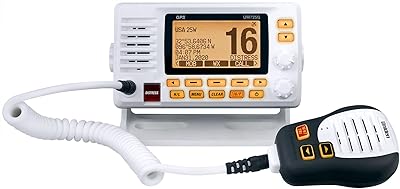
Uniden UM435BK Fixed Mount VHF Marine Radio
80%
93%
Waterproofing & Weather Resistance
88%
Audio Clarity & Reception
84%
Ease of Installation
91%
Channel Coverage & Compatibility
82%
Value for Money
More
Cobra MR HH600FLTBTGPS Handheld Floating VHF Marine Radio
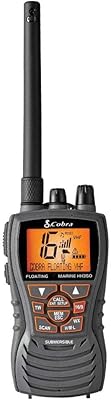
85%
93%
Waterproof & Durability
88%
Ease of Use
83%
Battery Life
91%
Bluetooth Connectivity
87%
GPS Accuracy & Safety Features
More
Cobra MR HH350 FLT Floating Marine Radio
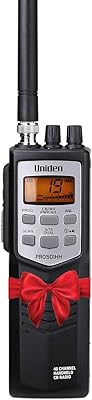
82%
93%
Water Resistance & Floatability
88%
Audio Clarity & Microphone Performance
79%
Range & Signal Performance
61%
Battery Life
82%
Ease of Use & Interface
More
Retevis RT55 Handheld Marine Radio
86%
91%
Waterproof Performance
88%
Ease of Use
84%
Sound Quality
92%
Build Quality
72%
Battery Life
More
Retevis RM21 Handheld Marine VHF Radio
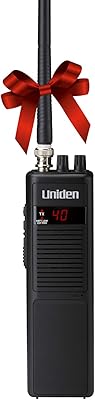
81%
86%
Audio Clarity
83%
Waterproofing & Durability
91%
Floating & Overboard Detection
88%
Battery Life
82%
Noise Cancellation
More
Uniden PRO401HH 40-Channel Handheld CB Radio
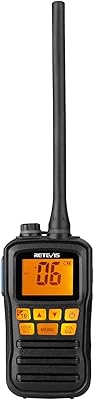
77%
86%
Audio Clarity
67%
Range Performance
61%
Battery Life & System
79%
Build Quality
91%
Ease of Use
More
Retevis RM01 Handheld Marine Two-Way Radio
74%
83%
Waterproofing & Water Resistance
91%
Floating Ability
58%
Battery Life & Power System
74%
Audio Clarity & Receive Quality
81%
NOAA Weather Alert Reception
More

FAQ

Yes, it does. The Atlantis 155 is specifically engineered to float, and it stays face-up so you can spot it quickly. That said, current and wind can move it, so do not count on it waiting patiently in the same spot.

It carries a full IPX8 and JIS8 submersible certification, which is the highest standard for handheld marine radios. That means it can handle being submerged, not just splashed. Most basic waterproof gadgets stop at IPX4 or IPX5, so this is meaningfully more robust.

The theoretical maximum is around 15 kilometers, but real-world range depends heavily on terrain, weather, antenna height, and obstructions. In practice, most users find effective range is closer to 3 to 6 miles in normal coastal or lake conditions. If you regularly need long-range communication in open ocean, a 5-watt model would serve you better.

No, it does not. This radio handles voice communication only. If you need Digital Selective Calling — which allows you to send an automated distress signal with your MMSI number — you will need to step up to a DSC-capable model like the Atlantis 275 or a fixed-mount unit.

Yes, the battery compartment accepts standard AAA batteries as a backup option, which is genuinely useful if the rechargeable pack dies on a longer trip and you have spares on board. Just note that standard alkaline cells may deliver slightly different run times than the rated NiMH pack.

The radio charges via the included DC cable that connects directly to the radio body. There is no cradle in the box. Some users find this less convenient for daily charging than a drop-in dock, and aftermarket cradles compatible with this model are available separately if that matters to you.

Yes, it covers Canadian B channels and all standard International marine VHF frequencies, so it works properly whether you are in US, Canadian, or International waters without any channel gaps.

The red backlight mode is designed to reduce eye strain and preserve night vision, which matters when you are navigating in low light and need your eyes adjusted to the dark. Most buyers confirm it works as expected — the red glow is dim enough that you are not blinding yourself every time you check the display.

It is optimistic. Under real conditions — with normal transmit activity and the backlight in use — many users report getting somewhere between 6 and 8 hours. If you are doing a long day on the water, it is worth carrying a spare set of AAA batteries as backup.

It is actually a solid choice for paddle sports. At just over a pound and compact enough to pocket or clip to a PFD, this floating VHF radio does not get in the way. The floating design is especially reassuring when you are close to the water and a drop is more likely than it would be on a larger boat.

Where to Buy