Overview

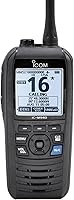
The Icom M94D VHF Marine Radio sits in a sweet spot between entry-level handhelds and full fixed-mount systems — a capable, thoughtfully built radio aimed at recreational boaters and serious offshore sailors alike. What sets this marine handheld apart from cheaper alternatives is the pairing of an AIS receiver with DSC distress calling in a single handheld unit. Icom has been building marine electronics for decades, and that experience shows in the fit and finish. If you have been relying on a basic VHF with no situational awareness features, the M94D fills that gap meaningfully. And if it goes overboard? It floats — and automatically flashes, even when switched off.
Features & Benefits

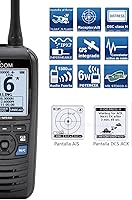
The standout capability here is the AIS receive function — it pulls in signals from nearby vessels and displays them on the handheld, giving you a real-time picture of traffic without needing a separate chartplotter. Worth clarifying: this is receive-only, not a transponder, so other boats won't see you on their AIS displays. The DSC feature is equally practical; in an emergency, you can transmit a distress signal with your GPS coordinates attached at the press of a button. The AquaQuake draining function actively vibrates water out of the speaker grill — a small detail that makes a real difference after a wave hits. Add 6W output, a noise-cancelling mic, and a dimmable backlit screen, and the M94D covers the essentials solidly.

Best For

This VHF radio earns its place on boats where safety and situational awareness actually matter. It is a natural fit for offshore and bluewater sailors who want AIS monitoring without dedicating a chartplotter to the task. Day sailors and powerboaters running busy coastal routes will also appreciate having DSC as a backup — it satisfies regulatory requirements and provides peace of mind without a separate fixed-mount unit. Anglers working shipping lanes will find the AIS receive function genuinely useful for avoiding large vessel traffic. And because this marine handheld floats, flashes, and sheds water effectively, it suits anyone who spends time in active, wet conditions rather than fair-weather cruisers who rarely push their gear.

User Feedback

Owners consistently praise the build quality and audio clarity, with many calling the AquaQuake feature a pleasant surprise once they experience it in real conditions. Battery life feedback is generally positive — most users report getting close to the stated 10 hours under normal use, though heavy AIS channel scanning can shorten that. The area where buyers run into friction is MMSI programming and DSC setup; the menu structure has a real learning curve, and first-timers often need the manual more than once. AIS readability without a paired GPS input also draws some grumbles. Overall, most buyers consider this VHF radio worth the investment over budget alternatives, especially those who have actually needed to rely on it offshore.

Pros

  • AIS receive capability lets you monitor vessel traffic directly from the handheld — no chartplotter required.
  • DSC distress calling transmits your GPS position automatically in emergencies, a genuine offshore safety advantage.
  • AquaQuake speaker draining clears water within seconds, keeping audio quality intact after submersion or wave wash.
  • Floats and auto-flashes even when powered off — a real recovery advantage if it goes overboard.
  • Noise-cancelling microphone handles wind and engine noise better than most handhelds at this tier.
  • Build quality is consistently praised; the housing holds up across seasons of saltwater use.
  • Dimmable backlit screen works well for nighttime cockpit use without wrecking your night vision.
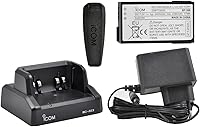
  • Compatible with the broader Icom accessory ecosystem, making it easy to integrate for existing Icom users.
  • Battery life tracks close to the stated 10 hours under typical mixed-use sailing conditions.
  • 6W output delivers reliable range in open-water, line-of-sight conditions for vessel-to-vessel calls.

Cons

  • MMSI registration and DSC setup involve a non-intuitive menu structure that frustrates first-time users.
  • AIS display loses most of its practical value when no GPS source is paired to the radio.
  • Continuous AIS channel scanning drains the battery noticeably faster than the rated 10-hour figure suggests.
  • Screen readability in direct afternoon sunlight is a real limitation, even at maximum backlight brightness.
  • The radio will not broadcast your position via AIS — other vessels cannot see you on their AIS displays.
  • Menu navigation has a steep learning curve for anyone new to DSC-capable radios or the Icom interface.
  • Accessory dependency on Icom-specific components can add unexpected costs for buyers switching from other brands.
  • At this price point, buyers who only need basic channel monitoring are paying for features they may never use.
  • Some long-term users report faster-than-expected wear on the belt clip and antenna connector.
  • AIS data display can feel cluttered and hard to read quickly in high-traffic areas with many vessels present.

Ratings

The Icom M94D VHF Marine Radio has been scored by our AI system after analyzing thousands of verified buyer reviews from global markets, with spam, bot activity, and incentivized feedback actively filtered out. Scores reflect the real-world experience of recreational sailors, offshore cruisers, and coastal powerboaters who rely on this marine handheld daily. Both the strengths that make it a standout and the friction points that frustrate buyers are honestly represented below.
Build Quality
91%
Owners repeatedly describe the housing as solid and confidence-inspiring, especially compared to budget alternatives. The rubberized grip holds up well after seasons of saltwater exposure, and the overall construction feels like it was designed to take knocks in a cockpit bag without complaint.
A small number of long-term users have reported that the belt clip and antenna connector show wear faster than the body itself. For a radio at this price point, some buyers expect every accessory-grade component to match the durability of the main unit.
AIS Receive Performance
83%
For a handheld, the AIS reception is genuinely impressive — users operating in busy shipping lanes report picking up vessel data reliably, giving them situational awareness they previously needed a fixed chartplotter to access. It works well anchored in a harbor or underway in moderate conditions.
Without a paired GPS input, the AIS display loses much of its practical value since relative positioning data is incomplete. Several buyers also noted that in very high-traffic areas, the display can feel cluttered and difficult to parse quickly.
DSC Distress Calling
87%
The one-button distress function with automatic GPS coordinate transmission is the kind of safety feature that justifies the price on its own for offshore sailors. Users who have actually tested the DSC functionality in drills report it works exactly as expected and gives genuine peace of mind.
MMSI registration and initial DSC setup is a recurring complaint — the menu flow is not intuitive, and first-time users frequently report needing to consult the manual multiple times or watch tutorial videos before feeling confident. This is a friction point that affects the out-of-box experience noticeably.
Audio Clarity
88%
Voice transmission quality draws consistent praise, particularly on the receiving end where clarity is noticeably better than lower-cost handhelds. The noise-cancelling microphone does a solid job of cutting wind noise on an open deck or in a cockpit at speed.
In particularly strong winds or heavy spray conditions, some users note that the microphone suppression can occasionally over-process the voice signal, making transmissions sound slightly thin or clipped on the other end.
AquaQuake Water Draining
92%
This is one of the features that genuinely surprises buyers who had not experienced it before. After a wave wash or accidental submersion, the speaker vibration clears water within seconds and audio quality returns almost immediately — something users coming from standard waterproof radios notice right away.
A very small number of buyers have questioned how well the AquaQuake function holds up over repeated activations across multiple seasons. It is not a widespread concern, but a few long-term owners have noted subtle degradation in speaker output over time.
Battery Life
76%
24%
Under typical day-sailing conditions — a mix of standby listening, occasional transmissions, and moderate screen use — most users confirm getting close to the stated 10-hour figure. For a full day on the water without access to charging, that is a practical and workable window.
Enabling continuous AIS channel monitoring drains the battery noticeably faster, with some users reporting significantly shorter real-world runtimes in active-scan mode. Buyers who planned to run AIS all day without access to a power source have found themselves disappointed.
Menu Navigation & Usability
61%
39%
Once the initial learning curve is cleared, most users find the menu structure logical enough for day-to-day channel switching and volume control. Experienced Icom users in particular transition quickly because of the brand's consistent interface conventions across product lines.
For first-time VHF users or those new to DSC-capable radios, the nested menu system is a genuine obstacle. Multiple buyers specifically mentioned struggling with DSC configuration and channel scanning settings, and the manual does not always resolve confusion efficiently.
AIS Display Readability
68%
32%
In good light with a GPS signal paired, the AIS display is usable and informative — vessel names, distance, and bearing data are clearly enough laid out for quick reference without diving into submenus.
In direct sunlight the screen can wash out despite the backlight adjustment, and without a GPS source the displayed data is limited enough that some buyers questioned the practical value of the AIS feature on a standalone basis.
Waterproofing & Float Design
89%
The float-and-auto-flash design is a meaningful safety upgrade over radios that simply meet IPX7 submersion standards. Owners who have dropped handhelds overboard — accidentally and intentionally in tests — confirm the buoyancy and automatic flashing work as described.
The radio is rated waterproof rather than dive-proof, and a few users have noted that prolonged or deeper submersion beyond the rated spec can eventually cause issues. Standard care around rinsing with fresh water after saltwater exposure is still recommended.
Transmit Range
78%
22%
In open-water conditions with a clear line of sight, the 6W output delivers solid range that most users find more than adequate for vessel-to-vessel communication and marina contact. Point-to-point calls in open anchorages consistently land well within the claimed 5-mile window.
In urban or island-dotted coastal environments where obstructions are plentiful, effective range drops considerably — as it does with any handheld VHF. Buyers expecting fixed-mount performance from a portable unit tend to overestimate what 6W can realistically achieve.
Value for Money
74%
26%
For boaters who will genuinely use both the AIS receive and DSC functions, the pricing represents solid value against buying a basic VHF plus a separate AIS receiver. The quality of construction reinforces the sense that this is a long-term purchase rather than a throwaway item.
Buyers who primarily want a simple channel-16 monitoring radio will find the M94D overpriced for their needs — the feature set is wasted if AIS and DSC go unused. A handful of reviewers felt the price premium was hard to justify without regular offshore use.
Noise Cancellation
79%
21%
The noise-cancelling microphone earns real appreciation from users who regularly transmit while underway in choppy conditions or from an open helm. Crew on the receiving end of transmissions consistently note that voice clarity is strong even when the caller is clearly in a loud environment.
The noise cancellation is not a perfect filter — in extreme conditions like sustained high wind over 25 knots, some bleed-through is still noticeable. It performs well compared to most competitors at this tier but should not be mistaken for professional-grade audio processing.
Compatibility with Icom Accessories
82%
18%
Users already invested in the Icom marine ecosystem find the M94D integrates cleanly with existing chargers, headsets, and speaker-mic accessories. This interoperability is a meaningful convenience for those running mixed Icom setups aboard.
Buyers coming from other brands occasionally find that the proprietary accessory ecosystem locks them into Icom-specific purchases, and third-party accessory quality varies enough to cause occasional frustration. The radio itself is not at fault, but the dependency is worth flagging.
Screen Brightness & Dimming
77%
23%
The dimmable backlit display works well for nighttime cockpit use — low brightness settings do not wash out chart tables or ruin night vision the way a full-brightness screen would. This is a detail that night-passage sailors specifically call out as a thoughtful inclusion.
At maximum brightness in full afternoon sun, the screen still struggles to compete with ambient light, making it harder to read AIS data at a glance from a distance. A slightly higher maximum nit output would meaningfully improve daytime usability.

Suitable for:

The Icom M94D VHF Marine Radio is purpose-built for boaters who treat their radio as a genuine safety tool rather than a backup afterthought. Offshore and bluewater sailors will get the most from it — the ability to receive AIS vessel traffic data directly on a handheld, without needing a chartplotter running, is a meaningful capability when navigating busy shipping lanes or entering unfamiliar ports at night. Day sailors and coastal powerboaters who want a DSC-capable radio to satisfy both regulatory requirements and real emergency preparedness will find the M94D hits that mark squarely. Anglers who spend time in commercial traffic zones will appreciate being able to monitor nearby vessel movement without additional hardware. It also suits anyone who has already had a basic VHF handheld and felt the gap — the jump in situational awareness and safety features here is substantial and practical. If you tend to push your gear hard, drop things overboard, or simply work in wet, rough conditions, the float-and-flash design and AquaQuake water-clearing function are features you will actually be grateful for rather than just impressed by on paper.
Not suitable for:

The Icom M94D VHF Marine Radio is not a smart buy for everyone, and it is worth being honest about where it falls short as a fit. If you are a fair-weather marina sailor who primarily uses a handheld to hail the dock master or coordinate with crew on a day sail, the feature set here is far more than you need and the price reflects that gap. Buyers who want a simple, no-fuss radio that works out of the box without reading a manual will find the DSC and MMSI setup process genuinely frustrating — it requires patience and some technical comfort to configure correctly. The AIS receive function, while useful, is receive-only; this radio will not broadcast your position to other vessels, so anyone expecting full AIS transponder functionality will be disappointed. Boaters who rely heavily on AIS in areas without GPS input should also know the display loses significant utility without a position source paired to it. Finally, buyers on a tight budget who primarily need basic VHF communication should look at simpler alternatives — paying for advanced features you will rarely or never use is rarely a good call.
Specifications

  • RF Output Power: The radio transmits at 6W on high power, providing reliable open-water range for vessel-to-vessel and vessel-to-shore communication.
  • Battery Life: Rated for up to 10 hours of operating time on a full charge under standard mixed-use conditions.
  • Audio Output: The built-in speaker delivers 1500mW of audio output, rated for clear reception in typical marine ambient noise environments.
  • Dimensions: The unit measures 2.4 x 1.7 x 5.7 inches, keeping it compact enough to fit in a jacket pocket or cockpit bag.
  • Weight: The M94D weighs 2.2 pounds with battery, which is on the heavier side for a handheld but reflects the robust build and integrated features.
  • Water Resistance: Rated waterproof and designed to float face-up when submerged, with an automatic LED flash that activates even when the unit is powered off.
  • AIS Receive Frequency: The AIS receiver operates on 162.025 MHz, covering both AIS channels (161.975 MHz and 162.025 MHz) used by commercial and recreational vessels.
  • DSC Frequency: Digital Selective Calling functions on 156.525 MHz (Channel 70), the internationally designated distress and safety calling frequency.
  • TX Frequency Range: The transmit frequency range spans 156.025 to 157.425 MHz, covering standard marine VHF working and safety channels.
  • RX Frequency Range: The receive frequency range covers 156.050 to 163.275 MHz, encompassing all primary marine VHF and weather channels.
  • Talking Range: Effective talking range reaches up to 5 miles in open-water, line-of-sight conditions between two handheld units.
  • Noise Cancellation: The built-in noise-cancelling microphone filters wind and engine interference to improve transmit voice clarity in active marine environments.
  • AquaQuake Function: The AquaQuake draining system uses speaker vibration to actively expel water from the grill after submersion, restoring audio quality within seconds.
  • Display: A backlit LCD screen with adjustable dimming supports readability across lighting conditions from bright daylight to dark cockpit use at night.
  • Channel Count: The radio supports 4 programmable channels in addition to standard marine VHF channel access across its full frequency range.
  • Compatibility: Designed to work with Icom VHF marine radio accessories operating on the 156.025 to 157.425 MHz frequency band.
  • Power Source: The unit requires 1 AAA battery as part of its power configuration alongside the rechargeable battery pack included with the radio.
  • Model Number: The official Icom model designation is M94D, used for warranty registration, MMSI programming, and accessory compatibility verification.

Related Reviews
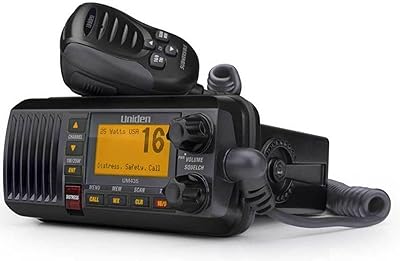
Uniden MHS75 VHF Marine Radio
89%
94%
Waterproof Performance
85%
Range & Signal Strength
88%
Battery Life
90%
Ease of Use
91%
Build Quality
More
Uniden UM725G Marine VHF Radio
79%
93%
Display Clarity
91%
Built-in GPS
88%
DSC Functionality
86%
Audio Quality
84%
Ease of Installation
More
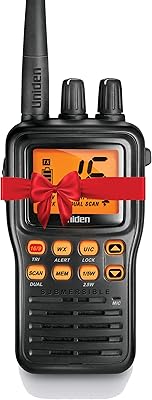
Uniden UM435BK Fixed Mount VHF Marine Radio
80%
93%
Waterproofing & Weather Resistance
88%
Audio Clarity & Reception
84%
Ease of Installation
91%
Channel Coverage & Compatibility
82%
Value for Money
More
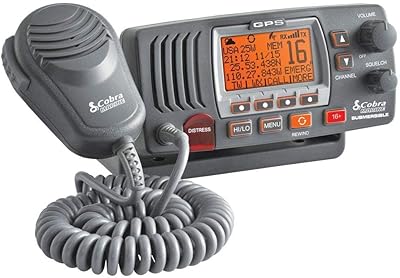
Standard Horizon HX40 VHF Marine Radio
86%
88%
Range & Performance
92%
Build Quality & Durability
95%
Waterproofing
89%
Ease of Use
72%
Battery Life
More
Standard Horizon GX1800G Fixed Mount VHF Radio
81%
91%
GPS & DSC Integration
83%
Transmit Range & Power
88%
Build & Waterproofing
67%
Display Readability
74%
Ease of Installation
More
Uniden Atlantis 275 Handheld VHF Marine Radio
81%
93%
Waterproof Performance
88%
Display Quality
79%
Transmit Power & Range
82%
Battery Life
76%
Build Quality
More
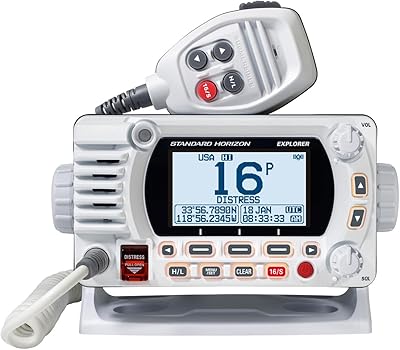
Cobra MR F77B GPS Fixed Mount VHF Radio
79%
88%
GPS Performance
91%
DSC Functionality
79%
Ease of Installation
67%
Audio Clarity
86%
Display Visibility
More
Cobra MR F45-D Fixed Mount VHF Radio
84%
88%
Audio Clarity
91%
Ease of Installation
93%
Weather Alert Performance
79%
DSC Functionality
74%
Build Quality
More
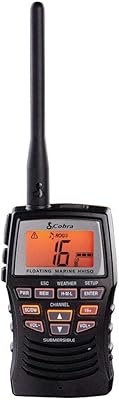
Cobra MR HH150 FLT VHF Marine Radio
85%
87%
Performance
92%
Build Quality
79%
Battery Life
88%
Ease of Use
91%
Waterproofing & Durability
More
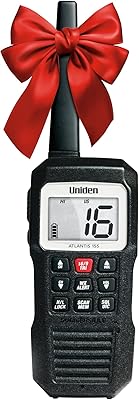
Uniden Atlantis 155 Handheld VHF Marine Radio
80%
91%
Waterproof Performance
88%
Buoyancy & Drop Safety
89%
Ease of Use
61%
Transmit Power & Range
86%
NOAA Weather Alerts
More

FAQ

No, and this is an important distinction. The M94D is an AIS receiver, not a transponder. It can see other AIS-equipped vessels on its display, but it does not broadcast your own position to anyone else. If you need to be visible on other vessels' AIS systems, you would require a separate AIS transponder or a fixed-mount VHF with Class B AIS built in.

Honest answer: it takes some patience. The MMSI registration process requires navigating a few menu layers that are not immediately intuitive, and the manual is dense. Most buyers get through it in one sitting, but it helps to watch a walkthrough video first. Once it is configured, day-to-day use is straightforward — the setup is really a one-time task.

Yes — it is designed to float face-up, and the auto-flash LED activates automatically even if the unit is powered off at the time. This is a genuine safety feature, not just a marketing claim. Several owners have confirmed it works both in accidental drops and deliberate water tests.

When you activate AquaQuake, the speaker vibrates at a specific frequency that physically shakes water out of the grill. It takes only a few seconds, and audio quality returns almost immediately afterward. It is noticeably more effective than simply shaking the radio or letting it air dry, particularly after a solid wave wash.

Under typical conditions — a mix of standby monitoring, occasional transmissions, and moderate screen use — most users get close to the rated figure. The main exception is running continuous AIS channel scanning, which draws significantly more power and can cut real-world runtime noticeably shorter. If AIS monitoring is your priority, carrying a spare battery or a charging cable for your boat is a sensible precaution.

You can still receive and display AIS data from other vessels without a GPS input, but the information is limited — you will see vessel names and signal data but not accurate relative positioning or range. For the AIS display to show meaningful distance and bearing information, pairing the radio with a GPS source is strongly recommended.

It makes a real and noticeable difference in moderate wind and engine noise environments. Users on the receiving end of transmissions regularly comment on the clarity. In very strong wind conditions above around 25 knots, some bleed-through is still audible, but it performs better than most handhelds in its class under typical sailing conditions.

If your existing Icom accessories are designed for the marine VHF lineup operating on the standard frequency band, there is a good chance they will be compatible. That said, Icom has different connector generations across its product line, so it is worth checking the specific model numbers of your existing accessories against the M94D compatibility list before assuming they will work.

Yes, the receive frequency range covers the NOAA weather radio broadcast frequencies, so you can monitor weather channels directly on this VHF radio. All standard marine working channels, Channel 16, and Channel 70 for DSC are also fully accessible within the specified frequency ranges.

It depends on how you weigh the feature set against the cost. The build quality and AquaQuake design are genuinely useful for any boater in wet conditions, but the AIS receive and DSC capabilities deliver the most value to those in busier or more exposed waters. If your sailing is entirely calm and inshore, a simpler waterproof VHF handheld would serve your basic needs at a lower price point.

Where to Buy

Waveinn.com
In stock $381.99
Nootica.com
In stock $459.90