Overview

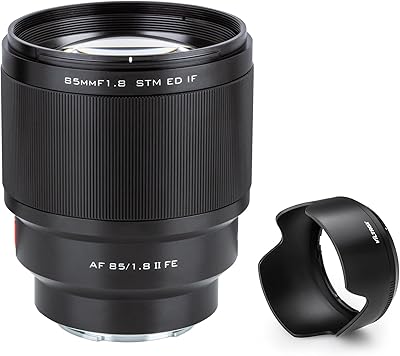
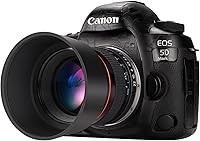
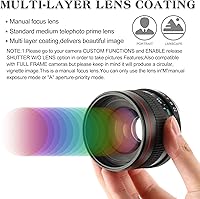
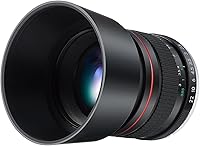
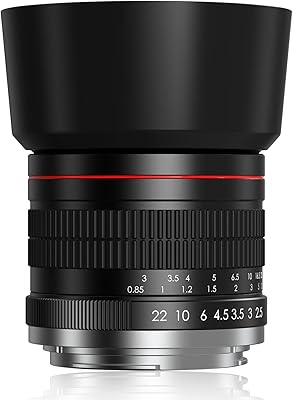
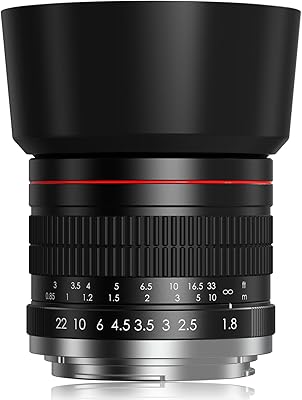
The JINTU 85mm f1.8 Portrait Prime Lens is a straightforward proposition: a fast, fixed-focal manual prime for Canon DSLR shooters who want serious glass without a serious price tag. Before anything else, know that this manual prime has no autofocus, no electronic contacts, and communicates nothing to your camera body — you will see a lens not attached warning on the display, and that is completely normal. What you get instead is a metal-barreled build and a hybrid aspherical element that punch well above this price tier. It fits any Canon EF or EF-S body, from a basic Rebel to a full-frame 5D. Patient shooters willing to dial in focus by hand will find a lot to like here.

Features & Benefits

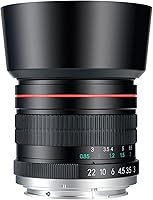
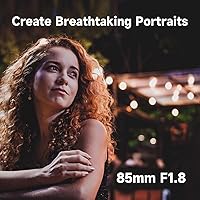
Shoot at f1.8 wide open and backgrounds go soft in a way that genuinely flatters portrait subjects — creamy blur without any clinical harshness. On a crop-sensor body, the 85mm focal length stretches to an effective 136mm equivalent, which is a classic head-and-shoulders framing distance that compresses features naturally. The optics use six elements in six groups, with low-dispersion glass keeping chromatic fringing under control for a lens at this price. There are no electronics involved, so aperture is set manually via a dedicated ring that clicks through f1.8 all the way to f22. The all-metal barrel keeps things around 1.1 pounds, and the 55mm filter thread accepts standard polarizers or ND filters without any adapters.

Best For

This portrait lens is a natural fit for hobbyist portrait photographers shooting on Canon Rebels who want the experience of a fast prime before committing to a pricier option. Video shooters and film students who already live in manual mode will appreciate that the aperture ring and focus ring behave predictably on a rig. Anyone curious about background separation and shallow depth-of-field work will get a genuine feel for what that looks like without breaking the budget. That said, this is not the right choice for sports, events, or any situation where fast autofocus is required — the manual-only design is a real limitation in fast-moving scenarios, not just a minor inconvenience.

User Feedback

Across 82 ratings, this manual prime holds a 4.0 average, which is respectable territory for a third-party lens with no electronics. The most consistent praise covers center sharpness wide open, pleasing bokeh on portraits, and a build quality that feels more expensive than the price suggests. The main friction point — and it catches people off guard — is the lens not attached error the camera throws at startup. This is expected behavior with no electronic contacts, but buyers who skip the manual instructions often leave frustrated reviews. A smaller group notes some focus breathing and mild barrel distortion at close range. Those who commit to the manual workflow tend to come away satisfied.

Pros

  • The f1.8 aperture produces genuinely smooth background blur on portraits, even when shooting on a crop-sensor body.
  • Metal barrel construction feels noticeably more substantial than plastic third-party alternatives at this price tier.
  • Broad Canon EF and EF-S compatibility covers everything from entry-level Rebels to full-frame 5D bodies.
  • The manual aperture ring puts full exposure control physically in your hands, no camera menu required.
  • Center sharpness wide open is solid for a third-party manual prime at this budget level.
  • The 55mm filter thread is a widely available size, making polarizers and ND filters easy and affordable to source.
  • At around 1.1 pounds, it sits comfortably on a standard Rebel grip during longer portrait sessions.
  • An excellent hands-on learning tool for beginners who want to understand manual exposure without buying expensive glass.

Cons

  • No electronic contacts means the camera throws a lens-not-attached warning on every power cycle — confusing if you are unprepared.
  • Zero EXIF data is written to image files, so aperture, focal length, and focus distance are never recorded.
  • Noticeable focus breathing when pulling focus during video can be distracting and complicate post-production edits.
  • Mild barrel distortion surfaces at closer focusing distances, which limits its usefulness for tightly framed environmental portraits.
  • No image stabilization means handheld shooting at slower shutter speeds carries a meaningful risk of camera shake.
  • The 0.85m minimum focusing distance rules out close-up or detail shots that a more versatile prime might handle.
  • Initially expect a high rate of missed-focus frames — the learning curve for manual focus is real and takes dedicated practice.
  • No autofocus confirmation or focus peaking assistance from the camera body makes precise focus harder on smaller Rebel viewfinders.

Ratings

Our AI scoring engine processed verified buyer feedback for the JINTU 85mm f1.8 Portrait Prime Lens from photographers across multiple global markets, actively filtering out bot-generated, incentivized, and duplicate submissions to ensure every score reflects genuine hands-on use. The categories below cover the full picture — from where this manual prime genuinely earns its praise to where it falls short for specific types of shooters.

Build Quality
84%
The all-metal barrel immediately sets this manual prime apart from the plastic-heavy competition at this price range. Photographers report it feels dense and well-assembled in hand, with no creaking or wobble at the mount. For a budget lens, the construction is consistently described as punching well above its price tier.
A few users note the focus ring feels slightly stiff out of the box, requiring a brief break-in period before it turns smoothly. The aperture ring, while functional, lacks the dampened feel of premium glass and can feel marginally loose to shooters accustomed to native Canon lenses.
Optical Sharpness
73%
27%
Center sharpness at f1.8 is genuinely respectable for a third-party manual prime at this price point — good enough for natural-light portrait sessions where the subject is centered and pixel-level inspection is not the goal. Most users shooting head-and-shoulders portraits at moderate distances report clean, detailed results from the center of the frame.
Edge and corner sharpness wide open leaves something to be desired, with visible softness that only resolves when stopping down to around f4 or beyond. This is not a concern for shallow depth-of-field portrait work, but it limits usefulness for landscapes or architecture where sharpness across the full frame is expected.
Bokeh Quality
82%
18%
For budget portrait shooters, the background blur at f1.8 is one of the most pleasant surprises this portrait lens offers. At a reasonable subject-to-background distance, the out-of-focus areas render smoothly without the harsh, nervous quality that some cheap primes exhibit. Natural-light sessions outdoors or near a window show the bokeh at its best.
At close focusing distances, the bokeh transitions from smooth to slightly busy, and circular highlights can show some shape irregularity toward the edges of the frame. Shooters finicky about onion-ring artifacts or outlining on specular highlights may find the rendering noticeably less polished than native Canon glass.
Value for Money
88%
For photographers who want to experiment with an 85mm focal length and fast aperture without a significant financial commitment, this manual prime delivers an honest amount of performance per dollar. The metal build and usable f1.8 bokeh together make the purchase feel justified, and it consistently earns praise from budget-conscious beginners.
The value equation shifts if you factor in the learning investment required to get consistently sharp results — buyers who are not ready to commit to manual focus may feel they overpaid once the novelty wears off. It is a strong bargain only for those who will actively embrace the manual workflow.
Manual Focus Experience
71%
29%
The focus ring has enough travel to allow reasonably precise adjustments, and experienced manual shooters report finding their rhythm with it quickly. For portrait sessions with cooperative, stationary subjects, hitting accurate focus is very achievable with practice — especially when using live view with the camera's digital zoom-in focus aid.
Without electronic focus confirmation or focus peaking assistance from the camera body, beginners face a steeper learning curve and a noticeably higher rate of missed focus during early sessions. Shooting slowly moving subjects — even a child walking toward the camera — is genuinely difficult and error-prone with this setup.
Aperture Control
78%
22%
Having a physical aperture ring is a real advantage for video shooters who need to adjust exposure during a take without navigating camera menus. Photographers transitioning from autofocus lenses often find the tactile, in-hand control refreshing, and the ring clicks firmly into each stop for confident, repeatable positioning.
The aperture ring clicks are audible and can be picked up by an on-camera microphone when adjusting exposure mid-shoot during video. A small number of users also report the ring feels incrementally looser over time with frequent use, particularly in colder shooting conditions.
Compatibility
86%
The EF mount design covers a genuinely wide Canon DSLR range — from basic Rebel bodies all the way up to the 5D Mark IV and 6D Mark II — making this portrait lens a versatile option that does not become obsolete if you upgrade camera bodies within the Canon DSLR ecosystem.
No officially confirmed compatibility with Canon mirrorless RF or EF-M mount bodies means shooters who have transitioned to mirrorless will need to verify third-party adapter behavior independently. The absence of electronics also means autofocus adapters will not restore any AF capability, regardless of which adapter is used.
Chromatic Aberration
67%
33%
The low-dispersion glass elements in the six-element design do a reasonable job controlling chromatic fringing in typical portrait shooting conditions — bright-line situations like backlit hair or high-contrast foliage edges remain mostly clean at moderate apertures and typical subject distances.
At f1.8 on high-contrast edges, some purple and green fringing is visible under close inspection, particularly with backlit subjects. While manageable with standard post-processing correction tools, photographers who shoot JPEG and prefer in-camera output without editing will notice the fringing more readily and may find it frustrating.
Distortion Control
61%
39%
At typical portrait distances — roughly 1.5 meters or more from the subject — barrel distortion is minimal enough that most photographers will never notice or need to correct for it. For standard head-and-shoulders framing, the geometric rendering is clean and more than satisfactory for the intended use case.
At or near the 0.85m minimum focusing distance, barrel distortion becomes visible and can slightly bow straight lines near the frame edges. This limits the usefulness of this portrait lens for close-range product shots or architectural detail work where precise geometric accuracy is expected or required.
Low-Light Performance
81%
19%
The f1.8 maximum aperture is a genuine low-light asset, enabling hand-held shooting in window-lit rooms, dim cafes, or shaded outdoor settings where a kit lens would force a disruptive ISO increase or dangerously slow shutter speed. Indoor environmental portrait users consistently cite this as one of the most practical reasons to own it.
Without image stabilization, the benefit of the wide aperture is partially offset — at 85mm, even modest camera shake can blur an otherwise well-focused shot at slower shutter speeds. Shooters with less steady hands will need to maintain shutter speeds above 1/160s to reliably eliminate motion blur in handheld situations.
Video Usability
58%
42%
Manual focus control and a physical aperture ring give this manual prime genuine appeal for narrative filmmakers and content creators who design deliberate focus pulls into their shots. On a locked-off or slow-moving rig, it can produce cinematic-looking portrait footage at a fraction of dedicated cine lens pricing.
Focus breathing is a notable and recurring complaint — the frame shifts visibly when pulling focus, which can distract viewers in polished video edits and may require stabilization corrections in post. With no electronic contacts, aperture data is also never passed to the camera, complicating consistent color matching in multi-camera setups.
Ease of Setup
54%
46%
For photographers who read the product documentation first, the setup process is entirely straightforward — mount the lens, switch to manual mode, and start shooting. Users who approach it with the right expectations describe the initial configuration as taking under five minutes to fully understand and feel comfortable with.
The lens-not-attached error that appears at every startup is the single largest driver of buyer frustration and negative reviews, caused almost entirely by buyers unprepared for a fully manual, electronics-free design. The error message is alarming enough that many users immediately assume they received a defective unit rather than a working manual lens.
Filter Compatibility
83%
The 55mm front thread is one of the most widely available filter sizes on the market, meaning polarizers, UV protectors, and variable ND filters are easy to find at any camera retailer without hunting for niche diameters. The included lens hood also attaches cleanly without interfering with filter access.
Using a thick-rimmed or stacked filter combination alongside the lens hood simultaneously can be awkward, and some users report mild vignetting at f1.8 with a stacked filter setup due to the relatively shallow thread depth. Photographers with an existing collection of larger-diameter filters will also need step-up rings.
Weight & Balance
77%
23%
At approximately 1.1 lb, this manual prime sits in a comfortable middle ground — dense enough to feel purposeful and well-built, but light enough that it does not significantly upset the balance on a smaller Rebel body during portrait sessions or travel use lasting a few hours.
On the smallest and lightest Rebel bodies, the all-metal construction adds noticeable front-heaviness that some users find tiring during extended handheld sessions. Those accustomed to the featherweight feel of a standard kit lens will sense the difference immediately, particularly when shooting one-handed or in an awkward position.

Suitable for:

The JINTU 85mm f1.8 Portrait Prime Lens is purpose-built for Canon DSLR shooters who are ready to slow down and shoot with genuine intention. Hobbyist photographers working with crop-sensor Rebels will find the effective 136mm field of view ideal for head-and-shoulders portraits, especially in natural or available light where the f1.8 aperture earns its keep. Film students and video creators who already operate fully in manual mode will appreciate the physical aperture ring and deliberate focus throw, both of which behave consistently whether the lens is on a bare body or rigged up for video. Budget-conscious beginners who want to truly learn depth-of-field control — rather than letting a kit lens handle all the decision-making — will get real, hands-on exposure to what a fast prime can do. Travel and street photographers who want a compact, all-metal prime that can handle everyday wear without feeling like a liability will find this a practical and capable companion.

Not suitable for:

Anyone expecting autofocus should stop here — the JINTU 85mm f1.8 Portrait Prime Lens is a fully manual design with no electronic contacts, and that is a permanent characteristic of its architecture, not a setting to toggle. Wedding, event, and sports photographers who need to track moving subjects quickly will find manual focus a genuine obstacle that costs real shots, not just a minor inconvenience to work around. Parents photographing active children indoors, or anyone shooting in unpredictable scenarios where both speed and low-light performance matter simultaneously, will struggle with the focus-by-hand workflow under pressure. Photographers who depend on EXIF data for post-processing organization will also notice its complete absence, since this portrait lens communicates nothing to the camera body. If your workflow relies on in-body image stabilization cooperation, autofocus confirmation indicators, or any form of electronic lens control, this manual prime simply was not designed with you in mind.

Specifications

  • Focal Length: Fixed 85mm prime focal length with no zoom capability.
  • Max Aperture: Maximum aperture of f1.8 supports shallow depth of field and strong performance in lower-light conditions.
  • Min Aperture: Minimum aperture of f22 provides a wide exposure range for full manual control in bright conditions.
  • Lens Mount: Compatible with Canon EF and EF-S mounts, covering both APS-C crop-sensor and full-frame Canon DSLR bodies.
  • Focus Type: Manual focus only, adjusted entirely via a dedicated focus ring on the lens barrel.
  • Electronics: No electronic contacts are present, meaning no autofocus drive, no EXIF metadata, and no communication with the camera body.
  • Optical Design: Six elements arranged in six groups, incorporating low-dispersion glass elements to reduce chromatic aberration.
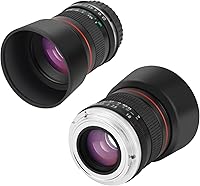
  • Filter Thread: 55mm front filter thread; attaching the included lens hood increases the effective outer diameter to 72mm.
  • Min Focus Distance: Closest focusing distance is 0.85m measured from the image plane.
  • Weight: Approximately 1.1 lb (around 0.49 kg), offering a solid, substantial feel without excessive load on entry-level bodies.
  • Build Material: All-metal barrel construction with no plastic exterior components.
  • Frame Coverage: Covers both full-frame and APS-C sensor formats; on crop-sensor bodies the effective focal length is approximately 136mm.
  • Stabilization: No optical or electronic image stabilization is built in.
  • Aperture Control: Aperture is set manually via a dedicated ring on the lens barrel, ranging from f1.8 through f22.
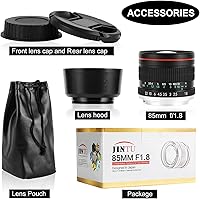
  • Lens Hood: A lens hood is included in the box and clips onto the front of the barrel for additional flare control.

Related Reviews
BENOISON 85mm F1.8 Nikon F Portrait Lens
67%
83%
Bokeh Quality
76%
Center Sharpness
47%
Corner Sharpness
53%
Vignetting
68%
Manual Focus Usability
More
Lightdow 85mm f/1.8 Manual Focus Portrait Lens
74%
76%
Image Sharpness
82%
Bokeh Quality
88%
Value for Money
84%
Focus Ring Feel
73%
Build Quality
More
Meike 85mm F1.8 Nikon F Portrait Lens
75%
91%
Value for Money
76%
Image Sharpness
83%
Bokeh Quality
61%
Autofocus Speed
72%
Autofocus Accuracy
More
VILTROX 85mm F1.8 Z Portrait Lens
76%
78%
Autofocus Performance
83%
Image Sharpness
81%
Bokeh Quality
76%
Build Quality
86%
Value for Money
More
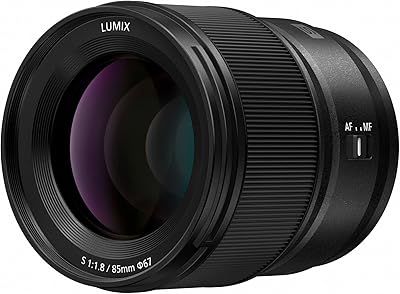
Panasonic LUMIX S-S85 85mm F1.8 Lens
82%
92%
Image Sharpness
84%
Bokeh Quality
71%
Autofocus Performance
83%
Build Quality
74%
Weather Sealing
More
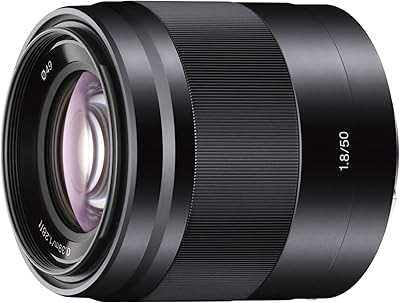
Sony E 50mm F1.8 OSS Portrait Lens
86%
89%
Image Quality
74%
Autofocus Performance
92%
Bokeh and Background Blur
80%
Low-Light Performance
85%
Build Quality
More
Meike 85mm F1.8 AF STM Portrait Lens
73%
76%
Image Sharpness
83%
Bokeh Quality
57%
Autofocus Speed
62%
Autofocus Accuracy
78%
Build Quality
More
BENOISON 85mm f/1.8 Portrait Prime Lens
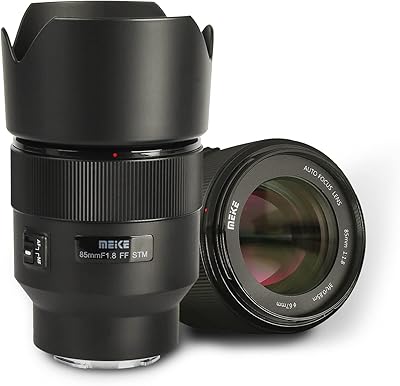
76%
83%
Bokeh & Background Separation
88%
Value for Money
71%
Build Quality & Feel
74%
Optical Sharpness (Center)
66%
Manual Focus Accuracy
More
Viltrox AF 85mm F1.8 Mark II Lens
81%
86%
Autofocus Speed
91%
Autofocus Noise
88%
Center Sharpness
63%
Edge & Corner Sharpness
79%
Bokeh Quality
More
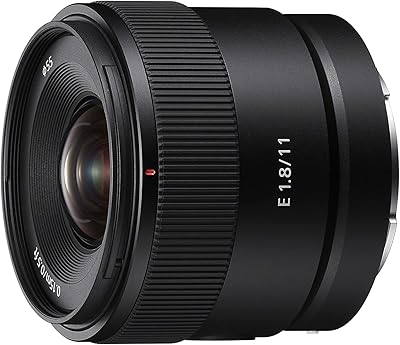
Sony E 11mm F1.8 APS-C Ultra-Wide-Angle Prime Lens
87%
93%
Autofocus Speed
91%
Image Quality
89%
Portability
74%
Low-Light Performance
88%
Build Quality
More

FAQ

Nothing is wrong. The JINTU 85mm f1.8 Portrait Prime Lens has no electronic contacts, so your Canon body simply cannot detect it the way it would a native lens. To shoot, switch your mode dial to Manual (M), set your ISO and shutter speed by hand, adjust the aperture ring on the lens barrel, and focus using the focus ring. The warning will keep appearing at startup, but it will not stop you from taking photos once you are in full manual mode.

Yes, it mounts directly on any Canon EF or EF-S body, and that covers the entire Rebel lineup from the T2i all the way through the T8i, plus the SL series and other crop-sensor Canons. Just keep in mind you will need to shoot in full manual mode since there is no electronic link between the lens and camera.

None whatsoever. This is a fully manual lens in every respect — no autofocus motor, no electronic contacts, no focus confirmation chip. If autofocus matters to your workflow, this portrait lens is genuinely not the right choice, and that is worth being clear-eyed about before purchasing.

At f1.8, center sharpness is solid for a budget manual prime — perfectly usable for portrait work where your subject is roughly centered. Corner sharpness at wide open is softer, which is typical at this price tier. Stopping down to around f2.8 or f4 noticeably improves edge-to-edge consistency if you need the whole frame sharp, such as for group shots or architecture.

It works well for video if you are already comfortable pulling focus by hand. The focus ring is smooth enough for deliberate, controlled focus transitions, and the aperture ring lets you adjust exposure physically without touching the camera. One thing to watch for is focus breathing — the frame shifts slightly when you rack focus, which can be noticeable in edited footage and may require compensation in post.

Yes, the EF mount covers a full 35mm frame, so it is fully compatible with full-frame Canon bodies including the 5D and 6D lines. On those cameras you get the true 85mm field of view, which is considered a classic flattering focal length for portrait photography. The same lens-not-attached warning will appear on full-frame bodies too, for the same reason.

The front filter thread is 55mm, which is a widely available and affordable size for standard UV, polarizer, and ND filters. A lens hood is included in the box — once attached, the outer diameter effectively becomes 72mm, but your filter accessories should still be purchased in the 55mm size to fit the lens thread itself.

Set the mode dial to M for Manual, then dial in your shutter speed and ISO for the right exposure — a light meter app on your phone can help if you are new to this. Turn the aperture ring on the lens to your chosen f-stop, then look through the viewfinder or use live view and rotate the focus ring until your subject looks sharp. Take a test shot, check the result, and adjust from there. It feels slow at first but becomes second nature quickly.

For a budget manual prime, the bokeh is genuinely one of its stronger qualities. At f1.8 with a reasonable distance between your subject and background, the blur is smooth and soft rather than harsh or distracting. It does not match the rendering of Canon's premium 85mm lenses, but for casual portrait sessions and first-time experimentation with background separation, it holds up well and rarely disappoints.

It can work for street photography, but it suits a patient and deliberate shooting style rather than fast reactive work. A common technique is zone focusing — pre-setting the focus to a fixed distance and using a small aperture like f8 so that a wide range is sharp — which removes the need to focus shot by shot. The all-metal build handles outdoor wear well. If your street style involves chasing fleeting moments at close range, the manual focus limitation will cost you frames.