
Overview

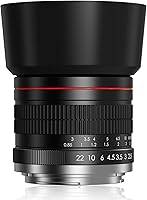
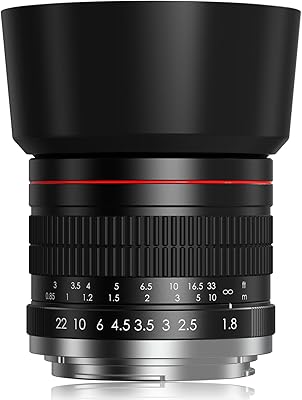
The BENOISON 85mm F1.8 Nikon F Portrait Lens is a third-party manual focus prime designed for Nikon F-mount DSLR shooters who want an 85mm option without spending heavily. BENOISON is a Chinese optics brand — not a household name, but increasingly common in the budget lens space. What matters most upfront: this manual 85mm lens has no electronic communication with your camera body — no autofocus, no aperture data transmitted. Your Nikon will likely flash a Lens not attached error on first mount; that is completely normal. Switch to Manual mode and it vanishes. This lens targets hobbyists, photography students, and portrait enthusiasts who prioritize value over automation.

Features & Benefits

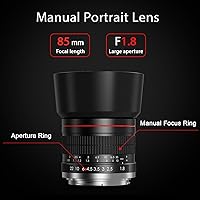
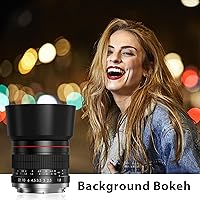
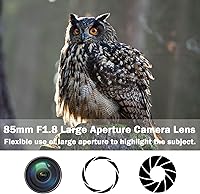
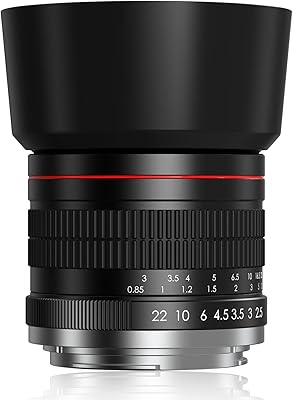
At F1.8 maximum aperture, this budget portrait prime produces the kind of background blur that makes subjects pop — smooth, rounded bokeh that punches well above its price point. The 85mm focal length provides natural portrait compression without distorting facial features, working beautifully for half-body and full-body shots alike. The manual focus ring has a decent amount of throw, giving you enough precision to land focus on an eye without it feeling twitchy. Aperture runs from F1.8 down to F22, covering everything from low-light portraiture to bright outdoor scenes. One practical note: filter sizing changes depending on whether the lens hood is attached — 72mm with it, 55mm without.

Best For

This manual 85mm lens is a natural fit for Nikon DSLR photographers who are already comfortable shooting manually, or those actively trying to learn the relationship between aperture, shutter speed, and ISO by feel. It works well for deliberate, slow-paced portrait sessions where you have time to dial in focus rather than chasing a moving subject. Film-style shooters and photography students will appreciate the tactile control. That said, it is not the right choice for weddings, sports, or candid street work where you need to react instantly. If you are weighing this against a used autofocus 85mm, the trade-off is simple: lower cost, but you own the focus responsibility entirely.

User Feedback

Across nearly 500 ratings, the BENOISON 85mm sits at 3.9 out of 5 — respectable for a budget prime, and the pattern in reviews is fairly consistent. Shooters who embrace the manual workflow tend to be satisfied, praising the bokeh quality and center sharpness once stopped down to around F2.8 or F4. Wide open at F1.8, corners go soft and some vignetting appears — neither is unusual for a lens in this category, but worth knowing before you shoot. The recurring complaint is not optical; it is the learning curve around camera error messages and dialing exposure manually. Build feels solid for the weight, though not quite as refined as established brands. Realistic expectations make all the difference here.

Pros

  • F1.8 aperture produces genuinely smooth, pleasing background bokeh for a lens at this price point.
  • Center sharpness is solid, especially when stopped down to F2.8 or F4 for portrait work.
  • The 85mm focal length delivers natural, flattering compression for face and upper-body portraits.
  • Compatible with a wide range of Nikon F-mount DSLRs, from entry-level to enthusiast bodies.
  • Manual focus ring has enough rotational throw to allow precise, controlled focusing.
  • Includes a lens hood, which adds practical value and helps reduce flare in bright conditions.
  • Aperture range extends to F22, giving flexibility across a wide variety of lighting situations.
  • Lightweight enough at 1.12 pounds to use comfortably for extended portrait sessions.
  • Ranked among the top sellers in its category, suggesting broad buyer accessibility and ongoing availability.
  • An affordable way to test whether an 85mm prime suits your shooting style before upgrading.

Cons

  • No autofocus means missed shots are common in fast-moving or unpredictable shooting situations.
  • The camera displays a lens error on first mount, which catches many buyers completely off guard.
  • Aperture value does not transmit to the camera body, leaving EXIF data incomplete for every shot.
  • Corners go noticeably soft when shooting wide open at F1.8, which can undermine full-frame portraits.
  • Some vignetting is visible at maximum aperture, requiring correction in post-processing.
  • Exposure must be set entirely by hand — metering through the lens does not function.
  • Filter thread size changes depending on whether the hood is attached, complicating filter kit compatibility.
  • Build quality, while acceptable, does not feel as refined as established lens brands at similar weights.
  • No weather sealing of any kind, limiting use in outdoor conditions with rain or heavy dust.
  • The manual-only workflow has a real learning curve that casual or beginner shooters often underestimate.

Ratings

The BENOISON 85mm F1.8 Nikon F Portrait Lens has been evaluated by our AI system after analyzing hundreds of verified global buyer reviews, with spam, incentivized feedback, and bot activity actively filtered out to ensure the scores reflect genuine user experiences. Ratings span everything from optical performance to real-world usability frustrations, giving you an honest picture of where this budget portrait prime delivers and where it falls short.

Bokeh Quality
83%
For a lens at this price tier, the background blur it produces at F1.8 genuinely surprises buyers shooting half-body portraits in parks or against simple studio backdrops. The circular aperture blades create smooth, creamy out-of-focus areas that separate subjects naturally without harsh outlining.
At wider apertures, some users notice slightly nervous bokeh toward the edges of the frame, particularly when background elements like foliage or window frames are close to the subject. It lacks the polished, controlled rendering of higher-end 85mm primes.
Center Sharpness
76%
24%
Stopped down to F2.8 or F4, the center of the frame holds up well for portrait work — facial details, fabric textures, and hair resolve cleanly enough for web use and moderate print sizes. Multiple buyers have noted the sharpness improvement when avoiding wide-open shooting.
Wide open at F1.8, center sharpness drops noticeably compared to name-brand alternatives, and fine details can appear slightly mushy in direct comparison. Users who pixel-peep or shoot for large-format prints will find the wide-open results underwhelming.
Corner Sharpness
47%
53%
For tightly cropped portrait shots where the subject occupies the center of the frame, corner softness is largely a non-issue, and many buyers report they rarely notice it in practice during standard portrait compositions.
Wide open, the corners go quite soft — a recurring and consistent complaint across reviews. For environmental portraits, group shots, or any composition where sharpness across the full frame matters, this is a real limitation that the lens simply cannot overcome at F1.8.
Vignetting
53%
47%
Some buyers actually prefer the natural light falloff at F1.8 for moody portrait work, as it draws the eye toward the center of the frame and adds a subtle atmospheric quality without heavy post-processing.
The vignetting at maximum aperture is pronounced enough that it requires correction in Lightroom or similar software for clean, even-toned backgrounds. Buyers shooting JPEG without post-processing will notice dark corners in almost every wide-open frame.
Manual Focus Usability
68%
32%
The focus ring has a generous rotational throw that gives users enough travel to make fine, deliberate adjustments — something short-throw budget lenses often get wrong. Photographers using live view with zoom magnification report being able to achieve reliably sharp focus on a stationary subject.
On optical viewfinders without a split-prism screen, landing critical focus on eyes during a portrait session takes practice and patience that many buyers underestimate at purchase. Several reviewers mention a frustrating initial period of soft shots before they adapted their technique.
Build Quality
66%
34%
The physical construction feels solid enough for casual use — the focus ring turns smoothly without wobble, and the lens mount seats securely on Nikon F bodies without play. At 1.12 pounds it has a reassuring heft that does not feel hollow or cheaply assembled.
The exterior finish and material quality do not match Nikon or Sigma glass at comparable weights, and long-term durability under heavy use remains a question mark given the brand's limited track record. There is no weather sealing, limiting outdoor use in unpredictable conditions.
Ease of Setup
51%
49%
Physically mounting this budget portrait prime onto a Nikon F-mount body is straightforward and identical to any other F-mount lens — no tools or adapters required for the vast majority of Nikon DSLR users.
The immediate appearance of a lens error on the camera screen genuinely confuses a significant portion of buyers, and several report nearly returning the lens before discovering the Manual mode fix. The lack of any aperture readout or EXIF recording adds further friction for users accustomed to automatic lenses.
Exposure Control
55%
45%
Photographers who already shoot in manual mode find the exposure workflow perfectly manageable — setting shutter speed and ISO independently is second nature for experienced shooters, and nothing about this lens makes that process more difficult.
For buyers transitioning from kit lenses or automatic shooting modes, the complete absence of metering-through-lens functionality is a steep adjustment. Multiple reviewers describe their first rolls of shots as consistently over- or underexposed before they found their footing.
Value for Money
78%
22%
As an entry point into 85mm portraiture without the cost of a brand-name autofocus prime, this manual 85mm lens offers a genuinely compelling proposition — the bokeh and focal length characteristics alone justify the spend for buyers who shoot controlled portrait sessions.
Buyers who factor in the learning time, the missing EXIF data, and the optical compromises wide open may find a used autofocus 85mm a smarter long-term investment at a modest price premium. The value calculation depends heavily on how much the manual workflow costs you in missed shots.
Compatibility Range
81%
19%
The Nikon F mount covers an enormous range of DSLR bodies spanning decades of production, meaning the vast majority of Nikon DSLR owners — from D3000-series beginners to D800-series enthusiasts — can mount and use this lens immediately.
Z-mount mirrorless users are entirely excluded without an additional adapter, which is an increasingly relevant limitation as Nikon's DSLR lineup ages and more photographers transition to mirrorless systems.
Filter Compatibility
59%
41%
The inclusion of a lens hood in the box is a practical touch, and buyers who are aware of the dual filter thread sizes upfront can plan their filter kit accordingly without extra expense.
The switch between 72mm with the hood and 55mm without it is a genuine nuisance — buyers who purchase filters before fully reading the specs frequently end up with the wrong size ring. The inconsistency has generated frustration in reviews from photographers who already own filter systems.
Portrait Compression
84%
The 85mm focal length delivers the kind of natural, flattering facial compression that portrait photographers have relied on for decades — subjects look proportionate and three-dimensional without the distortion that wider lenses introduce at close range.
On APS-C sensor bodies the effective field of view narrows to around 127mm equivalent, which some buyers find too tight for half-body shots in smaller indoor spaces, requiring more room to back up than anticipated.
Low Light Performance
71%
29%
The F1.8 maximum aperture gathers enough light for indoor portrait sessions under artificial lighting without pushing ISO to noise-heavy levels, which is one of the most cited practical benefits among buyers using it for home or studio-style shooting.
Because exposure must be dialed in fully by hand, achieving correct exposure quickly in rapidly changing light — like shooting near a window at dusk — requires constant adjustment and a good eye for reading scenes, which slows workflow considerably.

Suitable for:

The BENOISON 85mm F1.8 Nikon F Portrait Lens is a strong fit for Nikon DSLR owners who want to explore 85mm portraiture without committing to the price of a brand-name autofocus prime. Photography students and self-taught hobbyists will find it particularly valuable as a hands-on learning tool — shooting fully manually forces you to understand exposure and depth-of-field in a way that automatic lenses simply do not. If you shoot portraits in controlled or slow-paced settings, like studio-style home shoots, lifestyle sessions with a cooperative subject, or deliberate street photography, the manual workflow is genuinely manageable. Film-inspired shooters and those who enjoy a tactile, intentional approach to image-making will feel at home with this budget portrait prime. It also makes a sensible trial lens for someone unsure whether 85mm is the focal length for them before spending significantly more.

Not suitable for:

Photographers who rely on speed — whether shooting weddings, events, children, sports, or fast-moving street scenes — should look elsewhere, because this manual 85mm lens offers zero autofocus capability and no electronic communication with the camera body whatsoever. If your shooting style demands quick reactions, manually hunting for focus will cost you the shot every time. Nikon Z-series mirrorless users should also be aware that the BENOISON 85mm F1.8 Nikon F Portrait Lens is strictly an F-mount design and will not mount on Z-mount bodies without a separate adapter. Shooters who expect plug-and-play simplicity may also find the initial setup frustrating — the camera will display a lens error on first use, and aperture data will not appear in the EXIF or on the screen. Anyone accustomed to evaluative metering working automatically through the lens will need to relearn how to expose manually, which is a real time investment.

Specifications

  • Focal Length: Fixed 85mm prime focal length, offering classic portrait compression with no zoom capability.
  • Max Aperture: Maximum aperture of F1.8 allows for strong subject separation and effective shooting in lower light conditions.
  • Min Aperture: Minimum aperture of F22 provides significant depth-of-field control across a wide range of lighting scenarios.
  • Focus Type: Fully manual focus only — the lens has no autofocus motor and no electronic communication with the camera body.
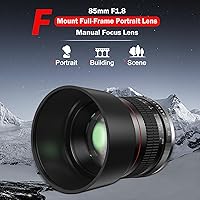
  • Mount: Nikon F mount, compatible with Nikon F-mount DSLR bodies in the D-series lineup.
  • Incompatible Mount: Not compatible with Nikon Z-mount mirrorless cameras without a separate third-party adapter.
  • Filter Thread: Filter thread measures 72mm when the included lens hood is attached, and 55mm when the hood is removed.
  • Dimensions: The lens body measures 4.72 x 2.95 x 2.95 inches, making it a moderately compact prime for its focal length class.
  • Weight: Weighs 1.12 pounds, which is manageable for extended handheld portrait sessions without significant fatigue.
  • Aperture Display: Because there is no electronic chip, the camera body displays F-- rather than a numeric aperture value during shooting.
  • Lens Hood: A lens hood is included in the box, which helps reduce lens flare and provides minor physical protection to the front element.
  • Brand: Manufactured by BENOISON, a third-party Chinese optics brand producing budget-oriented manual lenses for mainstream camera mounts.
  • Model Number: Official model designation is B-85, as assigned by the manufacturer.
  • Aperture Range: Full aperture range runs from F1.8 to F22, covering portrait, general photography, and landscape depth-of-field needs.
  • Lens Type: Prime lens with a single fixed focal length, producing generally sharper results than zoom lenses at comparable price points.
  • BSR Ranking: Holds a Best Sellers Rank of number 16 in the SLR Camera Lenses category on Amazon at the time of listing.
  • Availability: First listed for sale on October 14, 2023, indicating a relatively recent market entry with an active and growing review base.
  • Rating: Carries an average customer rating of 3.9 out of 5 stars across 479 ratings, reflecting mixed but broadly positive reception.

Related Reviews
Lightdow 85mm f/1.8 Manual Focus Portrait Lens
74%
76%
Image Sharpness
82%
Bokeh Quality
88%
Value for Money
84%
Focus Ring Feel
73%
Build Quality
More
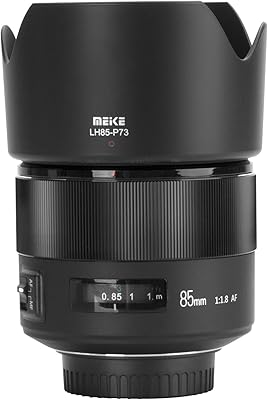
Meike 85mm F1.8 Nikon F Portrait Lens
75%
91%
Value for Money
76%
Image Sharpness
83%
Bokeh Quality
61%
Autofocus Speed
72%
Autofocus Accuracy
More
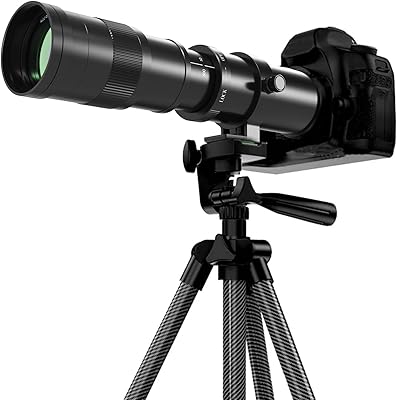
BENOISON 420-800mm Manual Focus Telephoto Lens
69%
88%
Value for Money
91%
Focal Reach
58%
Manual Focus Usability
67%
Image Sharpness
74%
Build Quality
More
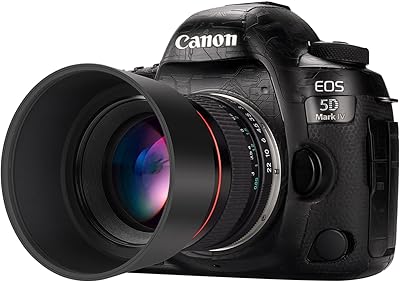
BENOISON 85mm f/1.8 Portrait Prime Lens
76%
83%
Bokeh & Background Separation
88%
Value for Money
71%
Build Quality & Feel
74%
Optical Sharpness (Center)
66%
Manual Focus Accuracy
More
JINTU 85mm f1.8 Portrait Prime Lens
75%
84%
Build Quality
73%
Optical Sharpness
82%
Bokeh Quality
88%
Value for Money
71%
Manual Focus Experience
More
Sony SEL85F18 85mm F/1.8 Prime Lens
81%
91%
Autofocus Speed & Accuracy
93%
Bokeh Quality
88%
Image Sharpness
82%
Chromatic Aberration Control
89%
Autofocus Noise
More
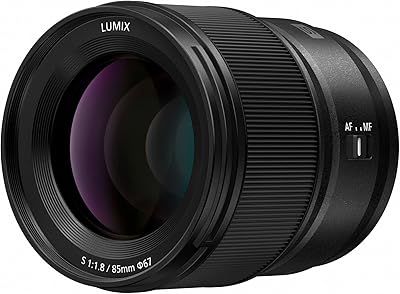
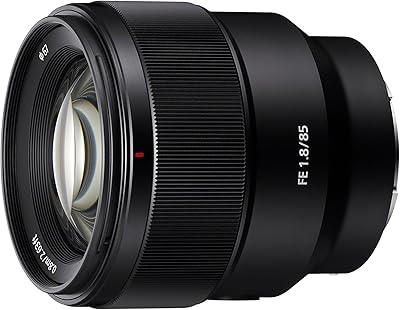
Panasonic LUMIX S-S85 85mm F1.8 Lens
82%
92%
Image Sharpness
84%
Bokeh Quality
71%
Autofocus Performance
83%
Build Quality
74%
Weather Sealing
More
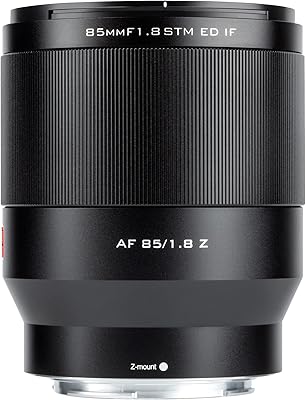
VILTROX 85mm F1.8 Z Portrait Lens
76%
78%
Autofocus Performance
83%
Image Sharpness
81%
Bokeh Quality
76%
Build Quality
86%
Value for Money
More
Nikon NIKKOR Z 85mm f/1.8 S Lens
86%
96%
Optical Sharpness
93%
Bokeh Quality
88%
Autofocus Performance
91%
Build Quality
84%
Weather Sealing
More
Sony E 50mm F1.8 OSS Portrait Lens
86%
89%
Image Quality
74%
Autofocus Performance
92%
Bokeh and Background Blur
80%
Low-Light Performance
85%
Build Quality
More

FAQ

No, you mounted it correctly. This error appears because the BENOISON 85mm F1.8 Nikon F Portrait Lens has no electronic chip, so the camera body cannot detect it through normal communication. Simply switch your camera to full Manual mode and the error will disappear. It is a known quirk with all dumb-chip manual lenses on Nikon bodies, not a defect.

Not directly — this is strictly an F-mount lens and will not physically attach to a Z-mount body. You would need a separate F-to-Z mount adapter to make it work, which adds cost and bulk. If you shoot Z-series, it is worth factoring that in before buying.

For the price tier, the optical performance is reasonable. Center sharpness is solid once you stop down to around F2.8 or F4, and the bokeh at F1.8 is genuinely smooth and attractive for portrait backgrounds. Wide open, the corners soften noticeably and some vignetting appears, which is typical for budget primes. If you are shooting tightly framed portraits rather than wide environmental shots, this is much less of an issue.

No — because there is no electronic communication between the lens and the body, the camera displays F-- rather than the actual aperture value. You will need to track your aperture setting by the physical ring on the lens itself. Your EXIF data will also not record the aperture, which is a minor but real inconvenience for reviewing shots later.

It depends on your camera and your experience level. The focus ring has a good amount of rotational throw, which makes precise adjustments easier than ultra-short-throw rings. Using your camera's live view with magnification, or enabling focus peaking if your body supports it, makes a significant difference. On optical viewfinders, a split-prism focusing screen (if your body supports swapping it) helps considerably.

That depends on whether you are using the lens hood or not. With the hood attached, the filter thread is 72mm. Remove the hood and it drops to 55mm. Make sure you know which configuration you plan to shoot with before buying filters, otherwise you risk buying the wrong size.

Yes, genuinely. Shooting with this budget portrait prime forces you to think about focus, aperture, shutter speed, and ISO as separate, deliberate choices rather than letting the camera handle them automatically. That hands-on process accelerates learning in a way that auto lenses often do not. Just go in knowing there is a real adjustment period, and do not expect it to keep up with fast-moving subjects.

The used Nikon 85mm F1.8G will cost considerably more, but you get autofocus, full electronic integration, better corner sharpness wide open, and much stronger build quality. If your budget allows it and you shoot in situations where speed matters, the Nikon is the smarter long-term investment. This manual 85mm lens makes more sense as a trial lens to confirm you love the focal length, or if you specifically want to shoot manually and want to minimize cost.

The hood does two useful things: it cuts down on lens flare when shooting into or near bright light sources, and it protects the front element from accidental bumps and light rain. Neither effect is dramatic, but both are practical. Given that it is included at no extra cost, there is little reason not to use it.

At 1.12 pounds it is not a featherweight, but it is well within comfortable range for handheld portrait work. On a mid-size DSLR body like a D3500 or D5600, the balance feels reasonable. You would not want to handhold it unsupported for hours on end, but for a typical portrait session it is not a strain.