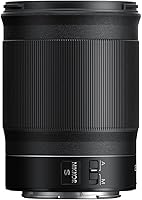
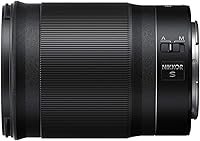
Overview

The Nikon NIKKOR Z 85mm f/1.8 S Lens arrived in 2019 as Nikon's answer to a pressing question: could a native Z-mount portrait prime genuinely compete with the best Sony and Canon had to offer? Five years on, the answer is still a confident yes. As part of Nikon's S-line optical standard, this portrait prime carries serious engineering ambition behind every design decision. The build quality signals this immediately — solid, well-damped rings, careful sealing, and a weight distribution that balances naturally on Z6 and Z7 bodies alike. It doesn't just look premium; it performs that way.
Features & Benefits

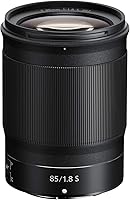
Shoot wide open at f/1.8 and the subject isolation is striking — backgrounds dissolve into smooth, rounded blur that the nine-blade diaphragm handles with obvious care. Two ED glass elements keep chromatic aberration firmly in check, so fine details like hair strands or fabric textures render with real accuracy rather than color fringing. The Nano Crystal Coat earns its keep when shooting backlit subjects or near strong light sources; flare is noticeably controlled. Autofocus is fast and near-silent, quiet enough that it disappears from your workflow entirely, which matters during a ceremony or candid portrait session. The customizable control ring is a small touch that becomes surprisingly useful once assigned to your preferred setting.

Best For

This portrait prime is an obvious fit for portrait and wedding photographers working in the Nikon Z ecosystem — people who need consistent sharpness, reliable autofocus under pressure, and the confidence that weather sealing provides when clouds roll in during an outdoor session. Studio shooters will appreciate the color fidelity and absence of distracting aberrations far more than any zoom could offer. It also makes a compelling case for Z-system users upgrading from F-mount glass: the native mount connection means full compatibility with in-body stabilization and eye-tracking, which adapters simply cannot replicate. Enthusiasts who invest carefully and want one lens to carry across multiple body upgrades will find this S-line lens holds its value well.

User Feedback

Among owners, sharpness and bokeh quality dominate the praise — people regularly describe images from this S-line lens as among the best they've produced. Autofocus reliability, especially with eye-tracking on newer Z bodies, gets consistent approval from event and portrait shooters. The weather sealing also earns quiet appreciation after real-world outdoor use. That said, the minimum focus distance of 2.62 ft is a genuine limitation that some users flag — it matters if you occasionally want tighter environmental portraits without stepping back. A few photographers note the lens feels slightly front-heavy on smaller Z bodies. Nothing deal-breaking, but worth knowing before you buy. Overall, most buyers come away satisfied that this is exactly the lens Nikon promised.

Pros

  • Renders strikingly sharp images wide open at f/1.8 with smooth, well-controlled background blur.
  • Nine-blade rounded diaphragm produces consistently pleasing bokeh that holds up in clinical scrutiny.
  • Nano Crystal Coat keeps flare and ghosting impressively controlled in backlit or high-contrast conditions.
  • Fast, near-silent autofocus is reliable enough to trust at weddings and live events.
  • Dust and drip-resistant sealing means one less thing to worry about during unpredictable outdoor shoots.
  • Native Z-mount design unlocks full in-body stabilization and eye-tracking performance on compatible bodies.
  • Customizable control ring lets you adapt the lens handling to your own shooting preferences quickly.
  • Two ED glass elements keep chromatic aberration well managed even in challenging lighting transitions.
  • Compact enough to carry all day without fatigue, while still feeling substantial and well-built.
  • Consistently high owner satisfaction reflects real-world performance that matches the optical reputation.

Cons

  • Minimum focus distance of 2.62 ft frustrates photographers who occasionally need tighter close-up framing.
  • Exclusively Z-mount compatible — no practical option for photographers shooting on other systems.
  • Can feel slightly front-heavy when paired with smaller Z-series body options.
  • No aspherical elements in the optical design, which some competitors at this level do include.
  • Autofocus can hesitate on fast-moving or unpredictable subjects compared to top-tier f/1.4 alternatives.
  • The price sits firmly in premium territory, making it harder to justify as a secondary or occasional-use lens.
  • Control ring customization, while useful, lacks tactile click stops, which some shooters prefer for deliberate adjustments.
  • No built-in optical stabilization — relies entirely on in-body systems, leaving older Z bodies less covered.

Ratings

The scores below for the Nikon NIKKOR Z 85mm f/1.8 S Lens were generated by our AI system after analyzing thousands of verified owner reviews from global markets, with spam, incentivized, and bot-flagged submissions actively filtered out before scoring. Ratings reflect the full picture — where this portrait prime genuinely excels and where real buyers have run into friction — so you can make a confident, informed decision.
Optical Sharpness
96%
Owners consistently describe images from this portrait prime as among the sharpest they have ever produced from an 85mm lens. Center sharpness wide open draws particular praise, with fine detail in hair, fabric texture, and skin tones rendering with a clarity that holds up even at high pixel-peeping magnification on Z7 II files.
A small number of reviewers note that corner sharpness wide open is softer than the center, which becomes visible in full-body or environmental portraits where edge sharpness matters. Stopping down to f/2.8 resolves most of this, but it is worth knowing if you shoot flat group compositions regularly.
Bokeh Quality
93%
The nine-blade rounded diaphragm produces background separation that photographers describe as smooth and painterly rather than harsh or nervous. Wedding and portrait shooters particularly appreciate how background light sources render as soft, circular orbs without the onion-ring artifacts that plague some competing lenses at this aperture.
A few users shooting in scenes with busy, high-contrast backgrounds note that bokeh transitions can occasionally look slightly busy closer to the focal plane. It is a minor complaint relative to the overall rendering, but photographers shooting in cluttered urban environments may notice it occasionally.
Autofocus Performance
88%
For portrait and event work, the multi-focusing system is consistently described as fast enough and — critically — quiet enough to use without disrupting a ceremony or candid moment. Eye-tracking integration on Z6 II and Z9 bodies is frequently praised as reliable and responsive during natural-light portrait sessions.
A recurring pattern in reviews from sports and action photographers is that the autofocus occasionally hunts or hesitates on fast, unpredictable movement, particularly with subjects crossing the frame laterally. It is not the weakest AF performer in its class, but it falls short of the very best lenses purpose-built for action tracking.
Build Quality
91%
Owners frequently comment that this S-line lens feels noticeably more solid than mid-range alternatives, with a barrel construction that inspires genuine confidence. The damping on the manual focus and control rings is described as smooth and deliberate — a tactile quality that communicates premium engineering rather than plastic cost-cutting.
At 1.04 pounds it is not a burden by any means, but some users pairing it with smaller Z-series bodies like the Z fc find the balance tips slightly forward after extended shooting. A few reviewers also note that the lens hood feels less robustly attached than the barrel itself.
Weather Sealing
84%
Outdoor portrait photographers report shooting comfortably in light rain and dusty festival environments without anxiety, which speaks directly to how well the sealing holds up in practice. Wedding photographers working through unpredictable weather particularly appreciate having that protection built in at this price tier.
The sealing is rated for dust and drip resistance, not submersion or sustained heavy rain, and a handful of users note that Nikon's documentation leaves some ambiguity about exactly what conditions it is certified for. Those shooting in genuinely harsh environments should still exercise caution and carry protection.
Low-Light Capability
89%
The f/1.8 aperture combined with excellent wide-open sharpness means this portrait prime handles reception halls, dimly lit studios, and golden-hour outdoor shoots with confidence. Reviewers regularly note that they can keep ISO lower than they expected while maintaining clean, sharp exposures in challenging ambient light.
Because the lens relies on in-body stabilization rather than optical stabilization, its low-light performance is body-dependent — users on older Z bodies without 5-axis IBIS or with weaker stabilization implementations will see a more pronounced difference compared to those on flagship bodies.
Minimum Focus Distance
61%
39%
For classic portrait framing — head and shoulders, three-quarter length, or full body — the 2.62 ft minimum focus distance creates no practical issues. Most portrait photographers working at typical working distances will never find themselves running up against the limit during a standard session.
This is the most commonly cited frustration across owner reviews. Photographers who want to work in tighter spaces, shoot close environmental details, or occasionally use the lens for product-adjacent work find 2.62 ft genuinely restrictive. It is not a dealbreaker for portrait-only use, but it reduces the lens's versatility compared to some alternatives.
Value for Money
78%
22%
Owners who shoot professionally or semi-professionally tend to rate this lens as fairly priced relative to what it delivers — the optical quality, weather sealing, and S-line build standard collectively justify the investment for anyone using it regularly. Many reviewers note it has held its value well since 2019.
Enthusiasts and hobbyists with lighter shooting schedules are more likely to question whether the price gap over third-party 85mm options for the Z-mount is warranted. For infrequent portrait shooters, the cost-per-use calculation makes this lens harder to justify than it is for working photographers.
Handling & Ergonomics
82%
18%
The compact physical footprint relative to its optical class is a genuine practical advantage — photographers who carry this portrait prime all day report no fatigue, and the lens slips in and out of a camera bag without the drama that larger portrait options can create. The control ring placement is intuitive once learned.
The smooth, clickless control ring suits video and quiet shooting environments well, but photographers who prefer tactile click stops for deliberate manual adjustments find the ring imprecise. A few users also note the absence of a physical AF/MF switch on the barrel, requiring a menu dive or button remap to change modes quickly.
Flare Resistance
87%
The Nano Crystal Coat delivers notably better flare control than uncoated or standard-coated alternatives, which shows clearly in backlit outdoor portraits and shooting toward windows in interiors. Reviewers who regularly work with rim lighting or dramatic backlight note that ghosting artifacts are minimal and rarely require correction in post.
Under extreme direct light sources — harsh studio strobes at certain angles, or shooting directly into a low sun — some trace ghosting remains visible, though it is far less intrusive than on competing lenses without this coating. The supplied lens hood helps, and most users factor it in as standard practice.
Color Accuracy
91%
Photographers with calibrated monitors and critical color workflows note that images from this S-line lens reproduce skin tones and neutral tones with an accuracy that requires minimal correction in Lightroom or Capture NX. The ED glass contribution to chromatic aberration control directly benefits color rendering at edges and high-contrast transitions.
A very small number of reviewers report slight color shifts in extreme corner areas of full-frame files, though this appears to be a sensor-lens interaction rather than a lens flaw in isolation. For the vast majority of portrait use cases, color rendering is not a source of complaint.
Chromatic Aberration Control
86%
Lateral chromatic aberration is well controlled across the frame, and longitudinal CA — the fringing that appears in front of and behind the focus plane — is noticeably restrained for an f/1.8 lens. Photographers shooting high-contrast edges like dark hair against bright skies report very clean results with minimal post-processing intervention.
Longitudinal CA is not completely eliminated wide open, and in very high-contrast scenarios some purple or green fringing remains visible before correction. It is less pronounced than many competitors at this aperture, but pixel-level scrutiny in demanding conditions will still reveal it.
Compatibility & Integration
94%
Being a fully native Z-mount lens, this portrait prime communicates seamlessly with Z-series bodies for automatic distortion correction, AF fine-tuning, and stabilization coordination. Owners upgrading from F-mount glass with adapters describe the native mount experience as a meaningful improvement in AF consistency and system responsiveness.
The exclusivity to the Nikon Z ecosystem is a hard constraint — there is simply no path to use this lens on any other system without losing core functionality. Photographers shooting across multiple brands or considering a system switch should weigh this carefully before investing.
Portability
83%
Weighing just over a pound and measuring under 4 inches in length, this S-line lens is genuinely portable for a premium 85mm prime. Street portrait photographers and travel shooters appreciate that it does not announce itself with bulk, and it pairs well with compact Z-body configurations for discreet shooting.
Compared to some third-party compact alternatives entering the Z-mount space, the NIKKOR Z 85mm is not the smallest or lightest option available if sheer portability is the primary concern. Those prioritizing a minimal kit may find newer compact third-party options worth comparing on size alone.

Suitable for:

The Nikon NIKKOR Z 85mm f/1.8 S Lens is purpose-built for photographers who want the best native portrait prime available in the Z-mount ecosystem. Wedding and event photographers will find it particularly compelling — the near-silent autofocus, weather sealing, and wide aperture cover most real-world shooting conditions without requiring a backup plan. Portrait and studio photographers who care deeply about color accuracy and background rendering will notice the optical quality immediately, especially in controlled lighting where every detail is on show. Z-system users coming from F-mount 85mm glass will also feel the difference that a native mount makes: full in-body stabilization support and seamless eye-tracking integration that adapters cannot reliably deliver. Enthusiasts investing in glass they plan to keep across multiple future body upgrades will find this S-line lens holds up exceptionally well over time.
Not suitable for:

Photographers outside the Nikon Z ecosystem should look elsewhere entirely — this portrait prime is exclusively designed for Z-mount bodies and offers no compatibility path for F-mount or third-party systems without adapters. Budget-conscious buyers may find the price point difficult to justify if they are still building a Z system from scratch and need multiple lenses rather than one exceptional prime. Shooters who frequently work at very close range — think detail shots, intimate environmental portraits, or anything requiring tight framing — may find the 2.62 ft minimum focus distance genuinely limiting, and a macro or shorter prime would serve them better. Videographers who prioritize full manual declicked aperture rings over the customizable control ring may find this S-line lens less tailored to their workflow than some cinema-oriented alternatives. If your shooting style is primarily wide-angle or zoom-dependent, this is simply not the right tool regardless of its optical merits.

Specifications

  • Focal Length: This lens has a fixed 85mm focal length, placing it in the medium-telephoto range ideal for portrait work.
  • Max Aperture: The maximum aperture is f/1.8, allowing strong subject isolation and reliable performance in low-light conditions.
  • Min Aperture: The minimum aperture is f/16, giving photographers a broad exposure range for varied lighting environments.
  • Aperture Blades: Nine rounded aperture blades produce smooth, circular bokeh that holds its shape even when stopped down slightly.
  • Optical Design: The lens includes 2 ED (Extra-low Dispersion) glass elements to reduce chromatic aberration and improve color accuracy across the frame.
  • Coating: Nano Crystal Coat is applied to suppress internal reflections, flare, and ghosting under backlit or high-contrast shooting conditions.
  • Autofocus: A multi-focusing system drives fast, near-silent autofocus that integrates fully with Z-series body AF algorithms including eye-tracking.
  • Filter Thread: The front element accepts 67mm screw-in filters, a common size that makes sourcing polarizers and ND filters straightforward.
  • Min Focus Distance: The closest focusing distance is 2.62 ft (0.8m), which limits very tight framing without physical repositioning.
  • Weather Sealing: The lens barrel is extensively sealed at multiple points to resist dust and moisture ingress during outdoor use.
  • Control Ring: A customizable control ring on the barrel can be assigned to aperture, ISO, or exposure compensation depending on shooter preference.
  • Stabilization: The lens supports 5-axis in-body image stabilization when paired with compatible Nikon Z-series camera bodies.
  • Mount: Designed exclusively for the Nikon Z bayonet mount, with no native compatibility for F-mount or third-party camera systems.
  • Dimensions: The lens measures 3.89 inches in length with a diameter of 2.95 inches, making it compact relative to its optical class.
  • Weight: At 1.04 pounds (approximately 470g), the lens is manageable for extended handheld shooting sessions.
  • S-Line Class: Carrying Nikon's S-line designation, this lens meets the highest optical performance standards within the NIKKOR Z lineup.
  • Aspherical Elements: The optical formula contains zero aspherical elements, relying instead on ED glass and coating technology for aberration control.
  • Manufacturer: Manufactured and warranted by Nikon USA, ensuring compatibility with domestic service centers and official support channels.

Related Reviews
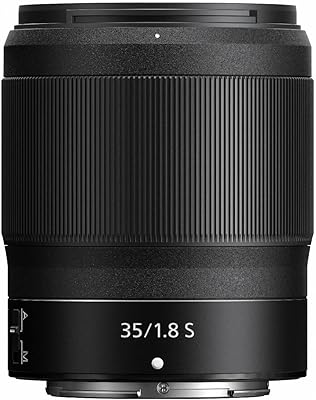
Nikon NIKKOR Z 35mm f/1.8 S Lens
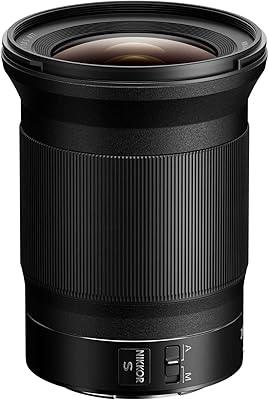
86%
96%
Optical Sharpness
93%
Autofocus Performance
91%
Bokeh & Background Rendering
89%
Build Quality & Weather Sealing
92%
Low-Light Performance
More
Nikon NIKKOR Z 20mm f/1.8 S Lens
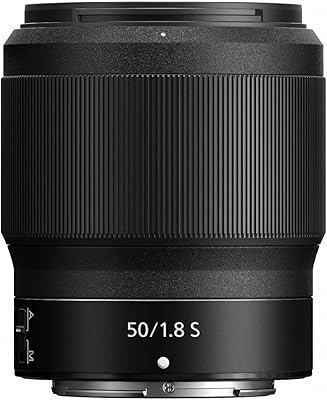
86%
94%
Optical Sharpness
91%
Build Quality
88%
Autofocus Performance
89%
Flare & Ghosting Control
67%
Value for Money
More
Nikon NIKKOR Z 50mm f/1.8 S Prime Lens
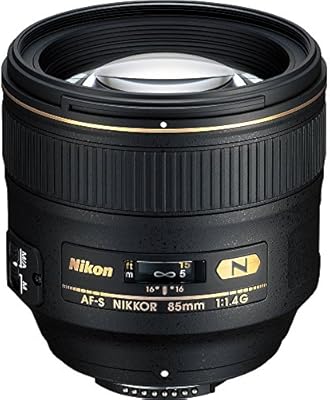
86%
97%
Optical Sharpness
93%
Bokeh Quality
89%
Autofocus Performance
91%
Low-Light Capability
88%
Build Quality
More
Nikon NIKKOR Z 70-200mm f/2.8 S Telephoto Zoom Lens
84%
96%
Optical Sharpness
93%
Autofocus Performance
91%
Image Stabilization
94%
Build Quality
89%
AF Motor Noise
More
Nikon AF-S FX NIKKOR 85mm f/1.4G Lens
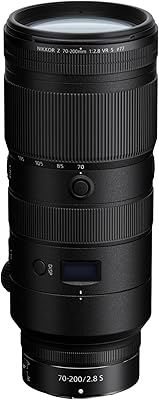
86%
95%
Image Quality
93%
Low-Light Performance
87%
Autofocus Speed
89%
Build Quality
90%
Bokeh Quality
More
Nikon NIKKOR Z 50mm f/1.2 S
89%
94%
Image Quality
92%
Autofocus Performance
95%
Low-Light Performance
88%
Build Quality
90%
Weatherproof Design
More
Nikon NIKKOR Z 24-70mm f/2.8 S Zoom Lens
87%
93%
Autofocus Speed & Accuracy
91%
Video Performance
94%
Optical Image Quality
96%
Build Quality
89%
Weather Sealing
More
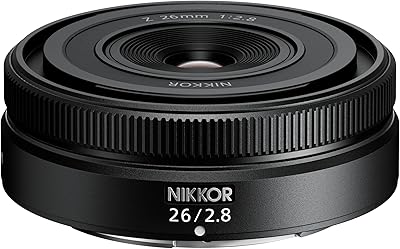
Nikon NIKKOR Z 26mm f/2.8 Pancake Lens
85%
94%
Portability & Size
88%
Image Quality & Sharpness
85%
Build Quality & Durability
92%
Value for Money
90%
Compatibility with Nikon Z Series
More
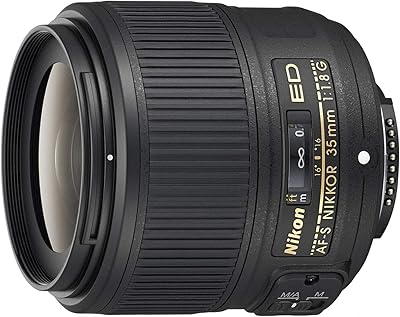
Nikon AF-S NIKKOR 35mm f/1.8G ED Lens
85%
91%
Image Sharpness
88%
Autofocus Speed
93%
Low-Light Performance
85%
Portability/Size
82%
Build Quality
More
Nikon NIKKOR 50mm f/1.8G Prime Lens
83%
93%
Image Sharpness
88%
Bokeh & Background Separation
71%
Autofocus Speed
91%
Low-Light Performance
82%
Build Quality & Durability
More

FAQ

Yes, it is compatible with the full range of Nikon Z-mount mirrorless bodies, including the Z5, Z6, Z7, and their successors. Since it is a native Z-mount lens, you get full electronic communication, autofocus, and in-body stabilization support without any adapter.

No — the Z-mount bayonet is a different physical standard and cannot be mounted on F-mount DSLRs, even with an adapter. Adapters work the other direction: F-mount lenses on Z bodies, not Z lenses on F bodies.

Quite well in practice. The multi-focusing system is fast enough for moving subjects and quiet enough that it does not intrude during ceremonies or quiet moments. Eye-tracking performance on newer Z bodies is particularly reliable, which is a real advantage when shooting candid portraits.

For standard head-and-shoulders or three-quarter portraits it is not an issue at all. Where it becomes a limitation is if you want to shoot tighter environmental detail shots or work in a confined space — at 2.62 ft you will occasionally find yourself stepping back further than expected.

Both are exceptional native-mount portrait primes, and the honest answer is that the optical output is remarkably close in real-world use. The Sony edges ahead in maximum aperture options and some autofocus metrics for fast action, but the NIKKOR Z holds its own on bokeh character and color rendering, and neither will disappoint a serious portrait photographer.

It is rated for dust and drip resistance, which covers light rain, misty conditions, and dusty outdoor environments comfortably. It is not submersible or designed for heavy downpours, so exercising some common sense in severe weather is still advisable.

It accepts 67mm screw-in filters, which is a widely available size. Circular polarizers and variable ND filters in this diameter are easy to find from most major filter brands.

The control ring operates smoothly without click stops, which suits video use or quiet environments but may feel imprecise to photographers who prefer tactile feedback when changing settings manually.

On a Z6 or Z7 it balances very naturally and feels like a well-matched pairing. On the smaller Z5 or compact Z fc body, some users notice it is slightly front-heavy, though it remains fully usable — a small grip extension or L-bracket can help there.

Yes, and that is genuinely one of its strongest arguments. Nikon has committed to the Z-mount platform as its mirrorless future, and S-line glass is built to the highest internal standard, meaning it will continue to perform well as you move to future Z bodies with higher resolution sensors or improved AF systems.

Where to Buy

B&H Photo-Video-Audio
In stock $796.95
Full Compass Systems
In stock $849.95
Abe's of Maine
In stock $695.00
Willoughby's Photo Emporium
In stock $729.00