Overview

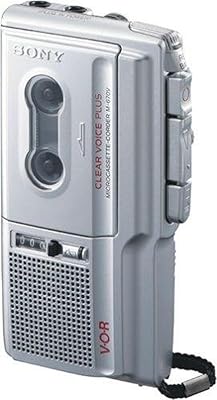
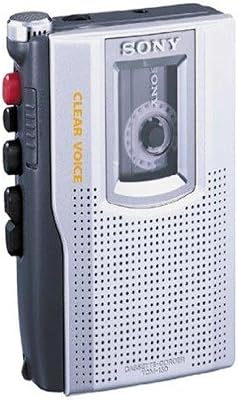
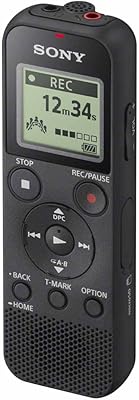
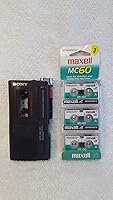
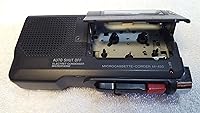
The Sony M-450 Microcassette Recorder is a compact analog voice recorder built for dictation and on-the-go note-taking — first available in 2002 and now discontinued, yet still actively sought on the used market. It records onto MC60 microcassette tapes, a format that professionals in legal, medical, and journalistic fields continue to rely on for its tangible, tamper-evident nature. At just 0.5 lbs and fitting neatly in a shirt pocket, this microcassette recorder prioritizes portability above all else. The catch is the price: acquiring one today means paying a legacy device premium, so buyers should weigh that honestly before committing.

Features & Benefits

Battery life is where this handheld voice recorder genuinely stands out. Running on two standard AA alkaline batteries, it delivers up to 30 hours of recording — a figure that sounds exaggerated until you actually use it through long transcription sessions. The one-touch record button is exactly what it sounds like: press and go, no menus, no delays. Sony's ClearVoice system does a decent job of prioritizing the speaker's voice over ambient noise, making playback noticeably cleaner for dictation purposes. A 3.5mm headphone jack rounds things out, letting you connect earphones for private review or plug into a dedicated transcription machine if that is part of your workflow.

Best For

This microcassette recorder is not trying to compete with modern digital voice recorders, and that is kind of the point. It was built for — and is still best suited to — professionals with established analog workflows: think court reporters, physicians dictating clinical notes, or field journalists who want a physical tape they can hand off directly. Anyone who already maintains a stockpile of MC60 tapes will find this handheld voice recorder a natural fit. Vintage electronics collectors also seek it out for the build quality alone. That said, the discontinued status and tape sourcing challenge are real friction points for anyone without an existing setup.

User Feedback

Buyers who have tracked down this handheld voice recorder tend to praise two things above all: battery endurance and the solid physical construction that feels built to last. The ClearVoice system earns positive mentions too, with users noting that speech comes through surprisingly well on playback even in noisier environments. On the downside, the discontinued status surfaces repeatedly — finding replacement tapes and sourcing service parts is increasingly difficult, and that frustrates some owners. A recurring theme in critical reviews is the value question: given what similar money buys in digital voice recorders today, the price demands a deliberate, analog-committed buyer to make sense. It is a niche tool, not a default recommendation.

Pros

  • Exceptional battery life — up to 30 hours on two standard AA batteries is genuinely impressive for any voice recorder.
  • The one-touch record button means you are capturing audio within seconds, no setup required.
  • ClearVoice processing noticeably cleans up speech during playback, making dictation easier to transcribe.
  • Compact and light enough to slip into a shirt pocket without thinking about it.
  • The 3.5mm headphone jack makes it compatible with transcription foot pedals and standard earphones.
  • Physical tape format provides a tamper-evident, archivable record that some professions legally prefer.
  • Built-in microphone handles solo dictation cleanly without requiring an external accessory.
  • Sony build quality means units acquired on the used market often still function reliably after years of use.

Cons

  • Discontinued by the manufacturer, so there is zero chance of warranty support or official repairs.
  • MC60 microcassette tapes are increasingly hard to find and prices are climbing as supply dwindles.
  • Mono-only recording is a hard ceiling — it cannot capture stereo audio under any circumstances.
  • No digital connectivity whatsoever; getting recordings onto a computer requires an analog conversion step.
  • The used-market price is steep relative to what modern digital recorders offer at a fraction of the cost.
  • A 1-inch display provides minimal information and can be difficult to read quickly in low light.
  • No built-in storage beyond the tape itself — lose or damage the cassette and the recording is gone permanently.
  • Completely unsuitable for any workflow that involves cloud storage, sharing, or remote collaboration.

Ratings

The Sony M-450 Microcassette Recorder has been scored by our AI after analyzing verified buyer reviews from global markets, with spam, bot-generated, and incentivized feedback actively filtered out. The scores reflect honest, real-world experiences from professionals, collectors, and everyday users who purchased and used this handheld voice recorder. Both the strengths that keep loyal users coming back and the frustrations that give buyers pause are transparently represented below.

Battery Life
93%
The 30-hour battery rating consistently earns high praise from users who rely on this microcassette recorder through full workdays. Medical professionals and journalists in particular note that they often go weeks between battery swaps, even with daily use — a genuine differentiator compared to most portable recorders in this class.
A small number of users report shorter runtimes when using lower-quality or older AA batteries, which suggests performance is sensitive to battery brand. There is no battery level indicator precise enough to warn users before a recording session cuts out unexpectedly.
Build Quality
88%
Users consistently describe this handheld voice recorder as feeling solid and well-assembled for its size and weight. The buttons have a satisfying tactile response, and many buyers who acquired used units report them functioning perfectly despite years of prior use — a testament to the physical durability Sony built into this product line.
The plastic casing, while sturdy, does show scuffs and wear marks with regular pocket carry. Some users note that the tape compartment hinge can loosen over time with heavy use, and replacement parts are essentially unavailable given the discontinued status.
Recording Clarity
79%
21%
The ClearVoice system earns genuine appreciation from dictation-focused users who find speech comes through clean and distinguishable on playback, even when recorded in moderately noisy environments like offices or moving vehicles. For its intended use case — close-range voice capture — it performs reliably.
Buyers who expected room-filling or multi-person recording quality are consistently disappointed. Background noise reduction has clear limits, and in loud environments, audio intelligibility drops noticeably. The mono format also means there is no spatial separation, which matters to some professional users.
Ease of Use
91%
The one-touch record button is one of the most frequently praised features across user reviews. Professionals who need to capture a thought or dictate a note quickly appreciate that there is zero learning curve — pick it up, press record, and go. No menus, no settings to navigate, no delays.
The 1-inch display is small enough that some users, particularly those with vision difficulties, find it hard to confirm recording status at a glance. A few buyers also note the controls feel dated compared to modern recorders, which offer more intuitive playback navigation.
Portability
89%
At just 8 ounces and with dimensions that fit comfortably in a shirt pocket, this microcassette recorder is genuinely easy to carry all day without noticing the weight. Field journalists and medical staff who keep it clipped or pocketed during rounds consistently highlight how unobtrusive it is.
The physical tape format inherently limits portability in a way digital recorders avoid — users need to carry spare tapes, which adds small but real bulk. Switching tapes mid-session in a hurry is less convenient than swapping a digital storage card.
Value for Money
51%
49%
For buyers who are deeply embedded in an MC60-based workflow and specifically need a reliable, high-quality analog recorder, the Sony M-450 delivers on its core promise. Users with that specific need tend to feel the investment is justified, especially given the build quality relative to cheaper alternatives.
At its current used-market price, the value proposition is hard to defend for anyone without an existing analog workflow. Modern digital voice recorders offer far more functionality, easier file management, and lower long-term costs. Several reviewers explicitly state they would not repurchase at the current asking price.
Tape Compatibility
72%
28%
The MC60 format compatibility is exactly what established users need, and the inclusion of one tape in the original packaging earns appreciation from first-time buyers. Users with existing tape libraries report that older recorded tapes play back cleanly on this unit.
The format dependency is a growing liability. MC60 tapes are increasingly difficult to source locally, and prices are rising as supply contracts. Several users flag tape availability as their single biggest ongoing frustration with committing to this recorder long-term.
Microphone Performance
76%
24%
For standard dictation scenarios — one person speaking at close range in a reasonably quiet setting — the integrated microphone captures voice with adequate clarity. Users who primarily record personal notes or medical dictation find it more than sufficient for their needs.
Distance and background noise expose the microphone's limitations quickly. Users who try to record interviews, meetings, or ambient environments report audio that is noticeably thin and difficult to transcribe accurately. There is no microphone sensitivity adjustment, which limits adaptability.
Playback Quality
81%
19%
Playback through the built-in speaker or via the 3.5mm headphone jack is consistently described as clear and easy to follow for transcription purposes. Users who connect the recorder to dedicated transcription machines report the audio translates well through external equipment.
The built-in speaker is small and mono, so playback volume in noisy environments is a common complaint. A handful of users note that tape hiss becomes more audible at higher playback volumes, which can slow down transcription for those with detailed recordings.
Connectivity
44%
56%
The 3.5mm headphone and output jack provides a basic but functional bridge between the recorder and external playback or transcription equipment. Users with foot-pedal transcription setups report the connection works reliably without any compatibility issues.
There is no digital connectivity of any kind — no USB, no Bluetooth, no wireless transfer. Getting audio onto a computer requires an analog pass-through recording, which is time-consuming and introduces generation loss. For any workflow that involves sharing or archiving recordings digitally, this is a serious limitation.
Long-term Reliability
83%
Users who have owned this handheld voice recorder for years report very few mechanical failures, and the analog tape mechanism is straightforward enough that it continues to function well with minimal maintenance. The simplicity of the design works in its favor over the long haul.
With no manufacturer support and no supply of replacement parts, any mechanical failure is essentially terminal. Buyers who depend on this recorder professionally are one broken unit away from scrambling to find a comparable replacement — a risk that grows as working units become scarcer.
Manufacturer Support
22%
78%
For buyers who acquired the unit while it was still in production, Sony's original build quality means many have gone years without needing any support at all. The recorder was well-documented during its active lifecycle, and manuals are still findable online.
This product is fully discontinued and Sony provides no service, warranty, or parts support whatsoever. Any issues that arise must be resolved through third-party repair shops or by sourcing donor units — an increasingly difficult and expensive proposition that significantly undermines long-term ownership confidence.
Form Factor
86%
The compact rectangular design sits naturally in the hand and is easy to operate with one hand while multitasking. Several users specifically mention appreciating that it does not feel flimsy or toy-like, which matters to professionals who carry it daily.
The overall form is functional but dated, and the button layout is not optimized for quick one-handed navigation during playback. Users accustomed to modern device ergonomics may find the control placement slightly awkward when trying to rewind or fast-forward with one hand.

Suitable for:

The Sony M-450 Microcassette Recorder was designed for a specific kind of user, and it still serves that user well. Professionals who operate within established analog workflows — court reporters, physicians dictating clinical notes, legal secretaries, or field journalists — will find this recorder fits naturally into their routine without requiring a rethink of how they work. If you already own a library of MC60 tapes and rely on a dedicated transcription machine, this handheld recorder plugs right into that ecosystem. Researchers who value a physical, tamper-evident record over a digital file for chain-of-custody reasons will also appreciate the format. It is equally appealing to vintage electronics collectors who want a well-constructed Sony unit that still functions as intended.

Not suitable for:

If you are simply looking for a convenient way to capture voice memos or record meetings, the Sony M-450 Microcassette Recorder is almost certainly the wrong tool for the job. Modern digital voice recorders and smartphone apps offer instant playback, easy file sharing, searchable transcripts, and no consumable media costs — advantages that are hard to argue against for everyday use. The discontinued status is a genuine practical concern: sourcing MC60 tapes is increasingly difficult, and finding replacement parts or repair services borders on impossible. Anyone sensitive to ongoing supply costs or who needs long-term product support should think carefully before committing. At its current used-market price, casual buyers are likely to feel the investment was not justified once the novelty of analog recording wears off.

Specifications

  • Brand: Manufactured by Sony, a Japanese electronics company with a long history in portable audio and recording devices.
  • Model: The model number is M-450, part of Sony's M-series line of handheld microcassette recorders.
  • Dimensions: The unit measures 1 x 2.45 x 4.69 inches, making it compact enough to fit in a shirt or jacket pocket.
  • Weight: The recorder weighs 8 ounces (0.5 lbs), which is light enough for extended handheld use without fatigue.
  • Tape Format: Records and plays back using MC60 microcassette tapes, with one tape included in the original packaging.
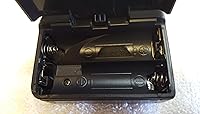
  • Battery Type: Powered by 2 AA alkaline batteries, which are included with the unit at purchase.
  • Battery Life: Rated for up to 30 hours of continuous recording on a single set of 2 AA alkaline batteries.
  • Microphone: Features a built-in integrated microphone designed primarily for close-range voice dictation and note-taking.
  • Audio System: Equipped with Sony's ClearVoice recording system, which prioritizes speech frequencies to improve playback intelligibility.
  • Recording Format: Records audio in mono format, which is standard and sufficient for voice dictation applications.
  • Headphone Jack: Includes a 3.5mm headphone jack for private audio playback or connection to external transcription equipment.
  • Display: Features a small 1-inch display that provides basic recording status information.
  • Recording Mode: Offers one-touch recording, allowing the user to begin capturing audio immediately with a single button press.
  • Availability: This product has been discontinued by the manufacturer and is only available through used or third-party marketplace sellers.
  • Release Date: The M-450 was first made available for purchase in August 2002.

Related Reviews
Sony M-670V Microcassette Voice Recorder
77%
88%
Audio Clarity
84%
Build Quality
71%
Voice-Operated Recording
91%
Battery Life
86%
Portability & Form Factor
More
Sony M-560V Microcassette Recorder
76%
88%
Build Durability
92%
Battery Efficiency
79%
Speech Intelligibility
84%
User Interface
71%
VOR Reliability
More
Sony M-470 Microcassette Voice Recorder
74%
93%
Ease of Use
78%
Audio Clarity
84%
Build Quality
91%
Portability
76%
Battery Life
More
Panasonic RN302 Microcassette Recorder
75%
86%
Build Quality
71%
Recording Clarity
67%
Voice Activation (VAS)
93%
Ease of Use
79%
Battery Life
More
Panasonic RR930 Microcassette Transcriber Recorder
75%
83%
Transcription Performance
88%
Variable Speed Control
91%
Foot Controller
67%
Build Quality
86%
Ease of Setup
More
Sony VRD-MC6 DVDirect
81%
94%
Ease of Setup
91%
Standalone Reliability
88%
Build Quality
83%
LCD Preview Screen
76%
Media Compatibility
More
Sony ICD-UX570
Sony ICD-UX570
79%
83%
Audio Clarity
76%
Noise Cancellation
91%
Built-In USB Convenience
88%
Battery Life
92%
Portability & Form Factor
More
Sony ICD-PX370 4GB
Sony ICD-PX370 4GB
83%
97%
Battery Longevity
89%
Portability & Form Factor
94%
File Transfer Convenience
78%
Recording Quality
91%
User Interface & Ease of Use
More
Sony ICD-UX560
Sony ICD-UX560
76%
88%
Audio Clarity
84%
Recording Modes
81%
Voice Activation
86%
Ease of Use
74%
Build Quality
More
Sony ICD-PX240 4GB
Sony ICD-PX240 4GB
81%
83%
Audio Clarity
91%
Ease of Use
94%
Portability & Form Factor
78%
Battery Performance
67%
Storage & File Management
More

FAQ

It uses MC60 microcassette tapes, one of which is included in the box. They are still available but increasingly hard to source locally — your best bet is ordering in bulk from online marketplaces. Stock up when you can, because supply is shrinking as the format ages.

Not directly. The Sony M-450 Microcassette Recorder has no digital output or USB connection. To get recordings onto a computer, you would need to run the 3.5mm headphone jack into your computer's audio input and record the playback in real time using software like Audacity. It is a workable solution, just not a fast one.

For standard voice dictation at close range, the built-in microphone performs well. The ClearVoice system helps filter out some ambient noise, so speech tends to come through cleanly during playback. If you are recording in loud environments or need to capture a distant speaker, an external mic via the input jack would help — but for everyday dictation, the built-in option is more than adequate.

Official Sony service for this model is no longer available. Your options are third-party electronics repair shops or finding a donor unit for parts. Given how simple the internal mechanics are, many technicians familiar with cassette-based devices can handle basic repairs, but there are no guarantees on parts availability.

The 30-hour rating holds up reasonably well in practice, especially with standard AA alkaline batteries. Heavy daily use will naturally drain them faster, but many users report going weeks before needing a replacement. Keeping a spare set on hand is always a good idea.

The Sony M-450 is designed for MC60 tapes, but microcassette recorders of this type are generally compatible with MC30 and MC90 tapes as well, since they share the same physical format and playback mechanism. The main difference is recording time per tape. That said, always verify compatibility before buying a large stock of an alternate length.

It can pick up voices in a room, but it is really optimized for close-range dictation — think one person speaking directly into the device. At a conference table or in a larger space, audio quality drops off noticeably. For meeting capture, a dedicated digital recorder with a more sensitive directional or omnidirectional mic would serve you better.

It is essentially a noise-reduction and voice-enhancement filter that runs during recording. In plain terms, it tries to make speech stand out more clearly against background noise by tuning the recorder to focus on vocal frequencies. It works best in moderately noisy environments — it is not a miracle filter, but it does make a noticeable difference when you play back a recording made in a busy setting.

The M-450 sits toward the higher end of Sony's M-series lineup, so it does offer better build quality and the ClearVoice system compared to more basic models. If your existing recorder is working fine, the upgrade may not be dramatic. But if you are replacing a worn-out unit and want something built to last, this handheld voice recorder is a solid step up.

That depends entirely on your use case. If you need a reliable unit for daily professional dictation and the ClearVoice feature matters to your workflow, the build quality and audio performance do justify a higher price compared to budget alternatives. If you just want to experiment with analog recording, a less expensive used model would do the job without the financial commitment.

Where to Buy