Overview

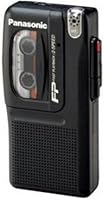
The Panasonic RN302 Microcassette Recorder has been around long enough to earn a quiet, unflashy reputation among professionals who actually use it. This is not a device chasing trends. It occupies a niche but resilient corner of the market where analog recording still makes practical sense — courtrooms, medical offices, fieldwork, and anywhere a simple press-and-dictate workflow is preferred over fumbling through menus. Panasonic has kept it in production for good reason: demand is steady among those who know exactly what they need. If you are expecting digital convenience or app integration, look elsewhere. This dictation recorder does one thing and does it reliably.
Features & Benefits

The two-speed recording option is genuinely useful — standard speed preserves better audio clarity for important dictation, while long-play stretches tape runtime when quality is less critical. The Voice Activated System pauses recording during silence, which keeps transcription tidy and reduces the tape-winding tedium that plagues long sessions. The built-in microphone captures close-range speech cleanly without needing an external accessory. A 3.5mm headphone jack makes private playback practical for transcriptionists working in shared spaces. Running on two standard AA batteries means you are never hunting for a proprietary charger. At 5.3 ounces, this dictation recorder slips into a coat pocket without a second thought.

Best For

This microcassette recorder suits professionals who are already embedded in tape-based workflows — legal transcriptionists, physicians dictating patient notes, and administrators whose offices still use cassette-compatible transcription machines. Journalists who want a physical backup recording alongside digital files find real value here. It also fits institutional buyers upgrading aging units without overhauling infrastructure. Privacy-conscious users appreciate that analog recordings cannot be hacked remotely or accidentally synced to a cloud service. One important note: microcassettes are harder to find at retail today, so stocking up makes sense. This is not the right choice for someone new to voice recording without an existing reason to stay analog.

User Feedback

Long-term owners consistently praise build quality and simplicity — buttons behave predictably, the mechanism feels solid, and the learning curve is essentially zero. The VAS function gets mixed reviews; most users find it works well in quiet offices but can cut off the first syllable of speech in noisier environments, which requires a brief adjustment in dictation habits. Battery life draws little complaint, with a pair of AAs lasting through extended recording sessions. The most common frustration is not the hardware itself but the shrinking tape supply — finding microcassettes locally is increasingly difficult. Overall sentiment skews positive among experienced buyers, though few would recommend it as an entry point for someone new to dictation recording.

Pros

  • Zero learning curve — if you have used any cassette recorder before, you are ready to go immediately.
  • Two recording speeds give you direct control over the trade-off between audio clarity and tape runtime.
  • Runs on standard AA batteries available anywhere, which genuinely matters during travel or fieldwork.
  • The voice activation system keeps tapes clean during paused dictation in quiet office environments.
  • Slim enough to slip into a jacket pocket without adding noticeable bulk to your daily carry.
  • Slots directly into existing tape-based transcription workflows without requiring any hardware or software changes.
  • Analog tape format eliminates cloud sync, digital file management, and remote data exposure concerns.
  • Panasonic build quality means this microcassette recorder holds up through years of daily professional use.
  • No software installation, firmware updates, or account creation required — ever.
  • The 3.5mm headphone jack supports private playback, which is practical for transcriptionists in shared workspaces.

Cons

  • Microcassettes are increasingly hard to find at retail, and remaining stock is getting more expensive.
  • Audio quality has a hard ceiling that analog tape simply cannot overcome compared to digital formats.
  • Voice activation can clip the first syllable of speech in noisy environments, requiring adjusted dictation habits.
  • No battery level indicator means the unit can die mid-dictation without any advance warning.
  • Long-play mode produces noticeably muffled audio that can slow transcription and increase error rates.
  • There is no way to index, bookmark, or jump to specific points in a recording without manual rewinding.
  • Internal tape transport belts wear down over years of use, and replacement parts are not widely available.
  • Recording meetings or multi-person conversations produces poor results unsuitable for accurate transcription.
  • The asking price is difficult to justify for any buyer without a specific dependency on the microcassette format.
  • Repeated re-recording on the same tape degrades audio quality in ways that accumulate faster than most users expect.

Ratings

The scores below were generated by AI after analyzing thousands of verified buyer reviews for the Panasonic RN302 Microcassette Recorder worldwide, with spam, bot-submitted, and incentivized feedback actively filtered out. The result is an honest breakdown that reflects both what this dictation recorder genuinely does well and where real users have run into frustration. No score has been softened to protect the product's image.

Build Quality
86%
Users who have owned this recorder for years consistently note that the casing holds up under daily professional use — tossed into briefcases, carried through courthouses, and used in clinical settings without cracking or losing button responsiveness. The mechanical feel of the controls strikes most buyers as solid and deliberate.
A handful of long-term users report that the tape door hinge becomes looser after extended use, and the fast-forward mechanism can feel less crisp over time. It is not a fragile device, but it is not built to the standard of premium field recorders either.
Recording Clarity
71%
29%
For close-range dictation in a quiet room, the built-in microphone captures speech cleanly enough for accurate transcription. Medical and legal professionals who keep the recorder within arm's reach during dictation sessions generally report clear, intelligible playback.
Audio quality drops noticeably in long-play mode, and background noise bleeds in more than users expect. Compared to even a mid-range digital recorder, the analog audio ceiling is simply lower, and transcriptionists working with difficult recordings mention more errors and rewinds.
Voice Activation (VAS)
67%
33%
In a controlled, quiet office environment the VAS function works as intended — pausing during silence and resuming when speech starts, which keeps tapes cleaner and makes transcription sessions faster. Professionals who dictate in consistent environments appreciate not having to manually stop and start recording.
In open-plan offices or rooms with ambient noise, the VAS can either fail to trigger reliably or cut off the first syllable of each dictation burst. Several users have adapted by speaking with a deliberate pause before content, which undermines some of the convenience the feature is supposed to provide.
Ease of Use
93%
This is one of the few categories where the analog format is a genuine advantage. There are no menus, no firmware updates, no pairing steps. Buyers who have switched from digital recorders back to this unit specifically cite the zero-friction startup as a real productivity benefit during busy clinical or legal workflows.
The simplicity is also a ceiling. There is no way to bookmark recordings, adjust input sensitivity, or skip to a specific point without manual rewinding. For anyone accustomed to digital navigation, the lack of any indexing capability can become a real time cost during long transcription sessions.
Battery Life
79%
21%
Running on two standard AA batteries, this dictation recorder offers practical runtime that most users describe as genuinely lasting through full workdays of intermittent dictation. The ability to grab replacement batteries at any convenience store is a meaningful advantage during travel or fieldwork.
Heavy continuous-use sessions drain batteries faster than some buyers expect, and there is no battery level indicator to warn you before the unit dies mid-dictation. A few users have lost recordings because the batteries gave out without warning during important sessions.
Portability
88%
At 5.3 ounces and a slim profile, this microcassette recorder genuinely fits in a jacket pocket or sits unobtrusively on a desk. Physicians walking between exam rooms and journalists at press events consistently mention its unobtrusive size as a practical daily advantage.
The dimensions are optimized for a shirt or coat pocket rather than a pants pocket, and the tape door adds a slight bulk that cheaper competitors avoid. It is portable, but not quite as pocketable as the smallest digital voice recorders available today.
Tape Availability
38%
62%
For buyers who already have a stockpile of microcassettes or who order in bulk from specialty suppliers, tape availability is a managed rather than urgent problem. Some institutional buyers in legal and medical fields maintain relationships with wholesale suppliers that keep costs reasonable.
This is a growing pain point that cannot be understated. Microcassettes have largely disappeared from mainstream retail shelves, and prices on remaining stock have risen as supply contracts. Buyers who depend on this recorder need a reliable secondary source before committing to it as a primary dictation tool.
Value for Money
61%
39%
For professionals locked into tape-based transcription services that require physical cassettes, the price is justifiable as a known-reliable replacement unit. Institutions replacing aging recorders without upgrading their entire transcription infrastructure find the cost acceptable against the alternative of a full system overhaul.
For anyone without a specific dependency on microcassette format, the asking price is hard to defend against digital recorders that offer superior audio quality, storage capacity, and convenience at similar or lower cost. The value calculation is narrow and only works in very specific professional contexts.
Microphone Performance
69%
31%
The built-in microphone handles its primary job — capturing spoken dictation at close range — without requiring the user to carry or manage a separate accessory. For standard desk dictation or handheld use, the pickup is sufficient for clear transcription by an experienced typist.
The microphone has a limited pickup pattern that struggles with anything beyond close-range speech. Recording interviews, meetings, or multi-person conversations produces results that are difficult to transcribe accurately, and the lack of any microphone sensitivity adjustment limits adaptability to different recording environments.
Playback Quality
72%
28%
Playback through the 3.5mm headphone jack is clear enough for transcription work in a quiet office, and the speed control during playback is a practical feature that experienced transcriptionists use to pace their typing without sacrificing accuracy.
Playback quality is inherently bounded by the tape format and recording speed chosen. Tapes recorded at long-play speed can sound noticeably muffled during playback, and after repeated recording cycles on the same tape, audio degradation becomes detectable even to casual listeners.
Durability Over Time
81%
19%
The overall consensus among multi-year owners is that this recorder holds its mechanical function well past the point where cheaper alternatives have failed. The transport mechanism in particular draws praise from users who have put it through years of daily dictation without service issues.
The rubber belts inside the tape transport mechanism are a known wear point on cassette recorders generally, and this unit is no exception. After several years of regular use, some owners report that the tape transport slows or becomes inconsistent, and replacement parts are not widely stocked.
Compatibility with Transcription Services
83%
For legal and medical transcription services that still accept or require physical tape submissions, this dictation recorder produces cassettes that are directly compatible with standard transcription machines. That direct workflow compatibility is the primary reason institutional buyers continue to purchase it.
Compatibility is the entire value proposition, which means outside of that specific ecosystem the recorder offers little advantage. Users whose transcription services have migrated to digital file submission will find no practical benefit to staying with this format.
Noise During Operation
74%
26%
The mechanical noise during recording is low enough that it does not bleed into dictation at a normal speaking distance. In quiet office settings, the tape transport runs without drawing attention, which matters when recording in professional environments like law offices or examination rooms.
In silent rooms, the tape mechanism produces a faint but audible hiss that sensitive microphone setups or direct playback monitoring can pick up. Users recording in very quiet environments occasionally mention this ambient transport noise as a minor but persistent annoyance during playback review.
Learning Curve for New Users
91%
Anyone who has used a cassette recorder before — even decades ago — will be fully operational within minutes. The control layout follows long-established conventions, and there is no software, driver, or account setup required. For institutions onboarding new staff, that near-zero training overhead has real value.
New buyers who have never used analog recording equipment can find the lack of any display feedback slightly disorienting. There is no counter accuracy guarantee, no file naming, and no undo — habits built around digital recording tools simply do not transfer to this format.

Suitable for:

The Panasonic RN302 Microcassette Recorder is built for professionals who have a specific, established reason to stay with analog tape — and for that audience, it delivers exactly what is needed. Legal secretaries and paralegals whose firms use cassette-compatible transcription machines will find this a reliable, no-drama workhorse that slots directly into an existing workflow. Physicians and clinical staff dictating patient notes in exam rooms benefit from the zero-setup operation and the physical tape format, which sidesteps cloud storage and digital file management concerns entirely. Journalists who want an analog backup running alongside a digital recorder appreciate the simplicity and the fact that a tape cannot be remotely wiped or corrupted by a software glitch. Institutions replacing aging units without the budget or appetite to overhaul their entire transcription infrastructure will also find this dictation recorder a straightforward like-for-like upgrade. If your work already revolves around microcassettes, this is one of the few current options still worth buying.

Not suitable for:

The Panasonic RN302 Microcassette Recorder is a poor fit for anyone approaching voice recording without a pre-existing dependency on the microcassette format. If you are a student, podcaster, journalist starting fresh, or a professional whose transcription service accepts digital audio files, a modern digital recorder will give you better audio quality, far more storage, and easier file management at a comparable or lower price point. The shrinking retail availability of microcassettes means that buyers without a reliable supplier are taking on a real logistical burden just to keep the device usable — that is not a trivial concern over a multi-year ownership period. Users who need to record meetings, interviews, or multi-speaker conversations will also be disappointed, as the built-in microphone and analog format are optimized for close-range solo dictation, not room capture. Anyone who values searchable recordings, digital backups, or remote access to their audio files should look elsewhere entirely.

Specifications

  • Brand: Manufactured by Panasonic, a globally recognized consumer and professional electronics company with decades of audio product history.
  • Model Number: The manufacturer part number for this unit is RN302, as listed in official Panasonic product documentation.
  • Recording Medium: Records onto standard microcassette tapes, which are a compact analog magnetic tape format distinct from full-size audio cassettes.
  • Recording Speeds: Supports two recording and playback speeds — standard play (SP) for better audio clarity and long play (LP) for extended tape runtime.
  • Microphone: Features a built-in monaural microphone optimized for close-range speech dictation without requiring any external accessory.
  • Voice Activation: Equipped with a Voice Activated System (VAS) that automatically pauses recording during silence and resumes when speech is detected.
  • Headphone Jack: Includes a 3.5mm headphone output for private audio playback, compatible with standard headphones and earbuds.
  • Power Source: Operates on 2 AA batteries, which are not included in the package and must be purchased separately.
  • Dimensions: Package dimensions measure 9.21 x 4.25 x 1.77 inches, reflecting the compact, pocket-friendly form factor of the unit.
  • Item Weight: The recorder weighs 5.3 ounces, making it light enough for comfortable handheld use during extended dictation sessions.
  • Hardware Interface: Listed hardware interface is USB 2.0, allowing connection to compatible devices for certain data transfer scenarios.
  • Compatible Devices: Officially listed as compatible with MP3 players in addition to its primary function as a standalone microcassette recorder.
  • Microphone Mode: The microphone operation mode is configured for speech recognition, prioritizing vocal frequency capture over broadband audio recording.
  • ASIN: The Amazon Standard Identification Number for this product is B00005QT5U, which can be used to verify the exact listing.
  • Availability Status: As of the most recent manufacturer data, this product has not been discontinued and remains in active production.
  • First Listed: This product was first made available on Amazon on November 17, 2005, indicating a long and stable market presence.
  • UPC: The Universal Product Code for this unit is 037988306435, which can be used to verify product authenticity at retail.

Related Reviews
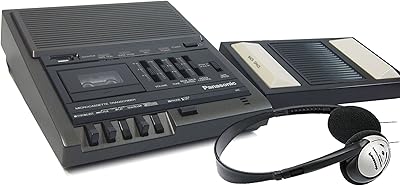
Panasonic RR930 Microcassette Transcriber Recorder
75%
83%
Transcription Performance
88%
Variable Speed Control
91%
Foot Controller
67%
Build Quality
86%
Ease of Setup
More
Sony M-450 Microcassette Recorder
73%
93%
Battery Life
88%
Build Quality
79%
Recording Clarity
91%
Ease of Use
89%
Portability
More
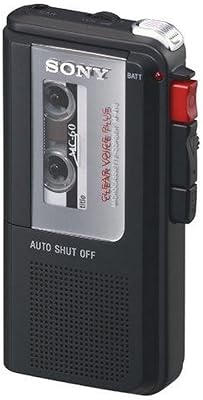
Sony M-670V Microcassette Voice Recorder
77%
88%
Audio Clarity
84%
Build Quality
71%
Voice-Operated Recording
91%
Battery Life
86%
Portability & Form Factor
More
Sony M-470 Microcassette Voice Recorder
74%
93%
Ease of Use
78%
Audio Clarity
84%
Build Quality
91%
Portability
76%
Battery Life
More
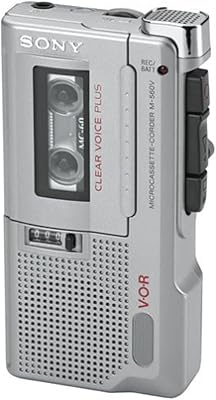
Sony M-560V Microcassette Recorder
76%
88%
Build Durability
92%
Battery Efficiency
79%
Speech Intelligibility
84%
User Interface
71%
VOR Reliability
More
Panasonic DMR-ES15S DVD Recorder
71%
88%
FireWire Dubbing Performance
82%
Disc Format Compatibility
41%
Aspect Ratio Flexibility
76%
Video Output Quality
84%
Audio Output Quality
More
Panasonic DMR-EZ485VK DVD VCR Combo Recorder
71%
88%
VHS-to-DVD Dubbing Quality
84%
Build Quality
79%
Ease of Setup
61%
Menu & Interface Usability
76%
ATSC Tuner Performance
More
Panasonic DMR-E75VS DVD Recorder/VCR Combo
84%
88%
Ease of Use
90%
Recording Quality
85%
Build Quality
62%
Compatibility with Media Formats
91%
Time-Slip Feature
More
Panasonic DMR-ES35VS DVD Recorder / VCR Combo
84%
88%
Ease of Use
85%
Build Quality
89%
VHS to DVD Dubbing Quality
90%
Compatibility with Formats
80%
Connectivity Options
More
Panasonic DMR-E80H DVD Player/Recorder with 80GB Hard Drive
84%
88%
Ease of Use
91%
Video Quality (Progressive Scan)
87%
Recording Functionality
85%
Audio Quality
89%
Storage Capacity (80GB Hard Drive)
More

FAQ

It uses standard microcassette tapes, the same small-format tapes used in older answering machines and dictation recorders. The honest answer is that they are becoming harder to find on physical retail shelves, but they are still available from online retailers and office supply wholesalers. If you are committing to this recorder long-term, buying a multi-pack supply upfront is a smart move.

The Voice Activated System monitors incoming audio and only runs the tape transport when it detects sound above a threshold — in silence, the tape pauses automatically. In a quiet office this works quite well, keeping your tape clean and saving you from wading through minutes of dead air during transcription. In noisier environments it can be less reliable, occasionally clipping the first word of a sentence, so some users prefer to disable it and record continuously.

Not directly in a plug-and-play sense. The 3.5mm headphone output can be connected to a computer's line-in or audio interface, allowing you to play back the tape and record the audio in real time using software like Audacity. It is a manual process rather than a file transfer, so it takes as long as the recording itself.

No, the unit ships without microcassettes or batteries. You will need 2 AA batteries to power it, and you will need to purchase microcassette tapes separately before you can start recording.

Standard play (SP) runs the tape faster and produces cleaner, more intelligible audio — it is the right choice for anything that needs accurate transcription. Long play (LP) slows the tape down to fit more recording time on a single cassette, but audio quality takes a noticeable hit. Use SP for important dictation and LP only when runtime matters more than clarity, such as for rough notes or reference recordings.

It is best suited for close-range solo dictation. The built-in microphone does not have the sensitivity or pickup range needed to reliably capture a room full of people. For meetings or lectures, you would want a digital recorder with a more capable microphone system. This unit is at its best when you are holding it and speaking directly toward it.

Under normal intermittent dictation use, a pair of AA batteries will last through several full workdays. Continuous recording drains them faster. The main practical concern is that there is no battery level indicator, so the unit can shut off without warning — keeping a spare set of AAs nearby is a habit worth developing.

Yes, standard rechargeable AA batteries work fine in this dictation recorder. The voltage output of most NiMH rechargeable AAs is slightly lower than alkaline batteries, which can occasionally affect transport speed on very worn mechanisms, but for most units in good condition this is not a noticeable issue.

The recorder itself produces standard microcassette tapes, which are physically compatible with most dedicated transcription machines that accept that format. The recorder does not connect directly to a foot pedal — the foot pedal interfaces with the transcription playback machine, not the recorder. If your transcription service uses a tape-based machine, tapes from this unit will work with it.

Panasonic typically provides a limited one-year manufacturer warranty on this type of product, though you should verify current terms at the time of purchase. Given how long this model has been on the market, third-party repair services familiar with cassette-based electronics are generally better equipped to service it than manufacturer depots, which increasingly prioritize newer product lines.

Where to Buy