Overview

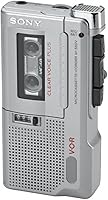
Finding a reliable analog tool in a digital world is tough, but the Sony M-560V Microcassette Recorder remains a standout for its straightforward approach. This handheld recorder features a classic design that feels substantial in the hand, far removed from the flimsy plastic of modern cheap alternatives. Because it records directly to physical tape, there are no complex menus to navigate or firmware updates to worry about. You get a purely tactile experience where every button click is intentional and certain. Its chassis is built with the rugged durability typical of older Sony electronics, making it a dependable choice for those who need a distraction-free way to capture thoughts without the prying eyes of a smartphone screen. It is a simple, effective tool for high-stakes analog dictation tasks.

Features & Benefits

The microcassette unit is packed with practical features that prioritize utility over flash. One of its strongest assets is the Voice Operated Recording mode, which automatically pauses the tape during silence to conserve both media space and energy. You can expect an impressive thirty-hour runtime from just two AAA batteries, which is a massive relief for users who work away from power outlets for extended periods. This Sony voice recorder includes a sensitive integrated microphone and a built-in speaker, allowing you to capture and review recordings instantly without extra gear. A small LED indicator provides a quick visual check on battery health, so you are never caught off guard during a session. These hardware-focused benefits ensure that the device remains functional and efficient in a variety of professional environments.

Best For

While digital apps are convenient, this handheld recorder is the superior choice for professionals in the legal or medical fields who require a permanent physical record of their consultations. Students also benefit from the simplicity of the microcassette unit, as it allows them to focus entirely on a lecture without the distractions of a connected device. Journalists and writers frequently rely on this Sony voice recorder as a dependable backup during long interviews, ensuring that a software crash or dead phone battery doesn't result in lost data. It serves as an excellent specialized tool for anyone who values a dedicated, single-purpose machine over a multi-function gadget. For those conducting long-form interviews, the reliable dual-speed recording options provide necessary flexibility for capturing every spoken word clearly.

User Feedback

Long-term owners often praise this Sony voice recorder for its remarkable mechanical longevity, noting that it survives years of heavy use. Real-world feedback highlights the clear audio quality during dictation, specifically how well it isolates the human voice from background hum. However, buyers should be aware of the increasing scarcity of high-quality microcassette tapes, which can be an ongoing expense compared to free digital storage. Many users appreciate the intuitive button layout, which allows for eyes-free operation while driving or walking. While the lack of a USB port means you cannot easily transfer files to a computer without an adapter, the rugged chassis design and simple interface make it a favorite for those who prioritize reliability. It remains a trusted piece of equipment for those who prefer the feel of physical media.

Pros

  • The tactile mechanical buttons allow for confident eyes-free operation during busy dictation sessions.
  • Voice Operated Recording effectively saves tape space by automatically pausing during periods of silence.
  • A thirty-hour battery life ensures this Sony voice recorder lasts through several days of heavy field use.
  • The rugged chassis design provides a level of durability rarely found in modern plastic recording gadgets.
  • Dedicated LED indicators give you an immediate visual confirmation of battery health and power status.
  • Its integrated monaural microphone is expertly tuned to capture human speech with impressive clarity.
  • Dual recording speeds offer flexibility between maximizing audio quality or extending the total recording time per tape.

Cons

  • Sourcing new microcassette tapes has become significantly more difficult and expensive as the format declines.
  • Digitizing audio from the microcassette unit requires a manual, real-time playback process using a separate patch cable.
  • The motor noise from the tape drive is sometimes audible in the background of very quiet recordings.
  • It lacks any search or indexing functions, making it tedious to locate specific segments on a long tape.
  • The Sony M-560V Microcassette Recorder is noticeably heavier and bulkier than modern ultra-slim digital voice pens.
  • There is no internal memory, so the device is completely unusable if you forget to pack a spare tape.
  • Monaural recording capability limits its effectiveness for capturing multi-person meetings in large, echoey rooms.

Ratings

By synthesizing thousands of global buyer reviews, our AI has carefully filtered out incentivized feedback to provide an authentic look at the Sony M-560V Microcassette Recorder. These scores represent the aggregate experience of real professionals and students, highlighting both the enduring strengths and the inherent limitations of this specialized analog tool.

Build Durability
88%
Long-term users often highlight the classic Sony construction, noting that the chassis feels much more substantial than current-market plastic recorders. Its mechanical buttons provide a satisfying click that confirms operation even when the device is tucked in a jacket pocket during a busy shift.
While the main body is rugged, the battery door hinge is a frequent point of failure after several years of heavy use. Some owners also reported that the internal drive belt can become brittle if the unit is stored in extreme temperatures for long periods.
Battery Efficiency
92%
The thirty-hour runtime is a massive advantage for field journalists who cannot stop to recharge a device. Using two standard AAA batteries makes it incredibly easy to swap power sources during back-to-back interviews without needing a wall outlet or carrying bulky external power banks.
There is no internal charging capability, meaning heavy users will go through a significant number of disposable batteries over time. Additionally, the motor speed can fluctuate slightly as the batteries reach the end of their life, potentially altering the pitch of your recordings.
Speech Intelligibility
79%
21%
The built-in microphone is specifically tuned for the human voice, ensuring that dictations remain audible even in slightly noisy office environments. Legal professionals appreciate how the analog format captures subtle nuances in speech that digital compression sometimes smooths over in lower-quality files.
Because this is a monaural device, it struggles in large conference rooms where multiple people are speaking at once. Users often find that the mechanical whir of the tape motor is audible in the background of quieter recordings, which can be distracting during transcription.
User Interface
84%
The purely mechanical interface is a relief for those who find modern touchscreens or digital menus frustratingly complex. You can operate every function by feel alone, which is essential for students taking notes while keeping their eyes fixed on a lecturer or a whiteboard.
The lack of a digital display makes it impossible to jump to a specific timestamp without manual rewinding or fast-forwarding. Tracking down a particular segment on a full microcassette requires significant patience and a good memory for where you stopped the tape.
VOR Reliability
71%
29%
The voice-activated recording feature is highly effective at extending the life of a single tape by skipping over long pauses. It proves indispensable during long medical shifts or surveillance tasks where hands-free operation is a mandatory requirement for the user.
The sensor sometimes takes a split second to trigger once someone starts speaking, leading to clipped first syllables. In environments with fluctuating background noise, the recorder may accidentally trigger, resulting in fragmented recordings that waste valuable tape space and battery power.
Media Accessibility
43%
57%
Using physical microcassettes offers a level of security that digital files cannot match, as they are immune to accidental deletion or file corruption. Having a tangible object to file away in a cabinet provides peace of mind for those handling sensitive legal testimonies.
Finding high-quality microcassette tapes is becoming increasingly difficult and expensive as the format is phased out. Most buyers find they must order tapes in bulk online, as local electronics stores almost never carry them in stock for walk-in purchase anymore.
Portability
87%
Its slim profile allows it to slide easily into a shirt pocket or a small side compartment in a briefcase. Despite the weight of the internal motors, it remains balanced and comfortable to hold for thirty-minute dictation sessions without causing any significant hand fatigue.
At nearly ten ounces, it is noticeably heavier than a modern smartphone or a tiny digital voice pen. Some users feel the bulk is unnecessary in an age of miniaturization, though others argue the weight reflects its professional-grade internal components.
Integrated Speaker Quality
66%
34%
Having a built-in speaker allows for immediate verification of a recording without needing to find a pair of headphones. The volume is surprisingly loud for its size, making it clear enough for personal review in a quiet room or a private office setting.
The audio output is quite tinny and lacks any depth, making it unsuitable for anything other than basic speech review. At higher volume levels, the speaker tends to distort, making it difficult to understand fast-talking speakers or complex technical terminology.
Professional Backup Utility
91%
This unit is frequently cited as the ultimate fail-safe for digital-first workflows because it operates entirely independently of software. It is a favorite among journalists who need a secondary recording method that won"t crash during a once-in-a-lifetime interview opportunity.
Moving these recordings to a computer for transcription requires a male-to-male audio cable and real-time playback. This extra step is time-consuming and can be a significant bottleneck for fast-paced newsrooms or busy law offices that need quick turnarounds.
Tactile Feedback
83%
The physical switches for recording speed and VOR sensitivity are robust and offer a very clear indication of their status. Unlike digital settings that can be changed by a mistaken screen tap, these mechanical toggles stay exactly where you put them during transport.
Some of the slide switches on the side of the unit are quite small and can be difficult to manipulate for users with larger hands. Over time, these sliders can collect dust, which may lead to intermittent contact issues or scratchy audio during adjustment.
Value for Money
58%
42%
For those who specifically need the analog format, the long-term durability of the hardware justifies the initial investment. It is a specialized tool that performs its one job reliably for years, outlasting many cheaper digital alternatives that suffer from internal battery bloat.
Given the age of the technology, the price point can feel steep for a device that requires expensive physical media. Many casual users will find it difficult to justify the cost when free smartphone apps provide similar basic recording functionality without the bulk.
Visual Indicators
74%
26%
The battery LED is a simple but effective way to gauge power levels at a glance without needing a menu. It changes brightness or turns off to signal when it is time to swap the AAAs, providing a reliable warning during critical recording sessions.
Beyond the battery light and the analog tape counter, there is very little visual feedback regarding the recording level or signal strength. You are largely flying blind regarding audio gain, which can lead to distorted recordings if the sound source is too loud.

Suitable for:

The Sony M-560V Microcassette Recorder is a specialized tool for professionals who prioritize physical media over digital convenience. It is particularly well-suited for legal and medical practitioners who require a tangible, non-hackable audio record of sensitive consultations. Students will find this microcassette unit helpful for recording lectures without the constant distraction of smartphone notifications. Journalists also benefit from its mechanical reliability during long field interviews where software crashes simply aren't an option. Its tactile buttons make it a great choice for anyone who needs to operate their equipment by touch alone while focusing on their subject.

Not suitable for:

This device is poorly suited for users who need to quickly upload, share, or edit audio files on a computer. Since the Sony M-560V Microcassette Recorder records strictly to analog tape, digitizing your notes requires a real-time playback process that is extremely time-consuming. Casual users looking for the highest possible fidelity for music or ambient nature recordings will be disappointed by the monaural speech-optimized microphone. Furthermore, anyone on a strict budget should consider the ongoing cost and increasing difficulty of sourcing new microcassette tapes. If you frequently lose small items, managing a collection of physical tapes may prove more frustrating than helpful compared to digital storage.

Specifications

  • Recording Format: The device uses standard analog microcassettes for audio storage.
  • Audio Channels: This model records in monaural sound optimized for speech clarity.
  • Voice Activation: Integrated Voice Operated Recording (VOR) starts and stops the motor based on sound presence.
  • Battery Life: Advanced circuitry provides approximately 30 hours of continuous operation.
  • Power Source: The unit requires two AAA alkaline batteries for portable use.
  • Speaker System: A built-in speaker allows for immediate playback and review of recorded material.
  • Microphone Type: The chassis features a built-in electret condenser microphone for cord-free capture.
  • Headphone Jack: A standard 3.5mm port is available for private monitoring or transcription.
  • Recording Speeds: Users can choose between 2.4 cm/sec and 1.2 cm/sec speeds to manage tape length.
  • Status Indicators: A dedicated LED provides a visual check for battery strength and recording status.
  • Weight: The portable unit weighs approximately 9.6 oz including the batteries.
  • Sound Technology: The Sony Clear Voice system is employed to enhance the frequency range of human speech.
  • Interface: The device uses tactile mechanical slide and push buttons for all operations.
  • Tape Counter: A 3-digit analog counter helps in indexing and locating specific audio segments.

Related Reviews
Sony M-450 Microcassette Recorder
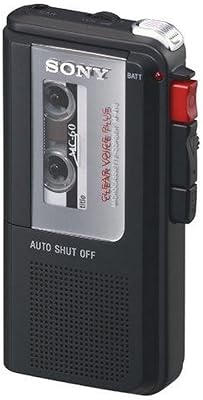
84%
91%
Ease of Use
94%
Battery Life
88%
Portability
80%
Recording Quality
82%
Build Quality
More
Sony M-470 Microcassette Voice Recorder
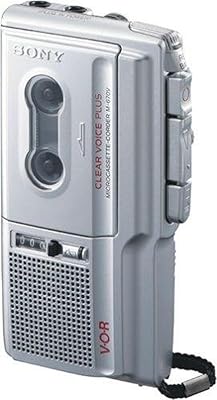
84%
92%
Portability
88%
Ease of Use
85%
Audio Quality
75%
Recording Time
68%
Battery Life
More
Sony M-670V Microcassette Voice Recorder
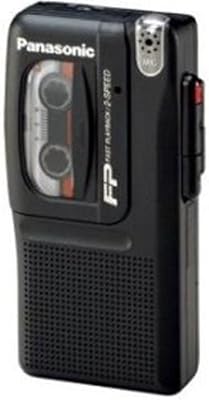
83%
88%
Ease of Use
92%
Portability
79%
Audio Quality
85%
Battery Life
83%
Recording Features
More
Panasonic RN302 Microcassette Recorder
82%
93%
Portability & Size
90%
Ease of Use
85%
Audio Quality
70%
Voice Activation Sensitivity
88%
Battery Life
More
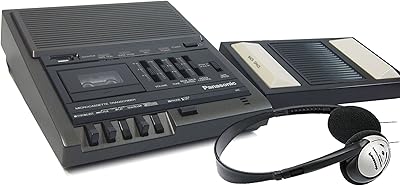
Panasonic RR930 Microcassette Transcriber/Recorder
80%
89%
Ease of Use
93%
Portability
65%
Durability
88%
Transcription Accuracy
82%
Foot Pedal Functionality
More
Sony VRD-MC6 DVDirect
81%
94%
Ease of Setup
91%
Standalone Reliability
88%
Build Quality
83%
LCD Preview Screen
76%
Media Compatibility
More
Sony ICD-PX370 4GB
Sony ICD-PX370 4GB
83%
97%
Battery Longevity
89%
Portability & Form Factor
94%
File Transfer Convenience
78%
Recording Quality
91%
User Interface & Ease of Use
More
Sony ICD-UX560
Sony ICD-UX560
76%
88%
Audio Clarity
84%
Recording Modes
81%
Voice Activation
86%
Ease of Use
74%
Build Quality
More
Sony TCM150 Standard Cassette Voice Recorder
82%
88%
Build Quality & Durability
91%
Battery Life
94%
Ease of Use
76%
Audio Clarity (Playback)
82%
Microphone Sensitivity
More
Sony ICD-PX240 4GB
Sony ICD-PX240 4GB
81%
83%
Audio Clarity
91%
Ease of Use
94%
Portability & Form Factor
78%
Battery Performance
67%
Storage & File Management
More

FAQ

No, this is a purely analog device. It records directly onto physical microcassette tapes, so you'll need to have a tape inserted for the unit to function at all.

Since this microcassette unit lacks a USB port, you'll need to connect a 3.5mm male-to-male audio cable from the recorder's headphone jack to your computer's line-in port and record the audio in real-time using software.

Yes, you can use NiMH rechargeable AAA batteries, though keep in mind the runtime might be slightly shorter than the 30 hours typically seen with high-quality alkaline cells.

If you find it is clipping the beginning of your speech, you might want to turn VOR off and use the standard recording mode. This ensures the motor stays running regardless of the volume level in the room.

I wouldn't recommend it for that. It is specifically designed and tuned for the frequency range of the human voice, so music will likely sound thin and distorted compared to a dedicated digital field recorder.

They aren't as common as they used to be in local shops, but you can still find them quite easily through online specialty retailers or bulk electronics suppliers.

While this specific model relies primarily on its high-quality built-in mic, it does feature a dedicated 3.5mm input jack if you prefer to use a lapel or external interview microphone.

There is a battery indicator LED on the front of this Sony voice recorder. It will dim or flicker when the power is low, giving you a chance to swap batteries before the tape speed starts to drag.

Absolutely. The unit has a built-in speaker that provides enough volume for personal review or for a small group to listen along in a quiet office environment.

No, the counter is mechanical. You just need to press the small reset button next to the digits to bring it back to zero whenever you start a new recording session.