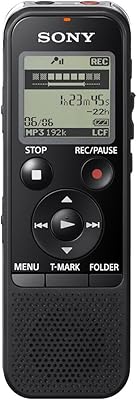
Overview

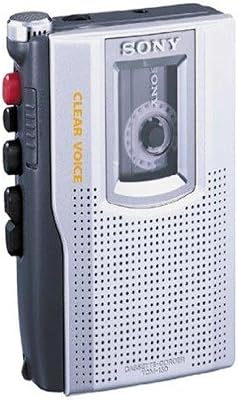
The Sony M-670V Microcassette Voice Recorder is one of those devices that occupies a very specific, unapologetic niche — and it makes no pretense of being anything else. In a world where smartphones and digital recorders have largely taken over, this Sony microcassette recorder holds its ground as a slim, pocket-sized tool built for people who still trust analog tape. Sony's track record in portable audio means you're getting solid construction and thoughtful engineering rather than a cheap plastic shell. The price reflects that — this isn't a bargain-bin recorder, and it wasn't designed to be. It's aimed at professionals and enthusiasts who have deliberate reasons to stay analog.
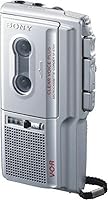
Features & Benefits

The standout feature for most users is Clear Voice Plus, Sony's recording system that actively filters ambient noise to sharpen spoken word during both capture and playback — a genuine difference-maker in noisy environments like busy offices or outdoor interviews. Voice-operated recording kicks in automatically when it detects sound, saving tape during pauses without requiring you to press anything. For moments when you need to capture something fast, 1-touch recording means no menus, no delay. Two playback speeds let you balance audio fidelity against tape longevity depending on your session. The 3-digit counter makes it easy to mark and revisit specific points, and two AAA batteries carry this voice recorder through up to 15 hours of use.

Best For

This voice recorder is squarely aimed at journalists and legal professionals who value analog documentation — people for whom a physical cassette tape carries evidentiary or archival weight that a digital file simply can't replicate. It also suits researchers who conduct long interviews and need a recorder that won't die mid-session or require charging. If your organization already maintains microcassette infrastructure — transcription machines, tape libraries — the M-670V slots right in. That said, prospective buyers should know upfront that microcassette tapes are increasingly difficult to find in physical stores. Planning ahead and stocking up on blank tapes is a practical necessity, not an afterthought. For anyone needing a discrete, single-handed recording option, this fits the bill.

User Feedback

Owners of this Sony microcassette recorder consistently praise the audio clarity on playback — particularly in interview settings where Clear Voice Plus makes transcription noticeably easier. Durability gets positive marks too; many buyers report years of reliable use with no mechanical issues. On the flip side, the VOR sensitivity divides people sharply. Some find it cuts in and out too aggressively during soft-spoken conversations, missing words at the start of sentences. A handful of users also question whether the price is justified for an analog format with shrinking tape availability. For most professionals who need it, though, the build quality and Sony's long-standing reliability tend to win out over those reservations.

Pros

  • Clear Voice Plus noticeably sharpens spoken word during playback, making transcription faster and less frustrating.
  • Voice-operated recording reduces tape waste during long sessions with natural pauses.
  • 1-touch recording means you can capture something the moment it happens, no menu navigation required.
  • Two AAA batteries power this voice recorder for up to 15 hours — plenty for a full day of fieldwork.
  • Slim, lightweight build at under 4 ounces makes it easy to carry in a shirt pocket or small bag.
  • The 3-digit tape counter lets you mark reference points during an interview and return to them reliably.
  • Sony's build quality means the mechanism holds up well over years of regular use.
  • Two recording speeds give you real control over the balance between audio clarity and cassette longevity.
  • Comes ready to use out of the box with batteries and a blank cassette included.

Cons

  • Microcassette tapes are increasingly hard to find in physical stores, requiring online planning and bulk buying.
  • VOR sensitivity can clip the first word of a sentence in soft-spoken or quiet recording environments.
  • No digital output means recordings cannot be transferred to a computer without a separate, external solution.
  • The monaural speaker and single-channel audio are limiting if playback quality matters beyond basic voice clarity.
  • At its price point, the analog format is a hard sell compared to what modern digital recorders offer for less.
  • Cassette tapes degrade over time and with heat exposure, making long-term archival storage less reliable than digital.
  • Finding replacement or compatible transcription equipment for playback at a desk is increasingly difficult.
  • No timestamp or automatic date-and-time logging on recordings, which some professional use cases require.

Ratings

The scores below for the Sony M-670V Microcassette Voice Recorder were generated by our AI engine after analyzing verified purchase reviews from buyers worldwide, with spam, bot activity, and incentivized feedback actively filtered out. Each category reflects the honest distribution of real user sentiment — strengths are acknowledged where earned, and recurring pain points are not glossed over. The result is a transparent, balanced picture of where this voice recorder genuinely delivers and where it falls short.
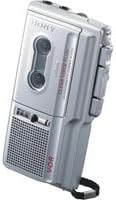
Audio Clarity
88%
The Clear Voice Plus system earns consistent praise from journalists and researchers who rely on this recorder for transcription work. Users who record in moderately noisy environments — cafes, open offices, outdoor interviews — report that playback is noticeably cleaner and easier to parse than comparable analog recorders without this feature.
In louder environments, such as crowded conference rooms or outdoor settings with wind, the noise filtering can only do so much, and some users note that faint voices at a distance still come through muddy. The monaural format also means there is no spatial separation, which some users find fatiguing during long playback sessions.
Build Quality
84%
Sony's manufacturing standards show clearly here — the housing feels solid rather than hollow, and the tape mechanism operates smoothly even after years of regular daily use. Multiple long-term owners report units that have held up through hundreds of recording sessions without mechanical issues.
A minority of users note that the tape door hinge and the playback controls can show wear after extended use, particularly with frequent one-handed operation. For a device at this price point, a few buyers expected more premium tactile feedback from the buttons.
Voice-Operated Recording
71%
29%
For long interview sessions with natural conversational pauses, VOR is a genuine convenience — it conserves tape and removes the need to manually manage recording during breaks. Users who conduct oral history recordings or legal depositions particularly appreciate not having to babysit the device.
VOR sensitivity is arguably the most polarizing aspect of this voice recorder. A notable segment of users report that it clips the first syllable or word when a speaker starts talking after a pause, which creates frustrating gaps during transcription. In very quiet settings, the threshold can also be too aggressive, cutting in and out mid-sentence.
Battery Life
91%
Fifteen hours from two standard AAA batteries is a strong result for this class of device, and real-world users confirm the rating holds up in practice. Field researchers and journalists who spend full days away from power sources find this sufficient to cover multiple long recording sessions without carrying spares.
Battery performance can dip noticeably in colder outdoor conditions, which a handful of users in northern climates flag as a concern for winter fieldwork. There is also no battery level indicator beyond the standard low-battery warning, so you cannot easily gauge remaining capacity mid-session.
Portability & Form Factor
86%
At under 4 ounces and with a genuinely slim profile, the M-670V disappears into a jacket pocket or small bag without adding meaningful bulk. Users who carry it daily for on-the-go note-taking consistently praise how unobtrusive it is compared to bulkier analog alternatives.
The physical dimensions, while slim, are still dictated by the microcassette format itself — so it will never be as compact as a digital voice recorder or a smartphone. Users upgrading from older, larger recorders appreciate the size, but those coming from digital devices may find it slightly bulkier than expected.
Ease of Use
83%
The 1-touch recording function is a standout usability feature — in real-world scenarios where you need to capture something quickly, not having to navigate a menu or press a sequence of buttons makes a meaningful difference. The tactile layout is intuitive enough that most users are comfortable with the device within minutes of first use.
Switching between VOR and manual recording modes, or adjusting speed settings, requires consulting the manual if you are not already familiar with Sony's control conventions. A small number of users with dexterity limitations also find the cassette door release fiddly to operate single-handedly.
Tape Availability
41%
59%
Standard microcassette tapes remain compatible, meaning buyers are not locked into proprietary Sony media — any MC-60 or MC-90 tape from any brand will work, giving some flexibility in sourcing.
This is the most consistently raised practical concern across user feedback. Microcassette tapes have largely vanished from physical retail stores, forcing buyers to plan ahead and order online, often in bulk. Supply is unpredictable, prices have increased as the format has declined, and some users report receiving old or degraded stock that causes dropouts or mechanical issues.
Playback Experience
76%
24%
The two-speed playback option is appreciated by users who want to slow down fast-paced recordings for careful transcription, and the 3-digit tape counter makes it straightforward to return to a specific point in a long session without rewinding blind.
The single monaural speaker is adequate for voice playback in a quiet room but struggles in any ambient noise setting — users often default to the headphone jack for serious review work. The speaker volume ceiling is also limited, which frustrates users who want to play back recordings for a small group.
Value for Money
62%
38%
For professionals in workflows where analog tape is a deliberate, justified requirement — legal documentation, archival research, chain-of-custody recording — the build quality and feature set make the price feel reasonable for a tool that will last years with proper care.
For anyone outside those specific professional use cases, the price is difficult to justify against what modern digital recorders offer at a fraction of the cost. The ongoing expense of sourcing tapes adds to the total cost of ownership in a way that frustrates users who did not fully anticipate it before purchasing.
Recording Speed Options
78%
22%
Having two speeds gives users genuine control over the tape-versus-quality trade-off, which is especially useful during extended recording sessions where tape conservation matters. Professionals who record regularly report appreciating the ability to switch based on session type rather than being locked into one setting.
The lower speed does produce a noticeable reduction in audio fidelity that becomes apparent when transcribing quickly spoken content or capturing multiple voices at once. New users sometimes select the slower speed to conserve tape and later find the quality insufficient for their needs.
Microphone Performance
73%
27%
The built-in microphone handles close-range one-on-one voice recording well, and in combination with Clear Voice Plus, produces results that are genuinely usable for professional transcription in controlled settings. Many journalists use this recorder in exactly this configuration without any external microphone.
The microphone's effective range drops off meaningfully beyond arm's reach, making group recordings or large meeting room use a challenge. It is a single-directional mono microphone by design, so users expecting room-filling pickup will be disappointed.
Long-Term Durability
81%
19%
The feedback from long-term owners is largely positive — units purchased years ago continue to function reliably, and the tape transport mechanism does not appear to degrade quickly under normal use. Sony's service reputation in this product category inspires confidence for professional buyers.
As with any device built around a mechanical transport, eventual wear is inevitable — particularly on the heads and pinch roller with very heavy use. Replacement parts and servicing options have also become harder to find as the microcassette format has declined in mainstream support.
Setup & Out-of-Box Experience
87%
Including batteries and a blank cassette in the box is a small but genuinely appreciated touch — users can start recording within minutes of opening the package without a separate trip to the store. The initial setup requires no configuration, software, or pairing, which suits buyers who value simplicity.
The included blank cassette is a single tape, which gives very limited initial recording time before a restock is needed. The manual, while functional, assumes some prior familiarity with cassette recorder conventions that newer users may not have.

Suitable for:

The Sony M-670V Microcassette Voice Recorder is purpose-built for professionals who have concrete, deliberate reasons to work with analog tape — not nostalgia, but practicality. Journalists conducting long-form interviews will appreciate the hands-free voice activation and the Clear Voice Plus system, which makes transcription far less painful when background noise is unavoidable. Legal professionals and court reporters who require a physical, tamper-evident record of proceedings will find the cassette format genuinely useful in ways a digital file simply cannot replicate. Researchers and academics working in field environments — where charging ports are scarce and sessions run long — will value the 15-hour battery life on a pair of standard AAA batteries. If your organization already operates microcassette transcription equipment, this voice recorder integrates without friction into an existing workflow.

Not suitable for:

The Sony M-670V Microcassette Voice Recorder is not the right tool for buyers who are simply looking for a convenient, everyday voice memo device — a modern smartphone or a budget digital recorder will serve that purpose far better and more cheaply. Anyone who needs to quickly share, search, or back up recordings digitally will find the analog format a frustrating dead end, since there is no direct digital output or file transfer capability. Casual users will also run into the growing problem of tape scarcity: microcassette tapes are no longer stocked in most retail stores, so you are committing to sourcing them online, often in bulk. The VOR sensitivity can also be a liability in soft-spoken or fast-paced conversations, occasionally clipping the first syllable of a sentence. And if you are expecting stereo audio quality for anything beyond voice capture, this recorder was never designed for that use case.

Specifications

  • Brand: Manufactured by Sony, a brand with decades of experience in portable consumer audio equipment.
  • Model Number: The exact model designation is M-670V, part of Sony's microcassette recorder lineup.
  • Format: Records and plays back on standard microcassette tapes, a compact analog magnetic tape format.
  • Recording System: Equipped with Sony's Clear Voice Plus system, which actively filters ambient noise to improve spoken-word clarity during both recording and playback.
  • Recording Modes: Supports voice-operated recording (VOR), which starts and stops automatically based on detected sound, as well as 1-touch manual recording.
  • Playback Speeds: Offers two playback and recording speeds, allowing users to choose between higher audio fidelity and extended tape capacity.
  • Tape Counter: Features a 3-digit tape counter for tracking position on the cassette and returning to marked reference points.
  • Microphone: Includes a built-in monaural microphone suitable for capturing voice in close-range recording scenarios.
  • Speaker: Equipped with a single, monaural internal speaker for on-device audio playback.
  • Headphone Jack: Features a 3.5mm monaural headphone jack for private listening during playback.
  • Battery: Powered by 2 AAA batteries, providing up to 15 hours of continuous operation; batteries are included in the box.
  • Weight: The unit weighs 3.84 ounces, making it light enough for all-day carry in a jacket pocket or bag.
  • Dimensions: Measures 3.3 x 5.7 x 10.3 inches, offering a slim, pocket-friendly profile for portable use.
  • In the Box: Ships with two AAA batteries and one blank microcassette tape ready for immediate use.
  • First Available: This model was first made available for purchase in April 2006 and has remained in production since then.
  • Discontinued: As of the latest available product data, this voice recorder has not been discontinued by the manufacturer.

Related Reviews
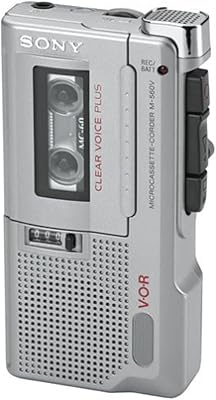
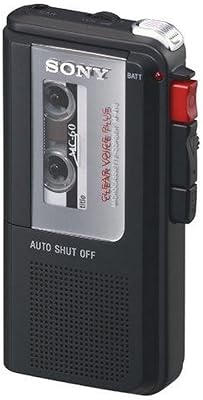
Sony M-560V Microcassette Recorder
76%
88%
Build Durability
92%
Battery Efficiency
79%
Speech Intelligibility
84%
User Interface
71%
VOR Reliability
More
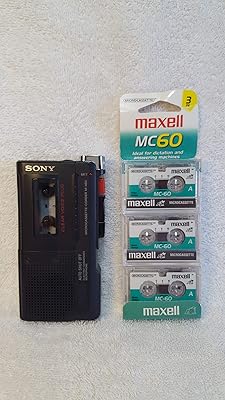
Sony M-470 Microcassette Voice Recorder
74%
93%
Ease of Use
78%
Audio Clarity
84%
Build Quality
91%
Portability
76%
Battery Life
More
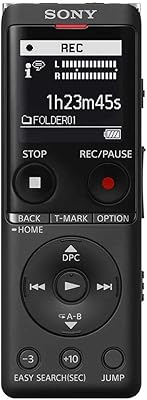
Sony M-450 Microcassette Recorder
73%
93%
Battery Life
88%
Build Quality
79%
Recording Clarity
91%
Ease of Use
89%
Portability
More
Sony ICD-PX370 4GB
Sony ICD-PX370 4GB
83%
97%
Battery Longevity
89%
Portability & Form Factor
94%
File Transfer Convenience
78%
Recording Quality
91%
User Interface & Ease of Use
More
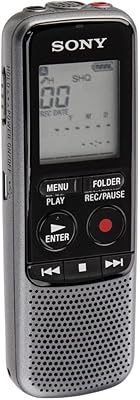
Sony TCM150 Standard Cassette Voice Recorder
82%
88%
Build Quality & Durability
91%
Battery Life
94%
Ease of Use
76%
Audio Clarity (Playback)
82%
Microphone Sensitivity
More
Sony ICD-UX570
Sony ICD-UX570
79%
83%
Audio Clarity
76%
Noise Cancellation
91%
Built-In USB Convenience
88%
Battery Life
92%
Portability & Form Factor
More
Sony ICD-PX240 4GB
Sony ICD-PX240 4GB
81%
83%
Audio Clarity
91%
Ease of Use
94%
Portability & Form Factor
78%
Battery Performance
67%
Storage & File Management
More
Sony ICD-UX560
Sony ICD-UX560
76%
88%
Audio Clarity
84%
Recording Modes
81%
Voice Activation
86%
Ease of Use
74%
Build Quality
More
Sony ICD-PX312 Voice Recorder
73%
91%
Ease of Use
88%
Battery Life
79%
Audio Clarity — Quiet Environments
48%
Audio Clarity — Noisy Environments
63%
Build Quality
More
Sony ICD-PX440 Digital Voice Recorder 4GB
87%
89%
Sound Quality
91%
Portability
87%
Battery Life
94%
Ease of Use
85%
Recording Time
More

FAQ

Yes, the Sony M-670V Microcassette Voice Recorder ships with two AAA batteries and a blank microcassette tape included in the box, so you can start recording immediately without a separate purchase.

This is honestly the most important practical consideration before buying. Microcassette tapes have largely disappeared from brick-and-mortar stores, so you will need to source them online. They are still available from various sellers, but it is worth buying a supply in advance rather than scrambling for them mid-project.

VOR automatically starts the tape rolling when it detects sound above a certain threshold and pauses when the room goes quiet — useful for conserving tape during interviews with natural pauses. However, some users find it clips the first syllable of a sentence in quieter environments. Most Sony recorders of this type allow you to switch between VOR and continuous manual recording, giving you full control when needed.

Not directly. This voice recorder has no digital output or USB connection. To transfer recordings to a computer, you would need a separate audio interface or a cassette-to-computer adapter, connecting the 3.5mm headphone jack to your computer's line-in port and recording in real time using audio software. It is a workable solution but requires an extra step and some setup.

Clear Voice Plus applies audio processing that reduces background hiss and ambient noise, making spoken word sharper and easier to understand. In practical terms, if you recorded an interview in a coffee shop or a moderately noisy office, playback will sound noticeably cleaner than a recorder without this feature. It is particularly helpful when transcribing long recordings.

The faster speed provides better audio fidelity — voices sound fuller and clearer — while the slower speed stretches the recording time on a single tape at the cost of some audio quality. For professional interviews or anything you plan to transcribe carefully, the faster speed is the better choice. The slower speed works fine for personal notes or situations where tape conservation matters more than audio richness.

Generally, yes. Users who have owned this voice recorder for extended periods report that the mechanical transport holds up reliably under regular use. Sony's build quality on this class of device is above average for the category. That said, like all cassette mechanisms, it has moving parts that will eventually wear with heavy use, so it is not indestructible.

Yes, standard rechargeable AAA batteries work fine in this recorder. Keep in mind that rechargeable batteries typically run at a slightly lower voltage than alkaline batteries, which can sometimes affect the rated battery life, but in practice the difference is minor for most users.

The built-in microphone performs best for one-on-one or close-proximity recording, which is what this voice recorder was primarily designed for. In a larger meeting room with several voices at varying distances, audio quality will diminish — you may find some speakers harder to hear on playback. For group settings, placing the recorder centrally on the table and using the Clear Voice Plus feature on playback will help, but it is not a conference room microphone by design.

It works with any standard microcassette tape, not just Sony-branded ones. The key specification to look for is the tape length — typically MC-60 (60 minutes) is the most common. Just avoid low-quality or very old stock tapes, as degraded tape can lead to dropouts in audio or mechanical issues with the transport.

Where to Buy