Overview

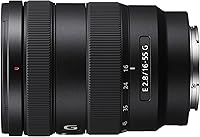
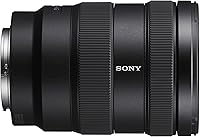
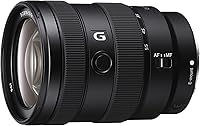
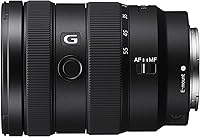
The Sony SEL1655G 16-55mm F2.8 Standard Zoom Lens is Sony's answer to what a serious APS-C shooter actually needs: one workhorse optic that handles everything from environmental portraits to tight street shots without forcing a compromise on light-gathering ability. This G-series zoom sits at the top of Sony's APS-C lens lineup, carrying optical standards developed for professional use. The constant F2.8 aperture is the headline feature — it separates this lens from every kit zoom on the market. You're not buying convenience here; you're investing in a tool built to last and perform across years of heavy use.
Features & Benefits

What makes this APS-C standard zoom stand out is how its engineering translates into real shooting confidence. The combination of two advanced aspherical and two standard aspherical elements keeps distortion and chromatic aberration under tight control, so images stay crisp edge-to-edge even at wide apertures — something kit lenses simply cannot claim. The XD Linear Motor drives autofocus with a speed and near-silence that you actually notice during video work; there's no hunting, no audible whir bleeding into your audio track. The 9-blade circular aperture renders out-of-focus backgrounds with a softness that feels organic rather than mechanical. Build quality is solid without being heavy, and the weather-resistant construction adds a layer of confidence in unpredictable conditions.

Best For

The SEL1655G earns its place in a bag when you need one lens to cover a wide range of situations without constantly swapping glass. Travel photographers benefit most from its focal range — wide enough for cityscapes, long enough to isolate a subject across a café table. Hybrid shooters and video creators get reliable, quiet tracking that keeps up with real-world movement. Stepping up from a Sony kit lens, you'll immediately feel the difference in low-light performance and edge sharpness. Event photographers working in inconsistent indoor lighting will appreciate the constant aperture that eliminates mid-shoot exposure recalculation. It's a long-term investment for APS-C users who plan to stay in the Sony ecosystem.

User Feedback

Buyers who own this G-series zoom consistently point to three things: autofocus speed, sharpness at open apertures, and the feel of the build. These aren't small praise — they reflect what the lens was designed to do well. That said, two criticisms come up regularly. The first is price, which is significant, though most buyers frame it as expected for the performance tier. The second is the absence of optical stabilization — on older APS-C bodies without in-body stabilization, this is a genuine limitation, not just a spec footnote. Users comparing it against the Tamron 17-70mm f/2.8 often note the Sony's edge in AF and build, but acknowledge the trade-off in value. The high average rating reflects a buyer who knew exactly what they were getting.

Pros

  • Corner-to-corner sharpness holds up impressively even at F2.8, which is genuinely rare in a zoom lens.
  • The constant F2.8 aperture across the full 16-55mm range removes the guesswork from exposure in changing light.
  • XD Linear Motor autofocus is fast enough to handle moving subjects and quiet enough for clean on-camera audio.
  • The 9-blade circular aperture produces background blur that looks smooth and natural, not harsh or ringed.
  • Build quality feels premium and weather-resistant without adding punishing weight to your bag.
  • The SEL1655G integrates tightly with Sony APS-C bodies, giving full use of eye-tracking and subject-recognition AF.
  • At 1.68 pounds, this G-series zoom is compact enough for all-day carry without fatigue.
  • Buyers who shoot both stills and video report strong performance in both disciplines without needing to switch lenses.
  • Optical distortion and chromatic aberration are well-controlled, reducing time spent in post-processing corrections.
  • Long-term ownership value is high for Sony APS-C users who plan to stay in the ecosystem.

Cons

  • No optical image stabilization means handheld shooting in low light is body-dependent, which is a real limitation on older APS-C models.
  • The price puts it out of reach for hobbyists who won't exploit its capabilities on a regular basis.
  • Third-party alternatives like the Tamron 17-70mm f/2.8 offer similar aperture coverage at a noticeably lower cost.
  • At 55mm on APS-C, the reach stops short for photographers who occasionally need a longer focal length.
  • Strictly limited to Sony E-mount APS-C bodies — useless if you upgrade to a full-frame camera body later.
  • The lens hood and filter thread size add to the overall footprint when packed with other gear.
  • Some users report that the manual focus ring feels less tactile compared to prime lenses in the same price bracket.
  • Resale value, while decent, doesn't fully offset the initial outlay if you decide the system isn't for you.

Ratings

Our AI rating system analyzed verified global buyer reviews for the Sony SEL1655G 16-55mm F2.8 Standard Zoom Lens, actively filtering out incentivized, bot-generated, and outlier submissions to surface what real photographers actually experience. The scores below reflect a balanced synthesis of widespread praise and recurring frustrations — nothing is glossed over. Both the standout strengths and the honest trade-offs are represented transparently across each category.

Optical Sharpness
94%
Reviewers consistently describe edge-to-edge clarity that holds up even when shooting wide open at F2.8 — something that genuinely surprises users coming from kit lenses. Architecture, street, and portrait photographers note that images rarely need sharpening corrections in post, even in the corners.
A very small number of users report slight softness at the extreme wide end when shooting flat subjects like documents or brick walls, though this is unlikely to affect real-world subject photography in any meaningful way.
Autofocus Performance
91%
The XD Linear Motor earns consistent praise for speed and near-silence, particularly from video creators who need tracking that doesn't intrude on audio. Users shooting moving subjects — kids, street scenes, event moments — report that the AF rarely misses or hunts in adequate light.
In very low light or low-contrast situations, some users note a brief hesitation before the lens locks on. It's a minor complaint and not unique to this lens, but worth knowing if you shoot frequently in dim, flat-lit environments.
Aperture Consistency
93%
Photographers who have dealt with variable-aperture zooms immediately appreciate that F2.8 stays fixed whether you're at 16mm or 55mm. This is especially valued by event and documentary shooters who can't stop to recalibrate exposure mid-shoot.
There is no meaningful user criticism of the aperture consistency itself — the only adjacent complaint is that F2.8, while excellent, still can't match the subject separation of a fast prime, which is an inherent zoom limitation rather than a flaw.
Bokeh Quality
88%
The nine circular blades produce background blur that users describe as soft and natural rather than edgy or geometric. Portrait and travel photographers note that out-of-focus city lights and foliage render particularly well, adding a polished look that zoom lenses rarely achieve.
Compared to a dedicated 35mm or 50mm prime at F1.8, the background separation is noticeably shallower, and some users feel the bokeh at 55mm still shows minor outlining on high-contrast edges that primes at similar prices avoid.
Build Quality
89%
The G-series construction draws frequent compliments for feeling genuinely solid — not plasticky or hollow — and the weather-resistant sealing gives outdoor and travel photographers real confidence in mixed conditions. Users report no wobble or flex in the zoom or focus rings after extended use.
A handful of users find the zoom ring resistance slightly stiff when the lens is cold, and a few note that the overall size is larger than they expected for an APS-C lens, which can feel unbalanced on smaller bodies like the a6000.
Video Usability
87%
Content creators highlight the quiet AF as the defining feature for video use — it handles subject transitions smoothly without audible motor noise bleeding into recordings. The constant aperture also means exposure stays locked during slow zoom pulls, which is a practical advantage for run-and-gun shooting.
The absence of built-in optical stabilization is the most cited video limitation, especially on bodies without IBIS. Handheld video without a gimbal or stabilized body can produce footage that feels shakier than users expect from a lens at this price level.
Image Stabilization
41%
59%
On bodies with in-body stabilization such as the a6700, the combination works acceptably well, and most users on those cameras do not report stabilization as a major issue during everyday handheld shooting.
This is the most criticized single aspect of the lens. Users on older, non-stabilized APS-C bodies feel the absence of OIS acutely in low light and during handheld video, and many state they would have made a different purchasing decision had they fully understood this limitation beforehand.
Low-Light Performance
86%
The constant F2.8 aperture gives this APS-C standard zoom a real low-light advantage over slower alternatives, and reviewers shooting indoor events, restaurants, and evening street scenes report usable results at shutter speeds that would force a kit lens into higher ISO territory.
Without OIS, achieving sharp handheld shots in dim light requires either a sufficiently fast shutter speed or a stabilized body. Users on non-IBIS cameras often need to push ISO higher than they'd like to compensate, which partially offsets the aperture advantage.
Value for Money
63%
37%
Buyers who fully commit to the Sony APS-C ecosystem and shoot regularly tend to describe the investment as justified over time, especially when they factor in the optical quality, AF speed, and build durability compared to cheaper alternatives that wear out or fall short faster.
The price is the single most polarizing aspect across all reviews. Many users openly compare it to the Tamron 17-70mm f/2.8, which costs significantly less and covers more focal range, making it hard for some buyers to rationalize the Sony's premium without a clear performance justification.
Focal Range Versatility
78%
22%
The 16–55mm range covers the most-used focal lengths in everyday photography — wide enough for tight interiors and landscapes, long enough for short telephoto portrait work — and users appreciate not having to switch lenses during a shoot.
At the 55mm limit, users who occasionally need reach for wildlife, sports sidelines, or compressed street shots feel the lens runs out of room too quickly. Several reviewers note they carry a second prime or telephoto for those situations, which partially defeats the one-lens convenience argument.
Portability
76%
24%
For a professional-grade constant-aperture zoom, the 1.68-pound weight is considered reasonable by most users, and photographers using it on mid-sized bodies like the a6400 or a6600 report that it balances well during long shooting days.
On the smallest Sony APS-C bodies, the lens feels front-heavy and visually oversized, which some users find awkward for discreet street photography where a smaller profile matters. It is not a compact lens by any objective measure.
AF Noise During Video
89%
This is a category where the SEL1655G genuinely stands out among zoom lenses — reviewers using on-camera microphones during interviews, vlogs, and event coverage consistently report that the motor is inaudible in recordings under normal ambient conditions.
In very quiet studio or indoor recording environments, a small number of users report picking up faint motor activity with highly sensitive external microphones placed very close to the lens body, though this is an edge case rather than a typical experience.
Compatibility & Integration
92%
Users consistently note that the lens integrates tightly with Sony's camera intelligence — eye-tracking, animal detection, and real-time subject recognition all work without limitation, which is a meaningful practical advantage over third-party alternatives that may not fully support these features.
Compatibility is strictly limited to Sony E-mount APS-C cameras, meaning any future upgrade to a full-frame Sony body renders this lens unsuitable for full-sensor use. This is a known system trade-off, but it's one that long-term buyers should weigh carefully before committing.
Manual Focus Feel
67%
33%
The focus ring is smooth enough for deliberate manual adjustments, and users doing focus pulls for video find it workable when using focus peaking or magnification assist on the camera body to confirm accuracy.
Compared to Sony's prime lenses in a similar price range, the manual focus ring feels less tactile and precise, and several reviewers note that the fly-by-wire response can feel slightly disconnected when making fast or large adjustments during live shooting.
Chromatic Aberration Control
83%
Purple and green fringing is well-controlled for a zoom lens, and most users report that lateral chromatic aberration is barely visible in real-world images, particularly when shooting subjects against bright skies or high-contrast backgrounds at moderate apertures.
At F2.8 in high-contrast situations — tree branches against bright sky, backlit subjects — a small amount of fringing is visible in uncorrected RAW files. It is easily corrected in post, but perfectionists who prefer cleaner RAW output may notice it more than casual shooters would.

Suitable for:

The Sony SEL1655G 16-55mm F2.8 Standard Zoom Lens is purpose-built for Sony APS-C shooters who have outgrown their kit glass and want a single, reliable optic they can trust across a wide range of situations. Travel photographers will find the focal range genuinely practical — wide enough for architecture and landscapes, long enough to frame a street portrait without crowding your subject. The constant F2.8 aperture is a real advantage for anyone shooting in mixed or low light, whether that's an indoor event, a dim restaurant, or golden-hour street work. Hybrid creators and video-focused users benefit from the near-silent XD Linear Motor, which keeps autofocus smooth and unobtrusive on-camera. If you're committed to the Sony E-mount ecosystem and shoot regularly enough to justify a serious glass investment, this G-series zoom will serve you well for years without feeling like a compromise.
Not suitable for:

Buyers on a tight budget or those who shoot casually on weekends will likely find it difficult to justify what this APS-C standard zoom costs relative to more affordable third-party alternatives that cover similar ground. Photographers who rely on optical image stabilization for handheld work — especially at slower shutter speeds — should know upfront that the Sony SEL1655G 16-55mm F2.8 Standard Zoom Lens has no built-in OIS; you'll need a body with in-sensor stabilization, like the a6700, to compensate. Full-frame Sony shooters will find this lens incompatible with their system entirely, as it is strictly designed for APS-C sensors. Wildlife and sports photographers needing reach beyond 55mm will quickly feel constrained by the focal range. And anyone prioritizing value-per-dollar over outright optical performance may find the Tamron 17-70mm f/2.8 a more rational choice for their actual shooting habits.
Specifications

  • Focal Length: The lens covers a 16–55mm zoom range, equivalent to approximately 24–82.5mm on a full-frame camera when used on an APS-C body.
  • Max Aperture: A constant F2.8 maximum aperture is maintained throughout the entire focal length range, ensuring consistent exposure without adjustment when zooming.
  • Lens Mount: Designed exclusively for the Sony E-mount and optimized for APS-C sensor cameras; it is not compatible with full-frame Sony bodies for intended use.
  • Autofocus: The XD Linear Motor autofocus system delivers fast, precise, and near-silent focusing performance suited to both stills and video recording.
  • Aperture Blades: Nine circular aperture blades create a rounded iris opening that produces smooth, organic bokeh in out-of-focus areas of an image.
  • Optical Design: The optical formula includes two advanced aspherical elements and two standard aspherical elements to minimize distortion, chromatic aberration, and coma across the frame.
  • Image Stabilization: This lens has no built-in optical image stabilization; stabilization relies entirely on the in-body system of the camera it is mounted on.
  • Dimensions: The lens measures 7.75 × 4.52 × 4.52 inches, making it compact for its performance class while remaining practical for everyday carry.
  • Weight: At 1.68 pounds, the lens offers a balance between solid build quality and manageable weight during extended shooting sessions.
  • Weather Sealing: The G-series construction includes dust and moisture resistance, providing added protection for outdoor and unpredictable shooting environments.
  • Minimum Focus: The minimum focusing distance allows close-up subject work within the standard zoom range, though it is not designed as a macro lens.
  • Model Number: The official Sony model designation is SEL1655G, which identifies this lens uniquely within the Sony E-mount APS-C lineup.
  • Release Year: The lens was first made available in August 2019 and remains one of Sony's primary APS-C zoom offerings as of this writing.
  • Series: This lens belongs to Sony's G Lens series, which denotes a higher tier of optical engineering and build standards compared to standard Sony kit lenses.
  • Filter Thread: The lens accepts standard screw-on filters via its front filter thread, allowing use of polarizing, ND, and UV filters for creative or protective purposes.

Related Reviews
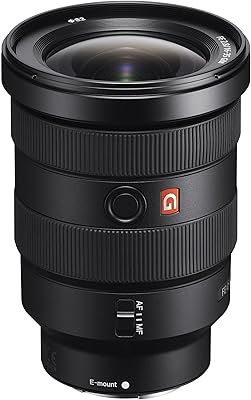
Sony FE 16-35mm F2.8 GM Zoom Lens
82%
94%
Optical Sharpness
91%
Aperture Consistency
89%
Autofocus Performance
88%
Build Quality & Weather Sealing
86%
Distortion Control
More
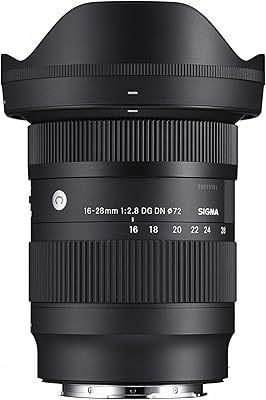
Sigma 16-28mm F2.8 DG DN Wide-Angle Lens
81%
91%
Optical Sharpness
74%
Distortion Control
88%
Autofocus Performance
86%
Build Quality & Weather Resistance
89%
Size & Portability
More
Sony SELP1650 16-50mm Power Zoom Lens
76%
93%
Portability & Form Factor
88%
Video Performance
78%
Image Stabilization
66%
Optical Sharpness
71%
Aberration & Distortion Control
More
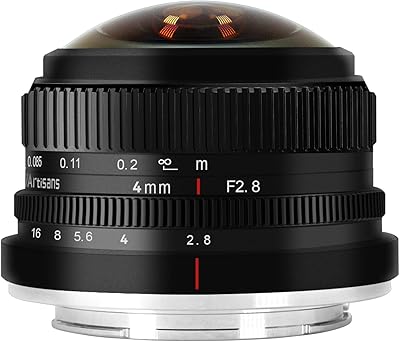
7Artisans 4mm F2.8 Fisheye Lens for Sony E-Mount
82%
88%
Image Quality
93%
Portability
75%
Manual Focus Control
82%
Build Quality
70%
Low-Light Performance
More
Sony FE 24-105mm F4 G OSS Lens
84%
93%
Optical Sharpness
91%
Autofocus Performance
89%
Build Quality
86%
Image Stabilization
88%
Video Performance
More
Sigma 24-70mm F2.8 DG DN II Lens
82%
93%
Optical Sharpness
84%
Autofocus Performance
88%
Build Quality
86%
Weather Sealing
71%
Value for Money
More
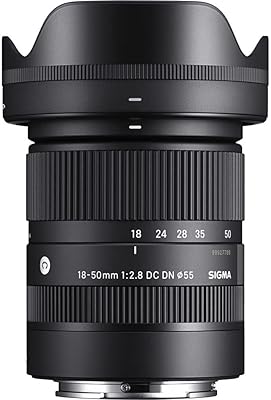
Sigma 18-50mm F2.8 DC DN Zoom Lens
84%
88%
Optical Sharpness
91%
Autofocus Performance
74%
Build Quality & Handling
86%
Value for Money
93%
Portability & Size
More
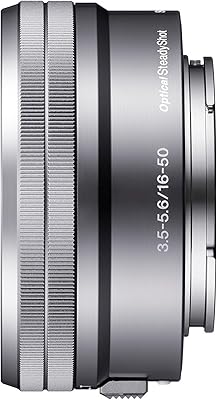
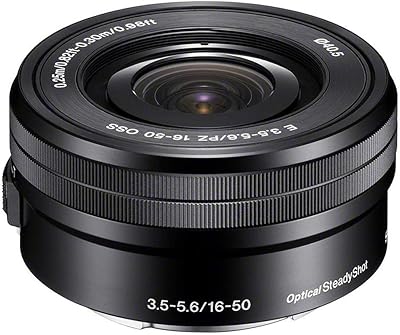
Sony 16-50mm f/3.5-5.6 OSS Alpha E-Mount Retractable Zoom Lens
85%
91%
Value for Money
87%
Image Quality
93%
Portability/Size
88%
Ease of Use
82%
Build Quality
More
Panasonic LUMIX 8-18mm F2.8-4.0 Lens
89%
91%
Image Quality
88%
Autofocus Performance
89%
Build Quality & Durability
84%
Ease of Use
90%
Video Performance
More
Fujifilm X-S20 XF16-50mm Mirrorless Camera Kit
80%
91%
Image Quality
94%
Film Simulations & Color Science
88%
In-Body Image Stabilization
86%
Video Capability
67%
Autofocus Performance
More

FAQ

Technically it will mount, but it is designed for APS-C sensors only. On a full-frame body, you will either see heavy vignetting or the camera will automatically crop to APS-C mode, reducing the effective resolution significantly. It is best used on APS-C bodies like the a6100, a6400, a6600, or a6700.

It depends on your camera body. On newer bodies like the a6700, which has in-body image stabilization, it is not much of an issue at all. On older APS-C bodies without IBIS, you will need to be more mindful of your shutter speed in low light, especially at longer focal lengths. For video on a non-stabilized body, a gimbal is worth considering.

Really well. The XD Linear Motor is one of the quieter AF systems Sony has built into an APS-C lens, which matters because internal lens noise can bleed into on-camera microphone recordings. Tracking is smooth and consistent, and it handles subject transitions without the jerky hunting you sometimes see in older AF designs.

If you shoot regularly and find yourself limited by your kit lens in low light or needing faster, more reliable autofocus, yes, the jump in quality is immediately noticeable. The sharpness at open aperture and the consistency of the F2.8 exposure across the zoom range are things a kit lens simply cannot match. That said, if you shoot occasionally or in well-lit conditions, the difference may not justify the cost.

The Tamron covers a slightly longer range and costs considerably less, which makes it attractive on paper. The SEL1655G generally edges ahead in autofocus speed and integration with Sony's subject-tracking systems, and the build quality feels more refined. The Tamron also lacks the same level of weather sealing. For pure value, the Tamron is competitive; for system integration and AF performance, the Sony pulls ahead.

It works with all Sony E-mount APS-C cameras, but it shines most on bodies with in-body stabilization, like the a6700. It also performs excellently on the a6400 and a6600. The fast AF pairs especially well with bodies that support real-time eye-tracking and subject recognition.

Yes, the lens has a standard front filter thread that accepts screw-on filters. A circular polarizer is a popular choice for outdoor shooting, and neutral density filters work well for video work at wide apertures in bright conditions. Just make sure you match the correct filter thread diameter to avoid buying the wrong size.

The nine circular aperture blades make a real difference here. Out-of-focus backgrounds render with a softness and roundness that is noticeably more pleasing than what you get from zoom lenses with fewer, straight-edged blades. It won't match a fast prime for background separation at the same aperture, but for a zoom, the rendering quality is genuinely good.

Yes. The G-series build is solid, with weather-resistant construction that handles dust and light moisture without issue. Photographers who use it for event work or travel report that it holds up well to regular heavy use. It does not feel fragile or plasticky in hand — the barrel and controls feel like they are built to last.

The minimum focus distance varies slightly across the zoom range but sits around 11.8 inches at the wide end, allowing for reasonably close subject work. It is not a macro lens by any measure, but for environmental portraits or product shots where you want some subject isolation without extreme close-up detail, it is sufficient for most everyday needs.