Overview

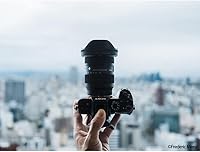
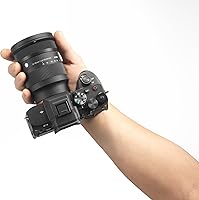
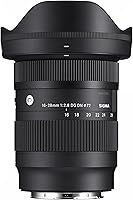
The Sigma 16-28mm F2.8 DG DN Wide-Angle Lens arrived at a time when Sony E-mount shooters were genuinely underserved in the fast wide-zoom category. Part of Sigma's Contemporary line, it was designed around a clear priority: deliver serious optical performance without the size and weight penalty that comes with the Art series. The 16–28mm range hits a practical sweet spot — wide enough for sweeping landscapes and tight interiors, yet long enough to stay useful for environmental portraits and travel shots. At under a pound, this wide-angle zoom is noticeably easier to carry than most f/2.8 competitors in its class.
Features & Benefits

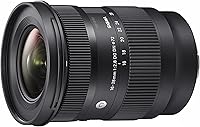
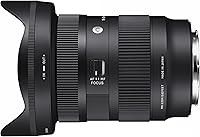
The constant f/2.8 aperture is what makes this lens genuinely useful rather than just interesting on paper — you can zoom freely without losing exposure consistency, which matters a lot when shooting fast-moving situations in dim light. Five FLD elements keep chromatic aberration well controlled, and four aspherical elements do real work managing coma and distortion, especially toward the 16mm end. The inner zoom mechanism keeps the barrel at a fixed length regardless of focal length, which is a quiet but significant advantage for anyone using a gimbal or a circular polarizer. The weather-resistant build adds confidence for outdoor work without making the lens feel overbuilt.

Best For

Landscape and architecture photographers will find the Sigma 16-28mm particularly well-matched to their needs — the wide end delivers genuine drama without excessive barrel distortion, and the sharpness holds up well across the frame. Travel shooters benefit from the compact footprint; this Sony E-mount lens replaces two primes without the bulk. Video creators running Sony mirrorless systems will appreciate how the inner zoom and quiet autofocus translate to clean, usable footage on a gimbal. It also works well for casual astrophotography where f/2.8 light-gathering matters, provided your body has solid in-body stabilization to compensate for the lack of OIS.

User Feedback

Owners consistently single out center sharpness as a genuine standout, even at wide-open apertures. Distortion at 16mm does show up, but it responds well to automatic correction in Lightroom and Capture One — most shooters report it is a non-issue in practice. Compared to Sony's own 12–24mm f/2.8 GM, buyers frequently mention that the Sigma 16-28mm is noticeably lighter and easier to handhold for long sessions. The autofocus draws consistent praise for being quick and quiet enough for video. The one honest caveat: there is no optical stabilization, so shooters coming from Canon or Nikon glass should factor in how much they depend on their body's IBIS system.

Pros

  • Constant f/2.8 aperture holds steady across the entire zoom range — no exposure surprises mid-shot.
  • Center sharpness at wide-open apertures is among the best reported in its class by real-world users.
  • Compact and light enough to carry comfortably alongside a second lens for a full day of shooting.
  • Inner zoom barrel keeps front element fixed, making filters and gimbal rigs behave predictably.
  • Quiet, fast autofocus integrates cleanly with Sony Eye AF for both stills and video work.
  • Weather-resistant build gives outdoor and travel shooters meaningful confidence in mixed conditions.
  • Native Sony E-mount delivers full camera compatibility with no adapter lag or feature compromises.
  • Chromatic aberration is well-controlled for a zoom, with minimal color fringing in high-contrast scenes.
  • The Sigma 16-28mm earns consistent praise as strong value compared to pricier Sony first-party alternatives.
  • Distortion at 16mm corrects automatically in Lightroom, making it a non-issue for raw shooters.

Cons

  • No optical image stabilization means full dependence on your camera body's IBIS system.
  • Corner sharpness and coma at f/2.8 limit usefulness for full-frame astrophotography without stopping down.
  • Barrel distortion at 16mm is noticeable in straight-out-of-camera JPEGs without automatic lens correction.
  • No dedicated aperture ring makes smooth in-shot iris pulls harder for video-focused shooters.
  • Ghosting from direct point-light sources can appear in backlit wide-angle night scenes.
  • Focal range stops at 16mm, leaving a gap for shooters who occasionally need to go ultra-wide.
  • No rubber mount gasket means weather sealing falls short of fully sealed professional lenses.
  • Bokeh at wide focal lengths is limited by physics — not a lens for subject isolation work.
  • Filter thread size may not match existing filter collections, requiring step-up rings or replacements.
  • Longitudinal chromatic aberration wide open is visible in backlit scenes and requires manual correction in post.

Ratings

The Sigma 16-28mm F2.8 DG DN Wide-Angle Lens has been scored by our AI system after analyzing thousands of verified global buyer reviews, with spam, bot activity, and incentivized feedback actively filtered out. Scores reflect the full picture — what this wide-angle zoom genuinely gets right and where real-world shooters have run into frustrations. Both the strengths and the honest trade-offs are baked into every number you see below.
Optical Sharpness
91%
Center sharpness at f/2.8 earns consistent praise from landscape and architecture shooters who push crops hard in post. Even toward the edges of a full-frame sensor, performance holds up well enough that most users report no need to stop down for general work.
Corner sharpness at 16mm wide open is softer than at the longer end of the zoom range, which some astrophotographers find limiting when stars near the frame edges matter. Stopping down to f/5.6 largely resolves it, but that trade-off is worth knowing upfront.
Distortion Control
74%
26%
For a 16mm wide-angle zoom, barrel distortion is well-managed optically, and modern editing software like Lightroom applies automatic lens profiles that make correction essentially invisible in a typical workflow. Most shooters report never thinking about it in practice.
Without software correction, distortion at the 16mm end is visible enough to be distracting in architectural shots with strong horizontal lines. Users who shoot JPEGs without in-camera correction, or who use software without a compatible lens profile, face a more manual correction process.
Autofocus Performance
88%
Autofocus is quick, accurate, and notably quiet — a combination that makes this Sony E-mount lens a reliable choice for video shooters who need smooth, unobtrusive tracking. Subject acquisition on Sony bodies like the A7 IV and A7R V is reported as confident and consistent.
In very low contrast or extremely dim conditions, a small number of users report occasional hunting before the lens locks. It is not a frequent complaint, but shooters doing event work in dark venues should be aware it can happen.
Build Quality & Weather Resistance
86%
The barrel feels dense and well-assembled, and the weather-resistant construction gives outdoor photographers confidence when shooting in light rain or dusty environments. The fixed-length inner zoom mechanism adds to the sense of structural solidity.
The lens lacks a rubber gasket seal at the mount, which limits its weather resistance compared to fully sealed professional glass. Some users feel the overall build, while good, stops just short of what they would expect for long-term heavy-duty field use.
Size & Portability
89%
At under a pound and with a compact barrel, this wide-angle zoom fits comfortably in a shoulder bag alongside a second lens — a genuine advantage over Sony's bulkier f/2.8 wide options. Travel and street photographers specifically call out how non-intrusive it feels during full-day shoots.
Compared to slower variable-aperture wide zooms, it is still a meaningful size and weight step up. Photographers who prioritize absolute minimalism in their kit may find a compact f/4 zoom or a single wide prime a better fit for ultralight travel.
Low-Light Capability
87%
The constant f/2.8 aperture delivers reliable light-gathering performance whether you are at 16mm or 28mm, which matters when shooting interiors, dusk landscapes, or handheld city scenes at night. Exposure stays predictable throughout the zoom range without any adjustment.
Without optical image stabilization, low-light handheld shooting depends entirely on the in-body IBIS of the camera body. Shooters using older Sony bodies with weaker stabilization systems will need to push ISO higher or accept motion blur at slower shutter speeds.
Optical Stabilization
51%
49%
On current Sony bodies with strong IBIS — such as the A7C II or A7R V — the lack of built-in OIS is largely compensated, and most users on those platforms report no real-world issues with stabilization during handheld stills shooting.
The absence of any in-lens stabilization is a legitimate limitation for users coming from Canon or Nikon ecosystems where lens-based IS is common on wide zooms. Video shooters working without a gimbal on older Sony bodies will notice the gap most acutely.
Chromatic Aberration Control
83%
The five FLD elements in the optical formula do meaningful work in controlling color fringing, and real-world shots of high-contrast edges — tree branches against bright sky, for example — show very little lateral chromatic aberration compared to similarly priced competitors.
Some longitudinal chromatic aberration is visible wide open in high-contrast situations, particularly noticeable in backlit scenes. It responds to correction in post, but users who rely heavily on straight-out-of-camera JPEGs may notice it more than raw shooters.
Coma & Astrophotography Performance
76%
24%
For a zoom lens at this price tier, coma control is reasonably strong toward the center of the frame, making it a workable option for wide-field astrophotography without the cost of a dedicated fast prime. Stars in the central two-thirds of the frame render cleanly at f/2.8.
Coma and astigmatism toward the corners at f/2.8 are visible in long-exposure night shots, which is a real limitation for astrophotographers who want pinpoint stars across the entire frame. Stopping to f/4 or f/5.6 improves the situation but reduces the aperture advantage.
Video Usability
85%
The inner zoom mechanism keeps the front element stationary, which makes circular polarizers and matte boxes behave predictably throughout the zoom range. Focus breathing is well-controlled for a zoom lens, and the quiet AF motor keeps audio tracks clean during pulls.
There is no dedicated aperture ring or de-clicked option, which some video-first shooters prefer for smooth iris pulls during a shot. Users doing more cinematic work often find themselves relying on in-camera aperture control, which can be less tactile than a dedicated ring.
Flare & Ghosting Resistance
78%
22%
Shooting toward bright light sources — sunsets, street lamps at night, windows in architectural interiors — produces manageable flare in most real-world scenarios. The coating handles diffuse light sources well, and veiling flare rarely degrades contrast noticeably.
Direct point-light sources in the frame at 16mm can produce visible ghosting artifacts, particularly in backlit night scenes. It is not a dealbreaker for most uses, but photographers shooting into the sun at wide angles should be prepared to manage it in post.
Value for Money
88%
Positioned well below Sony's first-party f/2.8 wide zoom option, this Sony E-mount lens delivers optical performance and build quality that most users feel punches above its tier. Buyers frequently describe it as the obvious choice if you do not need to go wider than 16mm.
The price is still a significant outlay compared to slower wide-angle zoom alternatives, and buyers on a tighter budget may find the value equation less clear. Those who rarely shoot in low light may question whether the constant f/2.8 premium over an f/4 zoom is worth it for their specific workflow.
Compatibility & Ecosystem Fit
92%
Native Sony E-mount communication means full compatibility with Sony's Eye AF, real-time tracking, and in-body stabilization coordination across the A7, A9, and A1 series bodies. There are no adapters, no compromises, and firmware updates are delivered through Sigma's USB dock or Sony bodies directly.
This lens is designed exclusively for the Sony E-mount ecosystem, so it offers no path for cross-platform use. Shooters considering a future system switch would need to replace the lens entirely, which is worth factoring into a long-term kit investment decision.
Bokeh & Background Rendering
71%
29%
At f/2.8 on a full-frame sensor, the Sigma 16-28mm can produce pleasant subject separation when shooting closer subjects at 28mm, with backgrounds rendering smoothly enough for environmental portrait work and product shots in context.
Wide-angle lenses are not bokeh tools by nature, and this one is no different. Shooters expecting the subject isolation of a short telephoto will be disappointed — this lens is optimized for scene-encompassing coverage, not selective focus effects.
Filter Usability
82%
18%
The inner zoom design keeps the front element fixed in position, meaning a circular polarizer or ND filter stays aligned throughout the focal range without needing readjustment. This is a practical advantage that variable-zoom lenses with extending barrels simply cannot offer.
The front element diameter requires a specific filter size, and users who own a collection of filters from previous lenses may need step-up rings or new filters to match. It is a minor one-time cost, but worth checking before purchase if you have an existing filter system.

Suitable for:

The Sigma 16-28mm F2.8 DG DN Wide-Angle Lens is a strong fit for Sony E-mount photographers who shoot across multiple disciplines and need one reliable wide zoom to cover them all. Landscape and architecture shooters will find the focal range practical — 16mm captures sweeping scenes while 28mm keeps you flexible enough for tighter compositional choices without swapping glass. Travel photographers benefit from the compact footprint and light weight, since a fast wide zoom that does not dominate your bag is genuinely useful when you are moving all day. Video creators running Sony mirrorless systems will appreciate the inner zoom barrel, quiet autofocus, and consistent aperture — all of which translate directly to cleaner footage on a gimbal or handheld rig. Hybrid shooters who split their time between stills and video will find the constant f/2.8 useful across both formats, and the native Sony mount means full access to eye tracking, real-time AF, and IBIS coordination without any adapter compromises.
Not suitable for:

The Sigma 16-28mm F2.8 DG DN Wide-Angle Lens is not the right choice for every Sony shooter, and being honest about that saves a lot of buyer regret. Photographers who regularly need to go wider than 16mm — think cave interiors, extreme real estate compositions, or immersive fisheye-style perspectives — will quickly hit the limit of what this lens can offer. Astrophotographers who demand pinpoint stars across the full frame at f/2.8 should know that corner coma is visible and only partially controlled; a dedicated fast prime will serve that use case better. Shooters upgrading from Canon or Nikon systems with lens-based image stabilization may be caught off guard by the complete absence of OIS here — if your Sony body has weak or older IBIS, handheld low-light shooting will require higher ISO or a steadier hand than you may be used to. Finally, buyers who primarily shoot in JPEG without post-processing should be aware that barrel distortion at 16mm is noticeable without software correction, and not every camera applies the lens profile automatically.
Specifications

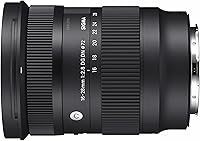
  • Focal Length: This wide-angle zoom covers a 16–28mm range, providing an ultra-wide field of view at the short end and a moderate wide angle at 28mm.
  • Maximum Aperture: The lens maintains a constant maximum aperture of f/2.8 throughout the entire zoom range, ensuring consistent exposure without adjustment when zooming.
  • Minimum Aperture: The minimum aperture is f/22, giving photographers full control over depth of field and exposure across a wide range of lighting conditions.
  • Lens Mount: Designed exclusively for the Sony E-mount system, the lens communicates natively with compatible Sony mirrorless camera bodies without requiring an adapter.
  • Format Coverage: The lens is engineered for full-frame Sony E-mount bodies and can also be used on APS-C Sony cameras, where the crop factor narrows the effective field of view.
  • Optical Formula: The internal optical design includes five FLD (Fluorite-equivalent Low Dispersion) elements and four aspherical elements to manage chromatic aberration, distortion, and coma.
  • Zoom Mechanism: An inner zoom design keeps the physical barrel length fixed during zooming, which benefits gimbal balance and allows front-mounted filters to remain properly aligned.
  • Image Stabilization: The lens contains no built-in optical stabilization and relies entirely on the in-body image stabilization (IBIS) system of the camera body it is mounted to.
  • Weight: The lens weighs 15.9 ounces (approximately 450g), making it noticeably lighter than competing f/2.8 wide-angle zooms in the Sony E-mount ecosystem.
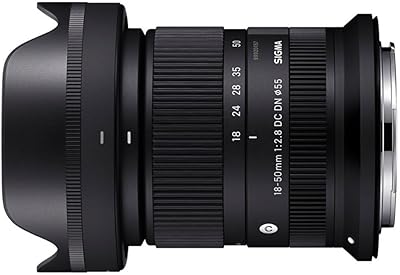
  • Dimensions: The lens measures approximately 4 inches in length and 3 inches in diameter, giving it a compact footprint relative to its aperture class.
  • Weather Resistance: The lens features weather-resistant construction to provide protection against dust and light moisture during outdoor and travel shooting situations.
  • Autofocus System: Autofocus is driven by a stepping motor (STM) system that operates quietly and quickly, making it well-suited for video recording as well as stills photography.
  • Aperture Blades: The lens uses a 9-blade rounded aperture diaphragm, which contributes to smooth, circular bokeh rendering in out-of-focus background areas.
  • Manufacturer: The lens is designed and manufactured by Sigma Corporation, a Japanese optical company known for its Contemporary, Art, and Sports lens lines.
  • Product Line: This lens belongs to Sigma's Contemporary series, which prioritizes a balance between optical performance, compact size, and practical everyday usability.
  • Filter Thread: Because of the inner zoom design, the front element remains stationary, allowing standard screw-in filters to be used at a fixed thread diameter throughout the zoom range.
  • Minimum Focus: The minimum focusing distance allows reasonably close subject approach, though this lens is optimized for mid-to-far distance wide-angle coverage rather than macro or close-up work.
  • Compatibility: The lens is fully compatible with Sony's advanced autofocus features including Eye AF, real-time subject tracking, and in-body stabilization coordination on supported Sony bodies.

Related Reviews
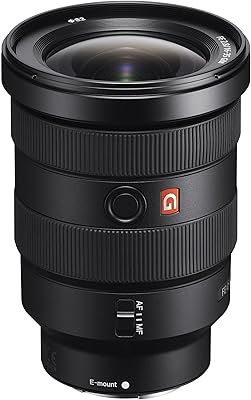
Sony FE 16-35mm F2.8 GM Zoom Lens
82%
94%
Optical Sharpness
91%
Aperture Consistency
89%
Autofocus Performance
88%
Build Quality & Weather Sealing
86%
Distortion Control
More
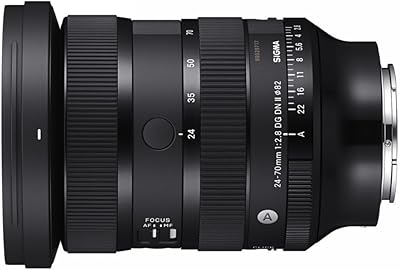
Sigma 24-70mm F2.8 DG DN II Lens
82%
93%
Optical Sharpness
84%
Autofocus Performance
88%
Build Quality
86%
Weather Sealing
71%
Value for Money
More
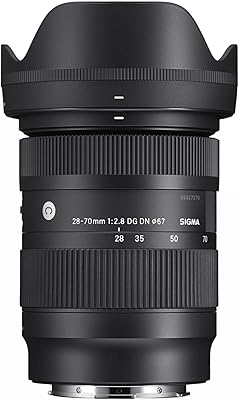
Sigma 28-70mm F2.8 DG DN Zoom Lens
83%
83%
Optical Sharpness
79%
Autofocus Performance
88%
Build Quality
93%
Weight & Portability
91%
Value for Money
More
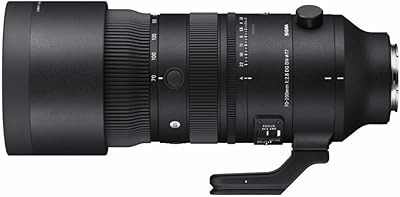
Sigma 70-200mm F2.8 DG DN OS Lens
84%
88%
Autofocus Speed
92%
Optical Image Quality
91%
Build Quality
87%
Weather Sealing
89%
Autofocus Noise
More
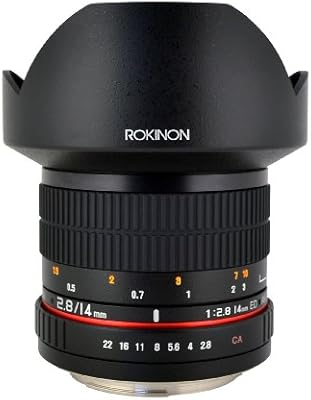
Rokinon 14mm F2.8 Wide Angle Lens
71%
83%
Optical Sharpness (Center Frame)
58%
Edge & Corner Sharpness
52%
Vignetting Control
61%
Chromatic Aberration
74%
Flare & Ghosting Resistance
More
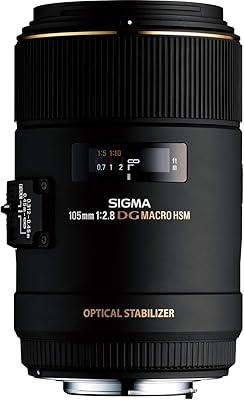
Sigma 105mm F2.8 EX DG OS HSM Macro Lens for Canon
85%
88%
Autofocus Performance
92%
Sharpness and Image Quality
89%
Optical Stabilization (OS)
87%
Build Quality
85%
Ease of Use
More
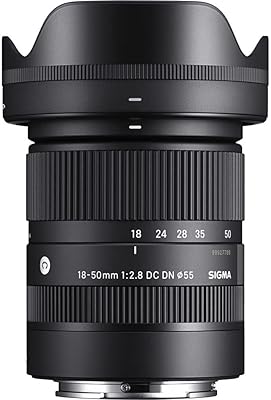
Sigma 18-50mm F2.8 DC DN Zoom Lens
84%
88%
Optical Sharpness
91%
Autofocus Performance
74%
Build Quality & Handling
86%
Value for Money
93%
Portability & Size
More
Sigma 18-50mm F2.8 DC DN Zoom Lens
81%
88%
Autofocus Performance
83%
Optical Sharpness
81%
Build Quality
94%
Size & Portability
86%
Low-Light Performance
More
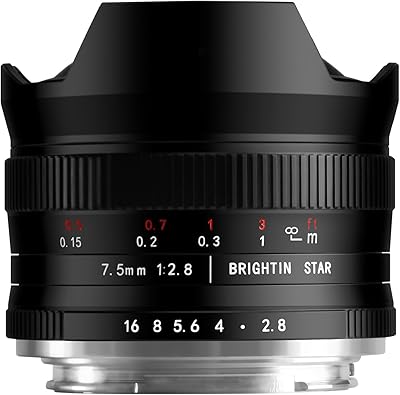
Brightin Star 7.5mm F2.8 III Fisheye Lens
75%
78%
Image Sharpness
88%
Value for Money
71%
Low-Light & Astrophotography Performance
82%
Build Quality & Construction
61%
Manual Focus Usability
More
Sony SEL1655G 16-55mm F2.8 Standard Zoom Lens
81%
94%
Optical Sharpness
91%
Autofocus Performance
93%
Aperture Consistency
88%
Bokeh Quality
89%
Build Quality
More

FAQ

Yes, it mounts and functions on any Sony E-mount body including APS-C cameras. Just keep in mind that the crop factor will narrow the effective field of view — 16mm becomes roughly 24mm equivalent, which changes the character of the lens significantly. For APS-C users who want a true ultra-wide angle, this may not be the ideal starting point.

It depends on how you shoot. If you shoot raw and use Lightroom, Capture One, or most other modern editors, the lens profile correction kicks in automatically and the distortion essentially disappears. If you shoot JPEG without in-camera correction enabled, you will see barrel distortion on straight lines near the edges of the frame. For most photographers, it is a non-issue in practice.

The Sony GM goes wider and is built to a higher weather-sealing standard, but it is also substantially heavier and significantly more expensive. The Sigma 16-28mm gives up 4mm at the wide end but delivers genuinely competitive optical performance at a fraction of the size and weight. For most landscape shooters, 16mm is wide enough, and the difference in reach rarely matters in the field.

Yes, and this is actually one of the practical advantages of the inner zoom design. Because the front element does not rotate or extend during zooming, a screw-in circular polarizer stays aligned exactly where you set it throughout the focal range. You do not need to readjust every time you zoom, which is a genuine quality-of-life improvement over lenses with extending barrels.

On current Sony bodies with strong IBIS — like the A7 IV, A7C II, or A7R V — most users report no meaningful issue for handheld stills. For video without a gimbal, or on older Sony bodies with weaker stabilization, the absence of in-lens OIS becomes more apparent. If you are coming from Canon or Nikon lenses with built-in IS, it is worth testing your specific body before committing.

It works well for video. The stepping motor autofocus is quiet enough that it rarely bleeds into audio recordings, focus breathing is controlled for a zoom lens, and the fixed barrel length makes gimbal operation straightforward. The one limitation for cinematic work is the absence of a dedicated aperture ring, so smooth iris pulls require using in-camera controls rather than a physical ring.

On current Sony bodies, autofocus is fast and reliable for general movement — pedestrians, cyclists, casual action. It is not a sports or wildlife lens by primary design, but the AF motor is responsive enough that most users report no frustration tracking everyday moving subjects. Very fast, erratic motion is better served by a telephoto with a more specialized AF system.

Sigma does release firmware updates for this lens, and they can be applied using Sigma's USB Dock accessory or, on compatible Sony bodies, directly through the camera's lens update menu. It is worth checking for updates when you first set it up, as Sigma occasionally releases improvements to autofocus behavior and camera compatibility.

It is a workable option for wide-field astrophotography — f/2.8 at 16mm captures a good amount of light, and center star rendering is clean. The honest limitation is corner coma at f/2.8, which causes stars near the edges of a full-frame sensor to elongate rather than render as points. Stopping down to f/4 or f/5.6 helps significantly, but if pristine corners matter for your night sky shots, a dedicated fast prime will outperform this zoom.

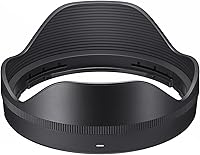
The lens ships with front and rear lens caps, a petal-style lens hood, and a soft carrying pouch. No filters or additional accessories are included. The USB Dock for firmware updates is a separate Sigma accessory and is not bundled with the lens.

Where to Buy