Overview

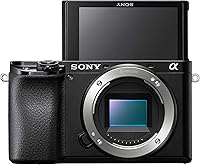
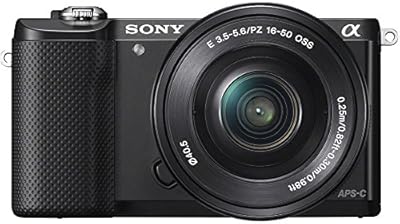
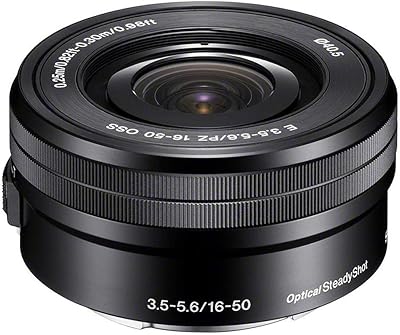
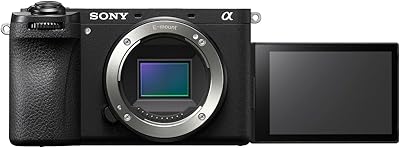
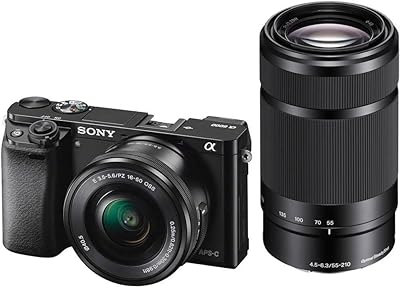
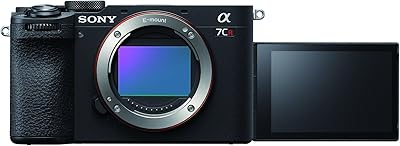
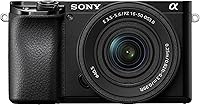
The Sony Alpha a6100 16-50mm is a compact mirrorless kit built for photographers ready to step up from a smartphone or entry-level DSLR without hauling heavy gear. It ships with Sony's E PZ 16-50mm zoom attached, so there is nothing extra to buy before heading out the door. The body is genuinely small — comfortable in a jacket pocket and light enough for all-day carry. It sits a rung below the a6400 and a6600 in Sony's lineup, but shares the same Real-time Eye AF engine, which is the headline feature. The tiltable touchscreen catches your attention immediately, and the overall construction feels considered rather than cut-rate for its market position.
Features & Benefits

The autofocus on the a6100 is where this camera earns its keep. Point it at a person's face and it locks onto the nearest eye with a speed that feels almost predictive — hold that lock through movement, head turns, even partial obstructions. Continuous burst shooting with AF and AE tracking active means you can fire through an action sequence and reliably pull sharp frames rather than hoping one lands. The sensor handles indoor available light well up to moderate ISO levels before noise becomes a concern. On the video side, 4K uses a full-pixel readout rather than a pixel-binned crop, which keeps footage cleaner — though be aware there is a slight focal length crop in 4K that narrows your effective field of view with the kit lens.

Best For

This Sony mirrorless kit is a natural match for travel photographers who live out of a carry-on — the entire kit fits easily in a small shoulder bag. Vloggers will appreciate the flip screen combined with a mic input that works without adapters, keeping on-location setups tidy. Parents trying to capture fast-moving kids, or pet owners chasing an unpredictable dog around a yard, will find the autofocus a genuine practical improvement over most alternatives at this level. It also suits Sony E-mount users upgrading from an older body, since existing lenses transfer directly. Beginners who want to learn manual controls have real room to grow here without quickly outgrowing the camera.

User Feedback

Owners of this APS-C camera rate it highly overall, and the praise is mostly earned. Eye AF consistently gets called out as the standout feature, particularly by parents and pet photographers describing it as reliable even in chaotic, unpredictable situations. The recurring complaint is battery life — the included cell drains faster than expected during extended video sessions, and picking up a spare before your first big shoot is genuinely practical advice rather than an upsell. A handful of users also find the kit lens feels flimsy and recommend pairing it with a prime for low-light shooting. Neither issue reflects a flaw in the camera body itself, and most buyers seem to treat them as minor, solvable inconveniences rather than dealbreakers.

Pros

  • Eye AF tracks faces and eyes with exceptional reliability, even through unpredictable movement.
  • The entire kit fits into a small shoulder bag, making it one of the most travel-friendly mirrorless options available.
  • 4K footage uses full-pixel readout, producing cleaner video than many rivals at this price tier.
  • Continuous burst shooting with active autofocus tracking means fewer missed moments during fast action.
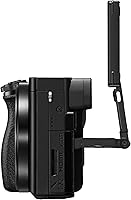
  • The 180-degree flip screen makes solo vlogging genuinely practical without any additional accessories.
  • A built-in mic input keeps on-location video setups simple and clean.
  • The a6100 shares core autofocus technology with Sony bodies that cost significantly more.
  • Wireless connectivity allows quick image transfers to a phone for immediate sharing or backup.
  • Beginners get full manual control access alongside smart automatic modes, offering a real learning path.
  • Compatible with the entire Sony E-mount lens ecosystem, giving owners a clear upgrade route.

Cons

  • Battery life is genuinely short — budgeting for at least one spare cell before the first serious outing is practical, not optional.
  • The kit lens feels plasticky and underperforms in low-light or indoor situations where a faster aperture is needed.
  • 4K recording introduces a focal length crop that catches users off guard, effectively narrowing the wide end of the kit lens.
  • The burst buffer fills up during sustained firing sequences, causing noticeable slowdown between rapid shooting runs.
  • Sony's mobile app for wireless transfer has a reputation for inconsistent pairing and occasional connection drops.
  • The shallow grip becomes uncomfortable during long sessions with heavier lenses attached.
  • The electronic viewfinder resolution and refresh rate are adequate but feel dated compared to newer competitors.
  • Menu navigation is extensive and takes meaningful time to learn, which can frustrate buyers expecting a quick setup.
  • No weather sealing means the camera needs to be protected in rain or dusty outdoor conditions.
  • The LCD washes out in bright sunlight, making accurate exposure review difficult when shooting outdoors.

Ratings

The Sony Alpha a6100 16-50mm earns consistently high marks across thousands of verified global reviews, and the scores below reflect what real buyers actually experienced — not the spec sheet. Our AI has analyzed confirmed purchases worldwide, actively filtering out incentivized, bot-generated, and outlier feedback, so both the strengths and the frustrations are represented honestly. Where this camera genuinely impresses, the scores show it; where real users ran into friction, that is reflected too.
Autofocus Performance
94%
Real-time Eye AF is the feature buyers mention most, and the praise is remarkably consistent. Whether tracking a toddler sprinting across a garden or a dog mid-leap, users report that the camera locks and holds focus with very little manual intervention needed. For a mid-range body, that level of reliability stands out.
In very low light or against busy, cluttered backgrounds, the tracking can occasionally hunt or briefly lose a subject before reacquiring. It is a minor complaint relative to overall AF performance, but users shooting in dim indoor environments do notice it.
Image Quality
88%
The 24.2MP sensor produces sharp, well-detailed images with natural color rendering that holds up well in daylight and good indoor light. Most buyers are genuinely impressed with how clean the files look when shooting in RAW, and the detail in landscape and portrait shots earns consistent praise.
At higher ISO settings — particularly indoors under artificial light — noise becomes visible and luminance smoothing from the processor softens fine detail. It is not unusable, but users who regularly shoot in dim conditions without a fast prime will bump into this ceiling fairly often.
Video Quality
81%
19%
4K footage shot via full-pixel readout looks noticeably cleaner than what many competing APS-C cameras produce at this level. Vloggers and YouTube creators point to the smooth rendering and good dynamic range in well-lit outdoor conditions as genuine advantages over older or cheaper alternatives.
There is a crop when shooting 4K that narrows the effective field of view, which catches some buyers off guard — especially when using the kit lens at wide angle. In low light, 4K video shows more noise than stills, and the camera can also warm up during extended 4K recording sessions.
Autofocus in Video
87%
Touchscreen AF during video recording is a feature users single out as a real-world usability improvement. Tapping to shift focus between subjects mid-clip works reliably, and Eye AF stays active in movie mode — a meaningful advantage for solo vloggers who cannot monitor a screen while presenting to camera.
Continuous AF in video occasionally produces a brief, visible hunting wobble when subjects move quickly toward or away from the camera. It is subtle enough that many users accept it, but buyers expecting cinema-level AF smoothness may find it distracting in critical footage.
Battery Life
52%
48%
The included battery is sufficient for a short outing — a morning walk or a couple of hours of casual shooting will not leave you stranded. For light users shooting mostly stills in bursts, a single charge can carry through a few hundred frames without issue.
Battery life is the most common genuine complaint from buyers, and it is hard to argue with. Shooting 4K video drains the cell noticeably faster, and a full day of shooting almost always requires either a second battery or a USB power bank. Buying a spare NP-FW50 is essentially mandatory, not optional.
Build Quality & Handling
73%
27%
The magnesium alloy body feels solid and purposeful in hand, and the overall dimensions make it easy to hold one-handed for extended periods. The control layout is logical once learned, and buyers who have used previous Sony bodies adapt quickly to the button placement.
The kit lens attracts regular criticism for feeling plasticky and light in a way that slightly undercuts the body's build quality. The grip is also on the shallow side, which makes longer zoom lenses or heavier primes feel slightly front-heavy without an add-on grip.
Portability & Size
91%
This is genuinely one of the more pocketable interchangeable-lens cameras available, and buyers who travel frequently or commute on foot appreciate being able to slip the entire kit into a small bag. The light overall weight means all-day carry is not a burden.
The compact dimensions do create some compromise — the small grip and tightly packed buttons can feel cramped for users with larger hands during extended shooting sessions. Those accustomed to DSLR ergonomics may need an adjustment period.
Flip Screen & Touchscreen
86%
The 180-degree tiltable screen is well-executed and earns strong feedback from vloggers and self-portrait shooters. The touchscreen response is accurate for focus point selection, and being able to flip the display forward while keeping the viewfinder available is a practical combination.
The resolution on the LCD is decent but not class-leading, and in bright outdoor sunlight the screen can wash out enough to make exposure judgment difficult. There is also no fully articulating side-flip design, so high-angle and low-angle shots in landscape orientation require some awkward positioning.
Kit Lens Quality
67%
33%
The E PZ 16-50mm covers a useful focal range for everyday shooting — street, travel snapshots, and casual portraits all work well in decent light. The built-in optical stabilization helps at the longer end, and the power zoom is convenient for video users who want smooth focal length changes.
Wide open at the longer end, sharpness and contrast drop off noticeably, and the maximum aperture limits usefulness in indoor or evening shooting. Several buyers recommend treating the kit lens as a starting point and budgeting for a fast prime relatively early in ownership.
Connectivity & Wireless
78%
22%
Built-in Wi-Fi and Bluetooth allow quick image transfers to a smartphone and remote shutter triggering without additional accessories. Buyers who regularly back up to a phone or share images on the go find the wireless workflow reasonably convenient once the initial setup is done.
Sony's Imaging Edge mobile app, which handles the wireless connection, receives mixed reviews for stability and interface design. Some users report inconsistent pairing behavior or connection drops, particularly on Android devices, which dilutes what should be a straightforward feature.
Electronic Viewfinder
71%
29%
Having an EVF at all in a body this compact is appreciated, particularly for shooting outdoors where screen glare is an issue. The 0.70x magnification gives a workable view for manual focus confirmation and composition in bright conditions.
The EVF resolution and refresh rate are adequate but not impressive by current standards. Users who shoot fast action through the viewfinder occasionally notice a slight lag, and the eye sensor that switches between EVF and LCD can misfire when the camera is lowered from eye level.
Continuous Shooting Speed
83%
Eleven frames per second with active autofocus tracking is a legitimate advantage for capturing kids at a birthday party, birds in flight, or any subject that moves unpredictably. Buyers in this segment are often pleasantly surprised by how capable the burst mode actually is in practice.
The buffer fills at a speed that limits how many sustained bursts you can fire before the camera slows down to write to the card. Using a fast UHS-I card helps, but users shooting prolonged action sequences will notice the hesitation between bursts.
Value for Money
79%
21%
As a complete ready-to-shoot kit from a major brand with flagship-grade autofocus technology filtered down into a mid-range body, the overall package offers genuine capability at a realistic price point for the target audience.
Competing APS-C kits from Fujifilm and Canon at similar prices offer comparable or better out-of-camera JPEG rendering and, in some cases, stronger battery life. Buyers who compare carefully before purchasing sometimes feel the a6100 gives ground on a few tangible real-world details despite the strong AF.
Low Light Performance
69%
31%
For a camera in this class, indoor shots in reasonably lit rooms — restaurants, living rooms with lamps on — produce clean enough results that most buyers are satisfied. Pair it with a fast prime and the sensor itself handles available light well.
The kit lens maximum aperture is a real constraint in low light, forcing the camera to push ISO higher than ideal. Without additional glass, evening or indoor shooting produces noticeably noisy images, and this is a limitation buyers who shoot primarily indoors should factor in before purchasing.
Ease of Use for Beginners
85%
Auto and scene modes produce reliable, well-exposed images straight away, and the touch-to-focus interface lowers the barrier for users coming from smartphones. The menu system, while deep, is organized logically enough that most first-time mirrorless buyers find their footing within a few sessions.
Sony's menu architecture is extensive and can feel overwhelming during the first week of ownership. Users who want to customize the camera heavily — assigning functions to buttons, setting up custom shooting modes — will spend meaningful time reading the manual or watching tutorials before feeling fully in control.

Suitable for:

The Sony Alpha a6100 16-50mm is built for a specific kind of buyer, and for that buyer it genuinely delivers. If you are a travel photographer who refuses to carry a heavy kit but still wants real image quality, this camera fits in a small bag and produces results that a smartphone simply cannot match. Vloggers and YouTube creators will find the combination of a flip screen, reliable face tracking, and a mic input surprisingly capable for solo on-camera work without needing extra accessories. Parents chasing fast-moving kids or pet owners trying to catch candid animal moments will appreciate an autofocus system that does the hard work for them — the tracking is forgiving in a way that translates directly into more usable shots per session. It also suits Sony E-mount users who already own glass and want a meaningfully upgraded body, since the entire lens library carries over. And for beginners who are serious about learning photography properly, not just shooting on auto, there is genuine depth here to grow into over time without hitting a ceiling too quickly.
Not suitable for:

The Sony Alpha a6100 16-50mm is not the right fit for everyone, and it is worth being honest about where it falls short before committing. If you shoot primarily in low light — dark reception halls, evening street photography, dimly lit interiors — the kit lens will be a constant frustration, and you will need to factor in the added cost of a faster prime lens fairly soon after purchase. Serious video producers who need long recording sessions or expect cinema-grade rolling shutter performance should look at more video-focused alternatives, as the battery drains quickly during extended 4K use and overheating can become an issue. Wildlife photographers or sports shooters who need a deep burst buffer and a robust weather-sealed body will find this camera reaches its practical limits under sustained professional workloads. Buyers who prioritize out-of-camera JPEG color rendering may also prefer what Fujifilm offers at a comparable price point. If large, comfortable ergonomics matter to you — particularly with heavier telephoto lenses attached — the shallow grip on this compact body can become tiring over a full day of shooting.
Specifications

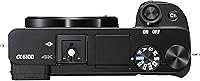
  • Sensor: 24.2MP BSI CMOS APS-C sensor paired with a front-end LSI for faster data readout and reduced noise at higher sensitivities.
  • Processor: BIONZ X image processor handles noise reduction, autofocus computation, and video encoding simultaneously without significant performance degradation.
  • Autofocus System: 425 phase-detection AF points cover nearly the full frame, with Real-time Eye AF and object tracking capable of acquiring focus in approximately 0.02 seconds.
  • ISO Range: Native ISO runs from 100 to 32000, expandable to 51200 for situations where extreme low-light sensitivity outweighs noise concerns.
  • Continuous Shooting: Up to 11 frames per second with active AF and AE tracking, allowing sustained bursts through fast-moving sequences.
  • Video Resolution: Records 4K UHD video using full-pixel readout with no pixel binning, plus Full HD at up to 120fps for slow-motion playback.
  • Stabilization: Optical image stabilization is provided by the kit lens rather than in-body, compensating for camera shake during handheld shooting.
  • Viewfinder: Built-in electronic viewfinder with 0.70x magnification and approximately 2.36 million dots for outdoor shooting when the LCD is difficult to read.
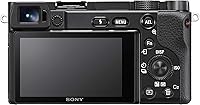
  • LCD Screen: 3-inch tiltable touchscreen LCD with 921,600-dot resolution flips 180 degrees forward for self-recording and vlogging use.
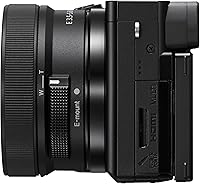
  • Kit Lens: Includes the E PZ 16-50mm F3.5-5.6 OSS II power zoom lens covering a 3x optical zoom range with built-in optical stabilization.
  • Connectivity: Equipped with Micro HDMI output, Micro USB, a Multi Interface Shoe, and a 3.5mm mic input for external audio recording.
  • Wireless: Built-in Wi-Fi and Bluetooth enable remote shooting, image transfer to smartphones, and camera control via the Sony Imaging Edge Mobile app.
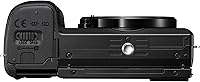
  • Battery: Powered by the NP-FW50 lithium-ion rechargeable battery, rated for approximately 380 shots per charge under CIPA standard testing conditions.
  • Memory: Single SD card slot compatible with UHS-I cards; faster UHS-II cards are physically compatible but operate only at UHS-I speeds.
  • File Formats: Captures stills in RAW (ARW), JPEG, or simultaneous RAW plus JPEG; video records in XAVC S and AVCHD formats.
  • Body Weight: Body-only weight is approximately 396g (14 oz); total kit weight with the 16-50mm lens attached is approximately 461g (16.3 oz).
  • Dimensions: Camera body measures approximately 120mm wide, 66.9mm tall, and 48.8mm deep, making it one of the more compact APS-C mirrorless bodies available.
  • Mount: Sony E-mount is fully compatible with both APS-C E-mount lenses and full-frame FE-mount lenses, which apply a 1.5x crop factor on this body.
  • Shutter Speed: Mechanical shutter range spans from 30 seconds to 1/4000 sec, with a flash sync speed of 1/160 sec.
  • Warranty: Covered by a 1-year limited manufacturer warranty from Sony, applicable to manufacturing defects under normal operating conditions.

Related Reviews
Sony Alpha a5100 16-50mm Mirrorless Camera
84%
91%
Image Quality
88%
Autofocus Performance
89%
Video Recording Quality
94%
Portability & Size
85%
Ease of Use
More
Sony Alpha a5000 Mirrorless Digital Camera with 16-50mm Lens
83%
89%
Image Quality
74%
Autofocus Speed
94%
Portability
88%
Ease of Use
80%
Battery Life
More
Sony Alpha ZV-E10 II Mirrorless Camera with 16-50mm Lens
85%
94%
Autofocus Performance
88%
Ease of Use for Beginners
90%
Video Quality (4K)
85%
Image Quality (26MP)
92%
Portability and Weight
More
Sony 16-50mm f/3.5-5.6 OSS Alpha E-Mount Retractable Zoom Lens
85%
91%
Value for Money
87%
Image Quality
93%
Portability/Size
88%
Ease of Use
82%
Build Quality
More
Sony SELP1650 16-50mm Power Zoom Lens
88%
84%
Image Quality
92%
Portability
89%
Zoom Performance
86%
Build Quality
91%
Ease of Use
More
Sony SEL1655G Alpha 16-55mm F2.8 G Lens
87%
94%
Image Quality
88%
Autofocus Speed and Accuracy
85%
Build Quality
72%
Weight and Portability
90%
Bokeh Quality
More
Sony Alpha 6700
Sony Alpha 6700
82%
93%
Autofocus Performance
91%
Video Quality
89%
Image Quality & Sensor
86%
Image Stabilization
58%
Battery Life
More
Sony Alpha a6000 Mirrorless Digital Camera
84%
96%
Autofocus Speed
91%
Image Quality
63%
Battery Life
88%
Portability/Weight
84%
Build Quality
More
Sony Alpha 7CR Full-Frame Camera
87%
96%
Image Quality
94%
Autofocus Performance
88%
Build Quality
92%
Portability
91%
Video Recording Quality
More
Sony Alpha 7R III Mirrorless Camera
87%
96%
Image Quality
94%
Autofocus Performance
88%
Battery Life
91%
Build Quality
92%
Low-Light Performance
More

FAQ

Yes, it genuinely is. The auto modes produce reliable results straight away, and the touchscreen makes focus selection feel intuitive if you are coming from a smartphone. The deeper manual controls are there when you are ready for them, so you will not outgrow the camera quickly. The main learning curve is Sony's menu system, which is extensive — but most users get comfortable with it within a few shooting sessions.

Honestly, it depends on how you shoot. For a few hours of casual photography, one battery is usually fine. For a full day out, or any serious amount of 4K video, you will almost certainly need a spare. Most experienced a6100 owners just buy a second NP-FW50 battery alongside the camera — it is a small extra cost that removes a recurring frustration entirely.

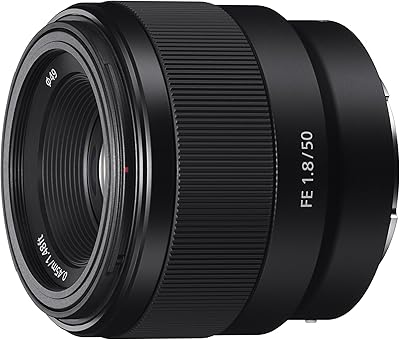
The 16-50mm kit lens is genuinely useful for travel, everyday snapshots, and outdoor shooting in decent light. Where it struggles is in low-light situations — the relatively narrow maximum aperture means the camera has to push ISO higher than ideal indoors. If you plan to shoot a lot in dim environments, budgeting for a fast prime lens like the Sony 35mm F1.8 relatively early makes a noticeable difference.

The 4K is legitimately better than what many competing cameras at this level produce, because the camera reads the full sensor rather than taking a cropped or pixel-binned shortcut. That said, there is a crop factor in 4K mode that effectively narrows your field of view, which matters if you are using the kit lens and relying on the wide end. For well-lit outdoor vlogging and travel content, most users are satisfied with the results.

If your previous Sony camera used the E-mount — which covers most Sony mirrorless bodies from the NEX series onward — yes, those lenses will fit and work fully. Full-frame FE-mount lenses also attach and function correctly, though they apply a 1.5x crop factor on the APS-C sensor. Sony A-mount lenses from DSLR bodies require a separate mount adapter to work.

Eye AF works on both human eyes and animal eyes, and buyers who photograph dogs and cats specifically mention it as one of the most practically useful features of this APS-C camera. It does not work perfectly in every situation — very low light or cluttered backgrounds can cause the tracking to hesitate — but for everyday pet photography in normal lighting, it is impressively reliable.

No, the a6100 body is not weather sealed. Sony describes it as water-resistant to a basic degree, but that does not mean it can handle rain or dusty conditions the way a weather-sealed body would. If you plan to shoot regularly in challenging outdoor conditions, you will want to protect it with a rain cover or consider whether a sealed body higher in Sony's lineup is worth the premium.

The a6400 adds a few meaningful upgrades: a larger, higher-resolution EVF, slightly improved video autofocus, and no recording time limit for video sessions. If video is your primary use case or you want a more fully-featured EVF, the a6400 is worth comparing seriously. For stills-focused buyers and vloggers doing shorter clips, the core autofocus performance and image quality are very close, and the difference in price can feel hard to justify.

You will want a UHS-I SD card with a fast write speed — look for cards rated V30 or higher, which indicates they can sustain at least 30MB/s write speeds. Note that while UHS-II cards physically fit the slot, the camera only reads them at UHS-I speeds, so there is no benefit to paying for UHS-II. A 64GB or 128GB UHS-I V30 card from a reputable brand is the practical recommendation for 4K shooting.

The a6100 supports in-camera charging via the Micro USB port, which means you can top up the battery without removing it — useful for charging from a laptop or power bank on the road. Charging this way is relatively slow compared to a dedicated wall charger, so if you are trying to recover a depleted battery quickly before a shoot, a standalone battery charger is a worthwhile addition.