Overview

The SOLOMARK 90mm Refractor Telescope arrived in mid-2024 and has already earned a strong foothold among entry-level refractors, sitting at #62 in its Amazon subcategory. Built around a 90mm objective lens and a 1000mm focal length, this refractor delivers genuine optical performance rather than the hollow promises plastered on cheaper starter scopes. What separates it from the budget pack is the Vertisteel AZ mount — a metal altazimuth design that feels noticeably steadier than the plastic gimbals you get with toy-grade rivals. Honest caveat: this is a capable entry-level instrument, not a tool for serious deep-sky research or astrophysics work.

Features & Benefits

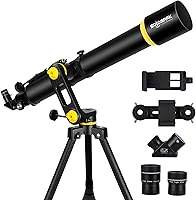
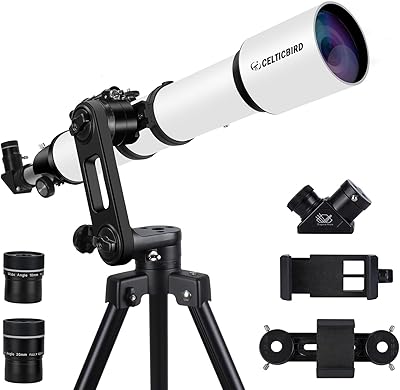
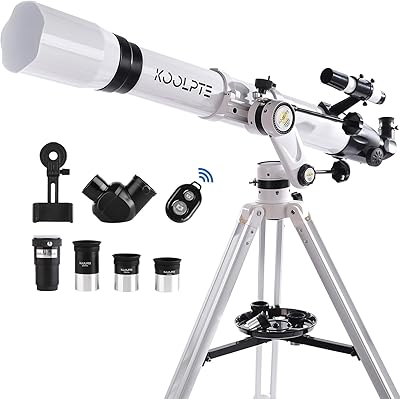
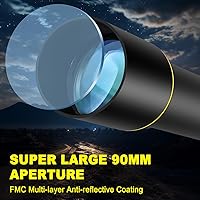
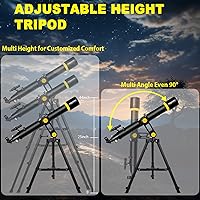
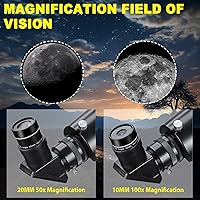
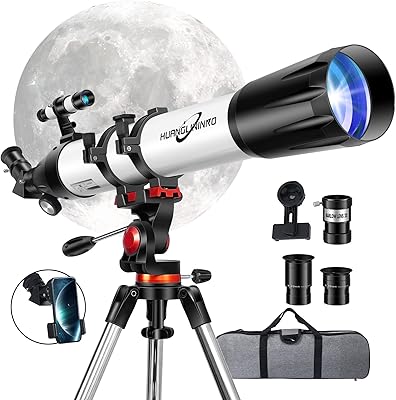
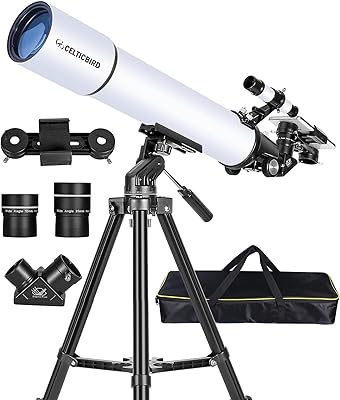
The 90mm aperture gathers enough light to reveal real planetary detail — lunar craters, Jupiter's cloud bands, and Saturn's rings are all within reach. Paired with the included WAK-series eyepieces, magnification runs between 50x and 100x, a practical range for the targets most beginners actually chase. The Vertisteel altazimuth mount glides on both axes more smoothly than typical beginner hardware, making object tracking far less frustrating. A reflex finderscope helps you point the tube accurately before committing to the eyepiece, and the adjustable aluminum tripod legs stay firm on grass or gravel alike. The bundled phone adapter rounds things out as a handy bonus for Moon photography.

Best For

This beginner telescope hits a genuine sweet spot for families who want one instrument that works for a curious ten-year-old and a more serious adult alike. It suits casual planetary observers well — the Moon in crisp detail, Saturn's rings just visible, Jupiter's moons as distinct points of light. Backyard astronomers and car campers will appreciate the stable tripod, though the 15-plus-pound build makes it a drive-up destination rather than a hiking pack item. The SOLOMARK scope also works as a thoughtful gift; everything needed for a first night out comes included, with no urgent accessories to track down separately.

User Feedback

Buyers consistently single out lunar image clarity as the highlight — the Moon through this refractor tends to genuinely impress first-timers. The mount's solid, metal feel also earns frequent praise. On the other side, some owners find the focuser a bit stiff, requiring patience to nail a sharp view. Assembly is manageable but not quite as instant as the packaging implies; plan for roughly 20 to 30 minutes the first time. The phone adapter is functional, though centering a smartphone over the eyepiece takes a little trial and error. A handful of users flag slight edge softness at maximum magnification, which is fairly common behavior for refractors in this tier.

Pros

  • The 90mm aperture delivers genuinely bright, detailed views of the Moon and brighter planets right out of the box.
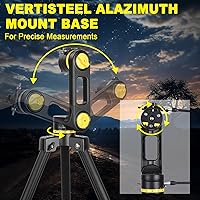
  • The Vertisteel altazimuth mount is noticeably steadier than the plastic mounts found on most competing beginner scopes.
  • A complete accessory bundle — tripod, eyepieces, finderscope, and phone adapter — means no immediate follow-up purchases.
  • The reflex finderscope makes pointing at targets far faster and less frustrating for first-time observers.
  • Adjustable tripod legs hold firm on grass, gravel, and uneven backyard terrain during long viewing sessions.
  • The SOLOMARK 90mm Refractor Telescope covers a practical 50x to 100x magnification range that suits its primary audience well.
  • Families can share the scope comfortably across different heights and experience levels in the same session.
  • The metal optical tube and Vertisteel mount body feel durable and have held up well for buyers using the scope regularly over several months.
  • Lunar photography with a smartphone through the included adapter produces genuinely shareable results with a little patience.

Cons

  • The focuser is stiff and can be frustrating to fine-tune, especially for new users chasing small planetary targets.
  • Assembly takes longer than advertised — plan for 20 to 35 minutes the first time, not a quick five-minute setup.
  • The printed instruction manual is vague in key steps, pushing many buyers toward third-party tutorial videos to complete setup.
  • At over 15 pounds, the scope is too heavy for anything beyond car-accessible locations.
  • Optical edge softness becomes noticeable at maximum magnification, particularly on high-contrast targets like the lunar limb.
  • The included eyepieces show chromatic fringing on bright targets, which more experienced observers will notice quickly.
  • The phone adapter requires considerable trial and error to center correctly — vignetting and blur are common early results.
  • Some plastic fittings on the accessory hardware feel inconsistent with the otherwise solid metal construction.
  • The altazimuth mount has no motor option, so tracking requires constant manual nudging as objects drift across the field of view.

Ratings

The SOLOMARK 90mm Refractor Telescope has been evaluated by our AI rating system after processing verified buyer reviews from multiple global markets, with spam, bot activity, and incentivized feedback actively filtered out. The scores below reflect the honest consensus of real users — capturing what genuinely impresses, what falls short, and where this beginner refractor sits relative to its competition. Both the highs and the friction points are represented transparently.
Optical Clarity
83%
Users consistently report sharp, bright views of the Moon, with crater detail that surprises first-time observers. Planetary targets like Saturn's rings and Jupiter's equatorial bands come through clearly at mid-range magnification, making backyard sessions genuinely rewarding for newcomers.
At the upper end of the magnification range — around 100x — some buyers notice softness toward the edges of the field of view. This is a known characteristic of refractors at this price tier and becomes more noticeable when atmospheric conditions are less than ideal.
Mount Stability
88%
The Vertisteel altazimuth mount stands out from plastic-mounted rivals in a tangible way. Observers report that the axes move smoothly under load, and the scope holds its position well between adjustments — a real quality-of-life improvement during extended evening sessions.
A minority of buyers note that fine micro-adjustments can occasionally overshoot the target, especially when tracking objects at higher magnifications. The mount is not motorized, so manual correction is always required, which adds a learning curve for complete beginners.
Tripod Build Quality
81%
19%
The adjustable aluminum tripod legs feel robust and planted on flat ground or moderate terrain. Backyard users and those setting up on patchy grass report noticeably less vibration compared to cheaper alternatives, which directly improves the viewing experience.
At over 15 pounds combined, the full setup is on the heavier side. Some buyers who hoped to use it on camping trips found the bulk inconvenient, and a few noted that the leg locks require a firm tightening to stay fully secure on uneven surfaces.
Ease of Assembly
71%
29%
Most users can get the scope assembled without specialized tools, and the component count is manageable enough that a parent and child can do it together. The process is logical once the manual is followed carefully, and the initial setup becomes faster with repetition.
The brand's claim of hassle-free assembly does not quite match user reality. Several reviewers report spending 20 to 35 minutes on first assembly, and the instruction manual draws criticism for being vague in a couple of key steps involving the mount attachment.
Focuser Performance
66%
34%
Once properly adjusted, the manual focuser delivers a satisfyingly crisp focal plane on bright objects like the Moon. Buyers who took the time to learn the focuser's resistance characteristics found the process predictable after a few sessions.
Stiffness in the focuser is the most frequently recurring complaint. New users in particular find it frustrating to isolate perfect focus, especially on planets where the target is small and the tolerance is tight. A smoother rack-and-pinion mechanism would meaningfully improve the experience.
Magnification Range
78%
22%
The 50x to 100x range supplied by the WAK-series eyepieces covers the most practical targets for a beginner — lunar detail, the brighter planets, and some open star clusters. Users appreciate having usable magnification out of the box without needing to purchase additional eyepieces immediately.
The ceiling of 100x limits versatility for anyone who quickly outgrows lunar and planetary basics. Deep-sky objects like nebulae or distant galaxies remain vague smudges at these magnifications, which can disappoint buyers with broader astronomical ambitions.
Finderscope Usability
76%
24%
The reflex finderscope makes initial target acquisition noticeably faster than a basic optical finder for new users. Pointing at a bright planet or the Moon and then swinging to the eyepiece works reliably once the finder is aligned, which most users accomplish within a few minutes.
Finderscope alignment can drift slightly after transport, requiring re-calibration before each outing. In low-light conditions, the illuminated reticle can also be a touch too bright for fully dark-adapted eyes, causing brief discomfort during transition.
Phone Adapter & Astrophotography
62%
38%
The included adapter lets users attach a smartphone directly over the eyepiece, and with patience, Moon shots come out genuinely shareable. Several buyers posted impressive lunar images taken with mid-range smartphones, which exceeded their expectations for a bundled accessory.
Centering the phone precisely over the eyepiece takes trial and error, and even small misalignments produce vignetting or blurry edges. Planetary photography is particularly difficult without a motorized mount, as objects drift out of frame quickly during the required exposure time.
Portability
59%
41%
The optical tube is reasonably sized for a 90mm refractor, and the disassembled components fit into a car boot without major reorganization. For backyard-to-backyard transport or driving to a dark sky site, the setup works adequately.
At 15-plus pounds assembled, this is not a take-on-a-hike instrument. Users who purchased with camping or trail-side stargazing in mind express clear disappointment. The weight is a trade-off for the mount stability, but the product messaging underplays this constraint.
Value for Money
79%
21%
Compared to other 90mm refractors at a similar price point, the SOLOMARK scope ships with a meaningful accessory bundle — tripod, finderscope, phone adapter, and eyepieces included. Buyers who compared alternatives acknowledge that assembling the same kit piecemeal would cost noticeably more.
A portion of buyers feel the pricing pushes into territory where more capable instruments exist, particularly from established optical brands. Those who researched before buying and had managed expectations are satisfied, while impulse purchasers occasionally feel the spec-to-cost ratio is tighter than it first appeared.
Eyepiece Quality
73%
27%
The WAK-series eyepieces that ship with this refractor deliver acceptably sharp central views for casual observation. Most beginners find the included glass sufficient for months of regular use before feeling the urge to upgrade.
Experienced observers notice chromatic fringing on high-contrast targets at the higher-power eyepiece, which is a limitation of the included optics rather than the objective lens itself. The eye relief is also on the shorter side, which can be uncomfortable for eyeglass wearers.
Build Material & Durability
82%
18%
The combination of a metal optical tube and the Vertisteel mount body gives the scope a solid, durable feel that users consistently contrast positively with toy-grade plastic alternatives. Several buyers mention the construction holding up well after months of regular outdoor use.
Some plastic components appear in the accessory fittings and eyepiece barrel housings, which feel slightly inconsistent alongside the otherwise sturdy hardware. A couple of long-term users report minor finish wear around the focuser knob after extended use outdoors.
Instructions & Documentation
54%
46%
The box includes a printed manual that covers the basic assembly steps and provides a starter guide to finding common celestial objects. For absolute beginners, this gives enough context to attempt a first session without external research.
The manual's translation quality is uneven in places, and diagrams for mount attachment leave some steps ambiguous. Multiple reviewers resorted to third-party YouTube tutorials to complete setup correctly, which is a meaningful friction point for a product marketed as beginner-friendly.
Family & Multi-User Usability
84%
The adjustable tripod height and intuitive altazimuth controls make it practical for both children and adults to use in the same session. Families report that the low barrier to pointing and focusing keeps younger users engaged rather than frustrated during shared stargazing nights.
Very young children may struggle with the focuser stiffness noted elsewhere, requiring adult intervention to fine-tune the view. The overall weight also means the telescope needs to be set up and moved by an adult, limiting independent use for smaller kids.

Suitable for:

The SOLOMARK 90mm Refractor Telescope is a strong match for families who want a single instrument that genuinely works for both curious kids and engaged adults, without requiring a background in astronomy to operate. If your main targets are the Moon, Saturn, and Jupiter — objects bright enough to reward a 90mm aperture at modest magnifications — this refractor delivers real satisfaction on clear nights. Beginners who have already outgrown a toy-store scope and want something with a metal mount, a proper finderscope, and a stable tripod will find this a meaningful upgrade. It also suits gift buyers well: the bundled accessories mean the recipient can set up and start observing without hunting for additional gear. Backyard astronomers and those driving to dark-sky sites will appreciate the stability of the Vertisteel mount, especially compared to the wobbly plastic alternatives that dominate this price range.
Not suitable for:

The SOLOMARK 90mm Refractor Telescope is not the right choice for buyers expecting a portable, pack-in-a-bag instrument — at over 15 pounds assembled, it is a car-transport scope at minimum, and anyone envisioning trail-side stargazing will be disappointed. Serious deep-sky observers chasing faint nebulae, distant galaxies, or globular clusters will hit the ceiling of what 100x magnification and a 90mm aperture can realistically resolve, and should look at larger aperture instruments or dedicated astrophotography rigs instead. This refractor is also not suited to buyers who want a fully hands-off, motorized tracking experience — the altazimuth mount requires constant manual correction, which can frustrate anyone expecting automation at this price tier. Astrophotographers with high expectations should note that the included phone adapter is a casual bonus, not a precision imaging tool, and long-exposure planetary or deep-sky photography is effectively off the table without significant additional hardware. Finally, eyeglass wearers may find the short eye relief on the included eyepieces uncomfortable during extended sessions.
Specifications

  • Objective Lens: The primary lens measures 90mm in diameter, providing enough light-gathering area to resolve meaningful detail on the Moon, planets, and brighter deep-sky targets.
  • Focal Length: The optical tube has a focal length of 1000mm, resulting in a focal ratio of approximately f/11, which favors planetary and lunar observation over wide-field viewing.
  • Magnification Range: Using the included WAK-series eyepieces, the scope delivers a practical magnification range of 50x to 100x depending on the eyepiece selected.
  • Mount Type: The scope ships with a Vertisteel altazimuth mount that allows manual adjustment along both altitude and azimuth axes for tracking celestial objects.
  • Tripod Design: The aluminum tripod features adjustable legs to accommodate different observer heights and terrain, providing a stable base during extended outdoor sessions.
  • Optical Tube Length: The optical tube measures 1000mm in length, consistent with the focal length of the refractor design.
  • Assembled Dimensions: When fully set up, the telescope measures approximately 39.37″ deep by 7.09″ wide by 12.6″ tall.
  • Total Weight: The fully assembled unit weighs 15.42 lbs (7.01 kg), which contributes to stability but makes it best suited for car-accessible locations rather than hiking.
  • Finderscope: A reflex-style finderscope is included to help users quickly locate and center celestial targets before switching to the main eyepiece.
  • Focus Mechanism: Focusing is performed manually via a rack-and-pinion focuser on the eyepiece end of the optical tube.
  • Eyepiece Series: The included eyepieces belong to SOLOMARK's WAK series, providing the magnification range needed for basic lunar and planetary observation straight out of the box.
  • Phone Adapter: A smartphone-compatible phone adapter is bundled with the scope, allowing users to attach most modern smartphones over the eyepiece for casual lunar photography.
  • Mount Material: The altazimuth mount head is constructed from Vertisteel, a steel-based alloy that offers greater rigidity and durability than the plastic mounts common in entry-level competitors.
  • Optical Tube Material: The main optical tube is built from metal, providing structural rigidity and resistance to flex that can degrade image quality in cheaper plastic-tube designs.
  • Telescope Type: This is a refractor telescope, meaning it uses a glass objective lens rather than mirrors to gather and focus light — a design well-suited to planetary observation and low-maintenance ownership.
  • Compatible Devices: The bundled phone adapter is designed for smartphone use, making it compatible with most current iOS and Android handsets for basic afocal photography.
  • Brand & Origin: The telescope is manufactured and sold under the SOLOMARK brand, which has been active in the consumer telescope market and first listed this model in July 2024.
  • Market Ranking: As of its latest ranking data, this refractor sits at #62 in the Telescope Refractors subcategory on Amazon, indicating a strong sales position for a scope launched in mid-2024.

Related Reviews
CELTICBIRD 90700 90mm Refractor Telescope
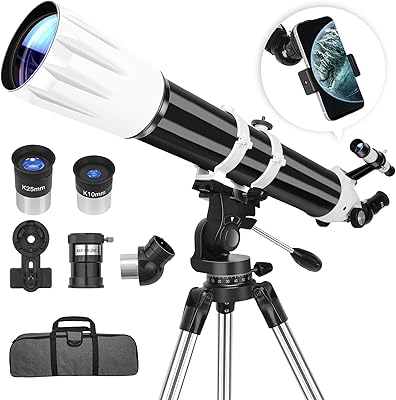
70%
83%
Optical Clarity
76%
Mount Precision
88%
Tripod Stability
81%
Ease of Assembly
62%
Finderscope Usability
More
PISEZ 90800 90mm Refractor Telescope
68%
83%
Optical Clarity
81%
Value for Money
72%
Ease of Setup
68%
Magnification Range
61%
Tripod Stability
More
Hawkko 90900 Refractor Telescope
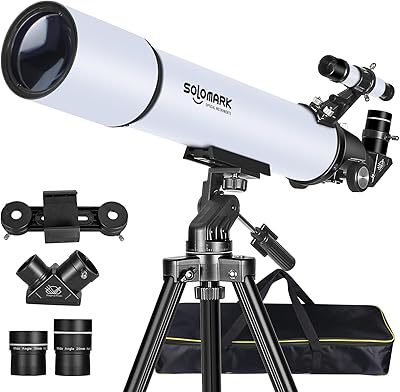
75%
83%
Optical Clarity
76%
Build Quality
69%
Mount Smoothness
88%
Ease of Setup
71%
Magnification Range
More
SOLOMARK 80900 Refractor Telescope
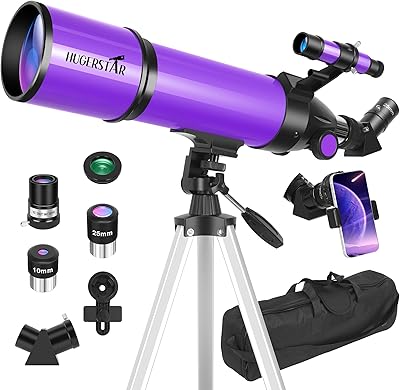
76%
83%
Optical Clarity
71%
Build Quality
62%
Tripod Stability
88%
Ease of Assembly
81%
Value for Money
More
Barska Starwatcher Refractor Telescope 60mm
80%
91%
Value for Money
88%
Ease of Setup
93%
Portability
85%
Performance (Planetary Viewing)
62%
Performance (Deep-Sky Viewing)
More
Celticbird 80mm 800mm Refractor Telescope
75%
83%
Optical Clarity
91%
Ease of Assembly
78%
Mount Usability
61%
Tripod Stability
58%
Included Eyepiece Quality
More
HEXEUM AZ50070 70mm Refractor Telescope
73%
78%
Optical Clarity
88%
Value for Money
57%
Tripod Stability
66%
Ease of Assembly
63%
Finderscope Usability
More
HUGERSTAR 80600 Refractor Telescope
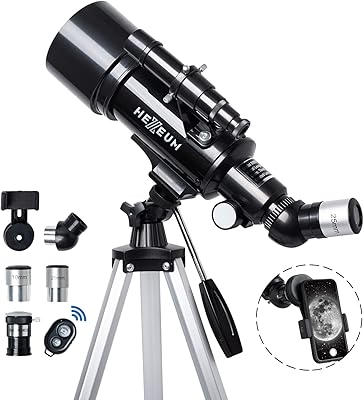
70%
78%
Optical Clarity
88%
Ease of Setup
61%
Tripod Stability
83%
Value for Money
84%
Portability
More
Barska Starwatcher 70mm Refractor Telescope
66%
72%
Optical Clarity
58%
Magnification Performance
54%
Build Quality
84%
Ease of Setup
88%
Portability & Storage
More
SOLOMARK Polaris 130EQ
69%
88%
Optical Clarity
91%
Aperture & Light Gathering
74%
German Equatorial Mount
82%
Build Quality & Materials
61%
Ease of Assembly
More

FAQ

Yes, and this is genuinely one of the stronger suits of this refractor. Saturn's rings are visible as a distinct structure at mid-range magnification, and Jupiter's four Galilean moons appear as small points of light flanking the planet. The equatorial cloud bands on Jupiter are also discernible on a steady night. Expectations should be set realistically — you are not getting Hubble-quality views — but the experience is legitimately impressive for a first-time observer.

Plan for roughly 20 to 35 minutes on your first setup, especially if you are new to telescopes. The process is not complicated, but the included manual has some ambiguous steps around the mount attachment that tend to slow people down. Watching a short setup tutorial online before you start can save a fair amount of frustration. Once you have done it once, subsequent setups are much faster.

It is a solid gift option for a teenager who has shown genuine curiosity about astronomy, particularly one who has already found a basic toy scope limiting. The full bundle — tripod, eyepieces, finderscope, and phone adapter — means there is nothing extra to buy immediately. Keep in mind the focuser requires some patience to master, so it suits teens who are willing to invest a little learning time rather than expecting instant results.

Yes, the bundled phone adapter attaches your smartphone directly over the eyepiece for what is called afocal photography. Moon shots come out quite well with a modern smartphone and some patience centering the lens. Planetary photography is harder because objects drift out of frame quickly without a motorized mount. Think of the phone adapter as a nice bonus for casual sharing rather than a serious astrophotography tool.

A stiff focuser is a common complaint with this scope and most entry-level refractors. Try making very small, slow adjustments rather than turning quickly — overshoot is the main culprit for blurry views. Starting your focus session on the Moon is helpful because the contrast is high enough to make focus position obvious. If stiffness persists, some users have found that very lightly lubricating the focuser rack with a small amount of silicone grease improves the feel considerably.

Refractors with this focal ratio can be used for daytime observation, but there is an important caveat: the image will appear inverted unless you add a correct-image diagonal, which is not included. For astronomy that inversion is irrelevant, but for terrestrial viewing it can be disorienting. If you want a scope that doubles convincingly for birdwatching, you may want to factor in the cost of an additional erecting prism or diagonal.

It works well as a shared family instrument, but younger children will likely need adult help with focusing and pointing. The tripod adjusts in height, which helps shorter users reach the eyepiece comfortably. The main challenge for kids is the focuser stiffness — small hands may struggle to make the fine adjustments needed for a crisp image. With a patient adult guiding the session, children in that age range tend to be genuinely delighted by their first views of the Moon.

The step up from 70mm to 90mm is meaningful in practice. The larger aperture gathers noticeably more light, which translates to brighter images and slightly more detail on planetary targets. The Vertisteel mount is also a real differentiator — most 70mm competitors in the lower price range use plastic altazimuth heads that wobble and vibrate with every touch. If the budget allows, the jump to 90mm with a metal mount is a worthwhile one for anyone planning more than occasional use.

No — the scope ships with everything needed for a first observing session, including eyepieces, a finderscope, tripod, and phone adapter. Most buyers find the included accessories sufficient for months of regular use before feeling the urge to upgrade. The one addition many observers eventually pursue is a wider-field, lower-power eyepiece for scanning star fields and locating targets more easily, but this is entirely optional at the start.

Yes — the Vertisteel altazimuth mount and aluminum tripod combination is one of the more stable setups in this class of beginner refractor. On flat or moderately uneven ground, the scope holds its position well between adjustments, and vibrations dampen quickly after touching the tube. The weight of the assembly actually works in your favor here; the heavier build resists knocks better than lighter plastic alternatives. Just make sure the tripod leg locks are firmly tightened before you start observing.