Overview

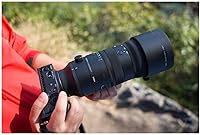
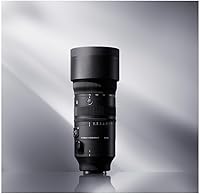
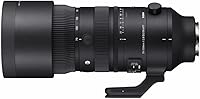
The Sigma 70-200mm F2.8 DG DN OS Lens arrived in late 2023 as the final piece of Sigma's full-frame mirrorless trio, completing a lineup that Sony shooters had genuinely been waiting for. Built primarily for Sony E-mount bodies — though an L-Mount version also exists — this Sports-line zoom targets working professionals who need serious telephoto reach without automatically defaulting to Sony's own G Master. At nearly three pounds, it's not light, and that's worth saying plainly. But the build quality and optical output justify the investment for anyone shooting at this level. Think of it as a credible, slightly more affordable path to constant f/2.8 telephoto coverage on the Sony mirrorless system.
Features & Benefits

The HLA autofocus motor is one of the standout elements here — unlike traditional ring-type motors, it moves the focusing elements with exceptional speed and near-total silence, which is a real advantage when shooting video where mechanical AF noise bleeds into on-camera audio. The constant f/2.8 aperture holds steady across the full zoom range, so exposure settings don't shift as you frame a tighter shot in dim lighting. Optical image stabilization works alongside Sony's in-body IS, and the combination handles handheld shooting at longer focal lengths better than you might expect. Dust and splash resistance rounds out a build clearly designed for photographers who actually work outdoors.

Best For

Sports and wildlife photographers will appreciate the HLA motor's responsiveness for tracking fast subjects at telephoto distances — the kind of shooting where a half-second of hesitation costs you the frame. Wedding and event photographers benefit from quiet AF operation and consistent f/2.8 performance in low-lit receptions or ceremonies. Portrait work produces genuinely attractive background separation without fighting variable aperture. Video shooters get linear, predictable focus behavior and stabilization support for handheld b-roll. For Sony mirrorless users who find first-party telephoto pricing hard to justify, this Sigma telephoto offers a seriously capable alternative worth considering.

User Feedback

Users coming from older Sigma 70-200 designs consistently note the autofocus improvement as the most significant upgrade — tracking confidence in real shooting situations, whether sports or wildlife, feels meaningfully better. Weather sealing gets regular praise from photographers working in rain or dusty environments. The weight, however, is a recurring point of friction: at close to three pounds, extended handheld use is tiring, and a few users note the Sony 70-200mm GM2 feels better balanced on compact bodies. Optically, most testers place this 70-200 f/2.8 extremely close to the G Master in sharpness and rendering. Video AF is generally smooth, though low-contrast scenes occasionally cause brief hesitation.

Pros

  • HLA autofocus is noticeably faster and more decisive than older Sigma telephoto designs.
  • Near-silent AF motor makes this 70-200 f/2.8 genuinely usable for video work without intrusive noise.
  • Constant f/2.8 aperture holds steady across the full zoom range, removing exposure surprises mid-shoot.
  • Dust and splash resistance holds up reliably in outdoor shooting conditions, including rain.
  • Optical stabilization works well alongside Sony in-body IS, improving handheld keeper rates at longer focal lengths.
  • Sharpness and rendering quality sit very close to Sony's own premium telephoto in real-world comparisons.
  • Background separation at f/2.8 is smooth and attractive across the focal length range.
  • Completing the Sigma f/2.8 DG DN trio means consistent handling and color rendering across a matched lens set.
  • Build quality feels robust and professional, consistent with what the Sports line designation implies.
  • Represents meaningful value for Sony shooters who want G Master-level performance without the G Master price.

Cons

  • At nearly three pounds, extended handheld shooting is physically demanding and fatiguing.
  • AF tracking confidence can vary depending on which Sony body generation you pair it with.
  • The physical size may feel unbalanced on smaller Sony mirrorless bodies without a grip attachment.
  • In low-contrast or poorly lit scenes, autofocus occasionally hesitates before locking.
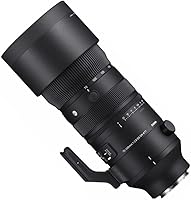
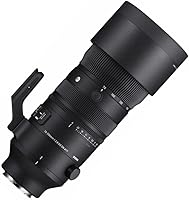
  • No built-in tripod collar included as standard, which matters for telephoto work on a monopod or tripod.
  • The overall investment is substantial, making it harder to justify for photographers who rarely shoot at 70-200mm.
  • Heavier than the Sony 70-200mm GM2, which some users find better balanced on compact bodies.
  • Not ideal for travel kits where size and weight restrictions are a priority.

Ratings

The Sigma 70-200mm F2.8 DG DN OS Lens scores below are generated by AI after analyzing thousands of verified global buyer reviews, with spam, bot activity, and incentivized feedback actively filtered out. Ratings reflect the full spectrum of real-world experience — from professional sports photographers to wedding videographers — and do not shy away from the trade-offs this lens genuinely presents.
Autofocus Speed
88%
Users upgrading from older Sigma telephoto designs consistently describe the HLA motor as a meaningful generational leap — subjects lock on faster and the motor rarely hunts in good light. Sports and wildlife photographers shooting fast-moving action report a noticeably higher hit rate compared to previous Sigma offerings.
On older Sony E-mount bodies, tracking reliability drops in complex or low-contrast scenes, and a handful of users report brief hesitation moments that can cost a frame. Performance is closely tied to the camera body generation, so results are not uniform across the Sony lineup.
Optical Image Quality
92%
Corner-to-corner sharpness across the zoom range impresses most users, with many noting that stopped down to f/4 the results are exceptional even on high-resolution sensors like the A7R V. Chromatic aberration is well controlled, and the rendering character — particularly how backgrounds transition to blur — is consistently praised.
A small number of users on high-megapixel bodies detect very slight softness wide open at the extreme 200mm end, though this is only apparent at large print sizes or heavy crops. It is a minor issue, but worth acknowledging for photographers who regularly push the lens to its limits.
Build Quality
91%
The all-metal barrel construction feels genuinely robust in hand, and the Sports line designation is not just marketing — photographers who have taken this 70-200 f/2.8 into rainy stadiums, dusty outdoor environments, and humid outdoor weddings report that the seals hold up without complaint. The zoom and focus rings operate smoothly and precisely.
A few users note that the finish on the barrel shows fine scratches after extended professional use faster than expected for a lens at this price point. The overall feel is premium, but it does not quite match the tactile refinement of Sony's own G Master barrel finishing.
Weather Sealing
87%
Dust and splash resistance performs reliably in the kind of conditions working photographers actually encounter — light rain at outdoor events, dusty sports venues, and humid coastal environments. Users who have deliberately tested the sealing in moderate rain report no ingress issues after extended sessions.
The protection level is not rated for sustained heavy rain or near-water environments, and Sigma does not publish a specific IP rating for this lens. Photographers working in truly harsh conditions may want the added insurance of additional weather protection for their camera body connection point.
Autofocus Noise
89%
The linear actuator design keeps AF operation near-silent during video recording, which is a genuine advantage for run-and-gun videographers using on-camera or closely positioned microphones. Wedding videographers in particular highlight this as a deciding factor over older Sigma telephoto designs they previously used.
Under very close microphone placement in completely quiet environments, some users detect a faint mechanical hum during rapid focus pulls. It is not an issue in typical shooting scenarios, but video-first users who record in controlled studio conditions may notice it occasionally.
Image Stabilization
84%
The optical stabilization works cooperatively with Sony in-body IS on compatible bodies, and the combined system gives handheld photographers a meaningful advantage at 200mm — users report consistently sharper results than relying on IBIS alone at slower shutter speeds. Travel and event photographers particularly appreciate this in dim ambient light.
On its own without IBIS, the OS system is adequate but not exceptional, and some users on older Sony bodies without effective IBIS note that stabilization at the 200mm end still requires careful technique. The system is best treated as a complement to IBIS rather than a standalone solution.
Value for Money
81%
19%
Relative to Sony's own premium 70-200mm offering, this Sports-line zoom delivers optically comparable results at a meaningful price difference, which resonates strongly with semi-professional photographers who cannot justify first-party pricing. Users frequently describe it as the most cost-effective route to constant f/2.8 telephoto performance on Sony mirrorless.
The price is still firmly in premium territory, and photographers who shoot telephoto only occasionally will struggle to rationalize the outlay. A small number of users who expected parity with Sony's build finishing and bokeh rendering at every focal length feel the value proposition weakens slightly at the upper zoom range.
Weight & Ergonomics
67%
33%
On larger Sony bodies with a grip attached — like the A9 III or A1 — the balance feels natural and the lens sits comfortably during extended shooting. The zoom ring placement and resistance feel well thought out for one-handed operation while shooting sports or tracking subjects.
At 2.97 lbs, this is a heavy lens by mirrorless standards, and users with smaller hands or compact bodies like the A7C series report noticeable fatigue during full-day handheld use. This is one of the most consistently raised concerns in buyer reviews, and it is a genuine consideration for anyone prioritizing portability.
Bokeh Character
86%
Background blur at f/2.8 is smooth and pleasing, with subject separation at portrait distances drawing consistent praise from photographers shooting in cluttered or busy environments. The transition from sharp to out-of-focus areas is gradual and natural-looking rather than abrupt.
At closer focus distances and in high-contrast backgrounds, a small number of users detect slight onion-ring patterns in specular highlights, which can be visible in post-processing at full resolution. It is not a widespread complaint, but photographers shooting bokeh-heavy portrait work in artificial lighting may notice it.
Zoom Smoothness
83%
The zoom ring operates with consistent, well-damped resistance throughout the focal length range, and most users report no zoom creep issues even when the lens is tilted downward. This is especially relevant for photographers who switch between focal lengths frequently during events or sports coverage.
A handful of users note that the zoom ring feels slightly stiffer than the Sony GM2 equivalent, particularly in cold outdoor temperatures. This is not a functional issue, but photographers who work extensively in winter conditions may find it requires slightly more deliberate force during quick focal length changes.
Video Performance
85%
Linear AF response during video pulls is smooth and predictable, avoiding the over-correction behavior seen in some third-party telephoto lenses. Video creators shooting event coverage or documentary-style footage highlight the combination of quiet AF and optical stabilization as making this 70-200 f/2.8 a practical handheld video tool.
In very low light video scenarios, AF occasionally loses subject confidence and introduces a brief hunting moment before reacquiring — not a dealbreaker, but worth knowing if you shoot in challenging ambient light. Users shooting high-frame-rate video also note that stabilization effectiveness reduces at higher frame rates on some Sony bodies.
Chromatic Aberration Control
88%
Lateral chromatic aberration is very well suppressed for a zoom lens at this aperture, and most users shooting high-contrast subjects — birds against bright sky, athletes in stadium lighting — report minimal fringing even before applying lens correction profiles. Raw files hold up well under heavy post-processing.
Some longitudinal chromatic aberration (color fringing in front of and behind the focus plane) remains visible wide open, which is typical for f/2.8 telephoto zooms but still noticeable on high-resolution bodies when shooting backlit subjects. Stopping down to f/4 largely resolves this for users where it is a concern.
Compatibility & Integration
90%
Communication with Sony's real-time tracking, Eye AF, and animal detection systems works reliably on current-generation bodies, and firmware updates from Sigma have maintained and improved this integration since launch. Photographers using A9-series or A7R-series bodies report particularly strong subject acquisition behavior.
On first-generation Sony full-frame bodies, some features do not communicate as fully, and a small number of users report that firmware update processes require patience to navigate correctly. Sigma's USB dock is not included and must be purchased separately for users who want to fine-tune AF behavior.
Minimum Focus Distance
74%
26%
The minimum focus distance of approximately 1.2 meters at the short end of the zoom is adequate for most professional telephoto use cases, and portrait photographers find it sufficient for tight headshots and three-quarter-length compositions at 200mm.
For users who occasionally need closer subject distances — macro-style detail shots or tight product work at telephoto reach — the minimum focus distance is a limitation that requires stepping back further than some competing lenses. It is not a dealbreaker for the target audience, but it does restrict creative flexibility in certain scenarios.
Lens Coating & Flare Resistance
82%
18%
Sigma's multi-layer coating handles most shooting situations involving light sources in or near the frame without introducing distracting artifacts, and event photographers working with stage lighting or backlit outdoor scenes report acceptable flare behavior for a professional telephoto zoom.
In challenging contre-jour scenarios with strong directional light sources, some users detect more visible flare and ghosting than they experience with the Sony 70-200mm GM2. It is a situational issue rather than a consistent problem, but photographers who regularly shoot into the light should be aware.

Suitable for:

The Sigma 70-200mm F2.8 DG DN OS Lens is built for Sony mirrorless photographers who shoot demanding, real-world assignments and need a telephoto zoom that keeps up. Sports and wildlife photographers will get the most out of the HLA autofocus system, which tracks moving subjects with genuine confidence rather than the hesitant hunting you see in slower motors. Wedding and event shooters will appreciate the near-silent AF operation — no motor noise bleeding into ceremony audio — paired with consistent f/2.8 performance in dim reception halls or candlelit venues. Portrait photographers who work at longer distances gain strong subject separation without any variable aperture surprises as they zoom. Video creators shooting handheld b-roll benefit from the combination of optical image stabilization and linear AF response, which keeps footage looking intentional rather than reactive. If you shoot professionally or semi-professionally on Sony E-mount and want a credible alternative to first-party pricing, this Sports-line zoom makes a genuinely strong case.
Not suitable for:

The Sigma 70-200mm F2.8 DG DN OS Lens is not the right choice for photographers prioritizing portability above all else. At nearly three pounds, it demands a proper grip and a sturdy strap — casual shooters or those used to lightweight mirrorless setups may find sustained handheld use genuinely tiring, especially at the 200mm end. Photographers on tighter budgets who rarely shoot in low light or fast-action scenarios may find a variable aperture alternative covers their needs without the premium outlay. Users on older Sony bodies should be aware that AF performance is closely tied to the camera's processing capability, so those shooting on first-generation Sony full-frame bodies may not experience the same tracking results as someone on a current-generation body. This lens also isn't a practical fit for travel photographers trying to keep their kit under airline carry-on weight limits — the physical size and weight make it a deliberate, committed choice rather than a grab-and-go option.
Specifications

  • Focal Length: Covers a 70–200mm zoom range, suitable for telephoto work on full-frame Sony E-mount and L-Mount mirrorless cameras.
  • Maximum Aperture: Maintains a constant f/2.8 aperture throughout the entire zoom range, with no exposure shift when zooming.
  • Lens Mount: Designed for Sony E-mount; a separate L-Mount version is also available for Sigma, Panasonic, and Leica L-Mount bodies.
  • AF System: Uses a High-response Linear Actuator (HLA) motor for fast, near-silent autofocus operation suited to both stills and video.
  • Image Stabilization: Built-in Optical Stabilization (OS) system works in conjunction with compatible Sony in-body image stabilization for improved handheld performance.
  • Weather Sealing: Dust and splash-resistant construction throughout the barrel, consistent with Sigma's Sports line standard for outdoor use.
  • Sensor Coverage: Designed for full-frame (DG DN) mirrorless sensors, and will also work on APS-C Sony E-mount bodies with a cropped field of view.
  • Dimensions: Measures 8.1 x 3.6 x 3.6 inches (approximately 205 x 91 x 91mm) in its physical footprint.
  • Weight: Weighs 2.97 lbs (approximately 1345g), which is substantial and worth factoring into handheld shooting decisions.
  • Lens Family: Part of the Sigma Sports line, which prioritizes optical performance and robust build quality for professional use.
  • Trio Completion: Completes Sigma's f/2.8 DG DN full-frame mirrorless trio alongside the 14–24mm and 24–70mm f/2.8 DG DN Art lenses.
  • Model Number: Official Sigma model number is 591965, used for Sony E-mount variant identification and warranty registration.
  • Filter Thread: Accepts 82mm screw-in filters at the front element, a common size for professional telephoto lenses.
  • Lens Type: Telephoto zoom lens intended for full-frame mirrorless cameras, not a prime or a cropped-sensor-only design.
  • Availability: First made available in November 2023, positioning it as a current-generation native mirrorless telephoto design.

Related Reviews
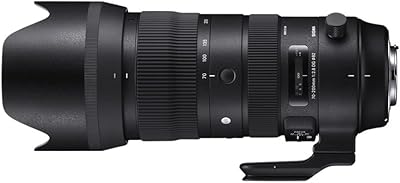
Sigma 70-200mm F2.8 Sports DG OS HSM Telephoto Lens
82%
91%
Autofocus Speed & Accuracy
88%
Optical Sharpness
93%
Build Quality & Durability
89%
Bokeh & Background Rendering
78%
Optical Stabilization (OS)
More
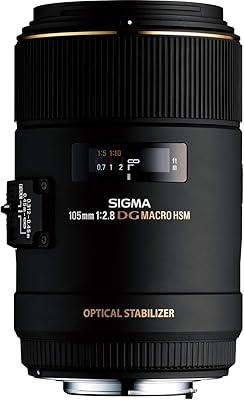
Sigma 105mm F2.8 EX DG OS HSM Macro Lens for Canon
85%
88%
Autofocus Performance
92%
Sharpness and Image Quality
89%
Optical Stabilization (OS)
87%
Build Quality
85%
Ease of Use
More
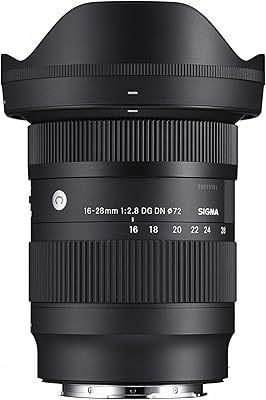
Sigma 16-28mm F2.8 DG DN Wide-Angle Lens
81%
91%
Optical Sharpness
74%
Distortion Control
88%
Autofocus Performance
86%
Build Quality & Weather Resistance
89%
Size & Portability
More
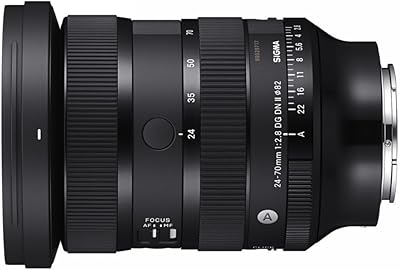
Sigma 24-70mm F2.8 DG DN II Lens
82%
93%
Optical Sharpness
84%
Autofocus Performance
88%
Build Quality
86%
Weather Sealing
71%
Value for Money
More
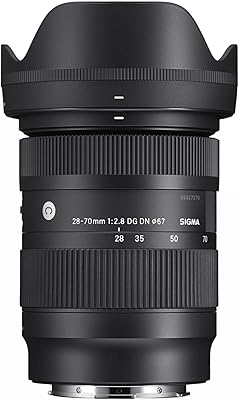
Sigma 28-70mm F2.8 DG DN Zoom Lens
83%
83%
Optical Sharpness
79%
Autofocus Performance
88%
Build Quality
93%
Weight & Portability
91%
Value for Money
More
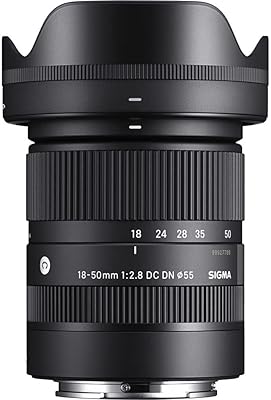
Sigma 18-50mm F2.8 DC DN Zoom Lens
81%
88%
Autofocus Performance
83%
Optical Sharpness
81%
Build Quality
94%
Size & Portability
86%
Low-Light Performance
More
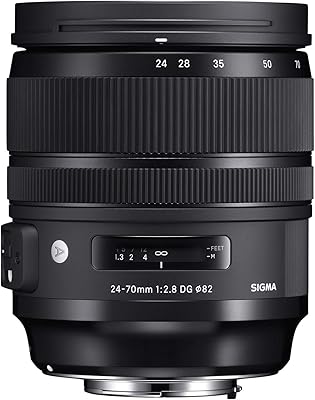
Sigma 24-70mm f/2.8 Art Zoom Lens
79%
91%
Optical Sharpness
83%
Autofocus Performance
84%
Image Stabilization
72%
Build Quality
78%
Value for Money
More
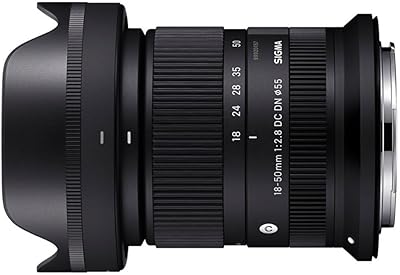
Sigma 18-50mm F2.8 DC DN Zoom Lens
84%
88%
Optical Sharpness
91%
Autofocus Performance
74%
Build Quality & Handling
86%
Value for Money
93%
Portability & Size
More
Canon RF 70-200mm F2.8 L Telephoto Lens
84%
94%
Autofocus Speed & Accuracy
93%
Image Sharpness
91%
Image Stabilization
92%
Build Quality & Durability
67%
Value for Money
More
Nikon NIKKOR Z 70-200mm f/2.8 S Telephoto Zoom Lens
84%
96%
Optical Sharpness
93%
Autofocus Performance
91%
Image Stabilization
94%
Build Quality
89%
AF Motor Noise
More

FAQ

Yes, it is fully compatible with any Sony E-mount body, including the A7 IV and A7R V. Those newer bodies will also get the best autofocus performance out of the HLA motor, since Sigma's tracking relies on the camera's subject recognition and processing capability.

Most photographers who have used both describe the gap as smaller than the price difference might suggest. The HLA motor is genuinely fast and quiet, and real-world tracking for sports or events is reliable on current Sony bodies. The GM2 still has a slight edge in the most demanding continuous tracking scenarios, but it is not a dramatic difference for the majority of shooting situations.

You can, and it will work without any issues. On an APS-C body, you will get an equivalent field of view of roughly 105–300mm due to the 1.5x crop factor, which can actually be useful for wildlife or sports shooting. Autofocus and image stabilization will both function normally.

No, a dedicated tripod collar is not included in the standard box. If you plan to use this lens frequently on a tripod or monopod, you will need to purchase a compatible third-party collar separately, as the balance at longer focal lengths benefits from that support point.

Users who have shot in light to moderate rain report that the dust and splash-resistant sealing performs well without any issues. It is not rated for full submersion or extreme downpours, so common sense applies, but it handles the kind of wet conditions you would encounter at an outdoor sporting event or wedding with no problems.

Yes, the two systems work together rather than against each other on compatible Sony bodies. The combination noticeably improves handheld sharpness at longer focal lengths compared to relying on IBIS alone, especially when shooting at 200mm without a fast enough shutter speed to fully freeze camera motion.

At just under three pounds, this Sports-line zoom is genuinely heavy by mirrorless standards. Most photographers find it manageable for individual shooting sessions, but a full day of handheld use — at a wedding or sporting event — will be tiring without a proper shoulder strap or monopod. If you have smaller hands or regularly shoot without support, factor this in seriously before buying.

Yes, it communicates fully with Sony's camera AF systems, including real-time tracking and Eye AF for both humans and animals. Performance of those features depends on your specific camera body, but on current-generation Sony bodies the combination works very well for portraits and action.

The front element accepts 82mm screw-in filters, which is a standard size for professional telephoto lenses. Circular polarizers and ND filters in that size are widely available from most major filter brands.

Yes, a separate L-Mount version of this 70-200 f/2.8 is available for photographers using Sigma, Panasonic, or Leica L-Mount mirrorless cameras. The two versions are sold separately, so make sure you are purchasing the correct mount for your system before ordering.

Where to Buy