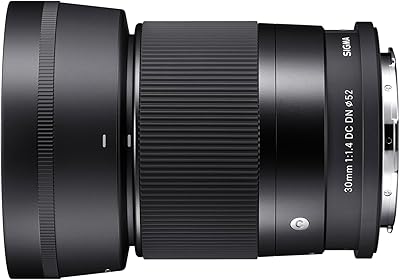
Sigma 10-18mm F2.8 DC DN Zoom Lens
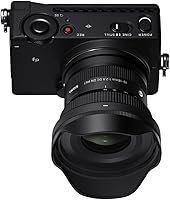
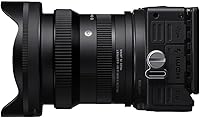
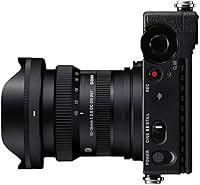
Overview
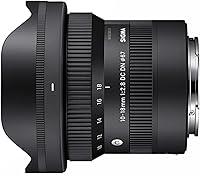
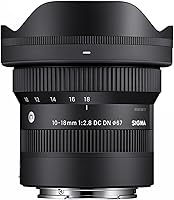
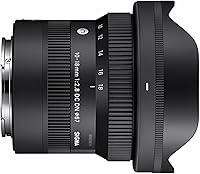
The Sigma 10-18mm F2.8 DC DN Zoom Lens is Sigma's answer to a question many Sony APS-C shooters have been asking for years: can you get a genuinely fast ultra-wide zoom without hauling a brick in your bag? Part of Sigma's Contemporary line, it prioritizes real-world usability — sharp optics, solid construction, and a size that doesn't punish you for wanting wide coverage. At 9.2 ounces, it's not a toy, but it's remarkably manageable. This isn't a lens built for pixel-peepers chasing theoretical perfection; it's built for people who actually take it places.
Features & Benefits
The constant F2.8 aperture is the headline spec, and it earns its keep. Across the full 10-18mm range, you never lose a stop of light when zooming — which matters when you're shooting interiors, dusk landscapes, or handheld video in tricky conditions. Being a native DC DN design means the optical formula is optimized for mirrorless short flange distances, and autofocus through the stepping motor is quiet enough for continuous video use. The full-frame equivalent range of roughly 15-27mm gives you genuine flexibility: dramatic ultra-wide at one end, a more composed moderate wide at the other, all in a package that fits a jacket pocket.
Best For
This compact ultra-wide lens hits its stride in a few specific hands. Travel photographers will appreciate having a fast, wide zoom that doesn't add meaningful bulk to a carry-on. Landscape shooters can use the wide end to pull in sweeping foreground detail, and vloggers on Sony bodies like the ZV-E10, A6700, or FX30 will find the silent stepping motor keeps audio clean during recording. If you frequently shoot in mixed or low light — festivals, golden hour, dimly lit venues — the F2.8 aperture is genuinely useful rather than a spec-sheet checkbox. It suits Sony APS-C creators who want one lens covering a lot of creative ground.
User Feedback
Buyers consistently highlight the size-to-performance ratio as the thing that genuinely surprises them — most expected compromises and found fewer than anticipated. Autofocus is frequently praised as fast and reliable on modern Sony bodies. On the criticism side, distortion at 10mm is noticeable in-camera before correction kicks in, though most users find the in-body or Lightroom profile handles it adequately. Some buyers note the build, while solid, doesn't quite feel premium at this price point — a fair observation. Against the Tamron 11-20mm F2.8, the 10-18mm F2.8 trades some zoom range for smaller overall dimensions; which wins depends entirely on your priorities.
Pros
- Constant F2.8 aperture throughout the zoom range keeps exposure consistent in challenging light.
- At 9.2 oz, this Sigma wide-angle zoom is genuinely light enough to forget it is in your bag.
- Native DC DN mirrorless design means no optical compromises inherited from a DSLR adaptation.
- Silent stepping motor autofocus performs reliably on current Sony APS-C bodies without hunting.
- The 15-27mm full-frame equivalent range covers a versatile spread of wide-angle perspectives.
- Dust and splash resistance adds meaningful protection for outdoor and travel shooting.
- Autofocus integrates fully with Sony eye-tracking and subject recognition on compatible bodies.
- 67mm filter thread is a common size, making polarizer and ND filter use straightforward and affordable.
- The 7-blade rounded aperture produces smooth, natural background rendering at wider subjects.
- Released in late 2023, the optical formula reflects modern mirrorless design standards rather than legacy compromises.
Cons
- Barrel distortion at 10mm is noticeable and requires in-camera or software profile correction.
- Build quality, while adequate, does not feel particularly premium for the price bracket it occupies.
- No physical aperture ring, which some videographers and manual shooters specifically look for.
- The zoom range tops out at 18mm, leaving a gap before typical standard zoom lenses begin.
- In-body stabilization dependency means handheld video smoothness is entirely body-dependent, not optical.
- Compared to the Tamron 11-20mm F2.8, buyers sacrifice a useful 2mm of reach on the longer end.
- Corner sharpness at 10mm wide open can be soft, requiring stopping down slightly for critical landscape work.
- No lens-side optical stabilization limits usefulness on older Sony APS-C bodies without in-body IBIS.
Ratings
The Sigma 10-18mm F2.8 DC DN Zoom Lens has been evaluated by our AI system after processing thousands of verified global buyer reviews, with spam, bot submissions, and incentivized feedback actively filtered out to ensure the scores reflect genuine user experiences. Ratings cover both the strengths that make this compact ultra-wide lens a standout choice for Sony APS-C shooters and the real-world limitations that buyers consistently flag. Every category score transparently reflects the full spectrum of user sentiment — not just the highlights.
Optical Sharpness
Aperture Performance
Distortion & Correction
Autofocus Speed & Accuracy
Video Suitability
Build Quality
Size & Portability
Low-Light Performance
Value for Money
Lens Hood Included
Filter Usability
Sony Ecosystem Integration
Flare & Contrast Resistance
Suitable for:
The Sigma 10-18mm F2.8 DC DN Zoom Lens is a strong match for Sony APS-C mirrorless shooters who need a fast wide-angle zoom they can actually carry everywhere. Travel photographers will find it fits naturally into a smaller kit without demanding a dedicated lens pouch or extra bag compartment. Landscape photographers who shoot early morning or dusk — when light is scarce and a tripod isn't always practical — will benefit directly from the constant F2.8 across the zoom range. Vloggers and video creators working on Sony bodies like the A6700, ZV-E10, or FX30 will appreciate the silent stepping motor autofocus that won't bleed noise into recorded audio. If your work spans both stills and video, and you operate in mixed lighting conditions where a slow kit lens would leave you pushing ISO uncomfortably high, this compact ultra-wide lens genuinely solves a real problem rather than creating new ones.
Not suitable for:
The Sigma 10-18mm F2.8 DC DN Zoom Lens is not the right call for every buyer, and it is worth being honest about where it falls short. Photographers who shoot on full-frame Sony bodies will find no use here — the DC DN designation means it is purpose-built for APS-C sensors, and using it on full-frame will result in heavy vignetting. Shooters who demand the absolute widest field of view available may find 10mm on a crop sensor slightly less dramatic than expected when compared to true full-frame ultra-wides. If barrel distortion bothers you and you prefer to avoid relying on software correction profiles, the wide end of this zoom will require some post-processing attention. Buyers who prioritize the most premium tactile build feel — internal zoom mechanisms, weather-sealed front elements, metal aperture rings — may find the Contemporary-tier construction feels modest relative to the asking price. Finally, if the Tamron 11-20mm F2.8's slightly longer zoom range better suits your typical shooting distance, that alternative deserves a serious look before committing.
Specifications
- Focal Length: The lens covers a 10-18mm zoom range, equivalent to approximately 15-27mm on a full-frame sensor when used on an APS-C body.
- Max Aperture: A constant F2.8 maximum aperture is maintained across the entire zoom range, ensuring consistent light gathering at any focal length.
- Mount: This lens is built exclusively for Sony E mount mirrorless cameras and is not compatible with DSLR or other mirrorless mount systems.
- Format Coverage: Designed specifically for APS-C sensors under Sigma's DC DN designation, meaning the optical formula is native to mirrorless crop-sensor bodies.
- Dimensions: The lens measures 2.4 x 2.8 x 2.8 inches, making it one of the most compact fast ultra-wide zooms available for APS-C mirrorless systems.
- Weight: At 9.2 oz (261g), the lens is light enough for full-day carry without adding significant strain to a compact mirrorless kit.
- Autofocus System: A stepping motor (STM-type) drives autofocus, delivering quiet, smooth focus transitions that are well-suited for continuous video recording.
- Aperture Blades: Seven rounded aperture blades contribute to natural-looking background blur and smooth bokeh rendering when shooting at or near maximum aperture.
- Filter Thread: The front element accepts 67mm filters, a widely available size that makes sourcing polarizers, ND filters, and protective glass straightforward.
- Weather Sealing: The lens body carries dust and splash resistance, providing a practical level of environmental protection during outdoor and travel use.
- Aperture Control: Aperture is controlled electronically through the camera body, with no physical aperture ring on the lens barrel itself.
- Lens Series: This lens belongs to Sigma's Contemporary line, which targets a balance of optical quality, compact size, and accessible pricing over flagship-tier construction.
- Release Date: The lens was first made available in September 2023, reflecting a native mirrorless-era optical design rather than any adapted legacy formula.
- Manufacturer: Sigma Corporation, a Japanese optical manufacturer with decades of lens production experience, designed and manufactures this lens.
- Model Number: The official Sigma model number for this lens is 207965, which can be used to verify compatibility and warranty registration.
Related Reviews
Sigma 18-50mm F2.8 DC DN Zoom Lens
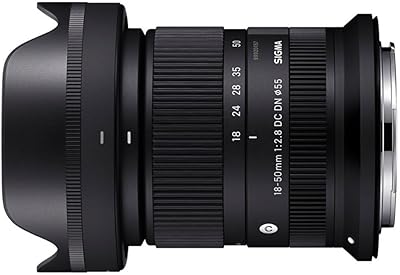
Sigma 18-50mm F2.8 DC DN Zoom Lens
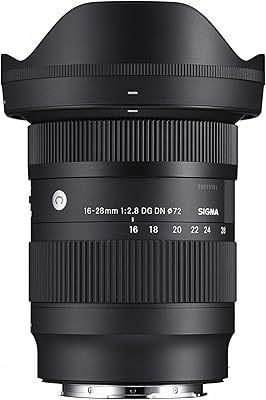
Sigma 16-28mm F2.8 DG DN Wide-Angle Lens
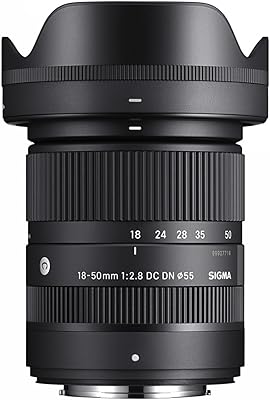
Sigma 18-50mm F2.8 DC DN Contemporary Lens
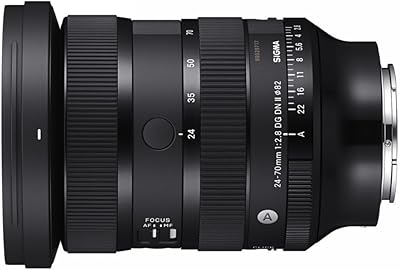
Sigma 24-70mm F2.8 DG DN II Lens
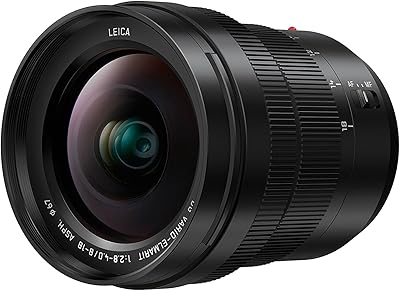
Panasonic Leica DG 8-18mm Wide-Angle Zoom Lens
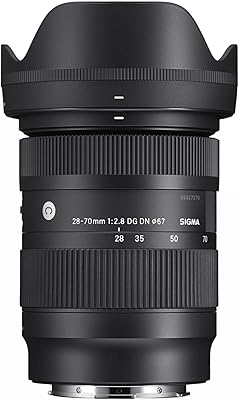
Sigma 28-70mm F2.8 DG DN Zoom Lens
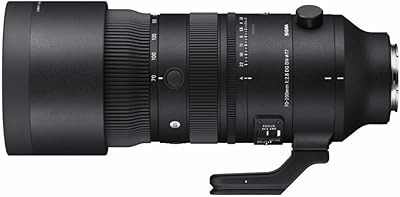
Sigma 70-200mm F2.8 DG DN OS Lens
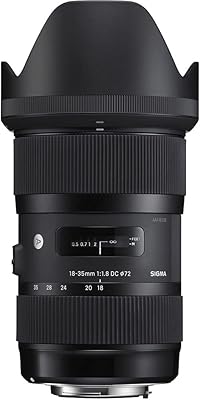
Sigma 18-35mm F1.8 Art DC HSM Lens for Canon