Overview

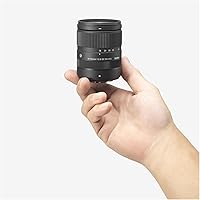
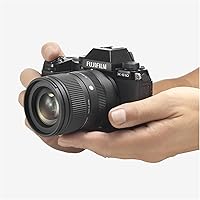
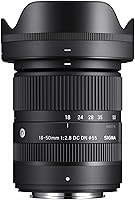
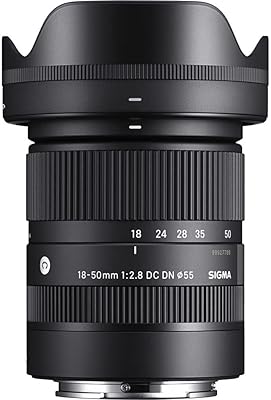
The Sigma 18-50mm F2.8 DC DN Contemporary Lens is Sigma's answer to a real gap in the APS-C mirrorless market: a constant-aperture standard zoom that doesn't bulk up your bag. Built specifically for crop-sensor systems, the Fuji X Mount version slots naturally into Fujifilm's ecosystem without the size compromises you'd normally expect from a fast zoom. It sits in Sigma's Contemporary line, which means the focus is on practical everyday performance rather than chasing exotic optical benchmarks. At roughly 286 grams and barely three inches long, it's genuinely compact by F2.8 zoom standards. Think of it as a dependable workhorse — well-rounded and built for real shooting situations rather than controlled test charts.
Features & Benefits

The standout trait here is the constant F2.8 aperture — you get the same maximum light-gathering ability whether you're shooting wide at 18mm or zoomed to 50mm, which matters a lot when light drops or you need background separation on the fly. That focal range translates well on APS-C: wide enough for tight interiors or street scenes, long enough for flattering head-and-shoulders framing. The STM autofocus motor is notably quiet during video, a genuine plus for anyone recording with an external microphone. Add weather sealing and an optical design that keeps chromatic aberration in check, and this compact standard zoom covers a lot of ground without demanding much space in your bag.

Best For

This Sigma zoom makes the most sense for Fujifilm shooters who want a single lens they can rely on across a wide range of situations — travel days, street walks, casual portraits, or run-and-gun video. If you've outgrown the Fujinon 18-55mm kit lens and feel limited by its variable aperture in mixed lighting, the 18-50mm F2.8 offers a meaningful step up without asking you to carry more weight. Street and documentary photographers will appreciate the compact form factor that doesn't draw attention, while vloggers benefit from the quiet STM focus during recording. It's less suited to wildlife or sports, where longer reach and faster tracking matter more.

User Feedback

Owners consistently praise center-frame sharpness, with many noting that images look crisp even at wide-open apertures — a reassuring sign for a zoom at this price point. Autofocus draws frequent compliments for speed and reliability in everyday use, though a handful of users report occasional hesitation in very low-contrast conditions. The most common criticism is mild barrel distortion at 18mm, manageable in post but worth knowing about if you shoot a lot of architecture. Corner sharpness at F2.8 can also disappoint pixel-peepers, though it tightens up noticeably by F4. Build quality impressions are broadly positive over extended use, and most buyers feel the price-to-performance ratio is genuinely strong for what this lens delivers.

Pros

  • Constant F2.8 aperture holds steady across the entire zoom range, giving consistent exposure in changing light.
  • Weighing under 300 grams, this Sigma zoom is genuinely light enough to forget you are wearing it all day.
  • Center-frame sharpness at wide apertures impresses most users coming from variable-aperture kit lenses.
  • STM autofocus is quiet enough for video recording without bleeding motor noise into the audio.
  • Weather-resistant construction adds real confidence when shooting outdoors in uncertain conditions.
  • The 18–50mm focal range on APS-C covers wide scenes, candid street shots, and natural portrait framing in one lens.
  • In-camera lens correction on Fujifilm bodies handles distortion and vignetting automatically, keeping the workflow fast.
  • Autofocus locks reliably in typical everyday conditions — events, travel, casual portraiture — without hunting or hesitating.
  • Build quality holds up well over extended daily use, with no reported mechanical degradation from long-term owners.

Cons

  • Corner sharpness wide open is noticeably softer than center performance, especially at the 18mm end.
  • Barrel distortion at 18mm requires correction in post when shooting raw, which adds editing time for architecture work.
  • No built-in optical image stabilization puts users with older, non-IBIS Fujifilm bodies at a disadvantage.
  • Autofocus can hunt and hesitate in genuinely low-contrast or dimly lit scenes, which is frustrating during critical moments.
  • The zoom ring direction is reversed compared to native Fujinon lenses, causing adjustment friction for users switching between glass.
  • There is no physical AF/MF switch on the barrel, forcing manual focus overrides through camera menus.
  • 50mm as the long end of the zoom range feels limiting for users who occasionally need more reach without swapping lenses.
  • The exterior finish feels more utilitarian than premium when compared side-by-side with native Fujinon options at a similar price.
  • Bokeh rendering at wider focal lengths is functional but unremarkable — not a lens for photographers who prioritize background character.

Ratings

The Sigma 18-50mm F2.8 DC DN Contemporary Lens has been put through its paces by a wide range of Fujifilm shooters worldwide, and the scores below reflect what our AI found after analyzing verified purchase reviews globally — filtering out incentivized, duplicate, and bot-generated feedback. From travel photographers to video creators, the consensus captures both what this compact standard zoom genuinely excels at and where it still leaves some buyers wanting more. Strengths and frustrations alike are reflected transparently in each category.

Optical Sharpness
88%
Center sharpness at F2.8 draws consistent praise from real-world shooters — street and travel photos look crisp without needing to stop down first. Many users report that even wide open, the lens holds detail well across typical subject distances, which builds confidence during fast-paced shooting.
Corner sharpness at the widest aperture is a recurring complaint, particularly from architecture and landscape photographers who care about edge-to-edge consistency. Stopping down to F4 or F5.6 resolves much of this, but buyers should know it is a genuine trade-off at F2.8.
Autofocus Performance
83%
In everyday shooting conditions — busy streets, casual portraits, indoor events — the STM motor locks on quickly and reliably enough that most users rarely think about it. Fujifilm shooters using X-T and X-S series bodies report smooth, natural tracking that keeps up with typical subject movement.
Low-contrast scenes and tricky lighting can cause occasional hesitation, which a handful of users found frustrating during critical moments. It is not quite at the level of native Fujinon primes in edge-case AF scenarios, and very fast action photography can expose its limits.
Build Quality & Durability
81%
19%
The weather-resistant construction gives real peace of mind for outdoor shooting in light rain or dusty conditions. Owners who have carried this Sigma zoom extensively over months report that it holds up well, with no reported rattles, creep, or degradation in the zoom or focus rings.
The plastic-dominant exterior, while functional, does not feel as premium as Fujinon lenses at a comparable price point — something buyers notice immediately when handling it. A few long-term users have noted minor cosmetic wear around the barrel edges with heavy daily use.
Size & Portability
93%
This is arguably where the 18-50mm F2.8 earns its strongest marks. At under 300 grams, it pairs with compact Fujifilm bodies without tipping the balance, making all-day carry genuinely comfortable. Travel photographers in particular highlight how easily it fits into a small shoulder bag alongside other gear.
It is worth noting that while compact by F2.8 zoom standards, it is still noticeably larger than a fast prime, which can matter when traveling with strict size constraints. The lens hood adds meaningful length and some users skip it entirely to maintain a lower profile.
Low-Light Capability
86%
The constant F2.8 aperture makes a tangible difference when shooting in cafes, museums, or at dusk — situations where a variable-aperture kit zoom would force a tradeoff between ISO and shutter speed. Users frequently mention the confidence of knowing their maximum aperture stays fixed as they zoom.
F2.8 on APS-C is good but not exceptional for truly dim environments compared to a fast prime like a 35mm F1.4. Some buyers expected more pronounced bokeh and low-light separation, and found the lens more utilitarian than atmospheric in challenging lighting.
Video Performance
84%
The STM motor earns clear appreciation from vloggers and content creators who need focus changes to go unheard on recordings. Breathing — the slight change in field of view during focus pulls — is controlled well enough that most video users are satisfied without needing external stabilization workarounds.
Continuous autofocus during video can occasionally hunt in scenes with multiple subjects or busy backgrounds, which interrupts otherwise smooth footage. Users shooting with gimbals also note that the lens balance requires some adjustment compared to lighter native Fujifilm options.
Distortion Control
71%
29%
At mid-range focal lengths, distortion is well-controlled and images look natural straight out of camera. Users shooting at 24–35mm equivalents on APS-C rarely need to apply corrections in post, which keeps the workflow clean for casual and documentary work.
Barrel distortion at the 18mm end is a consistently flagged issue in user feedback, particularly visible when shooting architecture or interiors with strong horizontal and vertical lines. In-camera correction handles most of it on Fujifilm bodies, but photographers shooting raw need to account for it in editing.
Chromatic Aberration
77%
23%
For a zoom lens at this aperture range, chromatic aberration is reasonably well managed in most everyday shooting scenarios. Portraits and natural scenes rarely show fringing that requires correction, which keeps post-processing workload low for typical users.
High-contrast edges — tree branches against a bright sky, backlit architectural details — can reveal some purple and green fringing at wider apertures. It is not severe enough to be a dealbreaker, but pixel-peepers shooting in these conditions will find it worth correcting in Lightroom.
Value for Money
82%
18%
Most buyers who compared this compact standard zoom against the Fujinon 18-55mm kit lens felt they received a meaningful upgrade in aperture and optical consistency for a justifiable step up in cost. For Fujifilm enthusiasts who shoot in variable conditions daily, the performance-per-dollar ratio holds up well.
At its price point, buyers are making a deliberate choice, and some feel that native Fujinon lenses offer better system integration and resale value over time. Those who primarily shoot in good light may find it harder to justify the cost over a smaller, slower lens that covers the same range.
Zoom Range Versatility
79%
21%
The 18–50mm span on APS-C covers most day-to-day photography needs comfortably — environmental context at 18mm, relaxed street framing in the middle, and natural portrait compression toward 50mm. Users who shoot a mix of subjects throughout the day appreciate not swapping lenses constantly.
The zoom range does stop short of what many walk-around photographers want — 50mm equivalent on APS-C is closer to 75mm full-frame, which can feel tight for group shots or indoor environments. Users who need reach beyond that will still need to carry a second lens.
Compatibility with Fujifilm Bodies
87%
The X Mount version integrates cleanly with Fujifilm's JPEG profiles, in-body stabilization, and lens correction data on bodies like the X-T4, X-T5, and X-S10. Users report that distortion and vignetting corrections apply automatically in-camera, which simplifies the workflow significantly.
Older Fujifilm bodies without in-body stabilization lose some of the lens's appeal since the optical formula does not include built-in image stabilization. A few users on legacy X-mount bodies noted slower or less consistent AF performance compared to newer camera generations.
Bokeh & Background Rendering
74%
26%
At 50mm and F2.8, subject separation is pleasant for a zoom — background blur looks soft enough for casual portrait work and product shots where the main subject needs to stand out. Users shooting at longer focal lengths within the range report naturally smooth out-of-focus areas.
At the wider end of the zoom, background separation is modest at best, and some buyers were disappointed coming from expectations set by fast primes. The bokeh character is clean but not particularly distinctive, which matters to photographers who prioritize that aesthetic quality.
Weather Sealing
78%
22%
The weather-resistant design gives practical confidence during outdoor sessions — light drizzle, dusty environments, and humid conditions are handled without anxiety. Users who shoot events or travel frequently mention this as a genuine plus over non-sealed alternatives at a similar price.
The sealing is described as weather-resistant, not fully weatherproof, and users should not mistake it for protection against heavy rain or submersion. A small number of reviewers felt the level of protection was not meaningfully better than competing lenses in the same category.
Ease of Use & Handling
85%
The compact dimensions and sensible ring placement make this Sigma zoom easy to handle intuitively, even for photographers coming from smaller prime setups. The zoom action is smooth with no looseness, and the focus ring has enough resistance for precise manual adjustments during video.
The lens lacks a physical autofocus-manual focus switch, which some experienced shooters miss when they want to quickly override autofocus without diving into camera menus. The zoom ring direction is also opposite to Fujinon lenses, which trips up users transitioning from native glass.

Suitable for:

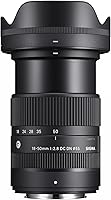
The Sigma 18-50mm F2.8 DC DN Contemporary Lens is an ideal match for Fujifilm mirrorless shooters who want a single, capable zoom they can carry every single day without dreading the weight. Street photographers, travel documentarians, and casual portrait shooters will find the constant F2.8 aperture genuinely useful when light gets tricky — in a covered market, a dim restaurant, or during the golden hour fade. Content creators and vloggers benefit from the quiet STM autofocus, which stays out of the way during recordings in a way variable-aperture kit lenses simply cannot match. Enthusiasts who have outgrown the Fujinon 18-55mm kit lens and want a real low-light upgrade without committing to a heavier, pricier professional zoom will find this Sigma zoom hits a practical sweet spot. It also suits photographers who travel light and refuse to carry multiple lenses, since the 18–50mm range on APS-C handles the vast majority of everyday shooting scenarios without forcing compromises.
Not suitable for:

Buyers expecting full-frame-level corner-to-corner sharpness wide open will likely find the Sigma 18-50mm F2.8 DC DN Contemporary Lens underwhelming at the pixel-peeping level — this is a practical lens, not a clinical one. Wildlife and sports photographers who need meaningful reach beyond 50mm will quickly feel limited and should look at longer zoom options instead. Shooters on older Fujifilm bodies without in-body image stabilization lose some of the lens's real-world appeal, since the optical design includes no built-in stabilization of its own. Those who prioritize maximum background separation and atmospheric bokeh over versatility would be better served by a dedicated fast prime — an F1.4 or F2 lens simply renders backgrounds differently. Finally, buyers who heavily weight native lens integration, resale value, or a premium tactile feel may find Fujinon's own lineup a more satisfying long-term investment despite the higher cost.
Specifications

  • Brand: Manufactured by Sigma Corporation of America, a Japanese optical company known for third-party interchangeable lenses.
  • Lens Line: Part of Sigma's Contemporary series, which prioritizes compact size, everyday usability, and strong optical performance at a practical price point.
  • Focal Length: 18–50mm zoom range, equivalent to approximately 27–75mm in full-frame terms when used on an APS-C sensor camera.
  • Max Aperture: Constant F2.8 maximum aperture is maintained across the entire zoom range from 18mm through 50mm.
  • Lens Mount: Designed exclusively for the Fujifilm X Mount, compatible with all current Fujifilm APS-C mirrorless camera bodies using that bayonet standard.
  • Format Coverage: Optimized for APS-C image sensors; using this lens on a full-frame body is not supported or intended by the optical design.
  • Autofocus System: Driven by a stepping motor (STM) mechanism, which provides smooth and near-silent focus transitions suited to both stills and video capture.
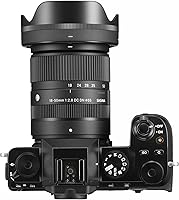
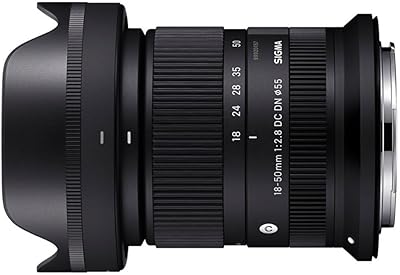
  • Dimensions: The lens measures 3 x 2.4 x 2.4 inches (approximately 76.2 x 61mm, length x diameter) in its standard configuration.
  • Weight: Weighs 10.1 ounces (approximately 286 grams), making it one of the lightest constant-F2.8 standard zooms available for APS-C mirrorless systems.
  • Weather Resistance: Features a weather-resistant construction designed to provide protection against dust and light moisture during outdoor shooting sessions.
  • Filter Thread: Accepts 67mm screw-in filters, including UV, circular polarizer, and neutral density types commonly used in landscape and video work.
  • Minimum Focus Distance: The lens achieves a minimum focusing distance of approximately 12.6 inches (32cm), enabling reasonably close subject framing at the wide end.
  • Aperture Blades: Equipped with 7 rounded aperture blades, which contribute to a smoother, more circular bokeh shape when shooting at wider apertures.
  • Optical Construction: Built with 15 elements arranged in 10 groups, incorporating special low-dispersion glass elements to manage chromatic aberration across the zoom range.
  • Image Stabilization: This lens does not include built-in optical image stabilization; users rely on in-body stabilization (IBIS) if their Fujifilm camera body provides it.
  • Release Date: First made available in November 2022, positioning it as a relatively recent addition to the third-party Fujifilm X Mount lens ecosystem.
  • Model Number: Sigma's official model number for this lens is 585975, used for warranty registration and service identification purposes.
  • Lens Type: Classified as a standard zoom lens, covering the focal range most commonly used for general photography including street, travel, and everyday subjects.

Related Reviews
Sigma 18-50mm F2.8 DC DN Zoom Lens
84%
88%
Optical Sharpness
91%
Autofocus Performance
74%
Build Quality & Handling
86%
Value for Money
93%
Portability & Size
More
Sigma 18-50mm F2.8 DC DN Zoom Lens
81%
88%
Autofocus Performance
83%
Optical Sharpness
81%
Build Quality
94%
Size & Portability
86%
Low-Light Performance
More
Sigma 18-35mm F1.8 Art DC HSM Lens for Canon
87%
94%
Sharpness & Image Quality
85%
Autofocus Speed & Accuracy
91%
Low-Light Performance
88%
Bokeh Quality
90%
Build Quality & Durability
More
Sigma 30mm F1.4 DC DN Mirrorless Lens
84%
93%
Optical Sharpness
91%
Bokeh Quality
74%
Autofocus Performance
89%
Low-Light Capability
71%
Build Quality
More
Sigma 10-18mm F2.8 DC DN Zoom Lens
81%
84%
Optical Sharpness
91%
Aperture Performance
67%
Distortion & Correction
79%
Autofocus Speed & Accuracy
88%
Video Suitability
More
Sigma 16-28mm F2.8 DG DN Wide-Angle Lens
81%
91%
Optical Sharpness
74%
Distortion Control
88%
Autofocus Performance
86%
Build Quality & Weather Resistance
89%
Size & Portability
More
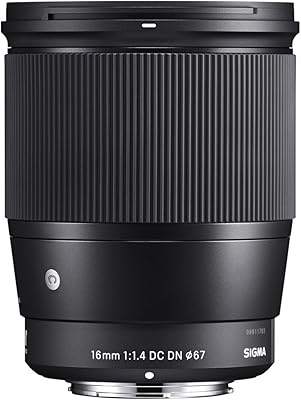
Sigma 16mm f/1.4 DC DN Wide-Angle Lens
80%
93%
Optical Sharpness
91%
Low-Light Performance
88%
Autofocus Reliability
84%
Build Quality
92%
Value for Money
More
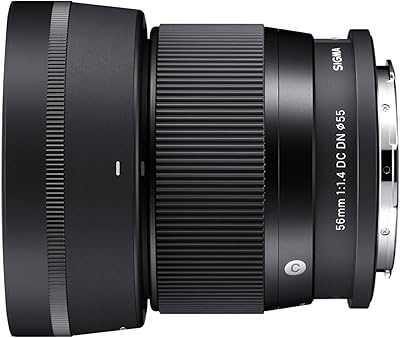
Sigma 56mm Contemporary Prime Camera Lens
84%
93%
Optical Sharpness
91%
Bokeh Quality
84%
Autofocus Performance
88%
Video AF & Audio
89%
Low-Light Performance
More
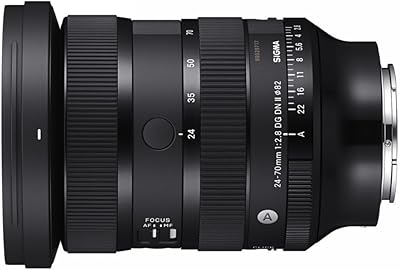
Sigma 24-70mm F2.8 DG DN II Lens
82%
93%
Optical Sharpness
84%
Autofocus Performance
88%
Build Quality
86%
Weather Sealing
71%
Value for Money
More
Fujifilm X-S20 XF16-50mm Mirrorless Camera Kit
80%
91%
Image Quality
94%
Film Simulations & Color Science
88%
In-Body Image Stabilization
86%
Video Capability
67%
Autofocus Performance
More

FAQ

Yes, the X Mount version is compatible with all Fujifilm cameras that use the X bayonet mount, including popular bodies like the X-T4, X-T5, X-S10, X-S20, and X100 series with an adapter. Older Fujifilm bodies work too, though autofocus performance may vary slightly depending on the camera's processing capabilities.

No, this Sigma zoom does not have optical image stabilization built in. If your Fujifilm body has in-body image stabilization (IBIS) — like the X-T4, X-T5, or X-S10 — that will still work normally with this lens. If you are shooting on an older body without IBIS, you will need to manage camera shake through shutter speed or a stabilized platform.

The main practical difference is aperture consistency. The Fujinon kit lens starts at F2.8 but closes to F4 as you zoom in, while the 18-50mm F2.8 stays at F2.8 all the way to 50mm. That matters in mixed or low light where you want predictable exposure without adjusting ISO mid-session. The trade-off is that the Sigma zoom is slightly shorter in reach at the long end.

It depends on what you shoot. For street, travel, portraiture, or documentary work, it is rarely noticeable in practice. If you shoot raw files and photograph architecture or interiors with strong straight lines, you will want to apply a lens correction profile in Lightroom or similar software. Fujifilm shooters using JPEG in-camera get automatic correction applied, which handles most of it cleanly.

It is genuinely well-suited for video work. The STM autofocus motor is quiet enough that it does not bleed noise into recordings, and focus transitions during continuous AF are smooth rather than abrupt. Lens breathing is controlled reasonably well. It is not a cinema-grade parfocal lens, but for vlogging, documentary-style video, and content creation it performs very competently.

No, and this catches a lot of switchers off guard. The zoom ring on this Sigma zoom rotates in the opposite direction to native Fujinon lenses. If you regularly switch between this lens and Fujifilm glass, you may find yourself zooming the wrong way instinctively for a while until muscle memory adjusts.

Yes, if you already own 67mm screw-in filters — circular polarizers, ND filters, UV protection — they will fit directly onto this lens without any adapter. The 67mm thread size is fairly common across mid-range zoom lenses, so there is a good chance you can share filters across your kit.

In typical indoor and outdoor shooting with reasonable contrast, autofocus is quick and dependable. Where it shows its limits is in genuinely low-contrast scenes — think a plain grey wall, foggy conditions, or a subject in deep shadow — where it can hunt before locking on. It is not a weakness unique to this lens, but worth knowing if you frequently shoot in challenging light.

The weather-resistant construction holds up well for travel and outdoor shooting in light rain, dusty environments, or humid conditions. Owners who have used it heavily over extended periods report solid build quality with no mechanical issues. Just keep in mind it is weather-resistant rather than fully weatherproof — it is not designed for heavy downpours or wet conditions without a weather-sealed camera body to match.

Yes, a petal-style lens hood is included in the box. It is worth using when shooting in bright conditions to reduce flare and protect the front element. Some users skip it when shooting in tight spaces or to keep the kit compact, since it does add meaningful length to the overall setup — but for outdoor daytime shooting it earns its place.

Where to Buy