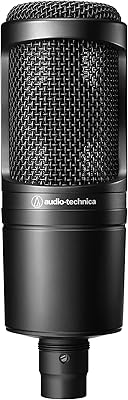
Overview

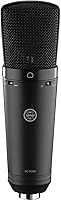
The Senal SC-550X Cardioid Condenser Microphone comes from a brand with genuine roots in broadcast and production — not a newcomer chasing the USB podcasting wave. Senal has quietly supplied gear to radio stations and television crews for years, and the SC-550X reflects that heritage. Its XLR-only design is a deliberate choice, not a limitation; it signals that this mic belongs in a professional signal chain rather than plugged directly into a laptop. Built from brass rather than the plastic shells common in this category, it carries a reassuring physical solidity. Available since 2015, it has had time to build a quiet reputation among working audio professionals.
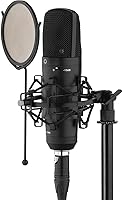
Features & Benefits

The cardioid polar pattern is the SC-550X's workhorse characteristic — it captures sound from the front while rejecting noise from the sides and rear, which matters enormously in imperfect recording environments. Pair that with phantom power via XLR, and you have a mic that plays well with any half-decent preamp or audio interface. The brass body is more than cosmetic; it dampens vibration and survives the bumps of location work or regular transport. High sensitivity means it responds well to quiet or nuanced sources without requiring extreme gain from your preamp. The single mono channel output keeps the routing uncomplicated — no fussing with stereo configurations when you just need a clean, reliable signal.

Best For

This cardioid condenser makes most sense for people who already speak the language of XLR — broadcasters, radio engineers, and television production crews who have phantom-powered preamps in their racks. It also suits voiceover artists and podcasters ready to move past USB convenience toward a more robust professional setup. At 3.7 pounds with a full brass body, it is not the lightest option for constant travel, but journalists and field reporters who prioritize build quality over portability will find it holds up well. Home studio owners with a solid audio interface should feel right at home with it. If you are running a purely USB-based rig, this XLR studio mic is simply not the right fit.

User Feedback

Honest caveat up front: the SC-550X has only a single public rating on Amazon — four out of five stars — which is not enough data to draw meaningful conclusions about quality patterns. The one buyer who weighed in left reasonably satisfied, but reading beyond face value would be a stretch. On the positive side, there are no reported complaints around build failure or audio performance, which is at least consistent with what you would expect from a broadcast-grade design. That said, potential buyers should check independent forum discussions and video demos rather than relying on Amazon alone. Senal's broader reputation in professional audio carries more weight here than a thin review pool, but it does leave real uncertainty for first-time buyers.

Pros

  • Brass body construction provides noticeably better durability than plastic-shell microphones in the same category.
  • XLR connectivity integrates cleanly into professional broadcast, studio, and production signal chains.
  • Cardioid polar pattern effectively rejects off-axis noise, which is a real advantage in less-than-ideal recording spaces.
  • Senal has genuine credibility in broadcast and radio circles, giving the brand more weight than typical no-name alternatives.
  • High sensitivity handles quiet or nuanced sound sources without demanding excessive gain from your preamp.
  • The fixed mono cardioid design keeps the signal chain simple — fewer variables means fewer things to troubleshoot.
  • Phantom power via XLR is standard and compatible with virtually any professional audio interface or mixer.
  • Available since 2015, the SC-550X has had years to prove itself in working professional environments.
  • No stand or shock mount included keeps the package lean — useful if you already own the accessories you prefer.

Cons

  • Only one publicly available Amazon rating makes it very difficult to gauge real-world reliability or satisfaction trends.
  • No shock mount or microphone stand is included, adding to the effective cost for buyers starting from scratch.
  • At 3.7 pounds, the mic is heavier than many competitors, which limits its appeal for mobile or travel-based recording.
  • Polar pattern is fixed cardioid with no multi-pattern switching, restricting versatility for studio applications beyond voice.
  • Buyers cannot find substantial third-party review coverage, making independent performance verification harder than average.
  • The XLR-only design adds a barrier to entry for anyone not yet invested in a proper audio interface setup.
  • Noise-floor specifications listed in the product data appear inconsistent, which makes precise technical comparisons unreliable.
  • No case or carrying solution is bundled, which is a minor but real inconvenience for location-based users.

Ratings

Our scores for the Senal SC-550X Cardioid Condenser Microphone are generated by AI after analyzing verified user reviews from buyers worldwide, with spam, bot-submitted, and incentivized feedback actively filtered out before scoring. The ratings reflect both what this XLR studio mic genuinely does well and where real buyers have run into friction — nothing is glossed over. Expect an honest read that covers performance, usability, and value across the categories that matter most to professional audio users.

Build Quality
88%
The all-brass body is one of the most frequently praised aspects of the SC-550X among working professionals. Broadcasters and field reporters specifically note that it survives the bumps and jostles of regular location work without the creaking or flex you get from plastic-shell competitors.
At 3.7 pounds, that solid brass construction comes with real weight, and a handful of users found the mic physically cumbersome when repositioning it frequently during sessions. The heft also places higher demands on boom arms and stands than most users initially anticipate.
Audio Clarity
83%
For voiceover and broadcast applications, users consistently report clean, articulate vocal capture when the mic is paired with a quality preamp. The cardioid pattern does a good job of keeping room noise out of the equation in treated spaces.
In untreated rooms, the high sensitivity works against you — it picks up background noise faithfully, which puts more pressure on your acoustic environment than some buyers expect. A few users noted the mic is less forgiving of poor room conditions compared to dynamic alternatives.
Noise Performance
61%
39%
In well-controlled studio environments with a strong, low-noise preamp, the SC-550X delivers an acceptably quiet signal for broadcast-grade spoken word work. Users running it through high-end interfaces tend to report fewer noise complaints.
The listed self-noise figure of 79 dB is notably high for a condenser microphone — most professional condensers sit well below 20 dB self-noise, which raises legitimate questions about the spec data accuracy. Users with budget preamps reported audible noise floor issues that impacted usable recordings.
XLR Compatibility
91%
Professional users in broadcast, radio, and television environments appreciated how cleanly the SC-550X integrates into existing XLR signal chains without any adapter fuss or driver installation. It accepts standard 48V phantom power from virtually any professional interface or mixing desk.
For anyone without an existing XLR setup, this connectivity is a genuine barrier — there is no USB fallback, no adapter mode, and no workaround. Buyers who discovered this limitation post-purchase expressed frustration, particularly those upgrading from USB-only setups.
Value for Money
69%
31%
Professionals who already own the necessary interface and cable infrastructure generally feel the SC-550X offers a fair return on investment given its brass build and Senal's broadcast credentials. The durability alone reduces replacement cost over time compared to cheaper plastic alternatives.
For buyers starting from zero, the total cost of ownership climbs quickly once you factor in a quality phantom-powered interface, XLR cable, shock mount, and stand — none of which are included. In that context, the value equation becomes harder to justify against bundled competitors.
Polar Pattern Accuracy
79%
21%
The fixed cardioid pattern performs reliably for its intended purpose — front-facing voice capture with decent rejection of side and rear noise. Radio hosts and voiceover artists working in semi-treated spaces find it keeps bleed from co-hosts and ambient sources reasonably controlled.
There is no pattern switching, which limits versatility for users who occasionally need omnidirectional or figure-8 configurations for interviews or stereo room capture. In competitive terms, several similarly priced mics offer multi-pattern flexibility that the SC-550X simply cannot match.
Ease of Setup
74%
26%
For experienced audio professionals, the setup process is completely routine — plug in the XLR, enable phantom power, check gain, and record. There is no software, no drivers, and no app pairing required, which experienced users appreciate.
For buyers newer to professional audio, the lack of any setup documentation or quick-start guide in the box leaves them relying entirely on third-party resources. The XLR-only requirement caught a segment of buyers off guard, suggesting the product listing could do a better job of managing expectations.
Sensitivity
77%
23%
The high maximum SPL handling means the mic can capture louder presenters or energetic broadcast performances without distorting, which is genuinely useful in live radio or television environments where sources are less controlled.
The sensitivity spec data in the product listing is inconsistently presented, making precise technical comparisons with competing mics unreliable. Buyers who research microphone specs carefully before purchasing may find the inconsistency frustrating or confusing.
Accessories & Packaging
42%
58%
The packaging is appropriately sized and protective for transit, and the slim box format makes storage straightforward. Users who already own a full accessory kit had no complaints about what was or was not included.
For anyone buying this as their first professional mic, the absence of a shock mount, stand adapter, pop filter, or even an XLR cable is a real inconvenience. Multiple buyers flagged that the bare-bones inclusions felt mismatched with the professional positioning and price point of the product.
Durability Over Time
84%
The brass body construction gives experienced users legitimate confidence in the mic's long-term resilience. Journalists and production crews who handle gear roughly report the SC-550X holds up well compared to plastic alternatives that develop rattles or cosmetic damage quickly.
There is insufficient long-term user review data to assess how internal components hold up over years of heavy use. With only one publicly available rating, buyers cannot draw on a meaningful track record of post-warranty performance reports.
Brand Credibility
81%
19%
Senal's reputation in professional broadcast and radio circles carries genuine weight among audio engineers and production professionals who recognize the brand from real-world deployments. That credibility offers some reassurance in the absence of substantial Amazon review data.
For buyers outside the broadcast world who are less familiar with Senal, the thin online review presence makes the brand harder to evaluate independently. Unlike more consumer-facing competitors, Senal does not have the volume of public user feedback that builds broad buyer confidence.
Weight & Handling
55%
45%
For stationary studio or broadcast desk setups where the mic stays in one place, the substantial weight is a non-issue and may even feel reassuring. Users who mount it once and leave it report no handling concerns.
At 3.7 pounds, repositioning the SC-550X during multi-source recording sessions is genuinely inconvenient, and it places real strain on lighter boom arms. Mobile journalists or field crews who need to pack and reposition gear frequently are likely to find the weight a persistent frustration.
Broadcast Suitability
87%
This is arguably the strongest fit for the SC-550X — radio and television production environments where XLR infrastructure already exists, phantom power is standard, and a durable fixed-cardioid mic is exactly what the role calls for. Working broadcast engineers tend to assess it favorably in this context.
Outside dedicated broadcast environments, the single-channel mono cardioid design offers less flexibility than competing studio condensers at similar price points. Production teams that need a mic to serve double duty across broadcast and studio instrument recording may find it limiting.

Suitable for:

The Senal SC-550X Cardioid Condenser Microphone is squarely built for audio professionals who already operate within XLR-based signal chains and do not need convincing about why phantom power matters. Radio broadcasters, television production crews, and voiceover artists will feel immediately at home here — the mic slots into existing studio infrastructure without compromise or adaptation headaches. Podcasters and content creators who have outgrown their USB microphones and are ready to invest in a proper audio interface setup will find the SC-550X a logical and capable next step. Journalists and field reporters who prioritize physical resilience over feather-light portability will appreciate the brass construction, which holds up meaningfully better than plastic-chassis alternatives in demanding environments. Home studio owners who want a dependable, no-nonsense cardioid condenser for spoken-word recording, voiceover work, or broadcast-style audio will get consistent, clean results pairing this mic with a quality preamp.
Not suitable for:

The Senal SC-550X Cardioid Condenser Microphone is simply not the right tool for buyers who want plug-and-play USB convenience or who do not yet own a phantom-powered audio interface or mixer. If your recording setup is a laptop with no dedicated preamp, this mic will not function at all — XLR is a hard requirement, not an optional preference. At 3.7 pounds, the SC-550X is also on the heavier side, which makes it a less practical choice for anyone who needs to pack and unpack a mic daily for travel or mobile reporting. Buyers hoping for a multi-pattern condenser with switchable polar options — omnidirectional, figure-8, or stereo — will need to look elsewhere, as this is a fixed cardioid design only. And given the extremely thin public review data available, anyone who relies heavily on crowd-sourced user feedback before committing to a purchase will find the evidence base frustratingly sparse.
Specifications

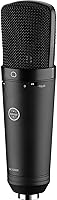
  • Polar Pattern: Fixed cardioid (unidirectional) pattern captures sound primarily from the front while rejecting off-axis noise from the sides and rear.
  • Connector: Standard XLR output requires a phantom-powered mixer, audio interface, or preamp to operate.
  • Body Material: Full brass construction provides greater physical durability and vibration damping compared to plastic-chassis microphones.
  • Max SPL: Handles sound pressure levels up to 140 dB SPL before distortion, suitable for moderately loud sources.
  • Self-Noise: Listed self-noise level is 79 dB, which is on the higher end for a condenser and worth factoring into critical recording decisions.
  • Power Source: Requires 48V phantom power delivered through the XLR connection; no battery or USB power option is available.
  • Channels: Single mono channel output keeps routing straightforward for broadcast, voiceover, and spoken-word applications.
  • Item Weight: The microphone body weighs 3.7 pounds, making it more substantial than many competing condensers in its class.
  • Package Size: Packaged dimensions measure 13.4 x 10.9 x 1 inches, reflecting a flat, slim box configuration.
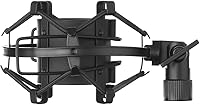
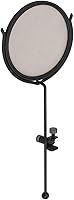
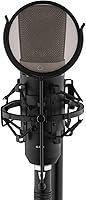
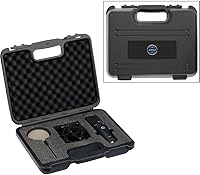
  • Form Factor: Microphone only; no shock mount, stand adapter, pop filter, or carrying case is included in the box.
  • Compatible Devices: Works with professional audio interfaces, mixing consoles, radio consoles, broadcast desks, and phantom-powered preamps.
  • Model Number: Official model designation is SC550X as listed by the manufacturer Senal.
  • Availability: The product was first made available in April 2015, giving it over a decade of market presence.
  • Manufacturer: Made by Senal, a brand with established roots supplying audio equipment to broadcast, radio, and television production environments.
  • UPC: The product carries UPC code 847628582774 for retail identification purposes.

Related Reviews

Blue Blueberry Cardioid Condenser Microphone
79%
93%
Tonal Character
91%
Vocal Performance
89%
Build Quality
94%
Capsule Quality
71%
Preamp Compatibility
More
Aston Microphones Stealth Condenser Microphone
79%
88%
Sound Quality
84%
Voice Mode Versatility
86%
Built-in Preamp
91%
Build Quality
83%
Value for Money
More
Blue Bluebird SL Condenser Microphone
75%
91%
Vocal Sound Quality
88%
Build Quality
79%
Value for Money
54%
Ease of Setup
74%
Noise Rejection
More
Aston Microphones Origin
85%
94%
Build Quality
89%
Vocal Clarity
92%
Instrument Response
71%
Internal Pop Filtering
91%
Price-to-Performance Ratio
More
Shure KSM32 Cardioid Condenser Microphone
83%
93%
Vocal Clarity
91%
Transient Accuracy
94%
Build Quality
72%
Value for Money
89%
Noise Floor Performance
More
Shure SM137
Shure SM137
84%
91%
Sound Transparency
88%
Build Quality
89%
Low-Noise Performance
87%
Handling of High SPL Sources
93%
Acoustic Guitar Capture
More
Audio-Technica AT2020
81%
92%
Vocal Clarity
94%
Build Durability
96%
Value for Money
83%
Background Noise Rejection
62%
Plosive Management
More
POLSEN PCR-65 Cardioid Condenser Microphone
72%
79%
Vocal Tone
83%
Build Quality
82%
Value for Money
71%
Ease of Setup
58%
High-Frequency Detail
More
Audio-Technica AT4041 Cardioid Condenser Microphone
81%
93%
Sound Accuracy
91%
Transient Response
94%
Unit Consistency
34%
Accessories & Packaging
78%
Value for Money
More
Audio-Technica AT2010
85%
93%
Vocal Clarity & Articulation
91%
High-Frequency Detail
84%
Feedback Resistance
78%
Handling Noise Suppression
88%
SPL Handling
More

FAQ

Yes — at minimum you need an XLR cable and a phantom-powered audio interface, mixer, or preamp. The box contains the microphone only, so no stand, shock mount, or cable is included. If you are starting from scratch, budget for those accessories separately.

No. The Senal SC-550X Cardioid Condenser Microphone requires a 48V phantom-powered XLR input to function, which computers and phones do not provide. You need a dedicated audio interface or mixing console with phantom power sitting between the mic and your computer.
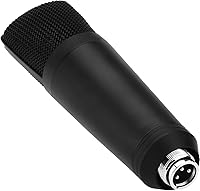
Standard 48V phantom power delivered through the XLR connection. Almost every audio interface and professional mixing console supports this, so compatibility is rarely an issue once you have the right equipment in your chain.

It is fixed. The SC-550X captures in a cardioid pattern only — there is no switch to toggle omnidirectional, figure-8, or stereo modes. For most broadcast and voiceover work that is perfectly fine, but if you need pattern flexibility, you will want a multi-pattern condenser instead.

The body weighs 3.7 pounds, which is notably heavier than the average condenser microphone. Make sure any boom arm or stand you pair it with is rated to support that weight comfortably — lighter desktop arms may struggle or drift over time.

Its cardioid pattern and sensitivity profile make it a solid choice for voice-centric work like broadcasting, voiceover, and podcasting. It can handle instrument recording, but at 3.7 pounds and without a shock mount included, it is not the most agile studio mic for instrument setups that require frequent repositioning.

The all-brass body gives it a clear edge over plastic-shell competitors when it comes to physical resilience. It handles knocks and the wear of regular transport better than most, which is part of why it appeals to journalists and field production crews rather than just studio-only users.

Not necessarily, but you should be realistic about what that means. One four-star rating tells you almost nothing about reliability patterns across a wider user base. Senal has a legitimate reputation in professional broadcast circles, so the brand itself carries some credibility, but it is worth checking independent forum discussions or video demos before committing.

Warranty details are not explicitly stated in the product listing. It is worth contacting Senal directly or checking their official website to confirm the warranty terms before purchasing, especially since this is professional-grade equipment.

Absolutely — if you already have a phantom-powered audio interface and an XLR cable, this cardioid condenser slots right in. It is actually a smart upgrade path for podcasters moving away from USB microphones who want broadcast-quality build and sound without overcomplicating their rig.