Overview

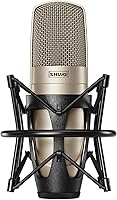
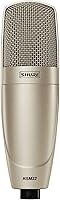
The Shure KSM32 Cardioid Condenser Microphone has been a respected fixture in recording studios since 2004, earning its reputation through consistent performance rather than marketing noise. Built for serious studio work, it carries the kind of solid metal construction and champagne finish you would expect from a professional-tier tool, not a starter kit. This Shure mic requires phantom power from an audio interface or mixer, so plan accordingly before purchasing. If you are looking for a plug-and-play shortcut, this is not it — but if you are ready to invest in a microphone that rewards proper technique and a decent signal chain, the KSM32 is worth serious consideration.
Features & Benefits

At the heart of the KSM32 is its embossed Mylar diaphragm — a design choice that stiffens the membrane just enough to capture fast transients accurately without dulling sensitivity. That shows up clearly when recording acoustic guitar or piano: attacks are crisp and natural, not smeared. The frequency response extends low enough to capture genuine body and warmth in voices and instruments, while the built-in low-frequency filter gives you a practical way to tame room rumble when your recording space is less than ideal. A 15 dB pad switch handles high-SPL sources without distortion, and a 78 dB signal-to-noise ratio keeps the noise floor impressively clean at lower input levels.

Best For

This studio condenser makes the most sense for home studio owners who have already moved past budget condensers and want recordings that hold up under scrutiny. Vocalists will appreciate how it captures voice with accuracy and a natural top end that does not add unwanted brightness or harshness. It is equally capable on acoustic instruments — fingerpicked guitar, upright piano, strings — where you need the mic to stay out of the way and simply reproduce what is in front of it. Engineers working with loud sources like brass or close-miked guitar cabinets will find the pad switch genuinely useful, and semi-professional studios needing one reliable large-diaphragm condenser will find this Shure mic fits that role well.

User Feedback

With a 4.7-star average across 88 ratings, the KSM32 earns strong marks from a wide range of users. Vocal clarity and natural high-frequency reproduction come up repeatedly in positive reviews, alongside praise for how well-built it feels — owners often note it still performs flawlessly years after purchase. On the critical side, a few buyers flag the price as a genuine commitment, and some point out that a shock mount is not always included, adding to the overall cost. Phantom power dependency is worth flagging for those new to condensers. That said, buyers upgrading from entry-level mics consistently describe the difference in recording quality as immediately noticeable and difficult to go back from.

Pros

  • Captures vocals with natural clarity and a smooth top end that avoids harshness.
  • The embossed Mylar diaphragm handles fast transients accurately, keeping acoustic instruments sounding true to life.
  • A 78 dB signal-to-noise ratio keeps the noise floor impressively low, even at conservative gain settings.
  • The 15 dB pad switch adds real flexibility when recording loud sources without distortion.
  • Built-in low-frequency filter is a practical tool for reducing room rumble in untreated spaces.
  • Solid all-metal construction gives it a durability that long-term owners consistently point to.
  • Compatible with any standard XLR audio interface or mixer, fitting easily into existing studio setups.
  • A strong 4.7-star average across verified buyers reflects consistently positive real-world experiences.
  • Buyers upgrading from budget condensers frequently notice an immediate and significant improvement in recording quality.
  • Shure's track record and brand reliability mean support, documentation, and longevity are rarely a concern.

Cons

  • Phantom power is required, so buyers without a compatible interface face extra costs before getting started.
  • The price is a significant commitment that may be hard to justify for casual or hobbyist use cases.
  • A shock mount is not always included, which adds to the total cost for buyers in less controlled environments.
  • No USB connectivity means it is completely unsuitable for direct computer recording without additional hardware.
  • Relatively few verified ratings compared to mass-market alternatives, giving less data on long-term failure rates.
  • Side-address design requires more careful mic placement technique than front-address alternatives, which can trip up less experienced users.
  • At just under a pound, it is heavier than many budget condensers, requiring a sturdy boom arm or stand.
  • The cardioid-only polar pattern limits versatility for engineers who occasionally need figure-8 or omnidirectional options.

Ratings

The scores below reflect our AI-driven analysis of verified buyer reviews for the Shure KSM32 Cardioid Condenser Microphone, collected from multiple global platforms with spam, bot activity, and incentivized feedback actively filtered out. Each category is scored independently to give you an honest picture of where this studio condenser genuinely excels and where it falls short for certain buyers.

Vocal Clarity
93%
Vocalists consistently describe recordings through the KSM32 as clean and natural, with a top end that adds presence without introducing harshness or sibilance. Singers tracking lead vocals for commercial releases particularly note how little corrective EQ is needed in the mix afterward.
A small number of users with very bright or forward voices found the mic slightly unforgiving in poorly treated rooms, picking up room reflections that then required additional post-processing to manage.
Transient Accuracy
91%
The embossed diaphragm design handles fast transients with notable precision, which pays off most clearly when recording fingerpicked acoustic guitar or piano — instruments where the attack of each note is critical to a natural, lifelike sound.
The improvement over competing mics in this area is most audible through a high-quality preamp; users running the KSM32 through budget-tier interfaces reported less dramatic differences in transient detail compared to those using cleaner signal chains.
Build Quality
94%
Long-term owners frequently call out the all-metal construction as one of the KSM32's most reassuring qualities, with several reviewers noting the mic has held up through years of regular studio sessions without any degradation in performance or cosmetic wear.
A few buyers noted the champagne finish shows fingerprints and minor handling marks more readily than darker-finished alternatives, which is a minor but real consideration for those who store their gear without a pouch or case.
Value for Money
72%
28%
For engineers and serious home studio owners who will actually push the mic in demanding sessions, the performance-to-price ratio holds up well over time, especially given the durability and the breadth of sources it handles competently.
At its price point, the KSM32 sits in a competitive bracket where several alternatives exist, and buyers who record only casually or infrequently will struggle to justify the outlay — the value story is strongest for those who genuinely use it regularly.
Noise Floor Performance
89%
The 78 dB signal-to-noise ratio translates directly into recordings that need very little noise reduction in post, which is especially appreciated by users tracking quieter acoustic sources like nylon-string guitar or intimate vocal performances at low gain levels.
While the self-noise performance is strong, some users in particularly noisy home environments noted that the mic is sensitive enough to pick up ambient sounds that cheaper, less sensitive condensers would have ignored — a trade-off of high sensitivity rather than a flaw.
Acoustic Instrument Recording
88%
Users recording piano, strings, and acoustic guitar repeatedly praise how the KSM32 captures the full frequency range of the instrument, from the low-end body to the upper harmonic detail, without adding artificial warmth or brightness.
A handful of reviewers noted that for dense ensemble recording or overhead drum applications, a matched stereo pair would be needed — and the cost of two units puts that use case out of reach for many home studio budgets.
High-SPL Handling
86%
The 15 dB pad switch earns consistent praise from engineers who use it for close-miking brass, loud guitar cabinets, or live stage applications where signal overload would otherwise be a real problem — it works cleanly without introducing coloration.
Users who primarily record quieter sources like voice or acoustic instruments noted they rarely if ever engaged the pad, making it a feature that adds value only for a subset of users rather than something the whole buyer base benefits from equally.
Low-Frequency Response
87%
The extended low-end reach gives recordings a sense of fullness and body that thinner-sounding budget condensers often lack, which singers and acoustic guitarists in particular tend to notice immediately when comparing recordings side by side.
In rooms with significant low-frequency buildup — common in smaller, untreated home studios — the extended bass response can work against you, requiring the low-cut filter to be engaged routinely or additional acoustic treatment to keep recordings manageable.
Low-Frequency Filter Utility
81%
19%
The onboard low-cut filter is a genuinely practical tool for home studio users who cannot fully treat their space, helping reduce HVAC noise, traffic rumble, and floor vibrations before they enter the recording chain.
Some users wished for a switchable frequency option rather than a fixed rolloff point, noting that the single setting does not always align perfectly with the specific frequency range of the problem noise in their environment.
Setup & Compatibility
76%
24%
The standard XLR connection means the KSM32 drops into any existing professional recording setup without any adapters or drivers, and compatibility with phantom-power-equipped interfaces from every major brand is essentially universal.
The mandatory phantom power requirement is a real barrier for buyers who do not yet own a compatible interface, and the absence of any USB option means this mic is entirely inaccessible to users who want a direct computer connection without additional hardware.
Shock Mount & Accessories
61%
39%
When a shock mount is included in the bundle configuration, users report it fits securely and works effectively for reducing stand-transmitted vibrations during live and studio tracking sessions.
The inconsistency across configurations — with some bundles omitting the shock mount entirely — frustrates buyers who only discover this after purchase, and the additional cost of sourcing a compatible mount adds friction to an already premium investment.
Durability & Longevity
96%
Reviewers who have owned the KSM32 for five or more years overwhelmingly report that it continues to perform identically to how it did when new, with no capsule degradation, mechanical looseness, or switch failure noted across a large number of long-term testimonials.
There is limited publicly available data on failure rates over decades of use, and Shure's repair and recapsulation services, while available, add cost if a problem does eventually occur outside any applicable warranty period.
Side-Address Usability
79%
21%
Experienced engineers appreciate the side-address format for its flexibility in mic placement, particularly for vocal booths and desktop studio setups where positioning a front-address mic at the correct angle can be more cumbersome.
Less experienced users occasionally struggled with the side-address orientation, unsure which face of the mic to direct toward the source, which led to some early recordings that missed the sweet spot of the cardioid pattern entirely.
Live Sound Performance
74%
26%
Users who have deployed the KSM32 in live sound applications report solid feedback rejection thanks to the tight cardioid pattern, and the high-SPL handling makes it a viable option for stage use on select sources.
The mic is fundamentally designed for controlled studio environments, and several live sound engineers noted that its sensitivity and extended low-end response require more careful gain management on stage than purpose-built live performance microphones typically demand.

Suitable for:

The Shure KSM32 Cardioid Condenser Microphone is the right call for recording musicians, vocalists, and audio engineers who are ready to move beyond entry-level gear and invest in a microphone that will genuinely hold up in serious sessions. If you are tracking vocals for commercial releases, recording acoustic guitar with real attention to detail, or running a home studio where the quality of your recordings actually matters to you, this Shure mic belongs on your shortlist. It shines particularly well in semi-professional and professional studio contexts where you need a reliable, consistent performer rather than a mic you are constantly second-guessing. Engineers working with high-SPL sources like brass instruments or close-miked amplifiers will appreciate the practical flexibility the pad switch adds. Anyone who already has a decent audio interface with phantom power and wants a single, well-rounded large-diaphragm condenser as their workhorse will find the KSM32 covers a wide range of recording tasks with confidence.

Not suitable for:

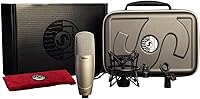
The Shure KSM32 Cardioid Condenser Microphone is not the right fit for beginners who are just starting out and have not yet built out a proper signal chain. Because it requires phantom power, buyers without a compatible audio interface or mixer will face additional upfront costs before they can even plug it in — that is a real barrier worth acknowledging. Podcasters or streamers looking for a simple USB solution, or anyone who needs a mic they can use straight out of the box with minimal setup, should look elsewhere. The price point is a serious commitment, and if your recordings are destined primarily for casual social media content or basic voice memos, the investment is hard to justify. This Shure mic also lacks a built-in shock mount in some configurations, meaning buyers in noisier or less acoustically treated environments may need to budget for additional accessories to get the best results.
Specifications

  • Microphone Type: Large-diaphragm side-address cardioid condenser designed for professional studio and live sound applications.
  • Diaphragm: Embossed ultra-thin high-compliance Mylar membrane that improves transient accuracy while maintaining sensitivity.
  • Polar Pattern: Unidirectional cardioid, capturing sound primarily from the front and rejecting noise from the rear.
  • Frequency Response: Extends from 20 Hz upward, providing full low-end body suitable for vocals and acoustic instruments.
  • Signal-to-Noise Ratio: Rated at 78 dB, delivering a very low noise floor that keeps recordings clean even at conservative gain levels.
  • Pad Switch: Switchable 15 dB attenuation pad allows the mic to handle high-SPL sources without signal distortion.
  • Connector: Standard 3-pin XLR output, compatible with professional audio interfaces, mixers, and preamps.
  • Power Source: Requires 48V phantom power supplied by a compatible audio interface, mixer, or standalone phantom power unit.
  • Weight: 17.3 oz (approximately 1.08 lb), requiring a sturdy microphone stand or boom arm for stable positioning.
  • Dimensions: Body measures 7.37 x 2.2 x 2.2 inches, consistent with standard large-diaphragm studio condenser form factors.
  • Body Material: All-metal construction with a Mylar diaphragm capsule, contributing to its long-term durability and physical resilience.
  • Finish: Available in a champagne silver and black finish that reflects its professional studio positioning.
  • Low-Frequency Filter: Built-in switchable low-cut filter reduces low-frequency rumble and handling noise at the source.
  • Audio Sensitivity: Sensitivity is rated at 15 dB, appropriate for capturing detail across a wide range of recording levels.
  • Number of Channels: Single-channel mono microphone intended for individual source tracking rather than stereo capture.
  • Model Number: Official model designation is KSM32/SL, as specified by Shure for this particular finish variant.
  • Brand: Manufactured by Shure, a company with a decades-long reputation in professional audio equipment.
  • Recommended Use: Optimised for studio vocal recording, acoustic instrument tracking, and demanding live sound production environments.

Related Reviews

Shure SM137

Shure SM137
84%
91%
Sound Transparency
88%
Build Quality
89%
Low-Noise Performance
87%
Handling of High SPL Sources
93%
Acoustic Guitar Capture
More
Shure SM81-LC
Shure SM81-LC
88%
97%
Acoustic Accuracy
94%
Build Durability
92%
Transient Response
88%
Off-Axis Rejection
91%
Low-Frequency Control
More
Blue Blueberry Cardioid Condenser Microphone
79%
93%
Tonal Character
91%
Vocal Performance
89%
Build Quality
94%
Capsule Quality
71%
Preamp Compatibility
More
Aston Microphones Stealth Condenser Microphone
79%
88%
Sound Quality
84%
Voice Mode Versatility
86%
Built-in Preamp
91%
Build Quality
83%
Value for Money
More
Blue Bluebird SL Condenser Microphone
75%
91%
Vocal Sound Quality
88%
Build Quality
79%
Value for Money
54%
Ease of Setup
74%
Noise Rejection
More
Aston Microphones Origin
85%
94%
Build Quality
89%
Vocal Clarity
92%
Instrument Response
71%
Internal Pop Filtering
91%
Price-to-Performance Ratio
More
Shure MV5
Shure MV5
81%
83%
Audio Quality
91%
Build Quality
96%
Ease of Setup
78%
Recording Modes
74%
Noise Rejection
More
Audio-Technica AT4040
83%
92%
Sound Transparency
88%
Build Quality
86%
Transient Response
83%
Value for Money
84%
Off-Axis Rejection
More
Audio-Technica AT2010
85%
93%
Vocal Clarity & Articulation
91%
High-Frequency Detail
84%
Feedback Resistance
78%
Handling Noise Suppression
88%
SPL Handling
More
Audio-Technica AT4041 Cardioid Condenser Microphone
81%
93%
Sound Accuracy
91%
Transient Response
94%
Unit Consistency
34%
Accessories & Packaging
78%
Value for Money
More

FAQ

Yes, as long as your USB interface has an XLR input with 48V phantom power — which most modern audio interfaces do. Just make sure phantom power is switched on before you start recording, since the KSM32 will not operate without it.

It depends on the specific configuration you purchase. Some bundles include a shock mount, but the standard listing does not always include one. If you are recording in a space with floor vibrations or desk noise, budgeting for a compatible shock mount separately is a smart move.

Technically it will work, but it is genuinely overkill for casual podcasting or streaming. This studio condenser is built for critical recording environments where audio quality is the priority. If you are running a high-production podcast or streaming setup where audio quality matters, it could be justified — but most casual users would be better served by a simpler, more affordable option.

It is most useful in rooms that are not acoustically treated. Air conditioning hum, traffic rumble, and general low-frequency ambience can all creep into recordings in a typical home studio. Switching on the low-cut filter rolls off those frequencies before they ever hit your recording chain, saving cleanup time in post-production.

When you close-mic a loud source — like a trumpet, a guitar cabinet, or a kick drum — the sheer sound pressure can overload the microphone capsule and cause clipping. The pad switch reduces the signal level by 15 dB before it hits the electronics, giving you clean headroom even on very loud sources.

It is genuinely well-suited for acoustic guitar. The extended low-frequency response captures the body and warmth of the instrument, while the accurate transient handling keeps fingerpicked notes and strummed chords sounding natural and precise. Position it around 6 to 12 inches from the soundhole, angled slightly toward the neck, and you will get excellent results.

The cardioid polar pattern rejects sound from behind the mic, which helps in moderately noisy rooms. Combined with the switchable low-cut filter, you have two practical tools for managing room noise. That said, no microphone fully compensates for a poor acoustic environment — basic treatment like absorptive panels will still make a meaningful difference.

Long-term owners consistently report strong durability, and the all-metal body is built to take the rigors of regular studio use. Shure has a well-established track record for making gear that holds up over time. With normal care and proper storage, there is no reason this mic should not serve you reliably for many years.

Any clean, transparent preamp with 48V phantom power and enough gain — typically around 50 to 60 dB — will let this mic perform at its best. Popular options include interfaces from Focusrite, Universal Audio, and Audient, or standalone preamps like the Grace Design m101. The better your preamp, the more the mic can reveal its full capability.

The most noticeable differences are in the noise floor, transient accuracy, and build quality. Budget condensers tend to add coloration, compress transients slightly, and introduce more self-noise into the signal. The KSM32 is more neutral and precise, which means recordings require less corrective processing afterward. Whether that improvement is worth the price gap really depends on how critical your end use is.

Where to Buy