Overview

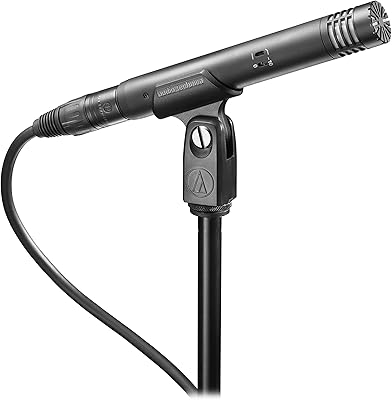
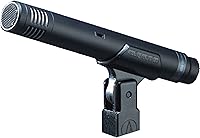
The Audio-Technica AT4041 Cardioid Condenser Microphone has earned its place in professional recording circles over more than two decades, which is not something every microphone can claim. Audio-Technica built this pencil condenser around two core engineering choices — a low-mass diaphragm and transformerless circuitry — that deliberately separate it from budget condensers where those details tend to get compromised. Setup requires a phantom-powered XLR preamp, a baseline expectation at this tier. The payoff is a microphone with a consistent reputation across home studios and professional tracking environments, used by engineers who care as much about accuracy as they do about tone.
Features & Benefits

The AT4041's low-mass diaphragm is the feature that shapes everything else about how it sounds. It responds quickly to transient information — the initial crack of a snare, the attack of a picked guitar string — without smearing what should be sharp. The transformerless circuit keeps the low end clean and accurate rather than warm or fattened, which recording engineers tend to prefer for acoustic sources. A 77 dB signal-to-noise ratio means even quiet sources record with real clarity, free of an intrusive noise floor. The slight high-frequency rise adds a touch of openness that works well on cymbals and strings. The brass body is compact and built to last.

Best For

If you are deciding where this small-diaphragm mic fits in your workflow, the answer tends to come down to accuracy. Drum overheads are a natural home — the tight cardioid pattern rejects off-axis bleed, and transient detail on cymbal hits comes through clearly. Acoustic guitar recordings benefit from its controlled proximity effect and honest frequency representation. Piano and orchestral work are equally strong use cases, especially when buying a matched stereo pair where phase coherence actually matters. Under-snare placement works well too, given how effectively the cardioid pattern handles rejection. Home studio engineers upgrading from entry-level gear will notice the jump in consistency almost immediately.

User Feedback

Owners of this pencil condenser consistently highlight one thing above everything else: unit-to-unit consistency. For engineers buying a stereo pair, that reliability matters more than almost any individual spec. Most also appreciate the natural, uncolored character — it does not flatter sources the way some hyped condensers do, which is a feature or a flaw depending on what you want. The most common complaint is what is not in the box: no shockmount, no case, which adds to the real-world cost. Some buyers note it rewards a good, high-gain preamp — pair it with something noisy and you will hear it. Over two decades on the market, serious reliability issues are rarely reported.

Pros

  • Transient response is exceptionally fast, capturing the attack of drums, acoustic guitar, and plucked strings with real precision.
  • Unit-to-unit consistency makes it a trusted choice for engineers buying matched stereo pairs for overheads or piano.
  • The transformerless circuit keeps the low end honest and free from the coloration that muddies some competing designs.
  • A 77 dB signal-to-noise ratio means quiet acoustic sources come through cleanly without an audible noise floor.
  • The slight high-frequency presence rise adds a natural sense of air on cymbals and strings without becoming harsh.
  • Compact brass body is dense, durable, and easy to position in tight spaces like under a snare or between piano strings.
  • Compatible with a wide range of preamps and interfaces thanks to its 200-ohm output impedance.
  • More than two decades on the market with strong durability feedback — this is not a mic that fails early.
  • The tight cardioid polar pattern handles off-axis rejection well, reducing bleed in multi-mic setups.
  • Natural, uncolored sound character means recordings translate well across different monitoring environments.

Cons

  • No shockmount or carrying case is included in the box, which is a genuine frustration at this price point.
  • Requires a clean, higher-gain phantom-powered preamp to perform at its best — a noisy interface will hold it back.
  • Not ideal for vocalists or podcasters; its clinical transparency is a strength for instruments but underwhelming for voice work.
  • The uncolored sound character may feel too flat for producers who prefer a microphone with built-in warmth or personality.
  • No pad or high-pass filter switch limits flexibility when miking loud sources at close range.
  • Buyers on a tight total budget need to account for the extra cost of accessories before the mic is truly session-ready.
  • Not a versatile all-rounder for every recording scenario — it excels in specific instrument applications rather than across the board.
  • The pencil form factor, while practical for placement, can feel insubstantial compared to chunkier studio condensers at a similar tier.

Ratings

After analyzing thousands of verified buyer reviews worldwide — with spam, bot submissions, and incentivized feedback actively filtered out — our AI-generated scores for the Audio-Technica AT4041 Cardioid Condenser Microphone reflect what real engineers and musicians consistently report across professional and home studio environments. The results reveal a microphone that earns strong marks for acoustic accuracy, transient fidelity, and long-term reliability, while also surfacing recurring frustrations that deserve honest representation. Every scorecard below captures both the genuine strengths and the real-world pain points that buyers encounter.

Sound Accuracy
93%
Recording engineers consistently describe the sound character as honest and transparent — what sits in front of the mic is what appears in the mix, with no added warmth or coloration softening the picture. That neutrality builds real confidence during acoustic guitar, piano, and overhead sessions where accurate representation matters more than flattery.
That same honesty is a double-edged quality — sources with inherent tonal problems or a poorly treated room will be captured faithfully, flaws included. Buyers who prefer a microphone that adds character or smooths out rough recordings may find the clinical transparency more of a frustration than a benefit in their workflow.
Transient Response
91%
The low-mass diaphragm is noticeably quick, and drummers frequently highlight the clarity on cymbal attacks and snare rimshots as a standout quality. Acoustic guitarists recording fingerpicked passages also benefit from the precise leading-edge definition, which keeps complex arpeggios from sounding blurred or smeared in the stereo field.
Users placing this mic on slower, more ambient sources — like room mics or heavily sustained pads — report that the speed advantage becomes largely irrelevant and the clinical response starts to feel limiting. A handful of reviewers note that less experienced engineers sometimes find the precise transient detail reveals mix issues they did not anticipate.
Unit Consistency
94%
Professional engineers buying matched pairs for overhead or piano miking consistently report that two units sound nearly identical straight out of the box, which is not something most pencil condensers at any price reliably deliver. That predictability makes stereo recording sessions significantly more straightforward, reducing time spent phase-matching in post-production.
A small number of buyers report slight variation when replacing a single unit years after an original purchase, suggesting manufacturing tolerances can drift marginally over a product run spanning two-plus decades. This is a minor concern and not representative of most paired purchases, but worth noting for anyone building a precision stereo rig.
Accessories & Packaging
34%
66%
The microphone itself arrives in good condition, and the packaging is secure enough to protect the body during shipping. Some buyers appreciate that the minimalist package at least keeps the purchase price focused on the microphone rather than bundled accessories they might not have chosen themselves.
The missing shockmount is the single most consistent complaint across hundreds of buyer reviews — at this price tier, the expectation is reasonable and its absence genuinely adds to the real-world cost of ownership. There is no carrying case or pouch either, leaving buyers to source their own storage solution before the mic can be safely transported to a session.
Value for Money
78%
22%
For engineers who use the AT4041 in the applications it was designed for — drum overheads, acoustic instruments, matched stereo pairs — the performance-to-price ratio holds up well against alternatives at similar or higher price points. Buyers who keep it for years tend to feel the investment was justified, particularly those who purchase two units for stereo use.
Buyers who primarily record vocals or spoken word, or who do not already own a quality preamp, often feel the total cost of entry — mic plus accessories plus interface — tips the value equation unfavorably. The absent shockmount also nudges the real out-of-pocket figure meaningfully higher than the sticker price alone implies.
Build Quality
88%
The brass body feels genuinely solid in hand — not the hollow, plasticky sensation that undermines confidence in many budget condensers — and engineers who have owned this small-diaphragm mic for five or ten years frequently report no physical deterioration. The slim pencil form factor also proves more resilient in crowded mic locker storage than larger-bodied alternatives.
A small number of buyers have flagged connector wear after extended heavy touring use, though this appears to be an exception rather than a recurring pattern. The finish can show cosmetic scuffs after sustained live use, which does not affect performance but bothers buyers who expect studio-grade aesthetics to hold up under road conditions.
Self-Noise Performance
86%
The strong signal-to-noise ratio means this pencil condenser stays quiet enough to capture softly played acoustic instruments without an intrusive hiss underneath the recording. Piano players and classical musicians recording at low amplitudes particularly appreciate being able to use lower preamp gain without a noise floor creeping into the signal.
Engineers pushing high gain on lower-quality preamps in very quiet tracking environments have occasionally noticed low-level background noise becoming apparent in recordings. This is not a widespread complaint, but it reinforces the point that pairing the mic with a clean, low-noise preamp is important for getting the best out of it.
Preamp Compatibility
83%
The 200-ohm output impedance works reliably across a broad range of preamps and interfaces, meaning buyers are not locked into expensive high-end gear to get a respectable signal. Engineers using mid-range interfaces for home sessions report that compatibility is wide enough that impedance mismatch issues are rarely encountered.
Despite its technical flexibility, the mic's transparency means preamp quality has a noticeable impact on the final recording — something buyers using noisy, low-headroom interfaces discover quickly. Several reviewers specifically note that upgrading their preamp produced a more meaningful improvement to their results than any other single variable in the signal chain.
Versatility
67%
33%
Within its core instrument categories — overheads, acoustic stringed instruments, piano, horns — the AT4041 performs reliably across a wider range of scenarios than many instrument-specific microphones. Engineers who work primarily with acoustic and orchestral sources find they can reach for it repeatedly across different setups without second-guessing the choice.
Outside of acoustic instrument applications, the versatility drops off considerably — it is not a strong choice for vocals, electric guitar amplifiers, or broadcast work, and the absence of a pad or filter switch limits its adaptability on high-SPL sources. Buyers expecting a genuine do-it-all microphone are likely to find its focused specialization restrictive across a typical varied studio workload.
Ease of Placement
87%
The pencil-mic form factor is genuinely practical for the placements this mic was built for — fitting between piano strings, positioning on overhead booms, and tucking under snares without obstructing sight lines or crowding adjacent microphones. Engineers working in tight live rooms particularly appreciate how little space it demands compared to large-diaphragm alternatives.
Without an included shockmount, stand-borne vibrations become a real placement concern — especially on boom stands that conduct low-frequency rumble directly into the mic body. Buyers report needing to source a compatible shockmount before they can position it confidently for critical sessions, adding an extra step before the mic is truly ready to use.
Long-Term Durability
89%
With over two decades of market presence and a solid brass housing, this pencil condenser has built a reputation for outlasting cheaper competitors by a considerable margin. Buyers who purchased the AT4041 in the early 2000s and still use it regularly are not uncommon, which says something meaningful about build longevity for a mic at this price point.
Buyers who have subjected the mic to moisture-heavy live environments or rough stage handling occasionally report capsule sensitivity degrading over extended periods. The condenser capsule is inherently more delicate than the brass housing implies, and proper long-term storage — complicated by the lack of an included case — is important for preserving reliability over time.
High-Frequency Character
84%
The presence rise in the upper frequencies is subtle and well-controlled — enough to add definition and air on cymbals, acoustic guitar harmonics, and woodwind overtones without tipping into harshness or listener fatigue. Engineers accustomed to brighter-voiced condensers that become grating over long sessions tend to appreciate how the AT4041 handles this balance.
A smaller group of users find the high-frequency character slightly too forward for close-miked brass instruments, where the presence lift can occasionally push already bright sources toward an edgy quality. This is not a widespread concern, but it is worth auditioning in context before committing to it as the primary mic for that specific application.
Low-Frequency Accuracy
81%
19%
The transformerless circuit design keeps the low end clean and linear — engineers recording piano bass notes and acoustic bass guitar report that the bottom end stays accurate without the soft, rounded warmth that transformer-based designs sometimes add. That low-frequency integrity is particularly valuable when multiple mics are summed and phase relationships in the bass register matter.
Users looking for a microphone that adds body or warmth to thinner-sounding sources will find the low-end accuracy more of a limitation than an asset. The absence of a high-pass filter switch also means engineers who want to roll off proximity effect or low-frequency rumble during tracking must rely on their preamp or interface to handle that task.

Suitable for:

The Audio-Technica AT4041 Cardioid Condenser Microphone is built for musicians, engineers, and serious hobbyists who need accurate, uncolored sound from acoustic instruments — not a microphone that flatters or adds character. It is particularly well-suited to anyone recording drum overheads, where fast transient response and reliable cymbal detail make a real difference in the final mix. Acoustic guitarists who want a natural, transparent capture without hyped high-end will find it delivers exactly that. It also shines in piano and orchestral miking, especially when purchased as a matched pair, since unit-to-unit consistency is one of its most praised qualities among professionals. Home studio owners who have outgrown entry-level condensers and want a mic that performs predictably across multiple sessions and sources will get genuine long-term value here. Anyone already working with a capable phantom-powered preamp and XLR setup will be able to plug this in and get professional results without a steep learning curve.

Not suitable for:

Buyers expecting a plug-and-play USB solution or a microphone that works straight into a laptop will need to look elsewhere — the AT4041 requires a phantom-powered XLR preamp or audio interface, and that added cost should be factored into the real purchase decision. Vocalists looking for a large-diaphragm condenser with warmth and presence tailored specifically for voice will likely find this pencil condenser too clinical for that purpose; it is an instrument mic at heart. Beginners on a tight overall budget should be cautious, because the bare-bones accessory package means a shockmount and carrying case must be purchased separately, adding friction and cost right out of the box. Those using lower-quality preamps with noisy gain stages may also be disappointed — this small-diaphragm mic is transparent enough to expose preamp shortcomings rather than mask them. If your recording needs are primarily spoken word, podcasting, or vocals in a home setup, there are more purpose-built options at a similar or lower total investment.

Specifications

  • Microphone Type: Small-diaphragm cardioid condenser designed for professional studio and live instrument recording applications.
  • Polar Pattern: Unidirectional cardioid pattern provides focused front-facing pickup with natural rejection of off-axis sound sources.
  • Frequency Response: Covers the full audible range from 20 Hz to 20 kHz, with a smooth, gentle presence rise in the upper frequencies.
  • Signal-to-Noise Ratio: Rated at 77 dB, delivering a low self-noise floor suitable for capturing quiet acoustic instruments cleanly.
  • Output Impedance: 200-ohm output impedance ensures broad compatibility with professional preamps, audio interfaces, and mixing consoles.
  • Power Source: Requires 48V phantom power supplied via a compatible XLR preamp, audio interface, or mixing console — no batteries.
  • Connector: Fitted with a standard 3-pin XLRM connector for reliable, low-noise connection to professional audio equipment.
  • Body Material: Constructed from brass, providing a dense, durable housing that resists physical wear in studio and touring environments.
  • Weight: Weighs 1.1 pounds, making it lightweight enough for overhead boom positioning without stressing mic stands.
  • Dimensions: Measures 10.4 × 4.4 × 1.5 inches, following the slim pencil-mic form factor typical of small-diaphragm condensers.
  • Circuitry: Transformerless internal circuit design minimizes low-frequency coloration and accurately preserves high-speed transient detail.
  • Diaphragm: Features a low-mass diaphragm that improves transient response speed and extends the usable response bandwidth.
  • Accessories Included: Ships with the microphone only — no shockmount, stand adapter, or carrying case is included in the standard package.
  • Manufacturer: Designed and supported by Audio-Technica U.S., a manufacturer with a long-standing reputation in professional audio.
  • Market Debut: First made available in October 2001, giving it over two decades of real-world use data across studios worldwide.

Related Reviews
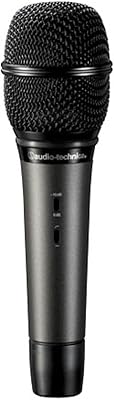
Audio-Technica AT2010
85%
93%
Vocal Clarity & Articulation
91%
High-Frequency Detail
84%
Feedback Resistance
78%
Handling Noise Suppression
88%
SPL Handling
More
Audio-Technica AT2021 Cardioid Condenser Microphone
77%
91%
Instrument Recording
84%
Sound Quality
86%
Value for Money
61%
Ease of Setup
63%
Vocal Performance
More
Audio-Technica AT4021 Cardioid Condenser Microphone
81%
93%
Tonal Accuracy
88%
Noise Floor Performance
87%
Build & Durability
84%
Value for Money
92%
Transient Response
More
Audio-Technica AT4040
83%
92%
Sound Transparency
88%
Build Quality
86%
Transient Response
83%
Value for Money
84%
Off-Axis Rejection
More
Audio-Technica AT2035
87%
91%
Audio Transparency
88%
Build Durability
86%
Self-Noise Levels
93%
High SPL Handling
74%
Environmental Isolation
More
Audio-Technica AT2020
81%
92%
Vocal Clarity
94%
Build Durability
96%
Value for Money
83%
Background Noise Rejection
62%
Plosive Management
More
Audio-Technica ATM710 Cardioid Condenser Microphone
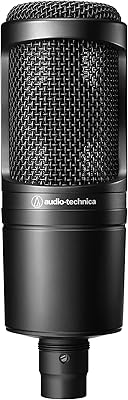
78%
86%
Vocal Clarity & Detail
74%
Stage Performance
83%
Build Quality
84%
Handling Noise Rejection
81%
Plosive & Sibilance Control
More
Audio-Technica AT2020USB+ USB Condenser Microphone
79%
88%
Audio Quality
94%
Ease of Setup
91%
Zero-Latency Monitoring
83%
Build Quality
76%
Value for Money
More
Audio-Technica AT4047/SV Cardioid Condenser Microphone
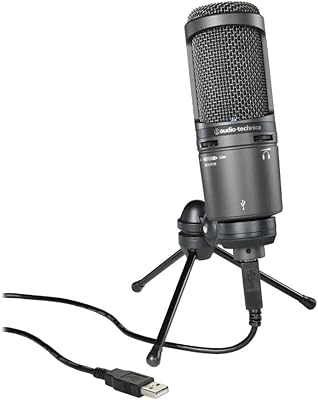
83%
93%
Tonal Character
91%
Self-Noise & Clarity
89%
Build Quality
92%
Vocal Performance
58%
Preamp Dependency
More
Audio-Technica AE5400 Cardioid Condenser Microphone
77%
92%
Vocal Sound Quality
86%
Handling Noise Rejection
91%
Noise Floor and Signal Clarity
64%
Feedback Resistance
69%
Value for Money
More

FAQ

Yes, it needs 48V phantom power to operate — there is no battery option. Most modern audio interfaces supply phantom power, so as long as yours has that feature and an XLR input, you are set. Just make sure phantom power is switched on before you start recording.

The cleaner the preamp, the better. Because this small-diaphragm mic is very transparent by design, a preamp with a noisy gain stage will show up in your recordings. Something with a relatively low noise floor and enough clean gain for the source you are recording will let it perform at its best.

No, and this is one of the most common frustrations buyers mention. The package includes the microphone only, so if you need a shockmount for vibration isolation or a case for safe transport, plan to purchase those separately. Factor that into your overall budget before buying.

It is genuinely one of the stronger small-diaphragm options for that application. The fast transient response captures the attack and decay of cymbals accurately, and the tight cardioid pattern helps reject bleed from other kit elements. A matched pair positioned in a spaced or XY configuration works especially well.

Very well. The pencil condenser captures the attack of picked or strummed strings naturally without exaggerating proximity effect the way some large-diaphragm mics do at close range. The gentle high-frequency presence rise adds a little openness without making the top end harsh, which works in its favor on guitar.

Technically yes, but it is not what it was designed for. The AT4041 is built for acoustic instruments, and its uncolored, analytical character tends to feel clinical on vocals compared to a large-diaphragm condenser. If voice recording is your primary use case, a mic voiced specifically for that purpose will likely serve you better.

This is actually one of the most compelling reasons professionals choose this mic. Unit-to-unit consistency is something Audio-Technica is known for with this model, and many engineers specifically buy two for overhead or piano miking because they trust the two will sound nearly identical. Some retailers sell a matched stereo pair version as well.

Standard balanced XLR cables work fine — cable length is not a major concern with a low-impedance mic like this one. A decent quality, properly shielded cable will do the job. You do not need boutique cables, but avoid very cheap ones that might introduce interference or have unreliable connectors.

The brass body holds up well. Given that this mic has been in production since 2001, there is a substantial track record, and long-term owners rarely report structural failures under normal use. It is not indestructible, but it is built solidly enough to handle regular studio sessions and careful live setups.

Yes, and those are genuinely strong use cases. The accurate frequency linearity and controlled polar pattern make it well-suited for piano miking, especially in stereo configurations. For horns and woodwinds, the slight high-frequency presence lift adds a natural brightness that suits the upper harmonics of those instruments without sounding forced.

Where to Buy